Author: admin

  • In the Media: Fábio Passos writes on Jornal i about organ-on-chip technology that could revolutionise modern medicine

    In the Media: Fábio Passos writes on Jornal i about organ-on-chip technology that could revolutionise modern medicine

    Can technology replace animal testing in drug development?

    A new article, entitled “Integrated circuits that emulate human organs: Organs-on-chip” (“Circuitos integrados que simulam órgãos humanos: Órgãos-em-chip”) was recently published by INESC-ID researcher, in the area of Nano-Electronic Circuits and Systems, Fábio Passos, on Portuguese newspaper, “Jornal i”.

    Traditionally, ensuring a drug’s safety for human consumption, requires extensive animal testing. This is not only a slow and costly process that sometimes causes animal suffering, but also often offers unreliable results for humans, resulting in undesirable side effects and failed tests. 

    According to Fábio Passos, the Organ-on-chip (OOC) technology – a groundbreaking innovation that uses integrated circuits to mimic a human organ in a controlled microenvironment – could be the solution for this problem, and “the application of this technology promises to revolutionise drug development, disease research and personalised medicine, while reducing dependence on animal testing”.

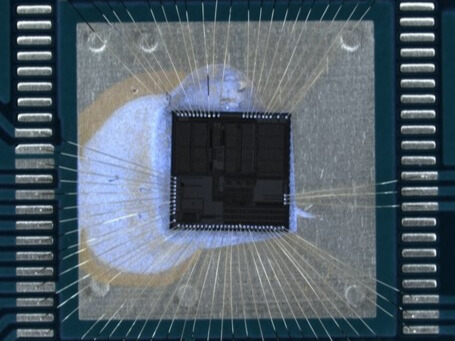
    The creation of OOC systems is, however, no small feat. Their composition is made of channels lined with living cells that mimic the structures and functions of specific organs, requiring the integration of multiple complex miniaturised components. The UNLOOC research project , which includes 51 organisations from 10 European countries, intends to tackle these technical challenges. In Portugal, partners like INESC-ID, INESC-MN, Instituto Superior Técnico, and Silicon Gate are developing analog integrated circuits for precise control and real-time monitoring of these systems.

    Read the full article here (in Portuguese).

  • Energy Democratisation – INESC-ID Leads U2Demo project, “Peer-to-Peer (P2P) trading and Energy Sharing”

    Energy Democratisation – INESC-ID Leads U2Demo project, “Peer-to-Peer (P2P) trading and Energy Sharing”

    The kick-off meeting of U2Demo took place on September 5th and 6th at INESC-ID and Instituto Superior Técnico Headquarters in Lisbon! It counted with over 30 participants from the project Consortium attending the meeting to discuss future steps and strategies for the following months.

    U2Demo (Use of open-source P2P energy sharing platforms for energy democratisation) is one of the latest projects signed by INESC-ID, under Cluster 5: Climate, Energy and Mobility of Horizon Europe. With INESC-ID as consortium leader, the project aims to develop new strategies that make it easy for people to join in Peer-to-Peer (P2P) trading and Energy Sharing, ensuring fair and equal access to sustainable energy for everyone.

    Led by INESC-ID researcher, in the area of Sustainable Power Systems, Hugo Morais, U2Demo counts with a total funding of 5 million €, (500K € of which will fund participation by INESC-ID) and will last 42 months. The project will bring together 20 partners, including associated partners, from eight countries to share their knowledge and expertise in developing strategies for open-source, non-proprietary tools and platforms.

    Testing for the developed tools will be implemented in four pilots (Portugal, Italy, Belgium and Netherlands) and performed in four Energy Communities (ECs) with different characteristics and governance models, each one sporting unique attributes and governance models, allowing the determination of optimal implementation conditions, and consolidation of the most promising solutions and associated business models. All action within P2P and Energy Sharing tools will be executed using blockchain, ensuring credibility and traceability of all activities.

    Through this, the initiative will allow consumers and prosumers to actively engage in energy and flexibility services, thanks to decision support algorithms, enhancing coordination and information exchange.

    Click here for more detailed information and list of partners.

  • INESC-ID joins the CARMA project (Collaborative Autonomous Robots for eMergency Assistance)

    INESC-ID joins the CARMA project (Collaborative Autonomous Robots for eMergency Assistance)

    During natural or manmade disasters, a quick and effective response is mandatory to minimise damage and ensure the population’s safety. Whether it’s a medical team employed to assist citizens during an earthquake, or police officers called to a bomb threat, first responders are sent directly to the site of a wide range of disaster situations. 

    What if, instead of sending traditional rescue teams, we could send unmanned vehicles working in symbiosis with humans to collect information, support first responders and assist citizens, thereby increasing security and rescue efforts, even in low visibility?

    To tackle this challenge, INESC-ID has recently joined Horizon Europe project Collaborative Autonomous Robots for eMergency Assistance (CARMA), led by a large European industrial leader (CS Group -France) in the crisis management market, and with partners across Europe, from Portugal to Greece.

    The goal of CARMA is simple: to co-create a groundbreaking and intuitive platform offering a complementary set of semi-autonomous and autonomous Unmanned Ground Vehicles (UGVs) capable of cooperating with humans during emergencies. By combining the experience of rescue teams with these vehicles, a faster and reliable analysis of the situation could be obtained, contributing to a more effective rescue plan. 

    At INESC-ID, the 36-month project is coordinated by Rui Prada, researcher in the area of Artificial Intelligence for People and Society, and funded with 334K€ out of a total 4M€ funding. The participation will consist of co-designing sessions with end-users, citizen representatives, and developers, to conduct the creation and definition of situations for the use of robots in civil protection scenarios, such as in the case of response to natural disasters. A model will be developed for the social behaviour of robots, that will collaborate with humans (first responders and citizens), in problem solving and setting guidelines for the relevant societal and ethical issues.

    The project will build on previously acquired research results, in the field of disaster robotics, and combine 3D radar-based environment mapping and analysis, with Artificial Intelligence (AI), Symbiotic operations and natural robot/human interaction. This will contribute to an improved planning of paths and missions as well as detection of victims and threats. 

    The process will involve end-users and experts who will assess and evaluate the results, provide insights, and identify typical and representative use cases and disaster scenarios. To aid in the implementation process, the project will carry out an ambitious communication and dissemination plan, training curriculum and produce a white book with recommendations for doctrine changes and best practices for the use of smart UGVs in disaster response.

    Click here for more detailed information and full list of partners.

  • INESC-ID joins prestigious Marie Curie Doctoral Training Network to enhance Privacy in Smart Speech Technology

    INESC-ID joins prestigious Marie Curie Doctoral Training Network to enhance Privacy in Smart Speech Technology

    How much private information can a single spoken word inadvertently reveal?

    The rapid growth of smart speech technology is transforming how people access information and applications through the human voice. However, these advancements come with privacy risks. Smart devices like speakers and smartwatches can expose users to the exploitation of sensitive information within speech signals, such as one’s health status, without their knowledge or consent.

    Can innovative privacy-preserving smart speech technologies reduce these risks? Aligned with this mission and its ongoing commitment to strengthen the internationalisation of its advanced training, INESC-ID has recently joined the Marie Curie doctoral training network “Privacy for Smart Speech Technology” (PSST). The PSST consortium includes world-leading research labs in speech processing, privacy, and usability, along with numerous innovative industrial partners across Europe.

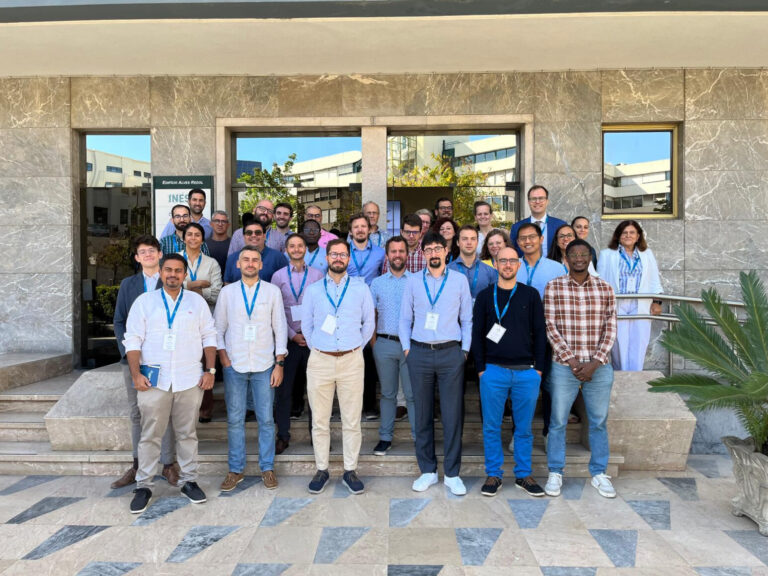
    The network will train a new group of researchers to develop these urgently-needed technologies using cutting-edge deep learning methods. This double-degree, high-impact training program partners with Aalto University (Finland, Coordinator), INESC-ID (Portugal), EURECOM GIE (France), INRIA (France), Ruhr-Universität Bochum (Germany), Radboud University Nijmegen (the Netherlands), and the Technical University of Berlin (Germany), among other partners. It will provide doctoral researchers with expertise in speech processing, machine learning, and comprehensive knowledge of privacy threats and privacy-enhancing technologies.

    Funded with a total of €4M by the Marie Skłodowska-Curie Actions (MSCA) Doctoral Networks (DN) program, the program will run for 60 months, starting January 25, 2025. INESC-ID’s participation will be led by Isabel Trancoso, an INESC-ID researcher in the area of Human Language Technologies and full professor at Instituto Superior Técnico, with funding of €487K.

    PSST partners and researchers will jointly create a unique, user-centred view of smart speech technologies, reducing threats like exploitation of sensitive information via speech. They will also promote innovative business models for responsible and sustainable privacy-aware technologies in the EU.

    The call for open positions begins in Fall 2024.

    Click here for more detailed information and full list of partners.

  • In the Media: Inês Lynce discusses Educational and Societal challenges in Computer Science at Visão newsmagazine

    In the Media: Inês Lynce discusses Educational and Societal challenges in Computer Science at Visão newsmagazine

    In a profound interview at Visão newsmagazine, INESC-ID President, Inês Lynce, discusses the evolution of computational sciences, particularly in relation to Artificial Intelligence (AI), and why the perception of radical change might not be entirely accurate, despite visible advancements. Inês details that while the foundations of AI and machine learning have been around since 1956, the real game-changer has been the increase in computational power and the vast amounts of data now available, making these technologies much more effective.

    The conversation also touches on the importance of demystifying AI and the need to explain how algorithms reach their conclusions, due to their inherent opacity. The concept of “Reinforcement Learning” is mentioned, likening it to Pavlov’s experiments, where rewards are used to train algorithms. The interview further explores the contrast between apocalyptic and awe-struck views of AI, emphasizing the significance of scientific communication for the general public.

    On a topic that is particularly important to her, Inês expresses concern about increasing female representation, breaking the stereotype that certain fields are predominantly male, and highlighting the positive impact of having women in leadership roles.

    Confessing her enthusiasm for the interaction with students, the professor at Técnico also reflects on the role of persistence and passion in scientific research and teaching. While research is portrayed as a solitary endeavour that heavily depends on peer acceptance, teaching is seen as offering immediate rewards. The ongoing shift in the education system, with a greater focus on autonomous learning by students, is a topic that is also of great relevance to Inês and that has been expressed clearly.

    The interview is on the printed edition of Visão newsmagazine, August 15, and is also available here.

  • EV charging station optimisation – New Horizon Europe project signed by INESC-ID

    EV charging station optimisation – New Horizon Europe project signed by INESC-ID

    INESC-ID has recently signed an agreement for a Horizon Europe project under Cluster 5: Climate, Energy and Mobility. The AHEAD project (AI-informed Holistic Electric Vehicles Integration Approaches for Distribution Grids), aims to not only determine the most convenient location to place electric vehicle (EV) charging stations, but also optimise both the usage of the power grid resources, and the charging stations located in urban and rural areas. Within this call, two other projects will be launched.

    At INESC-ID, the project is led by Hugo Morais, researcher in the Sustainable Power Systems (SPS) scientific area, with a total funding of 10 million 997K €, (916K € of which will fund participation by INESC-ID), and a consortium of 26 partners, within the EV value-chain, from 10 different countries.

    AHEAD will last for 48 months during which the simulation environment will leverage unique current AI models with two layers: spatial mapping for charger placement based on user needs and power grid placement for grid support. During this period, innovative smart charging algorithms will be developed and tested to minimise the network impact and provide economic benefits to consumers. Additionally, these algorithms will be tested in three demonstration sites to evaluate the technical and economic feasibility for light and heavy-duty EVs and boats.

    In the end it is expected to reach an optimised grid resource usage and mitigate EV charging impacts while advancing societal knowledge, focusing on user experience and cybersecurity, by minimising smart charging impacts and creating defences against cyber-attacks on chargers.

  • Navigating the Grey Areas: AI and Uncertainty at IPMU 2024

    Navigating the Grey Areas: AI and Uncertainty at IPMU 2024

    Almost nothing in life is black or white, rather a diversity of shades of grey. This is to say that uncertainty is everywhere, including in computational problems. But most of the time, engineers ignore this component of uncertainty, transforming it into zero/one solutions. “And then mistakes happen,” notes João Paulo Carvalho, from the Human Language Technologies research area, a board member of INESC-ID and a professor at Técnico. “When we move to real life, uncertainty takes on a different significance.”

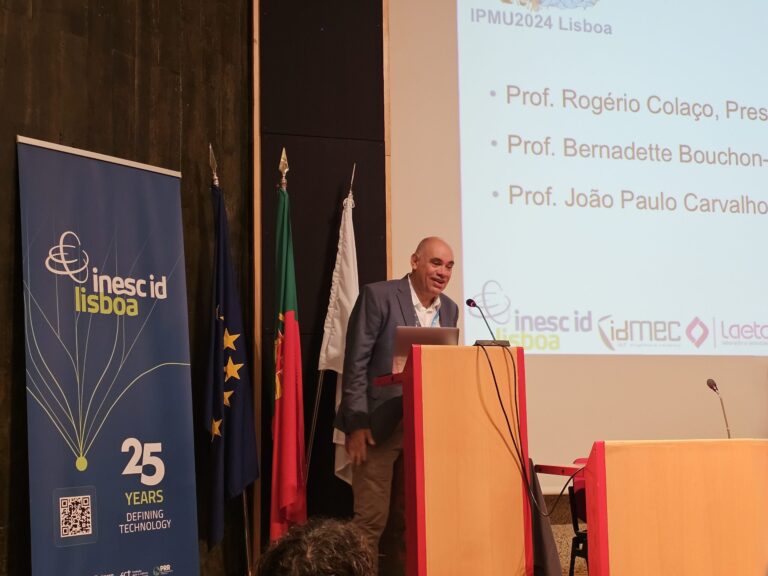
    Since 1986, computational scientists, mathematicians, and engineers gather every two years to discuss this topic at the International Conference on Information Processing and Management of Uncertainty in Knowledge-Based Systems (IPMU). It brings together everyone interested in developing methods for the management of uncertainty and aggregation, which allows for the management of data from multiple models and origins. IPMU2024, the 20th edition, happened from July 22 to 26 at Técnico, Lisbon, under the supervision of João Paulo Carvalho, the General Chair of the event.

    Many things in the area have changed since João Paulo first attended an IPMU. “In 2008, hardly anyone in this area focused on Neural Networks (NN) or Artificial Intelligence (AI). Many thought they were dying,” João Paulo recalls. Now, with the rise and dominance of Large Language Models (LLM) it is what we all know. Both expressions have reached the mainstream, and every year and a half there is a jump in the area that turns previous knowledge outdated. Hence, uncertainty in AI has become one of the main topics in IPMU.

    IPMU represents a privileged forum for the exchange of ideas between theoreticians and practitioners in these and related areas. Around 200 people, from 31 nationalities, attended the conference, with “very positive feedback,” João Paulo mentions. The event was also an opportunity to present some out-of-the-box topics, like the one introduced to a curious audience just on the first morning, by the keynote speaker Keeley Crockett, from Manchester Metropolitan University, UK, who gave a talk under the topic “People Powered AI – Challenges and opportunities in responsible and trustworthy AI development”.

    Apart from a career in computational science, Keeley is very interested in bringing topics such as AI to the public. “I am a people person,” she confesses during a conversation after the talk. “I want to empower people to have a voice,” Keeley adds, referring to the roadshows she used to do, speaking to senior communities. “The challenge is making sure things are done ethically. It is a different level to talk companies into doing it properly. It takes time, and resources.” Money that SMEs may not have to invest in this, she notes. “It is a triangle and the key is legislation.” Recognizing there are lots of people working in the field of ethics in AI – “that has grown in the last three to four years” – there is still a gap to fill, and “it is the people.”

    Text by Sara Sá, Science Writer | Communications and Outreach Office, INESC-ID / © 2024 INESC-ID

    Images | © 2024 INESC-ID

  • “Our dependence on IT systems is growing, and therefore, the problems affect us more, seem to happen more, and have more visibility”

    “Our dependence on IT systems is growing, and therefore, the problems affect us more, seem to happen more, and have more visibility”

    Millions of computers affected, with airports, supermarkets, and TV stations worldwide having their activities compromised. All due to a software failure. INESC-ID board member Miguel Pupo Correia, from the Distributed Parallel and Secure Systems research area and head of the Computer Science and Engineering Department of Técnico explains what we can do to prevent such a blackout and reveals what has been learned from this episode, which was not the first of its kind and certainly will not be the last.

     A failure at Microsoft resulted in a ‘blackout’ that is said to have affected 8.5 million computers. What kind of failure are we talking about?

    In reality, it wasn’t one failure but two. The one with the most impact wasn’t at Microsoft, but at a cybersecurity company called CrowdStrike. As far as we know, someone at this company left a bug in a software product, which was propagated to millions of computers worldwide and caused them to stop working. So, there were several errors made by the company’s employees: a bug, lack of testing that would have detected the bug, and propagation of the buggy software version to computers worldwide. Worse, all these computers had and have to be fixed manually, one by one. The second failure was indeed at Microsoft, specifically in its cloud service, Windows Azure, which had a data center down for several hours in the early hours of July 18 to 19.

    Was it of malicious or accidental origin? How can one distinguish between the two?

    The causes appear to have been accidental, or rather, there is no reason to believe they were intentional or malicious. Distinguishing them is not easy. The distinction concerns the presence of intention on the part of those who caused them. What we know is that neither company presented the case as having an intentional cause. It also seems evident that if they had been intentional, the perpetrator or perpetrators would be easily identified and would suffer the associated consequences.

    Despite the impact, only about one percent of companies using Windows were affected. What do these companies have in common, with the most notable examples being from the aviation sector?

    According to Gartner, a market research firm, CrowdStrike’s cybersecurity software (“endpoint protection”) is currently the market leader in this type of product. Therefore, the companies that fell victim to the problem were those concerned with the cybersecurity of their systems to the point of investing in and using the most sophisticated product available. Apparently, the choice was not the best from a reliability standpoint, although it might have been from a cybersecurity perspective.

    How can this type of problem be prevented?

    The problem cannot be completely avoided. It must be managed, and the risk of it happening must be kept at an acceptable level. The scientific field that studies the problem of avoiding failures like this – Dependability – has existed for several decades and is a very active research area. In this field, we know well that there are four complementary categories of mechanisms to avoid system failures: 1) fault prevention, which tries to avoid the occurrence and introduction of faults in systems (the bug in CrowdStrike’s case); 2) fault tolerance, which aims to prevent faults from leading to failures (the stoppage of computers in this case); 3) fault removal, which attempts to reduce the number and severity of faults; 4) fault forecasting, which aims to estimate the number, future incidence, and consequences of faults.

    We have witnessed the impact at the business level. But this type of problem can also affect citizens. What can each of us, individually, do to avoid suffering such a blackout?

    Both companies and individuals are increasingly dependent on computers and, I would say, want to depend more and more on computers. In the case of companies, it is evident, but citizens also increasingly depend on personal computers: mobile phones, laptops, tablets, smartwatches, etc. What can be done is to avoid critical dependence. There are numerous examples. One I see as a professor: students who have their thesis presentation in software that is in the cloud (usually Google Slides). As it is in the cloud, the possibility of using this software depends on the availability of the Internet. It seems to me to be a bad idea to depend on the Internet at an important moment like a master’s or doctoral defence, not to mention that it is unnecessary since the presentation can simply be downloaded in advance. Identifying these dependencies is not trivial, but it is necessary to think if at an important moment, I will depend on IT and what I can do to avoid it. I once heard Admiral Gameiro Marques, who is the National Security Authority, say that companies should maintain the ability to perform much of their activity manually, without using computers. This may be possible in some cases and impossible in others, but it seems to me a good principle. He was thinking specifically about a company, the IMPRESA group, whose IT infrastructure suffered a devastating cyberattack and lost the ability to edit the Expresso newspaper using the IT systems they had been using for several years. They might have thought it was impossible to continue producing the newspaper manually, but they had no choice.

    What do we learn – companies and citizens – from this incident?

    A few decades ago, public and business services worked quite poorly. Today we are used to them generally working well, efficiently, and without major delays. What we need to learn is that reality is not perfect and that at certain times something that seemed as obvious as catching a plane can be delayed by hours or even days or even impossible. We need to learn to manage our expectations.

    There has been talk of an increase in the occurrence of such problems – whether accidental or malicious in origin. Is this your opinion? If so, is it an inevitable fact, or can precautions prevent its occurrence?

    I agree that there has been talk and that there is a perception that the occurrence of such problems, both for accidental and intentional reasons, has increased. However, I have no certainty that this is true. This type of problem has always happened. Our dependence on such IT systems is growing, and therefore, the problems affect us more, seem to happen more, and have more visibility in the media.

  • Yes, ISTSat-1 solar panels are charging in space

    Yes, ISTSat-1 solar panels are charging in space

    It is confirmed! The ISTSat-1 solar panels are working properly and charging the batteries. “It made my day,” says João Paulo Monteiro, a researcher at IST Nanosat Lab, minutes after the team received another piece of data from the first university CubeSat entirely developed and built in Portugal, launched on July 9.

    Since the CubeSat departed from French Guiana aboard the Ariane 6’s maiden flight, the project team has been working day and night, looking after ISTSat-1. “It’s almost like taking care of a newborn,” admits João Paulo, as the satellite may ‘cry’ at one in the morning, at noon, or at seven PM.

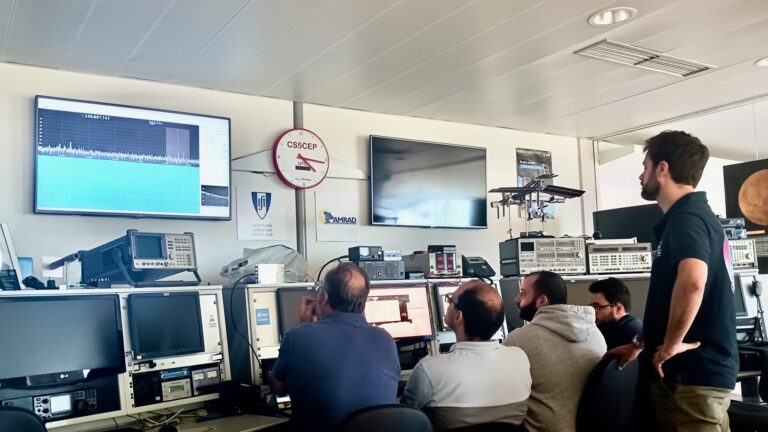
    Every 90 minutes, the satellite passes over the antennas placed at Técnico Oeiras, each time at a different angle. And amidst the noise captured by the equipment, the researchers are able to extract determinant information about the satellite. Only when the inclination of the satellite’s orbit is around 60 degrees is it a good chance to gather data. Usually, there are four good chances per 24 hours, and the amount of good news has been increasing, signal after signal, like baby steps.

    So far, the team knows it is cold out there – at 580 km from Earth – around 6 °C, as expected. The system is performing the predicted reboots, and the small cube is rotating at the desired speed. And fresh out of the bottle, we now know the energy system is fully operational. “It was a critical aspect,” admits João Paulo.

    Developed at Técnico, under the coordination of Rui Rocha, professor at IST and researcher at Instituto de Telecomunicações (IT), the ISTSat-1 project involved a team of around 50 people since its inception.

    As the pieces were being put together, a consortium was created to maximize the benefits of this pioneering event and others to come, and thus the NanosatLab consortium came to light, gathering IST, IT, INOV, INESC-MN, IDMEC, IST-ID/ISR-Lisboa, with INESC-ID as the leader.

    This week, the NanosatLab consortium had its first meeting, with the participation of Fernando Mira da Silva (IST), Carlos António Cardoso Fernandes (IT), António Gomes Leal (INOV), Susana Cardoso de Freitas (INESC-MN), Afzal Suleman (IDMEC), Rodrigo Ventura (IST-ID/ISR), Inês Lynce (INESC-ID) and the consortium directors Rui Rocha and Gonçalo Tavares.

    Regarding ISTSat-1, it is expected that during its five-year mission lifespan, the nanosatellite will capture and transmit messages from an air traffic monitoring system called ADS-B. This system involves aircraft broadcasting their positions, enabling other aircraft and ground terminals to receive this information.

    Text by Sara Sá, Science Writer | Communications and Outreach Office, INESC-ID / © 2024 INESC-ID

    Images | © 2024 INESC-ID

  • In the Media: Inês Lynce discusses the “summer of AI” in the Podcast “Futuro do Futuro”

    In the Media: Inês Lynce discusses the “summer of AI” in the Podcast “Futuro do Futuro”

    Is the Summer of AI Here to Stay?

    Inês Lynce, President and researcher at INESC-ID, has recently participated in the podcast, “Futuro do Futuro”, by national newspaper “Expresso” and hosted by journalist, Hugo Séneca, along with João Tiago Martins, from Noesis, to discuss Artificial Intelligence and its progress until now.

    During the episode, Inês Lynce highlighted the rapid advancements in the AI revolution predicting that domestic spaces will soon utilize AI to better meet the needs of their owners. However, the researcher emphasized the importance of vigilance to prevent the malicious use of AI, ensuring ethical practices in its application. Despite the progress achieved so far, Inês Lynce voiced criticism of the new regulations approved by the EU, suggesting that they may delay innovation and development in the sector.

    It was also pointed out that the effectiveness of robots and digital agents heavily relies on the quality of data provided to the training models. This dependency presents two major challenges: the inability to always trace the origins of data and the reliance on statistical behaviours, which may not always be rational. Reflecting on the early days of AI, Inês Lynce noted how just a few decades ago, AI was not considered a major topic, but it has now become a significant focus within the tech industry, which the community expects to dwindle eventually. 

    Listen to the full episode (in PT)  here .