Author: admin

  • In the Media: Luísa Coheur discusses AI emergence in classrooms with Público newspaper

    In the Media: Luísa Coheur discusses AI emergence in classrooms with Público newspaper

    INESC-ID researcher Luísa Coheur* and professor at Técnico has recently been interviewed by national newspaper, Público, about artificial intelligence (AI) integration in classrooms and the challenges it presents to teachers.

    Joined by several fellow educators, Luísa Coheur’s highlighted the rise in the use of AI by students and why it’s inevitable, providing advice to teachers and parents alike, on the advantages AI tools can provide, like assistance and increased classroom engagement, while not neglecting that they should not act as a replacement for skills acquired during the lessons.

    Read the full article (in PT) here.

    *Luísa Coheur is an Associate Professor at the Department of Computer Science at Instituto Superior Técnico and a Researcher at INESC-ID, in the “Human Language Technologies” group. Her preferred research topics focus on Dialogue Systems, Question/Answer, and Machine Translation (including for Portuguese Sign Language).

    (image source: Generative AI)

  • Advancing Compiler Technology: Nuno Lopes receives Google Research Scholar Award with Alive2 Project

    Advancing Compiler Technology: Nuno Lopes receives Google Research Scholar Award with Alive2 Project

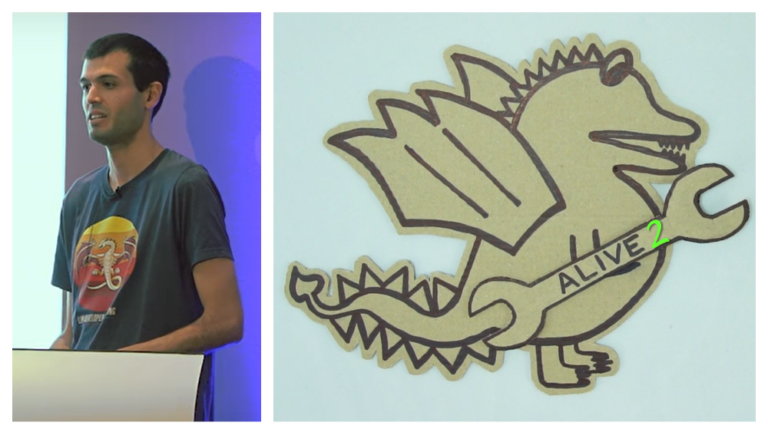
    Nuno Lopes*, researcher at INESC-ID and professor at the Department of Informatics at Técnico, received the prestigious and highly competitive Google Research Scholar Award, which includes a grant of $60,000.

    The award was given for his research in the area of automatic verification of compilers, which Nuno Lopes has developed in the last decade. In the past, this work had already been recognised with two distinctions for best papers at the Programming Language Design and Implementation conference (PLDI), and a technology transfer award. The prize money will be used to hire students to work on Alive2 for LLVM compiler verification, a tool developed by INESC-ID and used by several companies, including Google.

    The prize is awarded annually by Google and aims on funding world-class research conducted by early-career professors who are pursuing research in fields relevant to Google. This year, only two were granted in the area of Software Engineering and Programming Languages worldwide, with INESC-ID being one of the recipients.

    *Nuno Lopes is a researcher within the High Performance Computing Architectures and Systems Scientific Area at INESC-ID and Associate Professor at the Department of Computer Science and Engineering at Instituto Superior Técnico.

  • Tokyo within reach of an internship: opportunity for INESC-ID PhD students

    Tokyo within reach of an internship: opportunity for INESC-ID PhD students

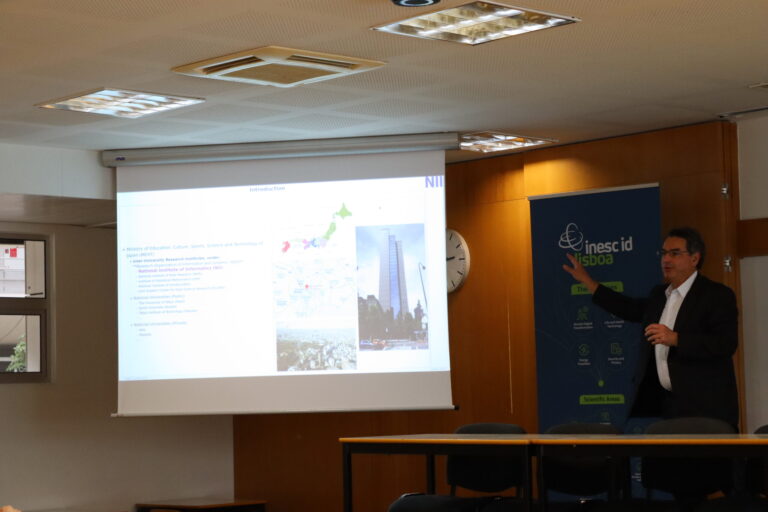
    It starts with an internship and it may end up in marriage. “Portuguese students love Japan,” reveals Emmanuel Planas, the professor in charge of the International Internship Program at NII- National Institute of Informatics, in Tokyo. “In some cases, after the internship they get a job and get married”, he adds after his presentation, last week, at Técnico Oeiras, to present the Memorandum of Understanding (MOU) signed between INESC-ID and the NII. Through this agreement, INESC-ID’s and IST’s Master’s in Computer Science students are invited to apply to an internship.

    This MOU with INESC-ID has been in place since 2011, after Rui Prada, from Artificial Intelligence for People and Society research area and a teacher at Técnico, became aware of this possibility, while completing a post-doc at NII. “I realised it was a good opportunity for students.”

    Finishing his tour around Europe to present this competitive program, established with the most reputable institutes in the world, the acting director of the Global Liaison Office explained to the audience the main aspects of the MOU. Every year, the NII receives 140 masters’ and doctoral students to this paid internship, lasting 2 to 6 months.

    At NII, located in the centre of the metropolis, very close to the Ministry of Education from Japan, there are 350 scientists, working in three research areas. Before applying, candidates must choose a topic and approach a senior researcher to work with during the internship. There are two calls every year, one in April and another in September, with 60 to 70 interns accepted per call. In each institute there is a referee who receives the applications, selects them and sends them to NII. AT INESC-ID, Rui Prada is the person in charge.

    Ana Carrasco, a PhD student, working in social robotics at GAIPS, has spent six months at NII under the MOU and highly recommends it. So much so that she is considering applying once more. “It’s an amazing experience”, she summarizes. “People are so friendly that I hardly felt the language barrier”, Ana adds, anticipating what might be felt as an obstacle by potential candidates.

    So far, around 40 students from INESC-ID/Técnico have joined the programme, Rui Prada estimates. ‘Ja ne’ Tokyo.

  • A year in review: 2023 INESC-ID Annual Report now available!

    A year in review: 2023 INESC-ID Annual Report now available!

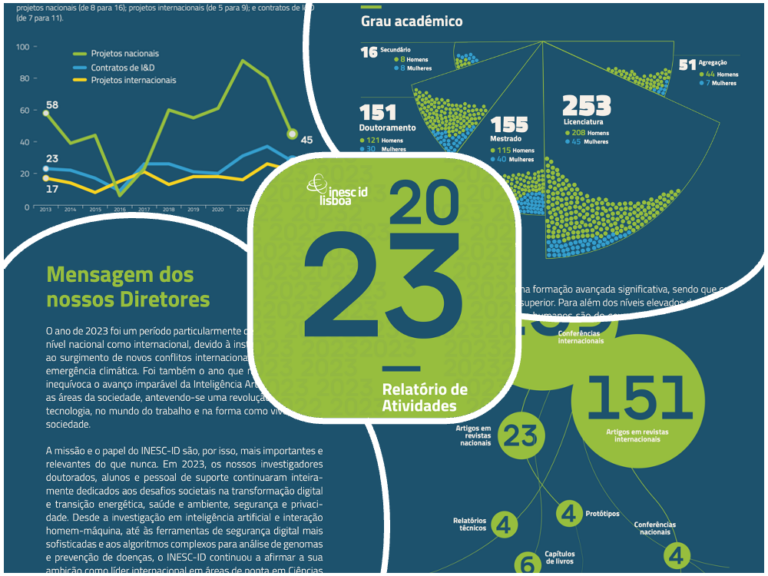
    The 2023 INESC-ID Annual Report has been released! The report, published in Portuguese, offers a comprehensive overview of the INESC-ID community, including the latest facts and figures, project updates, and achievements from the past year. It also presents highlights of our research, development, and innovation throughout 2023, alongside detailed information about our organisational structure, mission, and strategic objectives.

    Download the 2023 Annual Report here, and get to know our institute better with this retrospective.

  • The world needs more girls and women in tech and INESC-ID is helping to achieve that goal

    The world needs more girls and women in tech and INESC-ID is helping to achieve that goal

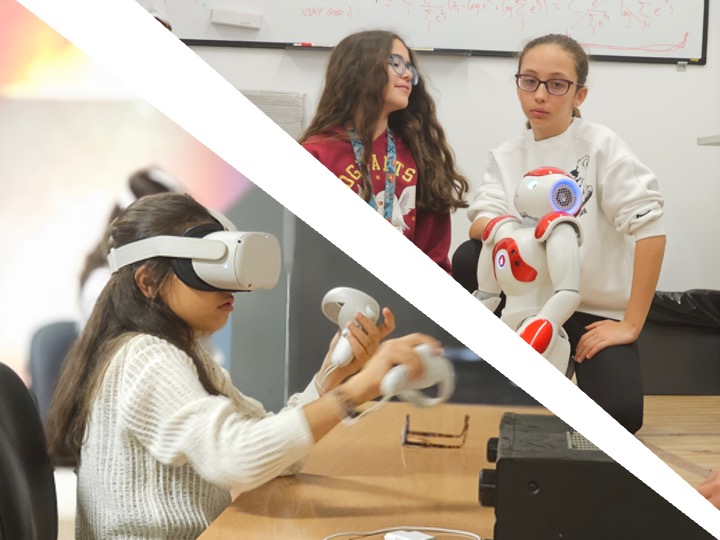
    It is inevitable! There is a natural urge to hold the dancing robot when it interrupts the choreography, falling down as programmed. This act, performed at INESC-ID Social Robotics Lab, from the Group of AI for People and Society (GAIPS), captured the full attention of elementary students from Agrupamento de Escolas de Miraflores, Oeiras, who were participating in the International Girls in ICT Day, celebrated at Técnico’s Taguspark Campus, on April 24th.

    If gender equality were attained in the Information and Communications Technology (ICT) sector, a market of up to 50 billion euros would open up, according to UNESCO. And this in only one of the reasons to celebrate and encourage girls to enrol in a career in this area.

    Since 2011, the International Telecommunication Union (ITU) has been promoting the event to raise awareness and stimulate girls and women to pursue a career in Science Technology Engineering Art and Math (STEAM). To mark the date, the GIRLSTEAM’24 received 150 students, who participated in activities promoted by INESC-ID and other research centres, such as the Institute for Bioengineering and Biosciences (IBB) and the Games Lab.

    During the visit, the students learned that besides entertaining, robots can also help children with autism navigate a world of sensory overload or accompany impaired people complete some tasks. And even solve some complicated math calculations. “Can they divide by zero?”, asked young Mateo.

    We could wager 100% of the youngsters that visited us are, in a way, gamers. But it certainly came as a surprise to realize that games can be a way to study altruism, as Samuel Gomes, also from GAIPS, does, or to cope with diseases, as the INESC-ID researcher, Sandra Gama, from the Human Lab, at the Graphics and Interaction (GI) group, pursues.

    In Europe, women hold just 22% of the tech industry’s positions and worldwide, out of the 7 million people who work in the ICT sector, only 30% are women. It is widely recognised technology is the language of tomorrow, cutting across many different professions, from health to economics. Girls must have a role in the future – for the sake of mankind.

    (Image: students participating in GI and GAIPS activities at GIRLSTEAM24 | © 2024 INESC-ID)
  • “GPT is wonderful! Use it without fear, – but with caution”, advises Luísa Coheur at Técnico Open Day

    “GPT is wonderful! Use it without fear, – but with caution”, advises Luísa Coheur at Técnico Open Day

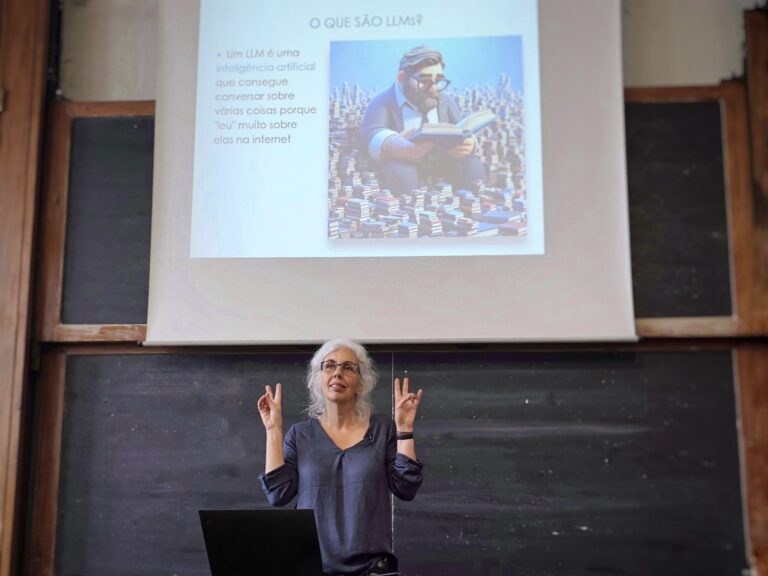
    The auditorium was completely full, mostly of youngsters, who wanted to listen to Luísa Coheur’s talk at Técnico Open Day: “ChatGPT – potentials and risks.” And there was no disappointment, since a good share of the participants stayed beyond schedule in a very vivid conversation with the researcher at INESC-ID’s Human Language Technologies (HLT) lab and a teacher at Técnico.

    The talk started with a retrospective on the origins of the now ubiquitous Large Language Models (LLM). “They were not born today, they are the result of many years of study in natural language processing, and also machine learning”, the researcher noted.

    Starting on the sixties of past century, the field has grown ever since, with an impressive evolution after the first public presentation of the most famous LLM, GPT, in 2019. “The first versions generated text that was correct, but still a bit confusing”, Luísa told the audience. “But with GPT-3 it is madness!”

    Assuming herself as a great enthusiast of the models, the researcher and teacher urged the students to incorporate this tool in their lives, including to fulfil their academic tasks. “I use it all the time, to prepare classes or to make presentations like this one”, Luísa revealed, giving the example of the illustrations, all created through instructions given to the model.

    But if first half of the conference was devoted to the advantages of using LLM, the second was focused on the risks. “Never trust it completely, always check.” Voice and image manipulation, made up sentences, invented sources, are the most critical aspects of this technology. But there is only one way to fight it: is to know it well and be aware of its faults.

    As the former President of USA, Franklin D. Roosevelt, famously said: “the only thing we have to fear is fear itself.”

    Another presentation that also generated interest from the participants, was the one about the first University CubeSat, a satellite entirely conceived and developed in Portugal, in a collaborative team that includes INESC-ID researchers, Gonçalo Tavares and Moisés Piedade. The conference was delivered by João Paulo Monteiro, one of the researchers responsible the project, who will likely be at French Guiana in September, to assist the launch event.

    (Image: © 2024 INESC-ID)

  • Electric Vehicles vs. Climate Change: INESC-ID at Técnico Open Day 2024 with EV4EU Project

    Electric Vehicles vs. Climate Change: INESC-ID at Técnico Open Day 2024 with EV4EU Project

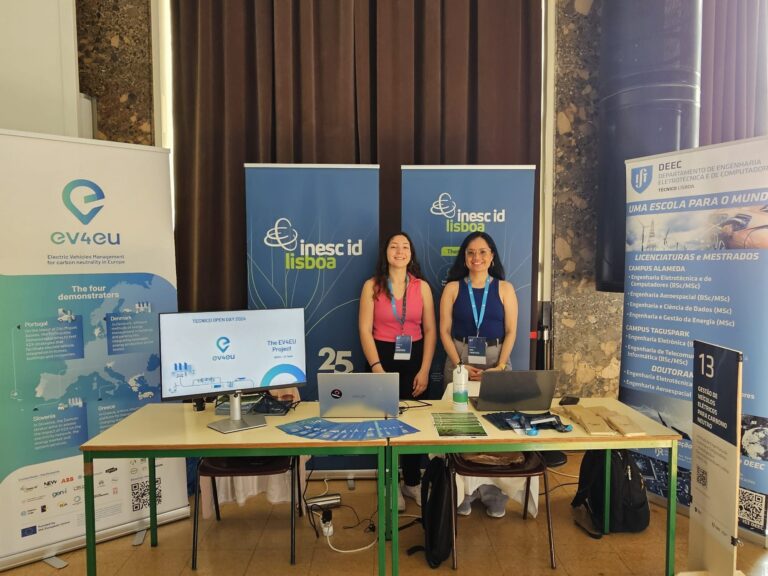
    INESC-ID marked its presence at the Técnico Open Day 2024, held on April 20 at Instituto Superior Técnico, in Lisbon, showcasing the Horizon Europe project EV4EU. The day was filled with lectures, interactive experiences, guided tours, and a science fair with 40 research projects on display, offering visitors a unique opportunity to discover the school and its initiatives.

    At the event’s Science Fair, EV4EU took center stage at the INESC-ID stand, where researchers Cindy P. Guzman and Larissa Montefusco, engaged with many curious visitors who stopped by to chat. Under the title “Electric Vehicles Management for Carbon Neutrality: Discover how electrical vehicles can contribute to the fight against climate change”, they shared the project’s latest developments and discussed how its planned solutions can support the massification of electric vehicles while contributing to the decrease of carbon emissions and global warming.

    Técnico Open Day 2024 was a major success, with over 2000 visitors throughout the day. With contributions from Departments, Students Associations, associated Research Units and Institutes, this was a day dedicated to celebrating diversity in the fields of engineering, science, technology and architecture, engaging the community with the best of what our science has to offer.

    Know more about the project here.

  • OLISSIPO organises Workshop on How to Design a Graphical Abstract

    OLISSIPO organises Workshop on How to Design a Graphical Abstract

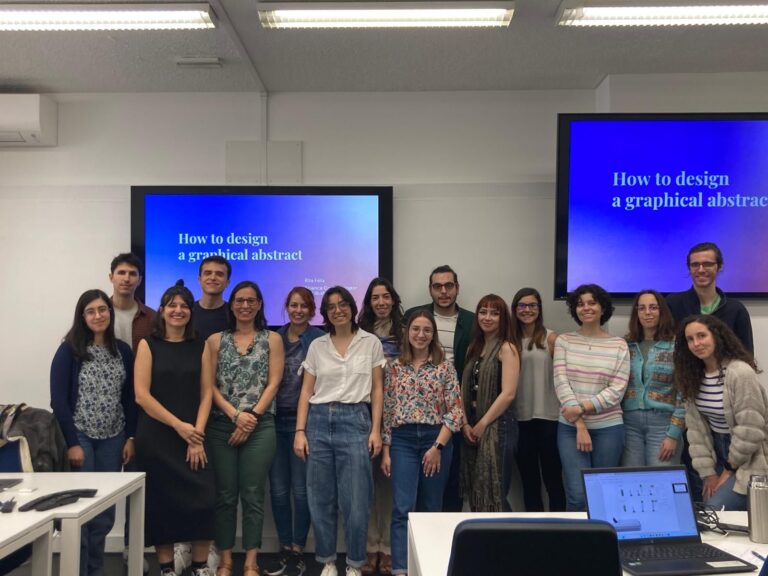
    Last Friday, we had the pleasure of hosting a workshop on “How to design a graphical abstract,” organised by OLISSIPO. The workshop was specifically tailored for Early-Stage Researchers and had Rita Félix, science communicator, illustrator, and designer from the CNC Center for Neuroscience and Cell Biology, as speaker and instructor.

    Throughout the day, participants delved into the specifics of graphical abstracts, gaining valuable insights into their structure and learning practical tips for enhancing clarity and appeal in their designs, without the need for software like Adobe Illustrator. They were encouraged to bring their graphical abstracts to the workshop, to share with the group, receive feedback, and collaborate on refining their designs. By the end of the day, each attendee left with an improved version of their graphical abstract, following several presentations and discussions.

    The aim was to equip participants with the necessary design tools and insights to create compelling and clear visual representations of their research, highlighting INESC-ID’s dedication to fostering a culture of effective science communication and equipping its researchers with the tools and knowledge necessary to share their work with broader audiences.

  • AI in Science: how can the European Commission promote a responsible uptake? Arlindo Oliveira participated as an expert in a report, via the Scientific Advice Mechanism

    AI in Science: how can the European Commission promote a responsible uptake? Arlindo Oliveira participated as an expert in a report, via the Scientific Advice Mechanism

    Published on April 15, the report “Successful and timely uptake of artificial intelligence in science in the EU” was produced by a group of renowned scientists, including INESC-ID researcher Arlindo Oliveira, from the SA-IDSS research area. The experts have been asked to provide recommendations via the Scientific Advice Mechanism, concerning how the European Commission can accelerate a responsible uptake of AI in Science. Some take home messages are: The EU should prioritize AI-powered research, particularly in area where large amounts of data are available, but hard to interpret, such as personalized health, social cohesion, and the green and digital transitions; It is important to support new research into the greenest AI algorithms and infrastructure, to help manage the environmental impact of the technology; data should be high quality, responsibly collected and well curated, with fair access for European researchers and innovators.

    While science may serve as basis for developing AI-based applications, science is also to be considered as a specific field in which AI can be applied: some of the most complex scientific problems can be tackled with AI technologies (including, but not limited to, data-intensive problems).

    For a more detailed information in the scientific advice, you may check the complete report.

  • In the Media: Rui Maranhão talks with Exame Informática about ICSE24’s Impact on Software Engineering and AI Innovations

    In the Media: Rui Maranhão talks with Exame Informática about ICSE24’s Impact on Software Engineering and AI Innovations

    INESC-ID researcher and full professor at Faculdade de Engenharia da Universidade do Porto (FEUP), Rui Maranhão*, has recently talked to Exame Informática, from Trust in News Group, about the upcoming 2024 edition of the International Conference on Software Engineering (ICSE), which will take place in Lisbon. 

    The interview was an opportunity for Rui Maranhão, chair of the conference, to share some exciting news and thoughts about the event. This included the record numbers of participants from African countries, and emphasised the fundamental role ICSE has in the software engineering community. ICSE not only highlights recent innovations and research in the field but ethical and environmental concerns as well, while also defining future tendencies and fostering collaboration between academia and industry. 

    ICSE is considered the premier international software engineering conference. This year, it will be held at Centro Cultural de Belém, in Lisbon, from April 14 to April 20. Registrations have reached record numbers, and the conference will focus on the link between software engineering and artificial intelligence (AI), with a particular emphasis on Large Language Models.

    Read the full article (in PT) here.


    *Rui Maranhão is a researcher at INESC-ID within the Automated Reasoning and Software Reliability researcher area, and full professor at Faculdade de Engenharia da Universidade do Porto. His research focuses on software quality, emphasising automating the testing and debugging phases of the software development life-cycle as well as self-adaptation.