Author: admin

  • Lusa and Inesc-ID invite citizens to support the construction of a tool against misinformation

    Lusa and Inesc-ID invite citizens to support the construction of a tool against misinformation

    The Lusa agency and Inesc-ID invite citizens to participate in the construction of a tool that will help fight misinformation, by answering a survey to assess the perception of credibility of news content.

    The survey, which is available at http://inforadar.inesc-id.pt/inquerito/#artigo, is part of a larger project, under development, to build a tool whose ultimate goal is to stimulate the critical spirit of readers and thus contribute to their media literacy.

    “The purpose of the application we intend to create is based on the idea that users should make informed decision on the information they consume  and share, providing readers with a set of relevant indicators that allow them to critically evaluate the credibility of the information they are about to to consume”, explains Inesc-ID researcher Paula Carvalho.

    The objective of this initiative, reinforces Paula Carvalho, “is not to censor, it is to empower readers, to provide them with the means that allow them to make informed decisions”.

    In a first stage of development of this application, which is being developed by the Lusa agency and Inesc-ID, it was carried out an annotation study of a variety of news articles by a restricted group of communication professionals, which allowed the identification of relevant indicators to distinguish news credible from not credible.

    As the tool is not specifically aimed at communication professionals, but at the general public, who are less sensitive to the principles and rules of journalistic writing, it was considered “essential that the previously identified credibility indicators by journalists are also assessed by common readers, to verify its relevance and consider its integration into the tool under development”, she said.

    By participating in the survey, available online, which will be more successful the more people who participate, citizens will be checking aspects such as the strategies used in the news headlines, the mention in the text of credible sources, the author’s degree of impartiality, usually in line with the use of neutral and objective language, a coherent discourse, which does not resort to fallacies, etc.

    “What we intend to investigate is the relative importance that users attach to each of these aspects, in order to select the attributes considered most relevant and informative to determine the credibility of the content they are confronted with”, explains the researcher from Inesc-ID .

    Many works have focused on finding strategies to distinguish credible news from non-credible or fake news (known as `fake news`), but, according to the researcher, “this approach is very reductive, seeking to group together a very heterogeneous set of news content, and, ultimately, journalistic styles, in just two categories”.

    Using the metaphor of colors, Paula Carvalho simplifies that “not everything is white or black. On the contrary, gray rules. Therefore, what we consider most appropriate is to assume that textual content can present different degrees of credibility, depending on the analysis of the indicators that seem relevant for a specific case.”.

    For example, if the reader is confronted with a news article that reveals a low degree of linguistic rigor, use `clickbait` strategies in the title, to attract his  attention and generate clicks, do not cite reliable sources and evokes the author’s opinions and sentiment, ” we believe that he will have no difficulty in making his own judgments about the credibility of the text”.

    The aim of this tool is to understand which textual characteristics are more associated with rigorous journalistic content, on the one hand, and misinformation, on the other, from the perspective of a common reader.

    Regarding the structure of the survey, each respondent is asked to read a text (randomly assigned) and answer a short questionnaire, consisting of a set of closed questions about that text.

    This questionnaire highlights textual aspects that must be considered when critically judging the credibility of an article, having also a didactic character.

    The researcher from Inesc-ID says she believes that, “by answering these questions, the reader is exercising his critical thinking, and it may happen that, in some cases, the initial intuition on the text credibility changes, after reflecting on the aspects he was confronted with”.

    This is one of the objectives of the project: “The tool to be made available will increase readers’ awareness and critical thinking, and thus contribute to their media literacy”, she pointed out.

    As the responses to this survey will be reflected in the tool, one may assume that readers will actively contribute to the definition of the “ingredients” that should make up the news nutrition labels.

    The survey is included in the 5th module of the Ciberinformado Citizen Course, https://www.nau.edu.pt/pt/curso/cidadao-ciberinformado/, developed by the Lusa agency and the Centro Nacional de CiberSegurança, but it can be answered independently, without having to do the entire course. The Cyber-informed Citizen is now in its second edition, having so far had more than eight thousand participants.
    The new module of the “Cyber-informed” course helps the trainee to understand and analyze the “nutritional information” of a news, considering all its content, from the credibility of the sources, the origin or if the text has a high emotional charge or subjectivity .

    The “Ciberinformed Citizen” course lasts an average of four hours, is free, is intended for all citizens who consult online information and is available until August 31, 2021.

  • Miguel Pupo Correia

    Short Personal Interview


    Miguel Pupo Correia was born in 1968, in Figueira da Foz, Portugal. He is an INESC-ID Researcher since 2011, integrating the Scientic Area Distributed, Parallel and Secure Systems (DPSS). Miguel Pupo Correia is also member of the Scientific Council of INESC-ID.


    How did you get to INESC-ID?

    When I was contracted by IST early 2011, I naturally joined INESC-ID and the Distributed Systems Group. I was with INESC years before, until 1997, before INESC-ID existed.


    INESC-ID is…

    A great place for doing research!


    Research project(s) under development

    QualiChain – Decentralised Qualifications

    DE4A – Digital Europe for All


    How would you explain in the most accessible and least technical language possible, what is the application / expected results of this (these) project (s)?

    Blockchain-based applications for improving (ex-)student mobility and contracting.


    Tell us about your favorite project so far (or one of them)?

    A great project was SafeCloud. The persons involved were great and we had very nice results on cloud security.


    What are the biggest challenges of working in research in this area?

    Similarly to most Computer Science and Engineering subareas, in mine there are too many researchers world-wide and industry producing new products fast, so the area evolves so quickly that it’s hard to see which directions will have impact in the medium term, not to say long term.


    What book are you currently reading?

    One that I’ve read recently and enjoyed was “Saint Peter’s Fair”, a medieval mystery novel by Ellis Peters. I have also been enjoying some old books by Armando Ferreira, a 20th century journalist who was an IST graduate.


    How would you explain to your child (or your parents or grandparents) what your job is?

    In short: teaching and investigating, which are deeply entangled activities.


    How do you see the mission of mission INESC-ID “to produce added value to people and society, supporting the response of public policies to scientific, health, environmental, cultural, social, economic and political challenges, in the fields of Computer Science and Electrical and Computer Engineering”?

    As a researcher my main focus is on academic research: keeping up to date with the literature and producing new results. However, I also interact with society in different ways, from roles in external organizations (EBP, .PT) to collaborations with industry. These interactions are useful to fertilize more fundamental research, but also to understand what society needs from us as researchers and teachers.


    Academic Degree

    PhD


    Training / Research Area(s)

    Cybersecurity, Dependability, Distributed Systems


    INESC-ID Scientific Area

    Distributed, Parallel and Secure Systems (DPSS)


    Email

    miguel.p.correia@tecnico.ulisboa.pt


    Linkedin Profile Link

    https://www.linkedin.com/in/miguelpcorreia/


    Twitter Profile Link

    https://twitter.com/miguelnpcorreia


  • Project to develop quantum communication networks for European Defence

    Project to develop quantum communication networks for European Defence

    The project “Disruptive SDN secure communications for European Defence” (DISCRETION) was one of the 26 projects selected by the European Commission under the 2020 call of the European Defence Industrial Development Programme (EDIDP).

    The DISCRETION proposal, in which Professors Ricardo Chaves, researcher at INESC-ID, and Paulo Mateus, researcher at IT, participate by Instituto Superior Técnico, was even ranked first in the topic of “Cyber ​​situational awareness and defense capabilities, defense networks and technologies for secure communication and information sharing” of the EDIDP 2020 call for proposals (EDIDP-CSAMN-2020).

    The “DISCRETION” project aims at integrating and combining the technologies of software defined network (SDN) and quantum key distribution. This combined with legacy optical networks will build a highly secure, scalable and resilient network control architecture for advanced tactical operation services and create a degree of autonomy for European defence forces.

    Compared with the traditional approach, where the network configuration and management interfaces are typically proprietary and tied to a specific manufacturer, SDN represents a revolution that supports further network evolution, opening it to potentially disruptive technologies like Quantum Key Distribution (QKD) and quantum technologies in general. This technology will reinforce the European Defence’s autonomy in secure communications and will enable European armed forces to also use Radio Spectrum for military activities.

    The members of the consortium are Deimos (coordinator), Instituto Superior Técnico, Instituto de Telecomunicações (IT), Altice Labs, Adyta Lda, Telefonica Investigación y Desarrollo S.A.U, Universidad Politécnica de Madrid, Austrian Institute of Technology GmbH and Nextworks.

    The Técnico team is composed of professors Ricardo Chaves (INESC-ID researcher) and Paulo Mateus (IT researcher). “This project is an important step towards greater collaboration between industry, academia and the government for the improvement of Cybersecurity at national and European level”, stresses professor Ricardo Chaves, coordinator of the “DISCRETION” project at Técnico. Professor Paulo Mateus highlights the importance of the project, once “it allows the participation of Instituto Superior Técnico in the modernization of national and European defence” and “promotes cooperation between IST mathematicians and engineers”.

    Experience shows the potential of the project

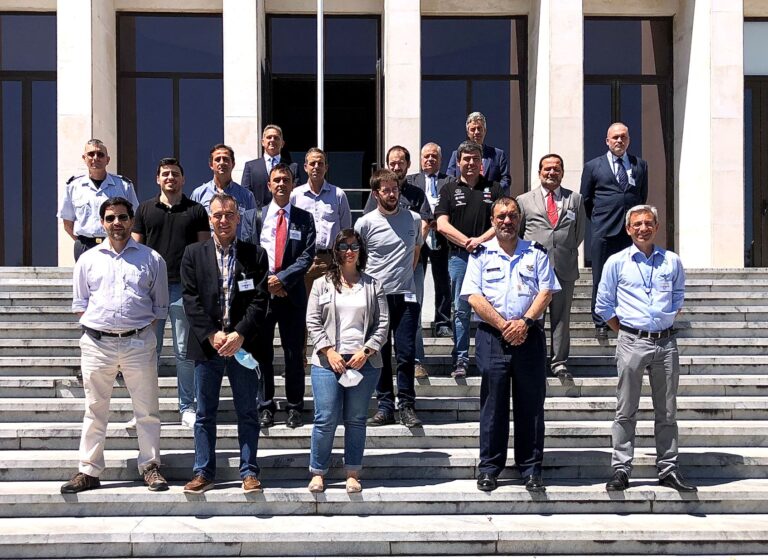
    An application of these technologies was demonstrated in Lisbon on 30th June, with an experimental test supported by the General Staff of the Portuguese Armed Forces (EMGFA), and the National Security Office (GNS). Some of the Portuguese partners in DISCRETION – Deimos, IT, Instituto Superior Técnico and AlticeLabs – have set-up a pioneer experiment, consisting in the interchange of messages between two Portuguese Defence facilities (5km apart from each other) using a quasi-quantum link and fiber optics.

    According to General Rocha, from EMGFA “this experiment allowed to demonstrate the national capabilities of the Portuguese industry, academia and defence internationally, and to start DISCRETION in a perfect time”. Admiral Gameiro Marques, Head of the Cybersecurity group – National Security Office, highlighted “the development of projects of this nature will enable Portugal – and Europe – to have its own technology in these areas, including encryption machines and the respective cryptographic key production processes”.


    Adapted from Instituto Superior Técnico

  • Miguel Pardal

    Short Personal Interview


    Miguel Pardal was born in 1977, in Lisbon, Portugal. He is an INESC-ID Researcher since 2015, integrating the Scientific Area Distributed, Parallel and Secure Systems (DPSS). Miguel Pardal is also member of the Scientific Council of INESC-ID.


    How did you get to INESC-ID?

    INESC-ID has long been a beacon of quality research in the Técnico community, so when I adjusted my research area to cybersecurity applied to the cloud and the internet of things, it made perfect sense to join the team.


    INESC-ID is…

    top-quality research, through passionate hard work


    Research project(s) under development (please indicate the name of the project(s)

    SureThing


    How would you explain in the most accessible and least technical language possible, what is the application / expected results of this (these) project (s)?

    The SureThing project is developing new ways to quickly and reliably prove our presence at specific locations, both for mobile and for internet of things applications. This will make checking-in at a medical office and getting a absence justification automatic. It can also improve the experience of visiting new locations with systems that can reliably reward users for completing tours.


    Tell us about your favorite project so far (or one of them)?

    My favorite project so far has been SafeCloud (H2020), where we collaborated with colleagues across Europe to develop added-security solutions. The INESC-ID team contributed to the development of reinforced-security channels that can go beyond TLS (the Security in HTTPS) with route monitoring and multiple layers of encryption.


    What are the biggest challenges of working in research in this area?

    One of the biggest challenges of working in Cybersecurity is keeping up the new threats that appear every week. On the one hand, we have to develop new and groundbreaking security mechanisms, to improve the security of systems, in the medium and long-term. On the other hand, we have to respond to emergencies, in the short-term.


    What book are you currently reading?

    The Inversion Factor, by Linda Bernardi, Sanjay Sarma (my PhD co-advisor) and Ken Traub (MIT Press). It discusses how businesses can adapt to the many possibilities of the internet of things. The inversion refers to stop thinking about products and center the design in the novel user experiences made possible by the new technologies.


    How would you explain to your child (or your parents or grandparents) what your job is? How do you explain what means to be a researcher in this area?

    Unfortunately there are bad people doing bad things on the Internet, and we have to outsmart them and keep everyone safe, while still enjoying the advantages of digital technologies.


    How do you see the mission of INESC-ID “ to produce added value to people and society, supporting the response of public policies to scientific, health, environmental, cultural, social, economic and political challenges, in the fields of Computer Science and Electrical and Computer Engineering”?

    I see INESC-ID playing a very significant role in society, as we bring the future closer to the present reality, and use our technical expertise to improve the technology and provide guidelines and scientific advice to policy decisions. This role is also critical to the formation of the next generations of engineers and researchers. We need to prepare them today for the challenges the world will face tomorrow.


    Academic Degree

    Doctorate


    Training / Research Area(s)

    Computer Science and Engineering


    INESC-ID Scientific Area

    Distributed, Parallel and Secure Systems (DPSS)


    Email

    miguel.pardal@tecnico.ulisboa.pt


    Linkedin Profile Link

    https://www.linkedin.com/in/miguelpardal/


    Twitter Profile Link


  • Sandra Gama

    Short Personal Interview


    Sandra Pereira Gama was born in 1984, in Entroncamento, Portugal. She is an INESC-ID Researcher since 2008, integrating the Scientific Area Graphics and Interaction (GI).

    How did you get to INESC-ID?

    As an MSc student

    INESC-ID is…

    A research institution of excellence

    Research project(s) under development (please indicate the name of the project(s)

    GameCourse, VisBig

    How would you explain in the most accessible and least technical language possible, what is the application / expected results of this (these) project (s)?

    (GameCrouse) We are studying ways to enhance higher education courses to provide a personalized, rather than one-size-fits-all, learning experience. We leverage on game principles (gamification) to further engage students and improve success.

    Tell us about your favorite project so far (or one of them)?

    GameCourse

    What are the biggest challenges of working in research in this area?

    Nowadays, with the COVID pandemic, doing research in the area of interaction, generally speaking, proves more difficult because we need to get participants to our studies. However, we have relied on technology to help bridge this gap.

    What book are you currently reading?

    1Q84, Haruki Murakami (big fan!).

    How would you explain to your child (or your parents or grandparents) what your job is? How do you explain what means to be a researcher in this area?

    I work in making it easier for people to interact with computers through meaningful visual representations that gather their attention, personalize content in a way that it it aesthetically pleasing according to people’s preferences and needs.

    How do you see the mission of INESC-ID “ to produce added value to people and society, supporting the response of public policies to scientific, health, environmental, cultural, social, economic and political challenges, in the fields of Computer Science and Electrical and Computer Engineering”?

    INESC-ID has a very wide variety of projects going on, with team members that encompass different competences, making it a rich environment for the exchange of ideas. The development of these ideas has, and will most certainly continue to lead to extremely relevant results, with impact on a most ample range of activities on health, environmental, cultural, social, economic and political fields.

    Academic Degree *

    PhD

    Training / Research Area

    Graphics and Interaction

    INESC-ID Scientific Area

    GI- Graphics and Interaction (GI)

    Email *

    sandra.gam@gmail.com

    Linkedin Profile Link

    https://www.linkedin.com/in/sandra-gama-971620170/

  • Newsletter

    Subscribe Newsletter

    * indicates required


    Subscriber consent

    The data submitted through this form will be used exclusively for the sending of INESC-ID Newsletter, NEWS-ID, and will not, under any circumstances, be shared with third parties. If you choose to, you can easily unsubscribe from the newsletter by following the link presented in the footer. In that case, your data will be automatically deleted from our information system. If you need to update your contact information or clarify any questions related to the newsletter, please contact info@inesc-id.pt. By submitting this form, you give permission to the use of your personal data according to the conditions above.

    We use Mailchimp as our marketing platform. By clicking below to subscribe, you acknowledge that your information will be transferred to Mailchimp for processing. Learn more about Mailchimp’s privacy practices here.

  • Daniel Gonçalves

    Short Personal Interview

    Daniel Gonçalves was born in 1974, in Tavira, Portugal. He is an INESC-ID Researcher since 2001, integrating the Scientific Area Graphics and Interaction (GI).

    How did you get to INESC-ID?

    As a prospective PhD student

    Research project(s) under development

    VisBig – Real-Time Visualization of Streaming Big Data

    GameCourse – Improving University Courses through Gamification

    How would you explain in the most accessible and least technical language possible, what is the application / expected results of this (these) project (s)?

    To be able to effectively and efficiently visualize and analyze large amounts real-time data; Study how gamification can be used to increase the engagement of college-level students of different profiles.

    Tell us about your favorite project so far (or one of them)?

    GameCourse, where lots of very interesting results have been achieved so far, with high impact from a scientific point of view, and also in pedagogical terms. We study how gamification can be used to increase student engagement, and even to provide students of different profiles with a different learning experience, moving away from the centuries-old and rather outdated “one-size-fits-all” approach. This will bolster their learning and outcomes. It has also shown to be a resilient approach, even in challenging contexts, such as the current COVID19 pandemic and all the changes to the teaching paradigm it brough about.

    What are the biggest challenges of working in research in this area?

    The need to involve students and other users (a must, but it makes testing harder). Indeed, there is an important qualitative aspect to the research that can and is assessed, but makes reaching conclusions harder than mere quantitative methods common in several other engineering fields.

    What book are you currently reading?

    Shards of Earth (by Adrian Tchaikovsky)

    How would you explain to your child (or your parents or grandparents) what your job is?

    I teach Computer Science at Técnico, continuously trying to find novel and more interesting ways of teaching, and I am a researcher, coming up with new ways to help people interact with computers.

    How do you see the mission of INESC-ID “ to produce added value to people and society, supporting the response of public policies to scientific, health, environmental, cultural, social, economic and political challenges, in the fields of Computer Science and Electrical and Computer Engineering”?

    It covers, in a nutshell, the goals and values that INESC-ID actively pursues. In particular, I would point out the connection to the wider society, where we strive to have an impact, that will help bolster national and international knowledge and standards of living. This, I feel, is a very relevant part of what we, INESC-ID researchers, try to accomplish.

    Academic Degree

    Habilitation in Computer Science

    Training / Research Areas

    HCI, InfoVis, Gamification, Computer Science Engineering

    INESC-ID Scientific Area

    Graphics and Interaction (GI)

    Email

    daniel.goncalves@inesc-id.pt


    Linkedin Profile Link

    https://www.linkedin.com/in/danielgoncalves/


    Twitter Profile Link

    https://twitter.com/domiriel

  • Arlindo Oliveira

    Short Personal Interview

    Arlindo Oliveira was born in 1963 in Negage, Angola. He is an INESC-ID Researcher since 1984 (then INESC), and integrates the Scientific Area Information and Decision Support Systems (IDSS).

    Arlindo Oliveira is a Distinguished professor of Instituto Superior Técnico (IST), with the Computer Science and Engineering Department.

    PhD in Electrical Engineering and Computer Science (EECS) from UC Berkeley in 1994, with a Fulbright fellowship. BSc (1986) and MSc (1989) in EECS from IST.

    Arlindo Oliveira is also President of INESC Holding.

    For you, INESC-ID is…

    A nice place to perform research.

    Research project(s) under development

    INTAKE

    DeepPathCovidX

    How would you explain in the most accessible and least technical language possible, what is the application / expected results of this (these) project (s)?

    Use machine learning to model and fight COVID-19.

    Tell us about your favorite project so far (or one of them)?

    INTAKE

    What are the biggest challenges of working in research in this area?

    Lack of good data

    What book are you currently reading?

    Extraterrestrial: The First Sign of Intelligent Life Beyond Earth

    How would you explain to your child (or your parents or grandparents) what your job is?

    Make machines learn from experience, like children

    Academic Degree

    PhD

    Training / Research Area

    Machine Learning

    INESC-ID Scientific Area

    Information and Decision Support Systems (IDSS).

    Email

    aml@inesc-id.pt

    Website

    http://arlindo.oliveira.cc/

    Linkedin

    https://www.linkedin.com/in/arlindo-oliveira-4119a1a/

    Twitter

    https://twitter.com/arlindooliveira

    Facebook

    https://www.facebook.com/ArlindoOliveiraIST/

  • Sentence End and Punctuation Prediction in NLG Text at SwissText2021

    Sentence End and Punctuation Prediction in NLG Text at SwissText2021

    A group of researchers from INESC-ID, in partnership with Unbabel, are one of the winning teams of the Shared Task “Sentence End and Punctuation Prediction” at SwissText2021.

    “This was a very competitive and in the end we are really pleased to be one of the winning teams! For our team this was the icing on the cake, after 1 year of collaboration on the topic of Automatic Rich Transcription (ART)”, mentioned Ricardo Rei, one of the INESC-ID researchers involved.

    7 teams participated, with the “Unbabel-INESC-ID” team taking first place, along with 2 other teams.

    The goal of the shared task was to build models for identifying the end of a sentence by detecting an appropriate position for putting an appropriate punctuation mark. Specifically, we offer the following subtasks:

    Subtask 1 (fully unpunctuated sentences-full stop detection): Given the textual content of an utterance where the full stops are fully removed, correctly detect the end of sentences by placing a full stop in appropriate positions.

    Subtask 2 (fully unpunctuated sentences- full punctuation marks): Given the textual content of an utterance where all punctuation marks are fully removed, correctly predict all punctuation marks.

    Due to the extremely close results of the first three solutions, the evaluators decided to announce the first three high-performing systems as the joint shared task winners.

    “We tried to look at the results from different angles, but couldn’t find any decisive criteria to select a single winner based on the scores. Congratulations to the HTW+t2k, Onpoint, and Unbabel-INESC-ID teams for their fine works” mentioned the organizers Don Tuggener and Ahmad Aghaebrahimian.

    The Unbabel-INESC-ID team is made up of researchers Ricardo Rei, Nuno Guerreiro, Luisa Coheur and Fernando Batista.

  • Digital Anatomy: Applications of Virtual, Mixed and Augmented Reality

    Digital Anatomy: Applications of Virtual, Mixed and Augmented Reality

    New book brings together 2 INESC-ID researchers: Joaquim Jorge and Daniel Lopes and other specialists in a unique interdisciplinary work


    The first book on digital anatomy, written in close cooperation between doctors, anatomists, and computer scientists, addresses Extended Reality applied to Clinical and Surgical Practice through Training and Teaching.

    The book just published by Springer / Nature’s prestigious series of books “Human-Computer Interaction Studies”, edited by two INESC-ID/Tecnico Professors, Joaquim Jorge and Daniel Lopes of Department of Computer Engineering and INESC-ID / Lisbon, in collaboration with Professors Jean-François Uhl of the University Paris-Descartes and Pedro Campos (University of Madeira). The book clarifies the classic approaches with VR, AR, and MR; It presents recent VR, AR, MR systems, techniques, and methods for digital anatomy.

    This book offers readers new insights into extended reality to digital anatomy, a new emerging discipline. The way teachers teach anatomy in the classroom is changing rapidly as new technology-based approaches become increasingly accessible. Recent studies show that Virtual (VR), Augmented (AR), and Mixed-Reality (MR) can improve retention andlearning outcomes.

    “The book is aimed at the scientific, academic and professional research community. It can be used as a textbook, “survey” on the state of the art and seed for new research projects”, says Joaquim Jorge, one of the authors and researcher at INESC-ID.

    Readers will find relevant tutorials on three-dimensional reconstruction techniques to perform virtual dissections. Several chapters serve as practical manuals for students and trainers in anatomy to update or develop their digital anatomy skills. We developed this book as a support tool for collaborative efforts around Digital Anatomy, especially in international and interdisciplinary distance-learning contexts. Our goal is to leverage the source material in this book to support new digital anatomy courses and programs in interdepartmental and interdisciplinary collaborations.

    A work carried out by several hands that resulted in an unusual book that brings together specialists in Anatomy, Informatics and Medicine.

    “The idea came from a collaboration with my colleague Jean-François Uhl that I had the opportunity to meet at a congress organized in Lisbon”, says Joaquim Jorge. “Me and my colleague Jean-françois Uhl were instrumental in exercising the network of contacts that each one of us has in their respective fields and collecting chapters. Daniel Lopes and Pedro Campos helped to recruit reviews and in the process of writing and editing some chapters ”, adds the researcher.


    Joaquim Jorge also tells us how the idea for this book was born:

    “This book came from an idea of mine. I organized the proposal given the experience of writing and editing books for Springer / Nature (it is already the 4th). The proposal was drawn up in 2018 and accepted in 2019. In 2019/2020 we have collected chapters around the world and 2020/2021 were spent on reviewing and reviewing chapters (where Daniel and Pedro Campos helped a lot). The book came out after a seven-month marathon (I planned to finish it on my sabbatical, but the pandemic delayed the process”.

    The book was just launched and more information can be found at https://www.springer.com/gp/book/9783030619046

    “I am very happy with the range of knowledge, skills and approaches that we have gathered in this book, with contributions of great technical level and thematic diversity, which I hope will stimulate / catalyze new lines of research and teaching”, pointed out Joaquim Jorge