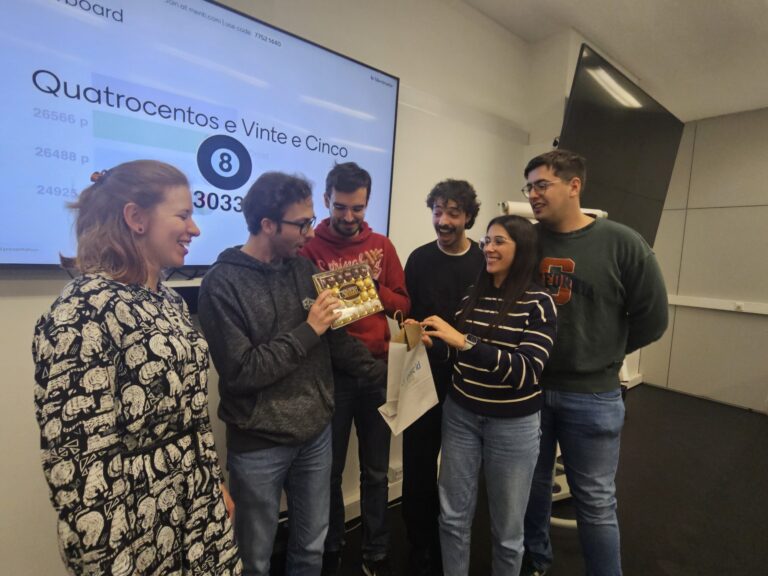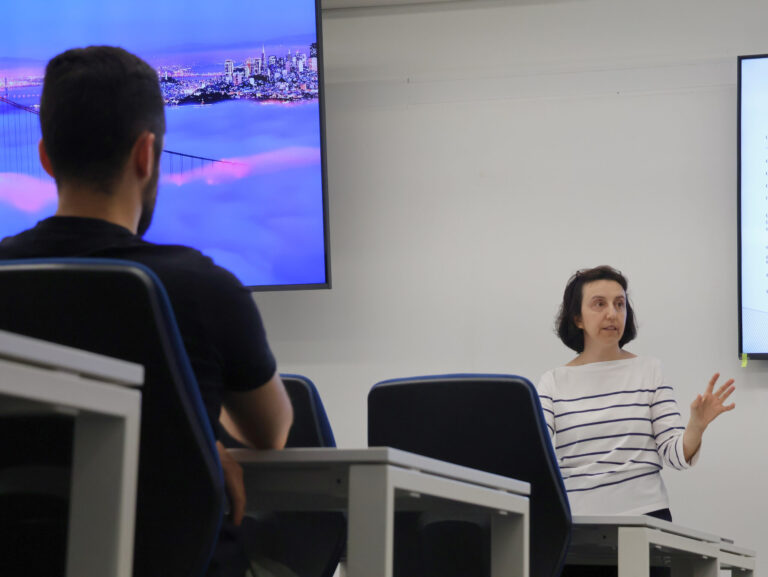
Earlier this month, our PhD students had their last meetup of 2025. After working hours, around twenty students gathered to room 9 of Alves Redol (INESC-ID headquarters), for a quiz game.
Divided into four teams and fuelled by snacks, the participants soon defined strategies and carefully went through the instructions at the beginning of the Mentimeter presentation. The first round was an easy one, INESC-ID trivia combined with facts about Computer Science and Electrical and Computer Engineering, a breeze for everyone. Quirky beeps, nostalgic sounds, soundtracks and even domestic appliances filled the room as the next round came along. Riddles took a modern turn, as various combinations of emojis appeared on the screen for a more challenging game of guessing which movie or series was being represented. And for the final boss, isolated quotes appeared on the screen, prompting participants to gather all their pop culture knowledge to guess what piece of media had originated the sentence.
The results were very close to a tie, but one team emerged victorious: “Quatrocentos e Vinte e Cinco”! The victory earned them a sweet prize which, in true community spirit, they made sure to share with their fellow colleagues.
* The INESC-ID PhD Students Meetups are informal gatherings designed to support and connect our doctoral researchers. Created by the Communications and Outreach Office, the series offers space for community building, peer exchange, personal and professional growth, and insight into the wider opportunities of the PhD journey. —
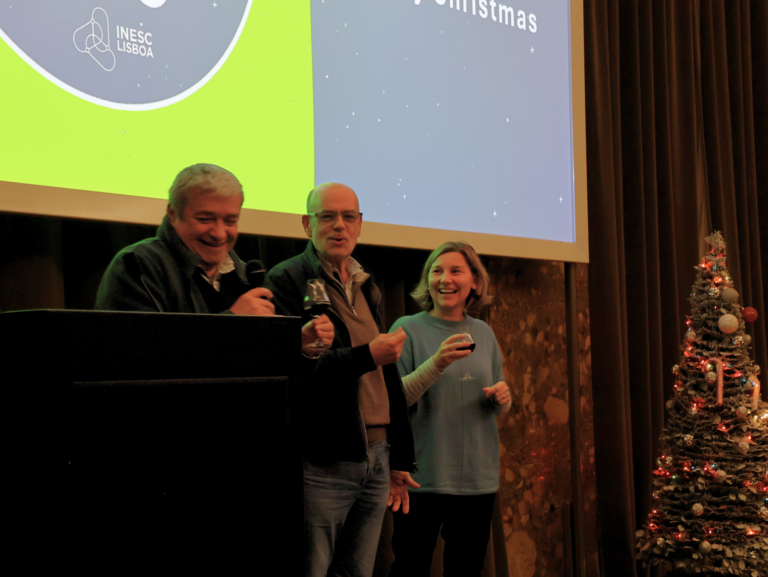
As is tradition, the three INESC Lisbon institutes, INESC-ID, INESC-MN and INOV, had their Christmas gathering on December 17 to mark the jolliest time of the year.
Under a smiley gingerbread cookie projected on the screen, the attendees gathered around the tables for a cozy evening snack and to engage in conversation, promoting connection between the three institutes. The chat was lively, the mood was merry, a perfect opportunity to wish each other happy holidays.
Inês Lynce INESC-ID president of the Board of Directors, Fernando Moreira president of INOV and Paulo Freitas, director of INESC-MN, went briefly up to the stage to thank everyone for coming, rejoicing on a very successful 2025 and taking the chance to make a heartfelt toast with everyone present.
We wish everyone a Merry Christmas and a Happy Holiday season!
After a two‑year hiatus, in which the annual meeting was held jointly with INOV and INESC MN under the INESC Lisboa initiative, INESC-ID returned to hosting its own dedicated gathering.
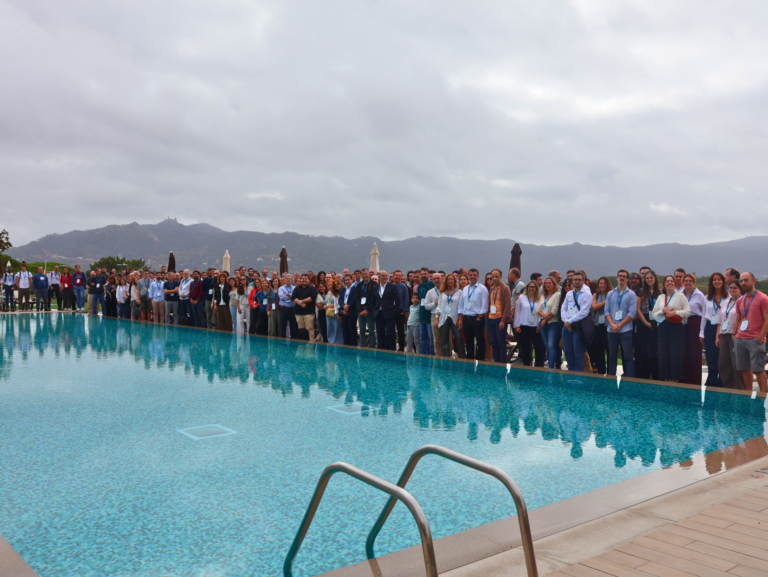
This year’s venue was Vila Galé Sintra, on an autumn day shrouded in the region’s characteristic fog, which gradually revealed Palácio da Pena atop the hill and the historical town of Sintra below. With a record participation of nearly 200 members, the meeting took place on October 23 in this symbolic setting, associated for centuries with moments of retreat and reflection.
“I enjoyed seeing all of INESC-ID at the same venue , which is a rare sight and a first time for me. It gave me a more complete perspective of how many research projects there are.”– PhD student
Institutional overview, support teams in the spotlight, and a thought-provoking talk
Inês Lynce, President of the Board of Directors, opened the first session of the day, stepping in for Executive Committee Director Miguel Pupo Correia, who was away on professional duties in the U.S. She was joined by Executive Director João Paulo Carvalho, who presented a profile of the INESC-ID community, including upcoming infrastructure plans and challenges. He was followed by fellow Executive Director Nuno Roma, who offered a detailed account of the institute’s current financial situation.
Next came a session dedicated to INESC-ID’s support offices, with brief presentations from the teams who, often behind the scenes, play a vital role in the institute’s daily life. Executive Director Helena Galhardas spoke for Administrative Support and Technological Infrastructures, followed by Elisabete Rodrigues and Sandra Sá (Board Support), Vanda Fidalgo (Human Resources), Sílvia Castro (Innovation Management), Sandra Aresta (Knowledge Transfer), and Rodrigo Abril de Abreu (Communications and Outreach).
The morning concluded with an inspiring talk by guest speaker João Rocha, Full Professor of Chemistry at the University of Aveiro and current Coordinator of the Council of Associated Laboratories. He reflected on the functional model of CICECO – Aveiro Institute of Materials, which he led from 2002 to 2021, the role of fundamental research in national development, and the challenges of large-scale scientific coordination. The session ended on a lively note with an open exchange of questions from the audience.
European projects, research on the walls, and a new format for dialogue
The afternoon began with a presentation by researcher Hugo Morais, from the Sustainable Power Systems scientific area, on his extensive experience with European projects. Together with his team (Rita Nunes, Mariana Carmo, and Cindy Gusman), he shared the structure they have developed over the years, with a strong track record in securing European funding, offering practical advice, strategies, and lessons learned for those looking to follow a similar path. The session aimed to inspire other researchers to join this European research ecosystem.
Mid-afternoon, alongside a coffee break dedicated to conversation, reconnection and networking, came the PhD Students’ Poster Session. Transforming the event walls into a showcase, the exhibition featured one poster selected by each Scientific Area coordinator, highlighting the diversity and quality of research underway at INESC-ID. This session also marked the second part of the 2nd Annual Meeting of INESC-ID PhD Students, whose first segment took place in September, and reinforced the active role of students in the institute’s life.
The closing session, led by Luís Oliveira e Silva, introduced a new format: the Town Hall – an open conversation between the Board of Directors and the INESC-ID community, held in a Q&A format. The directors addressed questions posed primarily by PhD students, who represented around one-third of participants this year, on topics ranging from the institute’s visibility and student recruitment strategies, to support during and after the PhD journey. This final moment promoted transparency, feedback, and collective reflection on the future of the institute.
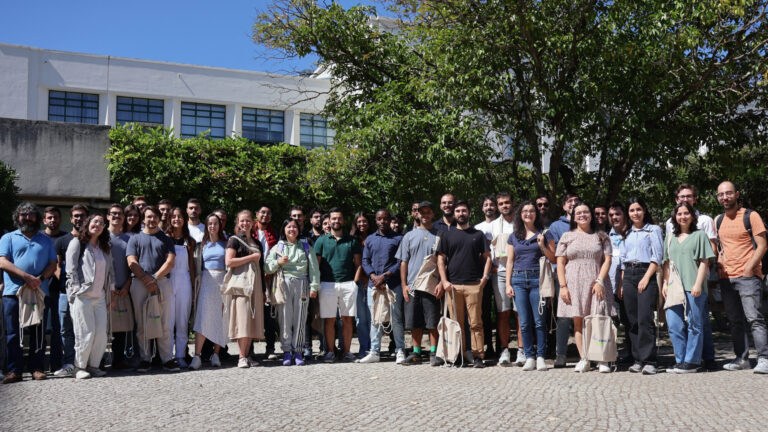
After a very successful first edition in 2024, the INESC-ID PhD Student Community dedicated the morning of September 24 to their second Annual Meeting, in a room packed with almost fifty people and many activities prompting discussion of relevant themes and mingling between the students.
Bright and early, students began arriving before nine o’clock for registration, where they received a goodie bag and a number for random seating at the tables. While more and more people arrived, coffee was available for anyone who needed some extra energy for the busy morning ahead.
The first session was an institutional presentation by board member, Helena Galhardas, with an overview of INESC-ID. It was followed by the Head of Communications and Outreach Office (COO), Rodrigo Abril de Abreu presenting the office and PhD volunteer, Carolina Carreira, who introduced the Volunteer Team, the growing community of PhD students and the initiatives carried out so far. To close the Introduction, PhD volunteer Daniel Gonçalves presented the Onboarding Guide, which has been developed over the last months and will be available to every newcomer.
“Who here loves 9 am meetings?” “Who has read a book this year?”, these were just two of the many questions asked during the ice breaker, moderated by PhD Volunteer Inês Conceição. Organised as a bingo game, students were divided into eight groups and given cards with various affirmations regarding both their personal and professional life, each to be crossed out if, at least, one person in the group related to it. This encouraged conversation among the students, and the two winning teams were awarded a thematic prize in the end.
After being acquainted with each other, and similar to the previous year, Daniel Gonçalves gathered students to discuss and come up with questions to fit into four categories, Academia, Industry, Entrepreneurship and General/Doctoral Path. After writing and voting on the most burning question of every topic, these were posed to 5 guest speakers, Rui Henriques, Guilherme Paim, Zita Marinho, Luís Fiolhais and Diogo Rato, in a panel moderated by Carolina Carreira. In a light-hearted fashion and with some nostalgic recollections, the speakers candidly shared their own experience as PhD students, what they would’ve done differently, whether nothing at all or all of it, and provided valuable advice for their successors.
By the end of the panel, the attendees made their way outside for a group picture and, finally, lunch, during which many took the chance to further talk with the speakers and to get to know each other better.
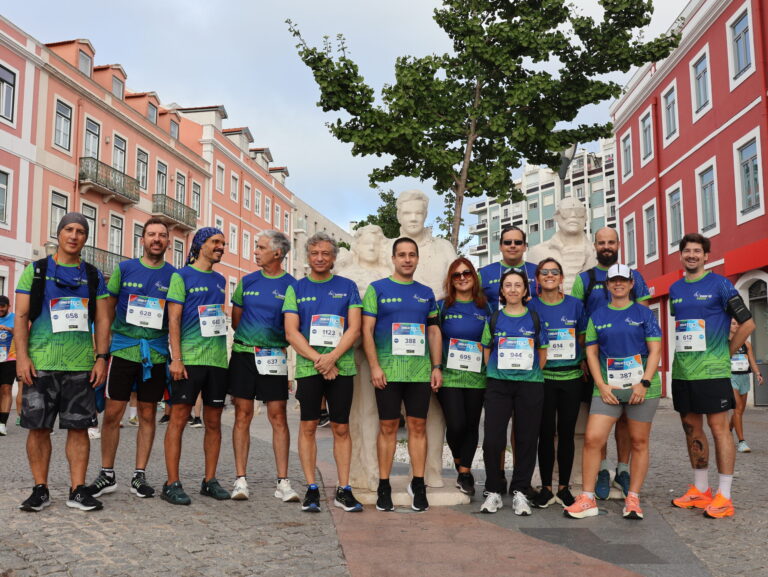
It was just after 8 a.m. on a sunny Sunday, September 14, and several members of the INESC-ID running group were already warming up, chatting, and sharing laughs near Algés station, a meeting point for thousands of runners and enthusiasts of all ages ahead of the Tejo Run 2025.
For those still arriving, it was easy to spot the rest of the team. The green and blue t-shirts with the INESC-ID logo and the rallying phrase Powered by Research, proudly worn by researchers, PhD students, and members of the various support offices, stood out in the crowd.
After the brief gathering, it was time to run. For some, the culmination of weeks of hard training. For others, first-timers, it felt more like a Sunday stroll straight out of an Instagram post: 10 kilometers of coastline between Algés and Praia da Torre, in one of Portugal’s oldest and most scenic races.
On the men’s classification, researcher Fábio Passos crossed the finish line first, with an impressive time under 50 minutes, followed closely by Jorge Fernandes. Nuno Roma and Nuno Neves finished just minutes later, almost neck and neck. In the women’s classification, Sílvia Castro, Natália Costa, and Manuela Sado completed the INESC-ID podium. The rest of the team arrived at their own pace, but no one was left behind.
At the finish line, sweat, fatigue, and wide grins were the best medals and the shared certainty that next year, “temos equipa!”
Can research institutes excel without caring for the wellbeing of their people?
It’s increasingly clear that real excellence in R&D+i is not just about brains or breakthroughs, it’s also about the social support systems behind them. With initiatives like the PhD Students Meetup on mental health and wellbeing last June, INESC-ID is taking part in this shift towards a new scientific culture.
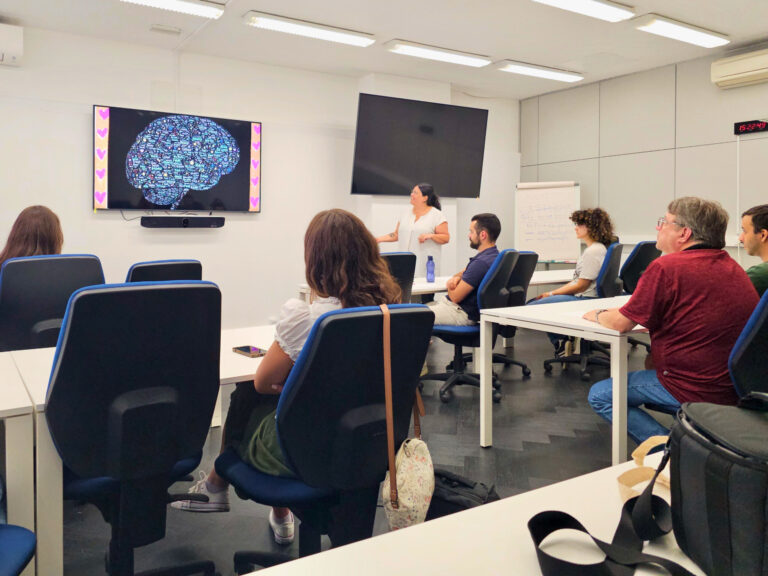
For many PhD students, the path toward a scientific career can be isolating. That’s why moments like the INESC-ID PhD Students Meetups matter. Part of an ongoing series of community-building initiatives designed to connect and empower our students, June’s event brought together around 20 participants from different research areas and stages of their doctoral journey for a hands-on workshop titled “Mente Sã: PhD em Progresso” (Healthy Mind: PhD in Progress). The session was led by Carla Boura, Coordinator of the Mental Health and Wellbeing Program at the University of Lisbon, and former Head of Student Support at Técnico’s Oeiras campus, both key institutions in the INESC-ID ecosystem.
Over the course of the half-day session, students paused, reflected, and explored tools to support their mental wellbeing – from recognising signs of psychological distress to practicing self-care and stress management strategies, including breathing and meditation exercises. The workshop also invited group discussions and joint reflection on common challenges, long-term wellbeing practices, and available resources.
A structural problem: stress, isolation, and academic pressure
The session began by framing the structural pressures faced by PhD students, including the solitary nature of certain research fields, a competitive culture, and the absence of a strong academic community.
A global survey of over 6000 PhD students, reported in a 2019 Nature article by Chris Woolston, found that more than one-third sought help for anxiety or depression with many other reporting mental health struggles. The study also showed that students face multiple pressures. External factors include unstable funding, unclear career prospects, excessive workloads, or lack of institutional support. Internal challenges like imposter syndrome, anxiety or burnout, are also common. Nearly one in five students also reported experiencing bullying or harassment. For international students, visa issues and cultural adaptation can add another layer of stress and isolation.
These stressors resonated with the students present, who shared their challenges in a rare moment of openness, made possible by the atmosphere of trust in the room. As Beatriz put it “What I liked the most was the caring environment, feeling like a safe space to share my experiences, and the practical tools and exercises to help with my emotions.” For Joana, “seeing that everyone has the same struggles during a PhD, and getting to know other INESC-ID students” was just as valuable.
Carla, who launched Portugal’s first academic mentoring program at Instituto Superior Técnico in 1997, and actively participates in wellbeing and inclusion initiatives, isn’t surprised by this reaction:
“There’s a misconception that PhD students, being older and having prior university experience, don’t need support. But everyone needs help at some point, regardless of age, and in a student community where more and more go directly from a Master’s to a PhD, that support becomes even more essential.”
She adds there’s often a lack of literacy around the topic and “in the case of doctoral students, prevention can be essential for a healthy journey”. Her remarks echoed student feedback, with one suggesting the inclusion of this kind of session during the onboarding process, while others highlighted that connecting with peers was just as important as the content itself.
Mental wellbeing as a foundation for excellence
According to Carla, the University of Lisbon has taken an important step in building this culture “once and for all”, aligning with the Nature article’s call for universities, supervisors, and funders to create healthier research environments and concrete support structures. Through its Mental Health and Wellbeing Program and Academic Success Project, the goal is to pave the way for psychologically safe environments that are “essential to developing creative, motivated, and dynamic students.”
In a field defined by high intelectual demands, small gestures can make a big difference. As Carla Boura reflected, “Initiatives like this one – bringing the University of Lisbon’s Mental Health Program to your students – can truly have an impact.”
At INESC-ID, home to nearly 200 PhD students, wellbeing and mental health are part of the conversation, not as a side note, but as a condition for excellence.
More information about ULisboa’s Mental Health and Wellbeing Program (in Portuguese) here.
Psychological First Aid Manual – University of Lisbon (PDF, in Portuguese) here.
Summer is in full swing, bringing with it warm sunshine that lasts until 9 pm. On one such day, our PhD students held their final Meetup before the slower months of July and August.
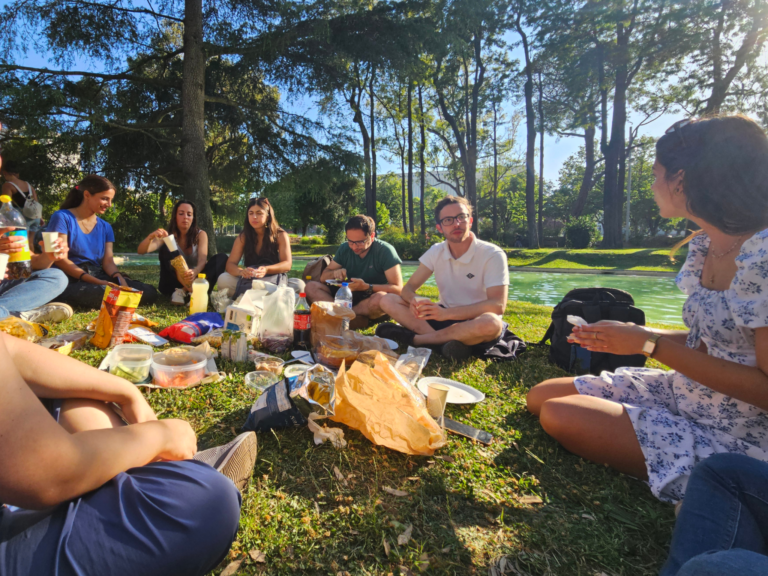
The garden at Campo Grande was the preferred meeting point, and on July 3, around 20 INESC-ID PhD students gathered near the lake. Although the rest of the week saw scorching temperatures, this particular day was perfect for a picnic. Popcorn, chips, small cakes, tortilla, and even healthier snacks like carrots and cucumber were laid out in the centre of the circle formed by the students, creating an enjoyable evening to wind down after work.
In addition to casual conversation, there was also time to reflect on the previous meetings, sharing both ups and downs. From technology transfer to mental health, these initiatives have had a great impact on the community, with everyone agreeing that the PhD student room, inaugurated back in April, was a huge success.
We will be back with more Meetups in September!
* INESC-ID PhD Students Meetups are informal gatherings designed to support and connect our doctoral researchers. Created by the Communications and Outreach Office, the series offers space for community building, peer exchange, personal and professional growth, and insight into the wider opportunities of the PhD journey.
It is with deep sadness that INESC-ID marks the passing of Professor Luís Marcelino Ferreira, a distinguished researcher, educator, and mentor who leaves a lasting legacy in the field of energy systems.
Professor Marcelino Ferreira graduated in Electrical Engineering from Instituto Superior Técnico (IST) in 1977. He earned his MSEE and PhD degrees from the Georgia Institute of Technology, USA, in 1984 and 1986, respectively.
Between 1986 and 1989, he worked as a Systems Engineer at Pacific Gas and Electric Company, in San Francisco, where he played a leading role in the development of HTO — a hydrothermal optimization program that became a reference in the coordination of energy resources.
Upon returning to Técnico in 1989, he brought with him a deep knowledge of systems optimization and a forward-looking vision of the opportunities enabled by the exponential growth in computational processing. He introduced the first postgraduate courses in electric power distribution networks and played a pivotal role in undergraduate teaching, particularly in the fields of Power Systems Control and Optimization and Network Analysis — courses where his high standards and scientific rigor left a lasting impression on generations of students.
As Full Professor, he took on many academic and scientific leadership roles from 2007 onwards. He served as Coordinator of the Energy Scientific Area at the Department of Electrical and Computer Engineering (DEEC) and, from 2013, as the Coordinator of the Sustainable Power Systems Research Group at INESC-ID — a responsibility he embraced when the Energy Group joined INESC-ID, and which he held until the end of his life, even after retiring as Full Professor.
Professor Marcelino Ferreira will be remembered for his intellectual clarity, his commitment to scientific excellence, and the profound influence he had on colleagues and students alike. His passing is a great loss to our community, and he will be deeply missed.
INESC-ID extends its heartfelt condolences to his family, friends, and all who had the privilege to work with him.
The news came on the morning of April 15, through an email sent by our President of the Board of Directors, Inês Lynce: INESC-ID had been rated “Excellent” — the highest possible rating — in the latest national evaluation of Research and Development (R&D) Units by the Portuguese Science and Technology Foundation (FCT), achieving the maximum score in all evaluation criteria.
Even though it was not a debut — the previous evaluation (2017/18) had reached exactly the same result — it still called for a celebration. And so we did!
And how do we celebrate in Portugal? With food, of course — and also with music (in this case, a band made up of Técnico students).
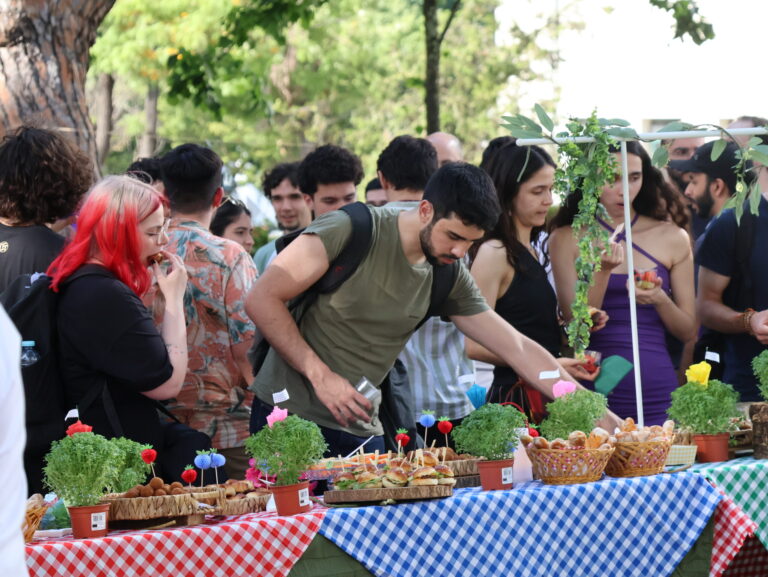
On May 29, at the Jardim Norte of IST, we had it all: hot dogs and bolas de Berlim, guitars playing, and fresh drinks. The decoration was Santos Populares style, with dwarf basil plants over checked tablecloths, anticipating the Lisbon festivities that fill the capital throughout the month of June.
According to the FCT evaluation panel, INESC-ID has “outstanding international-level research, excellence in scientific publications,” contributing to “both theoretical and applied domains.” The panel also highlighted our “strong role in international collaboration, industry partnerships, and public engagement, as well as [our] firm commitment to ethical research practices and gender equality.”
It didn’t mention the quality of the events we organize — but that’s surely because the evaluators haven’t attended one yet.
On May 19, a group of PhD students gathered for their 8th INESC-ID PhD Students Meetup and were introduced to Sandra Aresta, Knowledge Transfer Manager at INESC-ID, who presented the topic “Beyond Publications: Patents, Spin-offs, and Alternative Paths for PhDs”. During the session, Sandra shared her personal journey and professional experience, offering insights into what it means to work in the field of technology transfer. She then explained the processes within INESC-ID and how PhD students can benefit from this field, including filing patents or even founding a startup.
After an hour and a half of absorbing what was brand-new information for some of the participants, the questions kept coming. What followed was a lively coffee break with even more questions for the speaker, and animated discussions between the students themselves, as their conversations remained focused on how their research could lead to broader impact beyond academia.
The PhD journey can be challenging, and concerns about the future can be a significant source of anxiety for many students. With career-oriented meetups like this, the Communications and Outreach Office at INESC-ID aims to give PhD students an overview of the diverse opportunities beyond academia and strengthen their CVs, while also building a sense of community.