Category: Community

  • R.617: INESC-ID PhD students cut the ribbon on their new room
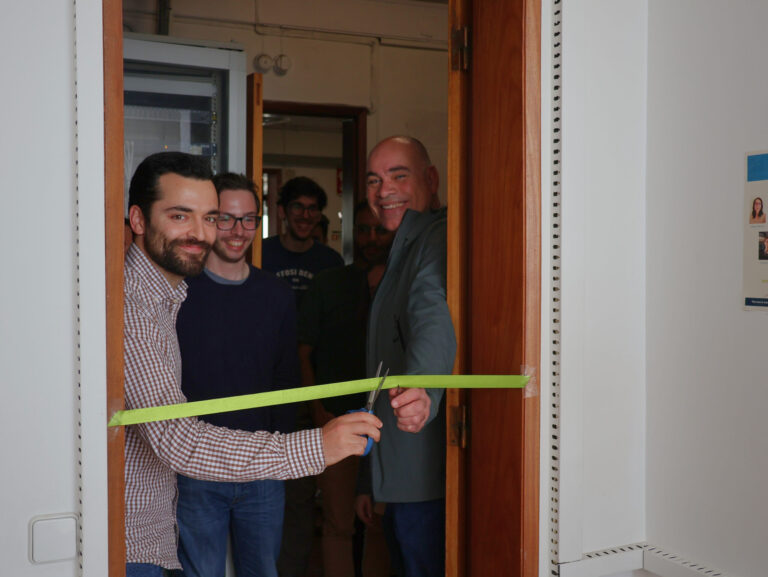
    R.617: INESC-ID PhD students cut the ribbon on their new room

    Located on the 6th floor of the Alves Redol building, room 617 started as a storage room, with spare furniture lying around. In the past few months, however, it was subject to a complete makeover. Under the guidance of the Communications and Outreach Office, students from the PhD Volunteer team measured the space, mapped it out and brainstormed ideas for furniture, decoration and even board games. After a year-long long process, and counting with the strong support from the Board of Directors, the new exclusive PhD Students Room was finally ready, waiting for the big inauguration.

    On April 2nd, around 30 people attended the symbolic ceremony, which included two members of the Board, João Paulo Carvalho and Helena Galhardas who, along with PhD Volunteer Daniel Gonçalves cut the ribbon placed at the door. Together, they shared the importance of having a space especially dedicated to PhD students, where they can study, socialize or take a breather from a day’s work. Enjoying the music being played and the snacks provided, the students were left to chat and enjoy their brand-new space.

    Connecting with like-minded individuals, listening to each others’ stories and challenges, sharing knowledge and new ideas, are part of what makes community building crucial for a successful PhD journey. With this in mind, the Communications and Outreach Office of INESC-ID has been developing a series of community building initiatives for our PhD students, with the latest one being the much-anticipated PhD Room. This room, managed by the PhD Volunteer team, is now open for any PhD student who wants to use it.


    Images | © 2025 INESC-ID

  • Innovation, memories, and future challenges at INESC-ID’ 25th anniversary celebration

    Innovation, memories, and future challenges at INESC-ID’ 25th anniversary celebration

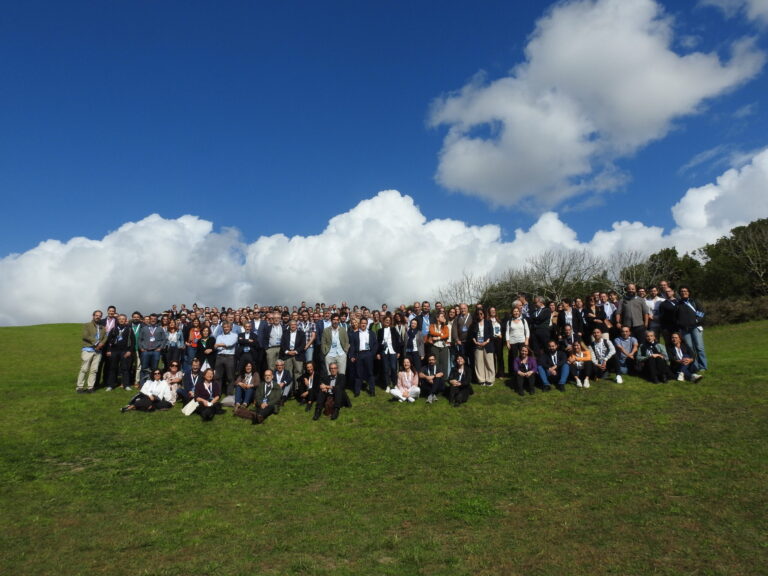
    There was chit-chat, an in-house photoshow, a trip down memory lane, and a big birthday cake. INESC-ID is officially a young adult, and January 28 was the day we chose to gather our community—past and present—along with friends from academia to celebrate 25 years of defining technology.
    At the Salão Nobre of Instituto Superior Técnico, we spent the afternoon reflecting on the work accomplished so far, as outlined by Inês Lynce, President of the Board of Directors, and looking ahead to the future, as addressed by Miguel Pupo Correia, President of the Executive Committee.
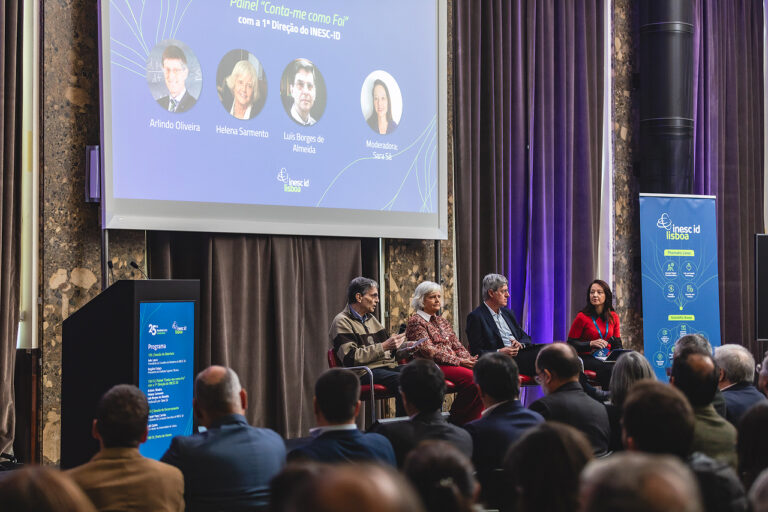
    In a conversation with INESC-ID’s first Directors back in the year 2000—Luís Borges de Almeida, Helena Sarmento, and Arlindo Oliveira—moderated by INESC-ID Science Writer Sara Sá, we heard about the main challenges of launching a research institute, the innovative management solutions implemented, and the memorable incidents that shaped this adventure.
    Rogério Colaço, President of Técnico, and Luís Castro, Vice-Rector of Universidade de Lisboa and a Professor at Técnico, honoured us with their presence on stage, sharing a few words in recognition of the research work conducted at INESC-ID.
    And, of course, no birthday celebration would be complete without cake and candles. The afternoon concluded with a chocolate cake decorated in INESC-ID colours and more than one hundred participants singing “Happy Birthday” to INESC-ID.

    Images | © 2025 INESC-ID

  • Focus on collaborators and scientific excellence will mark the mandate of the new Board of Directors

    Focus on collaborators and scientific excellence will mark the mandate of the new Board of Directors

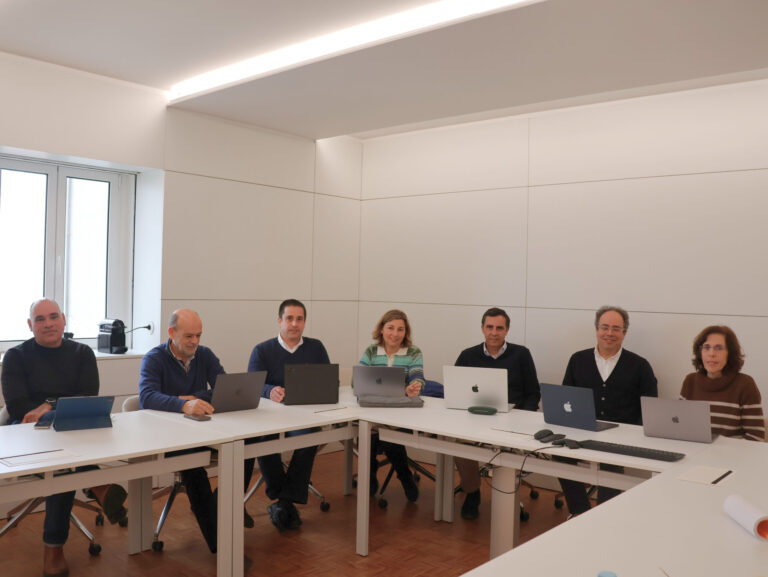
    With the inaugural meeting of the newly elected Board of Directors of INESC-ID starts a new chapter in the institute’s history. This meeting, held January 20, set the stage for the vision and strategic goals that will guide INESC-ID’s path in the coming years.

    Inês Lynce, President of the Board of Directors, highlighted the mission of the new leadership team. “The mission of the Board of Directors of INESC-ID is to reinforce its strategic role as a leader in cutting-edge research that drives innovation and addresses global challenges. Central to this vision is the recognition of our researchers and collaborators as the institute’s greatest asset,” she stated. The board aims to prioritize excellence in scientific research, foster interdisciplinary collaboration, and establish strong partnerships with industry and academia, both on a national and international scale.

    Miguel Pupo Correia, President of the Executive Committee, emphasized the significance of this leadership transition. “This is the first board elected under the new statutes of INESC-ID, and one of its primary objectives is to implement the newly established management structure, which includes an executive committee and non-executive directors. This structure will facilitate strategic reflection on INESC-ID’s goals, particularly as the institution celebrates its 25th anniversary and reaches a stage of maturity,” Miguel notes. The board remains steadfast in its commitment to scientific excellence, internationalization, and societal impact, with a strong focus on the professional growth and development of its researchers and collaborators.

    The meeting was also an opportunity for the Board to address key issues slated for 2025. Among these were the evaluation of INESC-ID’s status as an associated laboratory, the development of the strategic plan for 2026-2030, and the implementation of enhanced budget control mechanisms.

    The remaining members of the Board of Directors are Luís Oliveira e Silva, Fernando Moreira, Helena Galhardas, Nuno Roma and João Paulo Carvalho.


    Images | © 2025 INESC-ID


  • Rockin’ Around the INESC Lisboa Christmas Party

    Rockin’ Around the INESC Lisboa Christmas Party

    INESC-ID, INOV and INESC-MN came together on December 11 for a festive gathering complemented by Christmas traditional snacks and jolly tunes!

    Following its 2nd annual meeting, back in October, the INESC Lisboa’s institutes gathered once more to celebrate Christmas and meet one last time before the end of the year. As INESC Lisbon president, Leonel Sousa, stated in a short but meaningful speech, these kinds of occasions allow participants to meet and socialise, improving relations between the different institutes and helping to build a stronger community. 

    Though there was no Christmas tree to gather around, there were gifts for those who wanted to take a memento home,  made at CERCICA, a cooperative for education, rehabilitation and training of disabled citizens, based in Cascais. 

    We wish everyone a Merry Christmas and Happy Holiday season!

  • INESC-ID’s Support Staff Autumn Gathering

    INESC-ID’s Support Staff Autumn Gathering

    On Wednesday, November 13, INESC-ID’s support staff gathered around roasted sweet-potatoes, snacks and the traditional jeropiga for an internal social gathering!

    The occasion not only marked the celebration of the Iberian tradition, Magusto, but was also dedicated to the support offices, which are a key part of the INESC-ID foundation. Accompanied by catchy music, the teams chatted away during the afternoon and seized the chance to sing happy birthday to one of our staff members.

    At the end, each participant was gifted one of the brand new INESC-ID merch kits, as a token of appreciation for their daily efforts. We believe these special occasions will foster new connections and strengthen collaborations behind the scenes at INESC-ID.

  • INESC Lisboa Annual Meeting keynote speaker, Dejan Milojicic, on Technology Megatrends and the role of AI as an equalizer

    INESC Lisboa Annual Meeting keynote speaker, Dejan Milojicic, on Technology Megatrends and the role of AI as an equalizer

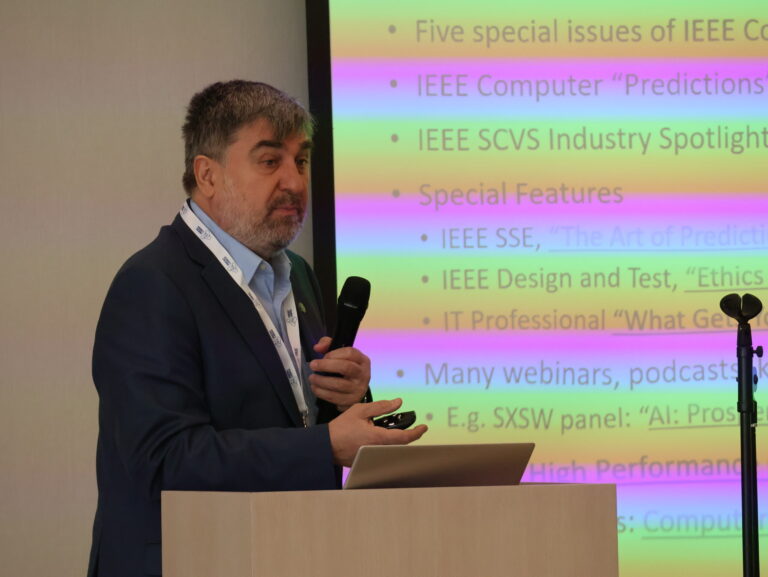
    It took Dejan Milojicic more than twenty years to understand the way of life in the United States. “Now I am at peace”, he shares, before delivering the keynote lecture at INESC Lisboa Annual Meeting. For the last 15 years, the HPE Fellow and VP, and former President of the IEEE Computer Society, has been involved in the production of the IEEE Technology Megatrends Report, which identifies the technologies with the greatest opportunities and potential impact for the future. Compiled annually by 50 experts, the report draws data from three different sources: the United States Patent Office, Google and IEEE digital library. The meticulous work pays off, he believes, since “it appeals to people.”

    A megatrend influences the evolution of multiple trends, making it crucial to understand these overarching patterns—it is both the sum of individual trends and a guiding force, often shaping perceptions that then influence its components. A megatrend impacts multiple factors—technological, economic, social, and ecological, he explains.

    This year’s report identifies three major areas of focus: Sustainability, Artificial General Intelligence and Digital Transformation – topics that were discussed in the meeting’s parallel sessions. Under these three topics we can find wearables and computer brain interface, digital twins, space technologies and also energy storage and autonomous technologies.  For Milojicic, the report is followed by the industry – timely productization of near-horizon technologies – governments – early regulation of technologies that cause concern – academia – globally train trainers for key megatrends – and professional organizations – help develop standards suited for increased speed of tech introduction. Of course, sometimes there are “strong mistakes”, such as the overemphasis on combating misinformation in the 2023 report. But, as he says, there are factors that can disrupt everything—war, COVID—but this shouldn’t stop us from making predictions.

    Discussing the dual nature of technology, Milojicic emphasizes that “any technology can be an enabler or a weapon,” which underscores the need for careful governance. Governments play a crucial role, he noted, by creating regulations that manage risks while fostering innovation. This is particularly relevant in fields like AI, where rapid advances can either reduce inequalities (AI as an equalizer) or exacerbate them if left unchecked. For this reason, Milojicic stresses the importance of regulatory frameworks that balance the benefits of technological adoption with ethical considerations and societal impacts.

    Companies and the educational system also should have a role to play on this. “All schools should forbid using AI for exams or to write articles”, he defends, giving the example of some companies where people are not allowed to use AI, at least external tools for confidentiality concerns.

    Looking at the trends identified in the 2024 report—sustainability, artificial general intelligence (AGI), and digital transformation—Milojicic describes these as “richness-blind” trends, meaning they offer potential for widespread adoption without requiring significant infrastructural changes. He draws on the example of mobile phones, which transformed communication in regions like India without the extensive infrastructure overhaul required in Western countries. Similarly, some developing nations could be ideal environments for testing new megatrends related to sustainability, AI, and digital transformation, potentially helping to bridge inequalities.

    On his way to visit his hometown, Belgrade, Serbia, Milojicic notes that he feels at home wherever he goes in Europe.

    Text by Sara Sá, Science Writer | Communications and Outreach Office, INESC-ID / © 2024 INESC-ID

    Images | © 2024 INESC-ID

  • A Community in the Making: sharing challenges and building solutions at the 1st INESC-ID PhD Students Annual Meeting

    A Community in the Making: sharing challenges and building solutions at the 1st INESC-ID PhD Students Annual Meeting

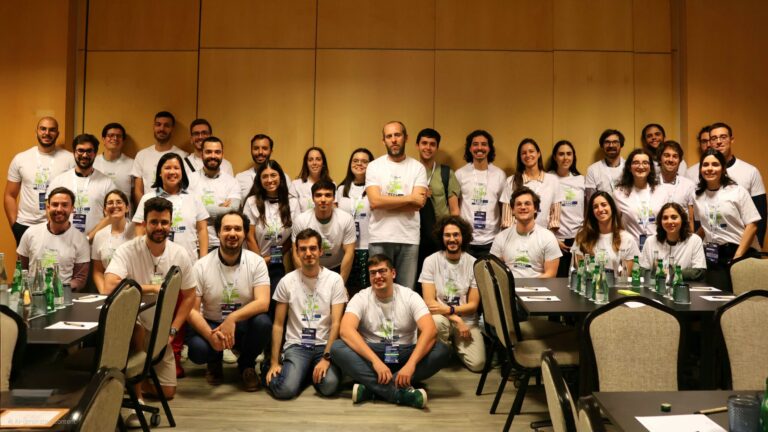
    Beginnings often carry symbolic meaning. October 25 marked a memorable moment for INESC-ID’s PhD students with the holding of the first official PhD Students Annual Meeting, bringing together around 40 PhD students from 10 different Scientific Areas, across two campuses of INESC-ID.

    The special event took place during an exclusive parallel segment organised by INESC-ID at the INESC Lisboa Meeting 2024. In a session prepared by the INESC-ID’s PhD Students Volunteer Team and the Communication and Outreach Office, PhD student Daniel Gonçalves presented and moderated a collaborative discussion activity to address the challenges encountered by students at the institute.

    In the first half of the session, divided into groups for a rapid ideation brainstorming format, students had a few minutes to meet each other (many for the first time) before diving into sharing the main difficulties they experience. In the second half, they enthusiastically discussed and presented actionable solutions, which will be further explored in depth and implemented at INESC-ID in the future. There was no shortage of ideas, only of time, and many students felt the discussion could have lasted much longer.

    “It was an inspiring day where we gained valuable insights into our challenges as PhD students and discussed solutions to create a stronger, more supportive community,” shared Sahar Cherati, PhD student and one of the newest members of the Volunteer Team.

    Following the PhD Students Volunteer Team’s motto: “To build a supportive community and promote collaboration among students”, which are key ingredients for the success of research at our institution, plans are already underway to make next year’s event bigger and attract even more students, making it an annual tradition at INESC-ID. Judging by the enthusiasm and commitment demonstrated by students at this first meeting, the future looks bright.

    Read more about the recent INESC Lisboa Meeting 2023 here.


    Text by Rodrigo Abril de Abreu | Communications and Outreach Office, INESC-ID
    © 2024 INESC-ID. Credit INESC-ID and the author, with a link to the original source, when sharing or adapting this article.

    Images | © 2025 INESC-ID

  • INESC Lisboa Annual Meeting: A Day of Reflection, Recognition, and Future Directions in Research

    INESC Lisboa Annual Meeting: A Day of Reflection, Recognition, and Future Directions in Research

    “It is an important event for the entire community, especially for young researchers. An opportunity to think about things we don’t usually consider,” said Arlindo Oliveira, INESC-ID researcher and President of INESC, at the closing session of the INESC Lisboa meeting, held on Friday, October 25. His words encapsulate the spirit of this gathering, now in its second edition, bringing together researchers from the three Lisbon-based INESC institutions—INESC-ID, INOV, and INESC MN.

    Under a bright autumn sun, around 300 people spent the day at the Crowne Plaza Hotel in Costa da Caparica, just across the Tagus River, engaging in discussions on career paths, institutional futures, and today’s scientific challenges. The day began with a warm welcome from INESC Lisboa President, Leonel Sousa, who expressed satisfaction with the success of this second edition and the impressive turnout.

    INESC-ID President, Inês Lynce, followed by presenting key statistics for INESC-ID: 102 integrated researchers, 64 collaborators, and 140 PhD students. She also introduced planned improvements for the institute’s management system, proudly noting that INESC-ID was the largest institute to achieve a maximum rating in the latest Fundação para a Ciência e Tecnologia evaluation. “The strength of INESC-ID lies in its foundations; our greatest asset is the initiative of our researchers. It’s up to the management to motivate people,” Inês concluded.

    INOV President Fernando Moreira shared insights into the institute’s history, tracing its origins back to 1980 and the centres for technology transfer. After these institutional updates, the audience turned to a talk from Dejan Milojicic, Senior Research Manager in the Strategy and Innovation Office at HP and former President of the IEEE Computer Society. Dejan, who has contributed to the annual Megatrends report for 15 years alongside 49 other distinguished experts, discussed the report’s role in guiding governments, research institutions, and industry. He noted, however, that unpredictable factors like war or COVID-19 can disrupt even the best projections. “Even so, we shouldn’t let that deter us from making predictions,” he asserted.

    Drawing on trends from the 2024 Megatrends document, participants then broke into parallel sessions to explore three major areas of evolving technology: Sustainability, Artificial General Intelligence, and Digital Transformation. Attendees were randomly assigned to groups to dive into these topics further.

    The afternoon included sessions organized by each institution. For INESC-ID, João Paulo Carvalho, Board Member responsible for Human Resources, provided an in-depth profile of INESC-ID members, including an exciting preview of the new building planned for the institute. Nuno Roma, also a Board Member, presented the most relevant numbers of the financial situation of our Institute.

    Brief presentations from Sílvia Castro, Head of the Innovation and Management Office, Sandra Aresta, from Knowledge and Technology Transfer, Rodrigo Abreu, Communications and Outreach Office, and Vanda Fidalgo, Human Resources Manager, further enriched the day’s discussions. In a parallel session, and with notorious satisfaction from the participants, occurred the first meeting of the INESC-ID PhD. students.

    The eagerly awaited announcement of awards was led by the researcher Rui Prada, from the AI for People and Society, who presented the winners of the Young Researcher category, Alessandro Gianola, of the PhD Student, Rafael Belchior, and the Researcher category, Hugo Morais.

    The day concluded with a talk by Maria Mota, President and CEO of the newly formed GIMM—a research institute created from the merger of the renowned IGC and IMM institutes. Maria, a scientist with over two decades of experience in malaria research, shared the story of GIMM’s foundation, mission, operational approach, and future directions for research in biology and medical care. Arlindo Oliveira then closed the event, expressing his appreciation for this initiative.

    Text by Sara Sá, Science Writer | Communications and Outreach Office, INESC-ID / © 2024 INESC-ID

    Images | © 2024 INESC-ID and INOV

  • 3 Questions with Leonel Sousa on INESC Lisboa and its Annual Meeting in 2024

    3 Questions with Leonel Sousa on INESC Lisboa and its Annual Meeting in 2024

    The biggest event in our community is approaching: the 2nd INESC Lisboa Annual Meeting, which will take place on October 25. We have asked three questions to INESC Lisboa director, Leonel Sousa, about the event and the INESC Lisboa community.

    – Why are these INESC Lisboa annual meetings relevant?

    Until 2022, each of the INESCs in Lisbon held its annual Meeting. Starting in 2023, these meetings were merged into a single event, with over 250 participants and external guests. The 2023 event featured interventions from a Minister (Ministro da Economia e do Mar) , as well as the President of the Comissão de Coordenação e Desenvolvimento Regional de Lisboa e Vale do Tejo. During the Meeting, topics ranging from research to technology transfer were discussed, covering the fields of Electrical Engineering, Computer Science and Engineering, as well as the technological areas of microelectronics and nanotechnology. The Meeting, in its current format, is unique, providing an opportunity to learn about the activities of the INESCs in Lisbon, share experiences, and establish collaborations.

    ⁠⁠Comparing to last year, what do you expect of this year’s meeting?

    The second edition of the INESC Lisbon Meeting will be even more challenging than the 2023 edition. The joint sessions will fully occupy the morning of the Meeting, rather than just part of the morning. In addition to the institutional components,  morning sessions will feature the in-person participation of Dr. Dejan Milojicic, Chair of the IEEE Future Directions Industry Advisory Board, a group within IEEE with strong industrial involvement. This board is responsible for identifying key technologies and technological megatrends and suggesting the best ways to advance these technologies. It will serve as a reflection on the evolution of R&DI activities at INESC Lisbon in the coming years.

    – How has the INESC Lisboa community evolved throughout the years?

    The INESC  in Lisbon involves three research institutes, two of which have research units classified as Excellent by the FCT, two recognised by the government as Associated Laboratories (LA), and two Technology and Innovation Centers (CTI). The organisation of INESC-ID, INOV, and INESC MN has evolved individually since 1999/2000 with great success, and in the past four years, thanks to the synergies between these institutes within the INESC Lisbon platform, they have achieved a consolidated budget of €15 million, with more than 350 researchers and technicians from over 20 different countries, 134 projects and contracts, 43 of which are coordinated by these institutions. Only an invaluable and diverse community, like that of INESC in Lisbon, is capable of achieving such success!