Category: Highlights

  • INESC-ID Early Stage Researcher Talks: by students, for students
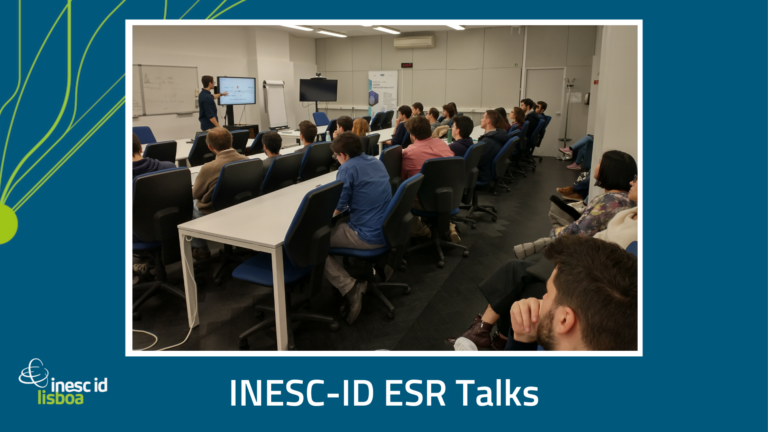
    INESC-ID Early Stage Researcher Talks: by students, for students

    Yesterday, 11 January 2022, saw the first session of the INESC-ID Early Stage Researcher (ESR) Talks.

    Designed specifically to provide students, as well as early-stage postdocs, with an exclusive space that is their own, where they can present, chat and discuss any topic of their choosing (including their ongoing work as well as its associated glitches), the INESC-ID ESR Talks were conceived as an ongoing, perpetually-mutating program by students, for students.

    Co-produced with our ESR community, actively together with ESR reps from every Research Area of the institute, the ESR Talks incorporate a space for talks, presentations and discussions as well as the snacks and fizzy drinks that ease a chilled exchange of ideas, chat and laughs on the Early Stage research experience and a favorite research topic, programming language or bit of hardware.

    The first session of the program hosted talks by Rodrigo Bruno (Distributed, Parallel and Secure Systems) with his talk “Virtualizing Runtimes to enable tomorrow’s Cloud Computing” and José Basílio (Information and Decision Support Systems) who covered “Integrative single-cell analysis of atherosclerotic arteries to identify unknown cellular identities”.

    This session highlighted another vital feature of the INESC-ID ESR community: its disciplinary multitude. From the intricacies of coding to the coming of age of completely novel hardware paradigms or the investigation of molecular biological dynamics using sophisticated computational tools, research at INESC-ID spans most of contemporary computer science and computer and electrical engineering. The multiplicity of our ESR community makes these spaces of free exchange vital for a cohesive and mutually-knowledgeable community.

    The next session of the INESC-ID ESR Talks will take place on 15 February 2023.

  • iv4XR: Intelligent Verification/Validation for Extended Reality Based Systems

    iv4XR: Intelligent Verification/Validation for Extended Reality Based Systems

    iv4XR (Intelligent Verification/Validation for Extended Reality Based Systems), a Horizon 2020-funded European project, finished its run on 31 December 2022 with some very exciting outputs.

    Coordinated by Rui Prada INESC-ID Artificial Intelligence for People and Society Senior Researcher and Associate Professor at Instituto Superior Técnico and active between October 2019 and December 2022, iv4XR aimed to build “a novel verification and validation technology for XR [Extended Reality] systems based on techniques from AI to provide learning and reasoning over a virtual world.” Ultimately, iv4XR provided a novel toolkit for XR developers to test and explore their XR systems as they build them, bit by bit.

    “Automating Quality Assurance (QA) tests of XR systems is a challenging but promising research field. It can bring great benefits to the XR industry by extending the possibilities of current QA practices and reducing its costs by reducing the need for user testing,” Prada commented.

    The project has delivered the iv4xr toolkit a multi-agent testing framework as well as a bounty of publications. Looking back from the final consortium meeting that was held in person on 29 November 2022 in Utrecht (the Netherlands), Rui Prada emphasized that “In the past three years, the iv4XR team was highly engaged in achieving the ambitious vision of the project. We are proud of the results presented in the toolkit that establish the basis for agent-based testing as a practice to test XR systems. Our studies in the domains of games, AI simulations, and sensor networks show promising results for the value of the approach. We close the project with a sense of accomplishment, but with the certainty that many interesting research questions remain.”

    To sum up the project the iv4XR team prepared the video below. Have a look at how XR system testing has just become easier:

  • Isabel Trancoso appointed IEEE Fellow Committee Vice Chair

    Isabel Trancoso appointed IEEE Fellow Committee Vice Chair

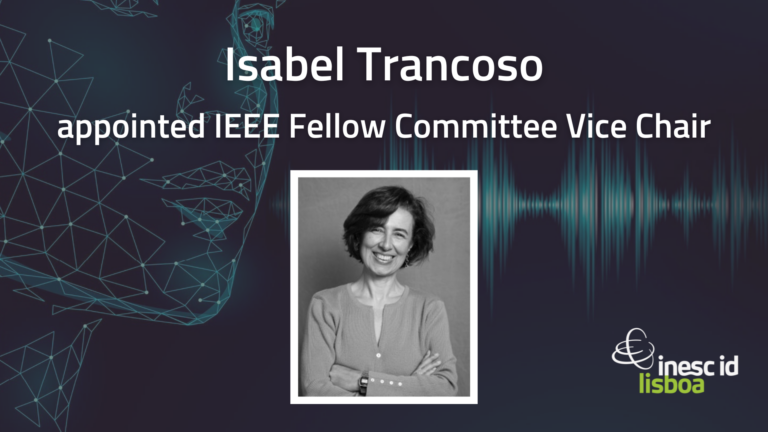
    Isabel Trancoso has been appointed IEEE Fellow Committee Vice Chair, a prestigious leadership role that recognizes a singular career and unique research contributions.

    The Institute of Electrical and Electronics Engineers (IEEE) is the world’s largest technical professional organization dedicated to advancing technology for the benefit of humanity. Appointed by the IEEE Board of Directors for a term lasting from 01 January to 31 December 2023, Professor Trancoso renowned INESC-ID Human Language Technologies researcher and Full Professor at Instituto Superior Técnico (IST) is now Vice Chair of the Committee that makes recommendations for nominees to be conferred the grade of Fellow, itself “a distinction reserved for select IEEE members whose extraordinary accomplishments in any of the IEEE fields of interest are deemed fitting of this prestigious grade elevation.”

    “I view this appointment as an appreciation of the work I have done during several years targeting the improvement of the Fellow selection process,” Professor Trancoso commented. “In particular in the last year, in which I was deeply involved in an ad hoc committee that made major recommendations towards this goal. So I’m equally excited and frightened by the challenges that lie ahead.” Professor Trancoso added that “Being Vice Chair of a Committee that recommends nominees to be conferred the grade of IEEE Fellow would be an enormous responsibility and a great honour at any time. This year it brings the added responsibility of helping to put in place significant modifications.”

    Appointment as IEEE Fellow Committee Vice Chair follows a long history of recognition of Professor Trancoso’s career by IEEE, including membership of the IEEE Fellows Committee, chairing of the IEEE James Flanagan Award Committee and the ISCA Fellow Selection Committee. Professor Trancoso was elevated to IEEE Fellow in 2011 and to ISCA Fellow in 2014.

  • ID-GAMING: Making a difference for persons with intellectual disabilities

    ID-GAMING: Making a difference for persons with intellectual disabilities

    A group of six institutions, across the social solidarity and information and communication technologies (ICT) sectors, have partnered up to improve the quality of life of persons with intellectual disabilities through “serious games”. Preliminary results are in — and they are promising.

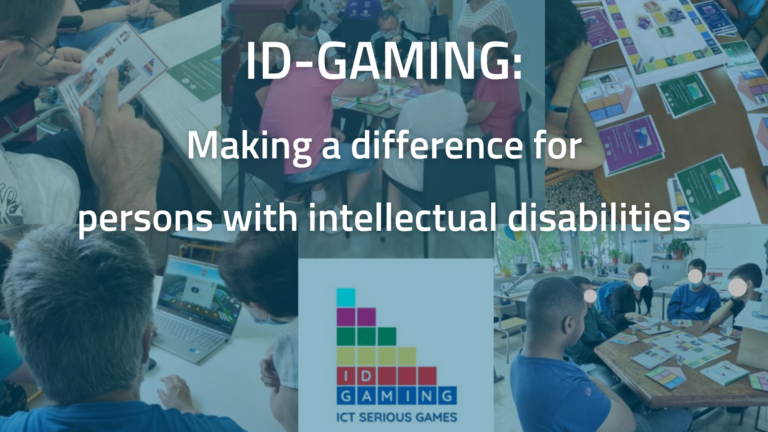
    From 01 November 2020 to 31 October 2022, an interdisciplinary and international corpus of social workers and researchers — including INESC-ID’s Rui Prada — collaborated with one goal in mind: to increase the competences of Persons with Intellectual Disabilities (PID) and related professionals and relatives by developing and implementing ICT serious games (designed with purposes other than just pure entertainment — e.g., training), thus hopefully improving cognitive functions and, therefore, their quality of life.

    Following a codesign approach in which PID were involved in the development process from the beginning, ID-GAMING resulted in three main outputs: the QooL CITY Game (a collaborative serious game, available in board and online versions, where players are engaged in a joint-play activity to have fun and achieve training objectives together), the Game Catalogue (a set of games and platforms suitable to PID, in which each game can be selected according to the cognitive function to be trained) and a host of Training Materials (conceived to provide support to PID, professionals and relatives when using the QooL CITY Game with training purposes). All resources are freely available on the ID-GAMING toolkit website.

    Based on observations reported by technicians working with PID during ID-GAMING evaluation sessions, over 70% of PID involved are estimated to have benefitted from some form of improvement. Adoption of ID-GAMING resources by the PID support institutions involved in the project has been substantial, with four events to disseminate the developed tools being held and several institutions showing real interest in using and adapting them to their own setting. As a testament to the reach and potential of ID-GAMING, the project received the Inclusive E+ Award from the Education and Training Erasmus+ Portuguese National Agency in November 2021.

    The six ID-GAMING partners are now focused on further developing the project, both by putting together a five-year exploitation plan as well as moving forward with a controlled research study in which the positive outcomes observed by technicians and social workers while ID-GAMING was implemented can be confirmed and systematized.

    “It was a challenging job because it involved a population with very specific needs, which is why we followed a methodology that involved targeted population groups from the beginning. We held several codesign workshops and some of the ideas proposed in them were included in the final game,” Rui Prada commented.

    At the end of the day, a project that purports to improve PID’s quality of life only makes sense, and can only be judged, by the impact it has on those populations. “I was extremely happy to see, at the end of the project, that the main ambassadors of the game are the people we created it for,” Prada proudly observes. “In an event organized to disseminate the project’s results to the community, held at IST Tagus Park in October, we invited several of the PID involved in codesign and evaluation of the game in Portugal, from CECD in Mira Sintra. They presented and explained the game to the other participants with great enthusiasm and pride. The institution’s trainers also thanked us for the work of creating the game. It was gratifying to see that the game was so well received and seems to have such an impact.”

    Bringing together expertise from six partners — Centro de Educação para o Cidadão com Deficiência (CECD, in Mira Sintra, Portugal), INESC-ID, the Aristotle University of Thessaloniki (AUTH, in Greece), Consorzio Solidarietà Sociale Forlì-Cesena (CSS, in Italy), Coordinadora de recursos de atención a personas con diversidad funcional intelectual (COPAVA, Spain) and Associazione Italiana per l’Assistenza agli Spastici (AIAS, Italy) — ID-GAMING was co-funded by the European Union Erasmus+ programme.

  • “Vencer o Adamastor” awarded to Gonçalo Correia

    “Vencer o Adamastor” awarded to Gonçalo Correia

    The inaugural Vencer o Adamastor Prize, worth €20,000, has been awarded to the machine learning researcher Gonçalo Correia.

    A senior researcher at Priberam Labs and Instituto de Telecomunicações — where he is working on the development of neural network models — and an Instituto Superior Técnico PhD graduate, Correia was awarded the Prize for his work on simplifying machine learning models used for automatic translation.

    Correia’s research project “Modelos compactos e transparentes de redes neuronais baseados em representações esparsas” (“Compact and transparent neural network models based on sparse representations”) proposes to “change a common perspective in the area of ​​machine learning and artificial intelligence: models that use neural networks cannot be interpretable, that is, capable of explaining their decisions; nor compact, that is, able to represent what they learned in a summarized way.” In this project Correia is allowing the neural network model to “learn its own sparsity, thus being able to learn that it is possible to override components of your decision, in order to make the model’s interpretability simpler.”

    Set up to recognize a researcher who demonstrates not only a clear ability to produce high quality scientific work, a vision for future scientific and technological developments in their respective area of ​​research, but the potential to make a significant contribution to the future scientific development of the country, Vencer o Adamastor — roughly translating to “Beating Adamastor”, a reference to the mythical stone giant who guarded maritime passage through the Cape of Good Hope and is featured in Luis de Camões’ Os Lusíadas — was established by INESC and the Portuguese newspaper Público. The prize winner was selected by a jury chaired by founder and ex-President of INESC, and Instituto Superior Técnico Emeritus Professor, José Tribolet.

    More details on the Vencer o Adamastor Prize are available here and a feature on Correia by Público, one of the prize’s founders, can be viewed here. The award ceremony is scheduled for 01 February, 3pm, at Instituto Superior Técnico.

  • INESC Lisboa 2022 Christmas celebration: a great road ahead

    INESC Lisboa 2022 Christmas celebration: a great road ahead

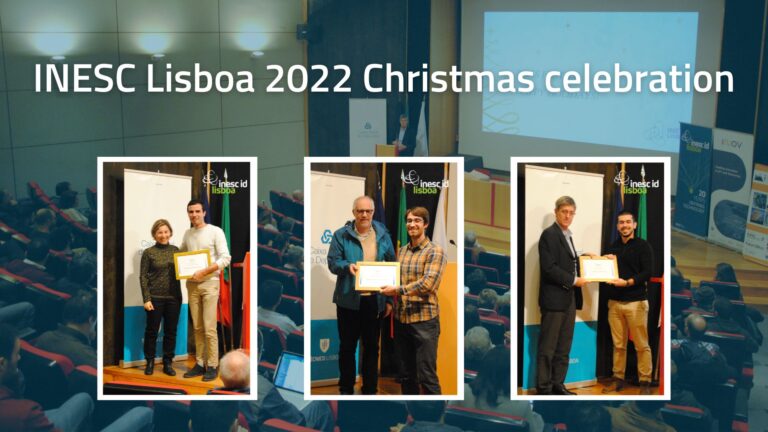
    The 2022 INESC Lisboa Christmas Celebration took place on 14 December at Instituto Superior Técnico’s Grand Auditorium.

    Featuring talks by Professor Arlindo Oliveira, President of INESC, and Professor Leonel Sousa, President of INESC Lisboa, as well as an intervention by Emeritus Professor José Tribolet (founder and ex-President of INESC), this event mapped the road ahead in the promising future of the three Lisbon-based INESC institutions — INESC-ID, INESC MN and INOV — brought together under the banner of INESC Lisboa.

    INESC Lisboa is a joint initiative launched in 2020 with the mission of facilitating synergies among the three Lisbon-based INESC institutes to promote their Research, Development, and Innovation (R&D+i) remits. A unique research consortium in Portugal, INESC Lisboa brings together two Associated Laboratories and two Interface Centres in taking knowledge up to the market and society.

    This yearly celebration also hosted the INESC-ID Awards, created in 2009 and bestowed once a year — by a jury composed by the members of the Advisory Board, an independent committee made of world class experts — to the institute’s best researchers. This year’s awardees were Rui Miguel Carrasqueiro Henriques (in the Researcher category), Rodrigo Fraga Barcelos Paulus Bruno (in the Young Researcher category) and André Miguel Paralta Patrício (in the PhD student category). For a full list of nominees for this year’s categories, as well as details on previous year’s awards, please have a look at our Awards webpage.

    Happy holidays from the INESC Lisboa community!

  • The December 2022 INESC-ID newsletter is out!

    The December 2022 INESC-ID newsletter is out!

    The December 2022 issue of NEWS-ID — the INESC-ID Newsletter — is out! You can read it here.

    Containing recent news from our researchers and their projects, open positions and some extra bits of content, our monthly newsletter is a great one-stop spot for great content on computer science and electrical and computer engineering.

    You can subscribe to our monthly newsletter here.

  • Accelerat.ai: a new consortium to accelerate digital transformation in Portugal

    Accelerat.ai: a new consortium to accelerate digital transformation in Portugal

    INESC-ID has joined a wide ranging set of partners in Accelerat.ai a new consortium whose goal is to accelerate the digital transformation of the public and private sectors in Portugal.

    Representing an investment of 34.5 million euros supported by the Portuguese Recovery and Resilience Plan (Plano de Recuperação e Resiliência, PRR), Accelerat.ai will be led by Defined.ai and include companies and research institutions as varied as INESC-ID, Instituto Superior Técnico, Faculdade de Ciências da Universidade de Lisboa, IBM, Microsoft or KPMG. Interested clients will include the banking sector (Caixa Geral de Depósitos, Novo Banco and Santander), the Portuguese Ministry of Health (e.g., the Portuguese National Health System, SNS), the Portuguese Ministry of Social Security, companies from the electricity and gas sectors (EDP and Galp), as well as other companies such as NOS, Worten and the insurance provider Fidelidade.

    Accelerat.ai aims to improve and optimize customer support services across the Portuguese and European markets based on the development of a unique set of technological solutions that pair virtual assistants with contact centers in European Portuguese. On Accelerat.ai, Daniela Braga, founder of Defined.ai, commented that “Alone, we go faster, but together we go further, resulting from committed and motivated teamwork. It is with enthusiasm that I thank the team that has accompanied me in this great project and present in Portugal, the first virtual assistant 100% in my native language.”

    Alberto Abad will lead INESC-ID’s participation in Accelerat.ai, a role that will mainly consist in investigating and exploring the capacity to mutually convert from speech to text and text to speech, also known as Automatic Speech Recognition and Speech Synthesis a key component of Conversational AI. INESC-ID and IST will take responsibility for the development and derived research activities of the modules of the speech-to-speech conversational stack, particularly, those related with automatic speech recognition and text-to-speech for European languages, and very especially, European Portuguese. The impact of this research is expected to concentrate on promoting a faster deployment of new languages, more engaging and successful agents, as well as better acceptance by specific population groups.

    Accelerat.ai is one of two Artificial Intelligence (AI)-related PRR-supported consortia that INESC-ID will be involved in. Have a read on that other AI PRR-supported ptoject, Responsible AI.

  • How and when viruses move: predicting the spread of COVID-19 using neural network models

    How and when viruses move: predicting the spread of COVID-19 using neural network models

    A group of researchers, led by Arlindo Oliveira, has proposed a new method to compute the spatio-temporal dynamics of COVID-19 infections.

    In a paper published this week on ACM Transactions on Spatial Algorithms and Systems, four INESC-ID researchers (Mário Cardoso, André Cavalheiro, Alexandre Borges and Arlindo Oliveira), together with colleagues from CERENA and ITI, implemented a neural network model — a computer program that simulates complex processes based on a very simplified form of how the human brain processes information — to estimate the incidence rate of COVID-19 in mainland Portugal.

    Based on the STConvS2S (Spatiotemporal Convolutional Sequence-to-Sequence) Network architecture, and using data from the Portuguese Directorate-General for Health (DGS) across the first twelve months of the pandemic, these researchers were able to show that this type of network was the best performing method for mapping the geospatial evolution of COVID-19 (when compared to an Autoregressive Moving Average [ARMA] model, a Vector Autoregressive [VAR] model, and a Susceptible–Infected–Recovered–Dead [SIRD] model). In short, the best way to map the dynamics of this contagion between neighboring regions — an important step in making predictions about the evolution of pandemics.

    All the data used in this article, as well as the code for the SIRD and the STConvS2S models, is available here.

  • INESC-ID takes part in the world’s largest consortium on Responsible AI

    INESC-ID takes part in the world’s largest consortium on Responsible AI

    INESC-ID has been announced as one of the members of the world’s largest consortium on Responsible Artificial Intelligence (Responsible AI).

    Led by Unbabel and including a set of ten other startups, eight research institutes (in Lisbon, Porto and Coimbra, amongst them INESC-ID, Instituto Superior Técnico, the Champalimaud Foundation and the Faculty of Engineering of the University of Porto), a law firm and five industry leaders across the life sciences, tourism and retail the Centre for Responsible AI will invest 78 million euros from the Portuguese Recovery and Resilience Plan (Plano de Recuperação e Resiliência, PRR) with the goal of positioning Portugal as a world leader in Responsible AI technologies and regulation.

    INESC-ID will participate in the Centre for Responsible AI via eleven of its researchers (some of whom will also integrate the Scientific and Executive Boards of the consortium): Isabel Trancoso, Ana Paiva, Bruno Martins, Helena Moniz, João Paulo Carvalho, Francisco Melo, Paolo Romano, Luísa Coheur, David Matos, Ana Teresa Freitas and Arlindo Oliveira.

    With a predicted impact on the Portuguese economy rounding 250 million euros, the Centre for Responsible AI is set to create 210 highly qualified jobs and result in over 130 advanced academic degrees.

    As part of its ambitious plan, this consortium will develop twenty-one innovative AI products, leveraging Responsible AI technologies to reduce biases and the potentially negative impact of these applications, fostering their equitable and sustainable use. Exemplifying the groundbreaking reach of the Centre for Responsible AI, one of these products will allow the automatic translation of clinical data, resolving and bypassing current challenges that should, for instance, contribute to the acceleration of clinical trials and the rapid transition of clinically important consumables to the market.

    On this world-first Centre for Responsible AI, Paulo Dimas, Vice-President of Innovation at Unbabel, commented that “we are creating what is the biggest Responsible AI consortium in the world. In it, we will develop a virtuous circle between startups and advanced research centers, creating next-generation AI products while positioning Portugal at the forefront of Artificial Intelligence. It was for us an enormous privilege to be able to lead this consortium where some of the brightest minds in Portugal are gathered to invent the future of Artificial Intelligence.”