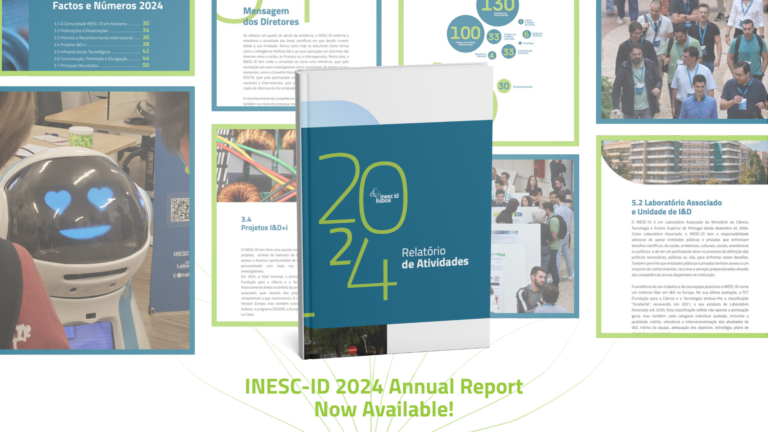
INESC-ID is proud to release its latest Annual Report, compiling the main achievements of 2024.
Inside the report, you can read the story of our organisation, along with an overview of our structure, mission, strategy, and the latest facts and figures that showcase the continued growth and evolution of our institute.
The spotlight, however, is on the activities and accomplishments of our researchers and support offices. From national and international projects, publications, awards and recognitions to collaborations and outreach initiatives. The report reflects our ongoing commitment to scientific excellence, internationalisation, knowledge transfer, societal impact, and talent development.
The report is available in Portuguese here. Take a look and get to know us better!
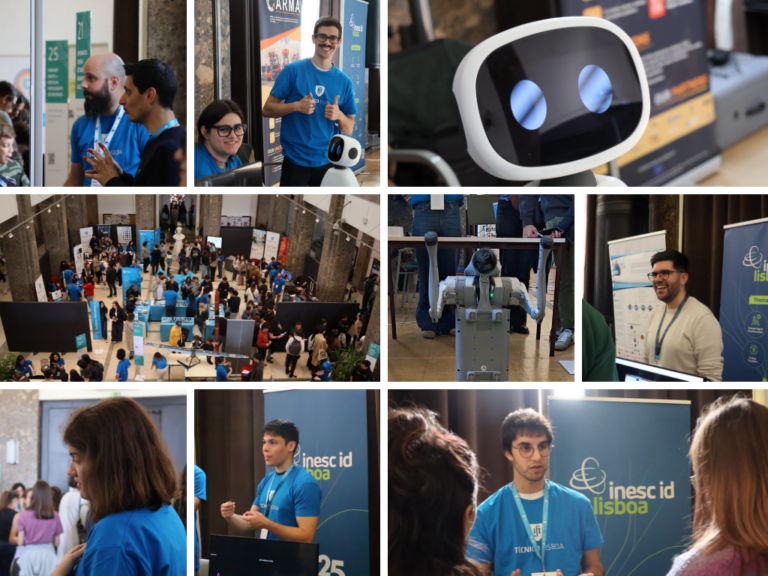
An AI-powered robot dog, a European-made high-performance chip, a sustainability-focused game co-designed with People with Intellectual Disabilities (PID), a small AI robot that helps identify dangerous mushrooms, and even a tool that video-tracks camouflaged sea creatures — these are the projects INESC-ID presented at this year’s Técnico Open Day, held on April 5, drawing in curious minds of all ages.
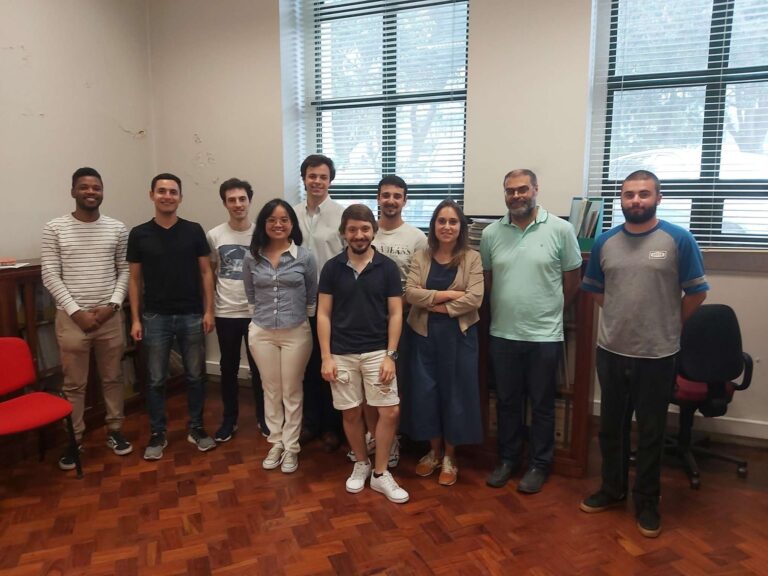
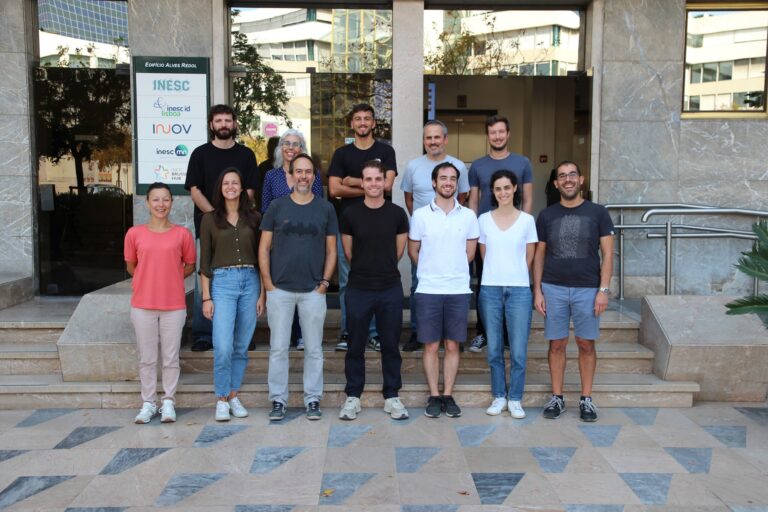
Just past 9 a.m, the nervous buzz among the team of INESC-ID researchers and volunteer students was palpable. With support from the Communication and Outreach Office, connections were tested, key topics mentally rehearsed and final touches applied at what was INESC-ID’s largest-ever presence at a science fair, featuring three booths and a demonstration arena. Everything was ready to welcome the record-breaking 2700 attendees entering Instituto Superior Técnico’s central pavilion, from aspiring engineers to knowledge-seeking families and science fans of all ages.
Robots and games that teach and inspire
At the first booth, Inês Lobo, a PhD student from the AIPS scientific area (at GAIPS group), introduced visitors to Todos Sustentáveis (All Sustainable), a co-designed game that empowers People with Intellectual Disabilities (PID) to be sustainable citizens. Originally created for this community, the game is now also being adopted in schools – and judging by the line of children waiting their turn, it will be a big hit.
“A father even thanked me for being able to rest for half an hour while his son played the game”, shared an amused Inês.
Next to her, fellow PhD student Sandra Andrade, demonstrated the adorable AI robot ELMO and the Mushroom Game – an engaging way to explore how trust influences AI assisted decision-making – perfect for sparking discussions about AI and even teaching a little mycology along the way. “I was surprised by the age range of the participants, from babies to grandparents, all very interested in artificial intelligence and robots”, Sandra noted.
Meanwhile, in the adjacent demonstration arena, Miguel Belbute, also from GAIPS, and the GO2 Robot Dog from the CARMA project delighted crowds. Designed to support emergency responders in disaster zones, the athletic robot impressed visitors with its agility, so much so that it had to pause several times to recharge.
“When the children gathered around me and the robot, asking endless questions after the last demo”, Miguel recalled, “I felt like we were looking at the next generation of engineers!”
European Innovation in Chips and Computing
At the next booth, INESC-ID researchers Pedro Tomás, Tiago Rocha and Nuno Neves, from HPCAS, showcased a major achievement: a high-performance, energy-efficient chip developed under the European Processor Initiative (EPI). This powerful computer chip is helping Europe stay competitive and ahead in high-tech fields like artificial intelligence and scientific simulations.
Using a real-time remote connection to the Barcelona Supercomputing Center, the researchers demonstrated the chip’s capabilities, while answering questions from young students fascinated by the technology, as well as from visitors interested in the impact of these efforts on Europe’s future. “It surprised me both the number and diversity of people who stopped by,” noted Pedro Tomás, taking part in the event for the first time.
AI Meets Marine Biology
Finally, at our maritime-themed booth, IDSS researcher Sofia Pinto’s Master’s students Tomás Gomes and Guilherme Gonçalves (also first timers in outreach events) showcased their thesis research using AI-assisted video tracking to help biologists at the Lisbon Oceanarium. Their systems can detect camouflaged or hidden animals in aquarium video feeds, helping marine scientists better understand behaviour, stress and health of aquatic life in captivity.
“It was a great feeling to be able to go out into the field and apply computer science to help animal welfare” said Tomás, who took valuable time away from thesis writing to volunteer. “This is definitely something I want to do again.”
A full day of demos. Dozens of questions. Hundreds of sparked minds. A smiling (if tired) INESC-ID team packed up, already looking forward to the next one.
Featured Projects by INESC-ID:
A chip that puts Europe ahead in computing(Pedro Tomás, Nuno Neves, Tiago Rocha – HPCAS)
Autonomous robots for emergency assistance(Miguel Belbute – AIPS)
Mushroom Game: AI for decision assistance (Sandra Andrade – AIPS)
“Todos Sustentáveis” (All Sustainable): a game for sustainable citizens (Inês Lobo – AIPS)
Can computer science help study Oceanarium animals? (Sofia Pinto, Tomás Gomes, Guilherme Gonçalves – IDSS)
About Técnico Open Day
Técnico Open Day is an annual event, organised by Instituto Superior Técnico, that brings together students, professors, researchers, staff, student groups, departments, and associated institutes for a day of over a hundred activities for all ages. With free admission, it includes a science fair with associated research centres and institutes, student groups, laboratory visits, conversations with scientists, course presentations, experimental games, lectures, and much more.
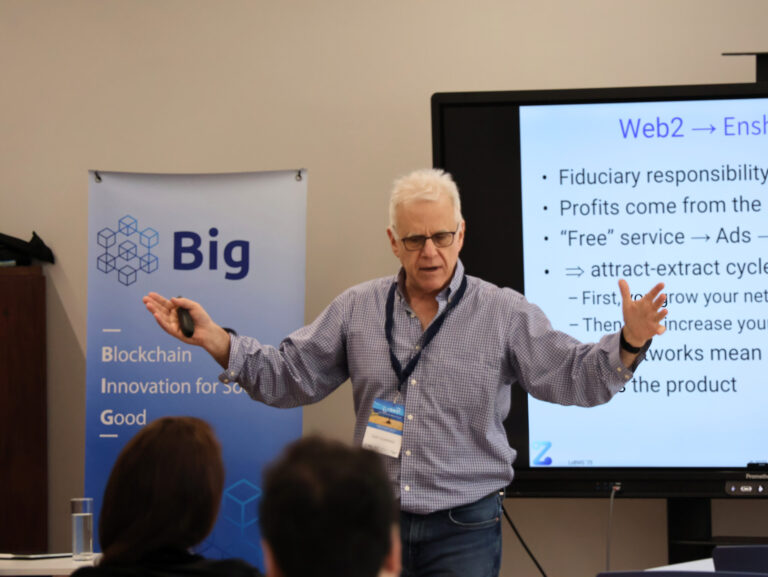
With its decentralized systems and the potential to reshape how we interact with the internet and conduct business, web3 sounds almost like an El Dorado. At the centre of it lies the technology that powers blockchain. Seth Goldstein, Professor at CMU School of Computer Science, is a committed thinker about the topic. During the Lisbon Blockchain Winter School 25, organized by the BIG Era Chair Project, he shared his mind-opening insights with the attendees, on a keynote under the title Web 3: trust, reputation and the future of money.
For the specialist, that shared the story of the three technological revolutions mankind has been through, what we are now living is unlike anything we have seen before and therefore a conversation about what is going on is crucial. “With the development of Web3, blockchain, and cryptocurrency, we are entering the third technological revolution (TR3) — one that will transform the labour market, redefine productivity, and fundamentally alter how we work.”
Web3: The technology of trust
Web3 is more than just a technological shift; it’s a new social technology that addresses trust in digital interactions. For Goldstein, the heart of blockchain’s innovation lies in the idea that, with it, you don’t have to trust the individual actors involved, but you can trust the results they produce.
In the past, trust has been central to transactions. From banking to everyday exchanges, we rely on systems and intermediaries to validate and secure transactions. Goldstein compares this to a simple example of money transfer: Imagine a world where individuals didn’t rely on intermediaries like banks but instead could exchange money directly, knowing their transactions would be validated by others in the network, who are incentivized to do so honestly.
This decentralized validation system is the backbone of blockchain. It operates without a central authority and ensures the authenticity of every transaction, allowing people to trust the results even if they don’t trust each other. As Goldstein puts it, blockchain is “a social technology” where individuals are incentivized to behave honestly, not because of goodwill, but because their economic interests are aligned with maintaining the system’s integrity.
Is Blockchain for social good?
One of the most common criticisms of blockchain and cryptocurrency is that they might be used for illicit purposes. Goldstein, however, counters that the transparency inherent in blockchain actually makes it difficult to misuse. Every Bitcoin transaction, for example, is recorded on the blockchain and publicly visible, making it clear who is transferring funds to whom. This transparency might be one of the technology’s most significant strengths in ensuring accountability and trust in the system.
Goldstein also highlights the broader social impact of these technologies. Just as roads and public infrastructure provide societal benefits, blockchain, Web3, and cryptocurrency can be seen as a public good, accessible to everyone. They allow for decentralized governance and voting, enabling individuals to participate in decision-making processes without the need for centralized power structures.
Technological revolutions and the future of work
Goldstein draws parallels between Web3 and earlier technological revolutions. The First Industrial Revolution saw a massive increase in productivity and improvements in living standards. The Second Industrial Revolution, fueled by electricity, further transformed society. However, the third revolution, which is driven by technologies like Web3, artificial intelligence, and blockchain, presents a unique challenge: it will not only increase productivity but also lead to massive disruption in the labour market.
With the rise of automation and AI, many traditional jobs are being replaced by machines. But there’s a twist: as productivity increases, labour costs are approaching zero. In Goldstein’s view, Web3 represents the solution to this problem by creating new forms of money and economic systems that don’t rely on the traditional methods of trust and control. As the cost of production continues to decrease, individuals may no longer need to depend on traditional jobs to sustain their livelihoods.
Goldstein also provocatively suggests that the key skills for the future won’t be programming or technical expertise, but rather philosophy, time management, and human-centric skills like empathy, creativity, and social intelligence. As machines take over cognitive and physical tasks, humans will be needed more for their emotional and creative capabilities.
As Web3 continues to evolve, there’s a need for regulation to ensure that it doesn’t devolve into a system ripe for exploitation. While Goldstein believes that governments shouldn’t be the ones to innovate, their role is critical in establishing boundaries and ensuring that individuals and institutions act within those boundaries. This is where the concept of Adam Smith’s “invisible hand” comes into play — government intervention should be designed to address externalities, like pollution, by setting appropriate costs and regulations.
In the case of cryptocurrency and blockchain, governments should aim to create a framework where people can innovate but also be held accountable for their actions. With the right regulations, blockchain could remain a force for good — offering transparency and security while providing individuals with the freedom to innovate.
Reputation-based currency
Looking ahead, Goldstein envisions a future where reputation is more important than currency. In this new economic model, the currency will be based not on the trust in a central authority but on the trust that people place in each other’s reputations. People will “print” their own money, and the value of that money will be determined by their fiscal reputation — not the government or central bank.
However, there are challenges ahead. As the labour market changes, Goldstein warns that the transition could be painful, with mass unemployment and social unrest as traditional jobs disappear. Yet, he remains optimistic. If we approach this revolution with the right mindset and adapt to these changes, the future could be bright — even if it requires us to rethink what work means and how we value human skills.
Goldstein’s greatest fear, however, is the potential end of innovation. With the rise of automation and AI, fewer people may choose to invest the time and effort needed to become experts in their fields. If the pursuit of expertise becomes increasingly irrelevant, we might lose the very drive that has led to humanity’s greatest advancements. This presents a paradox — we’re entering an era of unprecedented technological progress, but we also risk undermining the very factors that drive that progress.
In conclusion, the Web3 revolution is not just about blockchain or cryptocurrency — it’s about rethinking how we organize and value work, trust, and money in a world where traditional systems are no longer sufficient. While the future may be uncertain, one thing is clear: the changes happening now will define the future of work, society, and how we interact with the digital world. Whether it becomes a utopia or dystopia depends on how we navigate this new frontier.
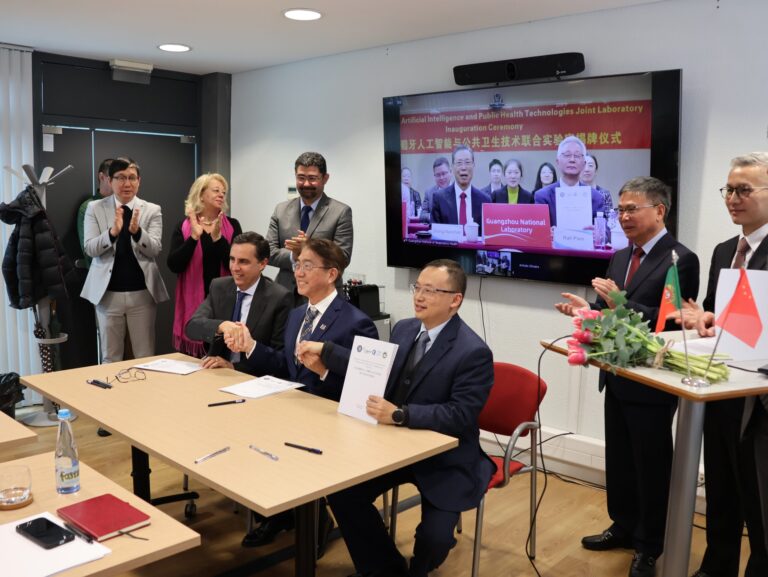
It was 10:10 AM in Lisbon and 18:10 in Guangzhou, of March 5, when the official ceremony for the establishment of the China-Portugal Joint Laboratory on AI and Public Health Technologies started. Held at the Department of Computer Science and Engineering (DEI) of Instituto Superior Técnico, the event gathered Portuguese and Chinese representatives who celebrated the signing of the memorandum of understanding over a traditional cup of tea and a handshake.
The China-Portugal Joint Laboratory on AI and Public Health Technologies is a collaborative effort between INESC-ID, Guangzhou Laboratory (GL), Guangzhou Medical University (GMU), and Macau University of Science and Technology (MUST) (China). The Joint Laboratory aims to consolidate and leverage artificial intelligence technologies to improve public health management at a global scale. This includes capabilities for analysing, modelling, and responding to emerging public health events.
Arlindo Oliveira, INESC-ID researcher, Professor at Técnico and coordinator of the partnership, acknowledges both the challenges and the strengths of this collaboration: “Although this collaboration presents challenges related to language barriers and differing cultural and political perspectives, we have managed to establish a fruitful and mutually trusting relationship. This has already led to significant funding for research and development, with further projects expected to be approved in the near future.”
Trust and Cooperation
Through international cooperation and information sharing, the lab will collect, organize, and disseminate data and experiences crucial for the prevention and response to major pandemics. Additionally, it will drive research into infection prevention and control measures, as well as AI-powered diagnostic technologies to address both infectious and non-infectious diseases.
During the ceremony, Zhao Bentang, Ambassador of the People’s Republic of China in Portugal, highlighted the significance of the Joint Laboratory. “The foundation of this laboratory reflects our firm belief that China and Portugal must work together to tackle global challenges. These challenges can only be effectively addressed through international cooperation. The creation of this laboratory is a concrete manifestation of both countries’ commitment to collaborating on these global issues, ensuring mutual benefits.”
Following the formal proceedings, and at the request of the academic Chinese partners, part of the group took the lift to the seventh floor of the North Tower at the Alameda Campus to visit the Institute for Systems and Robotics, where they were introduced to some of the advanced robotic technologies developed at the lab. These included iCub, one of the most complex humanoid robots in the world, designed to study human behaviour, and Vizzy, an interactive robot created to assist the elderly and hospitalized patients.
The works concluded with a visit to the Joint Laboratory at INESC-ID, that is meant to work under the five pillars Ana Teresa Freitas, President of DEI and the Strategic Coordinator of the INESC-ID thematic line Life and Health Technology, detailed at the ceremony: “Safe people, safe projects, safe data, safe algorithms, safe outputs”.
AI to solve global challenges
This new partnership is a step forward in facing global public health challenges through cutting-edge artificial intelligence technologies. As noted by Rogério Colaço, President of Instituto Superior Técnico, that welcomed the event, “the establishment of this Joint Laboratory represents a significant step forward in addressing global public health challenges. By leveraging cutting-edge artificial intelligence technologies, we aim to enhance public health management and improve our collective capacity to respond to emerging public health events on an international scale. This agreement not only fosters academic research but also promotes scholar exchanges that will enrich our understanding and capabilities.” An opinion shared by Miguel Pupo Correia, President of the Executive Committee of INESC-ID: “AI is one of the high-impact areas of our research, and this collaboration will enhance the creation of value for people and society.”
The memorandum of understanding was formally signed by representatives from all four institutions. Also present were Tai Kin Ip, Secretary for Finance of the Macau Government, Che Weng Keong, President of the Macau Science and Technology Development Fund (FDCT), Madalena Alves, President of the Portuguese Foundation for Science and Technology (FCT), and Rogério Colaço, President of Instituto Superior Técnico.
This initiative reinforces the growing importance of AI in public health and sets the foundation for a strong and lasting collaboration between Portugal and China in facing some of the most urgent and relevant global health challenges.
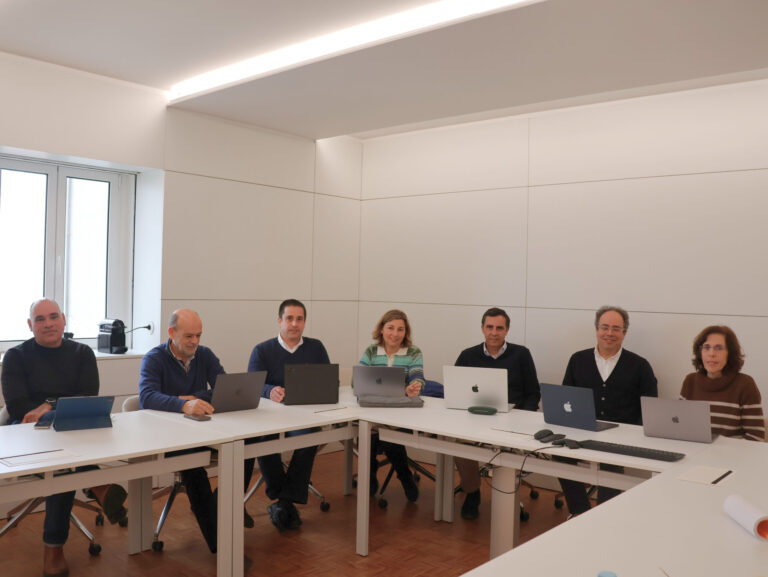
With the inaugural meeting of the newly elected Board of Directors of INESC-ID starts a new chapter in the institute’s history. This meeting, held January 20, set the stage for the vision and strategic goals that will guide INESC-ID’s path in the coming years.
Inês Lynce, President of the Board of Directors, highlighted the mission of the new leadership team. “The mission of the Board of Directors of INESC-ID is to reinforce its strategic role as a leader in cutting-edge research that drives innovation and addresses global challenges. Central to this vision is the recognition of our researchers and collaborators as the institute’s greatest asset,” she stated. The board aims to prioritize excellence in scientific research, foster interdisciplinary collaboration, and establish strong partnerships with industry and academia, both on a national and international scale.
Miguel Pupo Correia, President of the Executive Committee, emphasized the significance of this leadership transition. “This is the first board elected under the new statutes of INESC-ID, and one of its primary objectives is to implement the newly established management structure, which includes an executive committee and non-executive directors. This structure will facilitate strategic reflection on INESC-ID’s goals, particularly as the institution celebrates its 25th anniversary and reaches a stage of maturity,” Miguel notes. The board remains steadfast in its commitment to scientific excellence, internationalization, and societal impact, with a strong focus on the professional growth and development of its researchers and collaborators.
The meeting was also an opportunity for the Board to address key issues slated for 2025. Among these were the evaluation of INESC-ID’s status as an associated laboratory, the development of the strategic plan for 2026-2030, and the implementation of enhanced budget control mechanisms.
The remaining members of the Board of Directors are Luís Oliveira e Silva, Fernando Moreira, Helena Galhardas, Nuno Roma and João Paulo Carvalho.
In Greek legend, Achilles was a hero with a single vulnerability—his heel. Similarly, the “Achilles’ heels” of modern AI systems are trust and efficiency. The recently launched ACHILLES Horizon Europe Project (“Human-Centred Machine Learning: Lighter, Clearer, Safer”) aims to address these critical weaknesses.
Bringing together 16 organizations from 10 countries, ACHILLES has significant Portuguese involvement. Led by Fraunhofer Portugal Research (FhAICOS) as the coordinating partner, INESC-ID plays a key role with six researchers leading the Work Package (WP) on AI sustainability and contributing to the WP on Privacy-Preserving Machine Learning and Model Monitoring. Paolo Romano, from Distributed Parallel and Secure Systems, coordinates INESC-ID’s participation, which has a budget of nearly one million euros.
The ACHILLES team seeks to drive responsible AI innovation in line with European values and regulations. Moving away from the traditional “Faster, Higher, Stronger” approach—borrowed from the Olympics, another iconic Greek reference—ACHILLES champions a new framework: “Lighter, Clearer, Safer,” reflecting the evolving demands of modern AI.
“At the heart of ACHILLES is an iterative development cycle inspired by clinical trials,” explained André Carreiro, Senior Scientist and ACHILLES Project Coordinator.
A standout innovation within the project is the ACHILLES Integrated Development Environment (IDE), a machine-learning-driven platform empowering developers to build AI solutions that are not only more effective and efficient but also responsible and ethically compliant. The project will validate its approaches through real-world applications in healthcare, identity verification, content creation, and pharmaceuticals, demonstrating its transformative potential across diverse sectors.
Funded with over €8 million under the Horizon Europe Framework Program, on the cluster of digital, industry and space, ACHILLES is set to redefine the way we approach AI, ensuring it aligns with the values and expectations of modern society.
Undoubtedly, the biggest challenge facing humankind today is the energy transition. It is urgent that this ever-present topic moves from intentions to real action. This is precisely the aim of the PRR-funded project, Alliance for Energy Transition (ATE), with strong involvement from INESC-ID.
This collaborative initiative was designed to enhance the competitiveness and resilience of Portugal’s energy sector, positioning the country as a leader in sustainable and digital energy solutions. “It emphasizes how prioritized this area is and the strategic positioning of the country, as it touches on many strategic areas both nationally and internationally—from mobility to consumer services, electrical grids, offshore energy, solar power, and hydrogen,” notes Hugo Morais, a researcher in Sustainable Power Systems and Professor at Técnico.
Led by Efacec, with a consortium of 80 entities, 13 strategic partners, and a €274 million investment (€157M from PRR), ATE encompasses 16 work packages (WPs), each advancing key areas from smart grids to sustainable mobility and renewable energy integration. “It’s gigantic!” says Hugo.
This project is so large in scale that a dedicated association was created—Associação Aliança para a Transição Energética—to manage its 60 companies, 14 R&D institutes, six universities, 11 associations, clusters, public entities, and two laboratories. “ATE arises from the need to strengthen the competitiveness and resilience of companies in Portugal’s energy sector, with the clear goal of leading decarbonization and driving an effective energy transition. Thus, it becomes essential to create innovative, sustainable products, processes, and services with export potential, covering the entire value chain,” summarizes Rui Lameiras, Head of Product Management at Efacec, in an interview with Jornal Sol.
INESC-ID in four work packages
There are six areas of intervention: decarbonization of the energy system, reindustrialization and circular resource use, digitalization of the energy sector, decentralization and democratization of energy, sustainable mobility and industry, and business acceleration in the new economy. INESC-ID plays an essential role in four of the WPs, contributing innovative solutions and technologies aimed at driving both the energy transition and digital transformation of the sector.
“When we talk about the virtualization of functions, we’re referring to a completely new philosophy in substation development. A substation costs around ten million euros, and what we’re discussing is a complete shift in design philosophy—something that will have an impact five or ten years from now.” – Hugo Morais
To improve protections within electric grids, INESC-ID is developing solutions for intermittent fault detection, renewable-based systems, and virtualized protection functions—a shift from traditional Intelligent Electronic Devices (IEDs) to virtualized systems that allow for centralized management and reduced installation costs. “When we talk about the virtualization of functions, we’re referring to a completely new philosophy in substation development. A substation costs around ten million euros, and what we’re discussing is a complete shift in design philosophy—something that will have an impact five or ten years from now,” explains Hugo Morais. “This is to show that we have tangible results ready for the near future—a new station, a new concept for mobility management. We’re already entering the commercialization phase of prototype one and two, with the goal of reaching the market within three years,” Hugo adds.
The project is also working on a flexibility services considering different market architectures that hare available in different countries. Afterwards, new services are being designed and will be available in a near future. “Some things will be important now, while others will be relevant in five or ten years. Many outcomes will emerge from the project,” notes Hugo Morais. A significant part of this work results from the collaboration with the Smart Energy Lab. Here, INESC-ID is developing end-user solutions, including cost-effective strategies for electric mobility, battery control, and flexibility services that allow consumers to contribute to grid stability. One ongoing project is the Living Energy platform—a unique tool designed to engage both people and devices. With a user-friendly and visually appealing interface, Living Energy offers real-time data presentation, interactive capabilities, and options for gathering both quantitative and qualitative information.
No crystal balls
The platform can be easily adapted to specific needs, allowing for the collection, analysis, and reporting of key indicators, as well as stakeholder engagement through customization options. With more than 50 registered users across the country and a team of engineers and data scientists, it is possible to gather detailed information about new technologies before they are launched on the market—because, as we can read on the website, “we do not trust crystal balls.”
INESC-ID is also managing the implementation of a platform for digitalizing the energy sector and a support laboratory, essential for accelerating product testing and validation to reach the necessary Technology Readiness Levels (TRL) for commercialization. “The goal is to create a network of laboratories from various entities with multiple capabilities, thus avoiding the need for companies to rely on international laboratories,” explains Rui Lameiras. In such a challenging and vast endeavour, continuous training is crucial. INESC-ID focuses on reskilling and upskilling consortium partners, aiming to bolster expertise and adaptability among the professionals involved in ATE projects. Other segments of the ATE include solutions for energy communities, with some focused on offshore wind, which is “quite active,” according to Hugo. Other areas include solar energy, the integration of photovoltaic systems in agriculture, and PV integration in ports to support maritime mobility. In total, there will be 45 new products—80% of these destined for the international market—a turnover estimated at €550 million, generating 700 new jobs and avoiding 3.4 million tons of CO₂ emissions.
The goal is ambitious, as well as the challenge. The moment is now. As ATE continues to unfold, it will not only have a significant impact on Portugal’s energy landscape but also contribute to global efforts toward a more sustainable and interconnected world.
Who hasn’t had a frustrating experience with a chatbot? If you haven’t, either you’ve never used one, or you’ve interacted in American English or any other of the preferred languages of the big tech companies.
It may not be obvious, but developing a conversational agent could be a powerful way to promote inclusion. This is precisely one of the goals of the consortium Accelerat.ai, created to advance the digital transformation of the public and private sectors in Portugal, with active participation from INESC-ID. “We intend to develop technology in Portugal to support sectors that are particularly important, such as a conversational system for SNS24 (Portuguese National Health Service’s helpline) and customer support solutions for businesses”, describes Alberto Abad from Scientific Area Human Language Technologies and the leader of INESC-ID’s participation in the consortium, which is supported under the Recovery and Resilience Plan (RRP).
As seen in other areas of technology, the need to improve the quality and reliability of conversational agents was stressed during the Covid-19 pandemic, due to the transformation of services that previously provided in-person assistance and had to close. Consequently, there was a shortage of personnel to handle requests coming through contact centres, which were often not designed for that purpose. “Such circumstances created a need for, whenever possible, automated assistance,” notes Abad, a professor at Técnico, which is also a member of the consortium.
In this world of ours, there are about 7 000 spoken languages. According to Defined.ai, an AI marketplace for tools, data and models, and the leader of Accelerat.ai consortium, “29% of business has lost clients due to a lack of multilingual support and 70% of end-users express greater loyalty to companies offering support in their native language.” And so, the mission of this ambitious project, with a budget of 35 million euros, 2.18 million of which is allocated to INESC-ID, is to develop a conversational assistant for languages outside the top 15 language roadmaps of the big 5 tech companies, starting with European Portuguese.
The solutions in development are based on Conversational Artificial Intelligence Agents and CCaaS (Contact Centre as a Service). At INESC-ID, we will investigate and explore the capacity to mutually convert from speech to text and text to speech – an area known as Automatic Speech Recognition and Speech Synthesis. “It is a technology that has existed for many years, with several components – speech-to-text, and the reverse, text-to-speech”, Abad notes. “Additionally, there is the ‘brain’ of the system, which involves dialogue management and task handling, and this has evolved significantly in recent times with the advent of large language models (LLMs) that have transformed the landscape.”
To public and private organizations
Some of this technology is already on the market, typically dominated by major tech companies such as Microsoft, Google, and Apple. These corporations have a business vision and often overlook niche languages, such as European Portuguese, spoken by ten million people. Consequently, the level of maturity and the amount of data available to develop these systems for minority languages is lower. “Therefore, the goal of the project is to provide Portuguese companies with technology specifically tailored to the Portuguese context, including its variants”, like dialects or regional forms of the language.
Together on this mission, Defined.ai states that the project represents a strategic effort to cater the needs of the public and private sectors in Portugal and related markets, enhancing communication and accessibility in digital platforms. “If a developer intends to use voice systems in the Portuguese market, they must rely on generic models with a considerable margin of error, or in English and Brazilian Portuguese, languages that are not the preferred options for Portuguese speakers”, defended Daniela Braga, from Defined.ai, in a press release.
Over the past ten years, errors on this kind of systems have been drastically reduced. “The systems are improving so much that we may be approaching a situation where, in certain tasks, it will be difficult to distinguish a human from a machine. The components are the same, but they work much better”, explains Alberto Abad. And so synthetic speech may end up being indistinguishable from recordings in terms of naturalness and fluidity. “Today, it is possible to have dialogue systems that solve many problems”, he adds. But still there is margin for improvement, by pushing the boundaries of the state of the art.
Picking up on emotional cues
One of the research goals is to extract emotional cues from speech to create more empathetic, human-like responses, moving further away from a robotic response. Another purpose is to improve speech recognition in non-ideal conditions, such as low-resource languages (with relatively less data available for training), or atypical speech. “Systems are tested for normative speech – such as children, where the lexicon is different, pitch is different and there are more fluctuations”, says the researcher. Elderly and people with any type of disability that affects speech are also in the scope of Accelerat.ai. The system may be trained to speak slower when interacting with elderly, use youthful speech with youngsters or adapting the accent, to create more closeness to the user.
“Speech can be considered private information. If used maliciously, it is easy to create synthesis systems with our voice”, he alerts. “There can be a set of automatically extracted information that we might want to protect” – Alberto Abad.
It is becoming increasingly evident that voice data can contain valuable information that may be used to detect health conditions, such as Parkinson’s disease. “Depending on the type of client and the circumstances, this information can be useful for characterizing the patient, as in a hospital setting”, exemplifies Abad.
However, the more valuable the data, the greater the concern about privacy. “Speech can be considered private information. If used maliciously, it is easy to create synthesis systems with our voice”, he alerts. “There can be a set of automatically extracted information that we might want to protect.” To guarantee this, INESC-ID’s team is also working in ways to extract information while ensuring user privacy. And for this there are several approaches. “One idea is to use encryption. Another is to allow users to control which information they want to be leaked—such as being okay with their gender being known but not wanting anything else to be disclosed, or only allowing their speech to be used to understand what they are saying.”
Presence at Interspeech
Privacy is also a significant part of the project, with PhD students working in this area. “Currently, when we use such a system, the speech is stored, and we don’t know what might be done with it. We are working on improving speech recognition, on extracting features and health biomarkers, and in the future, on making interactions more private, addressing security and ethical concerns.”
Six senior researchers, five post-doc, three PhD students, a master student are part of the project, a team that had a notable presence in the last Interspeech conference (the largest one on speech and language technologies in the world), with the participation of several members, the presentation of three scientific works related to the improvement of automatic speech recognition in low-resource settings and the use of LLMs as speech annotators to characterize speakers, the participation of a junior PhD as an expert pannellist in the special session “Connecting Speech-science and Speech-technology for Children’s Speech”. and above all, with the recognition of Professor Isabel Trancoso who received the ISCA Medal for Scientific Achievement, an annual distinction that honors each year an individual who has made extraordinary contributions to the field of speech communication science and technology.
Projects like Accelerat.ai bring progress to conversational AI, prioritizing inclusiveness and accessibility. With applications ranging from healthcare to customer support, innovations in speech recognition and synthesis will increasingly become part of our everyday lives, bringing human-centered solutions at the base of AI development in Portugal and beyond.
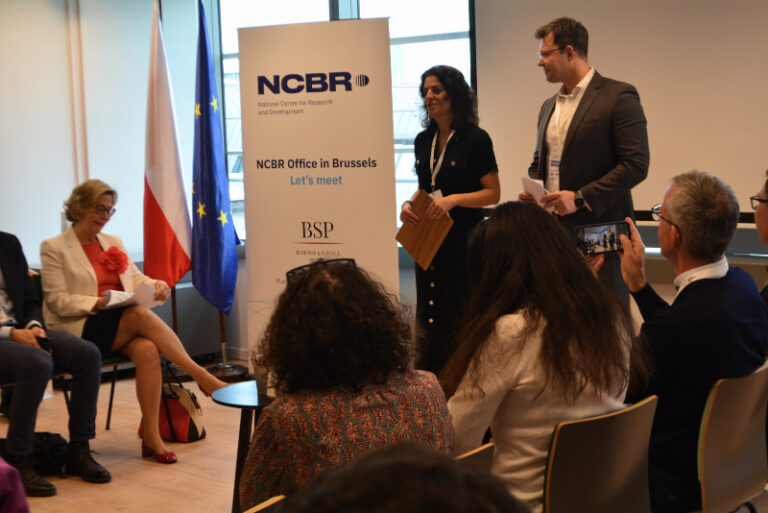
“AI-driven science extends beyond academia, fostering both innovation and economic growth,” declared the Deputy Director-General for Research and Innovation, Signe Ratso, while participating in the event “Leadership in Research and Innovation in the Age of AI”, an initiative of INESC Brussels HUB, co-organized with the European Commission and the NCBR Office in Brussels.
Over 60 leading R&D administrators, managers, researchers, and policymakers gathered in Brussels, on June 5 and 6, to discuss this crucial topic in a workshop format, sharing insights and developing strategies to face the challenges posed by AI. INESC-ID President, Inês Lynce, who was one of the six INESC-ID community members participating in the event, emphasized the “diversity of the attendees” and the “strong expertise in public policies some of them possess.”
The meeting was also an opportunity to discuss the EU strategy on AI since 2018 and initiatives like GENAI4EU and AI Factories and the “Living guidelines on the responsible use of generative AI in research”, as presented by Liviy Stirbat, Head of Unit for AI in Science in the DG for Research and Innovation at the European Commission. From the companies’ side, Ondrej Socuvka, Senior EU Public Policy and Government Affairs Manager at Google EU, shared how Google scientists are pushing AI’s boundaries responsibly.
“Listening to different perspectives concerning the use of AI in research institutions, in order to help us work better and improve the way they function, is what I cherish the most from the two days with the Brussels Hub,” said Rui Prada, INESC-ID researcher within the Artificial Intelligence for People and Society research area. “These events give us the opportunity to reflect on subjects that we often do not have time to consider in our daily lives.”
Inês Lynce also stressed the relevance of these immersive experiences: “It forces you to leave your comfort zone and think about the future of the institution and how we can make a difference.”
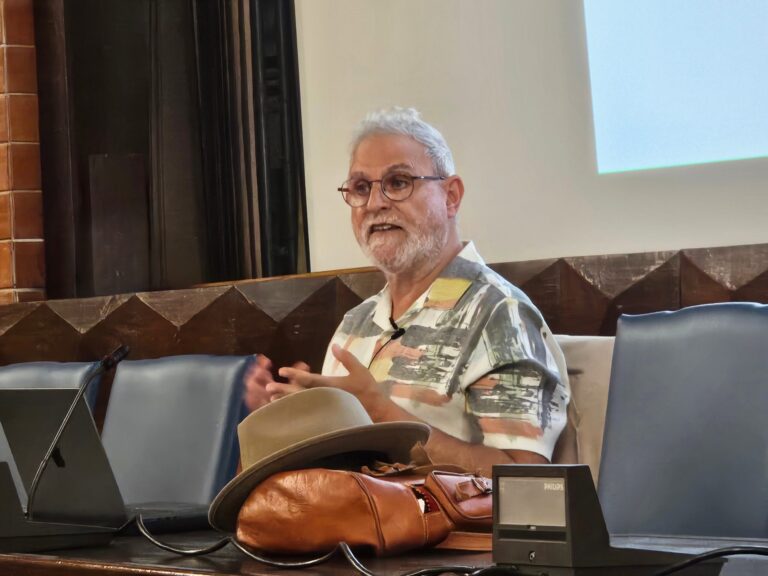
Wearing a khaki suit and a Panama hat, Philip Wadler meets his audience for the Distinguished Lecture (Programming Languages) in Agda = Programming (Languages in Agda), organized within the scope of the BIG ERA Chair Project. This time, we got the explorer’s look. For other attendees, the professor of Computer Science at the University of Edinburgh and a Fellow of the Royal Society has chosen the Superman costume.
Regardless of the cover, the expertise – spiced up with a touch of humour – is always assured. Wadler, a key developer of several programming languages, like Haskell and Java, is a notable figure in the field. “One of the most important personalities in the area”, Luís Caires, INESC-ID Information and Decision Support Systems and ERA Chair Holder, states while introducing the talk, which happened on June 4, at Instituto Superior Técnico (Alameda).
Wadler’s connection to Portugal comes through both the brain and the heart. “It’s a very strong place in programming languages!”, he notes. The emotional bond comes from his wife, a Brazilian native and a big fan of the country.
Author of several books on programming languages, the researcher and teacher has specialized in linear programming languages, “which is a tiny subfield of a subfield.” While talking about the subject, he often goes back to Ancient Greece and to the origins of the studies on logic, relating it to concepts like propositions as types and foundational logic ideas. “We’re working on programming languages that we’re designing now, but the designs are based on ideas and logic that go back to the turn of the 1900s or sometimes go back to Ancient Greece two thousand years ago.” Lewis Carroll, under his real name Charles Dodgson, also did some work on logic, Wadler exemplifies. “It is said that after Alice in Wonderland came out, the Queen of England said she wanted to see that author next book and it was on symbolic logic.”
Explaining the title of his talk, he explains Agda is one of a family of “what are called proof assistants”, that also go back in time, to the cryptography genius, Alan Turing. “Everybody is aware of this notion that programmes have bugs, right? You see this all the time: You’re using the web and all of a sudden, the website dies and puts up a little message saying ‘Please contact service or something’. So wouldn’t it be nice if you could demonstrate that would never happen?”, he questions. The sort of systems used by Amazon, for example, and that come in very handy in the cryptocurrency world and that is where his cooperation, as a consultant, with the platform Cardano comes from.
Writing proofs is not as simple as writing code. It requires highly trained individuals, who are not in abundance. “Artificial intelligence and machine learning classes and so on have around 400 students. My class has forty”, he compares.
Another sector that might benefit considerably from the use of proof assistants is Large Language Models. “What does a large language model do? It’s a neural network trained on a very large body of texts. What it does is given a group of words, what word should come next to sound good? So it’s just trained to sound good, to impress and therefore they have the tendency to confabulate”, Wadler notes. The integration of proof assistants on the programming of these models gives us the possibility to avoid these mistakes. But always with “people involved”, he stresses. “To check the specifications and come up with new ways of doing proofs and teach them to the machines.” Bulletproof logic.
Text by Sara Sá, Science Writer | Communications and Outreach Office, INESC-ID