Category: Highlights

  • Distinguished Lecture – Keshab K. Parhi

    Distinguished Lecture – Keshab K. Parhi

    Técnico – Alameda campus

    “Accelerator Architectures for Deep Neural Networks: Inference and Training”. – 2 pm – EA3

    We are pleased to announce a new IST Distinguished Lecture, on 19th November, with the support of the “Distinguished Lecturer Program (DLP)” at the Institute of Electrical and Electronics Engineers (IEEE), namely the IEEE CAS Society DLP.

    • 19th November 2021, 2 p.m., in EA3 amphitheatre (North Tower).
    • Speaker: Keshab K. Parhi (University of Minnesota, Minneapolis, USA)*
    • Title: “Accelerator Architectures for Deep Neural Networks: Inference and Training”.
    • Abstract: Machine learning and data analytics continue to expand the fourth industrial revolution and affect many aspects of our lives. The talk will explore hardware accelerator architectures for deep neural networks (DNNs). I will present a brief review of history of neural networks. I will talk about our recent work on Perm-DNN based on permuted-diagonal interconnections in deep convolutional neural networks and how structured sparsity can reduce energy consumption associated with memory access in these systems (MICRO-2018). I will then talk about reducing latency and memory access in accelerator architectures for training DNNs by gradient interleaving using systolic arrays (ISCAS-2020). Then I will present our recent work on LayerPipe, an approach for training deep neural networks that leads to simultaneous intra-layer and inter-layer pipelining (ICCAD-2021). This approach can increase processor utilization efficiency and increase speed of training without increasing communication costs.
    • *Bio: Keshab K. Parhi received the B.Tech. degree from the Indian Institute of Technology (IIT), Kharagpur, in 1982, the M.S.E.E. degree from the University of Pennsylvania, Philadelphia, in 1984, and the Ph.D. degree from the University of California, Berkeley, in 1988. He has been with the University of Minnesota, Minneapolis, since 1988, where he is currently Distinguished McKnight University Professor and Edgar F. Johnson Professor of Electronic Communication in the Department of Electrical and Computer Engineering. He has published over 650 papers, is the inventor of 32 patents, and has authored the textbook VLSI Digital Signal Processing Systems (Wiley, 1999) and coedited the reference book Digital Signal Processing for Multimedia Systems (Marcel Dekker, 1999). His current research addresses VLSI architecture design of machine learning systems, hardware security, data-driven neuroscience and molecular/DNA computing. Dr. Parhi is the recipient of numerous awards including the 2017 Mac Van Valkenburg award and the 2012 Charles A. Desoer Technical Achievement award from the IEEE Circuits and Systems Society, the 2004 F. E. Terman award from the American Society of Engineering Education, and the 2003 IEEE Kiyo Tomiyasu Technical Field Award. He served as the Editor-in-Chief of the IEEE Trans. Circuits and Systems, Part-I during 2004 and 2005. He is a Fellow of IEEE, ACM, AAAS and the National Academy of Inventors.

    Moderator: Leonel Sousa (Full professor, IST/DEEC; INESC-ID/SiPS).

  • Iolanda Leite: the scientist who seeks to build socially competent robots

    Iolanda Leite: the scientist who seeks to build socially competent robots

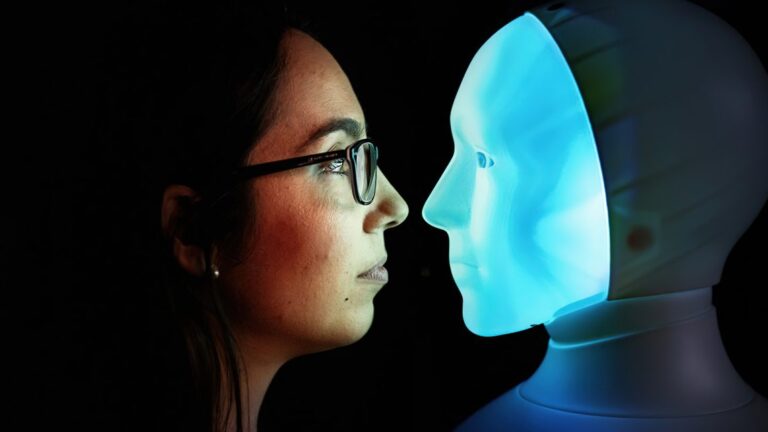
    The INESC-ID and Técnico alumna is an Assistant Professor and Researcher at the KTH Royal Institute of Technology and she is passionate about robotics.

    Iolanda Leite has always been interested in Tamagotchis and Furby robots, and how they worked. Nowadays, she is still fascinated by them and that is reflected in a successful career abroad, at the KTH Royal Institute of Technology, where she is an Assistant Professor and Researcher.

    Iolanda Leite entered Técnico – Taguspark campus in 2002. “There was a very familiar environment among students, teachers and non-teaching staff. Those times were quite intense”, she says when looking back on those days. “I have very good memories, especially every time we were about to finish a project. I made friends for life in those times”, she recalls.

    The passion for robotics arises when she was still a Técnico student attending Artificial Intelligence or Intelligent Agents course units. “The projects were very interesting and the professors inspired me a lot”, she shares. During her MSc degree, she chose to major in Intelligent Systems, “it was probably at that point that I have seriously considered a research career in this area”, she shares.

    For further reading: https://tecnico.ulisboa.pt/en/news/campus-community/iolanda-leite-the-scientist-who-seeks-to-build-socially-competent-robots/

    *Técnico news credits

  • Leonel Sousa appointed to the ACM Distinguished Speakers Program Committee

    Leonel Sousa appointed to the ACM Distinguished Speakers Program Committee

    Leonel Sousa, researcher at INESC-ID and professor at the Instituto Superior Técnico, was appointed to the ACM Distinguished Speakers Program Committee, and  is among the 8 nominees who will be part of the committee responsible for the oversight of the program.

    “After an excellent experience, for three years, as ‘Distinguished Speaker’ at ACM, I was surprised to be invited to join the ACM Distinguished Speaker Program Committee”, says the INESC-ID researcher and Técnico professor, who also explains “this program is responsible for selecting ‘Distinguished Speakers’, distinguished colleagues from academia and companies in the area of computer systems.”

    The ACM speakers represent a wide range of businesses, colleges and universities, including: IBM, Microsoft, BBN Technologies, Raytheon, Sony Pictures Imageworks, Lawrence Livermore National Laboratory, Siemens Information Systems, Stanford University, Carnegie Mellon, University of British Columbia, Georgia Tech, UCLA, McGill University, Tsinghua University and many others.

    Founded in 1947, ACM is an important and prestigious organisation that brings together computing educators, researchers, and professionals, and promotes computer research and innovation through its journals, magazines, high quality scientific events and conferences.

    **Técnico news credits

  • Helena Moniz, INESC-ID Researcher was nominated President of the EAMT and Vice-President of the IAMT

    Helena Moniz, INESC-ID Researcher was nominated President of the EAMT and Vice-President of the IAMT

    Helena Moniz, INESC-ID Researcher was nominated President of the European Association for Machine Translation (EAMT) and Vice-President of the International Association for Machine Translation (IAMT).

    “I am humbly grateful for such an amazing committee consider me as one of them. It is a true honour and a responsibility. I surely hope I may assist the EAMT diverse community of translators, end users of Machine Translation, NLP scientists, and industry partners. The present offers great challenges and opportunities to our community. My motto has been the balance between AI technologies and the human factor and I believe this is very much needed in such exciting times for (M)T!”, mentioned Helena Moniz.

    Helena Moniz is an Assistant Professor at the School of Arts and Humanities at the University of Lisbon, where she teaches Computational Linguistics, Computer Assisted Translation, and Machine Translation Systems and Post-editing.

    She received a PhD in Linguistics at FLUL in cooperation with the Technical University of Lisbon (IST), in 2013. She has been working at INESC-ID/CLUL since 2000, in several national and international projects involving multidisciplinary teams of linguists, speech, and NLP scientists. Within this fruitful collaborations, she participated in 16 national and international projects.

    Since 2015-, She is also the PI of a Protocol between INESC-ID and Unbabel, a translation company combining AI + post-editing, working in AI Research Projects.

    She is currently the vice-coordinator of the Human Language Technologies Lab at INESC-ID and responsible for the WG3 of the COST Action Multi3Generation (CA18231).

  • INESC-ID researchers awarded the INFORUM Award for Best student article

    INESC-ID researchers awarded the INFORUM Award for Best student article

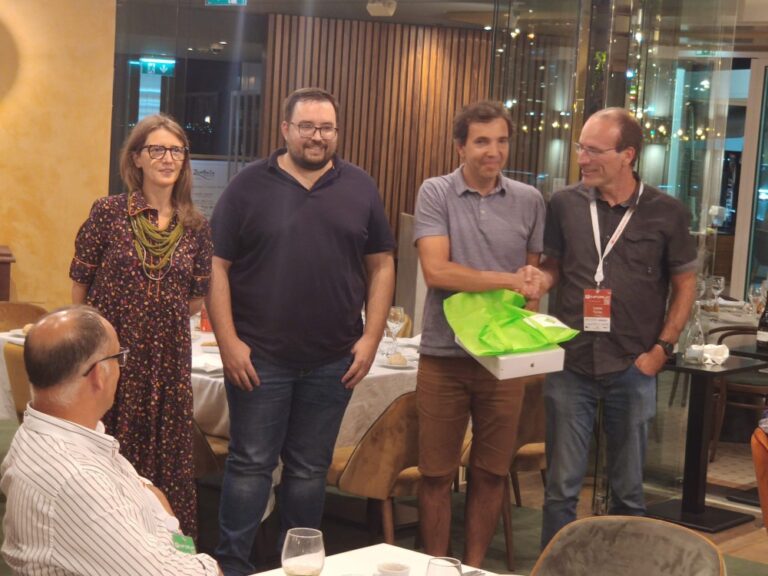
    The article “Non-consensual cryptocurrencies at Ethereum” by researchers Paulo Silva, Miguel Matos and João Barreto was awarded the prize for Best Student Article.

    INFORUM – Symposium on Information Technology took place on 9 and 10 September 2021 at ISEL, in Lisbon.

    More information at https://inforum.org.pt/en/premios


    [PT]

    Investigadores do INESC-ID recebem Prémio INFORUM Melhor artigo de estudante


    O artigo “Consensusless cryptocurrencies in Ethereum” dos investigadores Paulo Silva, Miguel Matos e  João Barreto foi premiado com a galardão de Melhor artigo de estudante

    O INFORUM – Simpósio de Informática teve lugar a 9 e 10 de Setembro de 2021 no ISEL, em Lisboa.

    Mais informação em https://inforum.org.pt/en/premios

  • 3 INESC-ID researchers win Universidade de Lisboa/ Caixa Geral de Depósitos Scientific Awards

    3 INESC-ID researchers win Universidade de Lisboa/ Caixa Geral de Depósitos Scientific Awards

    3 INESC-ID researchers were recognised in the 2020 edition of Universidade de Lisboa/ Caixa Geral de Depósitos Scientific Awards (ULisboa/CGD Scientific Awards) . The awards ceremony took place on 26th July.

    Joaquim Jorge, researcher at INESC-ID and professor at the Department of Computer Science and Engineering (DEI) at Instituto Superior Técnico, received the award in Computer Science and Informatics Engineering scientific area.

    Leonel Sousa, researcher at INESC-ID and professor at Department of Electrical and Computer Engineering (DEEC), won an honourable mention, in Electrical Engineering and Aerospace Engineering (Avionics) scientific area.

    Rui Gameiro de Castro, professor at the Department of Electrical and Computer Engineering (DEEC) and researcher at INESC-ID, received an honourable mention in Environmental and Energy Engineering scientific area.

    The ULisboa/CGD Scientific Awards reward scientific research activity and encourage the practice of publishing in international journals of recognised quality. These awards consist of a diploma and a €6.500 cash prize.

    The CEO of CGD highlighted the importance of ULisboa in society and shared CGD’s willingness to continue supporting and investing in knowledge, particularly in universities. “We believe that the University, with its endless freedom of spirit, is an essential bulwark for knowledge dissemination”, he said.

    The ceremony is available on ULisboa YouTube channel.

    Source: Instituto Superior Técnico

  • ILU: A technology to help improve Urban Mobility

    ILU: A technology to help improve Urban Mobility

    INESC-ID is developing a project in partnership with National Civil Engineering Laboratory, Câmara Municipal de Lisboa (Lisbon Municipality), and the major public carriers in the Lisbon metropolitan area with the aim of aligning urban mobility plans with the emerging traffic dynamics.

    The ILU project (Integrative Learning from Urban Data and Situational Context for City Mobility Optimization) aims to improve mobility in Lisbon by analyzing heterogeneous sources of traffic data produced by ticketing systems, stationary road sensors, and mobile devices; therefore: 1) supporting the transparency of urban mobility plans to the citizen; 2) offering a solid ground for coordination efforts among municipalities and public transport operators; and 3) ensuring the public transport system responds to the ongoing city transformations and changes observed in a pandemic context.

    To this end, the ILU APP, a pioneer recommendation system that integrates the main computational contributions of the project, is being developed. ILU APP offers a multimodal, dynamic and context-sensitive analysis of urban traffic, combining five main features:

    • automatic consolidation of urban data sources from public transport operators and PGIL (platform for intelligent management in Lisbon) with potential impact on the city traffic analysis, with particular attention to the provision of: efficient cross-modal spatiotemporal queries, Big Data visualization utilities, dynamic updates, mappings into data structures conducive to the subsequent machine learning tasks, and the inference of incomplete traffic flows, including alighting stop estimates in the CARRIS network;
    • descriptive analytics for detecting vulnerabilities and ongoing changes to mobility in the city, focusing on:

    – statistically significant traffic patterns, including: (a) frequent and periodic patterns indicative of overcrowding or congestion; (b) emerging traffic patterns that may reveal future vulnerabilities; (c) deviant patterns including anomalous variations in demand; (d) multimodal traffic synergies; and (e) correlations present in multiple sources of urban traffic;

    – dynamic inference of multimodal origin-destination matrices, allowing the detection of vulnerabilities in the network, including transfer needs and long journey times;

    • predictive analytics of traffic flows from various data sources, using innovative associative learning and deep learning principles. The facilities are provided within a solid statistical frame, enabling forecasts of road traffic or demand on the public transport network to be made with guarantees of significance and variability;


    • analytics sensitive to different sources of situational context, in particular the extension of the previous description and forecasting facilities for the study of traffic dynamics in the presence of historical and prospective context, including: (a) planned events (such as sport matches and cultural events), (b) weather forecasts, and (c) interdictions on public roads;


    • optimization facilities based on the previous data-centric models of traffic for: (a) adjusting the public transportation network by revising vehicle routing and frequency; and (b) designing intelligent traffic light control systems at specific city junctures. In this context, the ILU project is combining control and micro-simulation principles with advances from deep reinforcement learning.

    The recommendation system will be delivered in the form of a functional prototype to the project’s public partners – CML, CARRIS and METRO – to support their: (a) strategic decisions related to the city mobility; and (b) real-time operational decisions, including the signaling of the ongoing vulnerabilities in the mobility system.

    These contributions are expected to reveal untapped multimodal synergies and promote a sustainable urban mobility, giving priority for public transport options and the integration of active travel modes. Moreover, the modular, dynamic, and online nature of the devised contributions ensures their interoperability and scalability to other cities in the current pandemic era.


    [pt]

    ILU: A tecnologia a contribuir para melhorar a Mobilidade Urbana

    O INESC-ID está a desenvolver um projeto em parceria com a Câmara Municipal de Lisboa e o Laboratório Nacional de Engenharia Civil que visa contribuir para melhorar a Mobilidade Urbana.

    O projeto iLU (Integrative Learning from Urban Data and Situational Context for City Mobility Optimization) visa melhorar a mobilidade em Lisboa a partir da análise de dados da circulação automóvel e de transportes públicos. Pretende-se descobrir padrões de circulação na cidade, antecipar problemas e fazer recomendações.

    O INESC-ID está a desenvolver um projeto em parceria com o Laboratório Nacional de Engenharia Civil, a Câmara Municipal de Lisboa, e transportadoras na área metropolitana de Lisboa com o objetivo de alinhar os planos de Mobilidade Urbana com as emergentes dinâmicas de tráfego.

    O projeto ILU (Integrative Learning from Urban Data and Situational Context for City Mobility Optimization) visa melhorar a mobilidade em Lisboa através da análise de dados de tráfego produzidos por sistemas de bilhetagem na rede de transportes públicos, sensores rodoviários estacionários, e dispositivos móveis; visando: 1) apoiar a transparência dos planos de mobilidade urbana para o cidadão; 2) fortalecer a coordenação entre municípios e operadoras de transporte público a partir das vistas centradas nos dados; e 3) garantir que o sistema de transporte público responde às transformações em curso na cidade e às mudanças estruturas observadas em contextos pandémicos.

    Para tal, foi desenvolvida a ILU APP, um sistema de recomendação pioneiro que integra as principais contribuições computacionais do projeto. A ILU APP oferece uma análise multimodal, dinâmica e sensível ao contexto do tráfego urbano, combinando cinco características principais:

    • consolidação automática de fontes de dados urbanos presentes nos operadores de transportes públicos e disponibilizados na PGIL (plataforma para gestão inteligente em Lisboa), tendo particular atenção à disponibilização de facilidades de visualização, procuras eficientes, atualização dinâmica dos dados, mapeamentos em estruturas de dados conducivas às subsequentes tarefas de aprendizagem, e à inferência de fluxos de tráfego incompletos, incluindo estimativas do desembarque por passageiro na rede CARRIS;


    • analítica descritiva para detectar vulnerabilidades e contínuas alterações à mobilidade na cidade, com foco em:


    – padrões de tráfego estatisticamente significativos, incluindo: (a) padrões frequentes e periódicos indicativos de congestionamento ou sobrelotação; (b) padrões emergentes capazes de antecipar vulnerabilidades futuras; (c) padrões desviantes incluindo variações anómalas na procura; (d) sinergias multimodais no tráfego; e (e) correlações presentes nas múltiplas fontes de tráfego urbano;


    – inferência dinâmica de matrizes de origem-destino multimodais, permitindo a detecção de vulnerabilidades na rede, incluindo necessidades de transbordo e durações elevadas de viagem;


    • análise preditiva de fluxos de tráfego a partir de várias fontes de dados, usando princípios inovadores de aprendizagem associativa e aprendizagem profunda. As facilidades disponibilizadas têm um enquadramento estatístico sólido, permitindo realizar previsões do tráfego rodoviário ou de procura na rede pública de transportes com garantias de significância e variabilidade;


    • análises sensíveis a diferentes fontes de contexto situacional, em particular estendo as anteriores facilidades de descrição e previsão para o estudo da dinâmicas de tráfego na presença de contexto histórico e prospectivo, incluindo: (a) eventos planeados (desportivos e culturais), (b) registos e previsões meteorológicas, e (c) interdições em vias públicas;


    • optimizadores com base nos modelos de tráfego centrados em dados anteriores para: (a) ajustar a rede de transporte público revendo o roteamento e a frequência dos veículos; e (b) desenhar sistemas de controle de semáforos inteligentes em cruzamentos específicos na cidade. Nesse contexto, o projeto ILU combina princípios de controlo e micro-simulação com avanços em aprendizagem profunda com reforço.

    O sistema de recomendação será entregue sob a forma de um protótipo funcional aos parceiros públicos do projeto – CML, CARRIS e METRO – por forma a apoiar: (a) decisões estratégicas ligadas ao planeamento da mobilidade na cidade; e (b) decisões operacionais em tempo real, incluindo a sinalização de vulnerabilidades ou necessidades de reforço à oferta.

    Esperamos que estas contribuições revelem sinergias multimodais desconhecidas, promovendo uma mobilidade urbana mais sustentável, prioritizando as opções de transporte público e a integração de meios de transporte ativo (mobilidade pedonal, cicloviável, e partilhada). Além disso, a natureza modular e dinâmica das contribuições garante a sua extensão a outras cidades de Portugal e no mundo.

  • H  |  Visions of the Future |  The first issue of the e-magazine of INESC Brussels HUB

    H | Visions of the Future | The first issue of the e-magazine of INESC Brussels HUB

    Discover our newest publication: Visions of the future, the first issue of the e-magazine of INESC Brussels HUB.


    It brings you fresh ideas on the most important issues in scientific research and technology today, together with the stories of those who will develop the technological innovations of tomorrow. It focuses on the stories and the projects of the people who work in INESC, and of INESC’s international present and potential partners.


    For this issue, we wanted to give our contribution to the Conference on the Future of Europe, through a thematic publication on the future of technology


    Learn about the new perspectives and challenges of artificial intelligence, robotics, telecommunications, the energy transition, health technologies, and more.


    Read here


  • INESC-ID researchers awarded ACM SIGSOFT Distinguished Paper

    INESC-ID researchers awarded ACM SIGSOFT Distinguished Paper

    A joint team of researchers including INESC-ID researchers Vasco Manquinho and Pedro Orvalho will receive an ACM (Association for Computing Machinery) SIGSOFT Distinguished Paper Award for their work on a new analysis engine for the popular Alloy modeling language.

    The paper “AlloyMax: Bringing Maximum Satisfaction to Relational  Specifications” has been chosen to receive an ACM SIGSOFT Distinguished Paper Award at  upcoming ACM Joint European Software Engineering Conference and Symposium on the Foundations of Software Engineering (ESEC/FSE 2021).

    The team of authors is composed by Changjian Zhang (CMU), Ryan Wagner (CMU), Pedro Orvalho (INESC-ID/IST, Universidade de Lisboa), David Garlan (CMU), Vasco Manquinho (INESC-ID/IST, Universidade de Lisboa), Ruben Martins (CMU), and Eunsuk Kang (CMU).

    Distinguished papers are given to at most 10% of the papers accepted at  an ACM SIGSOFT-sponsored conference. The winners were chosen by the  program co-chairs from those papers that had either a nomination for  distinguished paper award, or at least two accept scores and no  negative scores.  In total eight papers were recognized this year.

    “The Alloy language is widely used in software engineering for verification, automatic generation of test cases, or security analysis. Considering that the software is currently pervasive on any device we use, some defects can result in serious failures in the operation and safety of the devices”, mentioned Vasco Manquinho.

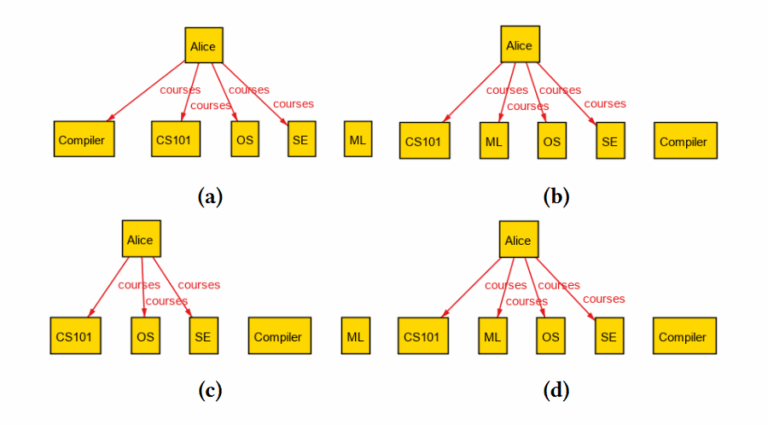
    The work, in collaboration with the CMU team, extends the Alloy modeling language to enable the generation of optimal solutions according to a given optimization criterion. For example, it enables to obtain solutions that maximize the performance or security of systems. The INESC-ID research team has a long-term collaboration  with Prof. Rúben Martins (CMU) in the development of new  optimization algorithms using computational logic.

    “This distinction is important because it allows greater visibility to our work in the field of computational logic. Reality is demonstrating the importance of this area in numerous engineering contexts”, adds the INESC-ID researcher.

  • Lusa and Inesc-ID invite citizens to support the construction of a tool against misinformation

    Lusa and Inesc-ID invite citizens to support the construction of a tool against misinformation

    The Lusa agency and Inesc-ID invite citizens to participate in the construction of a tool that will help fight misinformation, by answering a survey to assess the perception of credibility of news content.

    The survey, which is available at http://inforadar.inesc-id.pt/inquerito/#artigo, is part of a larger project, under development, to build a tool whose ultimate goal is to stimulate the critical spirit of readers and thus contribute to their media literacy.

    “The purpose of the application we intend to create is based on the idea that users should make informed decision on the information they consume  and share, providing readers with a set of relevant indicators that allow them to critically evaluate the credibility of the information they are about to to consume”, explains Inesc-ID researcher Paula Carvalho.

    The objective of this initiative, reinforces Paula Carvalho, “is not to censor, it is to empower readers, to provide them with the means that allow them to make informed decisions”.

    In a first stage of development of this application, which is being developed by the Lusa agency and Inesc-ID, it was carried out an annotation study of a variety of news articles by a restricted group of communication professionals, which allowed the identification of relevant indicators to distinguish news credible from not credible.

    As the tool is not specifically aimed at communication professionals, but at the general public, who are less sensitive to the principles and rules of journalistic writing, it was considered “essential that the previously identified credibility indicators by journalists are also assessed by common readers, to verify its relevance and consider its integration into the tool under development”, she said.

    By participating in the survey, available online, which will be more successful the more people who participate, citizens will be checking aspects such as the strategies used in the news headlines, the mention in the text of credible sources, the author’s degree of impartiality, usually in line with the use of neutral and objective language, a coherent discourse, which does not resort to fallacies, etc.

    “What we intend to investigate is the relative importance that users attach to each of these aspects, in order to select the attributes considered most relevant and informative to determine the credibility of the content they are confronted with”, explains the researcher from Inesc-ID .

    Many works have focused on finding strategies to distinguish credible news from non-credible or fake news (known as `fake news`), but, according to the researcher, “this approach is very reductive, seeking to group together a very heterogeneous set of news content, and, ultimately, journalistic styles, in just two categories”.

    Using the metaphor of colors, Paula Carvalho simplifies that “not everything is white or black. On the contrary, gray rules. Therefore, what we consider most appropriate is to assume that textual content can present different degrees of credibility, depending on the analysis of the indicators that seem relevant for a specific case.”.

    For example, if the reader is confronted with a news article that reveals a low degree of linguistic rigor, use `clickbait` strategies in the title, to attract his  attention and generate clicks, do not cite reliable sources and evokes the author’s opinions and sentiment, ” we believe that he will have no difficulty in making his own judgments about the credibility of the text”.

    The aim of this tool is to understand which textual characteristics are more associated with rigorous journalistic content, on the one hand, and misinformation, on the other, from the perspective of a common reader.

    Regarding the structure of the survey, each respondent is asked to read a text (randomly assigned) and answer a short questionnaire, consisting of a set of closed questions about that text.

    This questionnaire highlights textual aspects that must be considered when critically judging the credibility of an article, having also a didactic character.

    The researcher from Inesc-ID says she believes that, “by answering these questions, the reader is exercising his critical thinking, and it may happen that, in some cases, the initial intuition on the text credibility changes, after reflecting on the aspects he was confronted with”.

    This is one of the objectives of the project: “The tool to be made available will increase readers’ awareness and critical thinking, and thus contribute to their media literacy”, she pointed out.

    As the responses to this survey will be reflected in the tool, one may assume that readers will actively contribute to the definition of the “ingredients” that should make up the news nutrition labels.

    The survey is included in the 5th module of the Ciberinformado Citizen Course, https://www.nau.edu.pt/pt/curso/cidadao-ciberinformado/, developed by the Lusa agency and the Centro Nacional de CiberSegurança, but it can be answered independently, without having to do the entire course. The Cyber-informed Citizen is now in its second edition, having so far had more than eight thousand participants.
    The new module of the “Cyber-informed” course helps the trainee to understand and analyze the “nutritional information” of a news, considering all its content, from the credibility of the sources, the origin or if the text has a high emotional charge or subjectivity .

    The “Ciberinformed Citizen” course lasts an average of four hours, is free, is intended for all citizens who consult online information and is available until August 31, 2021.