Category: Highlights

  • 10, 9, 8…Ariane 6 is set for liftoff and we’re onboard
    10, 9, 8…Ariane 6 is set for liftoff and we’re onboard

    We are on the verge of a new dawn for European space exploration and for Portuguese academia. On its maiden flight, Ariane 6, the new European heavy lift launch vehicle, is carrying our ISTSat-1, the first university CubeSat satellite entirely conceived in Portugal. Handwritten on the coating of the rocket’s head, the so called fairing, are three names: João Paulo Monteiro, Manuel Santos and Tiago Santos – the junior researchers who travelled to the European Spaceport in French Guiana and signed the fairing before it was integrated on the rocket. “It was the most striking moment of our expedition”, confesses Manuel, part of the team of researchers and teachers at Técnico, members of the NanosatLab, a consortium led by INESC-ID.

    Besides this emotional moment, the team also had some technical work to do, like checking the nanosatellite battery status (spoiler alert: it was perfect!)

    The much-antecipated launch date – July 9 – was announced by ESA Director General, Josef Aschbacher, at the Berlin Air Show, one of the most prestigious events in the aerospace sector, happening this week.

    There was a lot to overcome to reach this phase. The idea of building a university satellite came to light back in 2010, with technical and legislation questions to surmount and a pandemic that contributed to the delay in the construction of the Ariane 6, initially meant to be ready by 2020.

    Modular and agile, as reinforced by Aschbacher, Ariane 6 has a reignitable upper stage, allowing it to launch multiple missions into different orbits on a single flight. “This inaugural flight is considered an experimental one; it is a test flight, not a commercial one”, stresses the coordinator of the ISTSat-1 project, Rui Rocha. Fingers crossed!


    Text by Sara Sá, Science Writer | Communications and Outreach Office, INESC-ID

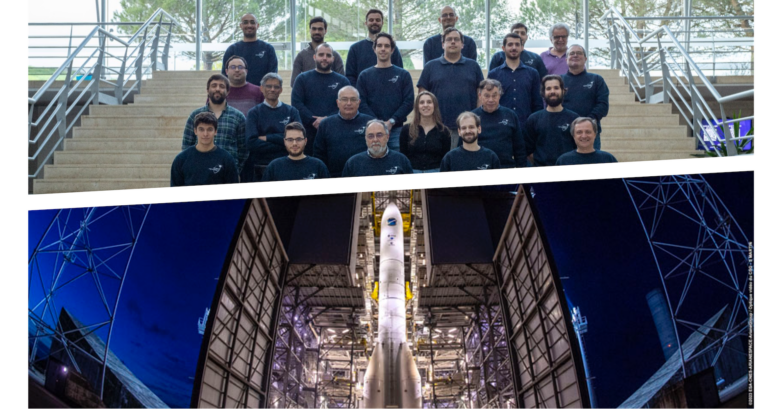
    Image caption: The NanoSat Lab team and Ariane 6. Image credits: Técnico, NanoSat Lab and ArianeGroup

  • INESC-ID Board members and researchers participate in Summer School on leadership in the age of AI

    INESC-ID Board members and researchers participate in Summer School on leadership in the age of AI

    Artificial Intelligence is forcing us to rethink and reshape everything, from leadership to research and innovation. It presents both a challenge and an opportunity. In this defiant and exciting context, INESC Brussels HUB is inviting 25 top R&I administrators, managers, researchers, and policymakers from across Europe to a highly dynamic “lunch to lunch” participatory workshop, taking place on June 5 and 6.

    With an emphasis on active engagement, this summer school ensures valuable and actionable outcomes for all attendees.

    The methodology includes presentations, collaborative discussions and workshops enabling participants to benchmark their practices against leading AI standards; gain insights and innovative strategies for their institutions; network with top experts from academia, industry and policy-making.

    INESC-ID President, Inês Lynce, along with other Board members and researchers from our institution will attend the Brussels meeting, joined by representatives from all other four INESC Group institutions. The list of participants includes AICEP Portugal Global, the European Research Council and various European research institutions.

  • Tackling EU’s AI Act regulation challenges: PLMJ and INESC-ID sign collaboration protocol

    Tackling EU’s AI Act regulation challenges: PLMJ and INESC-ID sign collaboration protocol

    On May 14, the law firm PLMJ and INESC-ID established a protocol to collaborate, each bringing their unique expertise, in developing and implementing specific programs to ensure that AI systems comply with the standards of the new European Union’s Artificial Intelligence Regulation, the world’s first comprehensive AI law.

    This partnership aims to develop new methodologies combining law and technology to check AI systems at every stage, from design to deployment, to make sure they’re safe and fair. The two partners will also promote training and knowledge sharing to enhance understanding of AI’s technical and legal aspects.

    Pedro Lomba, the coordinating partner of the Technology, Media, and Telecommunications sector at PLMJ, emphasised that “the compliance assessment with the AI Regulation—a pioneering law—will be unlike anything we have done so far in Technology Law”, and stressed the necessity for multidisciplinary knowledge about “a rapidly evolving family of technologies, some of which are new,” and the significance of partnering with “a robust technological partner like INESC-ID, which has performed unparalleled work in these areas.”

    Inês Lynce, President of INESC-ID, highlighted the institute’s extensive AI research and its contribution to providing a balanced view on AI’s potential and risks, and pointed out the critical need for “strong collaboration between entities skilled in legal and technological domains, a collaboration made possible through this partnership.”

    Read the full  PLMJ’s press release here.

    (image source: Generative AI)

  • INESC-ID’s researcher awarded a Fulbright scholarship to advance cancer treatment

    INESC-ID’s researcher awarded a Fulbright scholarship to advance cancer treatment

    When the gene editing technology, known as CRISPR-Cas, has come to light, a small revolution in the way we manage illness has started to happen. The potential to diagnose and treat health conditions, such as cancer, exponentially increases when Artificial Intelligence is incorporated. That’s exactly what Emanuel Gonçalves, a researcher at INESC-ID specializing in Automated Reasoning and Software Reliability and a teacher at Técnico, will be doing over the course of his sabbatical at the Broad Institute, of MIT and Harvard, under a Fulbright scholarship that he has just been awarded. “The Broad Institute is a leading institution in the area!”, stresses Emanuel. “And the Fulbright Program is, at the moment, one of the few supporting sabbatical leaves, with the advantage of including the possibility to take the family”, adds the father of two infants.

    During his three months stay in Cambridge, Massachusetts, on the second trimester of 2025, the researcher will analyse a rich CRISPR-Cas9 screen resulting from lab work previously done by the experimental team. Emanuel, who has been working on the application of machine learning to cancer biology and drug resistance, particularly integrating high-throughput functional genetic screens with rich multi-omic technologies – allowing for the analyses of multiple types of biological data simultaneously – plans to develop an efficient method for modelling this information, enabling combinatorial-based editing screenings. That is, to study several interactions and disturbances among proteins simultaneously.

    This visit to The Broad Institute will further “enhance IST and INESC-ID’s participation in the international DepMap consortium”, a platform aimed at empowering the research community to make discoveries related to cancer vulnerabilities. Additionally, “it will provide insights into emerging technologies shaping the next generation of machine learning models in cellular biology,” the researcher noted in his application.

    Fascinated by the potential of gene-editing to study cancer, Emanuel has been involved in a series of studies focused on applying CRISPR-Cas9 screens on a large scale. The ultimate goal during his stay at the Broad Institute is to employ novel machine learning approaches to stratify patients effectively and identify drug targets in innovative ways.

  • Fostering Collaboration for Technological Advancements: A Partnership Between SGInnovate and INESC-ID

    Fostering Collaboration for Technological Advancements: A Partnership Between SGInnovate and INESC-ID

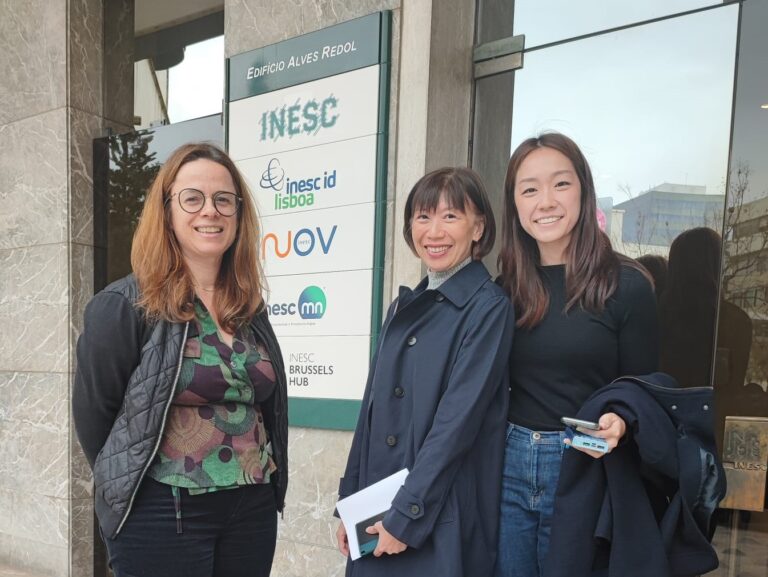
    It is one of the largest markets in the world, making the collaboration between SGInnovate, a leading Singaporean government-backed organization, focused on deep tech innovation, and INESC-ID an excellent opportunity to foster partnerships and drive technological advancements with societal impact. “Innovation knows no borders, and we hope that our initial engagement with SG Innovate marks the beginning of a fruitful partnership, particularly in facilitating access to new funding mechanisms and markets for innovative ideas,” notes Sílvia Castro, Head of the Innovation Office at INESC-ID, who was part of the team that received a Singaporean delegation visiting the premises of INESC-ID.

    SGInnovate, private-limited company wholly owned by the Singapore Government, specialized in supporting and scaling Deep Tech startups, aiming to address global challenges through innovation. Based in Singapore, it is focused on developing Human Capital and deploying Investment Capital to empower entrepreneurial initiatives around emerging technologies like Advanced Manufacturing, AgriFood, Healthcare, Biomedical Sciences, and Sustainability. Juliana Lim, SGInnovate’s Executive Director & Talent, and Samantha Fong, Manager of Partnerships, were also hosted by Miguel Correia, Board Member of INESC-ID.

    The tour was also an opportunity to meet with representatives from INESC-ID’s startup, including Diogo Rato Co-Founder of Testwaves, Miguel Freire Co-Founder & CEO at Neural Shift, Alexandre David Chief Operating Office at VoiceInteraction, and Marcelino Santos, Co-founder of SiliconGate. “SGInnovate has supported so far around two thousand startups in Singapore. A collaboration between INESC-ID’s startups and SGInnovate may open doors to the expansion on these startups to Singapore, and from there to the Asian market. This is an incredible opportunity for the expansion of their business”, stresses Miguel Correia.

    The visit was organized in collaboration with ANI, Startup Portugal, and AICEP, and included other Portuguese research institutes. “Together, we are laying the groundwork to amplify the impact of our deep tech solutions”, summarizes Sílvia Castro.

    (Image: Sílvia Castro with the SGInnovate delegation members, Juliana Lim and Samantha Fong | © 2024 INESC-ID)

  • In the Media: Luísa Coheur discusses AI emergence in classrooms with Público newspaper

    In the Media: Luísa Coheur discusses AI emergence in classrooms with Público newspaper

    INESC-ID researcher Luísa Coheur* and professor at Técnico has recently been interviewed by national newspaper, Público, about artificial intelligence (AI) integration in classrooms and the challenges it presents to teachers.

    Joined by several fellow educators, Luísa Coheur’s highlighted the rise in the use of AI by students and why it’s inevitable, providing advice to teachers and parents alike, on the advantages AI tools can provide, like assistance and increased classroom engagement, while not neglecting that they should not act as a replacement for skills acquired during the lessons.

    Read the full article (in PT) here.

    *Luísa Coheur is an Associate Professor at the Department of Computer Science at Instituto Superior Técnico and a Researcher at INESC-ID, in the “Human Language Technologies” group. Her preferred research topics focus on Dialogue Systems, Question/Answer, and Machine Translation (including for Portuguese Sign Language).

    (image source: Generative AI)

  • Advancing Compiler Technology: Nuno Lopes receives Google Research Scholar Award with Alive2 Project

    Advancing Compiler Technology: Nuno Lopes receives Google Research Scholar Award with Alive2 Project

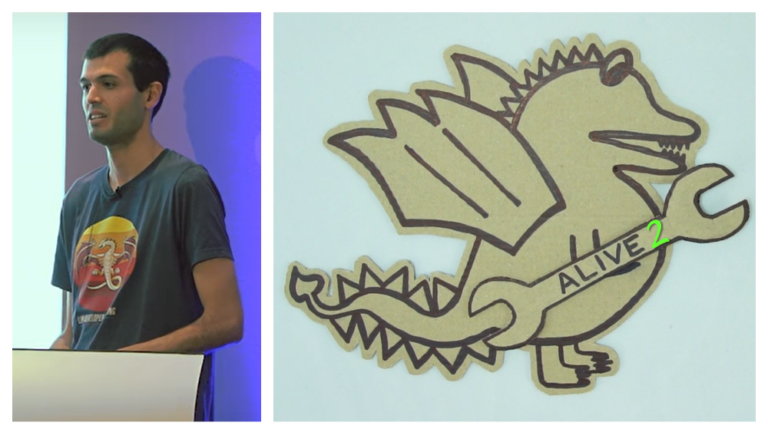
    Nuno Lopes*, researcher at INESC-ID and professor at the Department of Informatics at Técnico, received the prestigious and highly competitive Google Research Scholar Award, which includes a grant of $60,000.

    The award was given for his research in the area of automatic verification of compilers, which Nuno Lopes has developed in the last decade. In the past, this work had already been recognised with two distinctions for best papers at the Programming Language Design and Implementation conference (PLDI), and a technology transfer award. The prize money will be used to hire students to work on Alive2 for LLVM compiler verification, a tool developed by INESC-ID and used by several companies, including Google.

    The prize is awarded annually by Google and aims on funding world-class research conducted by early-career professors who are pursuing research in fields relevant to Google. This year, only two were granted in the area of Software Engineering and Programming Languages worldwide, with INESC-ID being one of the recipients.

    *Nuno Lopes is a researcher within the High Performance Computing Architectures and Systems Scientific Area at INESC-ID and Associate Professor at the Department of Computer Science and Engineering at Instituto Superior Técnico.

  • Tokyo within reach of an internship: opportunity for INESC-ID PhD students

    Tokyo within reach of an internship: opportunity for INESC-ID PhD students

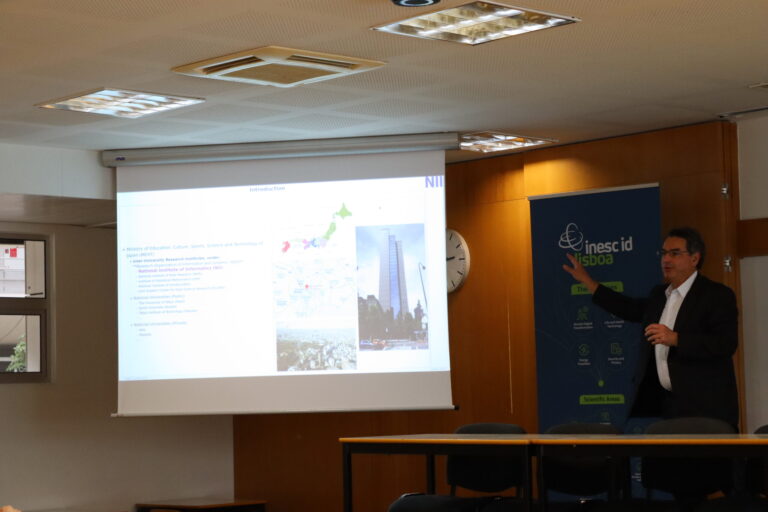
    It starts with an internship and it may end up in marriage. “Portuguese students love Japan,” reveals Emmanuel Planas, the professor in charge of the International Internship Program at NII- National Institute of Informatics, in Tokyo. “In some cases, after the internship they get a job and get married”, he adds after his presentation, last week, at Técnico Oeiras, to present the Memorandum of Understanding (MOU) signed between INESC-ID and the NII. Through this agreement, INESC-ID’s and IST’s Master’s in Computer Science students are invited to apply to an internship.

    This MOU with INESC-ID has been in place since 2011, after Rui Prada, from Artificial Intelligence for People and Society research area and a teacher at Técnico, became aware of this possibility, while completing a post-doc at NII. “I realised it was a good opportunity for students.”

    Finishing his tour around Europe to present this competitive program, established with the most reputable institutes in the world, the acting director of the Global Liaison Office explained to the audience the main aspects of the MOU. Every year, the NII receives 140 masters’ and doctoral students to this paid internship, lasting 2 to 6 months.

    At NII, located in the centre of the metropolis, very close to the Ministry of Education from Japan, there are 350 scientists, working in three research areas. Before applying, candidates must choose a topic and approach a senior researcher to work with during the internship. There are two calls every year, one in April and another in September, with 60 to 70 interns accepted per call. In each institute there is a referee who receives the applications, selects them and sends them to NII. AT INESC-ID, Rui Prada is the person in charge.

    Ana Carrasco, a PhD student, working in social robotics at GAIPS, has spent six months at NII under the MOU and highly recommends it. So much so that she is considering applying once more. “It’s an amazing experience”, she summarizes. “People are so friendly that I hardly felt the language barrier”, Ana adds, anticipating what might be felt as an obstacle by potential candidates.

    So far, around 40 students from INESC-ID/Técnico have joined the programme, Rui Prada estimates. ‘Ja ne’ Tokyo.

  • A year in review: 2023 INESC-ID Annual Report now available!

    A year in review: 2023 INESC-ID Annual Report now available!

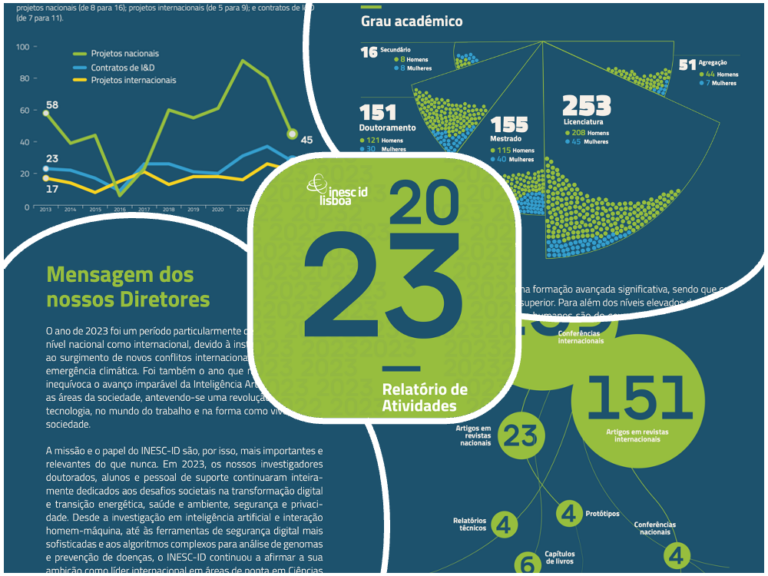
    The 2023 INESC-ID Annual Report has been released! The report, published in Portuguese, offers a comprehensive overview of the INESC-ID community, including the latest facts and figures, project updates, and achievements from the past year. It also presents highlights of our research, development, and innovation throughout 2023, alongside detailed information about our organisational structure, mission, and strategic objectives.

    Download the 2023 Annual Report here, and get to know our institute better with this retrospective.

  • The world needs more girls and women in tech and INESC-ID is helping to achieve that goal

    The world needs more girls and women in tech and INESC-ID is helping to achieve that goal

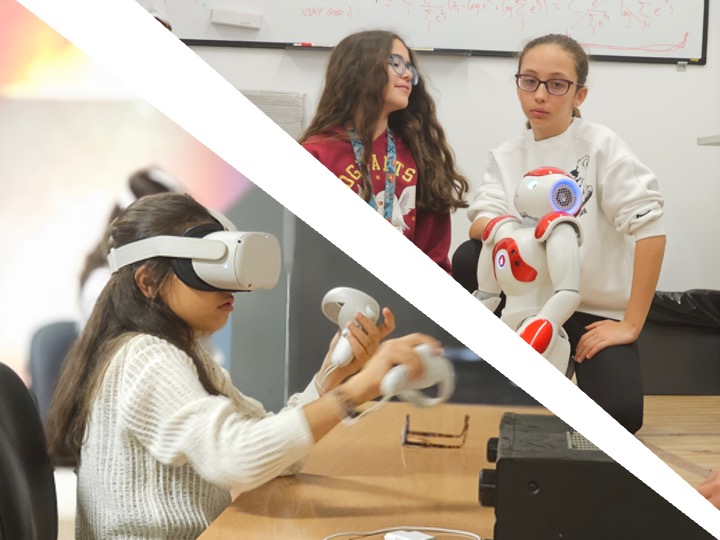
    It is inevitable! There is a natural urge to hold the dancing robot when it interrupts the choreography, falling down as programmed. This act, performed at INESC-ID Social Robotics Lab, from the Group of AI for People and Society (GAIPS), captured the full attention of elementary students from Agrupamento de Escolas de Miraflores, Oeiras, who were participating in the International Girls in ICT Day, celebrated at Técnico’s Taguspark Campus, on April 24th.

    If gender equality were attained in the Information and Communications Technology (ICT) sector, a market of up to 50 billion euros would open up, according to UNESCO. And this in only one of the reasons to celebrate and encourage girls to enrol in a career in this area.

    Since 2011, the International Telecommunication Union (ITU) has been promoting the event to raise awareness and stimulate girls and women to pursue a career in Science Technology Engineering Art and Math (STEAM). To mark the date, the GIRLSTEAM’24 received 150 students, who participated in activities promoted by INESC-ID and other research centres, such as the Institute for Bioengineering and Biosciences (IBB) and the Games Lab.

    During the visit, the students learned that besides entertaining, robots can also help children with autism navigate a world of sensory overload or accompany impaired people complete some tasks. And even solve some complicated math calculations. “Can they divide by zero?”, asked young Mateo.

    We could wager 100% of the youngsters that visited us are, in a way, gamers. But it certainly came as a surprise to realize that games can be a way to study altruism, as Samuel Gomes, also from GAIPS, does, or to cope with diseases, as the INESC-ID researcher, Sandra Gama, from the Human Lab, at the Graphics and Interaction (GI) group, pursues.

    In Europe, women hold just 22% of the tech industry’s positions and worldwide, out of the 7 million people who work in the ICT sector, only 30% are women. It is widely recognised technology is the language of tomorrow, cutting across many different professions, from health to economics. Girls must have a role in the future – for the sake of mankind.

    (Image: students participating in GI and GAIPS activities at GIRLSTEAM24 | © 2024 INESC-ID)