Category: Highlights

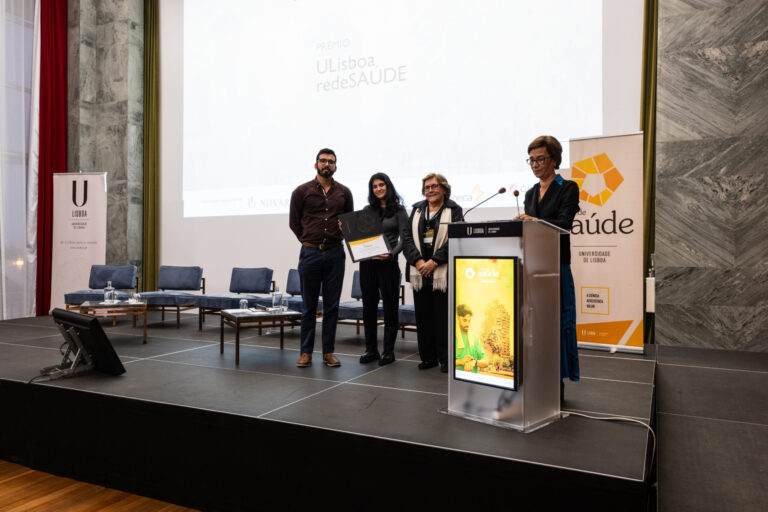
  • INESC ID Master student wins Prémio ULisboa redeSAÚDE
    INESC ID Master student wins Prémio ULisboa redeSAÚDE

    Mafalda Serafim, an INESC ID Master student in the Human Language Technology laboratory (HLT) and at Instituto Superior Técnico Computer Science and Engineering Department (DEI), won the “Prémio ULisboa redeSAÚDE 2023” in the category of Health Systems / Entrepreneurship / Digital Transition.

    The winning project, Mafalda’s master’s thesis “Acquisition of bio-markers from speech for the identification of Bipolar Disorder in European Portuguese,” was developed under the supervision of Professor Sofia Pinto and Professor Alberto Abad, both INESC ID researchers and Técnico faculty members (DEI Department), in collaboration with Professor Joaquim Gago (Unidade de Saúde Mental de Oeiras and Centro Hospitalar de Lisboa Ocidental – CHLO), and the support of the psychiatrist Daniel Sousa.

    The Prémio ULisboa redeSAÚDE distinguishes the best Master’s and Ph.D .works carried out by Universidade de Lisboa students in health related topics.

    More here.

  • INESC ID, INOV and INESC MN together in the 1st INESC LX annual meeting

    INESC ID, INOV and INESC MN together in the 1st INESC LX annual meeting

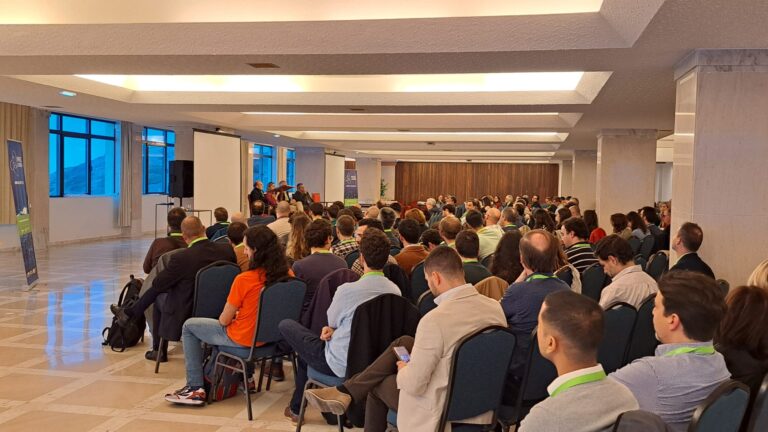
    On November 3rd, 2023, took place the first joint Meeting of INESC Lx, a consortium of the INESC institutions based in Lisbon: INESC-ID, INOV and INESC MN. Over 270 members of the three institutions met at Hotel Golf Mar, near Lisbon, for a full day of discussion and networking. The main goal of the meeting was to present the work being developed by the three R&D Institutes, all committed to advancing scientific research, technological development, and innovation, while building a networking environment to strengthen the collaborative work among the INESC Lx group.

    Leonel Sousa, President of INESC Lx, opened the Welcome Session highlighting INESC Lx mission and R&D+i activities since it was launched in 2020, followed by a video message by José Tribolet, Founder, and ex-President of INESC (Instituto de Engenharia de Sistemas e Computadores), and Instituto Superior Técnico Emeritus Professor.

    Teresa Almeida, the President of the Commission for Regional Development and Coordination of Lisbon and Tagus Valley (CCDR LVT), participated as an invited speaker and gave an overview of the Lisbon and Tagus Valley Region (RLVT) numbers and initiatives in the field of R&D. According to Teresa Almeida, the region has almost 40% of the country’s researchers and 43% of the R&E activities. In her opinion, INESC serves as an important player in this region, being involved in a high number of Agendas of the Recovery and Resilience Plan.

    The meeting featured both joint and parallel sessions, offering an overall perspective of each Institute’s competences and main accomplishments.

    After the Opening Session, INESC ID hosted its own parallel session providing an overview of the Institute’s activities by the Board of Directors. Inês Lynce, President at INESC ID, opened the session with an insightful look into the Institution’s history and main activities, followed by a presentation by Nuno Roma, Chief Financial Officer, on its financial performance. João Paulo Carvalho, Director of HR, spoke about the Institute’s human resources and presented the most recent collaborators, including researchers and support staff. Finally, Luís Rodrigues, President of the Scientific Council, introduced the main challenges expected for the next year, namely the upcoming FCT Evaluation of the R&D Units.

    At the end of the session, INESC ID presented its two annual distinctions: Rui Castro was named the Best 2023 Researcher and Ricardo Rei the Best 2023 Ph.D. student.

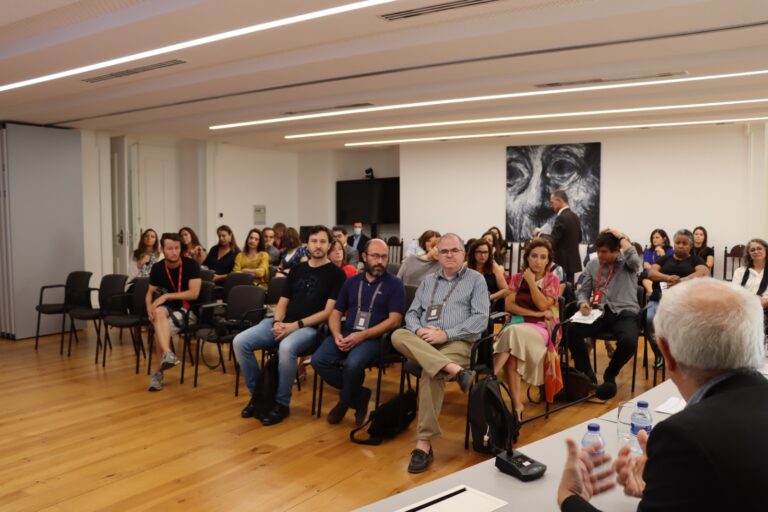
    In the afternoon, the second INESC ID session was fully dedicated to its Ph.D. students, being the first time, all doctoral students were invited to attend the annual event. The “Through the eyes of Ph.D. students” discussion panel, chaired by Susana Vinga, member of INESC ID Board of Directors, was an opportunity for students Ana Rita Baião, Catarina Botelho, David Calhas, Diogo Carvalho, Diogo Nunes and Renata C. Branco to share their experience at INESC ID, talk about the main challenges they face, and offer valuable inputs to the Institution’s Governance and community of researchers on what can be done to improve their experience.

    At the end of the day, the room was again full for the Closing session that had the privilege to count on the presence of the Portuguese Minister of the Economy and Maritime Affairs, António Costa Silva. The minister highlighted the work being done by INESC Lx and the importance of its participation in several mobilizing agendas and European projects, challenging the group to keep its significant contribution to the R&D sector in Portugal.

    The first INESC Lx meeting was surely a privileged platform to share ideas and foster new research opportunities, exploring the potential for future technological advancements and collaborations between all three Institutions.

    INESC ID 2022 Annual meeting

  • In the Media: Opinion article in Jornal i by INESC ID researcher Rui Castro

    In the Media: Opinion article in Jornal i by INESC ID researcher Rui Castro

    Rui Castro, researcher at INESC ID and full Professor at Instituto Superior Técnico, authored an opinion article published in the newspaper “Jornal i” titled “Energy storage systems in the electrical grid: What are we waiting for?” (“Sistemas de armazenamento de energia na rede elétrica: Estamos à espera de quê?”).

    The article discusses the complexity of the electrical power system and its dependence on a wide variety of different generator types each one with its own characteristics, from natural gas, to hydroelectric, wind, and solar power. Rui Castro emphasizes a fundamental constraint regarding the power system, which is that the balance between electricity production and consumption must be met at every second. This restriction is pivotal for the safe operation of the electrical grid.

    The article approaches two promising alternatives for energy storage: batteries and hydrogen. The INESC ID researcher acknowledges that it is possible with current battery technology to store and later release large amounts of electrical energy at a national level, but the high cost is still an issue. Nevertheless, the author predicts that soon, as technology advances and the cost of batteries decreases, this will be a competitive and economically viable option for large-scale energy storage. Regarding hydrogen, the production process through electrolysis during periods of low energy consumption is still expensive and inefficient. However, technological advancements are expected to make it viable in the longer term.

    Both are considered viable options for energy storage and helpful for power system’s stability, with batteries expected to become competitive sooner. At the same time, hydrogen may be an alternative in the longer term, depending on technological advancements and cost reductions.

    According to Rui Castro, Portugal needs to anticipate and prepare a future centered on an electrical system able to rely almost 100% on renewable energy sources. As a closing observation, the INESC ID researcher highlights that it is urgent to invest in efficient energy storage systems. The question is: what are we waiting for?

    Full article here.

  • INESC ID is part the Alliance for Energy Transition (ATE) consortium led by Efacec

    INESC ID is part the Alliance for Energy Transition (ATE) consortium led by Efacec

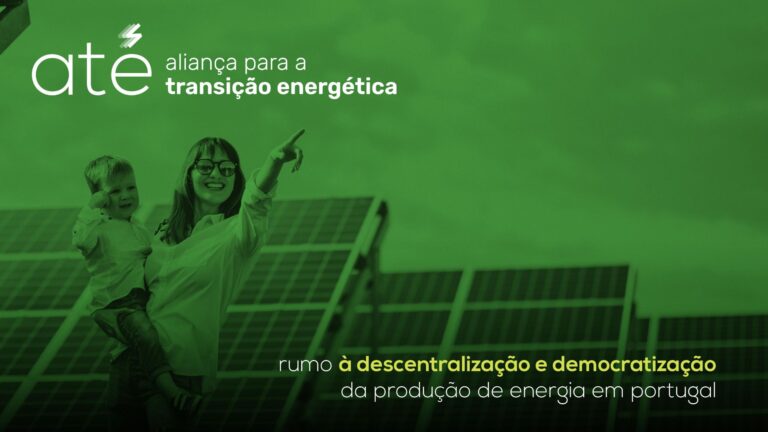
    The Alliance for Energy Transition (ATE) and IAPMEI – the main governmental agency for economic policies targeted to Portuguese companies – signed an acceptance agreement in the scope of the Recovery and Resilience Plan, to support the development of an ecosystem for energy transition and decarbonization.

    ATE is integrated in the agenda of RNC2050 – Roteiro para a Neutralidade Carbónica (Roadmap for Carbon Neutrality) and counts on a network of 80 partners, including 52 companies and 28 Institutions of the Research & Innovation System. The consortium is led by Efacec in partnership with industry partners like MC (Sonae), Capwatt, Smarternergy, Etermar, SEL (Smart Energy Lab), Tekever, PRF and Research Institutions such as INEGI, INESC ID and INESC TEC, among many others.

    INESC ID will contribute to four key work packages: developing advanced protection algorithms for high renewable energy penetration, creating innovative electric vehicle charging and management solutions, introducing novel methods and services to encourage flexibility usage in residential and commercial buildings. Following this, INESC ID will take the lead in establishing a National Network of Research Laboratories aimed at fostering cooperation to expedite Portugal’s energy transition.

    Envisioning a brighter future of energy in Portugal, ATE will create 420 qualified jobs in Portugal and generate an expected business volume of €550M/year, promoting the decrease of greenhouse gases (up to 3.4M tons of CO2) and developing a range of products, more than 80% of which are destined for exportation.

    The consortium will exploit opportunities in the context of Decarbonization, Decentralization and Digitalization in the Energy sector, promoting, a unique competitive ecosystem in Portugal but with an international scale.

    ATE projects are structured in six pillars, oriented towards strategic competitiveness and value creation in different aspects of the energy sector: energy communities and microgrids, renewable-based generation, energy efficiency and transition in industrial, commercial and residential users, and sustainable mobility and interconnection infrastructures.

    INESC ID will actively contribute to three of the pillars, namely in energy efficiency and transition in industrial, commercial and residential users, and sustainable mobility and interconnection infrastructures.

    According to ATE “this new value proposition will contribute to creating infrastructures that will allow the decrease of emissions in the energy sector in Portugal and in multiple international geographies”.

    Original article (in PT).


  • INESC ID researchers among the World’s Top 2% Most Influential Scientists

    INESC ID researchers among the World’s Top 2% Most Influential Scientists

    Stanford has released the World’s Top 2% Most Influential Scientists lists, featuring fourteen INESC ID researchers among the 200 thousand World’s most cited scientists.

    This annual recognition comprises two lists naming top scientists, doctors, engineers, and mathematicians, one referring to 2022 most influential scientists and the other focusing on a career-long impact.

    Compiled by Stanford University (USA) and published by Elsevier, scientists are classified in 22 scientific fields and 174 subfields. The lists are based on data from Scopus – the reference database of article abstracts and citations for journals and other academic publications – which covers nearly 36 377 titles (22,794 active titles and 13,583 inactive titles) from approximately 11,678 publishers.

    This year, a total of fourteen INESC-ID researchers have been appointed, some of them featuring in both categories:

    INESC ID’s most influential scientists in 2022 (7):

    INESC ID scientists included in the career-long database (14:

    More about last year INESC ID awardees list.

    Most influential 2022 scientists (full lists)

  • Supreme Court of Justice introduces new AI tool developed at INESC ID

    Supreme Court of Justice introduces new AI tool developed at INESC ID

    On October 4th, the “Supremo Tribunal de Justiça” (STJ) hosted in its headquarters an open public session to present the results of IRIS – Information, Rationalization, Integration and Summarization: Application of Artificial Intelligence Techniques at the Supreme Court of Justice”. In this project, the INESC ID researchers developed a set of tools, based on Artificial Intelligence (AI) techniques, to allow an easier access to court decisions.

    That resulted in three main IT features: an Optical Character Recognition (OCR) service for large documents (over a thousand pages) which will allow STJ to convert paper archived rulings into searchable text; an online publication service allowing an easy search of all the digital Jurisprudence rulings by the STJ,; and finally, an anonymization tool, which is already being used by the STJ and will now be made available to all courts, through a protocol signed at the event with the “Conselho Superior de Magistratura”.

    José Borbinha, researcher at INESC ID, Professor at Técnico and one of the project coordinators explains that “this new solution allows, in one hand, to simplify the complex task of analyzing these types of documents thanks to the support of AI techniques, and on the other hand to support the anonymization of judicial proceedings for reasons linked to the protection of personal data. This means for example that in a sentence or ruling of a Portuguese court, the names of those involved and their personal data are no longer included.”

    The IRIS research team used artificial intelligence and machine learning techniques to achieve the project goals “We had 19 members from INESC ID working under this project, from junior to senior researchers from different research areas who completed different tasks: from image segmentation to extract information, to OCR applied to images and text extraction, analysis of natural language, document search and retrieval, and finally person-machine interface for all the challenges listed above”, explains José Borbinha.

    According to the researcher ”one of the main motivations for this project were the  Conclusions of the Council of the Member States of the EU, on the adoption of good practices regarding the online publication of judicial decisions”, a document published in the Official Journal of the European Union. José Borbinha adds that “the project had a significant technological and innovative contribution to the adoption of some of these recommendations in Portugal”.

    The IRIS Project is an initiative of the Supreme Court of Justice, co-financed by the Support System for Digital Transformation of the Public Administration program (SAMA) under COMPETE 2020 as part of the Portugal 2020, and by the European Social Fund.

    Team members:

    #Scientific coordinators

    José Borbinha (Técnico / INESC-ID)
    Ricardo Ribeiro (Técnico / Iscte-IUL)

    #Technical coordinator

    Diogo Almiro (INESC-ID)

    #Senior Researchers (INESC-ID)

    Flávio Martins (Técnico / INESC-ID)
    Daniel Gonçalves (Técnico / INESC-ID)
    Helena Sofia Pinto (Técnico / INESC-ID)
    Miguel Won (INESC-ID)
    Isabel Trancoso (Técnico / INESC-ID)
    Pedro Santos (Técnico / INESC-ID)
    João Dias (UAlgarve / INESC-ID)
    Elsa Cardoso (Técnico / Iscte-IUL)

    # Junior Researchers (INESC-ID research team and Técnico students)
    Martim Zanatti (PhD / Técnico)
    André Oliveira (MSc / Técnico)
    Henrique Fernandes (MSc / Técnico)
    João Dinis (MSc / Técnico)
    João Simões (MSc / Técnico)
    Luis Silva (MSc / Técnico)
    Rui Melo (MSc / Técnico)
    Sara Ferreira (MSc / Técnico)

    More about the project here.

  • INESC ID researchers contributed to the development of an intelligent device for the detection of multi-resistant bacteria

    INESC ID researchers contributed to the development of an intelligent device for the detection of multi-resistant bacteria

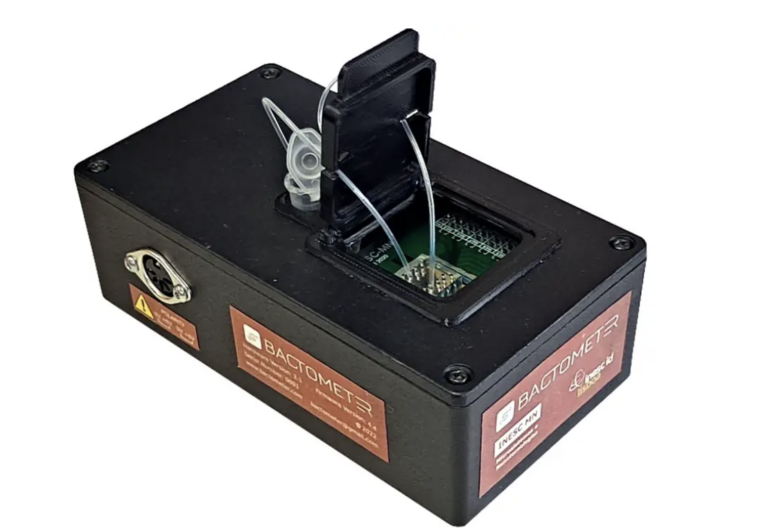
    A group of Portuguese researchers from INESC-ID and INESC MN have contributed to the development of Bactometer, a biological detector that can be used as screening system to detect multi-resistant bacteria in less than an hour.

    Multidrug-resistant bacteria are estimated to cause about 4.5 million hospital infections every year in Europe. Every day, patients colonized with multidrug-resistant bacteria are seen in Intensive Care Units, introducing these microorganisms into the hospital environment. These microorganisms develop more resistance and infect 1/5 of hospitalized patients.

    Bactometer will allow rapid and efficient identification of the strain of bacteria and its resistance mechanisms, reducing the current waiting time of 48-72h (with the laboratory culture method) to less than 1h. This new device will serve as a valuable support in the battle against antimicrobial resistance in Hospital environments.

    Additionally, the device is easily operated with no need for previous experience (similar to a COVID test) and the cost is similar to lab cultures (a classic but less precise method). This alternative is highly accurate on par with other expensive and sophisticated methods, such as PCR.

    Bactometer was created thanks to the research that has been developed at INESC for the last 15 years (INESC MN and INESC ID), as the device integrates technologies resulting from this long research work.

    The project was launched and monitored by Técnico professors: Paulo Freitas and Susana Cardoso from INESC MN and Moisés Piedade, Jorge Fernandes and Gonçalo Tavares from INESC-ID.

    The current project team is composed by 4 elements from Instituto Superior Técnico: Diogo Caetano (Electrical and Computer Engineering Ph.D.), Ruben Afonso (Electrical and Computer Engineering Ph.D. candidate), Débora Albuquerque (Biomedical Engineering Ph.D. candidate) and Ana Rita Soares (Technological Physics Ph.D.).

    The device development also counted with the support of the Portuguese start-up Magnomics. Founded in 2013, the company is focused on delivering the next generation of fully portable in-vitro molecular diagnostic devices. The basis of its novel and proven technology was transferred from INESC-ID and INESC MN and is based on an on-chip DNA extraction, amplification, and magnetic detection.

    Bactometer device schematic. Credit: INESC Brussels Hub

    More about the Bactometer on the official website.
    Official Press Release (INESC Brussels)

  • Two new exploratory projects led by INESC ID supported under the CMU Portugal Program

    Two new exploratory projects led by INESC ID supported under the CMU Portugal Program

    INESC ID will lead two new exploratory research projects (ERPs) selected under the 2022 Carnegie Mellon Portugal (CMU Portugal) Call, funded by Fundação para a Ciência e Tecnologia (FCT). The CMU Portugal Program supports the launch of ERPs on a regular basis, with the main objective of promoting Portugal’s international competitiveness and innovation capacity in Science and Technology (S&T) in Information and Communication Technologies (ICT).

    In 2021, two INESC ID projects were selected under the CMU Portugal Call, and two others will now be launched:

    mm-Size Stimulator Implants

     The project is led by Jorge Fernandes at INESC ID and by Marc Dandin at the Electrical and Computer Engineering Department (CMU) with a total funding of 50.000€.

    Bioelectronic Medicine (BEM) is at the intersection of scientific disciplines and has experienced a huge development in the past 5 years, being able to revolutionize how medicine is practiced by favoring the use of electroceuticals to interface with the nervous system instead of drugs.

    The “mm-Size Stimulator Implants” project is focused on the development of subdermal and deep mm-size implants. The main goal is to design a microelectronic implant circuit using state-of-the-art techniques at circuit level to obtain a simple implant with extremely low-power consumption (<1mW), capable of harvesting its’ own energy, having enough communication capabilities to receive commands and send status, and finally, being capable of stimulating nerves. 

    SALAD-Nets: Synthesizing Adaptive Large-scale Accelerated and Distributed Network Functions 

    The SALAD-Nets project is led by Luís Pedrosa at INESC ID and Srinivasan Seshan at the Computer Science Department at CMU with a total funding of 49.948,25€.

    The goal of this project is to allow developers, operators, and even cloud customers to design a virtual network of software NFs, and a synthesizer to map this large-scale distributed network onto the underlying network substrate, as deployed in the datacenter. Considering each device’s capabilities and limitations, SALAD-Nets partitions and optimizes the network functionality, generating the code that powers not only the myriad devices in the network, but also the controller that orchestrates it all to realize on the physical network fabric the same functionality that was specified in the virtual network topology.

    More on CMU Portugal website.


  • Pedro Carvalho writes on energy transition for Jornal i

    Pedro Carvalho writes on energy transition for Jornal i

    Pedro Carvalho has written a piece for Jornal i, calling once more for further conversation on energy transition.

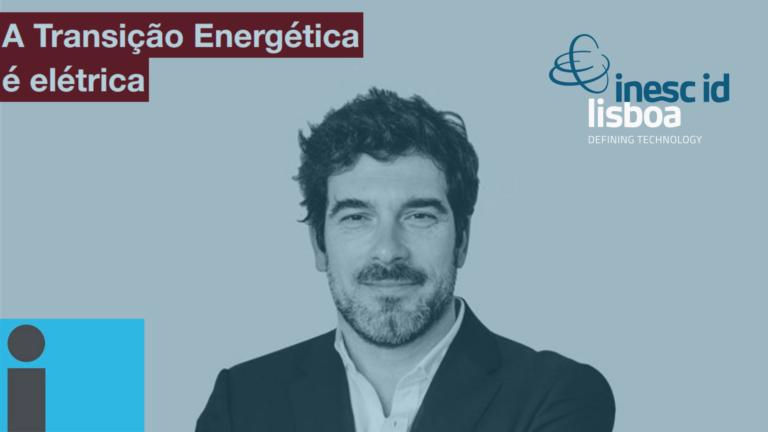
    Published online this Tuesday, 01 August 2023, in A Transição Energética é elétrica (“Energy Transition is electric”), Pedro Carvalho — Sustainable Power Systems researcher at INESC-ID and Full Professor at Instituto Superior Técnico — writes on the ageing reality of our electrical grid and its impact on the power delivery demands of the future, as well as electric mobility and the continuous need for renewable production.

    One can see the energy transition as aiming at addressing the challenges posed by climate change, resource depletion, and energy security through efficient transitions from fossil fuel-based sources to cleaner and more sustainable alternatives. Upgrading and modernizing the electrical grid is a crucial component of this transition, enabling it to handle higher capacities and efficiently integrate renewable energy sources like solar and wind, which are variable in nature.

    It is the Sustainable Power Systems community’s hope that, by embracing the energy transition, we can create a more resilient, environmentally friendly, and future-proof energy infrastructure. At INESC-ID we do research in this new complexity and develop new control, operational and planning concepts and approaches to deal with that power system transformation.

    You can read Professor Carvalho’s full piece here.

  • João Tiago Aparicio awarded best Master’s Thesis Prize at Prémio ULisboa RedeMOV

    João Tiago Aparicio awarded best Master’s Thesis Prize at Prémio ULisboa RedeMOV

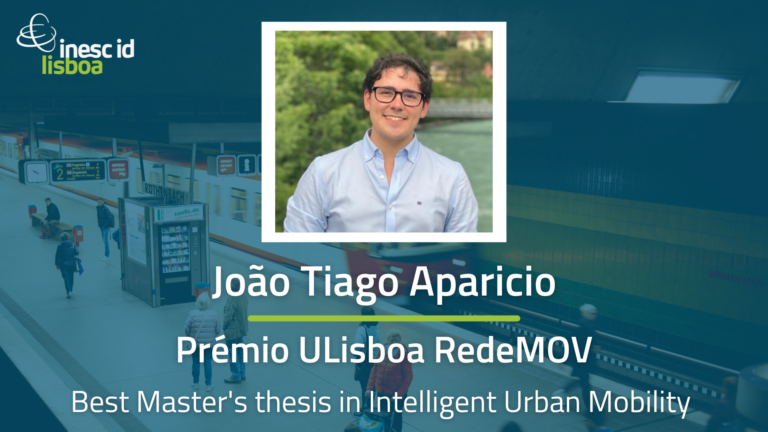
    João Tiago Aparicio‘s master’s thesis has been considered the best in the area of ​​intelligent urban mobility, among those produced at the University of Lisbon (ULisboa), in 2022.

    Modelling and Assessing Resilience in Multimodal Transportation Systems proposed to enable transportation operators to efficiently manage the demand for transportation in each segment of the network. The full thesis abstract is available below*. Aparicio is currently a PhD student at the Information and Decision Support Systems (IDSS) Research Area at INESC-ID.

    The University of Lisbon, through networkMOV (an interdisciplinary thematic network in the field of intelligent urban mobility), awards the ULisboa-networkMOV Prize (Prémio ULisboa RedeMOV) to recognize the best master’s and doctoral final projects carried out at ULisboa related to the theme of intelligent urban mobility. The prize for the best master’s final project, amounting to €1,500, was first awarded in 2021.

    The award ceremony took place on July 14th, in the Conference Hall of Reitoria da Universidade de Lisboa, as part of the networkMOV Conferences “Conversas à sexta” (“Friday Conversations”).


    *Modelling and Assessing Resilience in Multimodal Transportation Systems (Full abstract): Currently, more than 50% of the global population lives in urban areas. This brings various mobility challenges, particularly pushed by commuting needs in the public transport network to get to work, school, university and several other places daily. In this context, transport demand, city information and operational concerns need to be aligned. As such, this thesis aims to contribute to a more sustainable mobility solution by proposing and empirically testing methods to assess the resilience of a multimodal transport system. Resilience is seen in both static and dynamic settings, looking at aspects in the network topology and user flow and demand. Our hypothesis is that the appropriate multi-layered and traffic-sensitive modelling of this network can promote the integrate analysis of different modalities and characterize resilience. To this end, we propose three major contributions, a robustness assessment model along with the analysis of dynamics and the demand and supply changes as a means to characterize resilience. Within this multilayer network, citizens’ mobility patterns can be understood and represented. In particular we resort to the the use of agglomerative hierarchical clustering and weighted digraphs to this end. The results of this study allow decision-makers to understand the vulnerabilities and ongoing changes to the citizen multimodal patterns in a multimodal transportation network. Moreover, we highlighted the changes in passenger traffic demand during Covid-19 pandemic.