Category: In the Media

  • In the Media: Inês Lynce reflects on education in the age of AI on the “AI Talks, Humans Answer” podcast
    In the Media: Inês Lynce reflects on education in the age of AI on the “AI Talks, Humans Answer” podcast

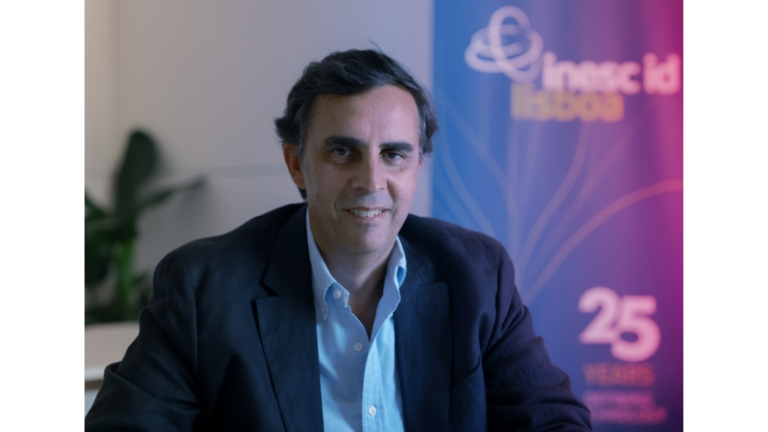
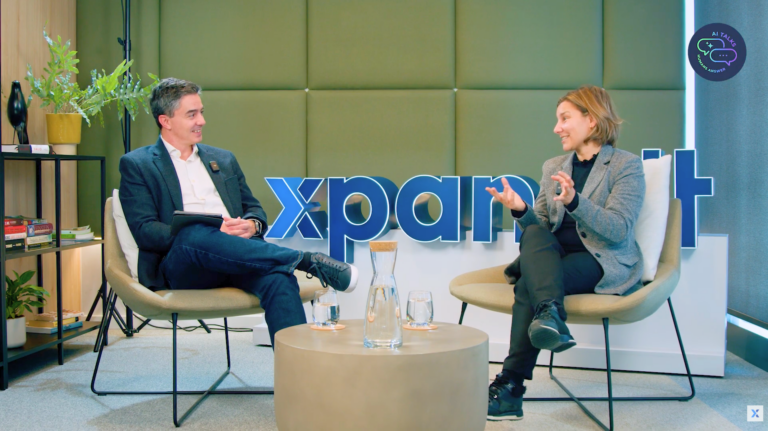
    Not prohibiting students matters — banning adults rarely works. That was one of the key ideas shared by Inês Lynce on the use of artificial intelligence and large language models in higher education, in the latest episode of Xpandit’s AI Talks, Humans Answer.

    At a time when universities are debating regulations and even prohibitions on the use of AI, Inês Lynce, INESC-ID researcher in artificial intelligence, President of the Board of Directors, and Professor at Instituto Superior Técnico, joins host Sérgio Viana (Xpandit) to reflect on how learning and teaching are changing in a world of increasingly ubiquitous AI models.

    The researcher reflects on how students can use these tools critically, and the evolving roles of teachers, curricula and student assessment. She also raises broader concerns about the social impact of AI, stressing the importance of human mentorship, curiosity and critical questioning as foundations of education, regardless of technology.

    Watch the full episode: here

  • In the Media: André Duarte’s research revealing AI-memorised copyrighted content featured in The Register

    In the Media: André Duarte’s research revealing AI-memorised copyrighted content featured in The Register

    The source of Large Language Models’ (LLM) knowledge is often unclear. Besides the fact that most commercial AI vendors do not disclose their full training datasets, current AI models are usually reluctant to reveal memorised content. Research by INESC-ID and Carnegie Mellon University (CMU) Portugal PhD student André Duarte’s has recently been featured in an article in The Register, discussing this issue.

    The focus is a paper co-authored by André, “RECAP: Reproducing Copyrighted Data from LLMs Training with an Agentic Pipeline”, which describes a software agent, RECAP, that is more effective in coaxing memorised content from LLMs, helping to determine what texts were used to train them and if they are copyrighted.

    Throughout the article, André explains what makes RECAP different from other software with the same purpose, and states that although one focus of this research concerns copyrighted content, the broader goal is to understand how memorisation happens in LLMs.

    This development has the potential to address regulatory concerns and help clarify copyright infringement claims from AI model training. The authors of the paper, which also include INESC-ID researcher, Arlindo Oliveira, argue that concerns regarding whether AI is being trained on proprietary data highlight the need for tools that can find what AI models have memorised.

    Read the full article here.

  • In the Media: INESC-ID featured in RTP1’s Inteligência Portuguesa

    In the Media: INESC-ID featured in RTP1’s Inteligência Portuguesa

    In an increasingly digital world, changes and shifts are to be expected in the functioning of our society. With this transition in mind, Portuguese television channel, RTP1, has developed 5 episodes that guide viewers through the national technological ecosystem. From healthcare to outer space, the mini-series showcases examples of enterprises in different fields and the opinion of various experts. Among those experts, and with appearances across more than one episode, are INESC-ID researcher and President of the Board of Directors, Inês Lynce and INESC-ID researcher and INESC President, Arlindo Oliveira.

    Arlindo Oliveira shares his predictions for the future, how general-purpose technology has a way of revolutionising society, similar to what happened with the invention of electricity. He believes systems will amplify and enhance efficiency and that although Artificial Intelligence (AI) is experiencing rapid evolution, it’s still far from producing new creative ideas and associating concepts from very different domains.

    With years of research on algorithms, Inês Lynce explains the importance of accuracy and reliable data to train models and highlights how much this research has evolved since the term “Artificial Intelligence” was first used in 1956. She adds that Large Language Models (LLMs) like Chat GPT have the ability to go through an enormous amount of data and adapt their “behaviour”, however, data ethics and the biases present in the very data available to train models are concerns that must be addressed.

    Watch the episodes (in Portuguese) here

    © 2025 INESC-ID

    Image: © RTP1 / Inteligência Portuguesa

  • In the Media: Joana Campos and Helena Moniz discuss critical thinking in the age of AI on RTP’s Sociedade Civil

    In the Media: Joana Campos and Helena Moniz discuss critical thinking in the age of AI on RTP’s Sociedade Civil

    “Do you ever question Waze when driving?” asked the host of RTP’s Sociedade Civil.
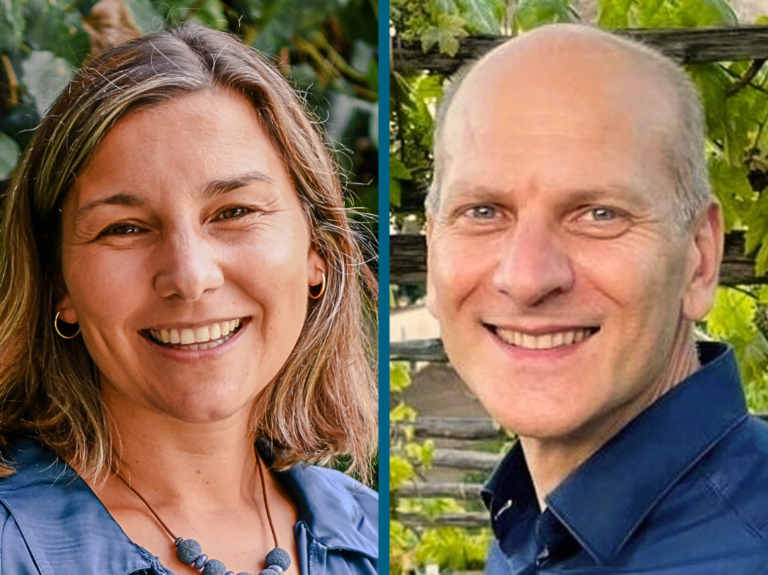
    AI is changing our lives: the way we think, our ethics, and our culture. To help reflect and shed light on these pressing issues, INESC-ID researchers Joana Campos* and Helena Moniz**, alongside Luís Moniz Pereira from Nova University, were invited to the recently aired episode on Critical Thinking in the Age of AI. 

    Joana brought attention to how the rapid rise of generative AI is reshaping society, including cognitive abilities such as memory and creativity; and how we need to actively decide which human capabilities we want to preserve, protect, and strengthen as these technologies evolve. 

    Helena emphasised another important dimension: the cultural and linguistic biases embedded in the digital ecosystem, currently dominated by the Anglo-Saxon culture, and the importance of AI platforms that reflect different cultures, languages and contexts. 

    Both researchers warned about the ethical implications of AI, the impact on democracies, and the urgent need for broad AI literacy. “The objective is not to turn everyone into a programmer, but that people know how to use it — because it is here,” says Joana. 

     Watch the full episode on RTP’s Sociedade Civil (in PT) here

    *Joana Campos is an INESC-ID researcher in the Artificial Intelligence for People and Society scientific area (AIPS) and Professor at Instituto Superior Técnico, working at the intersection of AI, human–computer interaction and the computational modelling of cognition and emotion.

    **Helena Moniz is an INESC-ID researcher in the Human Language Technologies (HLT) scientific area and Professor at the Faculty of Letters of the University of Lisbon. She is President of the European Association for Machine Translation, and Chair of the Ethics Committee of the Center for Responsible AI.


    © 2025 INESC-ID

    Image: © RTP / Sociedade Civil


  • In the Media: Innovation from Research to Application, Miguel Pupo Correia’s interview for APDC

    In the Media: Innovation from Research to Application, Miguel Pupo Correia’s interview for APDC

    In an article published in the APDC magazine “Comunicações”, Miguel Pupo Correia, researcher and President of the Executive Committee of INESC-ID, presents the institute, its history, and what it means to conduct research in one of the most relevant entities in the national scientific ecosystem. The piece was produced as part of a dual interview with António Leal, director of INOV, and follows an interview with INESC-TEC, in the previous issue.

    The researcher begins by tracing the story of INESC-ID, from the split of INESC until the present day, going over the four thematic lines and ten scientific areas that define the institute’s research and, of course, the people that make it happen. The article places special emphasis on several INESC-ID projects, including national initiatives such as AI for Public Administration; the Portuguese Chat GPT named Amália; Biodata, a flagship led by INESC-ID in the field of health and biological data analysis; and the EV4EU project, which plays a special role in energy transition.

    “Our DNA is to create top science, while also being connected to society. We work with industry in the most diverse ways.”

    INESC-ID’s impact goes well beyond Portugal, he adds. In addition to hosting a diverse international research team, many researchers conclude their PhD at the institute before continuing their careers across Europe or the United States. Partnerships with american universities like MIT, CMU and UT Austin also serve as contributors to funding and to INESC-ID’s international presence.

    The interview concludes on a positive note, with Miguel Pupo Correia emphasising that the path to success relies on these two key elements: people and projects, and that INESC-ID’s greatest ambition is to continue improving, expanding its societal impact, and creating more talent.

    Read the full article in APDC: here

    Image | © 2025 APDC

  • In the Media: Inês Lynce’s role at record-breaking ECAI 2025 featured in Il Mattino

    In the Media: Inês Lynce’s role at record-breaking ECAI 2025 featured in Il Mattino

    According to Il Mattino, one of the main Italian newspapers, this year’s European Conference on Artificial Intelligence (ECAI 2025),  one of the most prestigious international AI conferences, being held in Bologna from October 25 to 30, has set attendance and submission records. 

    The article highlights the scientific leadership of Aniello Murano, Professor of Computer Science at the University of Naples, and Inês Lynce, INESC-ID researcher, President of the Board of Directors, and Professor at Instituto Superior Técnico, who together are co-chairing the conference’s Program Committee. Selected through a rigorous international process, their leadership is credited with making this 28th edition the largest in ECAI’s history. 

    According to the piece, ECAI 2025 has seen a 20% increase in paper submissions (now double the number from 2023), 2500 participants, and over 2500 expert reviewers, nominated under Lynce and Murano’s coordination. 

    The program is described as a “map of the future of Artificial Intelligence,” featuring over 700 papers, 60 workshops, and 20 tutorials on topics ranging from machine learning and robotics to natural language processing and multi-agent systems. 

    Read more in Il Mattino’s full article on ECAI 2025 here. 

  • In the Media: “The Scientists of the future?” Arlindo Oliveira reflects on AI systems and their role in science

    In the Media: “The Scientists of the future?” Arlindo Oliveira reflects on AI systems and their role in science

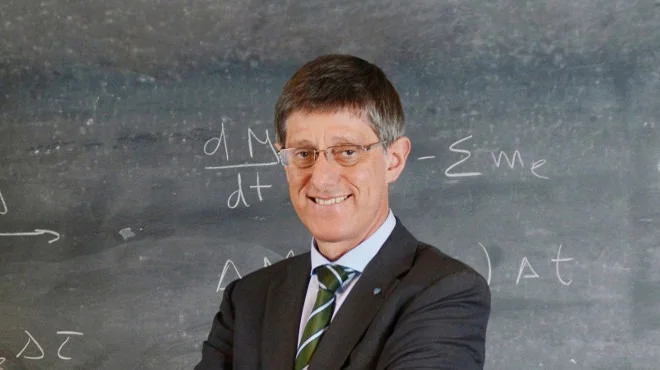
    “Will artificial intelligence systems of the (near or far) future be capable of creating new knowledge?” is the central question in the most recent opinion article by Arlindo Oliveira*, INESC-ID researcher and professor at Instituto Superior Técnico, published in Público, one of the main national newspapers.

    In this article, the researcher highlights recent advancements in Artificial Intelligence (AI) and Large Language Models (LLMs), emphasising their growing impact on society. As these models become increasingly complex, the question remains whether they will someday be able to create entirely new concepts.

    Arlindo Oliveira states that the general opinion remains deeply divided, with some experts firmly believing that the models will never go beyond predicting probabilities. However, others argue that this technology will eventually surpass statistics and be responsible for creating new knowledge. This breakthrough could mean a drastic change in how science is conducted in the future, ushering close collaboration between human and digital scientists.

    Read the full article in Público: here

    *Arlindo Oliveira is an INESC-ID researcher in the Information Decision and Support Systems area and president of INESC. He is also Full Professor at Instituto Superior Técnico in the Department of Computer Science.

    Image: Instituto Superior Técnico

  • In the Media: Luís Caires questions the future of Portugal’s science policy in Público

    In the Media: Luís Caires questions the future of Portugal’s science policy in Público

    “Is this the end of the science that we need?” That’s the question Luís Caires*, INESC-ID researcher and professor at Instituto Superior Técnico, raises in a recent opinion piece for Público, one of Portugal’s main national newspapers. The article addresses the Portuguese government’s announcement to dissolve the Fundação para a Ciência e a Tecnologia (FCT) and the Agência Nacional de Inovação (ANI), replacing them with a new agency.

    Luís Caires voices concern about the plan to merge these institutions into a new agency, a move with serious implications for national science policy and at odds with earlier government commitments. He points to the crucial role FCT has played in shaping the Portuguese scientific ecosystem and defends the ongoing relevance of its core mission.

    The researcher also highlights the distinct timelines and logics that govern science and innovation, stressing the complexity of their relationship. He warns against simplistic views and against growing disinvestment in fundamental research, which he considers just as essential as applied research in building a resilient and future-ready scientific system.

    Read the full article in Público: here

    *Luís Caires is an INESC-ID researcher in the IDSS scientific area, ERA Chair Holder under H2020 BIG. He is also Full Professor at Instituto Superior Técnico in the Department of Computer Science and founding Director of the NOVA Laboratory for Computer Science and Informatics.

  • In the Media: Helping journalists verify facts faster with trustworthy AI

    In the Media: Helping journalists verify facts faster with trustworthy AI

    INESC-ID PhD student Filipe Altoe, MSc student Sérgio Pinto, and researcher Sofia Pinto, also a Professor at Instituto Superior Técnico, are behind a new fact-checking AI model that was recently featured in national media, including Expresso, Observador, and SIC Notícias. 

    The article, presented last week at the international conference IJCAI 2025 in Montreal, proposes an AI model that automates the complex process of verifying information, helping journalists respond faster to digital misinformation, with full transparency and without replacing their judgement.

    The model was tested with the collaboration of more than 100 professional journalists, who helped validate its functionality and the quality of its explanations.

    This work exemplifies INESC-ID’s ongoing research in trustworthy and explainable AI, advancing methods that make artificial intelligence more transparent and reliable.

    Read the article on Expresso: here
    Read the article on SIC Notícias: here

  • In the Media: Research with societal impact – INESC-ID featured on CNN Inovação

    In the Media: Research with societal impact – INESC-ID featured on CNN Inovação

    “If someone had told me, when I started, that this would be the future, I wouldn’t have easily believed it”, reflects Inês Lynce at the opening of this week’s CNN Inovação –  a sentiment that captures how far INESC-ID has come. 

    INESC-ID was featured in this week’s episode, broadcast on CNN Portugal, a programme that explores innovative science, technologies and ideas that are shaping the future. The episode offers viewers an inside look into INESC-ID and its efforts to drive societal impact through research.

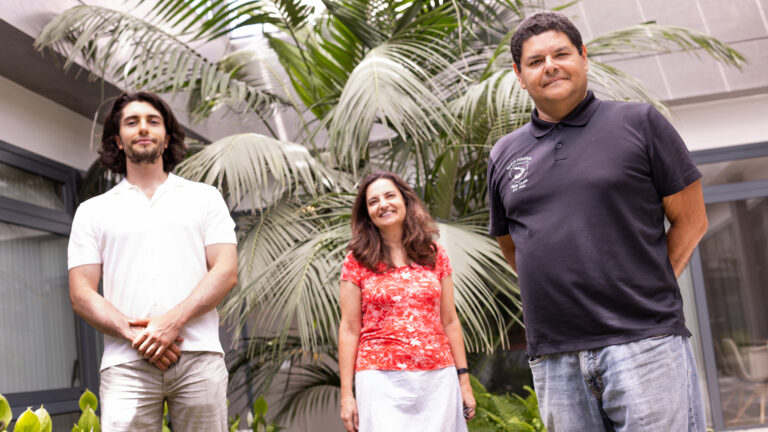
    Inês Lynce, President of the Board of Directors, opens the episode with an overview of INESC-ID’s mission, vision, and research focus. Researcher Rui Prada then presents All Sustainable: a digital serious game that empowers citizens with intellectual disabilities to engage with sustainability issues,  and that “It’s also a social inclusion tool for a population often excluded from the discussion,” he explains. Finally, researcher Hugo Morais introduces EV4EU, a European project led by INESC-ID that is advancing the electric mobility revolution and, as he notes, “a critical factor for achieving the objectives of Europe’s governments concerning carbon neutrality.”

    This feature provides a glimpse into how INESC-ID’s research is shaping a more digital, inclusive, and sustainable society – and a broader reflection on the role of engineering and technology in addressing global challenges. 

    Watch the full CNN Inovação episode on our Youtube channel: here

    (CNN Inovação is produced by Bubble Creative Studio. This episode was developed in collaboration with INESC-ID)

    Images | © 2025 INESC-ID and Bubble Creative Studio