Category: In the Media

  • In the Media: INESC-ID researchers help explain the causes behind the April 28 blackout
    In the Media: INESC-ID researchers help explain the causes behind the April 28 blackout

    Not long ago, power outages were a familiar part of life. Some of us certainly remember those stormy nights in which the light went off. Today, electricity is so present in our daily life that even brief disruptions can feel dramatic. The blackout that hit the Iberian Peninsula on the morning of April 28 was a strong reminder that modern society is built on a grid we rarely think about. Except when it goes dark.

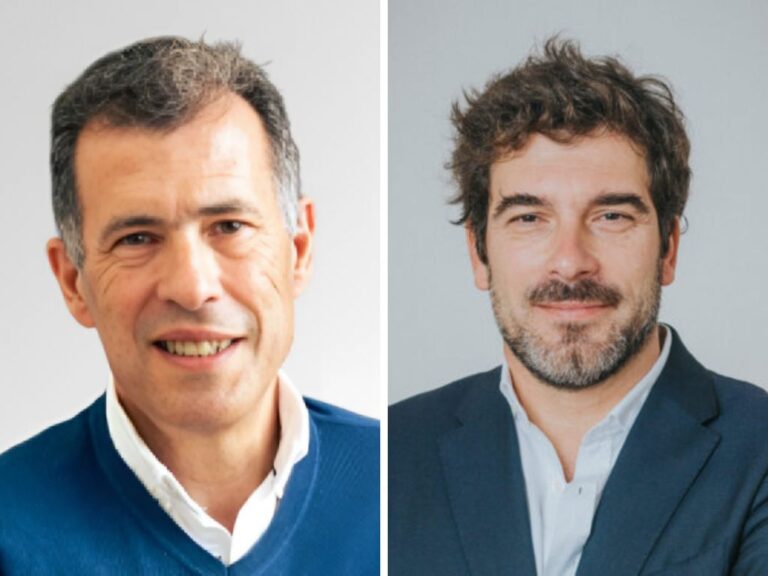
    Although the exact causes are still under investigation, the failure appears to have started in Spain and rapidly cascaded across the interconnected grid, resulting in a rare total blackout. Like a circuit breaker protecting your home, the system shut itself down to prevent larger damage. According to INESC-ID researchers, Rui Castro and Pedro Carvalho —both experts in power systems and energy transition—this was not a collapse of a failed system, but rather a sign of its robustness. The grid responded, isolated the issue, and restored power in phases using “black start” capabilities. However, the event also revealed the challenges of an energy transition reliant on variable renewables and decentralized production.

    There is no such thing as zero-risk infrastructure. Making the electric grid 100% fail-proof would require massive and economically unjustifiable investments. Instead, we must accept some level of risk and focus on making our systems more resilient, more intelligent, and quicker to recover.

    These insights were shared by Rui Castro and Pedro Carvalho in recent media  interventions (newspaper and TV channels), where both researchers contributed to clarifying the technical nature of the blackout and the broader implications for the energy transition and grid resilience.

    Links below:

    SIC 

    CNN

    Jornal Económico 

    O Observador 

  • In the Media: Women in Science and Engineering. Inês Lynce participates in article for Diferencial

    In the Media: Women in Science and Engineering. Inês Lynce participates in article for Diferencial

    “If you asked me who I admire: I admire my women colleagues.” – these were the words of INESC-ID’s President of the Board and researcher, Inês Lynce in a recent article published on Diferencial, the newspaper by Instituto Superior Técnico students, where the challenges and lessons of being a woman in science and engineering were discussed. 

    To highlight the increasing presence of women in these fields, Diferencial brought together three women of reference, DEI and INESC-ID’s Inês Lynce, DEEC’s Helena Ramos and COSTAR’s Rita Santos, to share their perspectives on what it means to be a woman in computer science, electrical engineering and physics, respectively. Throughout the discussion, they acknowledged that men and women often have different approaches in professional settings. Women may often face a sense of natural insecurity and are more aware of their limitations, which can lead to more cautious and reserved behaviours. Furthermore, to make their voices heard, women often need to be more assertive and “louder” than their male colleagues in order to effectively communicate their ideas.

    Inês Lynce, who studied at Instituto Superior Técnico (IST) and is now a full professor, noted that the percentage of women starting their studies in computer science has barely risen, which she describes as a “frightening” scenario. Greater diversity in science is essential because it enriches the field by incorporating a variety of perspectives, regardless of gender, a notion that all participants agreed on. As our researcher stated, “If all computer science is made by men, we’re in trouble, right? Games will remain masculine, as will apps”. On a positive note, there is now increased recognition and awareness of the issue, and efforts are already underway to ensure equal opportunities for everyone, an important step towards greater inclusion.

    Besides the challenges acknowledged, the three researchers expressed a strong sense of professional fulfilment, emphasising their excitement to learn more in their respective fields each day. Inês Lynce concludes that when choosing an academic and professional path, the most important factor is, “regardless of whether you are a boy or a girl, is that you make an informed decision and that you like it”. For women, she highlights the importance of “being proud of being a woman”.

    Read the full article, in Portuguese, here.

  • In the Media: Fixing the system, not the women. Ana Teresa Freitas writes in Público, on Girls in ICT Day

    In the Media: Fixing the system, not the women. Ana Teresa Freitas writes in Público, on Girls in ICT Day

    On International Girls in ICT Day, Ana Teresa Freitas, INESC-ID researcher and President of the Department of Computer Science and Engineering (DEI) at Instituto Superior Técnico, published an opinion article in Público that highlights a persistent and often overlooked issue in the digital transformation: the underrepresentation and under recognition of women in Information and Communication Technologies (ICT).

    The researcher, that has been actively involved in this subject, begins by reminding readers that the history of ICT is rich with the contributions of pioneering women. From Ada Lovelace, who wrote the first algorithm, to programming pioneers like Grace Hopper, Ida Rhodes, Jean Bartik, Kathleen Antonelli, and many others, women have played a foundational role in shaping the digital world. Yet their names are often left out of the narrative, and their legacies remain under-celebrated.

    Despite this long-standing contribution, Ana Teresa points out that women and girls continue to be a minority in ICT, not because of a lack of ability or interest, but because of structural and cultural barriers that persist in education, hiring, promotion, and workplace environments. Too often, efforts to address this imbalance have focused on encouraging women to adapt to male-dominated models of behaviour and success—what she calls “fixing the women.” Instead, the author argues, we must fix the system.

    “The rules of the game need to be rewritten,” Ana Teresa insists, “so that success no longer depends on fitting into outdated moulds but on valuing diverse profiles and work styles.” Diverse teams, she explains, are more innovative and better equipped to design solutions that reflect the needs of diverse populations. In a sector where talent is scarce, attracting and retaining women isn’t just about fairness, it’s a competitive imperative.

    There are, however, reasons for optimism. In 2024, 40% of PhD theses defended at DEI were presented by women.

    “Talent has no gender, and the technology of the future needs every brilliant mind. It’s up to all of us to fix the system so that this talent is not wasted, but empowered.”

    The article is available here (under paywall).

  • In the Media: INESC-ID researcher featured in RTP, on Project DISCRETION, Advancing Quantum-Secure Communications

    In the Media: INESC-ID researcher featured in RTP, on Project DISCRETION, Advancing Quantum-Secure Communications

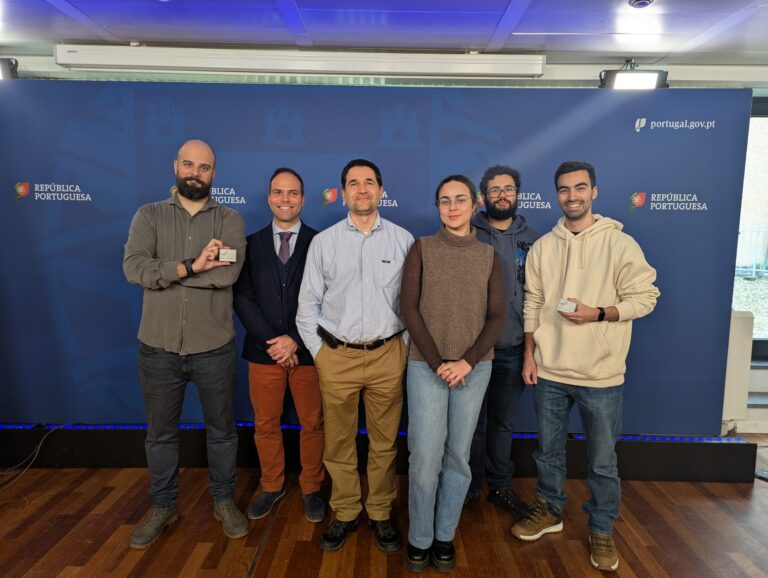
    The quantum era is not here yet, but some are already thinking about the post-quantum world and its impact on privacy and cybersecurity. One such person is INESC-ID researcher Ricardo Chaves, who participated in a demonstration of cutting-edge secure communication technologies developed under the DISCRETION project. The event, held on January 29 at the Portuguese Embassy (REPER headquarters) in Brussels, showcased technological advancements aimed at strengthening European defense infrastructure. In addition to Ricardo, INESC-ID researchers Nuno Neves, Joana Afonso, Pedro Martins, Pedro Matias and Tiago Dias were also present (all in the main picture ).

    The DISCRETION project recently gained public attention through a feature report by RTP, Portugal’s national broadcaster. The report highlighted the project’s groundbreaking advancements in secure military communications and its crucial role in enhancing European cybersecurity. Through interviews with key researchers, including Ricardo Chaves, the segment detailed the cryptographic technologies that are ate the core of DISCRETION’s security framework.
    Portugal’s Secretary of Defense Álvaro Castelo Branco and Portuguese Ambassador to the European Union Pedro Costa Pereira, alongside representatives from European institutions and member states, attended the event, emphasizing its significance for European security.

    DISCRETION is a €6 million initiative, supported by the European Commission under the European Defence Agency’s European Defence Industrial Development Programme and the Portuguese Government. By integrating a Software-Defined Network with Quantum Key Distribution (QKD) technologies, DISCRETION seeks to enhance the security of military networks against emerging threats, particularly in the post-quantum era.

    The RTP feature underlined the project’s capabilities in providing secure communication solutions, highlighting the ability to ensure reliable, encrypted messaging in challenging environments, protect sensitive military communications, and enable secure, cross-domain communication. These advancements underline the system’s versatility and strength in enhancing security for a range of applications.

    Collaborative European Leadership The DISCRETION project, short for “Disruptive SDN Secure Communications for European Defence,” is an initiative aimed at developing an optical Software-Defined Network (SDN) solution to ensure secure, robust, and resilient communications for European defense applications. It is led by Deimos Engenharia (Portugal) and brings together a consortium including Portugal (Altice Labs, Adyta, Instituto de Telecomunicações, Instituto Superior Técnico), Spain (Telefónica ID, Polytechnic University of Madrid), Austria (Austrian Institute of Technology), and Italy (NEXTWORKS).

  • In the Media: Inês Lynce on PRR Reprogramming in Público Newspaper

    In the Media: Inês Lynce on PRR Reprogramming in Público Newspaper

    Recently, Inês Lynce has participated in an article published in national newspaper, Público, along with João Rocha, Teresa Ferreira, Tiago Santos Pereira and Claudio Sunkel. In the piece, they discuss the change of direction of the Recovery and Resilience Plan (PRR) funds in Portugal. 

    The Sistema Nacional de Ciência e Tecnologia (SNCT) faces significant challenges. Although  investment in Science and Technology has been recognised as a key strategy for national development, the means to achieve this have not been amply provided. Some of the main obstacles include the unpredictability of funding for research facilities, delayed evaluations to define future funding, and inadequate equipment acquisition. The Conselho dos Laboratórios Associados (CLA) cites, as a main concern, the vulnerability of jobs, scientific careers, and management of science and technology, which, in turn, compromise national progress, as researchers are motivated to leave the country for better conditions.

    Previously, and contrary to other countries, Portugal did not direct PRR funding to significantly reinforce the SNCT, namely regarding facilities, spaces, labs and equipment. However, on January 21, during a regimental hearing at the National Assembly, the Minister for Territorial Cohesion affirmed that a reprogramming of the PRR has been designed and will pose an opportunity to reinforce equipment in the areas of health, science, innovation, research and technology.

    The CLA considers an application process directed to research units, which will allow the identification of equipment essential to the modernisation of the SNCT, especially in light of the urgency posed by the PRR calendar. 

    Read the full article (in Portuguese) here.

  • In the Media: New Database with the Genome of 1 Million Europeans – Ana Teresa Freitas interviewed in RTP1

    In the Media: New Database with the Genome of 1 Million Europeans – Ana Teresa Freitas interviewed in RTP1

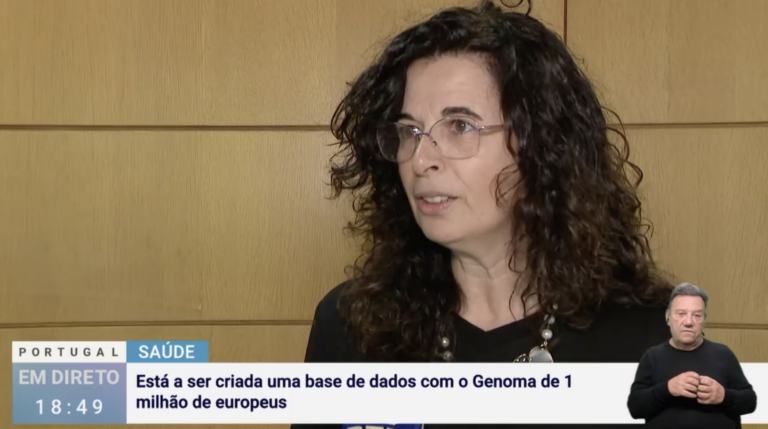
    INESC-ID researcher and coordinator of INESC-ID’s Life and Health Technology Thematic Line, Ana Teresa Freitas, recently talked on RTP’s TV programme “Portugal em Direto”, about the creation of a new database with the genome of 1 million Europeans.

    The goal is to gather individual genetic and health data to build risk models that will ease the development of more effective and personalised medicines, and allow more robust responses to future pandemics by understanding health risk factors within different populations. For example, a study back in 2021 determined that the Portuguese population is more vulnerable to a lack of vitamin D. 

    The project will end in 2026, and it will be one of the largest databases of the European population, with Portugal contributing with the data of 16000 people. The data acquired will not leave its respective countries, respecting security and privacy laws.

    Watch the interview (in Portuguese here (11:22 – 14:14)

  • Inês Lynce reflects about the importance of a comprehensive education the Impact of research and the future of AI

    Inês Lynce reflects about the importance of a comprehensive education the Impact of research and the future of AI

    In a recent interview for the supplement Dinheiro Vivo (part of Diário de Notícias), INESC-ID President, Inês Lynce, highlighted crucial topics regarding student education and the societal impact of scientific research. One of the key points discussed was the importance of a well-rounded education that goes beyond academic grades. According to the President, university admission is currently based on grades, but this doesn’t always predict future success. “There are many students who aren’t necessarily the ones with the highest grades, but they end up being much more successful,” she noted.

    The secret to this success, she explained, lies in a comprehensive education. The President emphasized that students’ resumes should not be limited to academic degrees but should include practical and extracurricular experiences. “I always recommend to students: the CV is not just about the academic title, but also the professional experience. Hands-on projects, like building satellites or the Formula Student, a racing car, are valuable examples of how important this practical experience is,” she added. She also emphasized the importance of extracurricular activities, such as competitive sports, highlighting the need to balance these with academic work: “A healthy body, a healthy mind, that’s the message.”

    Another central theme of the interview was the role of Artificial Intelligence (AI). The President compared AI to mathematics, seeing it as an indispensable foundation, not only for engineering but also for various fields of knowledge. “AI will become a fundamental base for everything, just as mathematics is for engineering,” she observed. This vision reinforces the idea that the future of science and innovation will be deeply tied to the development of AI technologies.

    The President also underscored the social responsibility that comes with conducting research, especially in high-impact areas like AI. “Doing excellent research means not only creating scientific impact but also societal impact,” she stated. She pointed out that communicating the work done by researchers is becoming increasingly important, noting that many professionals in the field weren’t trained for this task: “Researchers, by nature, weren’t shaped for this. And it’s an effort.”

    On the first episode of the podcast No limite da Inteligência Artificial, by the journalist Bruno Contreiras Mateus, Inês discusses with Paulo Dimas, from Unbabel, the present and the future of AI, the threats, the benefits and the way to deal with this technology in a fruitful and responsible manner.


  • In the Media: Rodrigo Rodrigues talks about how data centres impact our planet on  RTP’s “Biosfera”

    In the Media: Rodrigo Rodrigues talks about how data centres impact our planet on RTP’s “Biosfera”

    Have you ever thought about the environmental impact of asking ChatGPT a question, casually scrolling through social media, or binge-watching a series on Netflix?

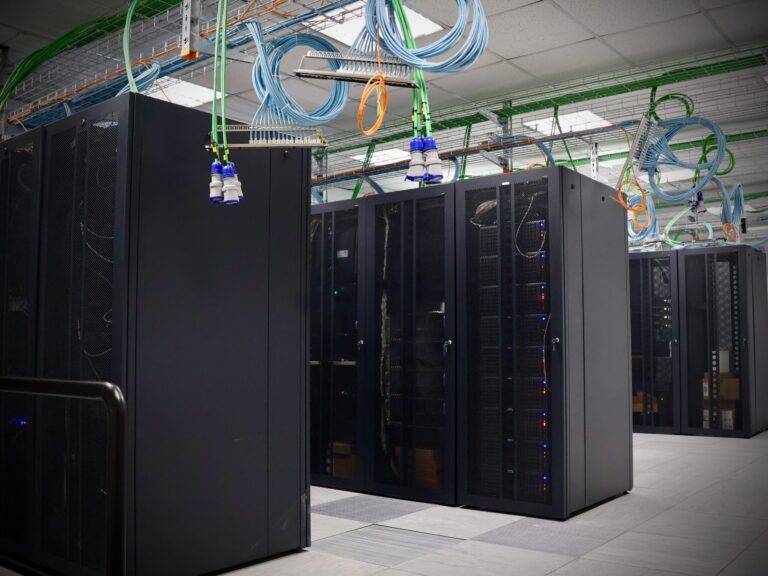
    These everyday activities of our technological society are made possible by the vast amounts of data being exchanged in an increasingly instant-paced, AI-driven world. Tens of thousands of data centres spread across the globe are at the heart of this highly complex flow of information. However, as the number of data centres increases, so does their consumption of natural resources and energy, leading to a larger carbon footprint and significant environmental impacts.

    This was the focus of a recently aired episode titled “Data Centres: what’s the path to sustainability?” on RTP’s TV programme “Biosfera,” where INESC-ID researcher Rodrigo Rodrigues, from the scientific area Distributed Parallel and Secure Systems, helped explain why and how data centres are becoming major consumers of energy and natural resources worldwide. According to Rodrigo, “In some countries, that consumption is overwhelming. For instance, in Ireland, the electricity consumed just to power data centres already represents 20% of the total electricity consumed.”

    In the episode, he also discussed innovative solutions being developed by companies to minimise this impact, giving him “reasons to be optimistic and vigilant.” While “AI can revolutionise digital transition and the generation of knowledge for preserving our planet”, it will “not be easy to track the environmental impacts associated with the manufacture and use of these data systems”.

    Watch the full episode (in Portuguese) here.

  • In the Media: Ana Teresa Freitas diagnoses  the future of medicine in October’s National Geographic

    In the Media: Ana Teresa Freitas diagnoses the future of medicine in October’s National Geographic

    Featured in the cover theme of this October’s edition of National Geographic, Ana Teresa Freitas, a senior INESC-ID researcher and coordinator of INESC-ID’s Life and Health Technology Thematic Line, shared valuable insights and predictions about the revolution of medicine currently underway.

    Unlike TV shows like House or Grey’s Anatomy, where doctors are the sole protagonists, Ana Teresa, an international expert on AI applied to medical research, highlighted that the future of medicine and the profile of medical doctors will likely see significant changes. Algorithms will play a larger role in triage and diagnosis, and hospitals will be transformed by technology. In the future, wearables will replace basic exams, providing continuous data to computing hubs, computing specialists, teleconsultations, and robotic arms in operating rooms will be the norm, and medicine will include a  much broader range of skills beyond traditional expertise.

    Read the online editorial (in PT) here or the full article in the printed version.

  • In the Media: Jorge Fernandes on the “90 Segundos de Ciência” Podcast

    In the Media: Jorge Fernandes on the “90 Segundos de Ciência” Podcast

    Jorge Fernandes, INESC-ID researcher in the area of Nano-Electronic Circuits and Systems, and CMU Portugal Faculty member at Instituto Superior Técnico, has recently participated in an episode of the Antena 1 podcast, “90 Segundos de Ciência” (“90 Seconds of Science”). 

    The focus, during the one minute and half allowed, was the CMU Portugal’s Exploratory Research project “mm-Size Stimulator Implants”, which aims to create integrated circuits with low energy consumption for electrical stimulation therapies and to develop a revolutionary new generation of microelectronic implants. 

    These implants are intended to be completely battery-free, eliminating the need for a titanium capsule, and so small that can comfortably be applied under the patient’s skin. 

    With a new range of autonomous and biocompatible implants such as these, Jorge Fernandes believes that it “can revolutionise medical practice and change the use of therapies that are typically administered through medication, replacing them with others that interact with the nervous system through electrical stimulation”. 

    Listen to the episode (in PT) here