Category: In the Media

  • In the Media: Inês Lynce Interviewed in the “Diálogos Convergentes” Podcast
    In the Media: Inês Lynce Interviewed in the “Diálogos Convergentes” Podcast

    “Curiosity, discovery and critical thinking are what’s behind science, and what sets us apart”.

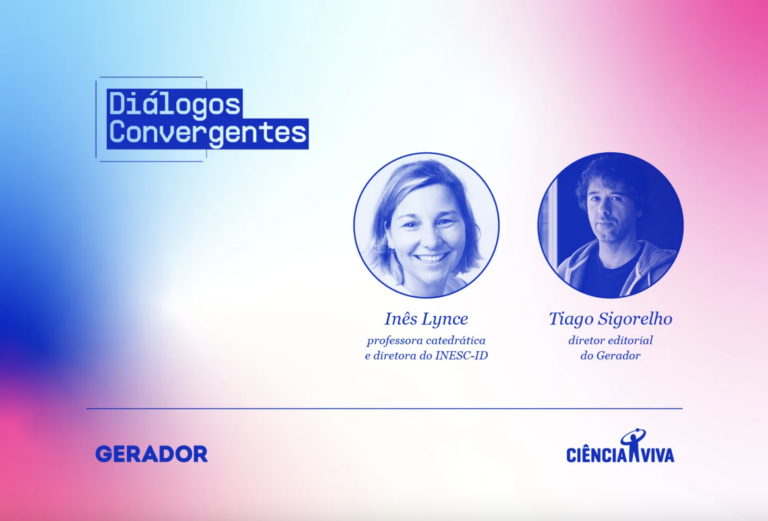
    That is the take of Inês Lynce, President and researcher at INESC-ID, who recently participated in an episode of “Diálogos Convergentes” (“Convergent Dialogues”), a podcast by Gerador. In this episode, Inês Lynce discussed with journalist, Tiago Sigorelho, what makes human thought different from a machine.

    Throughout the conversation, the researcher shared key insights on the evolution of AI, its regulation, and the role of expectations in the increasing popularity of this tool. What was highlighted the most, however, was the importance of critical thinking, which, according to Inês Lynce is what mainly differentiates people and AI. 

    The topic goes on to note that nothing should ever be done without careful consideration beforehand: “never use a text without reviewing it, never use an image without appreciating it critically, never spread alarming news without checking the sources”. 

    Finally, as an avid advocate for gender equality, the president of INESC-ID voiced her concerns regarding the fact that some academic fields still present a considerable gender imbalance, which not only represents a loss for women who would be interested in pursuing those areas, but also a loss for the field itself, that would benefit from their contributions.

    The podcast “Diálogos Divergentes” is an initiative by Gerador and Ciência Viva, where science and journalism come together through a talk between invited scientists and journalists, to ponder and discuss the frontiers of human knowledge and to better understand the world we live in.

    Listen to the full episode (in PT) here.

  • In the Media: Fábio Passos writes on Jornal i about organ-on-chip technology that could revolutionise modern medicine

    In the Media: Fábio Passos writes on Jornal i about organ-on-chip technology that could revolutionise modern medicine

    Can technology replace animal testing in drug development?

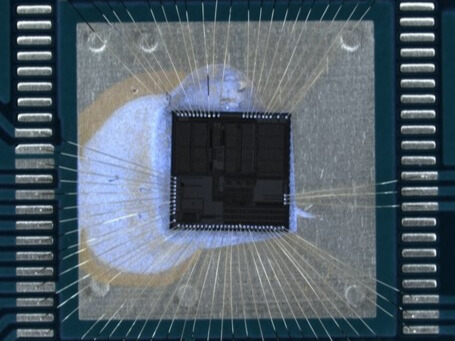
    A new article, entitled “Integrated circuits that emulate human organs: Organs-on-chip” (“Circuitos integrados que simulam órgãos humanos: Órgãos-em-chip”) was recently published by INESC-ID researcher, in the area of Nano-Electronic Circuits and Systems, Fábio Passos, on Portuguese newspaper, “Jornal i”.

    Traditionally, ensuring a drug’s safety for human consumption, requires extensive animal testing. This is not only a slow and costly process that sometimes causes animal suffering, but also often offers unreliable results for humans, resulting in undesirable side effects and failed tests. 

    According to Fábio Passos, the Organ-on-chip (OOC) technology – a groundbreaking innovation that uses integrated circuits to mimic a human organ in a controlled microenvironment – could be the solution for this problem, and “the application of this technology promises to revolutionise drug development, disease research and personalised medicine, while reducing dependence on animal testing”.

    The creation of OOC systems is, however, no small feat. Their composition is made of channels lined with living cells that mimic the structures and functions of specific organs, requiring the integration of multiple complex miniaturised components. The UNLOOC research project , which includes 51 organisations from 10 European countries, intends to tackle these technical challenges. In Portugal, partners like INESC-ID, INESC-MN, Instituto Superior Técnico, and Silicon Gate are developing analog integrated circuits for precise control and real-time monitoring of these systems.

    Read the full article here (in Portuguese).

  • In the Media: Inês Lynce discusses Educational and Societal challenges in Computer Science at Visão newsmagazine

    In the Media: Inês Lynce discusses Educational and Societal challenges in Computer Science at Visão newsmagazine

    In a profound interview at Visão newsmagazine, INESC-ID President, Inês Lynce, discusses the evolution of computational sciences, particularly in relation to Artificial Intelligence (AI), and why the perception of radical change might not be entirely accurate, despite visible advancements. Inês details that while the foundations of AI and machine learning have been around since 1956, the real game-changer has been the increase in computational power and the vast amounts of data now available, making these technologies much more effective.

    The conversation also touches on the importance of demystifying AI and the need to explain how algorithms reach their conclusions, due to their inherent opacity. The concept of “Reinforcement Learning” is mentioned, likening it to Pavlov’s experiments, where rewards are used to train algorithms. The interview further explores the contrast between apocalyptic and awe-struck views of AI, emphasizing the significance of scientific communication for the general public.

    On a topic that is particularly important to her, Inês expresses concern about increasing female representation, breaking the stereotype that certain fields are predominantly male, and highlighting the positive impact of having women in leadership roles.

    Confessing her enthusiasm for the interaction with students, the professor at Técnico also reflects on the role of persistence and passion in scientific research and teaching. While research is portrayed as a solitary endeavour that heavily depends on peer acceptance, teaching is seen as offering immediate rewards. The ongoing shift in the education system, with a greater focus on autonomous learning by students, is a topic that is also of great relevance to Inês and that has been expressed clearly.

    The interview is on the printed edition of Visão newsmagazine, August 15, and is also available here.

  • In the Media: Inês Lynce discusses the “summer of AI” in the Podcast “Futuro do Futuro”

    In the Media: Inês Lynce discusses the “summer of AI” in the Podcast “Futuro do Futuro”

    Is the Summer of AI Here to Stay?

    Inês Lynce, President and researcher at INESC-ID, has recently participated in the podcast, “Futuro do Futuro”, by national newspaper “Expresso” and hosted by journalist, Hugo Séneca, along with João Tiago Martins, from Noesis, to discuss Artificial Intelligence and its progress until now.

    During the episode, Inês Lynce highlighted the rapid advancements in the AI revolution predicting that domestic spaces will soon utilize AI to better meet the needs of their owners. However, the researcher emphasized the importance of vigilance to prevent the malicious use of AI, ensuring ethical practices in its application. Despite the progress achieved so far, Inês Lynce voiced criticism of the new regulations approved by the EU, suggesting that they may delay innovation and development in the sector.

    It was also pointed out that the effectiveness of robots and digital agents heavily relies on the quality of data provided to the training models. This dependency presents two major challenges: the inability to always trace the origins of data and the reliance on statistical behaviours, which may not always be rational. Reflecting on the early days of AI, Inês Lynce noted how just a few decades ago, AI was not considered a major topic, but it has now become a significant focus within the tech industry, which the community expects to dwindle eventually. 

    Listen to the full episode (in PT)  here .

  • In the Media: Paula Carvalho analyses the different “faces” of hate in the Podcast “Cortar o Mal pela Raiz”

    In the Media: Paula Carvalho analyses the different “faces” of hate in the Podcast “Cortar o Mal pela Raiz”

    Which forms can hate speech take? How to recognise them? Paula Carvalho, an INESC-ID researcher and member of the Project KNOwHATE team, joined Amanda Lima, journalist and editor of Diário de Notícias Brasil, in the second episode of the podcast “Cortar o Mal pela Raiz” (Cut the Evil at its Root), moderated by Cláudia Semedo. In this episode, the three participants discussed and analysed the complexity, multiple facets and subtleties of direct and indirect hate speech.

    The Podcast “Cortar o Mal Pela Raiz” is a four-episode series giving voice to various perspectives and experiences with a common goal: understanding online hate speech in Portuguese to combat it.

    The podcast is part of the KNOwHATE consortium, funded by the European Union through the Citizens, Equality, Rights and Values program, and which includes INESC-ID, ISCTE – Instituto Universitário de Lisboa, the Interactive Technologies Institute, among other partners. It aims to offer an innovative, comprehensive, participatory, and culturally sensitive approach to analyse, detect, and combat direct and indirect hate speech in Portuguese.

    Listen to the full episode (in PT) here.

  • In the Media: Rui Castro writes on the urgency of electrification for Portugal’s Energy Plan on Jornal i

    In the Media: Rui Castro writes on the urgency of electrification for Portugal’s Energy Plan on Jornal i

    Rui Castro, INESC-ID Researcher under the Sustainable Power Systems Scientific Area, and Full Professor at Instituto Superior Técnico, authored an opinion article, published in the newspaper “Jornal i”, titled “Electrification of consumption: an urgent need” (Eletrificação dos consumos: uma necessidade urgente).

    In this article, Rui Castro raises concerns about future national electric energy consumption, noting that if the National Energy and Climate Plan is successful, the installed capacity in the National Electricity System (SEN) will double by 2030, greatly surpassing current demand.

    We may have a problem of lack of consumption as early as 2030 if measures are not taken to promote the electrification of consumption, particularly in transport.”, states Rui Castro.

    According to the researcher, while these ambitious plans are a step in the right direction, they create a need for consumption of the produced energy. As Spain is also heavily investing in the installation of Renewable Energy Resources, exportation to Portugal’s neighbour country is hardly a viable option. Therefore, besides the natural intake from economy, families and industry, it is crucial to consider non-conventional intakes such as pumped hydroelectric power plants, and other innovative solutions.

    Additionally, Rui Castro  highlights two case studies to illustrate the issue, including a study carried out by a team at Instituto Superior Técnico, aiming to assess the needs for flexible power in 2030. Both cases show a probability for lack of consumption as early as 2030 if measures are not taken to promote the electrification of consumption. 

    Full article here (PT)

    (image source: Generative AI)

  • In the Media: Luísa Coheur discusses AI emergence in classrooms with Público newspaper

    In the Media: Luísa Coheur discusses AI emergence in classrooms with Público newspaper

    INESC-ID researcher Luísa Coheur* and professor at Técnico has recently been interviewed by national newspaper, Público, about artificial intelligence (AI) integration in classrooms and the challenges it presents to teachers.

    Joined by several fellow educators, Luísa Coheur’s highlighted the rise in the use of AI by students and why it’s inevitable, providing advice to teachers and parents alike, on the advantages AI tools can provide, like assistance and increased classroom engagement, while not neglecting that they should not act as a replacement for skills acquired during the lessons.

    Read the full article (in PT) here.

    *Luísa Coheur is an Associate Professor at the Department of Computer Science at Instituto Superior Técnico and a Researcher at INESC-ID, in the “Human Language Technologies” group. Her preferred research topics focus on Dialogue Systems, Question/Answer, and Machine Translation (including for Portuguese Sign Language).

    (image source: Generative AI)

  • Tokyo within reach of an internship: opportunity for INESC-ID PhD students

    Tokyo within reach of an internship: opportunity for INESC-ID PhD students

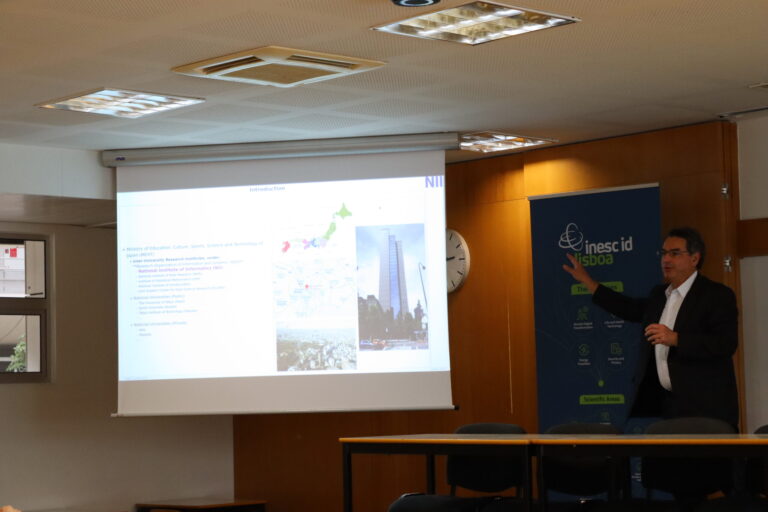
    It starts with an internship and it may end up in marriage. “Portuguese students love Japan,” reveals Emmanuel Planas, the professor in charge of the International Internship Program at NII- National Institute of Informatics, in Tokyo. “In some cases, after the internship they get a job and get married”, he adds after his presentation, last week, at Técnico Oeiras, to present the Memorandum of Understanding (MOU) signed between INESC-ID and the NII. Through this agreement, INESC-ID’s and IST’s Master’s in Computer Science students are invited to apply to an internship.

    This MOU with INESC-ID has been in place since 2011, after Rui Prada, from Artificial Intelligence for People and Society research area and a teacher at Técnico, became aware of this possibility, while completing a post-doc at NII. “I realised it was a good opportunity for students.”

    Finishing his tour around Europe to present this competitive program, established with the most reputable institutes in the world, the acting director of the Global Liaison Office explained to the audience the main aspects of the MOU. Every year, the NII receives 140 masters’ and doctoral students to this paid internship, lasting 2 to 6 months.

    At NII, located in the centre of the metropolis, very close to the Ministry of Education from Japan, there are 350 scientists, working in three research areas. Before applying, candidates must choose a topic and approach a senior researcher to work with during the internship. There are two calls every year, one in April and another in September, with 60 to 70 interns accepted per call. In each institute there is a referee who receives the applications, selects them and sends them to NII. AT INESC-ID, Rui Prada is the person in charge.

    Ana Carrasco, a PhD student, working in social robotics at GAIPS, has spent six months at NII under the MOU and highly recommends it. So much so that she is considering applying once more. “It’s an amazing experience”, she summarizes. “People are so friendly that I hardly felt the language barrier”, Ana adds, anticipating what might be felt as an obstacle by potential candidates.

    So far, around 40 students from INESC-ID/Técnico have joined the programme, Rui Prada estimates. ‘Ja ne’ Tokyo.

  • In the Media: Rui Maranhão talks with Exame Informática about ICSE24’s Impact on Software Engineering and AI Innovations

    In the Media: Rui Maranhão talks with Exame Informática about ICSE24’s Impact on Software Engineering and AI Innovations

    INESC-ID researcher and full professor at Faculdade de Engenharia da Universidade do Porto (FEUP), Rui Maranhão*, has recently talked to Exame Informática, from Trust in News Group, about the upcoming 2024 edition of the International Conference on Software Engineering (ICSE), which will take place in Lisbon. 

    The interview was an opportunity for Rui Maranhão, chair of the conference, to share some exciting news and thoughts about the event. This included the record numbers of participants from African countries, and emphasised the fundamental role ICSE has in the software engineering community. ICSE not only highlights recent innovations and research in the field but ethical and environmental concerns as well, while also defining future tendencies and fostering collaboration between academia and industry. 

    ICSE is considered the premier international software engineering conference. This year, it will be held at Centro Cultural de Belém, in Lisbon, from April 14 to April 20. Registrations have reached record numbers, and the conference will focus on the link between software engineering and artificial intelligence (AI), with a particular emphasis on Large Language Models.

    Read the full article (in PT) here.


    *Rui Maranhão is a researcher at INESC-ID within the Automated Reasoning and Software Reliability researcher area, and full professor at Faculdade de Engenharia da Universidade do Porto. His research focuses on software quality, emphasising automating the testing and debugging phases of the software development life-cycle as well as self-adaptation. 

  • In the Media: Ana Paiva and Alberto Rodrigues da Silva nominated for the XXIV Government of Portugal

    In the Media: Ana Paiva and Alberto Rodrigues da Silva nominated for the XXIV Government of Portugal

    Last Friday, April 5th, distinguished INESC-ID researchers Ana Paiva and Alberto Rodrigues da Silva were officially appointed as Secretaries of State in a ceremony at Ajuda Palace in Lisbon, presided over by the President of the Portuguese Republic, Marcelo Rebelo de Sousa.

    Ana Paiva* is the new Secretary of State for Science, serving under the Ministry of Education, Science and Innovation, while Alberto Rodrigues da Silva** has taken the role of Secretary of State for Modernisation and Digitalisation, under the Ministry of Youth and Modernisation. They were inaugurated alongside 41 colleagues appointed across 17 different ministries.

    *Ana Paiva is a researcher at INESC-ID within the Artificial Intelligence for People and Society research area and a Full Professor of Artificial Intelligence at Técnico, University of Lisbon. Her recent research focuses on engineering agents and robots capable of collaborating with humans in groups, fostering transparent, prosocial, and altruistic societies. She has served on the Global Agenda Council in Artificial Intelligence and Robotics of the World Economic Forum and as a member of the Scientific Advisory Board of Science Europe. She is a fellow of the AAAI, EurAI, and ELLIS.

    **Alberto Silva is a researcher at INESC-ID within the Information Systems research area and a Full Professor in the Department of Computer Engineering at Técnico, University of Lisbon. He is a member of the Project Management Institute (PMI), a senior member of the Association for Computing Machinery (ACM), part of the QUATIC Series Scientific Steering Committee, and a member of GPSI/APSI, the Working Group for Information Systems Project Management of the Portuguese Association for Information Systems.

    (photo: andresmh / Flickr)