Category: INESC-ID

  • INESC-ID Awards 2025: celebrating research excellence and the people who make it
    INESC-ID Awards 2025: celebrating research excellence and the people who make it

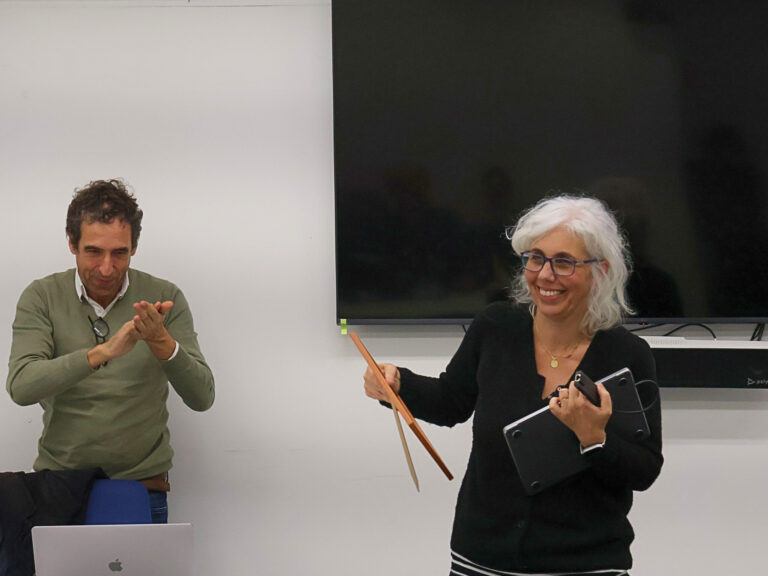
    Closing the year, the INESC-ID Awards 2025 brought together researchers, students and staff to recognise three outstanding contributions to the institute’s scientific life and impact.

    Hosted by the President of the Scientific Council, Rodrigo Rodrigues, the packed hybrid ceremony awarded Best INESC-ID Researcher to Luísa Coheur, Best Young Researcher to  Christof Torres and Best PhD Student to Pedro Orvalho.

    The recipients gave short presentations of their work. Luísa gave an overview of research on transparent and inclusive machine translation evaluation, including efforts to adapt this work to translation niches such as sign language; Christof, speaking live from Berlin, discussed his ongoing research on fortifying decentralised financial systems, wallet privacy and cross-chain sandwiching; and Pedro, now a postdoctoral researcher at the Barcelona AI Research Institute, presented MENTOR, a semantic automated program repair framework for programming exercises designed for use in educational environments.

    About the INESC-ID Awards:

    Since 2009, the INESC-ID Awards are presented annually to honour researchers whose work has made a significant contribution to the scientific life and impact of the institute, helping nurture a culture of excellence and commitment within INESC-ID’s scientific community.

    Winners are selected by an independent jury composed of world-renowned experts from the INESC-ID Advisory Board, ensuring a rigorous and external evaluation of the research conducted at the institute.

    © 2025 INESC-ID

    Images | © 2025 INESC-ID


  • INESC-ID brings secure computing to the first Téc4Defence

    INESC-ID brings secure computing to the first Téc4Defence

    At a time when the discussion on Defence is gaining prominence in political agendas in Portugal and across Europe, Téc4Defence brought together for the first time research institutes connected to Instituto Superior Técnico, companies active on the sector, and the Armed Forces to debate the future of Defence and dual-use technologies (for both civilian and military purposes).

    The event, organised by several student groups of Técnico with the objective of strengthening the role of science and engineering in National Defence and integration at European level, featured a full programme of roundtables, company pitches, debates, and technological solutions in development, including demonstrations of real prototypes with practical applications. 

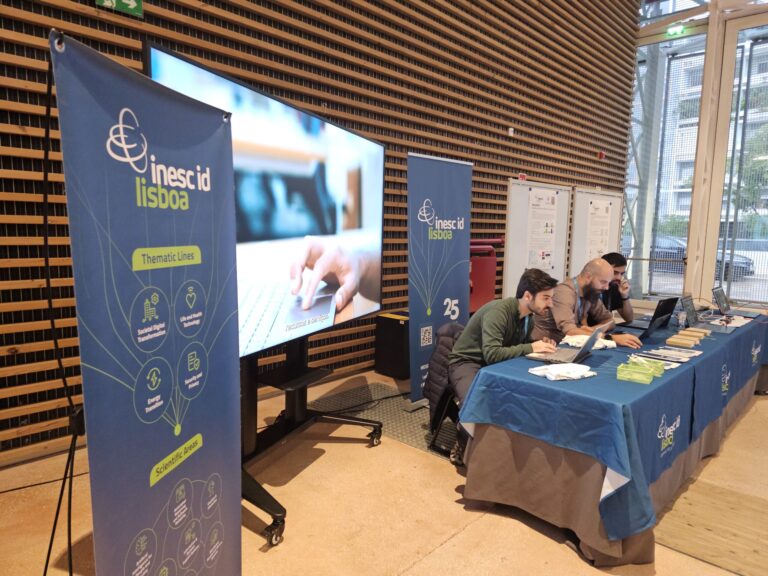
     In the exhibition area, the INESC-ID stand had a strong presence with a team of volunteers from the High-Performance Computing Architectures and Systems (HPCAS) scientific area. Researchers Ricardo Chaves, Nuno NevesJosé Antunes, Pedro Martins, and Manuel Goulão, demonstrated an encryption system for military networks and shared information on two European projects: SEQURED (see article), which develops innovative solutions to protect data from public and private organisations against future quantum-enabled cyberattacks.; and ORQESTRA, which focuses on integrating post-quantum cryptography technologies into real defence systems. 

    Throughout the day, our stand welcomed students, representatives of the Armed Forces, and industry professionals interested in the work carried out at our institute. The exhibition area also featured demonstrations from other research institutes, including INESC-MN, the Institute for Plasmas and Nuclear Fusion (IPFN), and the Institute for Systems and Robotics (ISR), alongside tech companies and the Navy, Air Force, and Army. Together, we showcased work in areas such as security, UAVs, advanced materials, telecommunications, surveillance, and microelectronics.

    See the photo gallery below.

    © 2025 INESC-ID

    Images | © 2025 INESC-ID

  • INESC‑ID Annual Meeting 2025: Year in review, showcasing excellence and a Town Hall

    INESC‑ID Annual Meeting 2025: Year in review, showcasing excellence and a Town Hall

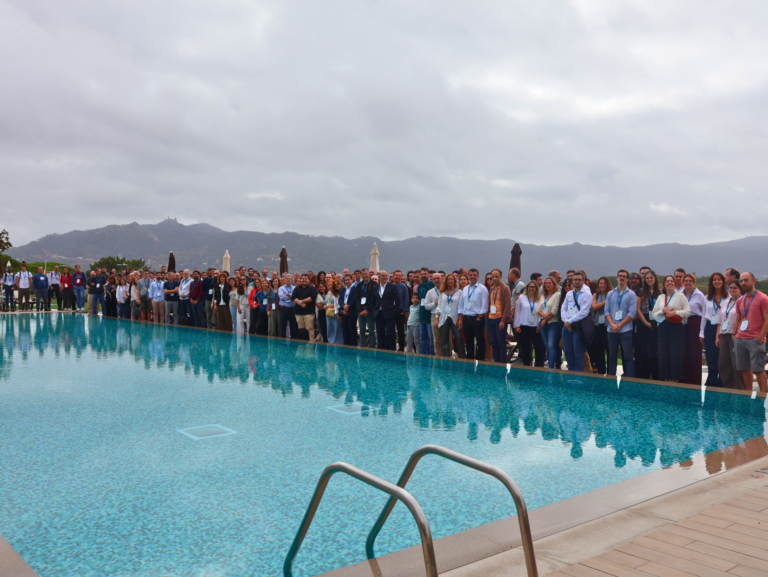
    After a two‑year hiatus, in which the annual meeting was held jointly with INOV and INESC MN under the INESC Lisboa initiative, INESC-ID returned to hosting its own dedicated gathering. 

    This year’s venue was Vila Galé Sintra, on an autumn day shrouded in the region’s characteristic fog, which gradually revealed  Palácio da Pena atop the hill and the historical town of Sintra below. With a record participation of nearly 200 members, the meeting took place on October 23 in this symbolic setting, associated for centuries with moments of retreat and reflection. 

    “I enjoyed seeing all of INESC-ID at the same venue , which is a rare sight and a first time for me. It gave me a more complete perspective of how many research projects there are.” PhD student

    Institutional overview, support teams in the spotlight, and a thought-provoking talk 

    Inês Lynce, President of the Board of Directors, opened the first session of the day, stepping in for Executive Committee Director Miguel Pupo Correia, who was away on professional duties in the U.S. She was joined by Executive Director João Paulo Carvalho, who presented a profile of the INESC-ID community, including upcoming infrastructure plans and challenges. He was followed by fellow Executive Director Nuno Roma, who offered a detailed account of the institute’s current financial situation. 

    Next came a session dedicated to INESC-ID’s support offices, with brief presentations from the teams who, often behind the scenes, play a vital role in the institute’s daily life. Executive Director Helena Galhardas spoke for Administrative Support and Technological Infrastructures, followed by Elisabete Rodrigues and Sandra Sá (Board Support), Vanda Fidalgo (Human Resources), Sílvia Castro (Innovation Management), Sandra Aresta (Knowledge Transfer), and Rodrigo Abril de Abreu (Communications and Outreach).

    The morning concluded with an inspiring talk by guest speaker João Rocha, Full Professor of Chemistry at the University of Aveiro and current Coordinator of the Council of Associated Laboratories. He reflected on the functional model of CICECO – Aveiro Institute of Materials, which he led from 2002 to 2021, the role of fundamental research in national development, and the challenges of large-scale scientific coordination. The session ended on a lively note with an open exchange of questions from the audience. 

    European projects, research on the walls, and a new format for dialogue 

    The afternoon began with a presentation by researcher Hugo Morais, from the Sustainable Power Systems scientific area, on his extensive experience with European projects. Together with his team (Rita Nunes, Mariana Carmo, and Cindy Gusman), he shared the structure they have developed over the years, with a strong track record in securing European funding, offering practical advice, strategies, and lessons learned for those looking to follow a similar path. The session aimed to inspire other researchers to join this European research ecosystem. 

    Mid-afternoon, alongside a coffee break dedicated to conversation, reconnection and networking, came the PhD Students’ Poster Session. Transforming the event walls into a showcase, the exhibition featured one poster selected by each Scientific Area coordinator, highlighting the diversity and quality of research underway at INESC-ID. This session also marked the second part of the 2nd Annual Meeting of INESC-ID PhD Students, whose first segment took place in September, and reinforced the active role of students in the institute’s life. 

    The closing session, led by Luís Oliveira e Silva, introduced a new format: the Town Hall an open conversation between the Board of Directors and the INESC-ID community, held in a Q&A format. The directors addressed questions posed primarily by PhD students, who represented around one-third of participants this year, on topics ranging from the institute’s visibility and student recruitment strategies, to support during and after the PhD journey. This final moment promoted transparency, feedback, and collective reflection on the future of the institute. 

    © 2025 INESC-ID
    Images: © 2025 INESC-ID

  • Rain or shine, INESC-ID brought science to the European Researchers’ Night

    Rain or shine, INESC-ID brought science to the European Researchers’ Night

    Not even the threat of tropical cyclone Gabrielle discouraged the hundreds of families and curious visitors who filled the Marina of Oeiras for another edition of the European Researchers’ Night (NEI). And last Friday, September 26, brought its reward: the announced storm turned into a perfect autumn afternoon and evening. Once again, the marina became a stage for live science, with more than 35 institutions, interactive experiments, games, conversations, and performances for all ages. 

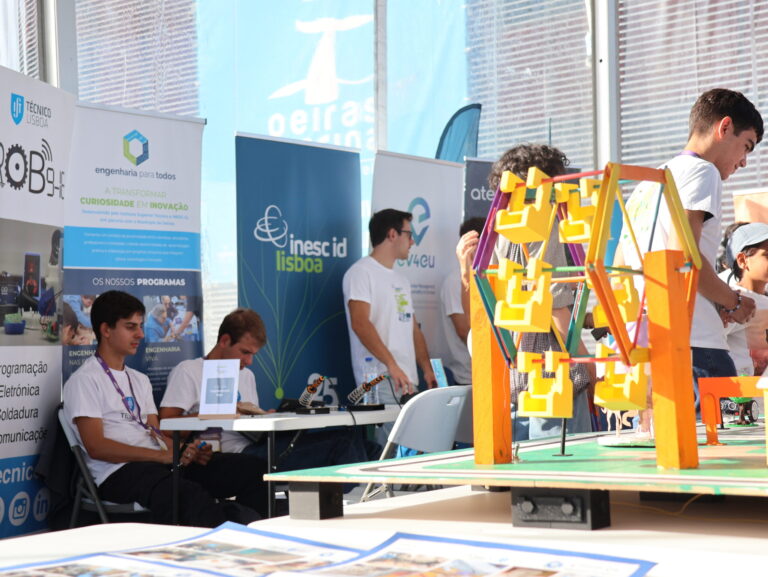
    For the second year in a row, INESC-ID took part in the event with a sea-view booth – part of a series of science outreach efforts coordinated by the Communications and Outreach Office. We were in great company, alongside colleagues from CERENA (also part of the Instituto Superior Técnico associated institutes community) and several other institutions.  

    Exploring Electric Mobility 

    Starting the first shift of the day, our booth featured the EV4EU and Aliança para a Transição Energética (ATE) projects, the latter being a key pillar of Portugal’s Recovery and Resilience Plan (PRR). Students Guilherme Pereira and Marcelo Braço Forte, from the Sustainable Power Systems scientific area, led the activity with an interactive quiz, challenging visitors and offering the chance to win a mini electric vehicle kit. 

     Serious Games for Psoriatic Arthritis Rehabilitation 

    As the sun went down, the baton was passed to returning volunteers Bárbara Ramalho from Graphics and Interaction (HUMAN Lab) and Samuel Gomes from GAIPS, joined by newcomers Rodolfo Costa and Filipa Magalhães. Together, they showcased the latest version of the game iPROLEPSIS, inviting the public to play and respond to questionnaires while explaining how the tasks were designed to train movements often affected by psoriatic arthritis. 

     Engineering for Everyone 

    Our booth’s second table was dedicated to the Engenharia para Todos project – a joint initiative by INESC-ID and Instituto Superior Técnico, with support from the Oeiras Municipality. This project embodies the spirit of this year’s edition by actively engaging children, public schools, and local communities in hands-on science and technology. Presented by coordinator Maria João Verdasca, and scholarship students Afonso Gonçalves and Martim Jesus, dozens of children had the chance to learn how to solder electronic components to build mini rockets. 

    Right in front, students from the C4 Science Club at Agrupamento de Escolas de Carnaxide — who developed their Smart City project throughout the year with support from Engenharia para Todos — proudly presented their city, built from 3D modelling and printing to Arduino programming. 

    At the end of the night, with all booths already packed away, only one small future scientist remained, determined and focused, finishing the last soldering points on her rocket. We waited patiently, watching her with quiet satisfaction. Only then, in a moment of silent complicity, did we unplug the soldering iron and close our participation.

    Held every year on the last Friday of September, the European Researchers’ Night brings science to the streets with hundreds of free events across Europe. This year’s edition in Oeiras, part of the EU-EMBRACES project, was coordinated by ITQB NOVA in partnership with the Oeiras Municipality.


    Published by the INESC-ID Communications and Outreach Office
    © 2025 INESC-ID. Credit INESC-ID, with a link to the original source, when sharing or adapting this article.

    Images | © 2025 INESC-ID

  • Powered by Research: INESC-ID goes the extra mile at the Tejo Run 2025

    Powered by Research: INESC-ID goes the extra mile at the Tejo Run 2025

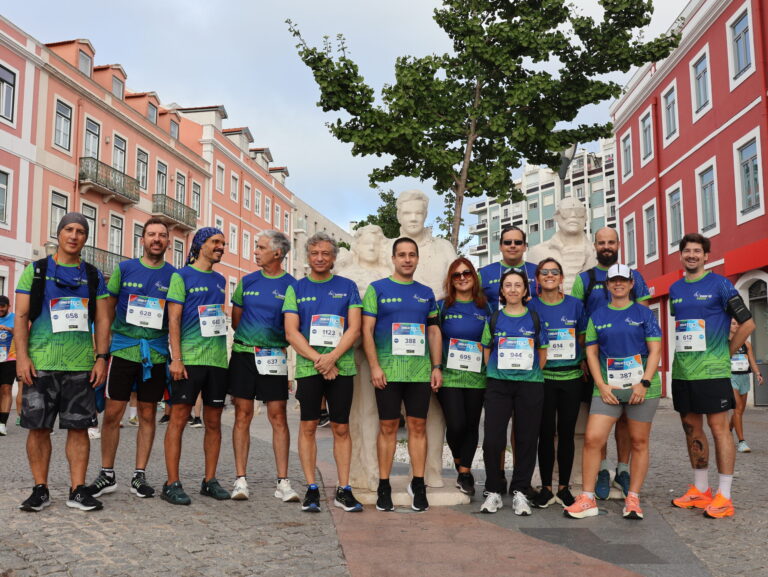
    It was just after 8 a.m. on a sunny Sunday, September 14, and several members of the INESC-ID running group were already warming up, chatting, and sharing laughs near Algés station, a meeting point for thousands of runners and enthusiasts of all ages ahead of the Tejo Run 2025. 

    For those still arriving, it was easy to spot the rest of the team. The green and blue t-shirts with the INESC-ID logo and the rallying phrase Powered by Research, proudly worn by researchers, PhD students, and members of the various support offices, stood out in the crowd. 

    After the brief gathering, it was time to run. For some, the culmination of weeks of hard training. For others, first-timers, it felt more like a Sunday stroll straight out of an Instagram post: 10 kilometers of coastline between Algés and Praia da Torre, in one of Portugal’s oldest and most scenic races. 

    On the men’s classification, researcher Fábio Passos crossed the finish line first, with an impressive time under 50 minutes, followed closely by Jorge Fernandes. Nuno Roma and Nuno Neves finished just minutes later, almost neck and neck. In the women’s classification, Sílvia Castro, Natália Costa, and Manuela Sado completed the INESC-ID podium. The rest of the team arrived at their own pace, but no one was left behind. 

    At the finish line, sweat, fatigue, and wide grins were the best medals and the shared certainty that next year, “temos equipa!


    Images | © 2025 INESC-ID

  • After the lights went out: MIT and INESC-ID researchers team up to prevent the next blackout

    After the lights went out: MIT and INESC-ID researchers team up to prevent the next blackout

    Long queues outside corner shops and bakeries. Supermarkets closed. Anxious people carrying gas cylinders, bags of charcoal, batteries, and candles. In an instant, and for several hours, the fast, digital rhythm of 21st-century life was unplugged. 

    The unprecedented Iberian blackout that left Portugal and Spain “in the dark” on the morning of April 28 exposed just how reliant modern society is on the seamless functioning of our electrical grids. 

    In the weeks that followed, the event triggered international media attention, quickly becoming politicized and a lightning rod in the renewable energy debate, as the Iberian Peninsula is one of the world’s regions with the highest levels of renewable energy production.

    Experts across the sector, including INESC-ID researchers and Instituto Superior Técnico professors Pedro Carvalho and Rui Castro, helped clarify the technical complexity of the event and the deeper challenges it revealed for Europe’s ongoing energy transition. (Read our earlier article here.) 

    “It immediately caught the world’s attention. Because we have one of the highest shares of renewables, what happened here became a weapon in the political debate.” –  Pedro Carvalho 

    But now, the key question is: how do we prevent this from happening again? 

    Events like these are often compared to forest fires – all too familiar in Portugal. Once they begin, they are incredibly hard to stop. Which is why building resilience and improving control in such a tightly interconnected system is essential. 

    That’s precisely the focus of a new project titled “Assessing and Mitigating Blackouts: The Case of Iberian 2025 Blackout”, recently awarded a US$200K seed grant by the MIT Portugal Program. The MIT Portugal Seed Fund is awarded exclusively to MIT Principal Investigators, with proposals that include collaboration with Portuguese faculty, students, industry, or other institutions in Portugal. 

    The project is co-led by Marija Ilic, professor and researcher at MIT and Pedro Carvalho—long-time collaborators with nearly two decades of joint work on modelling power systems and grids. Their research will explore two innovations designed to prevent future large-scale blackouts while allowing the continued integration of high levels of renewable energy sources. 

    The first involves simulating the electric power grid interconnecting France, Spain, Portugal, and the underwater connection to Africa—all affected during the April 28 event. The team will reconstruct the chain of events, assess vulnerabilities, and explore how cross-border exchanges, particularly between France and Spain, can be better coordinated to prevent voltage collapse. 

    The second innovation focuses on developing an adaptive power electronics control system capable of stabilising voltage and frequency during extreme grid disturbances. This mechanism is intended to avoid the premature activation of protection protocols that can inadvertently shut down the entire system. 

    Together, these innovations could help prevent widespread blackouts, while supporting the transition to cleaner, decentralised energy. To achieve this, the two co-investigators are rethinking today’s operating and planning practices, and aim to deliver recommendations for policymakers.  

    For Portugal, that work now includes INESC-ID, through Pedro Carvalho. As a member of the newly formed Technical Advisory Group for Strengthening the Security and Flexibility of the National Electricity System – set up by Portugal’s Minister for Environment and Energy and expected to soon deliver a public report – he is uniquely positioned to help turn research into action. 

    The group’s goal is to reinforce the grid’s resilience against future blackouts. For INESC-ID, this participation also reflects recognition of its expertise in energy systems, increasingly called upon in both research and policy contexts. 

    The project won’t just be academic. Using MIT’s Power Digital Twin to simulate real-world situations—recently deployed in Puerto Rico to prepare its power grid for hurricanes—the team will better understand the vulnerabilities of the Iberian grid and identify improvements, all while maintaining high use of renewables. 

    What adds further urgency and relevance to this research is the current political context. Although the blackout has disappeared from media headlines, “behind the scenes, utilities, especially in Spain, are still under tremendous pressure. Many companies are demanding millions in compensation,” Carvalho explains. 

    But practical changes are already underway. In the future, insights from this project could be applied to other regions with high renewable penetration, such as Texas, California, and Northern Europe, and provide recommendations to help industry and governments design better mitigation strategies. 

    In the immediate aftermath of the event, uncertainty and lack of information sparked speculation ranging from technical failure to fears of a Europe-wide cyberattack. We were bluntly reminded that our increasingly decentralised and interconnected critical infrastructures are not just technical, they are a societal nervous system.


    Text by Rodrigo Abril de Abreu | Head of Communications and Outreach Office, INESC-ID
    © 2025 INESC-ID. Credit INESC-ID and the author, with a link to the original source, when sharing or adapting this article.

  • “Healthy Mind, PhD in Progress”: Supporting PhD Student Wellbeing at INESC-ID

    “Healthy Mind, PhD in Progress”: Supporting PhD Student Wellbeing at INESC-ID

    Can research institutes excel without caring for the wellbeing of their people?

    It’s increasingly clear that real excellence in R&D+i is not just about brains or breakthroughs, it’s also about the social support systems behind them. With initiatives like the PhD Students Meetup on mental health and wellbeing last June, INESC-ID is taking part in this shift towards a new scientific culture.

    For many PhD students, the path toward a scientific career can be isolating. That’s why moments like the INESC-ID PhD Students Meetups matter. Part of an ongoing series of community-building initiatives designed to connect and empower our students, June’s event brought together around 20 participants from different research areas and stages of their doctoral journey for a hands-on workshop titled “Mente Sã: PhD em Progresso” (Healthy Mind: PhD in Progress). The session was led by Carla Boura, Coordinator of the Mental Health and Wellbeing Program at the University of Lisbon, and former Head of Student Support at Técnico’s Oeiras campus, both key institutions in the INESC-ID ecosystem.

    Over the course of the half-day session, students paused, reflected, and explored tools to support their mental wellbeing – from recognising signs of psychological distress to practicing self-care and stress management strategies, including breathing and meditation exercises. The workshop also invited group discussions and joint reflection on common challenges, long-term wellbeing practices, and available resources.

    A structural problem: stress, isolation, and academic pressure

    The session began by framing the structural pressures faced by PhD students, including the solitary nature of certain research fields, a competitive culture, and the absence of a strong academic community.

    A global survey of over 6000 PhD students, reported in a 2019 Nature article by Chris Woolston, found that more than one-third sought help for anxiety or depression with many other reporting mental health struggles. The study also showed that students face multiple pressures. External factors include unstable funding, unclear career prospects, excessive workloads, or lack of institutional support. Internal challenges like imposter syndrome, anxiety or burnout, are also common. Nearly one in five students also reported experiencing bullying or harassment. For international students, visa issues and cultural adaptation can add another layer of stress and isolation.

    These stressors resonated with the students present, who shared their challenges in a rare moment of openness, made possible by the atmosphere of trust in the room. As Beatriz put it “What I liked the most was the caring environment, feeling like a safe space to share my experiences, and the practical tools and exercises to help with my emotions.” For Joana, “seeing that everyone has the same struggles during a PhD, and getting to know other INESC-ID students” was just as valuable.

    Carla, who launched Portugal’s first academic mentoring program at Instituto Superior Técnico in 1997, and actively participates in wellbeing and inclusion initiatives, isn’t surprised by this reaction:

    “There’s a misconception that PhD students, being older and having prior university experience, don’t need support. But everyone needs help at some point, regardless of age, and in a student community where more and more go directly from a Master’s to a PhD, that support becomes even more essential.”

    She adds there’s often a lack of literacy around the topic and “in the case of doctoral students, prevention can be essential for a healthy journey”. Her remarks echoed student feedback, with one suggesting the inclusion of this kind of session during the onboarding process, while others highlighted that connecting with peers was just as important as the content itself.

    Mental wellbeing as a foundation for excellence

    According to Carla, the University of Lisbon has taken an important step in building this culture “once and for all”,  aligning with the Nature article’s call for universities, supervisors, and funders to create healthier research environments and concrete support structures. Through its Mental Health and Wellbeing Program and Academic Success Project, the goal is to pave the way for psychologically safe environments that are “essential to developing creative, motivated, and dynamic students.”

    In a field defined by high intelectual demands, small gestures can make a big difference. As Carla Boura reflected, “Initiatives like this one – bringing the University of Lisbon’s Mental Health Program to your students – can truly have an impact.”

    At INESC-ID, home to nearly 200 PhD students, wellbeing and mental health are part of the conversation, not as a side note, but as a condition for excellence.

    More information about ULisboa’s Mental Health and Wellbeing Program (in Portuguese) here.

    Psychological First Aid Manual – University of Lisbon (PDF, in Portuguese) here.


    Text by Rodrigo Abril de Abreu | Head of Communications and Outreach Office, INESC-ID
    © 2025 INESC-ID. Credit INESC-ID and the author, with a link to the original source, when sharing this article.

    Images | © 2025 INESC-ID

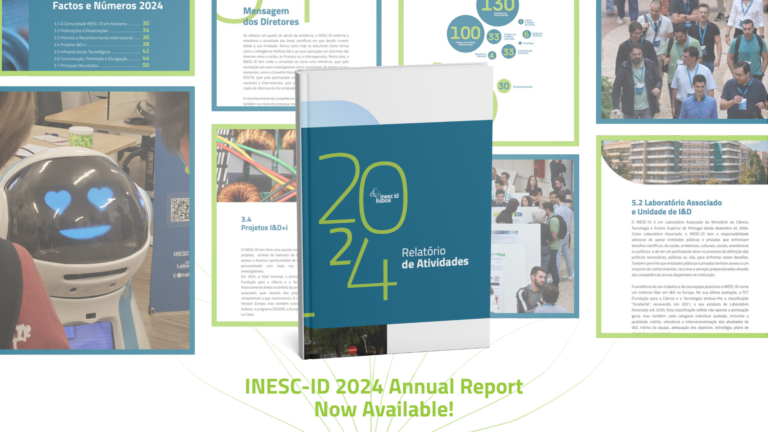
  • The INESC-ID 2024 Annual Report is Out!

    The INESC-ID 2024 Annual Report is Out!

    INESC-ID is proud to release its latest Annual Report, compiling the main achievements of 2024.

    Inside the report, you can read the story of our organisation, along with an overview of our structure, mission, strategy, and the latest facts and figures that showcase the continued growth and evolution of our institute.

    The spotlight, however, is on the activities and accomplishments of our researchers and support offices. From national and international projects, publications, awards and recognitions to collaborations and outreach initiatives. The report reflects our ongoing commitment to scientific excellence, internationalisation, knowledge transfer, societal impact, and talent development.

    The report is available in Portuguese here. Take a look and get to know us better!

  • INESC-ID participates in the INESC Brussels Hub Winter Meeting 2025

    INESC-ID participates in the INESC Brussels Hub Winter Meeting 2025

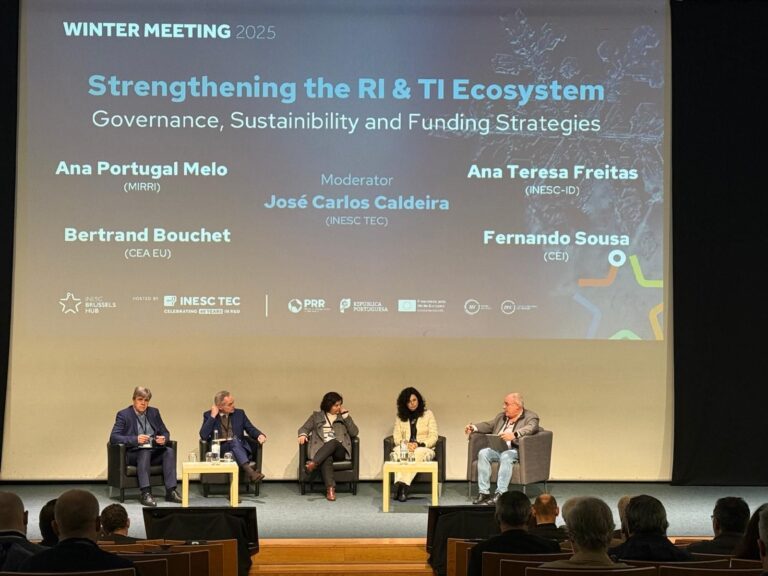
    Key European and national policymakers, research and technology infrastructure managers, and funding agencies, gathered on March 6 at the Faculty of Engineering of the University of Porto (FEUP), to attend the INESC Brussels Hub Winter Meeting 2025.  This year’s edition was particularly significant, as it focused on aligning EU and national strategies for the sustainability, governance, and funding of Research and Technology Infrastructures (RTIs), while also celebrating the 40th anniversary of INESC TEC.

    The meeting, organized with the support and participation of Portugal’s main research and innovation funding agencies, FCT (Fundação para a Ciência e a Tecnologia) and ANI (Agência Nacional de Inovação), was also an opportunity to discuss the evolving policy landscape and explore strategic investment models for RTIs.

    One highlight of the event was the “High-Level Policy Dialogue: Aligning EU, National and Regional Infrastructure Strategies,” moderated by Arlindo Oliveira, INESC-ID researcher and the President of the INESC holding. Additionally, Ana Teresa Freitas, also an INESC-ID researcher, participated as a panelist in the session “Strengthening the RI & TI Ecosystem: Governance, Sustainability, and Funding Strategies.”

    A dedicated Needs Assessment Workshop in the afternoon allowed participants to identify and validate key gaps and opportunities in the RTI landscape. The results of this workshop will be submitted to the European Commission to inform future policy and funding decisions.

    The President of FCT, Madalena Alves, attended the second day, participating in the closed event on “Policy, Governance, and Funding for Research and Technology Infrastructures.” Discussions also included key topics such as “The Next MFF, FP10, and the Future of R&I Funding.”

    Having participated actively on the meeting, Inês Lynce, President of the Board of Directors  of INESC-ID, stresses that “the INESC Brussels Hub Winter Meeting played a key role in discussing the alignment of EU and national strategies for the sustainability, governance, and funding of RTIs. Our participation in these discussions aimed to strengthen INESC-ID’s strategic alignment with EU initiatives, fostering new opportunities for collaboration and funding.”

    Miguel Pupo Correia, President of the Executive Committee of INESC-ID, also emphasized the importance of these events, stating, “Participation in European projects is of enormous importance for INESC-ID at various levels: funding, internationalization, and collaboration with leading companies and research centers, among others. These events organized by the INESC Brussels Hub provide a unique opportunity to understand the challenges and opportunities associated with such projects.”

  • PRR Projects: Fair, Explainable, and Sustainable. INESC-ID is leading Responsible AI with the CRAI Project

    PRR Projects: Fair, Explainable, and Sustainable. INESC-ID is leading Responsible AI with the CRAI Project

    Luís Oliveira lost his ability to speak due to Amyotrophic Lateral Sclerosis (ALS) in early 2023. However, in May 2024, he made his voice heard around the world. Luís, who sadly passed away in the meantime, made an historic appearance at the United Nations summit AI for Good, becoming the first ALS patient to demonstrate the use of Halo. This groundbreaking technology, developed under the PRR-funded Centre for Responsible AI (CRAI) project, enables communication without speech or typing, by combining Generative AI with a non-invasive neural interface that translates bioelectrical signal patterns into language.

    Halo, developed by Unbabel—the leading partner in this large-scale initiative—is perhaps the most visible innovation to emerge from the CRAI consortium. With €51 million in funding, CRAI aims to promote fair, transparent, eco-friendly, and trustworthy Artificial Intelligence. The initiative is structured around three key areas. Technology developers, including startups and companies focused on product development, ensure AI research directly supports real-world applications, such as Unbabel’s Halo. Fundamental research, led by top institutions like INESC-ID, Instituto de Telecomunicações, and the Champalimaud Foundation, drives cutting-edge AI advancements. Industry and healthcare adopters, such as Hospital de São João, Bial, and Luz Saúde, integrate AI solutions into their operations, ensuring broad societal impact. In total, CRAI brings together 10 startups, two unicorns, a law firm, five industry leaders, and eight research centers.

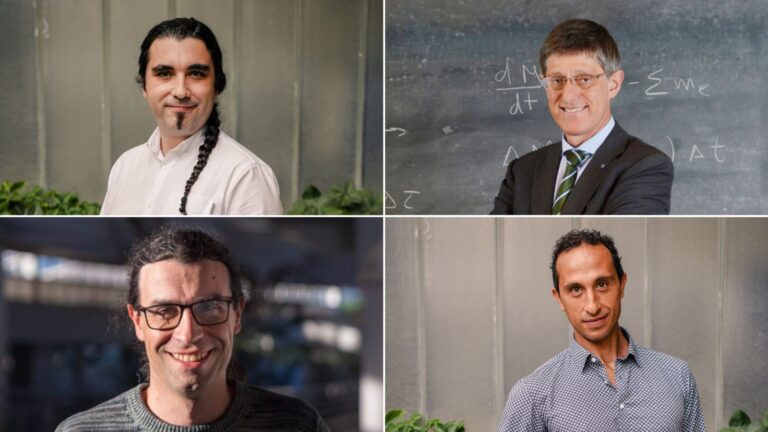
    At INESC-ID, four different research teams—led by Bruno Martins, Arlindo Oliveira, Rui Prada, and Paolo Romano—collaborate on various aspects of the project, with Responsible AI as a core pillar. Alongside this vision of connecting with companies, the teams are developing highly applied solutions.

    “CRAI is built on three fundamental principles: fairness, ensuring no discrimination towards groups of people; understandability and explainability, making AI systems interpretable and their decision-making processes transparent; and sustainability, ensuring computational feasibility and reducing energy consumption without compromising performance.”  — Bruno Martins

    INESC-ID’s expertise in Natural Language Processing (NLP) and dialogue systems has for instance been instrumental in supporting projects like Unbabel Halo. Other key initiatives focus on legal or clinical NLP, which are critical components of the Affine product being developed by NeuralShift, with its focus on streamlining legal workflows, or the automated medical record systems developed in collaboration with Priberam’s PCARE initiative.

    Bruno Martins, from Human Language Technologies research area and the coordinator of INESC-ID participation at the project, explains that CRAI is built on three fundamental principles: “fairness, ensuring no discrimination towards groups of people; understandability and explainability, making AI systems interpretable and their decision-making processes transparent; and sustainability, ensuring computational feasibility and reducing energy consumption without compromising performance.”

    The team led by Paolo Romano adopts a three-pronged approach to enhance AI efficiency and scalability, focusing on system-level optimization, cloud-level optimization, and self-adaptation. Meanwhile, research by the team coordinated by Rui Prada, on Social Artificial Intelligence and Social Robotics, aims to develop AI that interacts naturally and responsibly with humans, fostering a symbiotic relationship between people and technology. And Arlindo Oliveira’s team aims to strike a balance between safeguarding data privacy and security while leveraging customer insights in a competitive landscape.

    CRAI’s main objectives include advancing fundamental research in Responsible AI, developing products and services that apply Responsible AI principles to generate economic impact, attracting, training, and retaining world-class talent, and promoting education and awareness through initiatives such as the Responsible AI Forum. These efforts are already translating into real-world solutions, enhancing accessibility, improving healthcare processes, and fostering ethical AI adoption across industries.


    Text by Sara Sá, Science Writer | Communications and Outreach Office, INESC-ID
    © 2025 INESC-ID. Credit INESC-ID and the author, with a link to the original source, when sharing or adapting this article.

    Images | © 2025 INESC-ID, Técnico, Unbabel