Category: INESC-ID

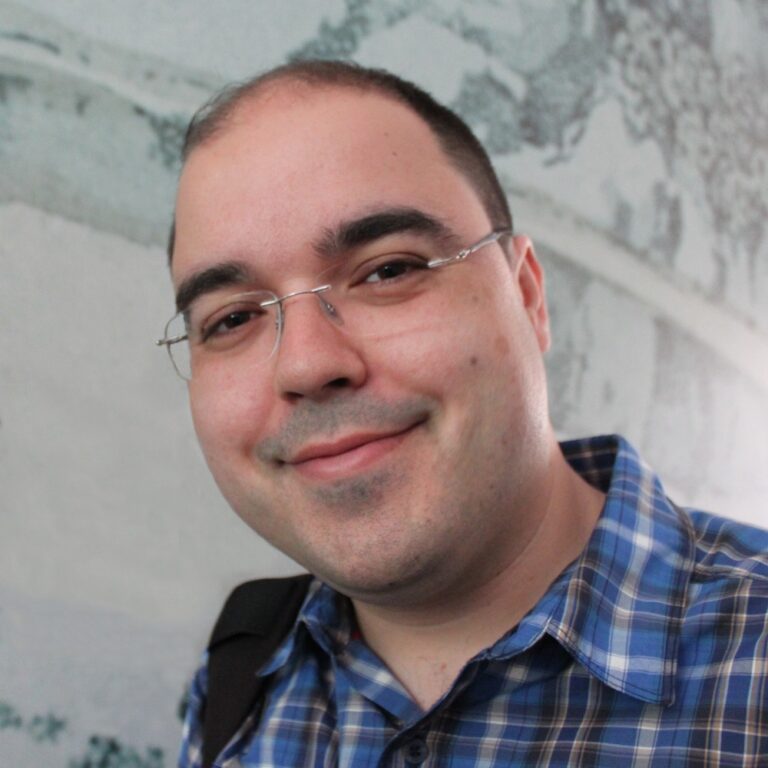
  • Gonçalo Rodrigues

    Short Personal Interview


    Gonçalo Rodrigues was born in 1995, in Lisbon. He is an INESC-ID Researcher and PhD Student since 2020, integrating the Scientific Area Nano-Electronic Circuits and Systems (NECS).


    How did you get to INESC-ID?

    During my master thesis


    INESC-ID is…

    one of the most advanced and innovative technology centers in Portugal.


    Research project(s) under development

    Position2 (European project with Philips) and Moore4Medical.


    How would you explain in the most accessible and least technical language possible, what is the application / expected results of this (these) project (s)?

    Next generation of biomedical tools.


    Tell us about your favorite project so far (or one of them)?

    Position2 with many futuristic ideas in the biomedical field.


    What are the biggest challenges of working in research in this area?

    Long waiting times to get results.


    What book are you currently reading?

    Papers and more papers (not books).


    How would you explain to your child (or your parents or grandparents) what your job is? How do you explain what means to be a researcher in this area?

    Design circuits that can be as small as a grain of sand, which will be part of an even more complex system.


    How do you see the mission of mission INESC-ID “ to produce added value to people and society, supporting the response of public policies to scientific, health, environmental, cultural, social, economic and political challenges, in the fields of Computer Science and Electrical and Computer Engineering”?

    I think we are going in the right path. INESC-ID has a variety of working areas which covers most of those challenges.


    Academic Degree

    Masters


    Training / Research Area(s)

    Nanotechnology / Biomedical


    INESC-ID Scientific Area

    Nano-Electronic Circuits and Systems (NECS)


    Email

    goncalo.rodrigues@inesc-id.pt


    Linkedin Profile Link

    https://www.linkedin.com/in/gonçalo-rodrigues-brás/


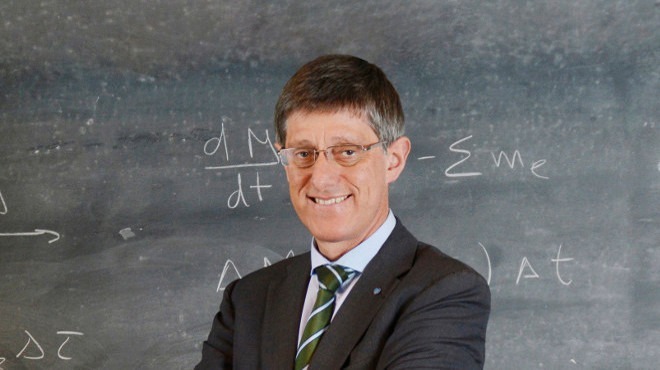
  • Miguel Pupo Correia

    Short Personal Interview


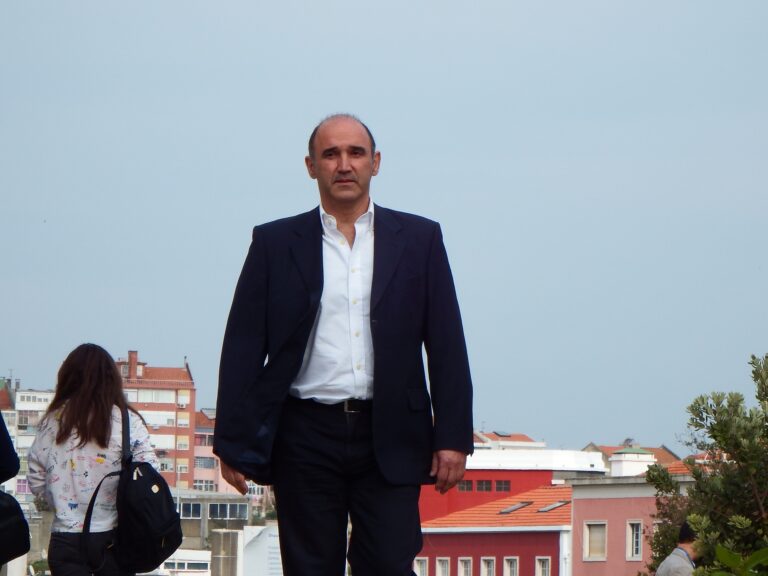
    Miguel Pupo Correia was born in 1968, in Figueira da Foz, Portugal. He is an INESC-ID Researcher since 2011, integrating the Scientic Area Distributed, Parallel and Secure Systems (DPSS). Miguel Pupo Correia is also member of the Scientific Council of INESC-ID.


    How did you get to INESC-ID?

    When I was contracted by IST early 2011, I naturally joined INESC-ID and the Distributed Systems Group. I was with INESC years before, until 1997, before INESC-ID existed.


    INESC-ID is…

    A great place for doing research!


    Research project(s) under development

    QualiChain – Decentralised Qualifications

    DE4A – Digital Europe for All


    How would you explain in the most accessible and least technical language possible, what is the application / expected results of this (these) project (s)?

    Blockchain-based applications for improving (ex-)student mobility and contracting.


    Tell us about your favorite project so far (or one of them)?

    A great project was SafeCloud. The persons involved were great and we had very nice results on cloud security.


    What are the biggest challenges of working in research in this area?

    Similarly to most Computer Science and Engineering subareas, in mine there are too many researchers world-wide and industry producing new products fast, so the area evolves so quickly that it’s hard to see which directions will have impact in the medium term, not to say long term.


    What book are you currently reading?

    One that I’ve read recently and enjoyed was “Saint Peter’s Fair”, a medieval mystery novel by Ellis Peters. I have also been enjoying some old books by Armando Ferreira, a 20th century journalist who was an IST graduate.


    How would you explain to your child (or your parents or grandparents) what your job is?

    In short: teaching and investigating, which are deeply entangled activities.


    How do you see the mission of mission INESC-ID “to produce added value to people and society, supporting the response of public policies to scientific, health, environmental, cultural, social, economic and political challenges, in the fields of Computer Science and Electrical and Computer Engineering”?

    As a researcher my main focus is on academic research: keeping up to date with the literature and producing new results. However, I also interact with society in different ways, from roles in external organizations (EBP, .PT) to collaborations with industry. These interactions are useful to fertilize more fundamental research, but also to understand what society needs from us as researchers and teachers.


    Academic Degree

    PhD


    Training / Research Area(s)

    Cybersecurity, Dependability, Distributed Systems


    INESC-ID Scientific Area

    Distributed, Parallel and Secure Systems (DPSS)


    Email

    miguel.p.correia@tecnico.ulisboa.pt


    Linkedin Profile Link

    https://www.linkedin.com/in/miguelpcorreia/


    Twitter Profile Link

    https://twitter.com/miguelnpcorreia


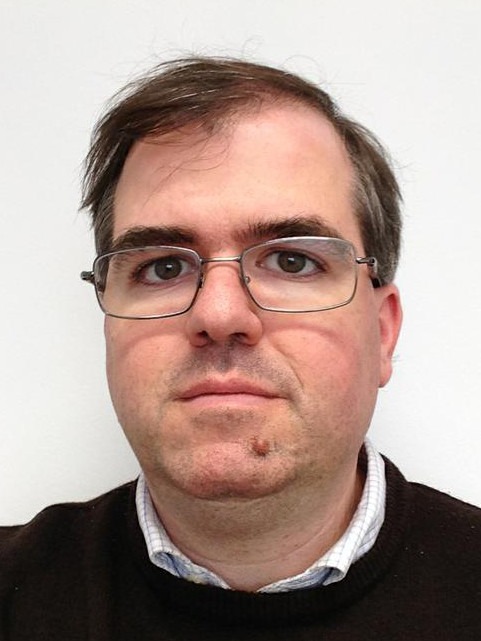
  • Miguel Pardal

    Short Personal Interview


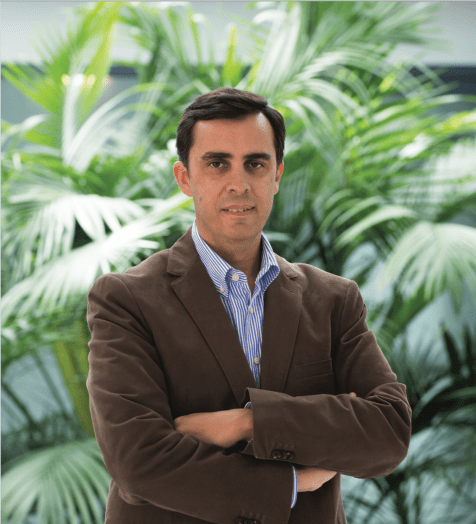
    Miguel Pardal was born in 1977, in Lisbon, Portugal. He is an INESC-ID Researcher since 2015, integrating the Scientific Area Distributed, Parallel and Secure Systems (DPSS). Miguel Pardal is also member of the Scientific Council of INESC-ID.


    How did you get to INESC-ID?

    INESC-ID has long been a beacon of quality research in the Técnico community, so when I adjusted my research area to cybersecurity applied to the cloud and the internet of things, it made perfect sense to join the team.


    INESC-ID is…

    top-quality research, through passionate hard work


    Research project(s) under development (please indicate the name of the project(s)

    SureThing


    How would you explain in the most accessible and least technical language possible, what is the application / expected results of this (these) project (s)?

    The SureThing project is developing new ways to quickly and reliably prove our presence at specific locations, both for mobile and for internet of things applications. This will make checking-in at a medical office and getting a absence justification automatic. It can also improve the experience of visiting new locations with systems that can reliably reward users for completing tours.


    Tell us about your favorite project so far (or one of them)?

    My favorite project so far has been SafeCloud (H2020), where we collaborated with colleagues across Europe to develop added-security solutions. The INESC-ID team contributed to the development of reinforced-security channels that can go beyond TLS (the Security in HTTPS) with route monitoring and multiple layers of encryption.


    What are the biggest challenges of working in research in this area?

    One of the biggest challenges of working in Cybersecurity is keeping up the new threats that appear every week. On the one hand, we have to develop new and groundbreaking security mechanisms, to improve the security of systems, in the medium and long-term. On the other hand, we have to respond to emergencies, in the short-term.


    What book are you currently reading?

    The Inversion Factor, by Linda Bernardi, Sanjay Sarma (my PhD co-advisor) and Ken Traub (MIT Press). It discusses how businesses can adapt to the many possibilities of the internet of things. The inversion refers to stop thinking about products and center the design in the novel user experiences made possible by the new technologies.


    How would you explain to your child (or your parents or grandparents) what your job is? How do you explain what means to be a researcher in this area?

    Unfortunately there are bad people doing bad things on the Internet, and we have to outsmart them and keep everyone safe, while still enjoying the advantages of digital technologies.


    How do you see the mission of INESC-ID “ to produce added value to people and society, supporting the response of public policies to scientific, health, environmental, cultural, social, economic and political challenges, in the fields of Computer Science and Electrical and Computer Engineering”?

    I see INESC-ID playing a very significant role in society, as we bring the future closer to the present reality, and use our technical expertise to improve the technology and provide guidelines and scientific advice to policy decisions. This role is also critical to the formation of the next generations of engineers and researchers. We need to prepare them today for the challenges the world will face tomorrow.


    Academic Degree

    Doctorate


    Training / Research Area(s)

    Computer Science and Engineering


    INESC-ID Scientific Area

    Distributed, Parallel and Secure Systems (DPSS)


    Email

    miguel.pardal@tecnico.ulisboa.pt


    Linkedin Profile Link

    https://www.linkedin.com/in/miguelpardal/


    Twitter Profile Link


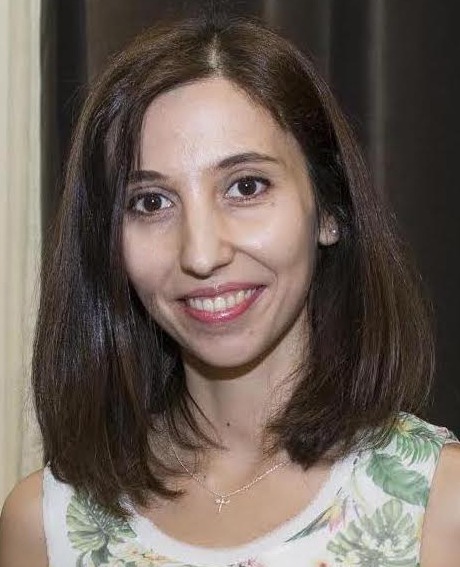
  • Sandra Gama

    Short Personal Interview


    Sandra Pereira Gama was born in 1984, in Entroncamento, Portugal. She is an INESC-ID Researcher since 2008, integrating the Scientific Area Graphics and Interaction (GI).

    How did you get to INESC-ID?

    As an MSc student

    INESC-ID is…

    A research institution of excellence

    Research project(s) under development (please indicate the name of the project(s)

    GameCourse, VisBig

    How would you explain in the most accessible and least technical language possible, what is the application / expected results of this (these) project (s)?

    (GameCrouse) We are studying ways to enhance higher education courses to provide a personalized, rather than one-size-fits-all, learning experience. We leverage on game principles (gamification) to further engage students and improve success.

    Tell us about your favorite project so far (or one of them)?

    GameCourse

    What are the biggest challenges of working in research in this area?

    Nowadays, with the COVID pandemic, doing research in the area of interaction, generally speaking, proves more difficult because we need to get participants to our studies. However, we have relied on technology to help bridge this gap.

    What book are you currently reading?

    1Q84, Haruki Murakami (big fan!).

    How would you explain to your child (or your parents or grandparents) what your job is? How do you explain what means to be a researcher in this area?

    I work in making it easier for people to interact with computers through meaningful visual representations that gather their attention, personalize content in a way that it it aesthetically pleasing according to people’s preferences and needs.

    How do you see the mission of INESC-ID “ to produce added value to people and society, supporting the response of public policies to scientific, health, environmental, cultural, social, economic and political challenges, in the fields of Computer Science and Electrical and Computer Engineering”?

    INESC-ID has a very wide variety of projects going on, with team members that encompass different competences, making it a rich environment for the exchange of ideas. The development of these ideas has, and will most certainly continue to lead to extremely relevant results, with impact on a most ample range of activities on health, environmental, cultural, social, economic and political fields.

    Academic Degree *

    PhD

    Training / Research Area

    Graphics and Interaction

    INESC-ID Scientific Area

    GI- Graphics and Interaction (GI)

    Email *

    sandra.gam@gmail.com

    Linkedin Profile Link

    https://www.linkedin.com/in/sandra-gama-971620170/

  • Newsletter

    Subscribe Newsletter

    * indicates required


    Subscriber consent

    The data submitted through this form will be used exclusively for the sending of INESC-ID Newsletter, NEWS-ID, and will not, under any circumstances, be shared with third parties. If you choose to, you can easily unsubscribe from the newsletter by following the link presented in the footer. In that case, your data will be automatically deleted from our information system. If you need to update your contact information or clarify any questions related to the newsletter, please contact info@inesc-id.pt. By submitting this form, you give permission to the use of your personal data according to the conditions above.

    We use Mailchimp as our marketing platform. By clicking below to subscribe, you acknowledge that your information will be transferred to Mailchimp for processing. Learn more about Mailchimp’s privacy practices here.

  • Daniel Gonçalves

    Short Personal Interview

    Daniel Gonçalves was born in 1974, in Tavira, Portugal. He is an INESC-ID Researcher since 2001, integrating the Scientific Area Graphics and Interaction (GI).

    How did you get to INESC-ID?

    As a prospective PhD student

    Research project(s) under development

    VisBig – Real-Time Visualization of Streaming Big Data

    GameCourse – Improving University Courses through Gamification

    How would you explain in the most accessible and least technical language possible, what is the application / expected results of this (these) project (s)?

    To be able to effectively and efficiently visualize and analyze large amounts real-time data; Study how gamification can be used to increase the engagement of college-level students of different profiles.

    Tell us about your favorite project so far (or one of them)?

    GameCourse, where lots of very interesting results have been achieved so far, with high impact from a scientific point of view, and also in pedagogical terms. We study how gamification can be used to increase student engagement, and even to provide students of different profiles with a different learning experience, moving away from the centuries-old and rather outdated “one-size-fits-all” approach. This will bolster their learning and outcomes. It has also shown to be a resilient approach, even in challenging contexts, such as the current COVID19 pandemic and all the changes to the teaching paradigm it brough about.

    What are the biggest challenges of working in research in this area?

    The need to involve students and other users (a must, but it makes testing harder). Indeed, there is an important qualitative aspect to the research that can and is assessed, but makes reaching conclusions harder than mere quantitative methods common in several other engineering fields.

    What book are you currently reading?

    Shards of Earth (by Adrian Tchaikovsky)

    How would you explain to your child (or your parents or grandparents) what your job is?

    I teach Computer Science at Técnico, continuously trying to find novel and more interesting ways of teaching, and I am a researcher, coming up with new ways to help people interact with computers.

    How do you see the mission of INESC-ID “ to produce added value to people and society, supporting the response of public policies to scientific, health, environmental, cultural, social, economic and political challenges, in the fields of Computer Science and Electrical and Computer Engineering”?

    It covers, in a nutshell, the goals and values that INESC-ID actively pursues. In particular, I would point out the connection to the wider society, where we strive to have an impact, that will help bolster national and international knowledge and standards of living. This, I feel, is a very relevant part of what we, INESC-ID researchers, try to accomplish.

    Academic Degree

    Habilitation in Computer Science

    Training / Research Areas

    HCI, InfoVis, Gamification, Computer Science Engineering

    INESC-ID Scientific Area

    Graphics and Interaction (GI)

    Email

    daniel.goncalves@inesc-id.pt


    Linkedin Profile Link

    https://www.linkedin.com/in/danielgoncalves/


    Twitter Profile Link

    https://twitter.com/domiriel

  • Arlindo Oliveira

    Short Personal Interview

    Arlindo Oliveira was born in 1963 in Negage, Angola. He is an INESC-ID Researcher since 1984 (then INESC), and integrates the Scientific Area Information and Decision Support Systems (IDSS).

    Arlindo Oliveira is a Distinguished professor of Instituto Superior Técnico (IST), with the Computer Science and Engineering Department.

    PhD in Electrical Engineering and Computer Science (EECS) from UC Berkeley in 1994, with a Fulbright fellowship. BSc (1986) and MSc (1989) in EECS from IST.

    Arlindo Oliveira is also President of INESC Holding.

    For you, INESC-ID is…

    A nice place to perform research.

    Research project(s) under development

    INTAKE

    DeepPathCovidX

    How would you explain in the most accessible and least technical language possible, what is the application / expected results of this (these) project (s)?

    Use machine learning to model and fight COVID-19.

    Tell us about your favorite project so far (or one of them)?

    INTAKE

    What are the biggest challenges of working in research in this area?

    Lack of good data

    What book are you currently reading?

    Extraterrestrial: The First Sign of Intelligent Life Beyond Earth

    How would you explain to your child (or your parents or grandparents) what your job is?

    Make machines learn from experience, like children

    Academic Degree

    PhD

    Training / Research Area

    Machine Learning

    INESC-ID Scientific Area

    Information and Decision Support Systems (IDSS).

    Email

    aml@inesc-id.pt

    Website

    http://arlindo.oliveira.cc/

    Linkedin

    https://www.linkedin.com/in/arlindo-oliveira-4119a1a/

    Twitter

    https://twitter.com/arlindooliveira

    Facebook

    https://www.facebook.com/ArlindoOliveiraIST/

  • Digital Anatomy: Applications of Virtual, Mixed and Augmented Reality

    Digital Anatomy: Applications of Virtual, Mixed and Augmented Reality

    New book brings together 2 INESC-ID researchers: Joaquim Jorge and Daniel Lopes and other specialists in a unique interdisciplinary work


    The first book on digital anatomy, written in close cooperation between doctors, anatomists, and computer scientists, addresses Extended Reality applied to Clinical and Surgical Practice through Training and Teaching.

    The book just published by Springer / Nature’s prestigious series of books “Human-Computer Interaction Studies”, edited by two INESC-ID/Tecnico Professors, Joaquim Jorge and Daniel Lopes of Department of Computer Engineering and INESC-ID / Lisbon, in collaboration with Professors Jean-François Uhl of the University Paris-Descartes and Pedro Campos (University of Madeira). The book clarifies the classic approaches with VR, AR, and MR; It presents recent VR, AR, MR systems, techniques, and methods for digital anatomy.

    This book offers readers new insights into extended reality to digital anatomy, a new emerging discipline. The way teachers teach anatomy in the classroom is changing rapidly as new technology-based approaches become increasingly accessible. Recent studies show that Virtual (VR), Augmented (AR), and Mixed-Reality (MR) can improve retention andlearning outcomes.

    “The book is aimed at the scientific, academic and professional research community. It can be used as a textbook, “survey” on the state of the art and seed for new research projects”, says Joaquim Jorge, one of the authors and researcher at INESC-ID.

    Readers will find relevant tutorials on three-dimensional reconstruction techniques to perform virtual dissections. Several chapters serve as practical manuals for students and trainers in anatomy to update or develop their digital anatomy skills. We developed this book as a support tool for collaborative efforts around Digital Anatomy, especially in international and interdisciplinary distance-learning contexts. Our goal is to leverage the source material in this book to support new digital anatomy courses and programs in interdepartmental and interdisciplinary collaborations.

    A work carried out by several hands that resulted in an unusual book that brings together specialists in Anatomy, Informatics and Medicine.

    “The idea came from a collaboration with my colleague Jean-François Uhl that I had the opportunity to meet at a congress organized in Lisbon”, says Joaquim Jorge. “Me and my colleague Jean-françois Uhl were instrumental in exercising the network of contacts that each one of us has in their respective fields and collecting chapters. Daniel Lopes and Pedro Campos helped to recruit reviews and in the process of writing and editing some chapters ”, adds the researcher.


    Joaquim Jorge also tells us how the idea for this book was born:

    “This book came from an idea of mine. I organized the proposal given the experience of writing and editing books for Springer / Nature (it is already the 4th). The proposal was drawn up in 2018 and accepted in 2019. In 2019/2020 we have collected chapters around the world and 2020/2021 were spent on reviewing and reviewing chapters (where Daniel and Pedro Campos helped a lot). The book came out after a seven-month marathon (I planned to finish it on my sabbatical, but the pandemic delayed the process”.

    The book was just launched and more information can be found at https://www.springer.com/gp/book/9783030619046

    “I am very happy with the range of knowledge, skills and approaches that we have gathered in this book, with contributions of great technical level and thematic diversity, which I hope will stimulate / catalyze new lines of research and teaching”, pointed out Joaquim Jorge

  • Detecção de COVID-19 a partir de tosse e fala

    Detecção de COVID-19 a partir de tosse e fala

    Projeto de Investigação para detecção da COVID-19 a partir de tosse e fala

    E se fosse possível saber se alguém está infetado com coronavirus apenas através dos sons que produz a tossir ou ao falar?

    Graças a algoritmos de Inteligência Artificial, em breve pode tornar-se realidade. É este o objetivo do projeto “Deteção de COVID-19 a partir da tosse e fala”, desenvolvido por uma equipa de investigadores do INESC-ID e do Instituto Superior Técnico.

    A fala é produzida por órgãos partilhados com o aparelho respiratório e vários estudos têm demonstrado que é possível detectar certas patologias analisando os sons que o ser humano produz ao falar ou tossir. É com base nesta perspetiva que se dá início a esta investigação.

    Objetivo do Projeto

    Explorar a possibilidade de detectar automaticamente a COVID-19 a partir de seus efeitos na tosse e na fala.

    Para tal, é necessário recolher um extenso conjunto de dados com exemplos representativos de tosse e fala de indivíduos infectados com COVID-19 e saudáveis. A sua participação é imprescindível e muito apreciada.

    Como participar?

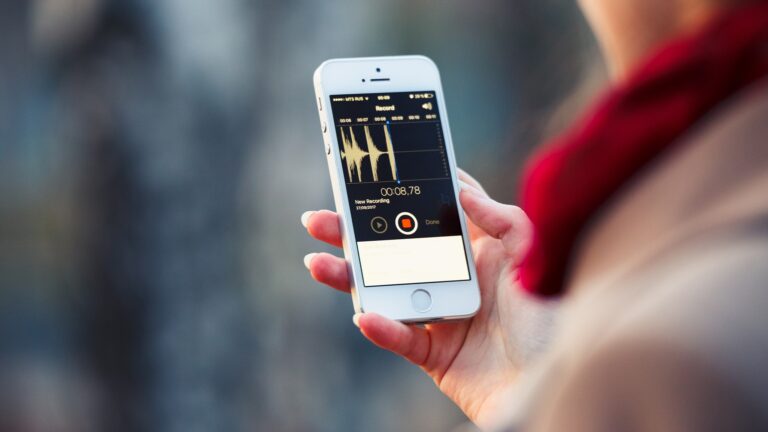
    Basta preencher um questionário que demorará aproximadamente 5 minutos. Começaremos por perguntar algumas informações demográficas e de saúde. A seguir, pedir-lhe-emos para gravar audios enquanto realiza alguns exercícios simples de fala.

    A participação é totalmente anónima e confidencial, não sendo recolhidos quaisquer contactos.

    Pode aceder também através do seguinte código QR.

    Quem pode participar?

    Qualquer pessoa. Quer já tenha sido diagnosticada com COVID-19 ou não, saudável ou com outras patologias associadas.

    A participação no estudo é gratuita e totalmente anónima e confidencial.

    Que dados são recolhidos?

    No questionário ser-lhe-ão solicitados os seguintes dados / colocadas as seguintes questões:

    • Idade
    • Sexo
    • Língua materna
    • Indicar outras condições médicas crónicas
    • Indicar se tem outra doença/condição médica que afecte a sua voz

    Depois de responder a estas questões importantes para caracterização da amostra, ser-lhe-á solicitado que grave o som da sua voz:

    • Simular tosse
    • Simular ressonar
    • Dizer a vogal “a” sustentada: “Aaaaaaaaaaa” durante o tempo que conseguir
    • Ler um texto em voz alta (fala a ler)
    • Descrever uma imagem  (fala espontânea)

    As gravações serão utilizadas para avaliar a presença de biomarcadores indicativos de COVID-19, e desenvolver sistemas robustos para detecção da doença. As suas gravações de fala e tosse serão estritamente confidenciais e serão analisadas, devidamente anonimizadas, apenas pelo grupo de investigadores deste projeto.

    Quem está de desenvolver este projeto?

    Este projeto é conduzido por uma equipa de investigadores do Instituto de Engenharia de Sistemas e Computadores – Investigação e Desenvolvimento (INESC-ID) e do Instituto Superior Técnico – Universidade de Lisboa (IST), ambos localizados em Lisboa, Portugal.

    Para saber mais:

    Website do Projeto: https://www.hlt.inesc-id.pt/w/COVID19

    Entrevista da Investigadora Isabel Trancoso ao Instituto Superior Técnico: https://tecnico.ulisboa.pt/pt/noticias/cientistas-do-tecnico-desenvolvem-projeto-para-a-detecao-de-covid-19-atraves-da-tosse-e-da-fala/

    Para qualquer esclarecimento, contacte-nos através do e-mail: covid19@hlt.inesc-id.pt

  • Alberto Rodrigues da Silva was nominated Senior Member of the ACM

    Alberto Rodrigues da Silva was nominated Senior Member of the ACM

    The INESC-ID Researcher Alberto Rodrigues da Silva was nominated Senior Member of the ACM – Association for Computing Machinery.

    “This nomination as “ACM Senior Member” is an important recognition mainly from the analysis of my professional career and achievements conducted throughout the last years. This is still more relevant due to the fact ACM is the major international professional association in the area of computer science and informatics engineering, with thousands of members worldwide, and an increasing number of activities and journals. With this nomination, I also join the network of ACM Senior Members and I am challenging to contribute to our professional community!”, mentioned Alberto Silva on his nomination.

    Alberto Rodrigues da Silva is an Integrated Researcher, Coordinator of the Information and Decision Support Systems (IDSS) Scientific Area of our Institute. His research interests are mainly focused on the following topics: information systems, software engineering, model-driven engineering, requirements engineering, project management, document automation, and their application in multiple domains.

    In this scope, the researcher has coordinated and participated in several R&D projects, including EU, FCT, PRIME, CYTED, or bilateral projects, with particular domains of citizenship and digital government, engineering, education, health, or even smart cities.

    As mentioned by the Senior Member Committee “we are delighted that you will be among the inductees honored with this designation and wish to congratulate you on this well-deserved recognition”.

    About the ACM Organization

    ACM brings together computing educators, researchers, and professionals to inspire dialogue, share resources, and address the field’s challenges. As the world’s largest computing society, ACM strengthens the profession’s collective voice through strong leadership, promotion of the highest standards, and recognition of technical excellence. ACM supports the professional growth of its members by providing opportunities for life‐long learning, career development, and professional networking.

    Founded at the dawn of the computer age, ACM’s reach extends to every part of the globe, with more than half of its nearly 100,000 members residing outside the U.S.  Its growing membership has led to Councils in Europe, India, and China, fostering networking opportunities that strengthen ties within and across countries and technical communities.  Their actions enhance ACM’s ability to raise awareness of computing’s important technical, educational, and social issues around the world.