Category: INESC-ID

  • Iolanda Leite: the scientist who seeks to build socially competent robots

    Iolanda Leite: the scientist who seeks to build socially competent robots

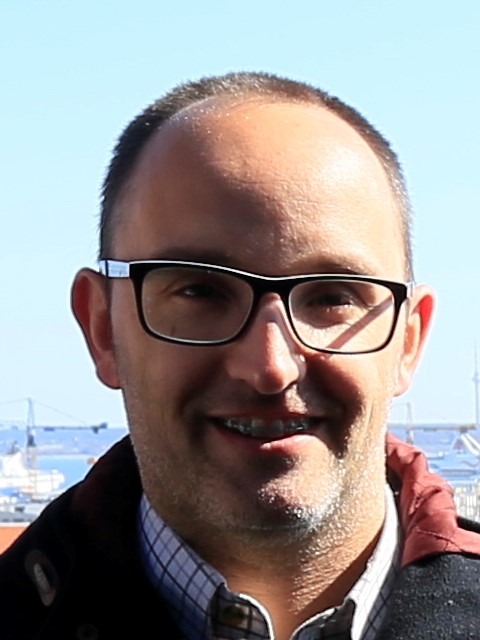
    The INESC-ID and Técnico alumna is an Assistant Professor and Researcher at the KTH Royal Institute of Technology and she is passionate about robotics.

    Iolanda Leite has always been interested in Tamagotchis and Furby robots, and how they worked. Nowadays, she is still fascinated by them and that is reflected in a successful career abroad, at the KTH Royal Institute of Technology, where she is an Assistant Professor and Researcher.

    Iolanda Leite entered Técnico – Taguspark campus in 2002. “There was a very familiar environment among students, teachers and non-teaching staff. Those times were quite intense”, she says when looking back on those days. “I have very good memories, especially every time we were about to finish a project. I made friends for life in those times”, she recalls.

    The passion for robotics arises when she was still a Técnico student attending Artificial Intelligence or Intelligent Agents course units. “The projects were very interesting and the professors inspired me a lot”, she shares. During her MSc degree, she chose to major in Intelligent Systems, “it was probably at that point that I have seriously considered a research career in this area”, she shares.

    For further reading: https://tecnico.ulisboa.pt/en/news/campus-community/iolanda-leite-the-scientist-who-seeks-to-build-socially-competent-robots/

    *Técnico news credits

  • Leonel Sousa appointed to the ACM Distinguished Speakers Program Committee
    Leonel Sousa appointed to the ACM Distinguished Speakers Program Committee

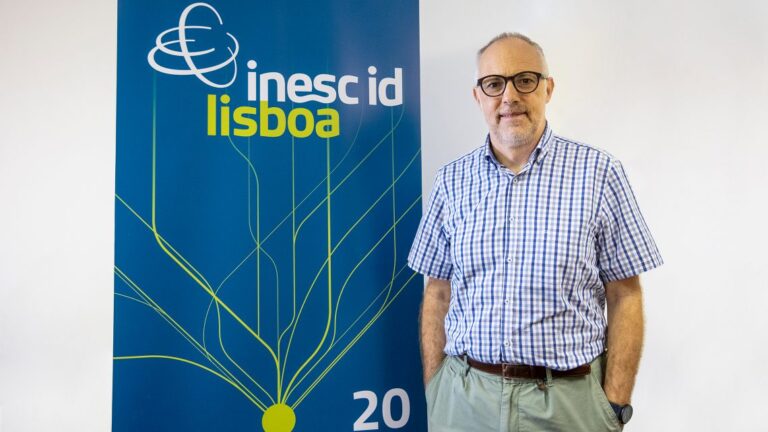
    Leonel Sousa, researcher at INESC-ID and professor at the Instituto Superior Técnico, was appointed to the ACM Distinguished Speakers Program Committee, and  is among the 8 nominees who will be part of the committee responsible for the oversight of the program.

    “After an excellent experience, for three years, as ‘Distinguished Speaker’ at ACM, I was surprised to be invited to join the ACM Distinguished Speaker Program Committee”, says the INESC-ID researcher and Técnico professor, who also explains “this program is responsible for selecting ‘Distinguished Speakers’, distinguished colleagues from academia and companies in the area of computer systems.”

    The ACM speakers represent a wide range of businesses, colleges and universities, including: IBM, Microsoft, BBN Technologies, Raytheon, Sony Pictures Imageworks, Lawrence Livermore National Laboratory, Siemens Information Systems, Stanford University, Carnegie Mellon, University of British Columbia, Georgia Tech, UCLA, McGill University, Tsinghua University and many others.

    Founded in 1947, ACM is an important and prestigious organisation that brings together computing educators, researchers, and professionals, and promotes computer research and innovation through its journals, magazines, high quality scientific events and conferences.

    **Técnico news credits

  • Luis M. Correia

    Short Personal Interview


    Luis M. Correia was born in 1958, in Portimão, Portugal. He is an INESC-ID Researcher since 2016, integrating the Scientific Area Communication Networks (CN).


    How did you get to INESC-ID?

    It was an R&D centre that fulfilled my expectations.


    INESC-ID is…

    an institution that excels in research, development and innovation activities, and that takes the lead in a number of technological areas, enabling its members to develop their work and creativity.


    Research project(s) under development

    Wireless Communications in Body Area Networks


    How would you explain in the most accessible and least technical language possible, what is the application / expected results of this (these) project (s)?

    It is the natural extension to a more personal use of the communications that are currently being done with the mobile phone and already other existing wearables.


    Tell us about your favorite project so far (or one of them)?

    4WARD (an EC project that launched the basis for many of the 5G features, in 2008).


    What are the biggest challenges of working in research in this area?

    The diversity of aspects to take into consideration is so large, that it’s a real challenge to have a detailed view of the global system.

    What book are you currently reading?

    Loonshots: How to Nurture the Crazy Ideas That Win Wars, Cure Diseases, and Transform Industries

    How would you explain to your child (or your parents or grandparents) what your job is? How do you explain what means to be a researcher in this area?

    To look for new technologies for people to communicate and make their live easier and more comfortable.


    How do you see the mission of INESC-ID “ to produce added value to people and society, supporting the response of public policies to scientific, health, environmental, cultural, social, economic and political challenges, in the fields of Computer Science and Electrical and Computer Engineering”?

    It’s an excellent one for an R&D centre working in the technology area.


    Email

    luis.m.correia@tecnico.ulisboa.pt


    Linkedin Profile Link

    https://pt.linkedin.com/in/luis-m-correia-5205201


    Academic Degree

    Ph.D.


    Training / Research Area

    Wireless Communications


    INESC-ID Scientific Area

    Communication Networks (CN)


  • Tomás Alves

    Short Personal Interview


    Tomás Alves was born in 1994, in Lisbon Portugal. He is an  INESC-ID Researcher and PhD Student since 2017, integrating the Scientific Area Graphics and Interaction (GI).


    How did you get to INESC-ID?

    I applied and was selected to be part of the GameCourse project (PTDC/CCI-CIF/30754/2017).


    INESC-ID is…

    one of the strongest research institutions in Portugal.


    Research project(s) under development

    My PhD topic focuses on developing personality-aware information visualization systems to improve user interaction and decision making.

    How would you explain in the most accessible and least technical language possible, what is the application / expected results of this (these) project (s)?

    The technology will help you make the best decisions based on your personality.


    Tell us about your favorite project so far (or one of them)?

    The PhD. I have had a lot of opportunities to collaborate with fellow colleagues in interesting topics both in and outside my research area.


    What are the biggest challenges of working in research in this area?

    Our research studies are utterly dependent of participants to provide data for our analysis. This COVID phase just exacerbated this need and put a lot of studies on hold.

    What book are you currently reading?

    Authority, by Jeff VanderMeer

    How would you explain to your child (or your parents or grandparents) what your job is? How do you explain what means to be a researcher in this area?

    I am working towards building technology more helpful and reliable by making it adapt itself to your own personality. Being a researcher in Human-Computer Interaction means that the user and their individual characteristics must always come first while developing technology.


    How do you see the mission of INESC-ID “to produce added value to people and society, supporting the response of public policies to scientific, health, environmental, cultural, social, economic and political challenges, in the fields of Computer Science and Electrical and Computer Engineering”?

    A cornerstone in the digital structure of Portugal.

    Email

    tomas.alves@tecnico.ulisboa.pt


    Linkedin Profile Link

    https://www.linkedin.com/in/tomas-martins-alves/


    Academic Degree *

    Bologna Master Degree in Information Systems and Computer Engineering – Alameda


    Training / Research Area(s) *

    Human-Computer Interaction, Personality Psychology, Decision Making


    INESC-ID Scientific Area

    Graphics and Interaction (GI)

  • ILU: A technology to help improve Urban Mobility

    ILU: A technology to help improve Urban Mobility

    INESC-ID is developing a project in partnership with National Civil Engineering Laboratory, Câmara Municipal de Lisboa (Lisbon Municipality), and the major public carriers in the Lisbon metropolitan area with the aim of aligning urban mobility plans with the emerging traffic dynamics.

    The ILU project (Integrative Learning from Urban Data and Situational Context for City Mobility Optimization) aims to improve mobility in Lisbon by analyzing heterogeneous sources of traffic data produced by ticketing systems, stationary road sensors, and mobile devices; therefore: 1) supporting the transparency of urban mobility plans to the citizen; 2) offering a solid ground for coordination efforts among municipalities and public transport operators; and 3) ensuring the public transport system responds to the ongoing city transformations and changes observed in a pandemic context.

    To this end, the ILU APP, a pioneer recommendation system that integrates the main computational contributions of the project, is being developed. ILU APP offers a multimodal, dynamic and context-sensitive analysis of urban traffic, combining five main features:

    • automatic consolidation of urban data sources from public transport operators and PGIL (platform for intelligent management in Lisbon) with potential impact on the city traffic analysis, with particular attention to the provision of: efficient cross-modal spatiotemporal queries, Big Data visualization utilities, dynamic updates, mappings into data structures conducive to the subsequent machine learning tasks, and the inference of incomplete traffic flows, including alighting stop estimates in the CARRIS network;
    • descriptive analytics for detecting vulnerabilities and ongoing changes to mobility in the city, focusing on:

    – statistically significant traffic patterns, including: (a) frequent and periodic patterns indicative of overcrowding or congestion; (b) emerging traffic patterns that may reveal future vulnerabilities; (c) deviant patterns including anomalous variations in demand; (d) multimodal traffic synergies; and (e) correlations present in multiple sources of urban traffic;

    – dynamic inference of multimodal origin-destination matrices, allowing the detection of vulnerabilities in the network, including transfer needs and long journey times;

    • predictive analytics of traffic flows from various data sources, using innovative associative learning and deep learning principles. The facilities are provided within a solid statistical frame, enabling forecasts of road traffic or demand on the public transport network to be made with guarantees of significance and variability;


    • analytics sensitive to different sources of situational context, in particular the extension of the previous description and forecasting facilities for the study of traffic dynamics in the presence of historical and prospective context, including: (a) planned events (such as sport matches and cultural events), (b) weather forecasts, and (c) interdictions on public roads;


    • optimization facilities based on the previous data-centric models of traffic for: (a) adjusting the public transportation network by revising vehicle routing and frequency; and (b) designing intelligent traffic light control systems at specific city junctures. In this context, the ILU project is combining control and micro-simulation principles with advances from deep reinforcement learning.

    The recommendation system will be delivered in the form of a functional prototype to the project’s public partners – CML, CARRIS and METRO – to support their: (a) strategic decisions related to the city mobility; and (b) real-time operational decisions, including the signaling of the ongoing vulnerabilities in the mobility system.

    These contributions are expected to reveal untapped multimodal synergies and promote a sustainable urban mobility, giving priority for public transport options and the integration of active travel modes. Moreover, the modular, dynamic, and online nature of the devised contributions ensures their interoperability and scalability to other cities in the current pandemic era.


    [pt]

    ILU: A tecnologia a contribuir para melhorar a Mobilidade Urbana

    O INESC-ID está a desenvolver um projeto em parceria com a Câmara Municipal de Lisboa e o Laboratório Nacional de Engenharia Civil que visa contribuir para melhorar a Mobilidade Urbana.

    O projeto iLU (Integrative Learning from Urban Data and Situational Context for City Mobility Optimization) visa melhorar a mobilidade em Lisboa a partir da análise de dados da circulação automóvel e de transportes públicos. Pretende-se descobrir padrões de circulação na cidade, antecipar problemas e fazer recomendações.

    O INESC-ID está a desenvolver um projeto em parceria com o Laboratório Nacional de Engenharia Civil, a Câmara Municipal de Lisboa, e transportadoras na área metropolitana de Lisboa com o objetivo de alinhar os planos de Mobilidade Urbana com as emergentes dinâmicas de tráfego.

    O projeto ILU (Integrative Learning from Urban Data and Situational Context for City Mobility Optimization) visa melhorar a mobilidade em Lisboa através da análise de dados de tráfego produzidos por sistemas de bilhetagem na rede de transportes públicos, sensores rodoviários estacionários, e dispositivos móveis; visando: 1) apoiar a transparência dos planos de mobilidade urbana para o cidadão; 2) fortalecer a coordenação entre municípios e operadoras de transporte público a partir das vistas centradas nos dados; e 3) garantir que o sistema de transporte público responde às transformações em curso na cidade e às mudanças estruturas observadas em contextos pandémicos.

    Para tal, foi desenvolvida a ILU APP, um sistema de recomendação pioneiro que integra as principais contribuições computacionais do projeto. A ILU APP oferece uma análise multimodal, dinâmica e sensível ao contexto do tráfego urbano, combinando cinco características principais:

    • consolidação automática de fontes de dados urbanos presentes nos operadores de transportes públicos e disponibilizados na PGIL (plataforma para gestão inteligente em Lisboa), tendo particular atenção à disponibilização de facilidades de visualização, procuras eficientes, atualização dinâmica dos dados, mapeamentos em estruturas de dados conducivas às subsequentes tarefas de aprendizagem, e à inferência de fluxos de tráfego incompletos, incluindo estimativas do desembarque por passageiro na rede CARRIS;


    • analítica descritiva para detectar vulnerabilidades e contínuas alterações à mobilidade na cidade, com foco em:


    – padrões de tráfego estatisticamente significativos, incluindo: (a) padrões frequentes e periódicos indicativos de congestionamento ou sobrelotação; (b) padrões emergentes capazes de antecipar vulnerabilidades futuras; (c) padrões desviantes incluindo variações anómalas na procura; (d) sinergias multimodais no tráfego; e (e) correlações presentes nas múltiplas fontes de tráfego urbano;


    – inferência dinâmica de matrizes de origem-destino multimodais, permitindo a detecção de vulnerabilidades na rede, incluindo necessidades de transbordo e durações elevadas de viagem;


    • análise preditiva de fluxos de tráfego a partir de várias fontes de dados, usando princípios inovadores de aprendizagem associativa e aprendizagem profunda. As facilidades disponibilizadas têm um enquadramento estatístico sólido, permitindo realizar previsões do tráfego rodoviário ou de procura na rede pública de transportes com garantias de significância e variabilidade;


    • análises sensíveis a diferentes fontes de contexto situacional, em particular estendo as anteriores facilidades de descrição e previsão para o estudo da dinâmicas de tráfego na presença de contexto histórico e prospectivo, incluindo: (a) eventos planeados (desportivos e culturais), (b) registos e previsões meteorológicas, e (c) interdições em vias públicas;


    • optimizadores com base nos modelos de tráfego centrados em dados anteriores para: (a) ajustar a rede de transporte público revendo o roteamento e a frequência dos veículos; e (b) desenhar sistemas de controle de semáforos inteligentes em cruzamentos específicos na cidade. Nesse contexto, o projeto ILU combina princípios de controlo e micro-simulação com avanços em aprendizagem profunda com reforço.

    O sistema de recomendação será entregue sob a forma de um protótipo funcional aos parceiros públicos do projeto – CML, CARRIS e METRO – por forma a apoiar: (a) decisões estratégicas ligadas ao planeamento da mobilidade na cidade; e (b) decisões operacionais em tempo real, incluindo a sinalização de vulnerabilidades ou necessidades de reforço à oferta.

    Esperamos que estas contribuições revelem sinergias multimodais desconhecidas, promovendo uma mobilidade urbana mais sustentável, prioritizando as opções de transporte público e a integração de meios de transporte ativo (mobilidade pedonal, cicloviável, e partilhada). Além disso, a natureza modular e dinâmica das contribuições garante a sua extensão a outras cidades de Portugal e no mundo.

  • Rui Henriques

    Short Personal Interview


    Rui Henriques was born in 1987, in Lisbon he is an INESC-ID Researcher since 2010, integrating the Scientic Area Information and Decision Support Systems (IDSS).


    How did you get to INESC-ID?

    Master thesis at IST


    INESC-ID is…

    highly supportive, particularly team-, staff- and logistic-wise. Impeccable project support, HR contracting, budget execution facilities, access to legal opinion, acquisition processes, and formalization of bilateral agreements.


    Research project(s) under development

    ILU – Integrative Learning from Urban Data and Situational Context for City Mobility Optimization (ILU (IDSS))


    WISDOM – Water Intelligence System Data

    Data2Help – Data Science for Optimization of Emergency Medical Services

    iCare4U – Decision Support System for Personalized Medicine in ICUs

    IPOscore


    How would you explain in the most accessible and least technical language possible, what is the application / expected results of this (these) project (s)?

    Biomedical data analysis for disease study, therapeutics and prognostics (primary research); Urban data analysis to assist mobility planning; Sensor data analysis for detecting fault behavior in utility supply/distribution systems; Spatiotemporal data analysis to optimize resource allocation


    Tell us about your favorite project so far (or one of them)?

    Multi-omic data analysis to identify the frontiers between psychiatric disorders, especially psychotic (such as schizophrenia) and affective (such as bipolar disease), and assess the adequacy of molecular therapies (specially antipsychotic drugs and mood stabilizers) at a personalized level.


    What are the biggest challenges of working in research in this area?

    Maybe time. The necessary time for validating therapeutic possibilities and translating the contributions into the daily clinical practice.


    What book are you currently reading?

    “Cada um vê o que quer num molho de couves” by Isabel Abecassis Empis


    How would you explain to your child (or your parents or grandparents) what your job is? How do you explain what means to be a researcher in this area?

    Study diseases, especially mental illnesses, dementia, and cancer, in order to offer better therapies for restoring our natural states of health and well-being.


    Email

    rmch@tecnico.ulisboa.pt


    Linkedin Profile Link

    https://www.linkedin.com/in/rui-henriques-4a300b8/


    Academic Degree *

    PhD


    Training / Research Area(s)

    Machine Learning, Data Science, Epigenetics, Health Informatics


    INESC-ID Scientific Area

    Information and Decision Support Systems (IDSS)

  • Luis Miguel Silveira

    Short Personal Interview


    Luis Miguel Silveira was born in 1963, in Lisbon. He is an INESC-ID Researcher since its inception, currently integrating the Scientic Area High-Performance Computing Architectures and Systems (HPCAS).


    How long have you been part of the INESC-ID Team?

    1999, when it started, I was previously a researcher at INESC since my student days.


    How did you get to INESC-ID?

    I was a young researcher at INESC before starting my PhD program and kept my association with the institute ever since. Later became an IST professor and have been a researcher at INESC-ID since the institution was started. I have also had the privilege of serving as President of the Scientific Council of the institute.


    INESC-ID is…

    An environment of excellence for conducting dynamic, challenging and multidisciplinary R&D&I


    Research project(s) under development

    NeuronReduce


    How would you explain in the most accessible and least technical language possible, what is the application / expected results of this (these) project (s)?

    Develop algorithms to build efficient simulation models of biological neuronal networks


    Tell us about your favorite project so far (or one of them)?

    HiFi-MRI, an international collaboration project for mapping and analyzing whole-brain activity using ultra-high field MRI data


    What are the biggest challenges of working in research in this area?

    Understanding the biological context and learning the associated “language”


    What book are you currently reading?

    Dilbert Turns 30


    How would you explain to your child (or your parents or grandparents) what your job is? How do you explain what means to be a researcher in this area?

    Find ways to describe complex behavior in a simple manner by concentrating on essential aspects


    How do you see the mission of INESC-ID “ to produce added value to people and society, supporting the response of public policies to scientific, health, environmental, cultural, social, economic and political challenges, in the fields of Computer Science and Electrical and Computer Engineering”?

    I see enormous potential in all those fields in making technology more widely available, more friendly, more efficient and increasingly devoted to improving our daily lives. And I see INESC-ID having a pivotal role in that transformation


    Email *

    lms@inesc-id.pt


    Linkedin Profile Link

    https://www.linkedin.com/in/luis-miguel-silveira-77a3304/


    Academic Degree *

    Licenciatura, MSc, ECE IST Tecnico, MSc, EE, PhD MIT


    Training / Research Area(s) *

    Design Automation


    INESC-ID Scientific Area *

    High-Performance Computing Architectures and Systems (HPCAS)

  • Francisco S. Melo

    Short Personal Interview


    Francisco S. Melo was born in 1977, in Guarda, Portugal. He is an INESC-ID Researcher since 2009, integrating the Scientic Area Artificial Intelligence for People and Society (AIPS).


    How did you get to INESC-ID?

    I started in 2009 as an Associated Laboratory Researcher, and in 2010 I joined IST as a faculty. At that time, I became a senior researcher at INESC-ID.


    INESC-ID is…

    A research institution that fosters state-of-the-art research in electrical engineering and computer science and facilitates knowledge and technology transfer between academia and industry in Portugal.


    Research project(s) under development

    HOTSPOT – Human-robOt TeamS without PrecoOrdinaTion


    ANIMATAS – Advancing intuitive human-machine interaction with human-like social capabilities for education in schools (ANIMATAS)


    ILU – Integrative Learning from Urban Data and Situational Context for City Mobility Optimization


    How would you explain in the most accessible and least technical language possible, what is the application / expected results of this (these) project (s)?

    HOTSPOT seeks to develop robots that can successfully collaborate with humans across multiple tasks.


    ANIMATAS is a European initiative that seeks to build a network of PhD researchers in the area of human-robot interaction.


    ILU seeks to improve traffic conditions in the city of Lisbon using Artificial Intelligence.


    Tell us about your favorite project so far (or one of them)?

    My favorite project so far was project INSIDE, which was a collaboration with several research institutions in Portugal and the USA, Portuguese companies and a Hospital, and investigated the use of robots in the therapy of children with autism spectrum disorders.


    What are the biggest challenges of working in research in this area?

    I work in artificial intelligence, specifically, a subarea of artificial intelligence known as machine learning. Currently, research in machine learning poses challenges along three orthogonal “perspectives”:

    – Scientific: In spite of the big successes of research in machine learning and artificial intelligence, current methods require absurd amounts of data and computation. One of the challenges is, therefore, to reduce the requirements of such methods. Another important challenge is related with interpretability: the aforementioned successes rely on complex models that are hard to interpret by humans, which brings forth several issues (e.g., trust).

    – Ethical: Relying on large amounts of data, machine learning algorithms are naturally subject to the biases that humans exhibit, and thus the algorithms tend to exhibit the same sort of discriminative outputs that are present in the data. Pursuing research in machine learning that mitigates the effect of such biases is, therefore, a very relevant challenge in this area.

    – Methodological: The large amount of computation required by state-of-the-art algorithms requires that institutions performing research in these areas have large computational budgets available, with two important consequences: institutions with humbler budgets find it challenging to compete with larger institutions/companies, and must therefore find research “niches” where the computation is a less central requirement; on the other hand, the results portrayed in many articles are hard to reproduce without access to such computation, which brings about the challenge of reproducibility.


    What book are you currently reading?

    1. Sapkowski, “Blood of Elves”.


    How would you explain to your child (or your parents or grandparents) what your job is? How do you explain what means to be a researcher in this area?

    My job is to make machines more intelligent and able to learn.


    How do you see the mission of INESC-ID “to produce added value to people and society, supporting the response of public policies to scientific, health, environmental, cultural, social, economic and political challenges, in the fields of Computer Science and Electrical and Computer Engineering”?

    I think that, in light of the technological advances of recent years, if INESC-ID is able to keep this mission in sight during its internal and external strategic decision-making, it has a unique opportunity to position itself as a top research institute at the national, European and even at the world level.


    Email *

    fmelo@inesc-id.pt


    Linkedin Profile Link

    https://www.linkedin.com/in/francisco-melo-aba83b8/


    Academic Degree

    PhD in Electrical and Computer Engineering


    Training / Research Area(s)

    Artificial Intelligence (Machine Learning/Reinforcement Learning)


    INESC-ID Scientific Area *

    Artificial Intelligence for People and Society (AIPS)


  • António Grilo

    Short Personal Interview


    António Grilo was born in 1973, in Lisbon. He is an INESC-ID Researcher since 1999, coordinating the Scientic Area Communication Networks (CN)


    How did you get to INESC-ID?

    As PhD student.


    INESC-ID is…

    A Portuguese cutting edge, Computer Science and Electrical and Computer Engineering research institute.


    Research project under development

    WiMeCOMA Moroccan wireless smart metering solution


    How would you explain in the most accessible and least technical language possible, what is the application / expected results of this (these) project (s)?

    Tools to help Distribution System Operators to plan and optimize their smart metering (smart grid, in general) communications infrastructure.


    Tell us about your favorite project so far (or one of them)?

    WiMeCOMA Moroccan wireless smart metering solution


    What are the biggest challenges of working in research in this area?

    To develop efficient optimization algorithms, and to harmonize the theoretical models with the practical measurements. The latter is seldom an easy task, since increasing the accuracy of theoretical models usually translates into additional time complexity. The latter must be minimized in order to make the tools suitable for practical use.


    What book are you currently reading?

    In the past few months I seldom had time to read anything other than computer networks engineering related books and articles. Anyway, my current Literature reading is “À la Recherche du Temps Perdu” by Marcel Proust. Since this work has seven volumes, in between I also read my beloved Portuguese classical authors, as well as History books, with focus on Military History.


    How would you explain to your child (or your parents or grandparents) what your job is? How do you explain what means to be a researcher in this area?

    I research new and improved mechanisms to support communication among people, computer systems and things.


    How do you see the mission of INESC-ID “to produce added value to people and society, supporting the response of public policies to scientific, health, environmental, cultural, social, economic and political challenges, in the fields of Computer Science and Electrical and Computer Engineering”?

    The results of the research carried out at INESC-ID can improve processes belonging to different sectors of society, which, in the long run, is expected to have a significant impact on the quality of life in general. In addition, the close relationship with Instituto Superior Técnico, Universidade de Lisboa has creates a symbiotic relationship that enriches engineering education with knowledge resulting from INESC-ID research. At the same time, I have always felt a great motivation of students to actively participate in the research work in the context of MSc and PhD projects.


    Academic Degree

    PhD


    Training / Research Area

    Computer Science, Electrical and Computer Engineering


    Email

    antonio.grilo@inesc-id.pt


    Linkedin Profile Link

    https://www.linkedin.com/in/ant%C3%B3nio-grilo-459b6440/


    INESC-ID Scientific Area

    Communication Networks (CN)