The results of the European Defence Fund (EDF) 2024 Call for Proposals have recently been published, with the ORQESTRA project, featuring INESC-ID as a partner, among those selected within the topic of Disruptive Technologies – Quantum.
“Orchestrating the Operational Deployment of Quantum Resistant Services for Next-Generation Secure Defence Systems and Communications” (ORQESTRA) started its 36 month long work on December 1st, with a consortium of 19 European partners. INESC-ID’s participation will be managed by Leonel Sousa, researcher in High-Performance Computing Architectures and Systems. With a funding of €436K, the team will oversee the design and development of the trusted computing base (TCB), including the integration of programmable (SW) software optimisations and shared (HW) hardware accelerators, and countermeasures for physical vulnerabilities.
The overall focus of the project is on integrating post-quantum cryptography (PQC) technologies into real defence systems. By developing SW and HW, it aims to mitigate the gap between computing intensive problems of PQC and the operational deployment of cryptography systems.
EDF launched the call focused on technologies like Artificial Intelligence (AI), quantum and air defence, with the goal to support projects with the potential to transform the European defence sector.
The European Parliament has set targets to reduce CO2 emissions from vehicles by 2040. Although Vehicle-Integrated Photovoltaic (VIPV) technologies have the potential to play an important role in this reduction, particularly in the electrification of the road transport sector, there are several challenges in achieving these targets.
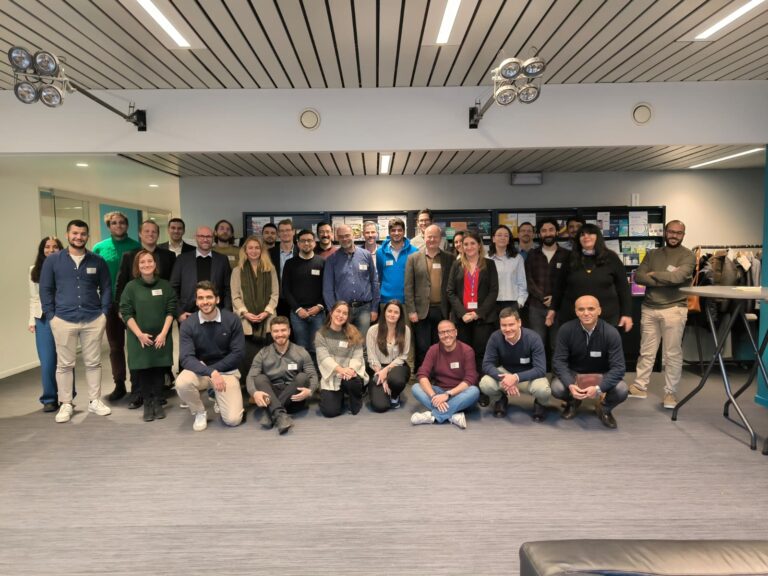
The “SOLAR Photovoltaic to MOVE for Systems Integration” (SOLAR-MOVE) project aims to tackle these challenges. The project recently had its kick-off meeting in November in Brussels, which counted with over 30 participants. INESC-ID is in charge of coordination, led by Sustainable Power Systems researcher Hugo Morais, with a funding of €678K. Within the INESC sphere, INESC TEC is also a partner in this project.
SOLAR-MOVE’s goal is to contribute to the massive adoption of electric vehicles (EVs) while minimising their impact on power grids and creating solutions with positive Net Present Value (NPV). Some of these solutions include five different types of VIPV vehicles (heavy-duty trucks, passenger buses, garbage trucks, last-mile delivery vehicles) and motorhomes and five charging stations with photovoltaic.
PVSmile focuses on international collaboration across the Mediterranean region, and aims to accelerate the adoption of smart, community integrated PV systems, fully integrated into energy grids. It will deliver data-driven, value-added energy and non-energy services to key stakeholders across the energy value chain and the PV sector.
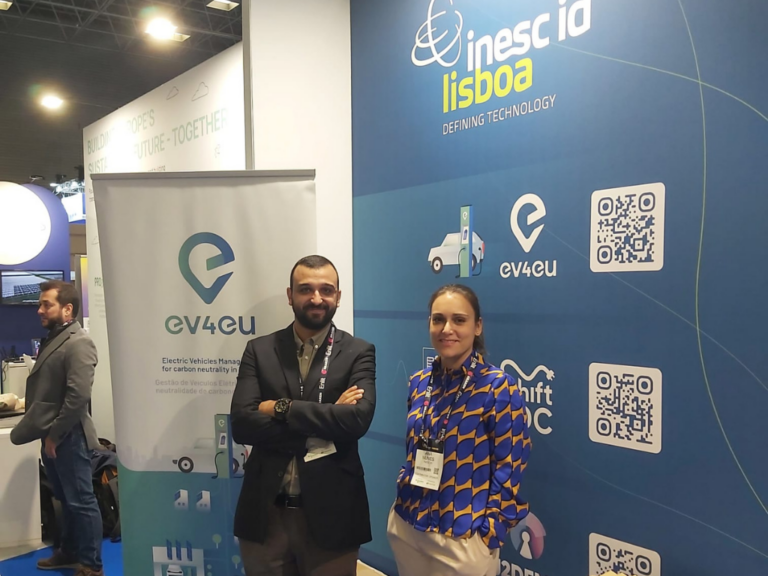
After last year’s success, EV4EU, Shift2DC and U2DEMO made a comeback to the Enlit Europe, which took place in Bilbao, Spain, from November 18 to 20. One of Europe’s most influential events in the energy sector, Enlit gathered more than 15000 energy professionals to discuss challenges in the sector and allowed visitors to explore projects and companies, while seeing how energy is generated, distributed and consumed.
EV4EU – development of user-centric V2X management strategies for houses, buildings, parking lots, and EV fleets, that will allow the massive growth of electric vehicles.
Shift2DC – a new approach on the way direct current (DC) solutions are used in power systems by creating smarter, more efficient, and eco-friendly energy systems, including ongoing research on Madeira Island and the creation of a DC Digital Port on the island.
U2Demo – development of innovative energy management strategies and technological solutions to promote equitable and democratic access to sustainable energy resources, empowering consumers to manage their energy use more effectively, save money, and take control of their energy data.
Joining our INESC-ID members were fellow partners from key institutions: Asier Aristondo (Tecnalia), Amel Addala Jullien (EDF) and Benedict Mortimer, Dimitrios Baros and Sergio Orlando (Eaton). EV4EU and Shift2DC were also part of the session “Smart Cities: From Buildings to Neighbourhoods and Transportation” along with projects Chronicle, WeForming, BilbOPS, ALRIGH2T, GIANTS and BuildOn.
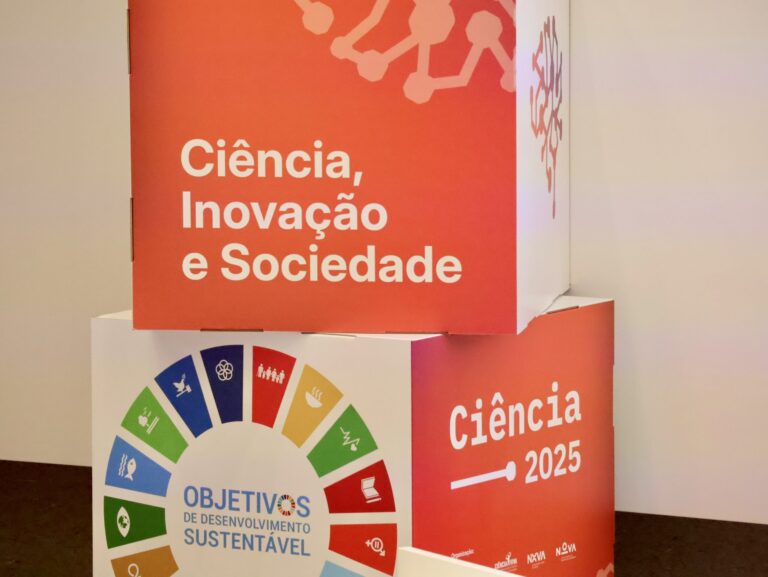
In a fractured, fast-changing world, Europe is facing urgent questions about security, sustainability and technological sovereignty. At Encontro Ciência 2025, Portugal’s largest annual science and technology gathering, we brought those questions into the room.
Held from July 9 to 11 at NOVA SBE in Carcavelos, this year’s edition explored the theme “Ciência, Inovação e Sociedade”, bringing together researchers, policymakers, and institutions to discuss the future of science in society. The European Commission was the official guest of honour, represented by high-level officials in the fields of science and innovation.
INESC-ID contributed with a flagship panel, joining voices from across the INESC network to ask a vital question: what role should research play in Europe’s resilience, autonomy, and defence?
Strategic Autonomy and Defence
At the heart of INESC-ID’s participation was the panel “The Role of Research in Resilience, Strategic Autonomy and Defence in the EU”, organised and moderated by Silvia Castro, Head of the Innovation Management Office. The session focused on Europe’s current challenges, highlighting how the INESC institutes are stepping up in response to shifting priorities, emerging risks, and a growing role for public research.
Defence was an unavoidable theme (a clear sign of the times) and many research areas were framed through that lens. But the conversation didn’t shy away from the deeper challenge: how can research serve both security and society without losing its compass? This focus was illustrated by presentations on dual-use technologies spanning cybersecurity, nanoelectronics, energy, health, and photonics.
The session featured contributions from Nuno Santos (INESC-ID), Nuno Cruz (INESC TEC), Carlos Henggeler Antunes (INESC Coimbra), Nazua Costa (INOV-INESC), and Susana Cardoso de Freitas (INESC MN), each presenting concrete examples of research underway and aligned with EU and national priorities.
It also drew on several insights, presented by João Claro (INESC TEC), from the recent INESC Brussels HUB Summer Meeting 2025, which gathered researchers, EU policymakers, and industry leaders to discuss strategic autonomy and the role of dual-use research in Europe’s future.
“The INESC Brussels HUB Summer Meeting showed how essential it is to have spaces for critical reflection, especially as we face growing geopolitical complexity and a rapidly changing research and innovation ecosystem,” remarked Silvia.
AI, Policy, and Education
Beyond the resilience agenda, INESC-ID contributed to a range of other thematic sessions: Rui Henriques joined a discussion on how artificial intelligence is reshaping the agri-food sector, boosting efficiency, sustainability, and competitiveness from farming to food distribution.
Helena Moniz participated in a panel on science-informed policymaking, where the Science4Policy initiative organised by PLANAPP was presented. The session highlighted how Portugal is positioning itself at the forefront of connecting research and public policy, with Helena noting that “initiatives like FCT’s Science4Policy calls are globally innovative” and that “we often fail to see what we’re good at in Portugal.”
Finally, the “Engenharia para Todos” (Engineering for All) initiative – a partnership between INESC-ID, Instituto Superior Técnico and Câmara Municipal de Oeiras – helped connect science with wider audiences. Science Manager Maria João Verdasca presented an e-poster on the programme’s outreach model, while students from the C4 Science Club of Carnaxide showcased their Smart City project: a tangible example of how engineering education and hands-on science can promote civic engagement, creativity, and early contact with advanced technologies.
From strategic autonomy to smart cities, INESC-ID’s participation at Encontro Ciência 2025 showed how our work is addressing pressing societal needs by connecting research across fields and institutions.
“Just like last year’s session, which brought together diverse perspectives from across the INESC institutes on a common theme”, added Silvia, “this initiative was also an excellent opportunity for networking and strengthening inter-institutional ties” – a reminder that in complex times, collaboration is as vital as innovation.
With the goal of launching a new research collaboration, for the development of Adaptive Conversational Engines, a research team led by Shinji Watanabe, Associate Professor at the Language Technologies Institute (CMU) traveled to Lisbon from June 15 to 18. This falls under the scope of the CMU Portugal supported project, “ACE-FM: Adaptive Conversational Engine powered by Foundation Models”, “which aims to enhance the capability of speech foundation models to understand long-form, multi-party conversations toward conversational AI. Besides, it supports the collaboration between CMU and PRR Mobilizing Agenda Accelerat.AI, led at INESC-ID by Human Language Technologies researcher Alberto Abad, Associate Professor at Instituto Superior Técnico (Técnico).”
As part of the visit, INESC-ID hosted an intensive two-day workshop, kicking off the collaboration while exchanging knowledge between teams. The workshop featured presentations from both teams and a keynote by Shinji Watanabe, titled “Open Whisper-Style Speech Models: Transparency, Scalability, and Advancing Explainability”. The first day provided an overview of the models developed at CMU, whilehands-on tutorials by CMU students Masao Someki, MLT student, and William Chen, PhD student, empowered researchers based in Portugal to apply them effectively. The second day focused on practical sessions in model fine-tuning with custom data and introduction to ESPnet3, CMU’s next-generation speech modeling platform. of what was a very productive workshop.
Along with fellow INESC-ID Human Language Technologies researcher, Isabel Trancoso, Alberto Abad shared insights into their team structure and highlighted successful past collaborations within the CMU Portugal program. According to project leads Aberto Abad and Shinji Watanabe, the visit helped both teams to gain a deeper understanding of each other’s expertise, research styles and focus areas, and also strengthen connections with fellow language technologies’ researchers.
Both teams expect that this collaboration will lay the foundation for future projects and long-term academic exchanges. “The outcomes of this collaboration will benefit not only the Accelerat.ai project, but also other PRR-supported initiatives, including the development of a national Portuguese large language model”, shared Alberto Abad.
The 2024 CMU Portugal PRR Call for Collaborative Research Grants aims to strengthen collaboration between CMU and Portuguese research institutions aligned with the Portuguese Recovery and Resilience Plan (PRR) Mobilizing Agendas. The call funded 12 projects, representing a significant step in fostering impactful research between Portugal and CMU.
“If someone had told me, when I started, that this would be the future, I wouldn’t have easily believed it”, reflects Inês Lynce at the opening of this week’s CNN Inovação – a sentiment that captures how far INESC-ID has come.
INESC-ID was featured in this week’s episode, broadcast on CNN Portugal, a programme that explores innovative science, technologies and ideas that are shaping the future. The episode offers viewers an inside look into INESC-ID and its efforts to drive societal impact through research.
Inês Lynce, President of the Board of Directors, opens the episode with an overview of INESC-ID’s mission, vision, and research focus. Researcher Rui Prada then presents All Sustainable: a digital serious game that empowers citizens with intellectual disabilities to engage with sustainability issues, and that “It’s also a social inclusion tool for a population often excluded from the discussion,” he explains. Finally, researcher Hugo Morais introduces EV4EU, a European project led by INESC-ID that is advancing the electric mobility revolution and, as he notes, “a critical factor for achieving the objectives of Europe’s governments concerning carbon neutrality.”
This feature provides a glimpse into how INESC-ID’s research is shaping a more digital, inclusive, and sustainable society – and a broader reflection on the role of engineering and technology in addressing global challenges.
Watch the full CNN Inovação episode on our Youtube channel: here.
(CNN Inovação is produced by Bubble Creative Studio. This episode was developed in collaboration with INESC-ID)
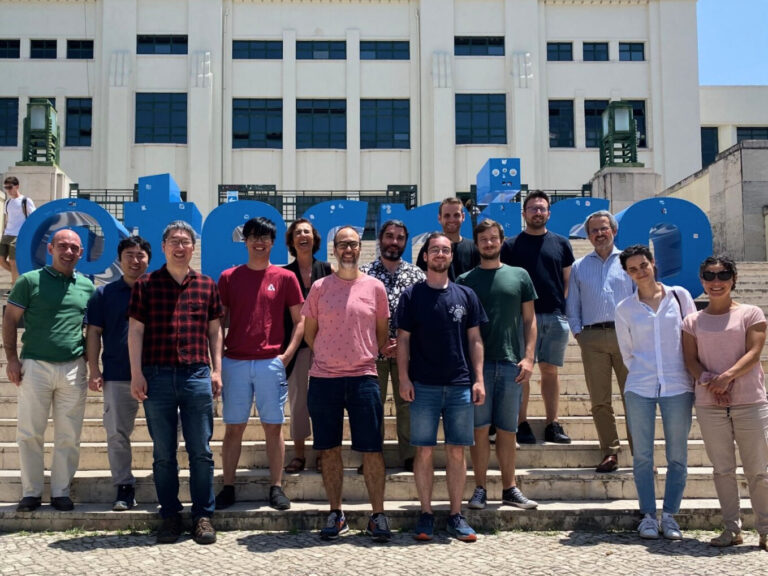
Launched under the Chips for Europe Initiative and co-funded by Fundação para a Ciência e a Tecnologia (FCT) and the Chips Joint Undertaking – European Union, POEMS directly responds to the priorities of Axis 1 of the National Semiconductor Strategy. The project targets two main fronts: capacity building through advanced training (Work Package 3) and technological advancement in semiconductor solutions (Work Package 4), aligning with Europe’s ambition for a more resilient and competitive tech industry.
The POEMS consortium brings together leading institutions across academia, research, and industry with expertise in chip design, advanced packaging, and emerging semiconductor technologies. Through collaborative work packages, POEMS will strengthen national infrastructure, allow access to innovation networks such as the European Network of Chips Competence Centres (ENCCC), and support the transition from R&D to market through business support and funding mechanisms. It also includes the development of a dedicated digital collaboration platform, which will house the Portuguese Semiconductor Observatory, training portals, and innovation support services.
With its unique characteristics and wide-reaching scope — from promoting STEM careers among youth to providing critical tools for companies and researchers — POEMS is more than a technological project; it’s a strategic engine for national growth in a critical and essential area.
From a total budget of nearly four million euros, INESC-ID will manage approximately 121,000 euros, under the coordination of researcher Jorge Fernandes, the institute’s Principal Investigator for POEMS.
Quantum computing is a serious threat to today’s cryptographic systems. A strong reason for the European Defence Fund (EDF) to invest in the development of quantum-resistant solutions for the defense sector. One of these initiatives is project SEQURED: Strengthening Defense Networks for the Quantum Era, launched May, 1st.
With a duration of 36 months and a budget of nearly four million euros, SEQURED brings together nine partners across Europe, including INESC-ID, to develop next-generation encryption tools, digital signatures, and secure data-sharing mechanisms.
As quantum technologies evolve, so do the risks posed to current cryptographic systems and so SEQURED aims to develop innovative solutions to ensure that both private and public sector organisations can protect their data against the emerging threat of quantum-enabled cyberattacks.
This international consortium of academic and industry partners is funded by Horizon Europe programme and is under the European Commission’s broader strategy for digital sovereignty and security. The project focuses on real-world applications of post-quantum cryptography (PQC), ensuring that today’s encrypted communications remain secure tomorrow, even in a post-quantum world. It also integrates cutting-edge cybersecurity practices with privacy-by-design principles and compliance with evolving EU regulations.
At INESC-ID, funded with €359k, researchers contribute their expertise in cryptographic algorithms, architectures, and secure system design, leading the project’s work package in these areas. Leonel Sousa, the projects’ PI, is taking part at the kick off meeting, happening May 19 and 20, in Greece.
Microbes are essential to life and have an impact on everything, from ecosystem dynamics to human health and industries like agriculture and food safety. Their diversity, however, remains largely underestimated. Considering their implications in sectors like food safety and climate change, it is crucial to accurately identify microorganisms and harness their potential.
Here is where MALDIBANK (Multi-domain Open MALDI Spectra Archive for Identification of Microorganisms) comes in. The new project, funded by the Horizon Europe programme, will gather 24 partners, including INESC-ID, tomorrow, May 13, in Braga for their kick-off meeting. This meeting, hosted by Universidade do Minho, will serve as a starting point to better define the action plan for the duration of MALDIBANK. At INESC-ID the project will be managed by Information and Decision Support Systems researcher and Life and Health Technology coordinator, Ana Teresa Freitas, with a funding of around €500K euros. The group will also count with Arlindo Oliveira, Emanuel Gonçalves as task leader, Daniel Faria as workpackage leader, Pedro Monteiro, Ruxandra Barbulescu and Sílvia Castro, both in impact.
For 4 years, the project will advance a database designed to expand the application of MALDI-TOF technology. This groundbreaking initiative will combine a vast spectrum database with advanced algorithmic tools, enabling innovative solutions for the identification and understanding of microorganisms. In the end, MALDIBANK will empower scientists to tackle antimicrobial resistance, environmental monitoring, among others, contributing to global problem-solving.
Our contribution will be on the project’s software ecosystem, in collaboration with INESC TEC, with a focus on optimizing performance for RISC-V architectures – an open-source, modular instruction set architecture that enables anyone to design custom processors without licensing fees, promoting technological independence and innovation. And also integrating HPC and AI applications, and enabling co-design approaches between hardware and software teams.
Backed by €240 million in funding from the EuroHPC Joint Undertaking, the project marks a strategic step toward reducing Europe’s dependence on non-EU hardware and software in the fields of High-performance Computing (HPC) and Artificial Intelligence (AI).
Coordinated by the Barcelona Supercomputing Center (BSC-CNS), DARE SGA1 will design and develop next-generation processors and a full software ecosystem based on RISC-V, an open standard instruction set architecture. The initiative’s goal is to create a fully European HPC technology stack to support scientific research, industrial innovation, and public-sector digital infrastructure.
“INESC-ID’s long-standing expertise in computer architecture and HPC positions us well to support this ambitious European initiative,” said Leonel Sousa, INESC-ID researcher, responsible for the Portuguese participation in Dare, and professor at Instituto Superior Técnico.
The first three years of DARE SGA1 will focus on building three RISC-V-based chiplets: a general-purpose processor (led by Codasip), a high-precision vector accelerator (led by Openchip), and an AI inference engine (led by Axelera AI). These components will form the backbone of Europe’s future supercomputing systems, offering greater energy efficiency and scalability than traditional monolithic chips.
“There’s no AI without HPC”, notes Leonel Sousa. “At the core of the project lies Europe’s ambition to become self-reliant in semiconductor and chip design. It’s crucial to reduce our dependency on foreign chip supply”, underlines the researcher.
DARE SGA1 is the first phase of a six-year roadmap to secure Europe’s digital autonomy in HPC and AI infrastructure. The project is expected to lay the groundwork for the EU’s first fully sovereign supercomputing system by the end of its initial phase.