Category: International Projects

  • Faster, Higher, Stronger: INESC-ID Joins Project ACHILLES to Redefine AI
    Faster, Higher, Stronger: INESC-ID Joins Project ACHILLES to Redefine AI

    In Greek legend, Achilles was a hero with a single vulnerability—his heel. Similarly, the “Achilles’ heels” of modern AI systems are trust and efficiency. The recently launched ACHILLES Horizon Europe Project (“Human-Centred Machine Learning: Lighter, Clearer, Safer”) aims to address these critical weaknesses.

    Bringing together 16 organizations from 10 countries, ACHILLES has significant Portuguese involvement. Led by Fraunhofer Portugal Research (FhAICOS) as the coordinating partner, INESC-ID plays a key role with six researchers leading the Work Package (WP) on AI sustainability and contributing to the WP on Privacy-Preserving Machine Learning and Model Monitoring. Paolo Romano, from Distributed Parallel and Secure Systems, coordinates INESC-ID’s participation, which has a budget of nearly one million euros.

    The ACHILLES team seeks to drive responsible AI innovation in line with European values and regulations. Moving away from the traditional “Faster, Higher, Stronger” approach—borrowed from the Olympics, another iconic Greek reference—ACHILLES champions a new framework: “Lighter, Clearer, Safer,” reflecting the evolving demands of modern AI.

    “At the heart of ACHILLES is an iterative development cycle inspired by clinical trials,” explained André Carreiro, Senior Scientist and ACHILLES Project Coordinator.

    A standout innovation within the project is the ACHILLES Integrated Development Environment (IDE), a machine-learning-driven platform empowering developers to build AI solutions that are not only more effective and efficient but also responsible and ethically compliant. The project will validate its approaches through real-world applications in healthcare, identity verification, content creation, and pharmaceuticals, demonstrating its transformative potential across diverse sectors.

    Funded with over €8 million under the Horizon Europe Framework Program, on the cluster of digital, industry and space, ACHILLES is set to redefine the way we approach AI, ensuring it aligns with the values and expectations of modern society.

  • INESC-ID coordinates FAIRY Project to Support Yeast-based Bioeconomy and Health

    INESC-ID coordinates FAIRY Project to Support Yeast-based Bioeconomy and Health

    Yeasts may seem just tiny, unimportant fungi, but their importance is far greater than their microscopic dimensions. They are vital in both the bioeconomy and health research, from baking bread to developing life-saving medications, participating in the production of food, energy and commodities, while also serving as pathogens and model organisms for studying genetics and diseases. 

    To support research on yeast gene activity, an open access platform, YEASTRACT+, has previously been developed by the European life sciences infrastructure ELIXIR. This platform serves as a widely used FAIRsharing Knowledge-base and repository. However, despite being a leading source of information, it currently lacks quantitative gene expression data and has limited characterisation of many yeast species.

    The FAIRY project, coordinated by INESC-ID and funded by OSCARS, a new Horizon Europe Grant, aims to tackle these challenges and enhance this platform. The project will investigate how transcription factors (proteins that regulate the transcription of genes) influence yeast’s gene activity and the resulting traits in various yeast species. This knowledge will help predict how these regulations impact the yeast metabolism, which will allow improving yeast-based production methods towards a circular bioeconomy.

    Additionally, the project will identify and store in a central database which genes are vital for the survival of various yeast species. This will improve the tools available for finding potential drug targets and make it easier for scientists to reuse the data, speeding up research in designing better yeast strains for industry and finding new antifungal drug treatments.

    Led by Pedro Monteiro, researcher in the area of Automated Reasoning and Software Reliability (ARSR), the project started on November 1st,  has a funding of €115K, and will last 12 months in partnership with Instituto Superior Técnico.

    Learn more about the project here.

    The FAIRY project is funded by the first edition of the OSCARS, an Horizon Europe Grant (GA number 101129751) led by the five Science Clusters: ENVRI (Environmental Science), ESCAPE (Astronomy and Particle Physics), LS RI (Life Sciences), PaNOSC (Neutron and Light Source Science), SSHOC (Social Sciences and Humanities).

  • Energy Democratisation – INESC-ID Leads U2Demo project, “Peer-to-Peer (P2P) trading and Energy Sharing”

    Energy Democratisation – INESC-ID Leads U2Demo project, “Peer-to-Peer (P2P) trading and Energy Sharing”

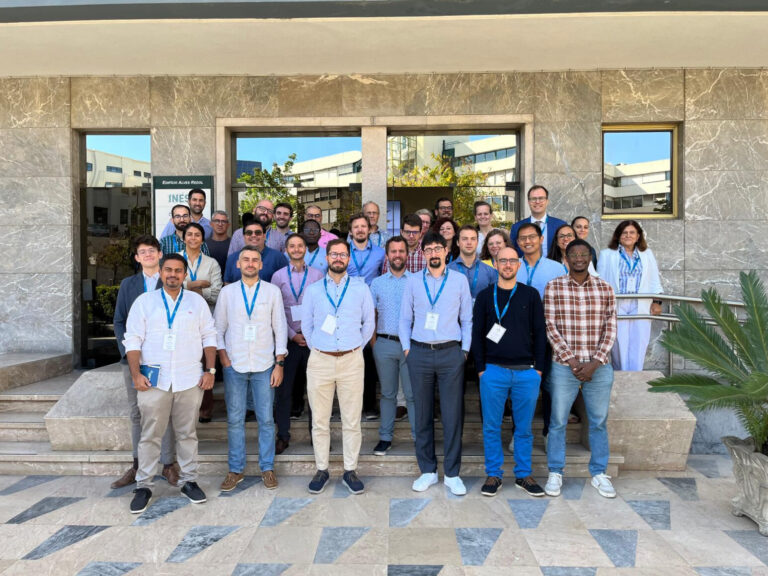
    The kick-off meeting of U2Demo took place on September 5th and 6th at INESC-ID and Instituto Superior Técnico Headquarters in Lisbon! It counted with over 30 participants from the project Consortium attending the meeting to discuss future steps and strategies for the following months.

    U2Demo (Use of open-source P2P energy sharing platforms for energy democratisation) is one of the latest projects signed by INESC-ID, under Cluster 5: Climate, Energy and Mobility of Horizon Europe. With INESC-ID as consortium leader, the project aims to develop new strategies that make it easy for people to join in Peer-to-Peer (P2P) trading and Energy Sharing, ensuring fair and equal access to sustainable energy for everyone.

    Led by INESC-ID researcher, in the area of Sustainable Power Systems, Hugo Morais, U2Demo counts with a total funding of 5 million €, (500K € of which will fund participation by INESC-ID) and will last 42 months. The project will bring together 20 partners, including associated partners, from eight countries to share their knowledge and expertise in developing strategies for open-source, non-proprietary tools and platforms.

    Testing for the developed tools will be implemented in four pilots (Portugal, Italy, Belgium and Netherlands) and performed in four Energy Communities (ECs) with different characteristics and governance models, each one sporting unique attributes and governance models, allowing the determination of optimal implementation conditions, and consolidation of the most promising solutions and associated business models. All action within P2P and Energy Sharing tools will be executed using blockchain, ensuring credibility and traceability of all activities.

    Through this, the initiative will allow consumers and prosumers to actively engage in energy and flexibility services, thanks to decision support algorithms, enhancing coordination and information exchange.

    Click here for more detailed information and list of partners.

  • INESC-ID joins the CARMA project (Collaborative Autonomous Robots for eMergency Assistance)

    INESC-ID joins the CARMA project (Collaborative Autonomous Robots for eMergency Assistance)

    During natural or manmade disasters, a quick and effective response is mandatory to minimise damage and ensure the population’s safety. Whether it’s a medical team employed to assist citizens during an earthquake, or police officers called to a bomb threat, first responders are sent directly to the site of a wide range of disaster situations. 

    What if, instead of sending traditional rescue teams, we could send unmanned vehicles working in symbiosis with humans to collect information, support first responders and assist citizens, thereby increasing security and rescue efforts, even in low visibility?

    To tackle this challenge, INESC-ID has recently joined Horizon Europe project Collaborative Autonomous Robots for eMergency Assistance (CARMA), led by a large European industrial leader (CS Group -France) in the crisis management market, and with partners across Europe, from Portugal to Greece.

    The goal of CARMA is simple: to co-create a groundbreaking and intuitive platform offering a complementary set of semi-autonomous and autonomous Unmanned Ground Vehicles (UGVs) capable of cooperating with humans during emergencies. By combining the experience of rescue teams with these vehicles, a faster and reliable analysis of the situation could be obtained, contributing to a more effective rescue plan. 

    At INESC-ID, the 36-month project is coordinated by Rui Prada, researcher in the area of Artificial Intelligence for People and Society, and funded with 334K€ out of a total 4M€ funding. The participation will consist of co-designing sessions with end-users, citizen representatives, and developers, to conduct the creation and definition of situations for the use of robots in civil protection scenarios, such as in the case of response to natural disasters. A model will be developed for the social behaviour of robots, that will collaborate with humans (first responders and citizens), in problem solving and setting guidelines for the relevant societal and ethical issues.

    The project will build on previously acquired research results, in the field of disaster robotics, and combine 3D radar-based environment mapping and analysis, with Artificial Intelligence (AI), Symbiotic operations and natural robot/human interaction. This will contribute to an improved planning of paths and missions as well as detection of victims and threats. 

    The process will involve end-users and experts who will assess and evaluate the results, provide insights, and identify typical and representative use cases and disaster scenarios. To aid in the implementation process, the project will carry out an ambitious communication and dissemination plan, training curriculum and produce a white book with recommendations for doctrine changes and best practices for the use of smart UGVs in disaster response.

    Click here for more detailed information and full list of partners.

  • INESC-ID joins prestigious Marie Curie Doctoral Training Network to enhance Privacy in Smart Speech Technology

    INESC-ID joins prestigious Marie Curie Doctoral Training Network to enhance Privacy in Smart Speech Technology

    How much private information can a single spoken word inadvertently reveal?

    The rapid growth of smart speech technology is transforming how people access information and applications through the human voice. However, these advancements come with privacy risks. Smart devices like speakers and smartwatches can expose users to the exploitation of sensitive information within speech signals, such as one’s health status, without their knowledge or consent.

    Can innovative privacy-preserving smart speech technologies reduce these risks? Aligned with this mission and its ongoing commitment to strengthen the internationalisation of its advanced training, INESC-ID has recently joined the Marie Curie doctoral training network “Privacy for Smart Speech Technology” (PSST). The PSST consortium includes world-leading research labs in speech processing, privacy, and usability, along with numerous innovative industrial partners across Europe.

    The network will train a new group of researchers to develop these urgently-needed technologies using cutting-edge deep learning methods. This double-degree, high-impact training program partners with Aalto University (Finland, Coordinator), INESC-ID (Portugal), EURECOM GIE (France), INRIA (France), Ruhr-Universität Bochum (Germany), Radboud University Nijmegen (the Netherlands), and the Technical University of Berlin (Germany), among other partners. It will provide doctoral researchers with expertise in speech processing, machine learning, and comprehensive knowledge of privacy threats and privacy-enhancing technologies.

    Funded with a total of €4M by the Marie Skłodowska-Curie Actions (MSCA) Doctoral Networks (DN) program, the program will run for 60 months, starting January 25, 2025. INESC-ID’s participation will be led by Isabel Trancoso, an INESC-ID researcher in the area of Human Language Technologies and full professor at Instituto Superior Técnico, with funding of €487K.

    PSST partners and researchers will jointly create a unique, user-centred view of smart speech technologies, reducing threats like exploitation of sensitive information via speech. They will also promote innovative business models for responsible and sustainable privacy-aware technologies in the EU.

    The call for open positions begins in Fall 2024.

    Click here for more detailed information and full list of partners.

  • EV charging station optimisation – New Horizon Europe project signed by INESC-ID

    EV charging station optimisation – New Horizon Europe project signed by INESC-ID

    INESC-ID has recently signed an agreement for a Horizon Europe project under Cluster 5: Climate, Energy and Mobility. The AHEAD project (AI-informed Holistic Electric Vehicles Integration Approaches for Distribution Grids), aims to not only determine the most convenient location to place electric vehicle (EV) charging stations, but also optimise both the usage of the power grid resources, and the charging stations located in urban and rural areas. Within this call, two other projects will be launched.

    At INESC-ID, the project is led by Hugo Morais, researcher in the Sustainable Power Systems (SPS) scientific area, with a total funding of 10 million 997K €, (916K € of which will fund participation by INESC-ID), and a consortium of 26 partners, within the EV value-chain, from 10 different countries.

    AHEAD will last for 48 months during which the simulation environment will leverage unique current AI models with two layers: spatial mapping for charger placement based on user needs and power grid placement for grid support. During this period, innovative smart charging algorithms will be developed and tested to minimise the network impact and provide economic benefits to consumers. Additionally, these algorithms will be tested in three demonstration sites to evaluate the technical and economic feasibility for light and heavy-duty EVs and boats.

    In the end it is expected to reach an optimised grid resource usage and mitigate EV charging impacts while advancing societal knowledge, focusing on user experience and cybersecurity, by minimising smart charging impacts and creating defences against cyber-attacks on chargers.