Category: National Projects

  • New INESC-ID projects approved in FCT Call for SR&TD Projects in all Scientific Domains 2023
    New INESC-ID projects approved in FCT Call for SR&TD Projects in all Scientific Domains 2023

    Recently, seven INESC-ID projects were approved by the Foundation for Science and Technology (FCT) in the Call for SR&TD Projects in all Scientific Domains 2023. The call will support internationally recognised scientific research and technological development (SR&TD) projects, in all scientific domains, aiming to contribute to innovative processes, with market purpose, and increase knowledge creation to respond to business and societal challenges.

    It was launched in conjunction with Innovation and Digital Transition Programme – COMPETE 2030 and the Regional Programmes of the North, Centre, Lisbon, Alentejo and Algarve, and the projects may be promoted in the form of individual projects or in co-promotion, with a maximum duration of 36 months and with a maximum eligible investment of € 250,000.

    INESC-ID had the following projects approved:

    Serverless High-density Environment for eLastic cLouds
    PI: Rodrigo Bruno
    Cloud computing is currently in an impasse. While hardware efficiency is improving at an exponentially lower rate, the demand for elastic and scalable cloud resources keeps growing, as evidenced by the emergence of popular cloud computing models such as Serverless. This demand cannot be met with existing virtualization technology, and to tackle this challenge, the project will propose Shell, a new virtualized runtime environment that has the potential to unlock the new cloud era.

    VERSACOMP: VERSAtile COMPuting with Advanced Processor Architectures
    PI: Ricardo Nobre
    The advent of processors with Artificial Intelligence (AI) capabilities represents a significant leap forward. This project aims at redefining the boundaries of what is possible with general-purpose computing. Unlocking the full capabilities of modern heterogeneous systems with AI-enhanced processors for a broader range of computational tasks can result in substantial improvements in performance, energy efficiency, and cost-effectiveness.

    GLOG: A shared log for building distributed applications
    PI: Luís Rodrigues
    This project aims at designing and implementing a highly efficient distributed shared log, a data structure that allows the view of events occurring in a distributed system, named Global LOG (GLOG). It will combine features of classical logs with features of publish-subscribe systems, in a unique combination of flexibility and global consistency, able to support for geo-distributed operation, subscribers with different consistency requierements and clients concerned with a subset of the information in the log.

    SYNTHESIS: Mosaic interaction and synthetic generation of multi-omics data for the discovery of precision medicines for cancer
    PI: Emanuel Gonçalves
    Despite remarkable progress in cancer precision medicine, drug resistance and low success rates underscore the urgent need for data-driven clinical trial designs. SYNTHESIS uses generative deep learning to integrate multi-omic data from pre- and clinical cancer databases, generating synthetic tumor profiles. This will aid the identification of druggable breast cancer subtypes and their molecular signatures, ultimately boosting clinical trials.

    SafeIaC: Reliable Analysis and Automated Repair for Infrastructure as Code
    PI: João Ferreira
    Software systems are foundational to the functioning of critical infrastructure, but errors in specific pieces of their code are a significant source of system failures and degradation, compromising the stability and reliability of essential services. In collaboration with INESC-TEC, SafelaC aims to develop methodologies for the reliable analysis and automated repair of software configuration and infrastructure code, contributing to a more resilient digital infrastructure. In the end, it has the potential of benefiting industries and end-users alike by enhancing the stability and security of critical services.

    SWATE: Socially-Aware AI for Teamwork Enhancement and Training
    PI: Joana Campos
    Assessing embodied interactions in physical environments over time can provide valuable insights of team dynamics. SWATE explores the creation of a Socially-Aware AI agent to enhance team training by providing real-time insights and actionable feedback from 3D articulated bodies and audio signals, as descriptors of teamwork dynamics. SWATE promises to revolutionize team dynamics understanding and applications across various domains.

    Configurable Neural Processing Unit for Embedded Intelligence
    PI: Mário Véstias
    The goal of the project is to prototype a configurable neural processing unit for embedded AI inference and training. The expected results include a configurable Neural Processing Unit and a hardware-oriented model design framework for embedded AI. The novel Neural Processing Unit will contribute to embedded AI expansion by improving computing and energy efficiency and allowing the adaptation of the architecture to the heterogeneity of the models.

    More information about the Call (in Portuguese) here

  • PRR Projects: From shopping to smartness. Project PT Smart Retail redesigned the future of retail

    PRR Projects: From shopping to smartness. Project PT Smart Retail redesigned the future of retail

    What if buying a snack, grabbing lunch, or doing the weekly groceries didn’t require queues, cashiers, or even a checkout line?

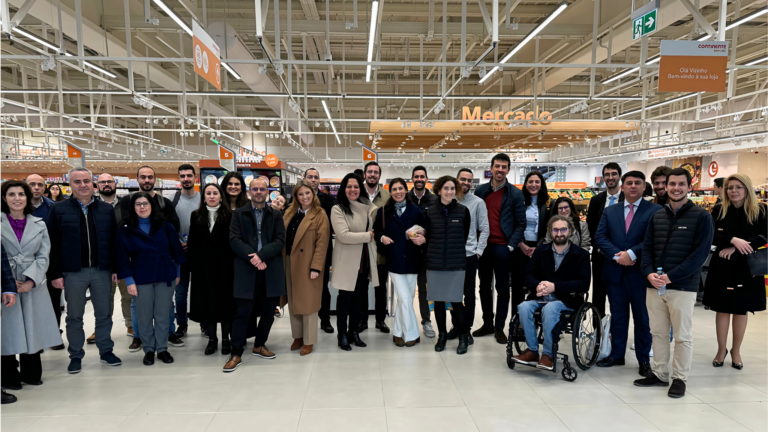
    This is not a scene from a sci-fi movie. It is already happening, in Portugal! The world’s largest intelligent retail store— a 1,200 square meter space operated by Continente—opened earlier this year in Leiria, showcasing the very technologies being developed through PT Smart Retail. This PRR-funded mobilizing project will transform the way we shop, consume, and interact with physical retail spaces.

    On this project, INESC-ID has a key role in dealing with the privacy and security of this future. Under the internal coordination of researcher Nuno Santos, from Distributed, Parallel and Secure Systems, the initiative brings together 19 partners, from startups to tech providers, universities, and major retailers like Continente and Galp.

    At the helm of the consortium is Sensei, a Portuguese tech company already pioneering autonomous retail experiences. But the goal of PT Smart Retail goes far beyond existing proof-of-concept stores. With an investment of over €31 million, the project aspires to deliver a new generation of intelligent, autonomous, and sustainable retail—from futuristic vending machines to fully operational cashierless stores, all powered by national technology.

    Launched in 2022 and running through the end of 2024, PT Smart Retail is part of Portugal’s broader Recovery and Resilience Plan (PRR), aiming to build national capacity in high-tech, high-impact sectors. In the retail domain, that means: Designing autonomous and hybrid store formats, developing “pods” that can be deployed in remote or high-traffic areas, introducing Zero Waste Cabinets that reinvent the vending machine experience and creating peripheral technologies to enhance user interaction and sustainability.

    Each innovation is based in seamless, contactless, and user-centric shopping experiences—think of walking into a shop, picking up your items, and walking out without scanning a single barcode. The rest is up to the system.

    “Our role in the project is very focused. We’re working on the privacy and security side—anticipating problems that might not be critical for the pilot store today but will be essential if this technology is to scale nationally or internationally.” – Nuno Santos

    But as this vision moves closer to reality, critical questions arise: How do we ensure customer privacy? Who has access to video data? How secure is the underlying AI? That’s where INESC-ID comes in.

    “Our role in the project is very focused,” explains Nuno Santos, Principal Investigator at INESC-ID and Professor at Técnico. “We’re working on the privacy and security side—anticipating problems that might not be critical for the pilot store today but will be essential if this technology is to scale nationally or internationally.”

    Indeed, the transition to intelligent retail systems introduces layers of complexity—technically, ethically, and legally. Every sensor, every camera, and every line of code collecting customer behavior must comply with GDPR, safeguard identity, and protect sensitive data from leaks or misuse.

    To solve these challenges, the INESC-ID team is developing solutions across five research vectors:

    1. Privacy-preserving Video Processing

    In smart stores, camera footage is essential for tracking customer movement and product selection. But how can we do this without violating privacy?

    INESC-ID’s answer is to transform video feeds into anonymized skeletal models, abstracting individuals into motion paths instead of identities. In some cases, the team goes further—applying visual obfuscation techniques that reduce people to blurred silhouettes, while still enabling operators to debug the system when needed.

    2. Trusted Video Stream Processing

    The software that powers smart retail—including the AI models for object recognition and movement tracking—runs on edge servers located inside stores. These are valuable intellectual property assets for companies like Sensei. But how can they ensure this code isn’t reverse-engineered or tampered with, especially in international deployments?

    INESC-ID is exploring hardware-based secure enclaves that encrypt and shield algorithms from unauthorized access, even when deployed in less trusted environments.

    3. Data Provenance and Auditability

    With thousands of data points flowing through these systems daily, it’s essential to prove that the algorithms act fairly and legally. INESC-ID is working on cryptographic methods to ensure traceability—demonstrating that a particular transaction was computed using valid data, from legitimate sensors, using trusted code.

    This will be crucial for compliance auditing, especially in the context of the AI Act in Europe.

    4. Network and Communication Security

    A smart retail system involves dozens of sensors communicating in real-time with local servers and cloud backends. This creates vulnerabilities: from spoofing attacks that fake product scans to malicious devices planted in stores.

    To address this, INESC-ID is developing secure communication protocols and monitoring tools that can detect anomalies in sensor behavior and network traffic.

    5. Web Application Security

    The final layer of the stack includes web-based dashboards, APIs, and customer-facing apps. These are often the most visible points of contact—and the most vulnerable to attacks.

    INESC-ID’s researchers are conducting code audits and developing automated tools to detect and patch vulnerabilities in retail web applications before they can be exploited.

    “The problems we’re solving in PT Smart Retail are not just relevant to retail,” says Nuno Santos. “They apply to surveillance in public spaces, stadiums, smart cities. The anonymization and secure processing of visual data is a broader societal challenge.”

    Ultimately, PT Smart Retail is not just about automating shopping. It’s about building trust in an era where technology is everywhere and often invisible. “When we used to shop at a neighborhood store, trust was physical, the shopkeeper knew us. Today, that trust has to be engineered into the system”, Nuno Santos notes.

    By combining cutting-edge AI with responsible data practices, PT Smart Retail aims to become a global reference for intelligent, privacy-first retail. And INESC-ID’s work is central to making that happen.


    Text by Sara Sá, Science Writer | Communications and Outreach Office, INESC-ID
    © 2025 INESC-ID. Credit INESC-ID and the author, with a link to the original source, when sharing or adapting this article.

    Images | © 2025 PT Smart Retail

  • POEMS: Portugal having a word in semiconductor innovation

    POEMS: Portugal having a word in semiconductor innovation

    INESC-ID is one of the 16 members of POEMS – the Portuguese Competence Centre in Semiconductors, a national initiative set to position Portugal in the field of microelectronics and semiconductor innovation.

    Launched under the Chips for Europe Initiative and co-funded by Fundação para a Ciência e a Tecnologia (FCT) and the Chips Joint Undertaking – European Union, POEMS directly responds to the priorities of Axis 1 of the National Semiconductor Strategy. The project targets two main fronts: capacity building through advanced training (Work Package 3) and technological advancement in semiconductor solutions (Work Package 4), aligning with Europe’s ambition for a more resilient and competitive tech industry.

    The POEMS consortium brings together leading institutions across academia, research, and industry with expertise in chip design, advanced packaging, and emerging semiconductor technologies. Through collaborative work packages, POEMS will strengthen national infrastructure, allow access to innovation networks such as the European Network of Chips Competence Centres (ENCCC), and support the transition from R&D to market through business support and funding mechanisms. It also includes the development of a dedicated digital collaboration platform, which will house the Portuguese Semiconductor Observatory, training portals, and innovation support services.

    With its unique characteristics and wide-reaching scope — from promoting STEM careers among youth to providing critical tools for companies and researchers — POEMS is more than a technological project; it’s a strategic engine for national growth in a critical and essential area.

    From a total budget of nearly four million euros, INESC-ID will manage approximately 121,000 euros, under the coordination of researcher Jorge Fernandes, the institute’s Principal Investigator for POEMS.


  • AMALIA, giving voice to Portuguese identity through Artificial Intelligence

    AMALIA, giving voice to Portuguese identity through Artificial Intelligence

    Few expressed pain and longing with the intensity of Amália Rodrigues, the iconic fado singer who became a symbol of Portuguese cultural identity. Her voice, her language, and her emotion are all part of a legacy that continues to shape Portugal’s artistic and emotional landscape. Drawing inspiration from that deep cultural well, AMALIA (Automatic Multimodal Language Assistant with Artificial Intelligence) is the name chosen for the first Portuguese Large Language Model (LLM) designed from scratch to reflect and preserve the richness of the Portuguese language and identity – with INESC-ID playing a crucial role, particularly in the area of speech processing.

    Derived from the Latin word for “fate,” fado conveys a broad spectrum of emotions, from heartbreak and nostalgia to joy and resilience. Similarly, AMALIA is being designed to understand, process, and generate content in European Portuguese, capturing nuances in both language and culture. “This tool will serve a wide range of applications across essential sectors such as education, media, science, cultural heritage, and public administration”, anticipates INESC-ID researcher and Professor at Técnico, Alberto Abad, from Human Language Technologies.

    A strategic national investment

    Supported under Portugal’s Recovery and Resilience Plan (PRR) and coordinated by the Foundation for Science and Technology (FCT), AMALIA is being developed by a national consortium of top academic and research institutions. This includes Universidade de Lisboa, via Instituto Superior Técnico, Universidade NOVA, the Universidade do Porto, Universidade de Coimbra, Universidade do Minho, and the national laboratories NOVA LINCS, IT, INESC TEC, CISUC/LASI, and ALGORITMI/LASI. Experts from the University of Beira Interior and the University of Évora are also contributing.

    Under the coordination of Alberto Abad, INESC-ID’s contribution focuses on multimodal language processing, particularly the integration of spoken language. This means AMALIA will not only be able to interpret text but also receive and process speech and images – giving it “ears” and “eyes,” with the “brain” generating accurate and contextually aware text responses.

    Unlike commercial AI models primarily optimized for global markets, AMALIA is trained from the scratch using resources such as Arquivo.pt and is specifically tailored for European Portuguese. It will be open source and designed to operate in closed and secure environments, ensuring data protection and reinforcing national technological sovereignty.

    AMALIA will serve as a strategic asset for Portugal – not just as a language model, but as a digital guardian of linguistic and cultural heritage. In an age when companies tend to prioritize broader language variants like Brazilian Portuguese, AMALIA’s focus on the European variant is both a cultural imperative and a technical challenge.

    Filling a niche

    By September 2025, the consortium aims to release a public version of the model. A first internal version was successfully launched on March 31, 2025, already capable of engaging in contextual conversations and demonstrating knowledge of Portuguese culture and language.

    “AMALIA will not replace general-purpose models like ChatGPT”, Alberto Abad underlines. “Instead, it fills a vital niche: delivering specialized, context-sensitive responses in domains where language, culture, and data privacy matter.” Its potential spans education, public service, cultural preservation, and more.

    As Fernando Pessoa once said, “My homeland is the Portuguese language (A minha pátria é a língua portuguesa).” With AMALIA, that homeland now has a voice in the digital future. One that speaks, understands, and respects its unique identity.


  • INESC-ID secures 14 new FCT-Funded Projects to Drive AI, Data Science, and Cybersecurity in Public Administration

    INESC-ID secures 14 new FCT-Funded Projects to Drive AI, Data Science, and Cybersecurity in Public Administration

    After having two exploratory research projects (ERPs) approved in the Call for Exploratory Projects in All Scientific Domains 2023, INESC-ID recently had eight more projects approved by FCT, in the Call for the 2024 program in “Artificial Intelligence, Data Science and Cybersecurity of relevance in Public Administration”. 

    This call will be fully funded by the Recovery and Resilience Plan (PRR) and aims to support the launch of a programme of R&D projects aimed at the development and implementation of advanced Cybersecurity systems, Artificial Intelligence, and Data Science in Public Administration. 

    The projects will be focused on optimising resources and combating fraud and error, leading to continuous improvements in public services and mutual knowledge exchange between Public Administration and the National Science and Technology System (SNCT). This initiative is expected to accelerate the digital transformation of science and support services within the SNCT, while contributing to the increase of both national and international competitiveness of science and technology.

    INESC-ID had the following projects approved in three different thematic areas:

    Artificial Intelligence and Data Science

    • “OptiGov: Leveraging AI for Process Efficiency in Public Administration” 

    PI: Alessandro Gianola

    Public Administration processes usually face challenges in compliance, particularly in aligning contractual specification documents with legal guidelines. To optimise and manage this complexity, the OptiGov project will harness the power of Data Science and Artificial Intelligence (AI), to introduce a method, enhanced with Large Language Model techniques, that will align specification documents and the meta-level guidelines dictating how the processes should be.

    • “Sarcoma Clinical Data Integration with AI-Driven Automation for the National Oncology Registry”

    PI: Emanuel Gonçalves

    The SARC-RON-AI project aims to develop an LLM-based (Large Language Model) system to efficiently process EHRs (Electronic Health Records), automating data submission for the southern regional oncology registry, Registo Oncológico Regional Sul (ROR-Sul). A prototype will be delivered, designed to operate within the real-world clinical context, thus improving Public Administration institutions.

    • “EquiVet.AI: An AI Assistant for Veterinarians in Equine Practice”

    PI: Luísa Coheur 

    EquiVet.AI proposes user-friendly non-invasive tools for the diagnosis of allergic diseases in horses, improving veterinary care and leveraging LLMs to generate reports from medical notes. The development of these tools will consider feedback from veterinarians, ensuring that the AI models are well-aligned with their needs, with the goal of facilitating their integration into daily workflows and promoting AI literacy within the community.

    • Artificial Intelligence in Tribunal” 

    PI: Ricardo Ribeiro

    This project aims to enhance some of the capabilities of the IRIS initiative, a previous collaboration between INESC-ID and the Supreme Court of Justice (STJ), and to improve two of the three resulting apps, currently used by STJ. It will address challenges such as entity extraction, structure identification, summarisation, classification, and case analysis support. The ultimate goal is to increase efficiency, effectiveness and consider a broader context for the use of these application, including other national courts, the High Council of the Judiciary (CSM), and courts of Portuguese-speaking African countries (PALOP).

    • “WebCAP: Web Data Collection via Automated Program Synthesis” 

    PI: José Santos

    Web scrapers are programs used for the challenging process of parsing and retrieving information scattered across web pages, and although useful, their development and deployment are complex, error-prone and time-consuming. WebCAP will address this challenge by leveraging recent advancements in programming language and machine learning, to introduce a novel framework capable of automating the creation of web scrapers. It will be particularly focused on scrapers tailored to collect data relevant to the Portuguese public administration, improving the formulation of public policies across various sectors.


    Cybersecurity

    • “WELL – Wallet for ELectronic heaLth records” 

    PI: David R. Matos

    The main output of the project will be combining cloud storage and a blockchain to create the WELL platform, composed of a repository to store EHRs (Electronic Health Records), and a wallet, to manage the EHRs of the patients. While the application will be designed for patients, medical professionals, insurance companies, and researchers, EHRs can only be shared with the consent of the patient, empowering the users with immediate access to and control over their health data.

    • “InfraGov: A Public Framework for Reliable and Secure IT Infrastructure” 

    PI: João Ferreira 

    InfraGov aims to develop an innovative solution for automated error and vulnerability detection and repair in software configuration and infrastructure code. The project involves collaboration with INESC-TEC, Agência para a Modernização Administrativa (AMA), Instituto de Gestão Financeira e Equipamentos da Justiça (IGFEJ), and Entidade de Serviços Partilhados da Administração Pública (ESPAP). As public administrative services transition to digital platforms, this outcome will significantly reduce the incidence of system failures and security breaches, improving the reliability and security of IT infrastructures.

    Interaction design and design of digital and physical systems

    • “Pediatric Palliative Care Support System”

    PI: Helena Galhardas

    The expected result of PiCaSSO is an integrated digital platform for the registration, characterisation, and monitoring of children and young people with Complex Chronic Diseases (CCDs) and palliative care needs in Portugal. This characterisation and monitoring will be essential to effectively stratify and organise the delivery of palliative care for these children and establish a care network supported with well-specified data.

    Besides these, INESC-ID is also a collaborator in six other projects, all in the thematic area of Artificial Intelligence and Data Science.

    More information about the Call (in Portuguese) here.

  • INESC-ID Projects Approved in ERPs FCT Call

    INESC-ID Projects Approved in ERPs FCT Call

    INESC-ID recently had two exploratory research projects (ERPs) approved in the Call for Exploratory Projects in All Scientific Domains 2023 by Fundação para a Ciência e a Tecnologia (FCT).

    In the field of “Computer and Information Sciences and Informatics”, the selected project was FLORA, coordinated by Vasco Manquinho. The project will develop new techniques, focused on Answer Set Programming (ASP), to debug logic programs, which is usually a challenging process since the programmer does not control the flow of execution nor is able to check the intermediate state of the program or localise a fault. FLORA will not only provide new techniques to mitigate these challenges, but also new annotated datasets of ASP programs and new tools to support the generation of new ones. All these will be available in a GitLab-based open-source framework in order to provide personalised feedback to novice ASP programmers.

    In the area of “Electrical and Electronic Engineering”, project OSiRIS coordinated by Rui Duarte, was the winning candidate. OSiRIS aims to explore AI algorithms to improve the generation of images by Synthetic Aperture Radar (SAR), while also replacing current computational units with smaller and faster ones. This will provide a new generation of on-board SAR processors to be further developed and industrialised, enhancing monitoring systems, on aircrafts and spacecrafts, and contributing to more accurate information on pollution, harvesting of natural resources and reaction to natural catastrophes.
    The projects will each receive around 50K € of funding.

    The goal of this call is to support exploratory research projects in all scientific domains, by promoting and strengthening the skills of scientific and technological institutions through the participation of their teams in projects of particular relevance. Proposals must be for individual projects, submitted by a single beneficiary, with a maximum duration of 18 months. Each project has a maximum funding of 50K, through the FCT budget.

    The 2024 call opened on December 19, and will close on February 25, 2025.

    More information here

  • Restoring Voices: Transformative ALS communication technology developed under CRAI wins innovation award

    Restoring Voices: Transformative ALS communication technology developed under CRAI wins innovation award

    Most of us are familiar with the synthetic voice that the famous physicist Stephen Hawking used to communicate. Suffering for many decades from the debilitating disease amyotrophic lateral sclerosis (ALS), Hawking continued working, unravelling the mysteries of black holes and sharing his insights in books and public appearances. Despite the misfortune of living with such a severe condition, he had access to cutting-edge technology that allowed him to remain professionally and socially active. Unfortunately, not all patients share this opportunity.

    Under the PRR-funded project Center for Responsible AI, in which INESC-ID is a key participant, Unbabel has developed Halo—a ground-breaking technology designed to restore the ability to communicate for patients living with ALS and similar conditions. This innovative device won the Prémio Inovação – Pedro Oliveira, awarded by Exame Informática during the “Os Melhores & As Maiores do Portugal Tecnológico 2024” ceremony.

    As described, “the solution consists of a muscle signal reader—essentially a band that can be worn on the head, which uses electromyography to detect fine muscle contractions—and Artificial Intelligence software that incorporates information about the user, such as personality, preferences, or their surrounding environment. Based on this system, which is continuously ‘fed’ with data from both the user and those around them, a persona is created. This persona generates response suggestions to questions posed to the user, which are then presented in audio form. The user selects the most appropriate response by moving their forehead muscles. Since the system converts text to speech for a more natural interaction, it is possible to use the patient’s own voice—either pre-recorded before the progression of the disease or retrieved from older audio recordings.” So that more patients may continue to have a voice.

    Every year, Exame Informática honors the best advancements in Portugal’s scientific and technological fields. As senior AI researcher at Unbabel Labs Catarina Farinha remarked, “with more recognition comes more responsibility to keep pushing and doing better.”

  • Bridge AI is at full speed: website and major event program are settled

    Bridge AI is at full speed: website and major event program are settled

    Helena Moniz was born and raised in the Azores islands, and this is not a mere detail when telling the story of how the Bridge AI project, led by INESC-ID, came to life. In response to a call on Science4Policy, opened by Science and Technology Foundation (FCT), it aims to bring together ethics, law, and literacy regarding the European legislation on Artificial Intelligence, known as the AI Act.

    “By choosing this thematic area, we are primed to advance Portugal’s readiness for impending AI regulations and fortify our nation’s position as a frontrunner in responsible and innovative AI implementation”, stresses the INESC-ID researcher, from the Human Language Technologies scientific area and a professor at Universidade de Lisboa. “We want to make a difference. How will a Portuguese citizen relate to the law, and how are we going to implement it?”, Helena adds. “How will my aunt in the Azores understand it?”

    The project, now running at full speed, has a brand-new website and the agenda for its public presentation event on October 19 is set. Confirmed speakers include Pedro Conceição, Director of the Human Development Report Office at the United Nations.

    Bridge AI was born out of the mission-driven spirit of young researchers like Joana Lamego (Champalimaud Foundation), Nuno André, and António Novais (both from Unbabel). It aims to foster a strong connection between academia, business, and the public sector. The project promotes AI literacy in society and serves as a valuable tool for Portuguese decision-makers, helping them make informed, evidence-based decisions.

    To achieve its goals, five working groups have been established, each focusing on different aspects of AI regulation, approved last May at the European Counsel. These groups will provide recommendations and conclusions at the major event on October 19, which will be held at Champalimaud Foundation, one of the project’s partners.

    Bridge AI also includes case studies, in partnership with companies like Unbabel, Priberan and Sword Health, that work in the fields of AI and Health technology. The Centre for Responsible AI is another key member, along with two law firms, Carnegie Mellon Portugal and the British and the American embassies.

    “It’s important to strike a balance between legislation and innovation. The law should not be a barrier”, notes Helena Moniz.

    With a funding of 40.000 euros, FCT emphasizes in its evaluation document that “the study is perfectly aligned with the thematic line and adjusted to the national context.”

    Text by Sara Sá, Science Writer | Communications and Outreach Office, INESC-ID / © 2024 INESC-ID

    Images | © 2024 INESC-ID/Bridge AI