Category: News

  • In the Media: Rodrigo Rodrigues talks about how data centres impact our planet on  RTP’s “Biosfera”
    In the Media: Rodrigo Rodrigues talks about how data centres impact our planet on RTP’s “Biosfera”

    Have you ever thought about the environmental impact of asking ChatGPT a question, casually scrolling through social media, or binge-watching a series on Netflix?

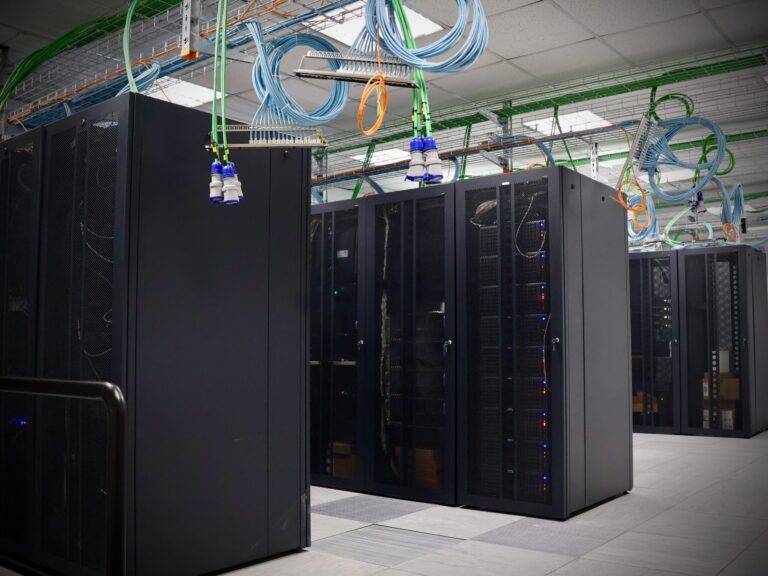
    These everyday activities of our technological society are made possible by the vast amounts of data being exchanged in an increasingly instant-paced, AI-driven world. Tens of thousands of data centres spread across the globe are at the heart of this highly complex flow of information. However, as the number of data centres increases, so does their consumption of natural resources and energy, leading to a larger carbon footprint and significant environmental impacts.

    This was the focus of a recently aired episode titled “Data Centres: what’s the path to sustainability?” on RTP’s TV programme “Biosfera,” where INESC-ID researcher Rodrigo Rodrigues, from the scientific area Distributed Parallel and Secure Systems, helped explain why and how data centres are becoming major consumers of energy and natural resources worldwide. According to Rodrigo, “In some countries, that consumption is overwhelming. For instance, in Ireland, the electricity consumed just to power data centres already represents 20% of the total electricity consumed.”

    In the episode, he also discussed innovative solutions being developed by companies to minimise this impact, giving him “reasons to be optimistic and vigilant.” While “AI can revolutionise digital transition and the generation of knowledge for preserving our planet”, it will “not be easy to track the environmental impacts associated with the manufacture and use of these data systems”.

    Watch the full episode (in Portuguese) here.

  • In the Media: Ana Teresa Freitas diagnoses  the future of medicine in October’s National Geographic

    In the Media: Ana Teresa Freitas diagnoses the future of medicine in October’s National Geographic

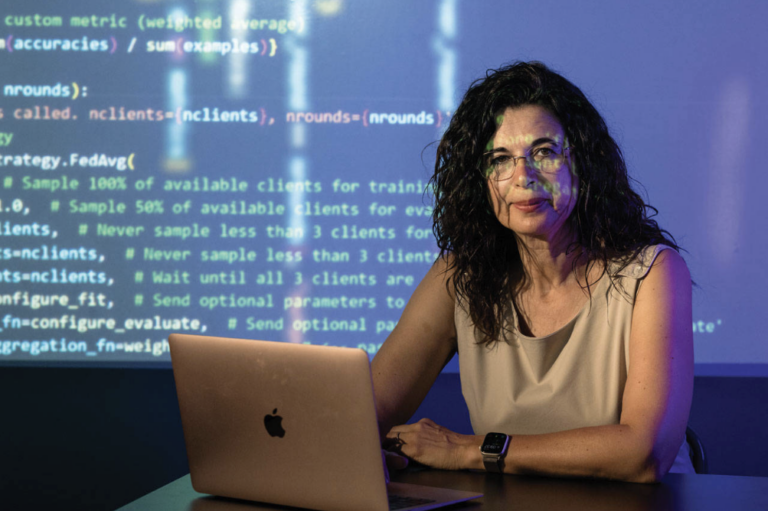
    Featured in the cover theme of this October’s edition of National Geographic, Ana Teresa Freitas, a senior INESC-ID researcher and coordinator of INESC-ID’s Life and Health Technology Thematic Line, shared valuable insights and predictions about the revolution of medicine currently underway.

    Unlike TV shows like House or Grey’s Anatomy, where doctors are the sole protagonists, Ana Teresa, an international expert on AI applied to medical research, highlighted that the future of medicine and the profile of medical doctors will likely see significant changes. Algorithms will play a larger role in triage and diagnosis, and hospitals will be transformed by technology. In the future, wearables will replace basic exams, providing continuous data to computing hubs, computing specialists, teleconsultations, and robotic arms in operating rooms will be the norm, and medicine will include a  much broader range of skills beyond traditional expertise.

    Read the online editorial (in PT) here or the full article in the printed version.

  • In the Media: Jorge Fernandes on the “90 Segundos de Ciência” Podcast

    In the Media: Jorge Fernandes on the “90 Segundos de Ciência” Podcast

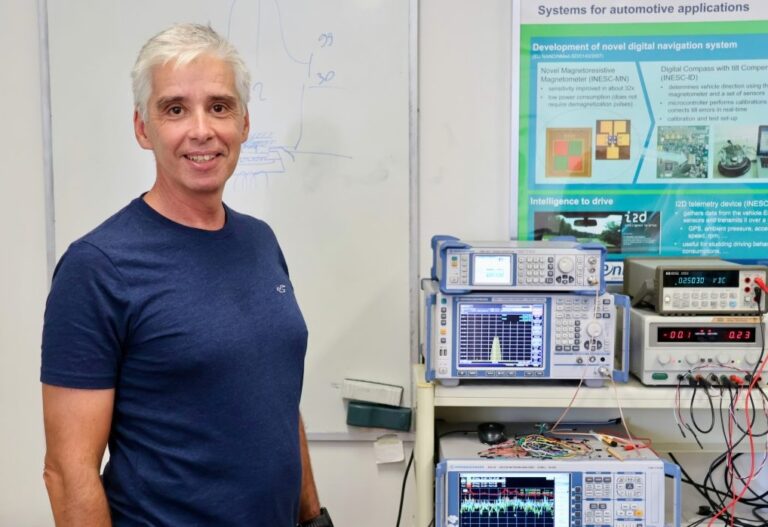
    Jorge Fernandes, INESC-ID researcher in the area of Nano-Electronic Circuits and Systems, and CMU Portugal Faculty member at Instituto Superior Técnico, has recently participated in an episode of the Antena 1 podcast, “90 Segundos de Ciência” (“90 Seconds of Science”). 

    The focus, during the one minute and half allowed, was the CMU Portugal’s Exploratory Research project “mm-Size Stimulator Implants”, which aims to create integrated circuits with low energy consumption for electrical stimulation therapies and to develop a revolutionary new generation of microelectronic implants. 

    These implants are intended to be completely battery-free, eliminating the need for a titanium capsule, and so small that can comfortably be applied under the patient’s skin. 

    With a new range of autonomous and biocompatible implants such as these, Jorge Fernandes believes that it “can revolutionise medical practice and change the use of therapies that are typically administered through medication, replacing them with others that interact with the nervous system through electrical stimulation”. 

    Listen to the episode (in PT) here

  • INESC-ID Researchers among Stanford Elsevier’s World’s Top 2% Most Influential Scientists 2023

    INESC-ID Researchers among Stanford Elsevier’s World’s Top 2% Most Influential Scientists 2023

    Stanford has released the World’s Top 2% Most Influential Scientists lists, which feature 18 INESC-ID researchers, among the 200 thousand most cited scientists in the world.

    The recognition consists of two lists naming top scientists, doctors, engineers, and mathematicians. One list refers to the 2023 most influential scientists, while the other focuses on career-long impact. The lists are compiled by Stanford University (USA) and published by Elsevier. Eligible individuals are classified in 22 scientific fields and 174 subfields, based on data from Scopus.

    INESC ID’s most influential scientists in 2023 (11):

    INESC ID scientists included in the career-long database (16):

    More about last year INESC ID awardees list.

  • In the Media: Inês Lynce Interviewed in the “Diálogos Convergentes” Podcast

    In the Media: Inês Lynce Interviewed in the “Diálogos Convergentes” Podcast

    “Curiosity, discovery and critical thinking are what’s behind science, and what sets us apart”.

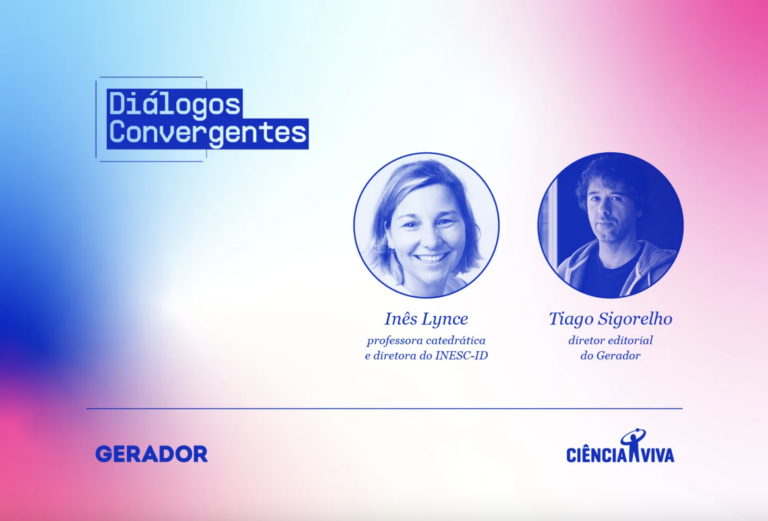
    That is the take of Inês Lynce, President and researcher at INESC-ID, who recently participated in an episode of “Diálogos Convergentes” (“Convergent Dialogues”), a podcast by Gerador. In this episode, Inês Lynce discussed with journalist, Tiago Sigorelho, what makes human thought different from a machine.

    Throughout the conversation, the researcher shared key insights on the evolution of AI, its regulation, and the role of expectations in the increasing popularity of this tool. What was highlighted the most, however, was the importance of critical thinking, which, according to Inês Lynce is what mainly differentiates people and AI. 

    The topic goes on to note that nothing should ever be done without careful consideration beforehand: “never use a text without reviewing it, never use an image without appreciating it critically, never spread alarming news without checking the sources”. 

    Finally, as an avid advocate for gender equality, the president of INESC-ID voiced her concerns regarding the fact that some academic fields still present a considerable gender imbalance, which not only represents a loss for women who would be interested in pursuing those areas, but also a loss for the field itself, that would benefit from their contributions.

    The podcast “Diálogos Divergentes” is an initiative by Gerador and Ciência Viva, where science and journalism come together through a talk between invited scientists and journalists, to ponder and discuss the frontiers of human knowledge and to better understand the world we live in.

    Listen to the full episode (in PT) here.

  • 3 Questions with Leonel Sousa on INESC Lisboa and its Annual Meeting in 2024

    3 Questions with Leonel Sousa on INESC Lisboa and its Annual Meeting in 2024

    The biggest event in our community is approaching: the 2nd INESC Lisboa Annual Meeting, which will take place on October 25. We have asked three questions to INESC Lisboa director, Leonel Sousa, about the event and the INESC Lisboa community.

    – Why are these INESC Lisboa annual meetings relevant?

    Until 2022, each of the INESCs in Lisbon held its annual Meeting. Starting in 2023, these meetings were merged into a single event, with over 250 participants and external guests. The 2023 event featured interventions from a Minister (Ministro da Economia e do Mar) , as well as the President of the Comissão de Coordenação e Desenvolvimento Regional de Lisboa e Vale do Tejo. During the Meeting, topics ranging from research to technology transfer were discussed, covering the fields of Electrical Engineering, Computer Science and Engineering, as well as the technological areas of microelectronics and nanotechnology. The Meeting, in its current format, is unique, providing an opportunity to learn about the activities of the INESCs in Lisbon, share experiences, and establish collaborations.

    ⁠⁠Comparing to last year, what do you expect of this year’s meeting?

    The second edition of the INESC Lisbon Meeting will be even more challenging than the 2023 edition. The joint sessions will fully occupy the morning of the Meeting, rather than just part of the morning. In addition to the institutional components,  morning sessions will feature the in-person participation of Dr. Dejan Milojicic, Chair of the IEEE Future Directions Industry Advisory Board, a group within IEEE with strong industrial involvement. This board is responsible for identifying key technologies and technological megatrends and suggesting the best ways to advance these technologies. It will serve as a reflection on the evolution of R&DI activities at INESC Lisbon in the coming years.

    – How has the INESC Lisboa community evolved throughout the years?

    The INESC  in Lisbon involves three research institutes, two of which have research units classified as Excellent by the FCT, two recognised by the government as Associated Laboratories (LA), and two Technology and Innovation Centers (CTI). The organisation of INESC-ID, INOV, and INESC MN has evolved individually since 1999/2000 with great success, and in the past four years, thanks to the synergies between these institutes within the INESC Lisbon platform, they have achieved a consolidated budget of €15 million, with more than 350 researchers and technicians from over 20 different countries, 134 projects and contracts, 43 of which are coordinated by these institutions. Only an invaluable and diverse community, like that of INESC in Lisbon, is capable of achieving such success!

  • Science, families and fun. European Researcher’s Night had it all!

    Science, families and fun. European Researcher’s Night had it all!

    To celebrate science across Europe is the goal of the European Commission’s initiative, European Researchers’ Night (NEI). And that’s exactly how it felt last Friday, the 27th, at Marina de Oeiras – a celebration!

    At 12 years old, Renata is very sure of what she wants to be when she grows up. The eighth-grader likes Biology the most and wants to be a scientist or an astronaut. Accustomed to attending science outreach events, Renata visited INESC-ID’s booth at NEI, where she tested the Alien Bar game  developed at Group of Artificial Intelligence for People and Society (GAIPS Lab), to explore cooperation between people. Throughout the afternoon, the researchers Samuel Gomes and Luís Costa, both regulars at such events, explained to visitors the concept behind these so-called serious games.

    Spread across three tables, INESC-ID’s participation at NEI, which has been celebrated throughout Europe since 2005, included a demonstration of platforms to study the psychology behind cooperation and teamwork, games to help cope with psoriatic arthritis and a demo of a social robot, interacting with the attendees. We also had the project Engenharia para Todos, aimed at promoting skills in the fields of Science and Technology.

    Although it was her first time participating in such events, PhD student and researcher Bárbara Ramalho from HUMAN Lab in Graphics and Interaction appeared completely at ease. Together with the master’s students Marta Vicente and Hugo Escobar, they showcased the game iPROLEPSIS, inviting volunteers to play while explaining how its tasks are designed to train wrist rotation or breathing—movements that are often affected in people with psoriatic arthritis.

    Also in the games section, we had Inês Lobo, from GAIPS, displaying the collaborative game Geometry Friends, highlighting a study that explores human interaction with agents, exhibiting different levels of initiative – leader, follower, shift initiative.

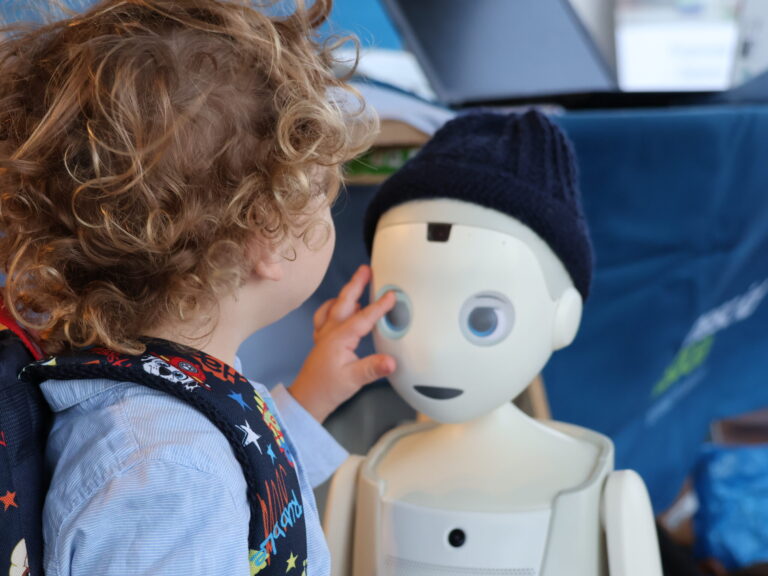
    Undoubtedly, the star of the show was Navel, our social robot, easily recognisable with its blue beanie and blinking eyes. Developed at GAIPS, Navel simulates a curious little boy and is designed to engage in social interactions in hospitals, elderly care institutions, or any setting where human contact is needed. Research assistant Haohua Dong proudly and enthusiastically took care of Navel throughout the event.

    INESC-ID’s participation in NEI Marina, an event promoted by António Xavier Institute of Chemical and Biological Technology of the NOVA University of Lisbon (ITQB NOVA), in partnership with the Município de Oeiras, offered a dynamic and interactive experience, showcasing the intersection of technology, human interaction, and social good. And was definitely a rewarding experience to all of the people involved.

    Text by Sara Sá, Science Writer | Communications and Outreach Office, INESC-ID / © 2024 INESC-ID

    Images | © 2024 INESC-ID

  • Bridge AI is at full speed: website and major event program are settled

    Bridge AI is at full speed: website and major event program are settled

    Helena Moniz was born and raised in the Azores islands, and this is not a mere detail when telling the story of how the Bridge AI project, led by INESC-ID, came to life. In response to a call on Science4Policy, opened by Science and Technology Foundation (FCT), it aims to bring together ethics, law, and literacy regarding the European legislation on Artificial Intelligence, known as the AI Act.

    “By choosing this thematic area, we are primed to advance Portugal’s readiness for impending AI regulations and fortify our nation’s position as a frontrunner in responsible and innovative AI implementation”, stresses the INESC-ID researcher, from the Human Language Technologies scientific area and a professor at Universidade de Lisboa. “We want to make a difference. How will a Portuguese citizen relate to the law, and how are we going to implement it?”, Helena adds. “How will my aunt in the Azores understand it?”

    The project, now running at full speed, has a brand-new website and the agenda for its public presentation event on October 19 is set. Confirmed speakers include Pedro Conceição, Director of the Human Development Report Office at the United Nations.

    Bridge AI was born out of the mission-driven spirit of young researchers like Joana Lamego (Champalimaud Foundation), Nuno André, and António Novais (both from Unbabel). It aims to foster a strong connection between academia, business, and the public sector. The project promotes AI literacy in society and serves as a valuable tool for Portuguese decision-makers, helping them make informed, evidence-based decisions.

    To achieve its goals, five working groups have been established, each focusing on different aspects of AI regulation, approved last May at the European Counsel. These groups will provide recommendations and conclusions at the major event on October 19, which will be held at Champalimaud Foundation, one of the project’s partners.

    Bridge AI also includes case studies, in partnership with companies like Unbabel, Priberan and Sword Health, that work in the fields of AI and Health technology. The Centre for Responsible AI is another key member, along with two law firms, Carnegie Mellon Portugal and the British and the American embassies.

    “It’s important to strike a balance between legislation and innovation. The law should not be a barrier”, notes Helena Moniz.

    With a funding of 40.000 euros, FCT emphasizes in its evaluation document that “the study is perfectly aligned with the thematic line and adjusted to the national context.”

    Text by Sara Sá, Science Writer | Communications and Outreach Office, INESC-ID / © 2024 INESC-ID

    Images | © 2024 INESC-ID/Bridge AI

  • In the Media: Fábio Passos writes on Jornal i about organ-on-chip technology that could revolutionise modern medicine

    In the Media: Fábio Passos writes on Jornal i about organ-on-chip technology that could revolutionise modern medicine

    Can technology replace animal testing in drug development?

    A new article, entitled “Integrated circuits that emulate human organs: Organs-on-chip” (“Circuitos integrados que simulam órgãos humanos: Órgãos-em-chip”) was recently published by INESC-ID researcher, in the area of Nano-Electronic Circuits and Systems, Fábio Passos, on Portuguese newspaper, “Jornal i”.

    Traditionally, ensuring a drug’s safety for human consumption, requires extensive animal testing. This is not only a slow and costly process that sometimes causes animal suffering, but also often offers unreliable results for humans, resulting in undesirable side effects and failed tests. 

    According to Fábio Passos, the Organ-on-chip (OOC) technology – a groundbreaking innovation that uses integrated circuits to mimic a human organ in a controlled microenvironment – could be the solution for this problem, and “the application of this technology promises to revolutionise drug development, disease research and personalised medicine, while reducing dependence on animal testing”.

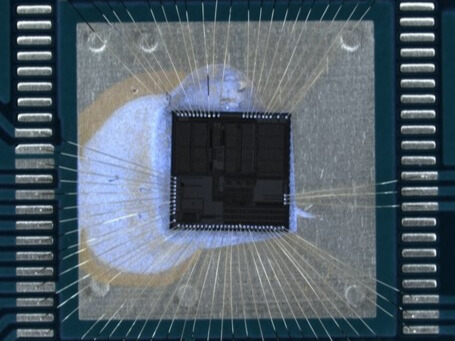
    The creation of OOC systems is, however, no small feat. Their composition is made of channels lined with living cells that mimic the structures and functions of specific organs, requiring the integration of multiple complex miniaturised components. The UNLOOC research project , which includes 51 organisations from 10 European countries, intends to tackle these technical challenges. In Portugal, partners like INESC-ID, INESC-MN, Instituto Superior Técnico, and Silicon Gate are developing analog integrated circuits for precise control and real-time monitoring of these systems.

    Read the full article here (in Portuguese).

  • Energy Democratisation – INESC-ID Leads U2Demo project, “Peer-to-Peer (P2P) trading and Energy Sharing”

    Energy Democratisation – INESC-ID Leads U2Demo project, “Peer-to-Peer (P2P) trading and Energy Sharing”

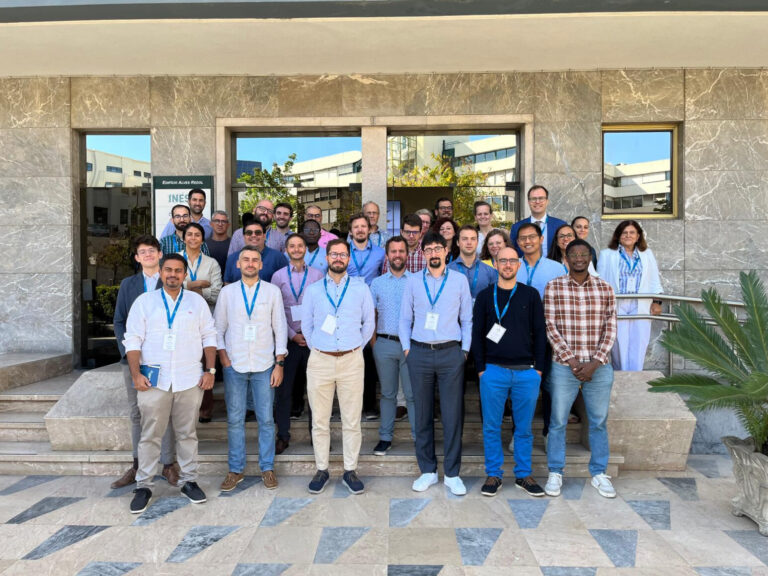
    The kick-off meeting of U2Demo took place on September 5th and 6th at INESC-ID and Instituto Superior Técnico Headquarters in Lisbon! It counted with over 30 participants from the project Consortium attending the meeting to discuss future steps and strategies for the following months.

    U2Demo (Use of open-source P2P energy sharing platforms for energy democratisation) is one of the latest projects signed by INESC-ID, under Cluster 5: Climate, Energy and Mobility of Horizon Europe. With INESC-ID as consortium leader, the project aims to develop new strategies that make it easy for people to join in Peer-to-Peer (P2P) trading and Energy Sharing, ensuring fair and equal access to sustainable energy for everyone.

    Led by INESC-ID researcher, in the area of Sustainable Power Systems, Hugo Morais, U2Demo counts with a total funding of 5 million €, (500K € of which will fund participation by INESC-ID) and will last 42 months. The project will bring together 20 partners, including associated partners, from eight countries to share their knowledge and expertise in developing strategies for open-source, non-proprietary tools and platforms.

    Testing for the developed tools will be implemented in four pilots (Portugal, Italy, Belgium and Netherlands) and performed in four Energy Communities (ECs) with different characteristics and governance models, each one sporting unique attributes and governance models, allowing the determination of optimal implementation conditions, and consolidation of the most promising solutions and associated business models. All action within P2P and Energy Sharing tools will be executed using blockchain, ensuring credibility and traceability of all activities.

    Through this, the initiative will allow consumers and prosumers to actively engage in energy and flexibility services, thanks to decision support algorithms, enhancing coordination and information exchange.

    Click here for more detailed information and list of partners.