Category: News

  • A year in review: 2023 INESC-ID Annual Report now available!
    A year in review: 2023 INESC-ID Annual Report now available!

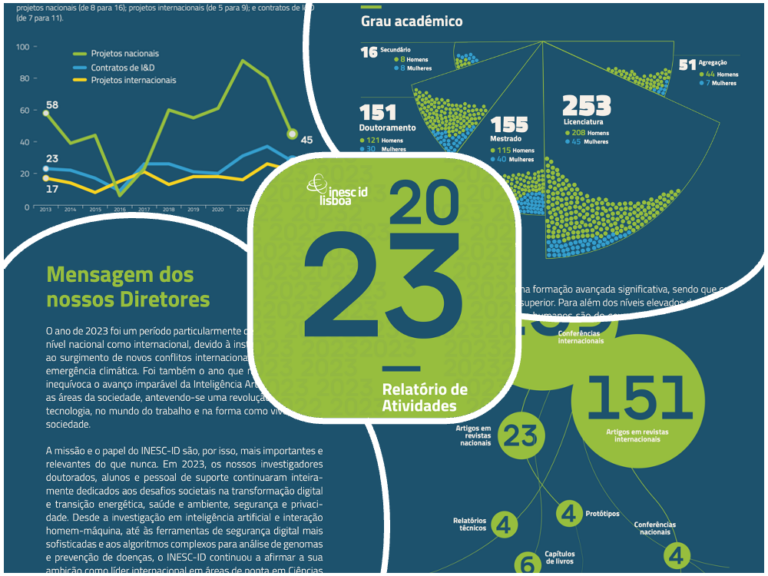
    The 2023 INESC-ID Annual Report has been released! The report, published in Portuguese, offers a comprehensive overview of the INESC-ID community, including the latest facts and figures, project updates, and achievements from the past year. It also presents highlights of our research, development, and innovation throughout 2023, alongside detailed information about our organisational structure, mission, and strategic objectives.

    Download the 2023 Annual Report here, and get to know our institute better with this retrospective.

  • The world needs more girls and women in tech and INESC-ID is helping to achieve that goal

    The world needs more girls and women in tech and INESC-ID is helping to achieve that goal

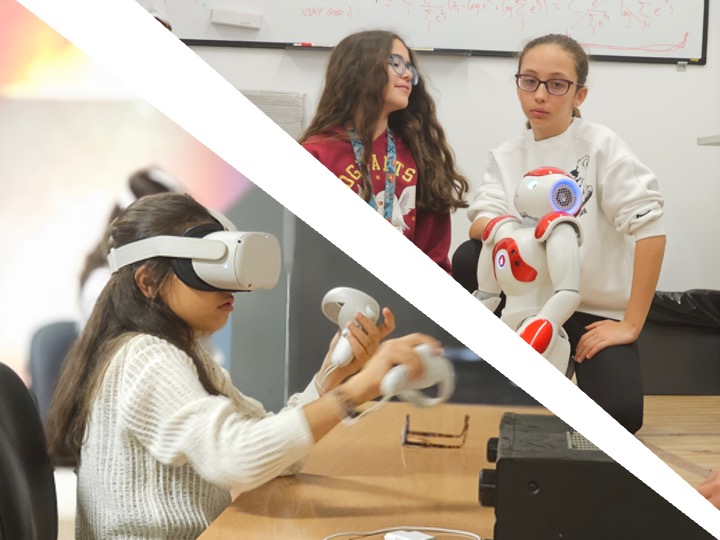
    It is inevitable! There is a natural urge to hold the dancing robot when it interrupts the choreography, falling down as programmed. This act, performed at INESC-ID Social Robotics Lab, from the Group of AI for People and Society (GAIPS), captured the full attention of elementary students from Agrupamento de Escolas de Miraflores, Oeiras, who were participating in the International Girls in ICT Day, celebrated at Técnico’s Taguspark Campus, on April 24th.

    If gender equality were attained in the Information and Communications Technology (ICT) sector, a market of up to 50 billion euros would open up, according to UNESCO. And this in only one of the reasons to celebrate and encourage girls to enrol in a career in this area.

    Since 2011, the International Telecommunication Union (ITU) has been promoting the event to raise awareness and stimulate girls and women to pursue a career in Science Technology Engineering Art and Math (STEAM). To mark the date, the GIRLSTEAM’24 received 150 students, who participated in activities promoted by INESC-ID and other research centres, such as the Institute for Bioengineering and Biosciences (IBB) and the Games Lab.

    During the visit, the students learned that besides entertaining, robots can also help children with autism navigate a world of sensory overload or accompany impaired people complete some tasks. And even solve some complicated math calculations. “Can they divide by zero?”, asked young Mateo.

    We could wager 100% of the youngsters that visited us are, in a way, gamers. But it certainly came as a surprise to realize that games can be a way to study altruism, as Samuel Gomes, also from GAIPS, does, or to cope with diseases, as the INESC-ID researcher, Sandra Gama, from the Human Lab, at the Graphics and Interaction (GI) group, pursues.

    In Europe, women hold just 22% of the tech industry’s positions and worldwide, out of the 7 million people who work in the ICT sector, only 30% are women. It is widely recognised technology is the language of tomorrow, cutting across many different professions, from health to economics. Girls must have a role in the future – for the sake of mankind.

    (Image: students participating in GI and GAIPS activities at GIRLSTEAM24 | © 2024 INESC-ID)
  • “GPT is wonderful! Use it without fear, – but with caution”, advises Luísa Coheur at Técnico Open Day

    “GPT is wonderful! Use it without fear, – but with caution”, advises Luísa Coheur at Técnico Open Day

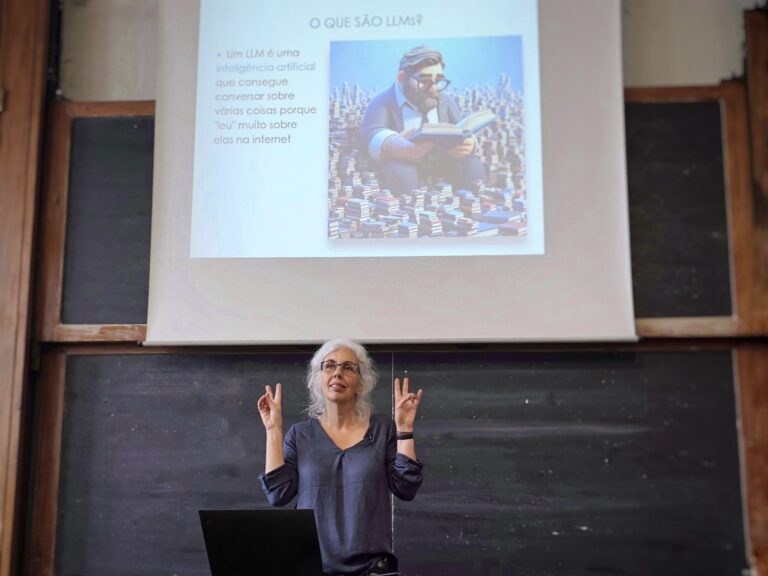
    The auditorium was completely full, mostly of youngsters, who wanted to listen to Luísa Coheur’s talk at Técnico Open Day: “ChatGPT – potentials and risks.” And there was no disappointment, since a good share of the participants stayed beyond schedule in a very vivid conversation with the researcher at INESC-ID’s Human Language Technologies (HLT) lab and a teacher at Técnico.

    The talk started with a retrospective on the origins of the now ubiquitous Large Language Models (LLM). “They were not born today, they are the result of many years of study in natural language processing, and also machine learning”, the researcher noted.

    Starting on the sixties of past century, the field has grown ever since, with an impressive evolution after the first public presentation of the most famous LLM, GPT, in 2019. “The first versions generated text that was correct, but still a bit confusing”, Luísa told the audience. “But with GPT-3 it is madness!”

    Assuming herself as a great enthusiast of the models, the researcher and teacher urged the students to incorporate this tool in their lives, including to fulfil their academic tasks. “I use it all the time, to prepare classes or to make presentations like this one”, Luísa revealed, giving the example of the illustrations, all created through instructions given to the model.

    But if first half of the conference was devoted to the advantages of using LLM, the second was focused on the risks. “Never trust it completely, always check.” Voice and image manipulation, made up sentences, invented sources, are the most critical aspects of this technology. But there is only one way to fight it: is to know it well and be aware of its faults.

    As the former President of USA, Franklin D. Roosevelt, famously said: “the only thing we have to fear is fear itself.”

    Another presentation that also generated interest from the participants, was the one about the first University CubeSat, a satellite entirely conceived and developed in Portugal, in a collaborative team that includes INESC-ID researchers, Gonçalo Tavares and Moisés Piedade. The conference was delivered by João Paulo Monteiro, one of the researchers responsible the project, who will likely be at French Guiana in September, to assist the launch event.

    (Image: © 2024 INESC-ID)

  • Electric Vehicles vs. Climate Change: INESC-ID at Técnico Open Day 2024 with EV4EU Project

    Electric Vehicles vs. Climate Change: INESC-ID at Técnico Open Day 2024 with EV4EU Project

    INESC-ID marked its presence at the Técnico Open Day 2024, held on April 20 at Instituto Superior Técnico, in Lisbon, showcasing the Horizon Europe project EV4EU. The day was filled with lectures, interactive experiences, guided tours, and a science fair with 40 research projects on display, offering visitors a unique opportunity to discover the school and its initiatives.

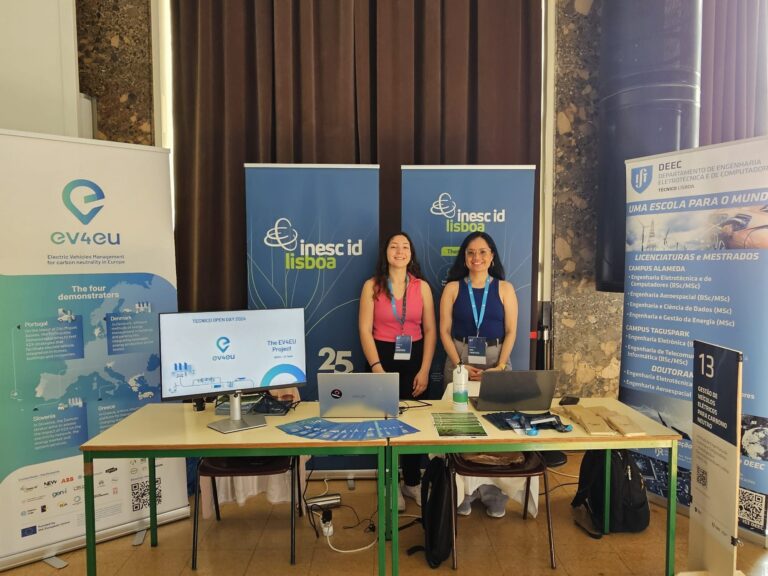
    At the event’s Science Fair, EV4EU took center stage at the INESC-ID stand, where researchers Cindy P. Guzman and Larissa Montefusco, engaged with many curious visitors who stopped by to chat. Under the title “Electric Vehicles Management for Carbon Neutrality: Discover how electrical vehicles can contribute to the fight against climate change”, they shared the project’s latest developments and discussed how its planned solutions can support the massification of electric vehicles while contributing to the decrease of carbon emissions and global warming.

    Técnico Open Day 2024 was a major success, with over 2000 visitors throughout the day. With contributions from Departments, Students Associations, associated Research Units and Institutes, this was a day dedicated to celebrating diversity in the fields of engineering, science, technology and architecture, engaging the community with the best of what our science has to offer.

    Know more about the project here.

  • AI in Science: how can the European Commission promote a responsible uptake? Arlindo Oliveira participated as an expert in a report, via the Scientific Advice Mechanism

    AI in Science: how can the European Commission promote a responsible uptake? Arlindo Oliveira participated as an expert in a report, via the Scientific Advice Mechanism

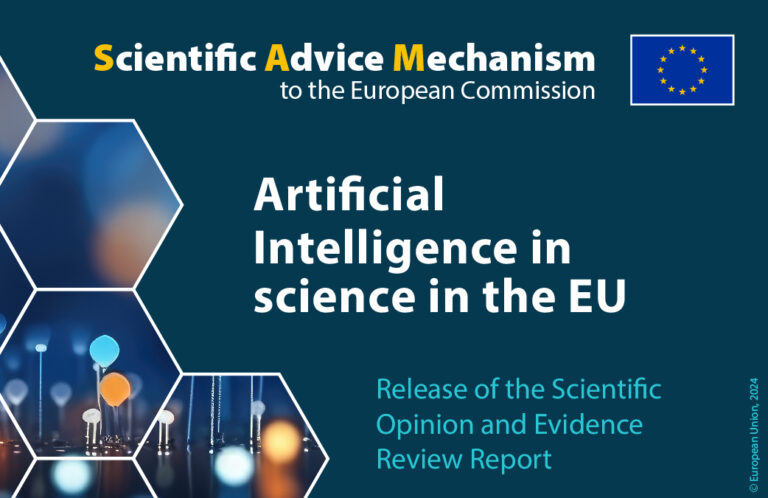
    Published on April 15, the report “Successful and timely uptake of artificial intelligence in science in the EU” was produced by a group of renowned scientists, including INESC-ID researcher Arlindo Oliveira, from the SA-IDSS research area. The experts have been asked to provide recommendations via the Scientific Advice Mechanism, concerning how the European Commission can accelerate a responsible uptake of AI in Science. Some take home messages are: The EU should prioritize AI-powered research, particularly in area where large amounts of data are available, but hard to interpret, such as personalized health, social cohesion, and the green and digital transitions; It is important to support new research into the greenest AI algorithms and infrastructure, to help manage the environmental impact of the technology; data should be high quality, responsibly collected and well curated, with fair access for European researchers and innovators.

    While science may serve as basis for developing AI-based applications, science is also to be considered as a specific field in which AI can be applied: some of the most complex scientific problems can be tackled with AI technologies (including, but not limited to, data-intensive problems).

    For a more detailed information in the scientific advice, you may check the complete report.

  • In the Media: Rui Maranhão talks with Exame Informática about ICSE24’s Impact on Software Engineering and AI Innovations

    In the Media: Rui Maranhão talks with Exame Informática about ICSE24’s Impact on Software Engineering and AI Innovations

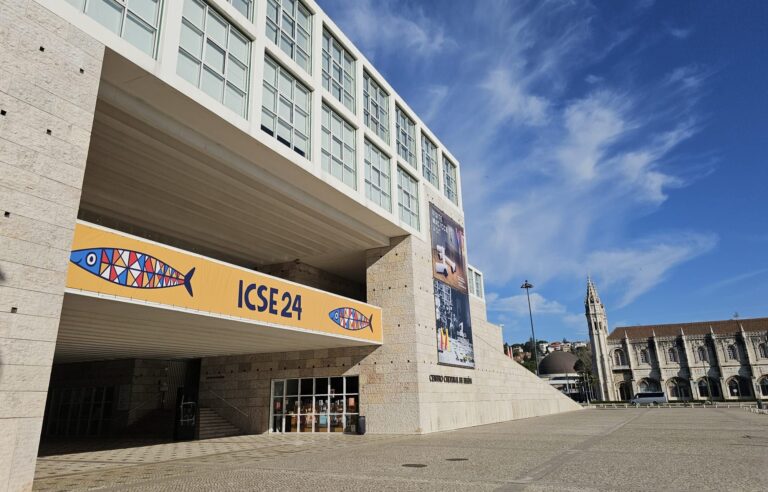
    INESC-ID researcher and full professor at Faculdade de Engenharia da Universidade do Porto (FEUP), Rui Maranhão*, has recently talked to Exame Informática, from Trust in News Group, about the upcoming 2024 edition of the International Conference on Software Engineering (ICSE), which will take place in Lisbon. 

    The interview was an opportunity for Rui Maranhão, chair of the conference, to share some exciting news and thoughts about the event. This included the record numbers of participants from African countries, and emphasised the fundamental role ICSE has in the software engineering community. ICSE not only highlights recent innovations and research in the field but ethical and environmental concerns as well, while also defining future tendencies and fostering collaboration between academia and industry. 

    ICSE is considered the premier international software engineering conference. This year, it will be held at Centro Cultural de Belém, in Lisbon, from April 14 to April 20. Registrations have reached record numbers, and the conference will focus on the link between software engineering and artificial intelligence (AI), with a particular emphasis on Large Language Models.

    Read the full article (in PT) here.


    *Rui Maranhão is a researcher at INESC-ID within the Automated Reasoning and Software Reliability researcher area, and full professor at Faculdade de Engenharia da Universidade do Porto. His research focuses on software quality, emphasising automating the testing and debugging phases of the software development life-cycle as well as self-adaptation. 

  • ISTSat-1: Portugal’s First University CubeSat Satellite Ready for Summer Space Launch

    ISTSat-1: Portugal’s First University CubeSat Satellite Ready for Summer Space Launch

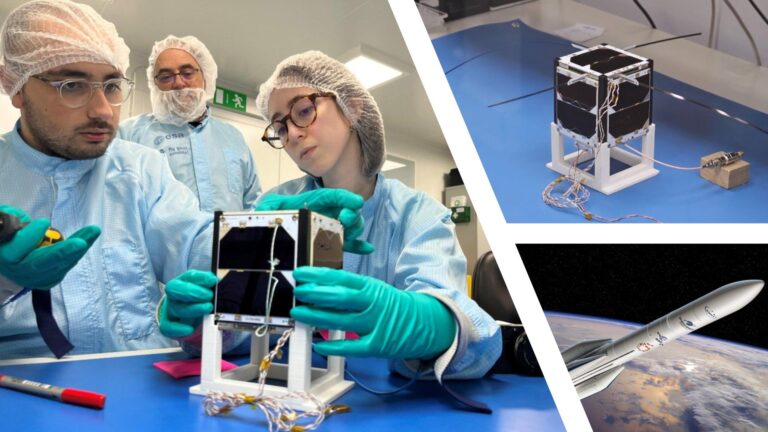
    The first University CubeSat satellite, entirely conceived and developed in Portugal, is set to launch this summer. The ISTSat-1 project was developed by a collaborative team coordinated by Rui Rocha, which includes INESC-ID researchers Gonçalo Tavares and Moisés Piedade, along with students from Instituto Superior Técnico, marking a significant achievement for Portugal’s technological presence in the international space sector. 

    This state-of-the-art nanosatellite, so named for its size and weight, demonstrates the remarkable feat of integrating all fundamental systems of a satellite into a small cube measuring just 10 cm on each side. It is scheduled to hitch a ride to space aboard the inaugural flight of the Ariane 6 rocket, launching from French Guiana in June or July this year. Once in orbit, the ISTSat-1’s mission will be to demonstrate that small CubeSats can effectively detect aircraft ADS-B signals from space in areas where ground systems cannot reach, such as oceans or very remote regions. 

    As the summer launch approaches, the ISTSat-1 team has already completed its final preparations. Recently, students from NanosatLab traveled to Exolaunch’s Berlin headquarters in Germany to integrate ISTSat-1 with the CubeSat deployer in preparation for the launch, and ensuring that the satellite is ready for the rigors of space. It will soon be shipped to Arianespace facilities in Évry, France, and subsequently to the Guiana Space Centre.

    Mission control for ISTSat-1 will be established at Técnico’s campus in Taguspark, Oeiras, and the satellite will be controlled via the CS5CEP station, licensed to AMRAD, ensuring that oversight and operation are conducted entirely from Portugal. 

    The launch and deployment of ISTSat-1 will be the culmination of an effort that began as early as 2010, when the feasibility of a CubeSat mission was assessed. In 2017, the project was selected by the European Space Agency’s (ESA) Fly Your Satellite! programme, which encourages university teams to develop their own satellites and exposes team members, particularly students, to the entire project lifecycle of a space mission. 

    In 2022, researchers involved in the ISTSat-1 project headed the creation of the Técnico NanosatLab in Taguspark. This consortium led by INESC-ID and including IT, IDMEC, ISR, INESC-MN, INOV, and Instituto Superior Técnico, was the site for the final integration of the ISTSat-1, paving the way for future satellite technology development projects.

    Know more about ISTSat-1: here

    (Image sources: ISTSat-1 website, INESC-ID, ESA)

  • In the Media: Ana Paiva and Alberto Rodrigues da Silva nominated for the XXIV Government of Portugal

    In the Media: Ana Paiva and Alberto Rodrigues da Silva nominated for the XXIV Government of Portugal

    Last Friday, April 5th, distinguished INESC-ID researchers Ana Paiva and Alberto Rodrigues da Silva were officially appointed as Secretaries of State in a ceremony at Ajuda Palace in Lisbon, presided over by the President of the Portuguese Republic, Marcelo Rebelo de Sousa.

    Ana Paiva* is the new Secretary of State for Science, serving under the Ministry of Education, Science and Innovation, while Alberto Rodrigues da Silva** has taken the role of Secretary of State for Modernisation and Digitalisation, under the Ministry of Youth and Modernisation. They were inaugurated alongside 41 colleagues appointed across 17 different ministries.

    *Ana Paiva is a researcher at INESC-ID within the Artificial Intelligence for People and Society research area and a Full Professor of Artificial Intelligence at Técnico, University of Lisbon. Her recent research focuses on engineering agents and robots capable of collaborating with humans in groups, fostering transparent, prosocial, and altruistic societies. She has served on the Global Agenda Council in Artificial Intelligence and Robotics of the World Economic Forum and as a member of the Scientific Advisory Board of Science Europe. She is a fellow of the AAAI, EurAI, and ELLIS.

    **Alberto Silva is a researcher at INESC-ID within the Information Systems research area and a Full Professor in the Department of Computer Engineering at Técnico, University of Lisbon. He is a member of the Project Management Institute (PMI), a senior member of the Association for Computing Machinery (ACM), part of the QUATIC Series Scientific Steering Committee, and a member of GPSI/APSI, the Working Group for Information Systems Project Management of the Portuguese Association for Information Systems.

    (photo: andresmh / Flickr)

  • In the Media: Paula Carvalho discusses the spread of online hate speech with Público newspaper

    In the Media: Paula Carvalho discusses the spread of online hate speech with Público newspaper

    In an article in Público titled “Liberdade para odiar. Onde começa o discurso de ódio?(“Freedom to hate. Where does hate speech begin?”), INESC-ID researcher Paula Carvalho shared insights about the complex and pervasive phenomenon of direct and indirect online hate speech.

    Within the context of the EU-funded project Knowing Online Hate Speech (kNOwHATE), which includes Paula Carvalho and researchers from Iscte and IST-ID, the team has analysed the content, subtleties and propagation of thousands of messages directed against immigrants, racial/ethnic groups, and LGBTIQ communities.

    With the rise of social media platforms and the rapid dissemination of information, understanding and addressing this phenomenon has become crucial for identifying, monitoring, and preventing online hate speech against these communities.

    Read the full article (in PT) here.

    *Paula Carvalho is a researcher at INESC-ID within the Information Systems Engineering research area, and an Invited Assistant Professor at Técnico, University of Lisbon. Her research interests lie in the broad areas of Natural Language Processing, Corpus Linguistics, and Computational Social Sciences. Currently, her research is particularly focused on the analysis and detection of information disorder on social media, including hate speech and conspiracy theories.

  • Isabel Trancoso honored with ISCA Medal for Scientific Achievement

    Isabel Trancoso honored with ISCA Medal for Scientific Achievement

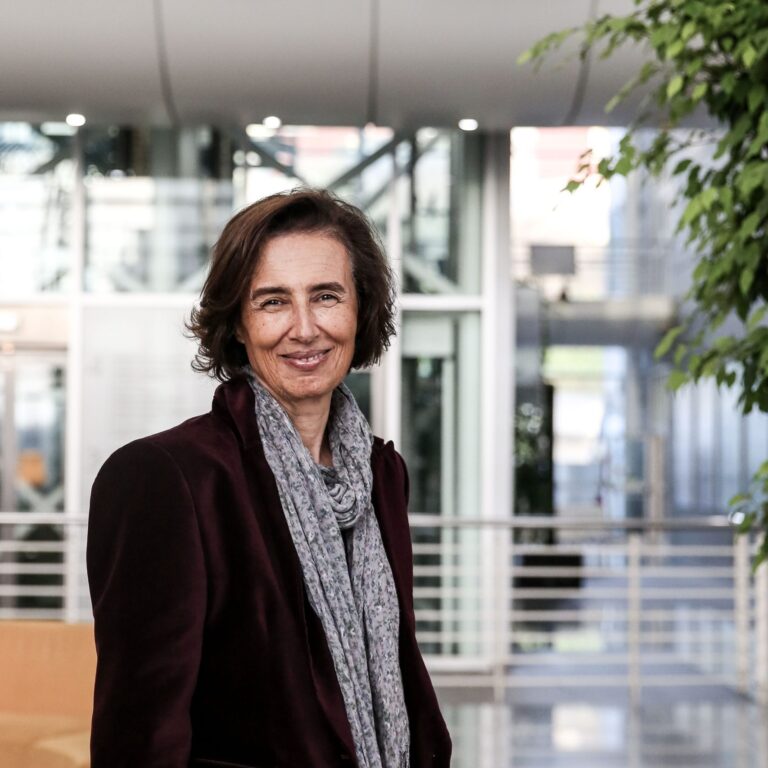
    INESC-ID researcher Isabel Trancoso has been chosen as the recipient of the 2024 International Speech Communication Association (ISCA) Medal for Scientific Achievement. This prestigious award recognizes her “pioneering contributions to speech coding and resources for the Portuguese language, and sustained service to the speech community.”

    The ISCA Medal, established in 1989, represents ISCA’s highest achievement and acknowledges outstanding contributions to speech communication. Isabel Trancoso will be presented with the medal at the opening ceremony of Interspeech 2024 in Kos, Greece. In addition to this honor, she will deliver a keynote speech, about her work in the field and perspectives on past, present, and future of speech communication.

    Isabel Trancoso is a full professor at Instituto Superior Técnico, the former President of the Scientific Council of INESC ID, and also the founder of INESC-ID’s Speech Processing Group, now HLT (Human Language Technologies). She was president of ISCA from 2007 to 2011, and became a Fellow of ISCA in 2014.

    Recently, she has also received the honor of being appointed IEEE Fellow Committee Chair 2024 (learn more here).

    (Photo credits: Expresso Podcast “A Próxima Vaga” © Nuno Fox)