Category: News

  • Integrating post-quantum cryptography technologies into real defence systems – The ORQESTRA project
    Integrating post-quantum cryptography technologies into real defence systems – The ORQESTRA project

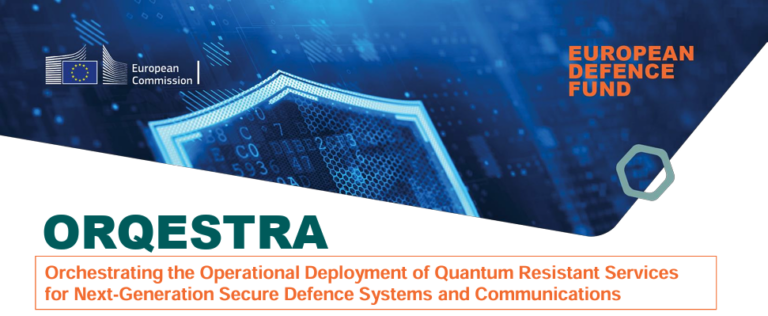
    The results of the European Defence Fund (EDF) 2024 Call for Proposals have recently been published, with the ORQESTRA project, featuring INESC-ID as a partner, among those selected within the topic of Disruptive Technologies – Quantum.

    Orchestrating the Operational Deployment of Quantum Resistant Services for Next-Generation Secure Defence Systems and Communications” (ORQESTRA) started its 36 month long work on December 1st, with a consortium of 19 European partners. INESC-ID’s participation will be managed by Leonel Sousa, researcher in High-Performance Computing Architectures and Systems. With a funding of €436K, the team will oversee the design and development of the trusted computing base (TCB), including the integration of programmable (SW) software optimisations and shared (HW) hardware accelerators, and countermeasures for physical vulnerabilities.

    The overall focus of the project is on integrating post-quantum cryptography (PQC) technologies into real defence systems. By developing SW and HW, it aims to mitigate the gap between computing intensive problems of PQC and the operational deployment of cryptography systems.

    EDF launched the call focused on technologies like Artificial Intelligence (AI), quantum and air defence, with the goal to support projects with the potential to transform the European defence sector.

  • Doubling the Power: SOLAR-MOVE and PVSmile had their kick-off in November

    Doubling the Power: SOLAR-MOVE and PVSmile had their kick-off in November

    The European Parliament has set targets to reduce CO2 emissions from vehicles by 2040. Although Vehicle-Integrated Photovoltaic (VIPV) technologies have the potential to play an important role in this reduction, particularly in the electrification of the road transport sector, there are several challenges in achieving these targets.

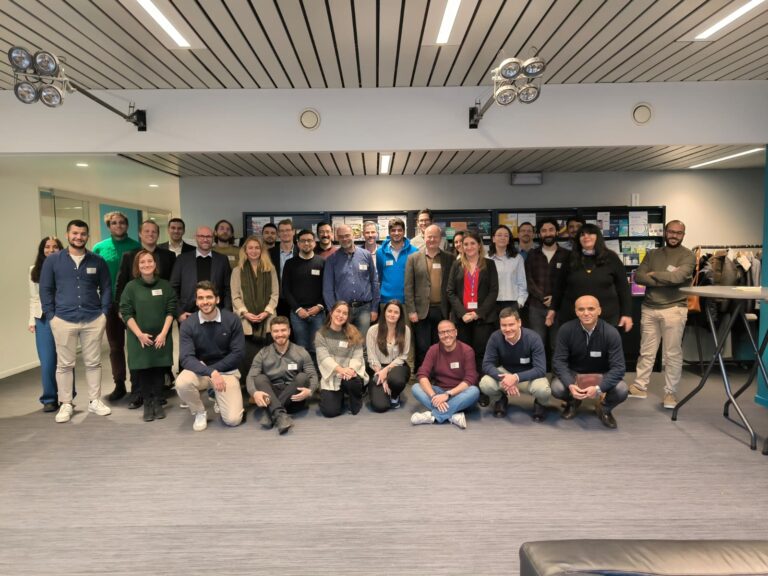
    The “SOLAR Photovoltaic to MOVE for Systems Integration” (SOLAR-MOVE) project aims to tackle these challenges. The project recently had its kick-off meeting in November in Brussels, which counted with over 30 participants. INESC-ID is in charge of coordination, led by Sustainable Power Systems researcher Hugo Morais, with a funding of €678K. Within the INESC sphere, INESC TEC is also a partner in this project.

    SOLAR-MOVE’s goal is to contribute to the massive adoption of electric vehicles (EVs) while minimising their impact on power grids and creating solutions with positive Net Present Value (NPV). Some of these solutions include five different types of VIPV vehicles (heavy-duty trucks, passenger buses, garbage trucks, last-mile delivery vehicles) and motorhomes and five charging stations with photovoltaic.

    In the same week, another energy project, “Digitalising the Lifecycle of Community-Integrated PV Systems for Smart Grid-Ready and Inclusive Energy Communities” (PVSmile), coordinated by the National Technical University of Athens, had its kick-off meeting in Athens. Along with INESC TEC, INESC-ID is also a partner in this project, with a funding of €177K and participation managed by Hugo Morais,

    PVSmile focuses on international collaboration across the Mediterranean region, and aims to accelerate the adoption of smart, community integrated PV systems, fully integrated into energy grids. It will deliver data-driven, value-added energy and non-energy services to key stakeholders across the energy value chain and the PV sector.

    Images | © 2025 SOLAR-MOVE

  • Inês Lynce appointed national co-director of CMU Portugal

    Inês Lynce appointed national co-director of CMU Portugal

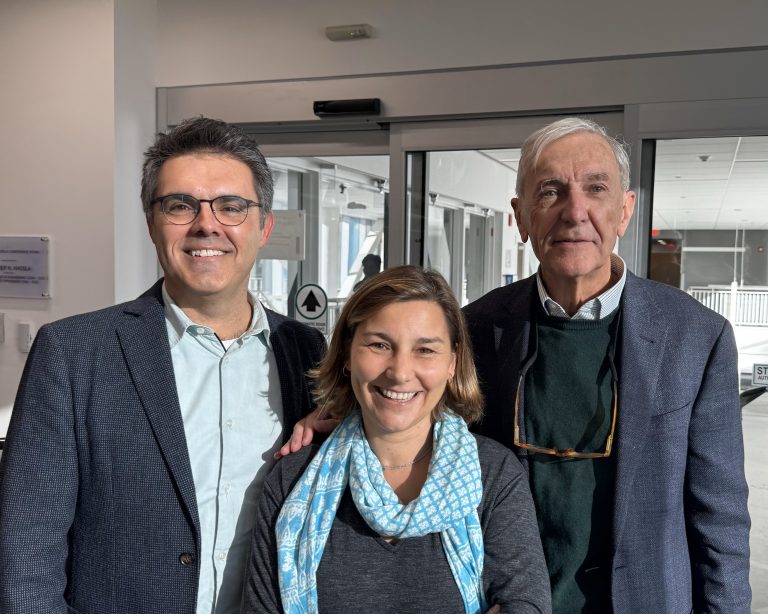
    After being nominated in 2021, Inês Lynce, INESC-ID president of the Board of Directors, has been reappointed, by the Fundação para a Ciência e Tecnologia (FCT), national co-director for Phase IV of the Carnegie Mellon Portugal Program, which will run from 2025 to 2030. The leadership will be shared with fellow co-director João Magalhães, from the Faculty of Science and Technology of NOVA University of Lisbon, working together with director José Fonseca de Moura, professor at Carnegie Mellon University (CMU).

    FCT also appointed national co-directors for other U.S. partnerships, for the MIT Portugal: João Pedro Barreto, from the Faculty of Science and Technology of the University of Coimbra and Alexandre Ferreira Silva, from University of Minho, and for UT Austin Portugal: Rute André, from University of Aveiro and Rui Oliveira, from University of Minho.

    The extension of these partnerships is an opportunity for greater ambition and alignment with the challenges of the Portuguese scientific and technological system, which could translate into a more significant impact on the country’s development.

    It is expected that the new phase will bring “changes in governance, including the implementation of a new model in early 2026 and the establishment of a new mission structure”. This new structure will be chaired by José Manuel Mendonça, President Emeritus of INESC TEC and Professor Emeritus at the Faculty of Engineering of the University of Porto.

    Images | © 2025 CMU Portugal

    *Adapted from the original published by CMU Portugal

  • The return of EV4EU, Shift2DC and U2DEMO to Enlit 2025

    The return of EV4EU, Shift2DC and U2DEMO to Enlit 2025

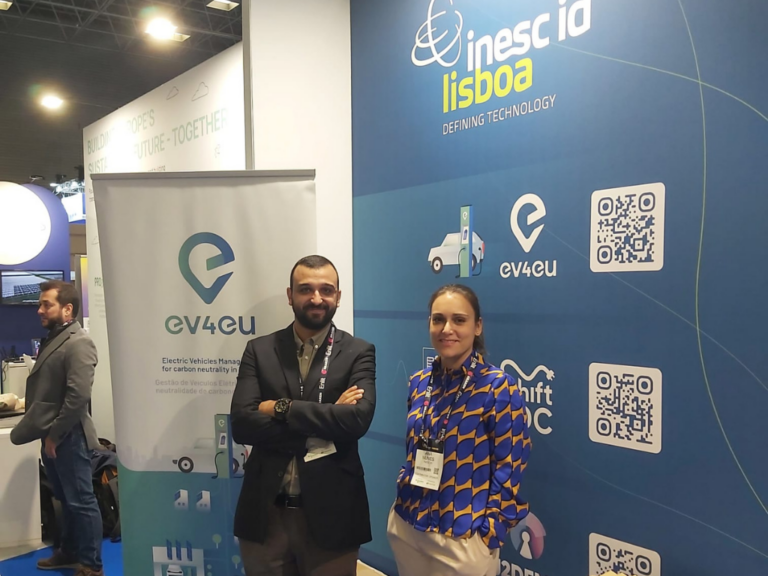
    After last year’s success, EV4EU, Shift2DC and U2DEMO made a comeback to the Enlit Europe, which took place in Bilbao, Spain, from November 18 to 20. One of Europe’s most influential events in the energy sector, Enlit gathered more than 15000 energy professionals to discuss challenges in the sector and allowed visitors to explore projects and companies, while seeing how energy is generated, distributed and consumed.

    Ana Rita Nunes,project manager, and Pedro Costa, researcher in Sustainable Power Systems, were at the INESC-ID booth in the European Projects Zone, sharing the mission and results of three Horizon Europe projects, coordinated by researcher Hugo Morais:

    • EV4EU – development of user-centric V2X management strategies for houses, buildings, parking lots, and EV fleets, that will allow the massive growth of electric vehicles.
    • Shift2DC – a new approach on the way direct current (DC) solutions are used in power systems by creating smarter, more efficient, and eco-friendly energy systems, including ongoing research on Madeira Island and the creation of a DC Digital Port on the island.
    • U2Demo – development of innovative energy management strategies and technological solutions to promote equitable and democratic access to sustainable energy resources, empowering consumers to manage their energy use more effectively, save money, and take control of their energy data.

    Joining our INESC-ID members were fellow partners from key institutions: Asier Aristondo (Tecnalia), Amel Addala Jullien (EDF) and Benedict Mortimer, Dimitrios Baros and Sergio Orlando (Eaton). EV4EU and Shift2DC were also part of the session “Smart Cities: From Buildings to Neighbourhoods and Transportation” along with projects Chronicle, WeForming, BilbOPS, ALRIGH2T, GIANTS and BuildOn.

  • More than a gut-feeling: using AI to analyse the gut microbiome and its impact on menopause

    More than a gut-feeling: using AI to analyse the gut microbiome and its impact on menopause

    There are many places that provide a home for these microscopic communities we call the “microbiome”. One such location is none other than the human gut, where the microorganisms play a crucial role in a range of processes such as metabolism, immunity and even behaviour. The AGEWISE: Unravelling the gut-hormone axis in Women’s Aging, project awarded the 2024 Portugal grant from the Biocodex Foundation and led by Ana Santos Almeida at GIMM-CARE, brought together a multidisciplinary team of researchers from GIMM, INESC-ID, and the Faculty of Medicine of the University of Lisbon to analyse the impact of the microbiome in one specific life stage: menopause.

    The fact that gut bacteria are responsible for metabolising estrogen, the most important hormone during menopause, led to the hypothesis of a connection between this life stage and the microbiome. The methodology begins by assessing behavioural patterns and analysing blood and gut microbiome samples from several women, before and during menopause, to identify the microorganisms and hormones present. At INESC-ID, the team is led by Ana Teresa Freitas, researcher in Information Decision and Support Systems and coordinator of the Life and Health Technology thematic line. The group is using deep learning to develop computational tools that will analyse the biological data and support non-invasive diagnosis.

    In addition, the INESC-ID team is developing risk models to assess colorectal cancer and other potential diseases associated with menopause. The results could help understand if the gut microbiome could serve as a biomarker of symptoms or as a risk indicator of disease. Furthermore, the project team hopes that in the future, it could be modulated to help prevent serious diseases.

    This research is of particular importance for its focus on a condition exclusive to women. With many healthcare studies based mostly on male patients, the information gathered from this research could represent a significant advancement, not only regarding menopause, but also gut-related issues in women’s health.


    © 2025 INESC-ID

    Image | © Pexels

  • INESC-ID brings secure computing to the first Téc4Defence

    INESC-ID brings secure computing to the first Téc4Defence

    At a time when the discussion on Defence is gaining prominence in political agendas in Portugal and across Europe, Téc4Defence brought together for the first time research institutes connected to Instituto Superior Técnico, companies active on the sector, and the Armed Forces to debate the future of Defence and dual-use technologies (for both civilian and military purposes).

    The event, organised by several student groups of Técnico with the objective of strengthening the role of science and engineering in National Defence and integration at European level, featured a full programme of roundtables, company pitches, debates, and technological solutions in development, including demonstrations of real prototypes with practical applications. 

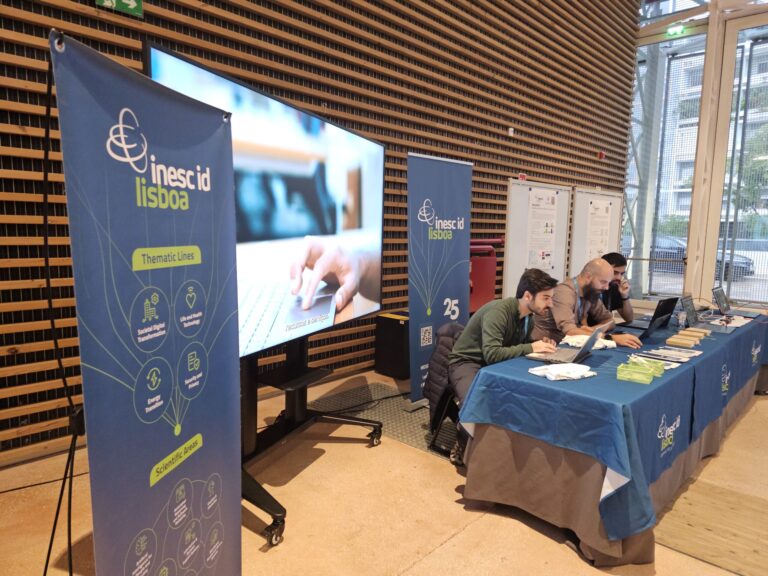
     In the exhibition area, the INESC-ID stand had a strong presence with a team of volunteers from the High-Performance Computing Architectures and Systems (HPCAS) scientific area. Researchers Ricardo Chaves, Nuno NevesJosé Antunes, Pedro Martins, and Manuel Goulão, demonstrated an encryption system for military networks and shared information on two European projects: SEQURED (see article), which develops innovative solutions to protect data from public and private organisations against future quantum-enabled cyberattacks.; and ORQESTRA, which focuses on integrating post-quantum cryptography technologies into real defence systems. 

    Throughout the day, our stand welcomed students, representatives of the Armed Forces, and industry professionals interested in the work carried out at our institute. The exhibition area also featured demonstrations from other research institutes, including INESC-MN, the Institute for Plasmas and Nuclear Fusion (IPFN), and the Institute for Systems and Robotics (ISR), alongside tech companies and the Navy, Air Force, and Army. Together, we showcased work in areas such as security, UAVs, advanced materials, telecommunications, surveillance, and microelectronics.

    See the photo gallery below.

    © 2025 INESC-ID

    Images | © 2025 INESC-ID

  • In the Media: INESC-ID featured in RTP1’s Inteligência Portuguesa

    In the Media: INESC-ID featured in RTP1’s Inteligência Portuguesa

    In an increasingly digital world, changes and shifts are to be expected in the functioning of our society. With this transition in mind, Portuguese television channel, RTP1, has developed 5 episodes that guide viewers through the national technological ecosystem. From healthcare to outer space, the mini-series showcases examples of enterprises in different fields and the opinion of various experts. Among those experts, and with appearances across more than one episode, are INESC-ID researcher and President of the Board of Directors, Inês Lynce and INESC-ID researcher and INESC President, Arlindo Oliveira.

    Arlindo Oliveira shares his predictions for the future, how general-purpose technology has a way of revolutionising society, similar to what happened with the invention of electricity. He believes systems will amplify and enhance efficiency and that although Artificial Intelligence (AI) is experiencing rapid evolution, it’s still far from producing new creative ideas and associating concepts from very different domains.

    With years of research on algorithms, Inês Lynce explains the importance of accuracy and reliable data to train models and highlights how much this research has evolved since the term “Artificial Intelligence” was first used in 1956. She adds that Large Language Models (LLMs) like Chat GPT have the ability to go through an enormous amount of data and adapt their “behaviour”, however, data ethics and the biases present in the very data available to train models are concerns that must be addressed.

    Watch the episodes (in Portuguese) here

    © 2025 INESC-ID

    Image: © RTP1 / Inteligência Portuguesa

  • In the Media: Joana Campos and Helena Moniz discuss critical thinking in the age of AI on RTP’s Sociedade Civil

    In the Media: Joana Campos and Helena Moniz discuss critical thinking in the age of AI on RTP’s Sociedade Civil

    “Do you ever question Waze when driving?” asked the host of RTP’s Sociedade Civil.
    AI is changing our lives: the way we think, our ethics, and our culture. To help reflect and shed light on these pressing issues, INESC-ID researchers Joana Campos* and Helena Moniz**, alongside Luís Moniz Pereira from Nova University, were invited to the recently aired episode on Critical Thinking in the Age of AI. 

    Joana brought attention to how the rapid rise of generative AI is reshaping society, including cognitive abilities such as memory and creativity; and how we need to actively decide which human capabilities we want to preserve, protect, and strengthen as these technologies evolve. 

    Helena emphasised another important dimension: the cultural and linguistic biases embedded in the digital ecosystem, currently dominated by the Anglo-Saxon culture, and the importance of AI platforms that reflect different cultures, languages and contexts. 

    Both researchers warned about the ethical implications of AI, the impact on democracies, and the urgent need for broad AI literacy. “The objective is not to turn everyone into a programmer, but that people know how to use it — because it is here,” says Joana. 

     Watch the full episode on RTP’s Sociedade Civil (in PT) here

    *Joana Campos is an INESC-ID researcher in the Artificial Intelligence for People and Society scientific area (AIPS) and Professor at Instituto Superior Técnico, working at the intersection of AI, human–computer interaction and the computational modelling of cognition and emotion.

    **Helena Moniz is an INESC-ID researcher in the Human Language Technologies (HLT) scientific area and Professor at the Faculty of Letters of the University of Lisbon. She is President of the European Association for Machine Translation, and Chair of the Ethics Committee of the Center for Responsible AI.


    © 2025 INESC-ID

    Image: © RTP / Sociedade Civil


  • Strengthening Partnerships across the Atlantic – Brazil’s MCTI visits INESC-ID

    Strengthening Partnerships across the Atlantic – Brazil’s MCTI visits INESC-ID

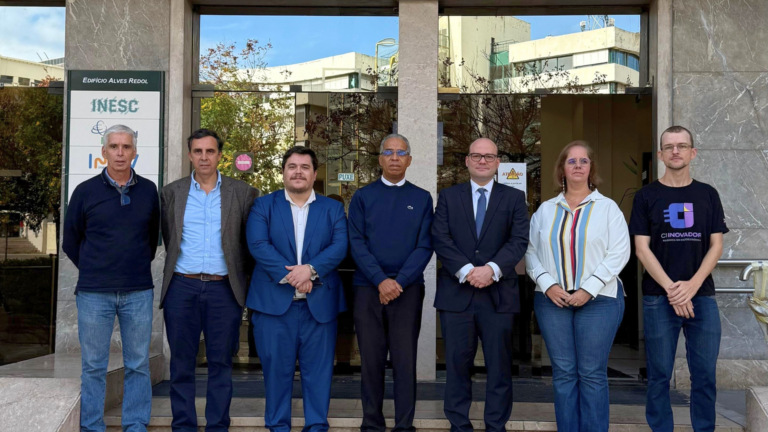
    On November 5, the INESC headquarters were busy with anticipation for an important visit. The Secretary for the Ministry of Science, Technology and Innovation of Brazil, Henrique Miguel, accompanied by diplomat Diego Araújo Campos from the Brazilian Embassy in Lisbon, arrived in Alves Redol premises to learn more about both INESC-ID and INESC-MN’s facilities.

    The purpose of this visit was to showcase development and research activities and to explore opportunities for enhanced cooperation between the two countries, mainly in microchips, Artificial Intelligence (AI) and cybersecurity, potentially paving the way for new partnerships.

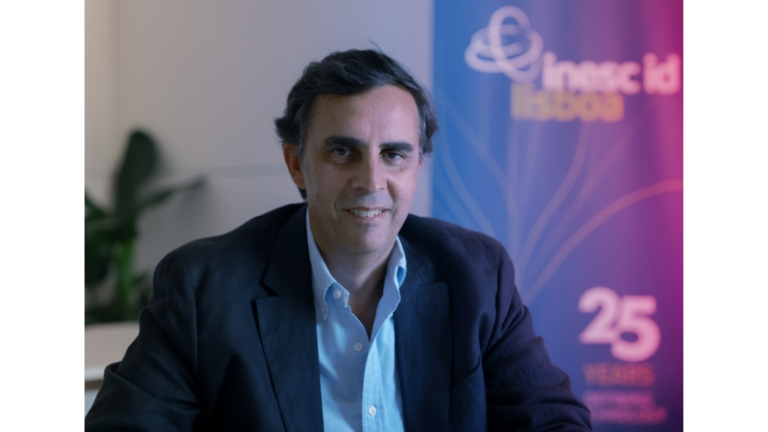
    The visit’s programme started with institutional presentations by Miguel Pupo Correia, researcher and President of the Executive Committee of INESC-ID and Susana Freitas, Executive Director of INESC-MN. Jorge Fernandes, INESC-ID researcher in Nano-Electronic Circuits and Systems gave an overview of the initiative POEMS – The Portuguese Competence Centre in Semiconductors, which aligns with the Brazilian Government’s efforts in the ChipTech programme. Guilherme Paim, INESC-ID researcher in High Performance Computing Architectures and Systems, and the visit’s organiser, presented the results achieved by INESC-ID visiting students at the CI Inovador Polo UFRGS (INOVA-ME), coordinated by Fernanda Lima Kastensmidt and organised by SOFTEX, with the support of Brazilian microelectronics company, Chipus Microelectronics.

    Efforts to strengthen scientific and technological cooperation between Portugal and Brazil have recently led to the signing of a MoU during the XIV Cimeira and to the Seminar of the Luso-Brazilian Agenda of AI. The latter was attended by Bernardo Correia, Secretary of State for Digitalization of Portugal of the Portuguese Republic – XXV Government, and Henrique Miguel, Secretary of Science and Technology for Digital Transformation of Brazil, among several other authorities from both countries.

    © 2025 INESC-ID
    Images | © 2025 INESC-ID

  • In the Media: Innovation from Research to Application, Miguel Pupo Correia’s interview for APDC

    In the Media: Innovation from Research to Application, Miguel Pupo Correia’s interview for APDC

    In an article published in the APDC magazine “Comunicações”, Miguel Pupo Correia, researcher and President of the Executive Committee of INESC-ID, presents the institute, its history, and what it means to conduct research in one of the most relevant entities in the national scientific ecosystem. The piece was produced as part of a dual interview with António Leal, director of INOV, and follows an interview with INESC-TEC, in the previous issue.

    The researcher begins by tracing the story of INESC-ID, from the split of INESC until the present day, going over the four thematic lines and ten scientific areas that define the institute’s research and, of course, the people that make it happen. The article places special emphasis on several INESC-ID projects, including national initiatives such as AI for Public Administration; the Portuguese Chat GPT named Amália; Biodata, a flagship led by INESC-ID in the field of health and biological data analysis; and the EV4EU project, which plays a special role in energy transition.

    “Our DNA is to create top science, while also being connected to society. We work with industry in the most diverse ways.”

    INESC-ID’s impact goes well beyond Portugal, he adds. In addition to hosting a diverse international research team, many researchers conclude their PhD at the institute before continuing their careers across Europe or the United States. Partnerships with american universities like MIT, CMU and UT Austin also serve as contributors to funding and to INESC-ID’s international presence.

    The interview concludes on a positive note, with Miguel Pupo Correia emphasising that the path to success relies on these two key elements: people and projects, and that INESC-ID’s greatest ambition is to continue improving, expanding its societal impact, and creating more talent.

    Read the full article in APDC: here

    Image | © 2025 APDC