Category: News

  • Project to develop quantum communication networks for European Defence
    Project to develop quantum communication networks for European Defence

    The project “Disruptive SDN secure communications for European Defence” (DISCRETION) was one of the 26 projects selected by the European Commission under the 2020 call of the European Defence Industrial Development Programme (EDIDP).

    The DISCRETION proposal, in which Professors Ricardo Chaves, researcher at INESC-ID, and Paulo Mateus, researcher at IT, participate by Instituto Superior Técnico, was even ranked first in the topic of “Cyber ​​situational awareness and defense capabilities, defense networks and technologies for secure communication and information sharing” of the EDIDP 2020 call for proposals (EDIDP-CSAMN-2020).

    The “DISCRETION” project aims at integrating and combining the technologies of software defined network (SDN) and quantum key distribution. This combined with legacy optical networks will build a highly secure, scalable and resilient network control architecture for advanced tactical operation services and create a degree of autonomy for European defence forces.

    Compared with the traditional approach, where the network configuration and management interfaces are typically proprietary and tied to a specific manufacturer, SDN represents a revolution that supports further network evolution, opening it to potentially disruptive technologies like Quantum Key Distribution (QKD) and quantum technologies in general. This technology will reinforce the European Defence’s autonomy in secure communications and will enable European armed forces to also use Radio Spectrum for military activities.

    The members of the consortium are Deimos (coordinator), Instituto Superior Técnico, Instituto de Telecomunicações (IT), Altice Labs, Adyta Lda, Telefonica Investigación y Desarrollo S.A.U, Universidad Politécnica de Madrid, Austrian Institute of Technology GmbH and Nextworks.

    The Técnico team is composed of professors Ricardo Chaves (INESC-ID researcher) and Paulo Mateus (IT researcher). “This project is an important step towards greater collaboration between industry, academia and the government for the improvement of Cybersecurity at national and European level”, stresses professor Ricardo Chaves, coordinator of the “DISCRETION” project at Técnico. Professor Paulo Mateus highlights the importance of the project, once “it allows the participation of Instituto Superior Técnico in the modernization of national and European defence” and “promotes cooperation between IST mathematicians and engineers”.

    Experience shows the potential of the project

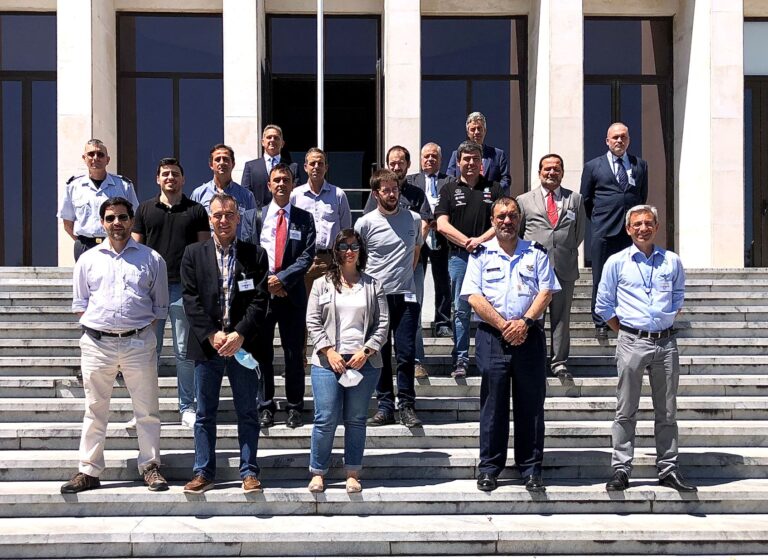
    An application of these technologies was demonstrated in Lisbon on 30th June, with an experimental test supported by the General Staff of the Portuguese Armed Forces (EMGFA), and the National Security Office (GNS). Some of the Portuguese partners in DISCRETION – Deimos, IT, Instituto Superior Técnico and AlticeLabs – have set-up a pioneer experiment, consisting in the interchange of messages between two Portuguese Defence facilities (5km apart from each other) using a quasi-quantum link and fiber optics.

    According to General Rocha, from EMGFA “this experiment allowed to demonstrate the national capabilities of the Portuguese industry, academia and defence internationally, and to start DISCRETION in a perfect time”. Admiral Gameiro Marques, Head of the Cybersecurity group – National Security Office, highlighted “the development of projects of this nature will enable Portugal – and Europe – to have its own technology in these areas, including encryption machines and the respective cryptographic key production processes”.


    Adapted from Instituto Superior Técnico

  • Sentence End and Punctuation Prediction in NLG Text at SwissText2021

    Sentence End and Punctuation Prediction in NLG Text at SwissText2021

    A group of researchers from INESC-ID, in partnership with Unbabel, are one of the winning teams of the Shared Task “Sentence End and Punctuation Prediction” at SwissText2021.

    “This was a very competitive and in the end we are really pleased to be one of the winning teams! For our team this was the icing on the cake, after 1 year of collaboration on the topic of Automatic Rich Transcription (ART)”, mentioned Ricardo Rei, one of the INESC-ID researchers involved.

    7 teams participated, with the “Unbabel-INESC-ID” team taking first place, along with 2 other teams.

    The goal of the shared task was to build models for identifying the end of a sentence by detecting an appropriate position for putting an appropriate punctuation mark. Specifically, we offer the following subtasks:

    Subtask 1 (fully unpunctuated sentences-full stop detection): Given the textual content of an utterance where the full stops are fully removed, correctly detect the end of sentences by placing a full stop in appropriate positions.

    Subtask 2 (fully unpunctuated sentences- full punctuation marks): Given the textual content of an utterance where all punctuation marks are fully removed, correctly predict all punctuation marks.

    Due to the extremely close results of the first three solutions, the evaluators decided to announce the first three high-performing systems as the joint shared task winners.

    “We tried to look at the results from different angles, but couldn’t find any decisive criteria to select a single winner based on the scores. Congratulations to the HTW+t2k, Onpoint, and Unbabel-INESC-ID teams for their fine works” mentioned the organizers Don Tuggener and Ahmad Aghaebrahimian.

    The Unbabel-INESC-ID team is made up of researchers Ricardo Rei, Nuno Guerreiro, Luisa Coheur and Fernando Batista.

  • Digital Anatomy: Applications of Virtual, Mixed and Augmented Reality

    Digital Anatomy: Applications of Virtual, Mixed and Augmented Reality

    New book brings together 2 INESC-ID researchers: Joaquim Jorge and Daniel Lopes and other specialists in a unique interdisciplinary work


    The first book on digital anatomy, written in close cooperation between doctors, anatomists, and computer scientists, addresses Extended Reality applied to Clinical and Surgical Practice through Training and Teaching.

    The book just published by Springer / Nature’s prestigious series of books “Human-Computer Interaction Studies”, edited by two INESC-ID/Tecnico Professors, Joaquim Jorge and Daniel Lopes of Department of Computer Engineering and INESC-ID / Lisbon, in collaboration with Professors Jean-François Uhl of the University Paris-Descartes and Pedro Campos (University of Madeira). The book clarifies the classic approaches with VR, AR, and MR; It presents recent VR, AR, MR systems, techniques, and methods for digital anatomy.

    This book offers readers new insights into extended reality to digital anatomy, a new emerging discipline. The way teachers teach anatomy in the classroom is changing rapidly as new technology-based approaches become increasingly accessible. Recent studies show that Virtual (VR), Augmented (AR), and Mixed-Reality (MR) can improve retention andlearning outcomes.

    “The book is aimed at the scientific, academic and professional research community. It can be used as a textbook, “survey” on the state of the art and seed for new research projects”, says Joaquim Jorge, one of the authors and researcher at INESC-ID.

    Readers will find relevant tutorials on three-dimensional reconstruction techniques to perform virtual dissections. Several chapters serve as practical manuals for students and trainers in anatomy to update or develop their digital anatomy skills. We developed this book as a support tool for collaborative efforts around Digital Anatomy, especially in international and interdisciplinary distance-learning contexts. Our goal is to leverage the source material in this book to support new digital anatomy courses and programs in interdepartmental and interdisciplinary collaborations.

    A work carried out by several hands that resulted in an unusual book that brings together specialists in Anatomy, Informatics and Medicine.

    “The idea came from a collaboration with my colleague Jean-François Uhl that I had the opportunity to meet at a congress organized in Lisbon”, says Joaquim Jorge. “Me and my colleague Jean-françois Uhl were instrumental in exercising the network of contacts that each one of us has in their respective fields and collecting chapters. Daniel Lopes and Pedro Campos helped to recruit reviews and in the process of writing and editing some chapters ”, adds the researcher.


    Joaquim Jorge also tells us how the idea for this book was born:

    “This book came from an idea of mine. I organized the proposal given the experience of writing and editing books for Springer / Nature (it is already the 4th). The proposal was drawn up in 2018 and accepted in 2019. In 2019/2020 we have collected chapters around the world and 2020/2021 were spent on reviewing and reviewing chapters (where Daniel and Pedro Campos helped a lot). The book came out after a seven-month marathon (I planned to finish it on my sabbatical, but the pandemic delayed the process”.

    The book was just launched and more information can be found at https://www.springer.com/gp/book/9783030619046

    “I am very happy with the range of knowledge, skills and approaches that we have gathered in this book, with contributions of great technical level and thematic diversity, which I hope will stimulate / catalyze new lines of research and teaching”, pointed out Joaquim Jorge

  • INESC-ID researchers are among the best scientists in the world in the field of Computer Science

    INESC-ID researchers are among the best scientists in the world in the field of Computer Science

    5 INESC-ID researchers are among the world’s top computer scientists, according to the 7th edition of Top Scientists Ranking for Computer Science & Electronics, released by Guide2Research. Once again, the highest number of Portuguese scientists is affiliated with Instituto Superior Técnico.

    Among the 24 Portuguese computer scientists affiliated with national institutions are 5 INESC-ID reseachers: Ana Paiva, Joaquim Jorge, Luís Rodrigues, Francisco C. Santos and Leonel Sousa. In the list we found another 6 Portuguese scientists affiliated with Instituto Superior Técnico: José Bioucas Dias (IT), Mário Figueiredo (IT), António Pascoal (ISR-Lisboa), José Santos- Victor (ISR-Lisboa),  Fernando Pereira (IT), José Rui Figueira (CEG-IST),

    The list also includes four Técnico alumni: professors Manuela Veloso (Carnegie Mellon University- CMU), José MFMoura (CMU), Pedro Domingos (University of Washington) and João Marques-Silva (Institut Recherche en Informatique de Toulouse).

    The first position of this year’s edition is held by professor Anil K. Jain (Michigan State University). Professors Yoshua Bengio (Université de Montréal) and Herbet Simon (CMU), hold the second and third position respectively.

    Position in the ranking is based on each scientist’s influential contributions based on their h-index from Google Scholar. The h-index threshold for accepting a scientist to be examined is set to 40 provided that most of their publications are in the area of computer science and indexed in DBLP.

    Guide2Research is one of the leading portals for computer science research providing trusted data on scientific contributions since 2015.

    The list aims to highlight the major contributions on Computer Science and Electronics and to inspire researchers, entrepreneurs and decision-makers around the world.

    Source: Adapted from Instituto Superior Técnico

  • José Teixeira de Sousa was elevated to IEEE Senior member

    José Teixeira de Sousa was elevated to IEEE Senior member

    IEEE recently elevated José Teixeira de Sousa to Senior Member of the organization, an honor bestowed only to those who have made significant contributions to the profession.

    IEEE is the world’s largest technical professional organization dedicated to advancing technology for the benefit of humanity.

    “Being elevated to Senior Member means recognition for more than 30 years dedicated to Electrical and Computer Engineering. During this long period of time, I have done quite a few things. Still, I highlight my early contributions to Integrated Circuit Yield Theory (fraction of chips fabricated without defects). Later, my work on reconfigurable hardware (making circuits by electrically programming them) gave rise to 4 international patents and 3 startup companies. I am thankful to many people, but especially to João Paulo Teixeira, who introduced me to Electronics, to Thomas Williams (IBM) and Vishwani Agrawal (Bell Labs) for joint work on Defect Level modelling, to Miron Abramovici (Bell Labs) for being my scientific mentor and dear friend, and finally to my co-worker Horácio Neto (INESC-ID) who is a Chess and Life Grandmaster.”, mentioned the researcher.

    José Teixeira de Sousa is a researcher at the  High Performance Computing Architectures and Systems (HPCAS) at INESC-ID and Professor at the Department of Electrical and Computer Engineering of Instituto Superior Técnico.

  • HATE COVID-19.PT: a project that will automatically detect online hate speech in Portuguese

    HATE COVID-19.PT: a project that will automatically detect online hate speech in Portuguese

    Direct verbal insults. Offensive and insulting words with intent to depreciate. Physical threats to the lives of others or their families. Statistics show that Covid-19 has led to an increase in hate speech.

    Several European and international institutions have issued recommendations on combating racism, xenophobia and homophobia, also alerting to the low level of report and participation. Covid-19 has led to an increase in hate speech towards already vulnerable communities. In response to this problem, FCT – Fundação para a Ciência e a Tecnologia, created a special support – “Impact of the COVID-19 pandemic in the crimes of incitement to hatred and violence and in hate speech”. One of the projects selected includes a Técnico/INESC-ID research team, led by professor Paula Carvalho (Department of Computer Science and Engineering – DEI).

    The main objective of the project “HATE COVID-19.PT -Detecting Overt and Covert Hate Speech in Social Media” is to automatically detect online hate speech in Portuguese. “On the one hand, it is a priority to invest in languages such as Portuguese, whose linguistic resources for mapping hate speech are still quite scarce”, explains professor Paula Carvalho. “On the other hand, we intend to analyse this phenomenon in the Portuguese online community, taking into account the temporal dimension, in order to understand the impact of the pandemic on hate speech, on social networks”, adds the professor.

    The research team intends to study the dynamics of this phenomenon in a specific context, that is why the analysis of hate speech will focus on the pandemic period. “This project will be crucial to assess whether, in fact, the current circumstances have significantly boosted this phenomenon”, and to identify the main targets of hate speech in Portugal, in pandemic times.

    The project, which started on 1st May, will last 10 months and results from a partnership between INESC-ID (proponent entity), Lusa News Agency and the Portuguese National Cybersecurity Center (CNCS). The project has received a total funding of €35,892.

    This project involves the creation of a large annotated corpus from social media, covering the Covid-19 pandemic, which will support the development of a machine learning prototype to detect hate speech and assess its explicitness and intensity, considering the time period and geolocation data. “This prototype will be available to the community, and it can be explored by linguists, communication and social sciences experts, media professionals, among others, in order to monitor, analyse and assess the evolution of hate speech on social media”, says the DEI professor.

    The importance of enhancing the Portuguese language in this field

    The research team involved in “HATE COVID-19.PT” has been focusing on issues that are directly or indirectly related to hate speech, more precisely “irony detection in the media” and, more recently, “the identification of strategies for detecting misinformation, in general, and on social media, in particular”, says professor Paula Carvalho.

    According to the INESC-ID researcher “most studies have focused on direct hate speech, usually including insulting words or expressions”. “Users often express themselves – in an indirect or underhanded way – through linguistic and rhetorical strategies, which difficult speech explicitness”, stresses the Técnico professor.

    “Our team brings together multidisciplinary researchers: natural language processing, artificial intelligence and communication sciences”, says professor Paula Carvalho.

    In addition to professor Paula Carvalho, who is a linguist and works with natural language processing, other INESC-ID scientists are involved in natural language processing and artificial intelligence, as well as a social scientist/DEI professor with an interest in digital media and man machine interaction. Some of these researchers are currently involved in the Contrafake project.

    Knowledge is a major weapon against hate speech

    According to ECRI annual report 2020, racism, racial discrimination and intolerance are growing. “I believe that knowledge is the most effective response to prevent these phenomena”, highlights the INESC-ID researcher. “Therefore, these initiatives promoting research and the advancement of knowledge in such crucial areas are essential to stop this type of crime”, she adds.

    Although the project has an exploratory nature, the team is confident “the results will allow the academic community to monitor and deepen the progress of hate speech, thus promoting the development of research in various areas that focus on this issues”. “In our opinion, the analysis of subsequent studies may guide policy makers and protect the most affected groups”, adds the professor.


    Source: Instituto Superior Técnico

  • Alberto Abad was elevated to senior member of IEEE

    Alberto Abad was elevated to senior member of IEEE

    According to IEEE – Institute of Electrical and Electronics Engineers, “Senior Membership is an honor bestowed only to those who have made significant contributions to the profession”.

    “It’s an honor for me to receive such a recognition from IEEE. The area of human language technologies and speech processing, in which I have been involved for more than 15 years, presents very interesting challenges and applications. I hope this recognition can contribute to promote this area among students, among the local scientific community and also to promote the work we do in INESC-ID and Técnico. I’m very happy to be able to continue contributing every day”, mentioned Alberto Abad.

    A recognition to the researcher of his peers for technical and professional excellence.

    Alberto Abad is an Assistant Professor at the Department of Computer Science and Engineering (DEI) of Instituto Superior Técnico (IST) and researcher at INESC-ID. He is the coordinator of the Human Language Technologies laboratory at INESC-ID and the executive coordinator of the scientific area of Programming Methodology and Technology at DEI. He is also an ISCA member and he has been recently elevated to the grade of IEEE Senior member in recognition for his significant contributions.

    Alberto Abad has developed his research career in the area of human language technologies for more than 15 years. His research interests include robust speech recognition, speaker and language characterization, applied machine learning, health-care applications, and privacy-preserving speech processing and machine learning.

    During these years, Alberto Abad has co-authored over 100 peer-reviewed publications in top-tier conferences and scientific journals of the field. He has been Principal Investigator of FCT funded project VITHEA and INESC-ID representative in the DIRHA European project, Biovisualspeech CMU-Portugal project, and TAPAS ITN. He has also been team member in various Spanish and Portuguese national and international projects, and team leader in international technological evaluation challenges achieving excellent results. He has supervised and co-supervised more than 20 MSc thesis and 1 PhD thesis and lectured in courses at both Technical University of Catalonia (UPC) and IST on a variety of topics, including signal processing, machine learning, programming principles, object oriented programming and compilers. Alberto Abad has been actively involved in research community activities, including conference organization, and closely collaborated with local industry and start-up companies.

  • SparCity: the new collaborative project to create a supercomputing framework

    SparCity: the new collaborative project to create a supercomputing framework

    SparCity, a new EuroHPC Joint Undertaking project, was launched.

    The project aims to build a sustainable exascale ecosystem and increasing Europe’s competitiveness.

    The project involves six player organisations in the area of high-performance computing from Portugal, Germany, Norway and Turkey.

    Recently funded by the European High Performance Computing Joint Undertaking (EuroHPC JU), the highly ranked SparCity just launched. With three years of duration and a total budget of 2.6M€, this collaborative project between 6 partners in 4 countries aims to build a sustainable exascale ecosystem and increase Europe’s competitiveness.

    The main goal of SparCity is to create a supercomputing framework that will provide efficient algorithms and coherent tools specifically designed for maximising the performance and energy efficiency of sparse computations on emerging High Performance Computing systems, while also opening up new usage areas for sparse computations in data analytics and deep learning.

    “When talking about sparse computations, people think of scientific applications, finite element methods, mesh computation, etc. However, this project will also open up new usage areas for sparse computation, including data analytics and deep learning. That is why it is a very impactful project.” says Dr Didem Unat, the coordinator of SparCity at Koç University.

    To demonstrate the effectiveness, societal impact, and usability of the framework, the SparCity project will enhance the computing scale and energy efficiency of four challenging real-life applications that come from drastically different domains, namely, computational cardiology, social networks, bioinformatics and autonomous driving. By targeting this collection of challenging applications, SparCity will develop world-class, extreme-scale and energy-efficient HPC technologies.

    SparCity involves partnerships with Sabanci Universitesi (Turkey), Simula Research Laboratory (Norway), INESC-ID (Portugal), Ludwig-Maximilians-Universitaet Muenchen (Germany) and Graphcore (Norway), with the coordination of Koç University (Turkey).

    “For INESC-ID, SparCity will leverage the efforts on the European low power processing technologies (in particular the European Processor Initiative) and contribute to the realisation of future exascale system architectures based on such technologies” says Prof. Leonel Sousa, Full Professor of the Electrical and Computer Engineering Department of Instituto Superior Técnico, University of Lisbon, and Senior Researcher of the High-Performance Computer Architectures and Systems Research Group.

    “It is thus a great opportunity for researchers at Simula to collaborate with internationally leading experts, through these EuroHPC projects, to bring innovative use of HPC to real-world applications.” says Professor Xing Cai, head of the High Performance Computing department at Simula.

    This is an excellent chance for my team at Sabancı University to share our expertise on HPC and work with great researchers on a challenging project which will hopefully change the way we handle extreme-scale problems using sparse data.” says Dr. Kamer Kaya, from Sabancı University.

    Graphcore is committed to enabling next-generation techniques in AI compute, including innovative approaches to sparsity. Putting new hardware and software tools into the hands of researchers through the SparCity initiative will drive a virtuous cycle of discovery and deployment throughout Europe.” says says Ola Tørudbakken, GM & SVP Systems at Graphcore.

    Read more about SparCity here: http://sparcity.eu/

  • 11th Lisbon Machine Learning Summer School

    11th Lisbon Machine Learning Summer School

    LxMLS 2021 will take place July 7th to July 15th in online format (via zoom and slack). It is organized jointly by Instituto Superior Técnico (IST), a leading Engineering and Science school in Portugal, the Instituto de Telecomunicações, the Instituto de Engenharia de Sistemas e Computadores, Investigação e Desenvolvimento em Lisboa (INESC-ID), Unbabel and Cleverly.

    Click here for information about past editions (LxMLS 2011, LxMLS 2012, LxMLS 2013, LxMLS 2014, LxMLS 2015, LxMLS 2016, LxMLS 2017, LxMLS 2018, LxMLS 2019, LxMLS 2020) and to watch the videos of the lectures (2016, 2017, 2018, 2020).


    Call for Participation

    Important Dates
    —————
    * Application Deadline: May 15, 2021
    * Decision: June 1, 2021
    * Early Registration: June 15 – July 1, 2021
    * Summer School: July 7 – 15, 2021


    Topics and Intended Audience
    —————

    The school will cover a range of Machine Learning (ML) topics, from theory to practice, that are important in solving Natural Language Processing (NLP) problems that arise in the analysis and use of Web data.

    Our target audience is:

    • Researchers and graduate students in the fields of NLP and Computational Linguistics;
    • Computer scientists who have interests in statistics and machine learning;
    • Industry practitioners who desire a more in depth understanding of these subjects.

    Features of LxMLS:

    • No deep previous knowledge of ML or NLP is required, but the attendants are assumed to have some basic background on mathematics and programming
    • Lecturers are leading researchers in machine learning and natural language processing (see speakers)
    • Days are divided into morning lectures and afternoon lab sessions and practical talks (see schedule)
    • The Labs guide will be provided one month in advance. Last year’s guide can be found here
    • A day zero is scheduled to review basic concepts and introduce the necessary tools for implementation exercises
    • Both basic (e.g linear classifiers) and advanced topics (e.g. deep learning, reinforcement learning) will be covered


    Online Format:

    Due to the current COVID-19 pandemic, the 11th Lisbon Machine Learning School will be held online (via zoom and slack). Similar to last year, we are excited for the opportunity to create a virtual school, where you will be able to attend all the lectures, and participate in the Q&As and labs remotely. We will also provide the tools for students to engage with each other remotely. The lectures will also be streamed to YouTube, and will become freely available later in our YouTube channel. The Q&A, labs and social activities will remain restricted to the accepted students only.

    List of Confirmed Speakers
    —————

    LUIS PEDRO COELHO Fudan University | China
    MÁRIO FIGUEIREDO Instituto de Telecomunicações & Instituto Superior Técnico | Portugal
    ANDRE MARTINS Instituto de Telecomunicações & Unbabel | Portugal
    IRYNA GULEYVICH Technical University Darmstat | Germany
    NOAH SMITH University of Washington & Allen Institute for Artificial Intelligence | USA
    SLAV PETROV Google Inc. | USA
    XAVIER CARRERAS dMetrics | USA
    GRAHAM NEUBIG Carnegie Mellon University | USA
    BHIKSHA RAJ Carnegie Mellon University | USA
    CHRIS DYER Google Deep Mind | UK
    ELIAS BARENBOIM Columbia University | USA
    ADELE RIBEIRO Columbia University | USA
    STEFAN RIEZLER Institut für Computerlinguistik, Universität Heidelberg | Germany
    BARBARA PLANK IT University of Copenhagen | Denmark
    SASHA RUSH Cornell Tech | USA

    Please visit the webpage for up to date information: http://lxmls.it.pt/2021

    To apply, please fill the form in https://lisbonmls.wufoo.com/forms/application-form-lxmls-2021/
    Any questions should be directed to: lxmls-2021@lx.it.pt.

  • António Menezes Leitão honored with the Sasada Prize 2021

    António Menezes Leitão honored with the Sasada Prize 2021

    The 2021 Sasada Prize has been awarded to the INESC-ID researcher António Menezes Leitão. António is a senior researcher of the Graphics and Interaction Group at INESC-ID and Professor at Instituto Superior Técnico.


    “I had very good teachers but one of them changed my life: Prof. João Pavão Martins became my mentor and he inspired me to follow his example. Just like he did to me, I have challenged my students to become members of my research group and I have tried to be a good mentor. This prize, honoring Prof. Tsuyoshi Sasada, is thus very meaningful to me, as it tells me that I succeeded in that mission. Obviously, the merit also goes to my students. Through their dedication and friendship, they made it very easy to be a mentor”, mentioned António Menezes Leitão about this recognition.


    From 2019, the Sasada Prize follows the discontinued Sasada Award (awarded from 2007 until 2016), which was instituted in the memory of Prof. Tsuyoshi Sasada (1941-2005), former Professor of Osaka University, co-founder and Fellow of CAADRIA, a prolific researcher and teacher from whose lab over 200 students have graduated, and better known as “Tee” in the community.


    The recipient of this prize is recognized for his sustained record of contributions and their mentoring of others in the research community, demonstrating a significant and lasting impact on computer aided design research. Nominations are called from across the world and this year a rich set was received.


    In making its award, the committee was impressed by the focus of António’s research, the quality of his contributions and, in particular, with the significant number of his research students whom he has supported to attend research conferences widely as they establish themselves in the research community. The committee members can recall the high quality of papers and presentations in these sessions over the years.


    “My work is focused on the development of theories, techniques, and tools that support architects and engineers in the exploration of algorithmic approaches. These approaches can considerably improve the design process and promote the search for better-performing design solutions but require a significant shift in the way we think about design problems. Throughout the years, I have invited students of architecture, engineering, and computer science to help me advance these ideas and, together, we have been producing a lot of interesting research. The Sasada Prize is the recognition, from the CAADRIA community, that this collaboration has been successful and that my students are now part of a new generation of researchers”, add the INESC-ID Researcher.


    The committee has heard from a number of these students who consistently report that he is a committed teacher that is highly sought after and that he is a valued mentor. He has established the research group Algorithm Design for Architecture that welcomes participation from students and young researchers that has developed a strong community committed to design and computation research.


    The awarding committee was composed by Atsuko Kaga (Osaka University), Candy Herr (CAADRIA President) and Tom Kvan (CAADRIA Fellow).