Category: News

  • Project to detect COVID-19 from coughs and speech

    Project to detect COVID-19 from coughs and speech

    What if it was possible to detect whether someone has COVID-19 or not, just from the sounds of their coughing or talking? It sounds like science fiction, but it may soon come true. This is the goal of the project “Detecção de COVID-19 a partir de tosse e fala” (“COVID-19 detection from coughs and speech”), developed by a team of researchers from Instituto Superior Técnico and INESC-ID.

    Using Artificial Intelligence (AI) technologies, the project aims to develop a robust system that helps to identify who is infected with the SARS-CoV-2 virus, through recorded voice and cough. “The main purpose of this project is to be one more clue that can indicate the disease or even be combined with other biomarkers”, highlights the project coordinator, professor Isabel Trancoso, who is also Técnico professor (Department of Electrical and Computer Engineering – DEEC) and INESC-ID researcher.

    Although not yet conclusive, the research carried out around this topic is already getting some exciting answers. Several articles published on the subject suggest the hypothesis that even asymptomatic patients reveal changes in their voice, due to the impact of the virus on the lungs and vocal cords, showing slight differences when compared with a healthy person. Although this difference is not decipherable to the human ear, an AI model may be able to detect it.

    RT-PCR testing is the mainstay in diagnosing COVID-19, and more recently, antigen tests. There are several disadvantages associated with this testing protocol, namely delayed results, due to the increased workload in laboratories and the huge demand. Consequently, there is a growing interest in developing a cheap, immediate and easy to use system that allows to optimize the testing process. This project was created to follow this need and to take advantage of the solid knowledge that already exists about the potential of speech as a biomarker for health, strongly based on AI methods.


    Analyzing speech patterns can help diagnose diseases

    Speaking requires the coordination of numerous anatomical structures and systems. The lungs send air through the vocal cords, which produce sounds that are shaped by the tongue, lips and nasal cavities, among other structures. The brain, along with other parts of the nervous system, helps to regulate all these processes and determine the words someone is saying. A disease that affects any one of these systems might leave diagnostic clues in a patient’s speech.

    The Técnico professor explains “the potential of speech as a biomarker for health has already been identified for diseases that affect respiratory organs, such as simple cold, or sleep apnea; for mental disorders, such as depression, bipolar disorder, autism spectrum; and for neurodegenerative diseases such as Parkinson’s disease, Alzheimer’s disease, Huntington’s disease; or amyotrophic lateral sclerosis, among many other diseases”. Over the past decade, scientists have used machine learning systems to identify potential vocal biomarkers for a wide variety of these clinical conditions.

    The idea for this project comes up right at the beginning of the first lockdown. “Our experience with these diseases clearly pointed to the need to make a great effort to collect an extensive sound data related with COVID-19”, says professor Isabel Trancoso.

    A similar project, carried out by a team of researchers at the University of Cambridge, explored the use of traditional acoustic clues (cepstral coefficients, energy, fundamental frequency, etc.) and clues obtained through transfer learning techniques using neural networks, along with different classifiers for COVID-19 detection. The developed models for COVID-19 detection show that the performance is close 80%, even in users who tested negative for COVID-19, but who also had cough due to cold or asthma.

    According to the INESC-ID researcher, “the results of the various research works on this topic are very promising, but there are still many areas left unexplored”.


    The importance of the community in this project

    The first phase of the project is to collect an extensive dataset with representative examples of speech and simulated coughs and snores from both COVID-19 positive (symptomatic and asymptomatic) and negative individuals (ideally including also participants with respiratory conditions other than COVID-19, such as flu, cold, asthma, etc.).

    These data will be crucial for the development and success of the project, and for this reason the participation of community is essential and warmly appreciated. The challenge of participating in this study extends to the whole society.

    To participate, just follow this link (where you can find the informed consent form), or use the QR code available here.

    The participants will have to supply an audio recording of their cough and snoring, as well as speech – sustained vowel, reading a short text, free description of an image. In addition, participants just need to provide some personal data, namely demographic data – age, sex, mother tongue; health data – date and result of the COVID test (for those who were already tested), symptoms in the last 15 days, chronic diseases or chronic medical conditions, voice disorders. All necessary measures will be taken to ensure the security and anonymity of the data collected.

    After the necessary data is collected, the research team will use signal processing and machine learning techniques to assess the presence of biomarkers indicative of COVID-19 in coughs and speech, and to develop robust systems for the detection of COVID-19. Once properly tested, these systems can be easily deployed as a web tool and/or a mobile application.


    An important screening tool

    The research team do not intend to develop a clinical diagnostic test, but rather a complementary and low-cost test – a simple screening tool – using non-intrusive techniques and whose use does not depend on health professionals. In the future, the effective implementation of this screening tool may be essential to curb the spread of COVID-19 pandemic if, for example, it is used at the entrance of schools or companies/institutions.

    The data collected in this study will also allow to continue studying other diseases that affect the respiratory system. “It is extremely important to have a volume of data that allows us to carry out this study”, stresses professor Isabel Trancoso.

    “My vision is that collecting speech samples will become as common as a blood test”, says the INESC-ID researcher. “It is a ubiquitous signal and can be collected in a non-invasive way, both in person and by teleconsultations”, she stresses.


    Source: Instituto Superior Técnico


  • Artificial Intelligence for COVID-19 chest X-ray diagnosis
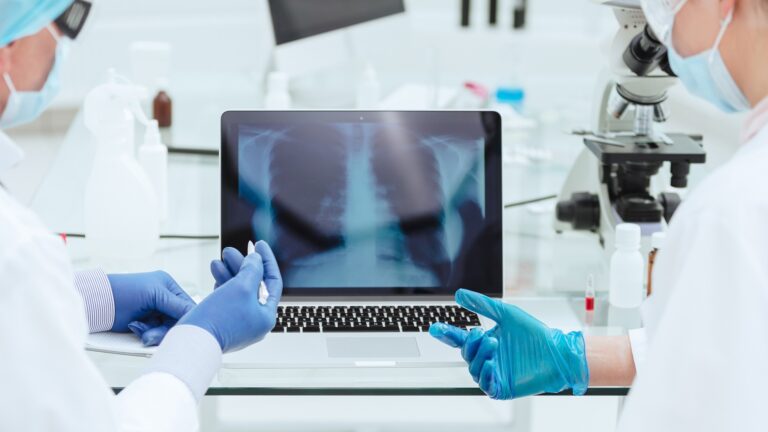
    Artificial Intelligence for COVID-19 chest X-ray diagnosis

    The DeepPathCOVIDx project will allow to develop of a solution that will assist healthcare professionals in the analysis of chest X-ray images.

    A team of researchers from Técnico and INESC-ID, in collaboration with Hospital da Luz Learning Health, is developing a solution consisting of AI models for the analysis of chest radiography of patients suspected of having COVID-19, in an emergency context.

    Besides causing cough, fever and fatigue, the SARS-CoV-2 virus can cause acute upper tract infection. Identifying these clinical cases and prevent worsening clinical conditions is crucial to reduce pandemic deaths. Conventional chest radiography allows the assessment of infection and, consequently, the strategy of monitoring and treating the patient. Chest X-rays can also be used as a complementary diagnostic method, although they are not part of the official protocol.

    Thus, the creation of AI models to identify radiological characteristics of COVID-19 in chest X-ray images allows, together with other clinical information, to help in the decision-making for suspected cases of COVID-19, being an important and useful tool to support the work of healthcare professionals. “The main purpose of this tool is to be able to detect, autonomously, and with a high degree of certainty, COVID-19 on chest X-rays and how severe the disease is”, explains Arlindo Oliveira, Técnico professor and Principal Investigator of the project.

    This tool aims to optimize the work of radiologists, identifying and prioritizing the x-rays of suspected COVID-19 patients in the work list, to assist doctors in an emergency context when radiologists are not available, with a tool for analyzing radiographs, and to increase efficiency in an emergency context, facilitating professionals’ decision making.

    The system is currently being tested “with data from Hospital da Luz and Hospital Beatriz Ângelo”, shares by professor Arlindo Oliveira. “The data provided by our partners will allow us to test the accuracy of the model. If we succeed, it will be included in hospital admissions”, explains professor Arlindo Oliveira.

    The project’s feasibility study should be completed in a few months. The next phase will go through the implementation of the tool in a hospital. Although this phase no longer relies on the research team, professor Arlindo Oliveira believes that “it may be operational a few months after the demonstration is finished”.

    The multidisciplinary team consists of Técnico/INESC-ID researchers in the fields of machine learning and artificial intelligence, radiologists, ER doctors at Hospital da Luz Lisboa and Hospital Beatriz Ângelo, human factors and ergonomics experts, information systems experts and managers. DeepPathCOVIDx was one of the projects funded bythe Portugal 2020 programme. The results will be announced in the first half of this year.

    According to professor Arlindo Oliveira “the collaboration between engineering and medicine is always very fruitful and will play an essential role in medical advances”.


    Source: Técnico

  • New Book by the INESC-ID researcher Andreas Wichert and his PhD student Luís Sá-Couto

    New Book by the INESC-ID researcher Andreas Wichert and his PhD student Luís Sá-Couto

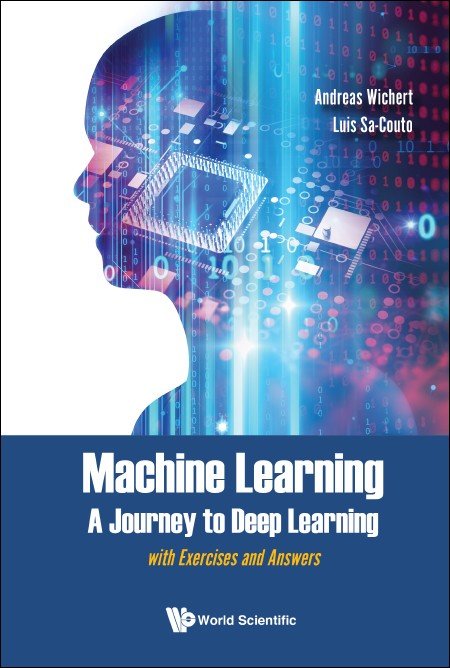
    World Scientific just published the work “Machine Learning — A Journey to Deep Learning”, written by INESC-ID researcher Andreas Wichert and  his PhD student Luís Sá-Couto.

    This unique compendium discusses some core ideas for the development and implementation of machine learning from three different perspectives — the statistical perspective, the artificial neural network perspective and the deep learning methodology.

    The useful reference text represents a solid foundation in machine learning and should prepare readers to apply and understand machine learning algorithms as well as to invent new machine learning methods. It tells a story outgoing from a perceptron to deep learning highlighted with concrete examples, including exercises and answers for the students.

    The book is available here.


    About the authors:

    Andreas Wichert studied computer science at the University of Saarland, where he graduated in 1993. Afterwards, he became a PhD student at the Department of Neural Information Processing, University of Ulm. Since 2006 he is Assistant Professor at Department of Computer Science and Engineering, University of Lisbon where he is as well lecturing about machine learning and quantum computation. His research focuses on neuronal networks, cognitive systems and quantum computation.

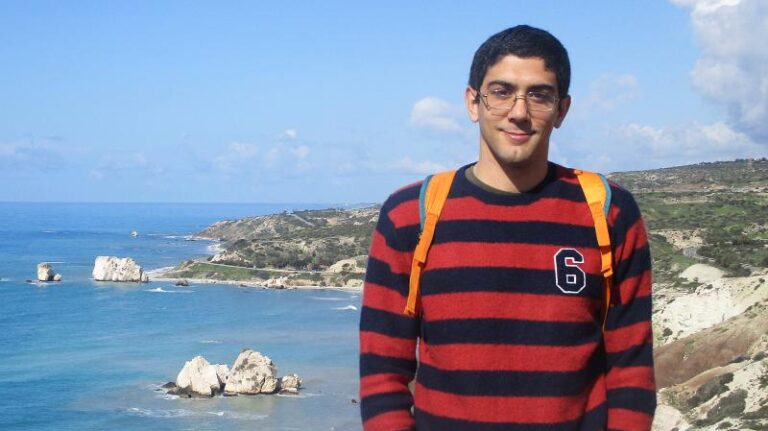
    Luis Sa-Couto studied computer science at the Department of Computer Science and Engineering, University of Lisbon, where he graduated in 2018. Since then he is a PhD student under the supervision of Prof Andreas Wichert with the topic Extending Deep Learning Applicability Through Attention-inspired Networks for Object Recognition. He lectured practical classes in AI and machine learning.

  • Arlindo Oliveira is one of the new members of STOA International Advisory Board

    Arlindo Oliveira is one of the new members of STOA International Advisory Board

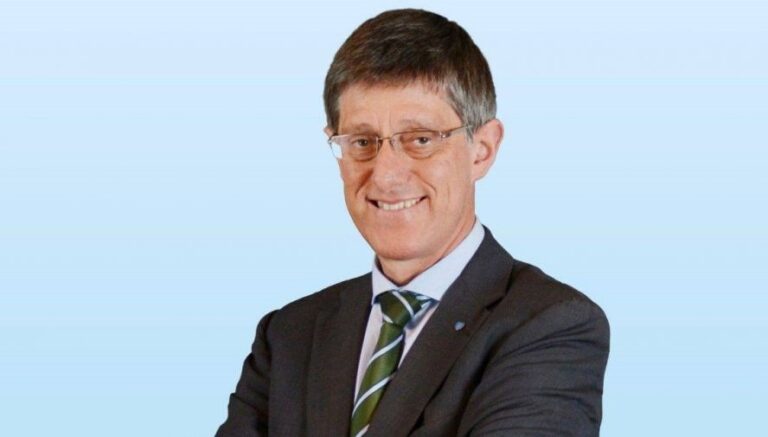
    Arlindo Oliveira, President of INESC and Researcher at INESC-ID was invited to be one of the new members of the STOA (European Parliament Panel for the Future of Science and Technology) Advisory Board.

    “The European Parliament panel for the future of science and technology will define and propose, to the Parliament and to the Commission, the policies and strategies that will be adopted in Europe, for a number of key digital technologies, including Artificial Intelligence, Quantum Computing and Nanotech. It is to me an honor to have been invited to the advisory board of this panel, which will play a significant role in the definition of the key choices and includes a number of people with an enormous experience in the development and adoption of transforming technologies”, said Arlindo Oliveira.

    The also distinguished professor of Instituto Superior Técnico is now part of the list of world-renowned individuals, including personalities from academia, international organisations, the private sector, civil society and think tanks. During the 2020-2024 mandate, the Board will focus in particular upon STOA activities in the area of artificial intelligence (AI), including its Centre for AI (C4AI).

    List of STOA International Advisory Board members (2020-2024 mandate)


    About Arlindo Oliveira

    Arlindo Oliveira is a distinguished professor of Instituto Superior Técnico, with the Department of Computer Science and Engineering. He obtained a PhD from UC Berkeley in 1994, under a Fulbright fellowship, after a BSc and a MSc from IST, in 1986 and 1989, respectively. His major areas of interest are Algorithms and Complexity, Machine Learning, Bioinformatics and Digital Circuit Design. He has worked at CERN, Cadence Laboratories and INESC-ID. He is a member of the Portuguese Academy of Engineering and a senior member of IEEE.

  • Nine INESC-ID researchers are among the most cited top scientists in the world

    Nine INESC-ID researchers are among the most cited top scientists in the world

    Nine INESC-ID researchers are among the most cited top scientists at the top 2% of their respective areas.

    Portugal is represented in this list compiled by Stanford University with 385 scientists affiliated to several national institutions.

    The rankings are based upon a researcher’s citations for both a single year (2019) and cumulative across their careers. Titled “Updated science-wide author databases of standardized citation indicators,” the list uses algorithms that quantify and systematically rank individuals into consistent scientific fields.

    The scores are provided both with and without self-citations to lessen the impact of researchers employing extreme self-citations or the use of citation farms (small clusters of researchers massively citing each other’s work).

    Ranked within the careerlong citation impact list are these INESC-ID researchers:

    The article and list of leading scientists can be consulted at: https://journals.plos.org/plosbiology/article?id=10.1371/journal.pbio.3000918

  • Alumnus Paulo Martins received the Cor Baayen Young Researcher Award

    Alumnus Paulo Martins received the Cor Baayen Young Researcher Award


    Paulo Martins was awarded an honorable mention "Cor Baayen Young Researcher Award", by the European Research Consortium for Informatics and Mathematics (ERCIM).
    
    Paulo Martins finished his PhD in 2019 "Arithmetic and Algorithms for Emerging Cryptography" under the guidance of Leonel Sousa at INESC-ID and currently holds positions at Samsung R&D Institute United Kingdom. He was one of the distinguished in a total of 13 finalists of this special award, which annually recognizes the promising work developed by a young researcher in the fields of computing and mathematics.
    
    Paulo Martins revealed that the distinction surprised him, since this is a “very competitive prize”. “I see this mention as a validation of my doctoral thesis and cause for enthusiasm for future work”, he says. Emphasizing the importance of the award “in the area of ​​computer science and applied mathematics”, Paulo mentions that he has “a special appreciation for this contest” since its founder “stimulated research in the area of ​​cryptography, which is one of my main research interests ”.
  • Researchers team on top 5 in International Timetabling Competition

    Researchers team on top 5 in International Timetabling Competition

    The 4th edition of the International Timetabling Competition took place during the last year and brought together researchers and enthusiasts from 57 countries to solve complex scheduling problems.

    From all the participants, only 15 teams managed to solve the competition instances, among which is a team of Portuguese researchers from IST / INESC-ID. The team composed by the Ph.D. student Alexandre Lemos, and Professors Pedro Monteiro and Inês Lynce, managed to collect 79 points and reach a place on top 5.

    The great challenge of this competition was to schedule the timetables of large universities with different characteristics and restrictions. The competition instances were obtained from 10 different universities from 9 different countries spread across 5 continents. The competition is now over, however, the work goes on and the results are continuously compared within the scientific community on the competition website.

    The ITC 2019 ranking can be consult here.

  • Artificial Intelligence and COVID-19: new research project between HL Learning Health, IST and INESC-ID

    Artificial Intelligence and COVID-19: new research project between HL Learning Health, IST and INESC-ID

    The goal is to create AI models to assist in the analysis of thoracic radiographies in patients in a context of emergency.

    A consortium integrating Hospital da Luz Learning Health, Instituto Superior Técnico (IST) and INESC-ID has an innovative project in progress, with the purpose of developing a solution composed of artificial intelligence (AI) models for the analysis of thoracic radiographies undertaken by patients in hospital emergency units, estimating the probability of presenting the characteristics of covid-19 infection. In case of high probability, the models enable to estimate the degree of severity of the disease.

    The early identification and characterization of patients with covid-19 in emergency units is crucial to provide the best health care, the thoracic radiography being a complementary global means of diagnosis, which is fast and easy to perform. The creation of these AI models, applied to the analysis of thoracic radiographies in patients in emergency units, assists, in combination with further clinical data, the medical professionals in the detection of suspected cases of covid-19.

    The aim is to respond to the following needs:

    1. Optimize the work of radiologists, identifying and prioritizing in work schedule those radiographies suspected of covid-19;
    2. Assist physicians of other specialties in the context of emergency, when radiologists are not available, with a tool for the analysis of thoracic radiographies;
    3. Simplify the decision making for health professionals in the definition of the clinical protocol.

    This project is being developed by a multidisciplinary team of radiologists, physicians from the emergency services of Hospital da Luz Lisboa and Hospital Beatriz Ângelo, specialists in ergonomics and human factors, researchers in the areas of machine learning and artificial intelligence, specialists in information systems and managers. The project is financed under the program Portugal 2020 and results will be presented during the first semester of 2021.

  • CESAER appoints Arlindo Oliveira as ERA & EEA Envoy

    CESAER appoints Arlindo Oliveira as ERA & EEA Envoy

    Our researcher Arlindo Oliveira was recently appointed CESAER’s envoy on the European Research Area (ERA) and the European Education Area (EEA).

    The appointment ensures CESAER association ongoing and strong commitment to the shaping of the ERA and the EEA, through positions ‘Towards a truly reinforced European Research Area’ and ‘Towards a dynamic European Education Area driven by excellence’, which provide concrete recommendations in response to the European Commission’s communications on the topics earlier this year.

    Know more here.

  • Team led by researcher Rui Henriques in top 3 at EDP University Challenge

    Team led by researcher Rui Henriques in top 3 at EDP University Challenge

    Team advised by INESC-ID Researcher Rui Henriques has participated in the 2020 edition of the EDP University Challenge and conquered a place in the top 3.
    Daniel Marques de Castro, Miguel Trinca and João Aparício da Costa presented the work “Vehicle Smart Grid based on a Multi-Agent System”.
    This project aims to “manage the cost of changing charging stations, minimize the number of unused charging stations minimize waiting time of vehicles to charge”.