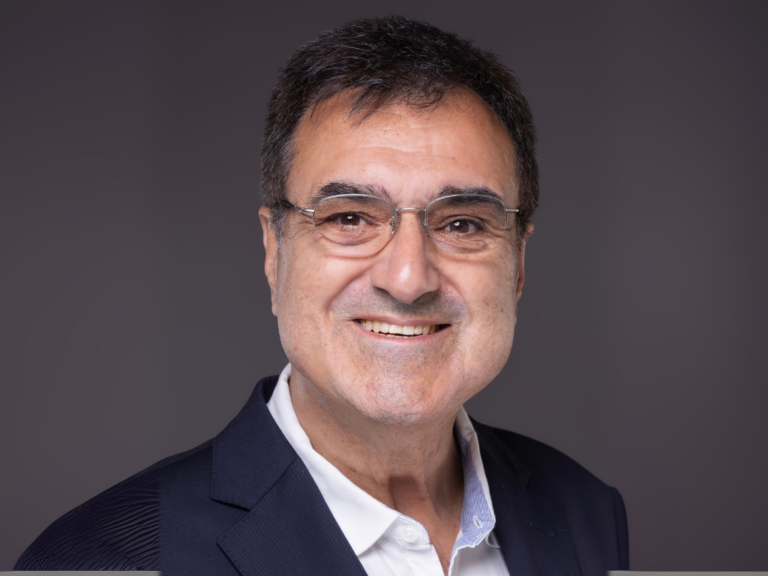
INESC-ID researcher Joaquim Jorge, from the Graphics and Interaction scientific area, has been elected President of the IEEE Computer Society for 2027, after serving on the Society’s Board of Governors and leading multiple initiatives in the field of computing.
A long-time contributor to the IEEE community, he was previously named an IEEE Distinguished Visitor, received the Golden Core Recognition in 2024, and was inducted into the IEEE VR Academy. He currently serves on the Society’s Publications Board.
The IEEE Computer Society is the world’s largest organisation of computing professionals, supporting over 375,000 members worldwide.
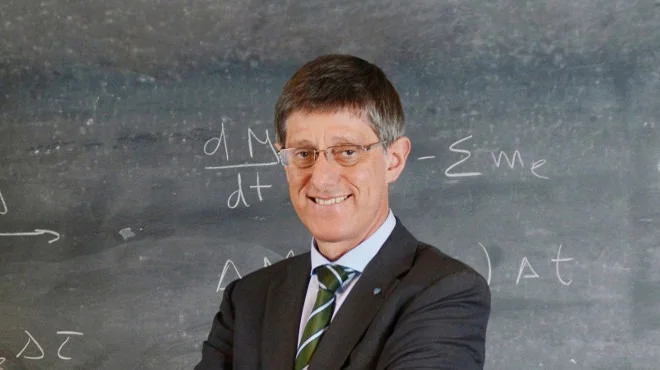
“Will artificial intelligence systems of the (near or far) future be capable of creating new knowledge?” is the central question in the most recent opinion article by Arlindo Oliveira*, INESC-ID researcher and professor at Instituto Superior Técnico, published in Público, one of the main national newspapers.
In this article, the researcher highlights recent advancements in Artificial Intelligence (AI) and Large Language Models (LLMs), emphasising their growing impact on society. As these models become increasingly complex, the question remains whether they will someday be able to create entirely new concepts.
Arlindo Oliveira states that the general opinion remains deeply divided, with some experts firmly believing that the models will never go beyond predicting probabilities. However, others argue that this technology will eventually surpass statistics and be responsible for creating new knowledge. This breakthrough could mean a drastic change in how science is conducted in the future, ushering close collaboration between human and digital scientists.
*Arlindo Oliveira is an INESC-ID researcher in the Information Decision and Support Systems area and president of INESC. He is also Full Professor at Instituto Superior Técnico in the Department of Computer Science.
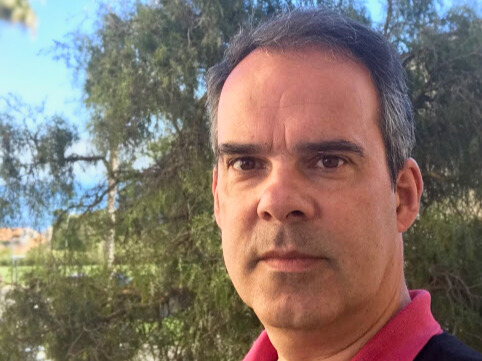
“Is this the end of the science that we need?” That’s the question Luís Caires*, INESC-ID researcher and professor at Instituto Superior Técnico, raises in a recent opinion piece for Público, one of Portugal’s main national newspapers. The article addresses the Portuguese government’s announcement to dissolve the Fundação para a Ciência e a Tecnologia (FCT) and the Agência Nacional de Inovação (ANI), replacing them with a new agency.
Luís Caires voices concern about the plan to merge these institutions into a new agency, a move with serious implications for national science policy and at odds with earlier government commitments. He points to the crucial role FCT has played in shaping the Portuguese scientific ecosystem and defends the ongoing relevance of its core mission.
The researcher also highlights the distinct timelines and logics that govern science and innovation, stressing the complexity of their relationship. He warns against simplistic views and against growing disinvestment in fundamental research, which he considers just as essential as applied research in building a resilient and future-ready scientific system.
*Luís Caires is an INESC-ID researcher in the IDSS scientific area, ERA Chair Holder under H2020 BIG. He is also Full Professor at Instituto Superior Técnico in the Department of Computer Science and founding Director of the NOVA Laboratory for Computer Science and Informatics.
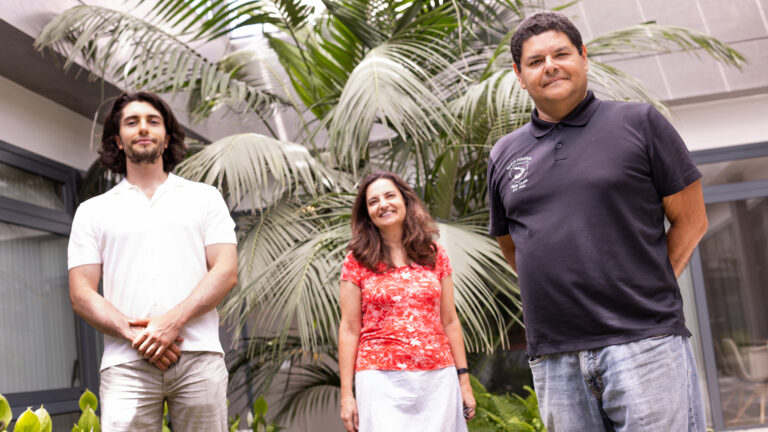
INESC-ID PhD student Filipe Altoe, MSc student Sérgio Pinto, and researcher Sofia Pinto, also a Professor at Instituto Superior Técnico, are behind a new fact-checking AI model that was recently featured in national media, including Expresso, Observador, and SIC Notícias.
The article, presented last week at the international conference IJCAI 2025 in Montreal, proposes an AI model that automates the complex process of verifying information, helping journalists respond faster to digital misinformation, with full transparency and without replacing their judgement.
The model was tested with the collaboration of more than 100 professional journalists, who helped validate its functionality and the quality of its explanations.
This work exemplifies INESC-ID’s ongoing research in trustworthy and explainable AI, advancing methods that make artificial intelligence more transparent and reliable.
Read the article on Expresso: here Read the article on SIC Notícias: here
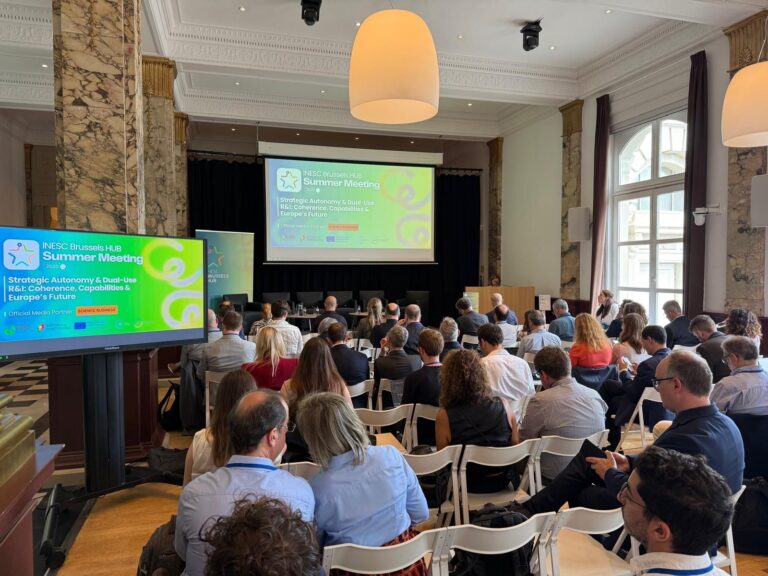
Last month, the BIP Meeting Centre, in Brussels, hosted the 2025 INESC Brussels Hub Summer Meeting, which brought together over 200 participants, including researchers, EU policymakers, and industry leaders. From June 25 to 26, the high-level policy and strategy forum, organised by INESC Brussels Hub, addressed Europe’s most pressing research and innovation policy changes, from strategic autonomy to the role of dual-use research in Europe’s future.
The two-day event featured plenary and breakout sessions and foresight dialogue, promoting critical reflections and discussions focused on a singular policy challenge: “How can Europe design research and innovation strategies that are resilient, integrated, and capable of securing both prosperity and security in an era of uncertainty?”
“This meeting offers INESC-ID a unique opportunity to strengthen its international reputation, align its research with European policies, and enhance its relevance and visibility within the INESC community and beyond,” remarks our President of the Board Inês Lynce, who represented INESC-ID at the event, alongside Ana Teresa Freitas, Arlindo Oliveira and João Paulo Carvalho.
Ana Teresa Freitas moderated Breakout B1: Health, Cyber and Sensors for Societal Resilience, which explored possible contributions to societal resilience, particularly in potential civil protection and defence contexts, through advanced sensing, AI and simulation tools.
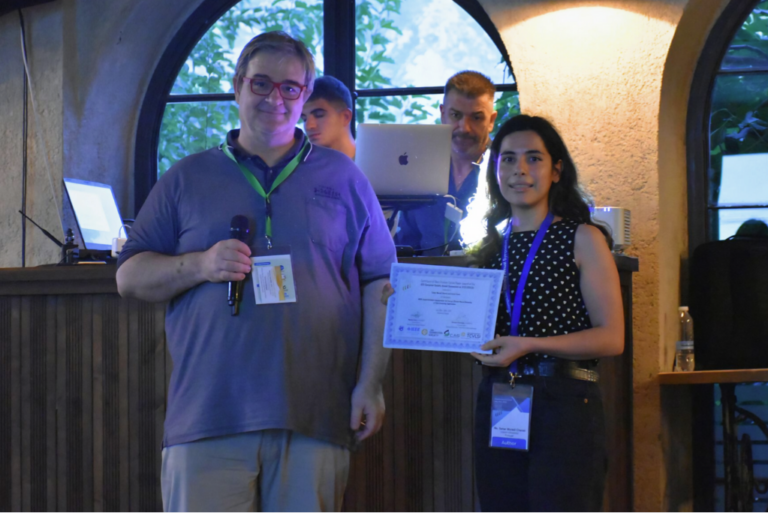
Sahar Moradi Cherati, one of our PhD Students in High-Performance Computing Architectures and Systems (HPCAS) was awarded the “Best Student Paper Award” during the IEEE Computer Society Annual Symposium on VLSI (Very-large-scale integration).
Sahar’s work “MSDF-Based Hardware Accelerators for Energy-Efficient Neural Networks in Edge Computing Applications”, is co-authored by her supervisor HPCAS researcher Leonel Sousa. It explores a new approach to designing Multiply-Accumulate (MAC) units using Most Significant Digit First (MSDF) arithmetic. The goal is to enhance neural network performance on edge devices by minimising latency and effectively managing energy and area constraints.
“It’s encouraging to see this work recognised, and I’m grateful for the support and guidance I’ve received throughout this work.” adds Sahar.
For over three decades the Symposium has been a unique forum promoting multidisciplinary research and new visionary approaches in the area of VLSI. The 2025 Symposium explores emerging trends and novel ideas and concepts covering a broad range of topics, from VLSI circuits, systems and design methods, to bringing VLSI design to new areas and technologies. This year it was co-located with the event “Empowering Women in Hardware & Chip Design: Challenges & Success Stories” organised by #SMART4Women.
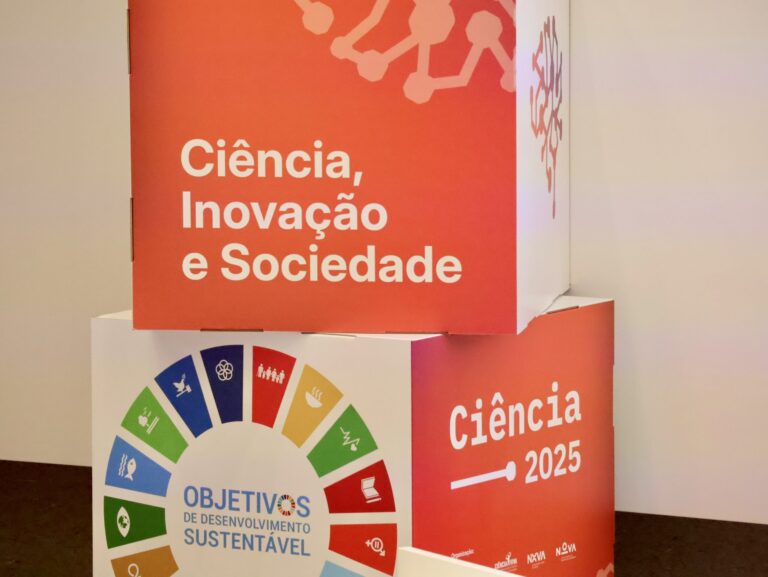
In a fractured, fast-changing world, Europe is facing urgent questions about security, sustainability and technological sovereignty. At Encontro Ciência 2025, Portugal’s largest annual science and technology gathering, we brought those questions into the room.
Held from July 9 to 11 at NOVA SBE in Carcavelos, this year’s edition explored the theme “Ciência, Inovação e Sociedade”, bringing together researchers, policymakers, and institutions to discuss the future of science in society. The European Commission was the official guest of honour, represented by high-level officials in the fields of science and innovation.
INESC-ID contributed with a flagship panel, joining voices from across the INESC network to ask a vital question: what role should research play in Europe’s resilience, autonomy, and defence?
Strategic Autonomy and Defence
At the heart of INESC-ID’s participation was the panel “The Role of Research in Resilience, Strategic Autonomy and Defence in the EU”, organised and moderated by Silvia Castro, Head of the Innovation Management Office. The session focused on Europe’s current challenges, highlighting how the INESC institutes are stepping up in response to shifting priorities, emerging risks, and a growing role for public research.
Defence was an unavoidable theme (a clear sign of the times) and many research areas were framed through that lens. But the conversation didn’t shy away from the deeper challenge: how can research serve both security and society without losing its compass? This focus was illustrated by presentations on dual-use technologies spanning cybersecurity, nanoelectronics, energy, health, and photonics.
The session featured contributions from Nuno Santos (INESC-ID), Nuno Cruz (INESC TEC), Carlos Henggeler Antunes (INESC Coimbra), Nazua Costa (INOV-INESC), and Susana Cardoso de Freitas (INESC MN), each presenting concrete examples of research underway and aligned with EU and national priorities.
It also drew on several insights, presented by João Claro (INESC TEC), from the recent INESC Brussels HUB Summer Meeting 2025, which gathered researchers, EU policymakers, and industry leaders to discuss strategic autonomy and the role of dual-use research in Europe’s future.
“The INESC Brussels HUB Summer Meeting showed how essential it is to have spaces for critical reflection, especially as we face growing geopolitical complexity and a rapidly changing research and innovation ecosystem,” remarked Silvia.
AI, Policy, and Education
Beyond the resilience agenda, INESC-ID contributed to a range of other thematic sessions: Rui Henriques joined a discussion on how artificial intelligence is reshaping the agri-food sector, boosting efficiency, sustainability, and competitiveness from farming to food distribution.
Helena Moniz participated in a panel on science-informed policymaking, where the Science4Policy initiative organised by PLANAPP was presented. The session highlighted how Portugal is positioning itself at the forefront of connecting research and public policy, with Helena noting that “initiatives like FCT’s Science4Policy calls are globally innovative” and that “we often fail to see what we’re good at in Portugal.”
Finally, the “Engenharia para Todos” (Engineering for All) initiative – a partnership between INESC-ID, Instituto Superior Técnico and Câmara Municipal de Oeiras – helped connect science with wider audiences. Science Manager Maria João Verdasca presented an e-poster on the programme’s outreach model, while students from the C4 Science Club of Carnaxide showcased their Smart City project: a tangible example of how engineering education and hands-on science can promote civic engagement, creativity, and early contact with advanced technologies.
From strategic autonomy to smart cities, INESC-ID’s participation at Encontro Ciência 2025 showed how our work is addressing pressing societal needs by connecting research across fields and institutions.
“Just like last year’s session, which brought together diverse perspectives from across the INESC institutes on a common theme”, added Silvia, “this initiative was also an excellent opportunity for networking and strengthening inter-institutional ties” – a reminder that in complex times, collaboration is as vital as innovation.
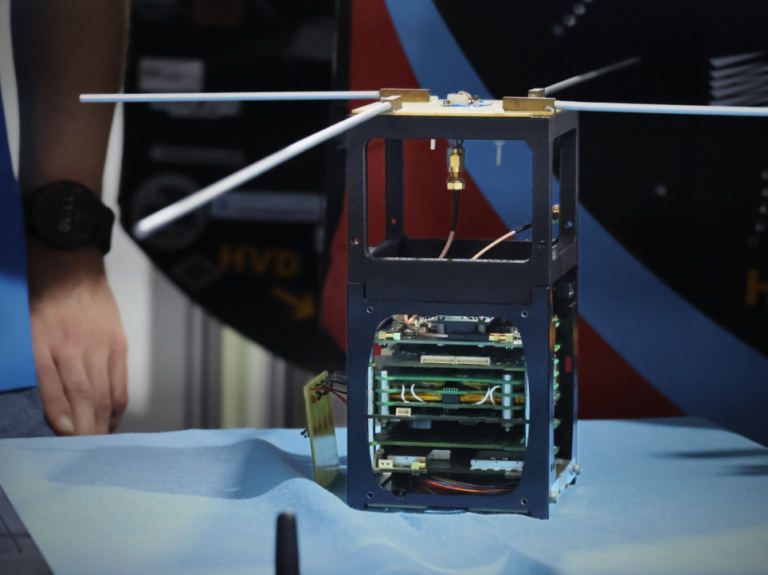
One year ago, Portugal launched its first university satellite into space, aboard the European Space Agency’s (ESA) Ariane 6 rocket, with the mission of testing its ability to detect aircraft in remote areas.
The commemorative event took place this July 9 at the Central Atrium of Técnico – Oeiras Campus, gathering institutional partners, space sector specialists, and members of the academic community to celebrate this milestone and reflect on the future of Portuguese aerospace engineering. The program included presentations by Rui Rocha, project coordinator and co-founder of NanoSat Lab; Rogério Colaço, president of Técnico; Joana Mendonça, vice-president of Técnico – Oeiras Campus; and Pedro Patacho, Education Councillor of the Municipality of Oeiras.
Floating at 580 km above Earth’s surface, in low orbit, the satellite has gone around our planet a total of 5500 times, 1460 of which passed right above the Técnico – Oeiras campus, its home base. It was not, however, always an easy journey. The team faced an unexpected obstacle, as the reception of signals from orbit turned out to be challenging due to inherent problems related to the connection between the radio and transmission antennas. To solve this, the team of around 50 Técnico students, teachers and researchers had to resort to building giant antennas until additional ground stations were established. With the help of radio amateurs, these efforts proved successful.
The project received financial support of INESC-ID, Instituto Superior Técnico, the Instituto de Telecomunicações (IT), at the Instituto de Engenharia Mecânica (IDMEC). It also involved the participation of members of the Instituto de Sistemas e Robótica (ISR-Lisboa), as well as the support of several companies linked to the sector.
Summer is in full swing, bringing with it warm sunshine that lasts until 9 pm. On one such day, our PhD students held their final Meetup before the slower months of July and August.
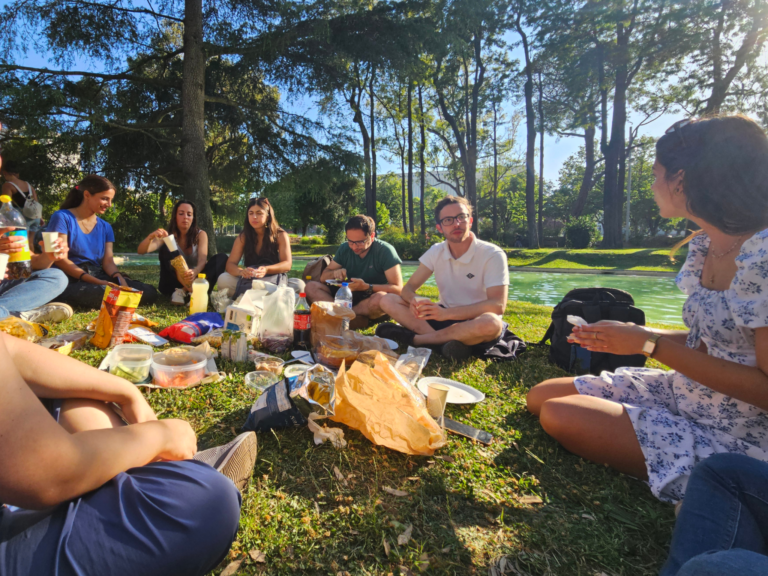
The garden at Campo Grande was the preferred meeting point, and on July 3, around 20 INESC-ID PhD students gathered near the lake. Although the rest of the week saw scorching temperatures, this particular day was perfect for a picnic. Popcorn, chips, small cakes, tortilla, and even healthier snacks like carrots and cucumber were laid out in the centre of the circle formed by the students, creating an enjoyable evening to wind down after work.
In addition to casual conversation, there was also time to reflect on the previous meetings, sharing both ups and downs. From technology transfer to mental health, these initiatives have had a great impact on the community, with everyone agreeing that the PhD student room, inaugurated back in April, was a huge success.
We will be back with more Meetups in September!
* INESC-ID PhD Students Meetups are informal gatherings designed to support and connect our doctoral researchers. Created by the Communications and Outreach Office, the series offers space for community building, peer exchange, personal and professional growth, and insight into the wider opportunities of the PhD journey.
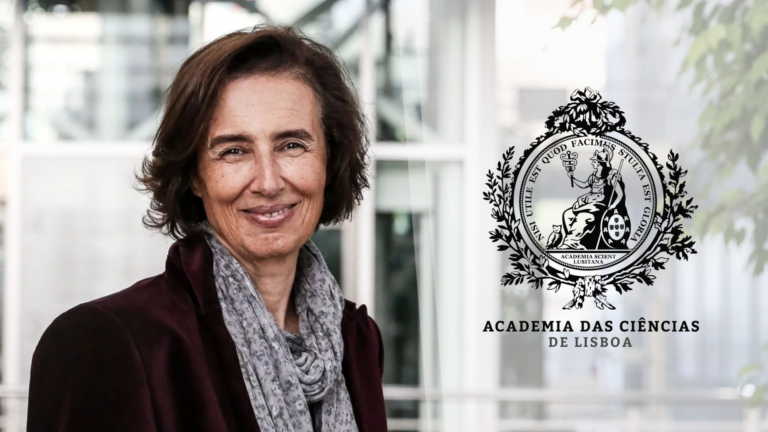
Isabel Trancoso, senior researcher at INESC-ID, founder of the Human Language Technologies area, and full professor at Instituto Superior Técnico, has been elected a corresponding member of the Lisbon Academy of Sciences. She will join the Science Class, 8th Section – Information Sciences and Technologies. The official swearing-in ceremony will take place on July 3, ahead of the Academy’s annual celebrations on July 4.
Founded in 1779, the Lisbon Academy of Sciences is one of Portugal’s oldest scientific institutions. It promotes interdisciplinary research, cultural heritage, public education, and civic discourse, and serves as an official advisory body to the Portuguese state in matters of language and scientific policy. Members are elected from among Portuguese citizens with a significant body of scientific or literary work, and are expected to contribute to the Academy’s intellectual and institutional activities, including plenary sessions and the work of their respective sections.
Her election follows recent appointments of other INESC-ID researchers, including Arlindo Oliveira (2024) and José Borbinha (2023), highlighting the institute’s continued presence and influence within national science policy and academic leadership.