Category: News

  • AMALIA, giving voice to Portuguese identity through Artificial Intelligence

    AMALIA, giving voice to Portuguese identity through Artificial Intelligence

    Few expressed pain and longing with the intensity of Amália Rodrigues, the iconic fado singer who became a symbol of Portuguese cultural identity. Her voice, her language, and her emotion are all part of a legacy that continues to shape Portugal’s artistic and emotional landscape. Drawing inspiration from that deep cultural well, AMALIA (Automatic Multimodal Language Assistant with Artificial Intelligence) is the name chosen for the first Portuguese Large Language Model (LLM) designed from scratch to reflect and preserve the richness of the Portuguese language and identity – with INESC-ID playing a crucial role, particularly in the area of speech processing.

    Derived from the Latin word for “fate,” fado conveys a broad spectrum of emotions, from heartbreak and nostalgia to joy and resilience. Similarly, AMALIA is being designed to understand, process, and generate content in European Portuguese, capturing nuances in both language and culture. “This tool will serve a wide range of applications across essential sectors such as education, media, science, cultural heritage, and public administration”, anticipates INESC-ID researcher and Professor at Técnico, Alberto Abad, from Human Language Technologies.

    A strategic national investment

    Supported under Portugal’s Recovery and Resilience Plan (PRR) and coordinated by the Foundation for Science and Technology (FCT), AMALIA is being developed by a national consortium of top academic and research institutions. This includes Universidade de Lisboa, via Instituto Superior Técnico, Universidade NOVA, the Universidade do Porto, Universidade de Coimbra, Universidade do Minho, and the national laboratories NOVA LINCS, IT, INESC TEC, CISUC/LASI, and ALGORITMI/LASI. Experts from the University of Beira Interior and the University of Évora are also contributing.

    Under the coordination of Alberto Abad, INESC-ID’s contribution focuses on multimodal language processing, particularly the integration of spoken language. This means AMALIA will not only be able to interpret text but also receive and process speech and images – giving it “ears” and “eyes,” with the “brain” generating accurate and contextually aware text responses.

    Unlike commercial AI models primarily optimized for global markets, AMALIA is trained from the scratch using resources such as Arquivo.pt and is specifically tailored for European Portuguese. It will be open source and designed to operate in closed and secure environments, ensuring data protection and reinforcing national technological sovereignty.

    AMALIA will serve as a strategic asset for Portugal – not just as a language model, but as a digital guardian of linguistic and cultural heritage. In an age when companies tend to prioritize broader language variants like Brazilian Portuguese, AMALIA’s focus on the European variant is both a cultural imperative and a technical challenge.

    Filling a niche

    By September 2025, the consortium aims to release a public version of the model. A first internal version was successfully launched on March 31, 2025, already capable of engaging in contextual conversations and demonstrating knowledge of Portuguese culture and language.

    “AMALIA will not replace general-purpose models like ChatGPT”, Alberto Abad underlines. “Instead, it fills a vital niche: delivering specialized, context-sensitive responses in domains where language, culture, and data privacy matter.” Its potential spans education, public service, cultural preservation, and more.

    As Fernando Pessoa once said, “My homeland is the Portuguese language (A minha pátria é a língua portuguesa).” With AMALIA, that homeland now has a voice in the digital future. One that speaks, understands, and respects its unique identity.


  • INESC-ID secures 14 new FCT-Funded Projects to Drive AI, Data Science, and Cybersecurity in Public Administration

    INESC-ID secures 14 new FCT-Funded Projects to Drive AI, Data Science, and Cybersecurity in Public Administration

    After having two exploratory research projects (ERPs) approved in the Call for Exploratory Projects in All Scientific Domains 2023, INESC-ID recently had eight more projects approved by FCT, in the Call for the 2024 program in “Artificial Intelligence, Data Science and Cybersecurity of relevance in Public Administration”. 

    This call will be fully funded by the Recovery and Resilience Plan (PRR) and aims to support the launch of a programme of R&D projects aimed at the development and implementation of advanced Cybersecurity systems, Artificial Intelligence, and Data Science in Public Administration. 

    The projects will be focused on optimising resources and combating fraud and error, leading to continuous improvements in public services and mutual knowledge exchange between Public Administration and the National Science and Technology System (SNCT). This initiative is expected to accelerate the digital transformation of science and support services within the SNCT, while contributing to the increase of both national and international competitiveness of science and technology.

    INESC-ID had the following projects approved in three different thematic areas:

    Artificial Intelligence and Data Science

    • “OptiGov: Leveraging AI for Process Efficiency in Public Administration” 

    PI: Alessandro Gianola

    Public Administration processes usually face challenges in compliance, particularly in aligning contractual specification documents with legal guidelines. To optimise and manage this complexity, the OptiGov project will harness the power of Data Science and Artificial Intelligence (AI), to introduce a method, enhanced with Large Language Model techniques, that will align specification documents and the meta-level guidelines dictating how the processes should be.

    • “Sarcoma Clinical Data Integration with AI-Driven Automation for the National Oncology Registry”

    PI: Emanuel Gonçalves

    The SARC-RON-AI project aims to develop an LLM-based (Large Language Model) system to efficiently process EHRs (Electronic Health Records), automating data submission for the southern regional oncology registry, Registo Oncológico Regional Sul (ROR-Sul). A prototype will be delivered, designed to operate within the real-world clinical context, thus improving Public Administration institutions.

    • “EquiVet.AI: An AI Assistant for Veterinarians in Equine Practice”

    PI: Luísa Coheur 

    EquiVet.AI proposes user-friendly non-invasive tools for the diagnosis of allergic diseases in horses, improving veterinary care and leveraging LLMs to generate reports from medical notes. The development of these tools will consider feedback from veterinarians, ensuring that the AI models are well-aligned with their needs, with the goal of facilitating their integration into daily workflows and promoting AI literacy within the community.

    • Artificial Intelligence in Tribunal” 

    PI: Ricardo Ribeiro

    This project aims to enhance some of the capabilities of the IRIS initiative, a previous collaboration between INESC-ID and the Supreme Court of Justice (STJ), and to improve two of the three resulting apps, currently used by STJ. It will address challenges such as entity extraction, structure identification, summarisation, classification, and case analysis support. The ultimate goal is to increase efficiency, effectiveness and consider a broader context for the use of these application, including other national courts, the High Council of the Judiciary (CSM), and courts of Portuguese-speaking African countries (PALOP).

    • “WebCAP: Web Data Collection via Automated Program Synthesis” 

    PI: José Santos

    Web scrapers are programs used for the challenging process of parsing and retrieving information scattered across web pages, and although useful, their development and deployment are complex, error-prone and time-consuming. WebCAP will address this challenge by leveraging recent advancements in programming language and machine learning, to introduce a novel framework capable of automating the creation of web scrapers. It will be particularly focused on scrapers tailored to collect data relevant to the Portuguese public administration, improving the formulation of public policies across various sectors.


    Cybersecurity

    • “WELL – Wallet for ELectronic heaLth records” 

    PI: David R. Matos

    The main output of the project will be combining cloud storage and a blockchain to create the WELL platform, composed of a repository to store EHRs (Electronic Health Records), and a wallet, to manage the EHRs of the patients. While the application will be designed for patients, medical professionals, insurance companies, and researchers, EHRs can only be shared with the consent of the patient, empowering the users with immediate access to and control over their health data.

    • “InfraGov: A Public Framework for Reliable and Secure IT Infrastructure” 

    PI: João Ferreira 

    InfraGov aims to develop an innovative solution for automated error and vulnerability detection and repair in software configuration and infrastructure code. The project involves collaboration with INESC-TEC, Agência para a Modernização Administrativa (AMA), Instituto de Gestão Financeira e Equipamentos da Justiça (IGFEJ), and Entidade de Serviços Partilhados da Administração Pública (ESPAP). As public administrative services transition to digital platforms, this outcome will significantly reduce the incidence of system failures and security breaches, improving the reliability and security of IT infrastructures.

    Interaction design and design of digital and physical systems

    • “Pediatric Palliative Care Support System”

    PI: Helena Galhardas

    The expected result of PiCaSSO is an integrated digital platform for the registration, characterisation, and monitoring of children and young people with Complex Chronic Diseases (CCDs) and palliative care needs in Portugal. This characterisation and monitoring will be essential to effectively stratify and organise the delivery of palliative care for these children and establish a care network supported with well-specified data.

    Besides these, INESC-ID is also a collaborator in six other projects, all in the thematic area of Artificial Intelligence and Data Science.

    More information about the Call (in Portuguese) here.

  • INESC-ID Stands out in ACM CHI Conference

    INESC-ID Stands out in ACM CHI Conference

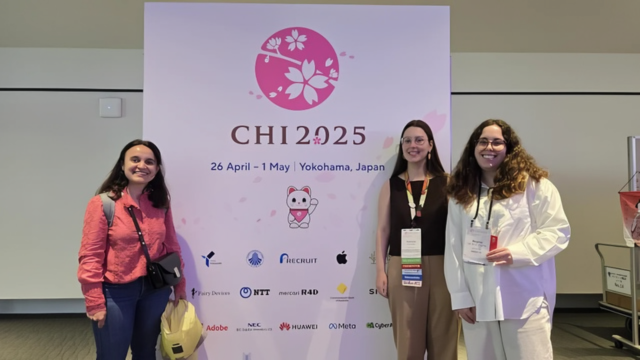
    Our institute made waves last week during the ACM (Association of Computing Machinery) CHI 2025 conference on Human Factors in Computing Systems, with several contributions presented.

    Patrícia Piedade, Artificial Intelligence for People and Society (AIPS) PhD student and Rui Prada, AIPS  researcher, co-authored a paper that received an honorable mention, placing it in the top 5% of submissions. In addition, three other papers, co-written by INESC-ID researchers, were presented at the conference. It is worth noting that one of these articles was solely authored by women, including AIPS PhD student, Regina Duarte and AIPS researchers Ana Paiva and Joana Campos; an inspiring example of the growing presence of women in computer science. Isabel Neto, former INESC-ID researcher authored two of the papers mentioned.

    ACM CHI is the world’s most important conference on human-computer interaction, where researchers and practitioners present cutting-edge work on how people interact with digital technologies. It is held annually and in 2025 it took place from 26 April to 1 May in Yokohama, Japan.

  • INESC-ID researchers receive ACM SIGSOFT Distinguished Paper Award at ICSE 2025

    INESC-ID researchers receive ACM SIGSOFT Distinguished Paper Award at ICSE 2025

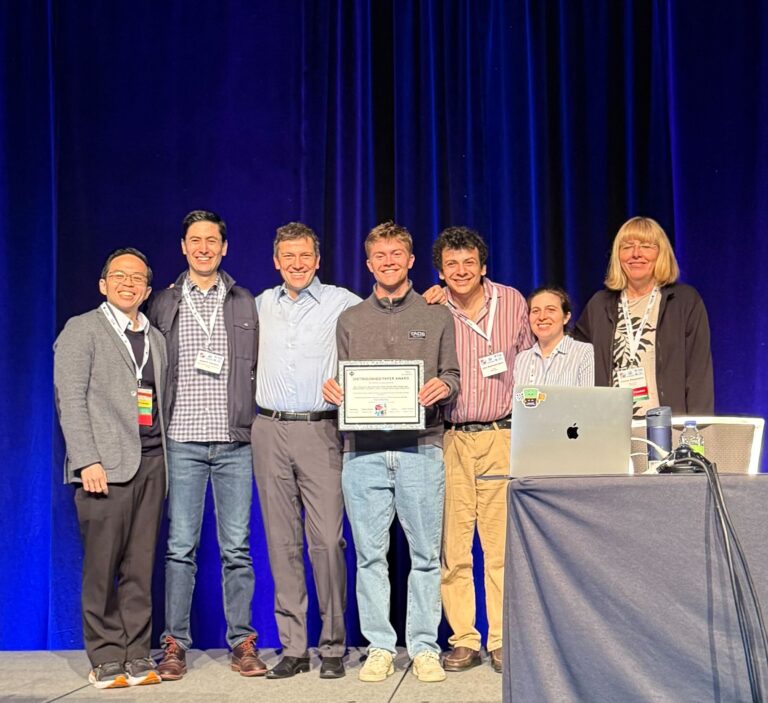
    João F. Ferreira, INESC-ID researcher and professor at the Department of Computer Science and Engineering (DEI) at Instituto Superior Técnico, and Nuno Saavedra, PhD student and INESC-ID researcher, have received the prestigious ACM SIGSOFT Distinguished Paper Award at the International Conference on Software Engineering (ICSE) 2025—the premier global event in software engineering.

    The award-winning paper, titled Rango: Adaptive Retrieval-Augmented Proving for Automated Software Verification,” presents a novel approach to proof synthesis using machine learning and large language models (LLMs), enhanced by retrieval augmentation techniques. Rango introduces a dynamic, adaptive system that identifies and integrates relevant proofs and premises at each stage of the software verification process. This allows the tool to tailor its reasoning to both the specific project and the evolving state of the proof itself.

    The effectiveness of Rango was demonstrated using a newly curated dataset, CoqStoq, which contains more than 2,200 open-source Coq projects. The tool successfully synthesized proofs for 32% of theorems, marking a 29% improvement over previous state-of-the-art systems—an impressive leap forward that could help make formal software verification more accessible and practical for developers.

    This significant achievement is the result of a strong international collaboration with the research including researchers from the University of California San Diego, the University of Massachusetts and Pedro Carrott, a former MSc student at Técnico, supervised by João F. Ferreira and presently at Imperial College London.

    The ACM SIGSOFT Distinguished Paper Award is reserved for papers of exceptional quality presented at ICSE, and this recognition reflects both the scientific impact and collaborative excellence behind the work.

  • In the Media: Women in Science and Engineering. Inês Lynce participates in article for Diferencial

    In the Media: Women in Science and Engineering. Inês Lynce participates in article for Diferencial

    “If you asked me who I admire: I admire my women colleagues.” – these were the words of INESC-ID’s President of the Board and researcher, Inês Lynce in a recent article published on Diferencial, the newspaper by Instituto Superior Técnico students, where the challenges and lessons of being a woman in science and engineering were discussed. 

    To highlight the increasing presence of women in these fields, Diferencial brought together three women of reference, DEI and INESC-ID’s Inês Lynce, DEEC’s Helena Ramos and COSTAR’s Rita Santos, to share their perspectives on what it means to be a woman in computer science, electrical engineering and physics, respectively. Throughout the discussion, they acknowledged that men and women often have different approaches in professional settings. Women may often face a sense of natural insecurity and are more aware of their limitations, which can lead to more cautious and reserved behaviours. Furthermore, to make their voices heard, women often need to be more assertive and “louder” than their male colleagues in order to effectively communicate their ideas.

    Inês Lynce, who studied at Instituto Superior Técnico (IST) and is now a full professor, noted that the percentage of women starting their studies in computer science has barely risen, which she describes as a “frightening” scenario. Greater diversity in science is essential because it enriches the field by incorporating a variety of perspectives, regardless of gender, a notion that all participants agreed on. As our researcher stated, “If all computer science is made by men, we’re in trouble, right? Games will remain masculine, as will apps”. On a positive note, there is now increased recognition and awareness of the issue, and efforts are already underway to ensure equal opportunities for everyone, an important step towards greater inclusion.

    Besides the challenges acknowledged, the three researchers expressed a strong sense of professional fulfilment, emphasising their excitement to learn more in their respective fields each day. Inês Lynce concludes that when choosing an academic and professional path, the most important factor is, “regardless of whether you are a boy or a girl, is that you make an informed decision and that you like it”. For women, she highlights the importance of “being proud of being a woman”.

    Read the full article, in Portuguese, here.

  • In the Media: Fixing the system, not the women. Ana Teresa Freitas writes in Público, on Girls in ICT Day

    In the Media: Fixing the system, not the women. Ana Teresa Freitas writes in Público, on Girls in ICT Day

    On International Girls in ICT Day, Ana Teresa Freitas, INESC-ID researcher and President of the Department of Computer Science and Engineering (DEI) at Instituto Superior Técnico, published an opinion article in Público that highlights a persistent and often overlooked issue in the digital transformation: the underrepresentation and under recognition of women in Information and Communication Technologies (ICT).

    The researcher, that has been actively involved in this subject, begins by reminding readers that the history of ICT is rich with the contributions of pioneering women. From Ada Lovelace, who wrote the first algorithm, to programming pioneers like Grace Hopper, Ida Rhodes, Jean Bartik, Kathleen Antonelli, and many others, women have played a foundational role in shaping the digital world. Yet their names are often left out of the narrative, and their legacies remain under-celebrated.

    Despite this long-standing contribution, Ana Teresa points out that women and girls continue to be a minority in ICT, not because of a lack of ability or interest, but because of structural and cultural barriers that persist in education, hiring, promotion, and workplace environments. Too often, efforts to address this imbalance have focused on encouraging women to adapt to male-dominated models of behaviour and success—what she calls “fixing the women.” Instead, the author argues, we must fix the system.

    “The rules of the game need to be rewritten,” Ana Teresa insists, “so that success no longer depends on fitting into outdated moulds but on valuing diverse profiles and work styles.” Diverse teams, she explains, are more innovative and better equipped to design solutions that reflect the needs of diverse populations. In a sector where talent is scarce, attracting and retaining women isn’t just about fairness, it’s a competitive imperative.

    There are, however, reasons for optimism. In 2024, 40% of PhD theses defended at DEI were presented by women.

    “Talent has no gender, and the technology of the future needs every brilliant mind. It’s up to all of us to fix the system so that this talent is not wasted, but empowered.”

    The article is available here (under paywall).

  • INESC-ID contributes to Europe’s digital autonomy in High-Performance Computing and AI through the DARE Project

    INESC-ID contributes to Europe’s digital autonomy in High-Performance Computing and AI through the DARE Project

    INESC-ID is one of 38 partners involved in a major European effort to build a sovereign computing infrastructure through the new project DARE SGA1 – Digital Autonomy with RISC-V in Europe.

    Our contribution will be on the project’s software ecosystem, in collaboration with INESC TEC, with a focus on optimizing performance for RISC-V architectures – an open-source, modular instruction set architecture that enables anyone to design custom processors without licensing fees, promoting technological independence and innovation. And also integrating HPC and AI applications, and enabling co-design approaches between hardware and software teams.

    Backed by €240 million in funding from the EuroHPC Joint Undertaking, the project marks a strategic step toward reducing Europe’s dependence on non-EU hardware and software in the fields of High-performance Computing (HPC) and Artificial Intelligence (AI).

    Coordinated by the Barcelona Supercomputing Center (BSC-CNS), DARE SGA1 will design and develop next-generation processors and a full software ecosystem based on RISC-V, an open standard instruction set architecture. The initiative’s goal is to create a fully European HPC technology stack to support scientific research, industrial innovation, and public-sector digital infrastructure.

    “INESC-ID’s long-standing expertise in computer architecture and HPC positions us well to support this ambitious European initiative,” said Leonel Sousa, INESC-ID researcher, responsible for the Portuguese participation in Dare, and professor at Instituto Superior Técnico.

    The first three years of DARE SGA1 will focus on building three RISC-V-based chiplets: a general-purpose processor (led by Codasip), a high-precision vector accelerator (led by Openchip), and an AI inference engine (led by Axelera AI). These components will form the backbone of Europe’s future supercomputing systems, offering greater energy efficiency and scalability than traditional monolithic chips.

    “There’s no AI without HPC”, notes Leonel Sousa. “At the core of the project lies Europe’s ambition to become self-reliant in semiconductor and chip design. It’s crucial to reduce our dependency on foreign chip supply”, underlines the researcher.

    DARE SGA1 is the first phase of a six-year roadmap to secure Europe’s digital autonomy in HPC and AI infrastructure. The project is expected to lay the groundwork for the EU’s first fully sovereign supercomputing system by the end of its initial phase.

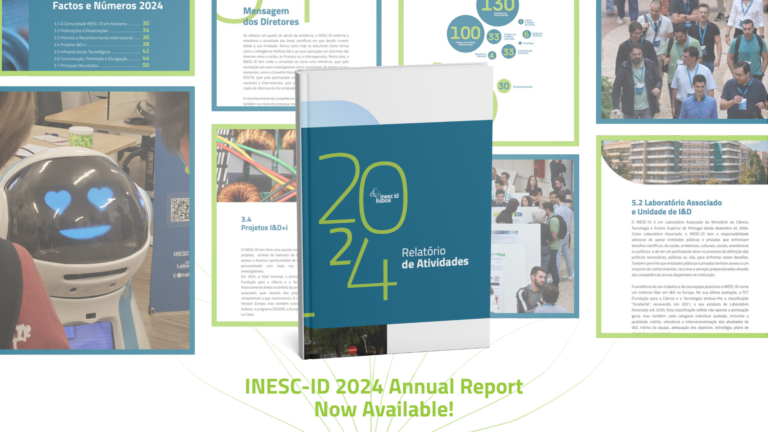
  • The INESC-ID 2024 Annual Report is Out!

    The INESC-ID 2024 Annual Report is Out!

    INESC-ID is proud to release its latest Annual Report, compiling the main achievements of 2024.

    Inside the report, you can read the story of our organisation, along with an overview of our structure, mission, strategy, and the latest facts and figures that showcase the continued growth and evolution of our institute.

    The spotlight, however, is on the activities and accomplishments of our researchers and support offices. From national and international projects, publications, awards and recognitions to collaborations and outreach initiatives. The report reflects our ongoing commitment to scientific excellence, internationalisation, knowledge transfer, societal impact, and talent development.

    The report is available in Portuguese here. Take a look and get to know us better!

  • Isabel Trancoso joins international panel on Technology and Regulation at Católica event

    Isabel Trancoso joins international panel on Technology and Regulation at Católica event

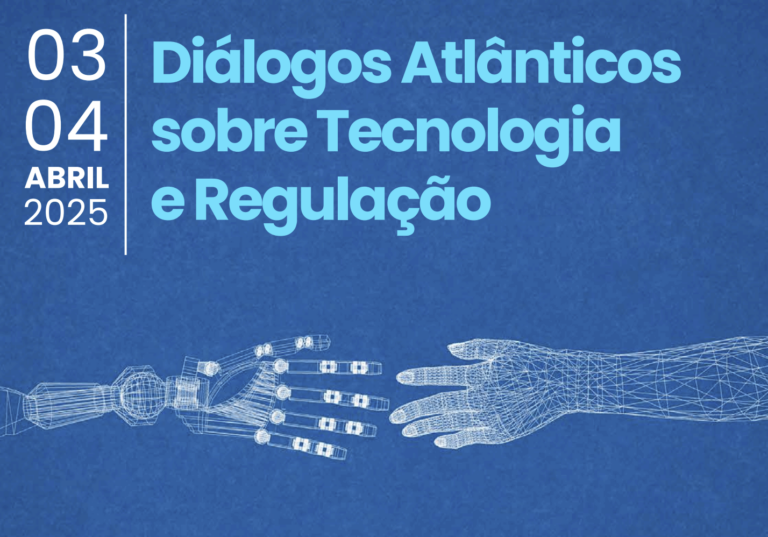
    Isabel Trancoso, senior researcher at INESC-ID, from Human Language Technologies scientific area, and a leading expert in speech technologies, participated in the Atlantic Dialogues on Technology and Regulation, held on April 3–4 at Universidade Católica Portuguesa in Lisbon.

    Organized by the Católica Research Centre for the Future of Law, in collaboration with FGV Direito Rio (Brazil), the event brought together national and international experts to discuss pressing challenges in digital regulation. Topics ranged from emerging technologies to the legal and ethical frameworks shaping our digital future.

    Ahead of a panel discussion on the topic, Isabel Trancoso and also Mário Figueiredo, professor at Instituto Superior Técnico, delivered keynote talks on Artificial Intelligence and the societal challenges it presents

    Participation in this high-level forum underscores INESC-ID’s active role in shaping public dialogue around the intersection of technology, ethics, and policy. Entry to the event was free, subject to prior registration.

  • INESC-ID opens minds at Técnico Open Day: exploring AI, robotics, chips and sustainability

    INESC-ID opens minds at Técnico Open Day: exploring AI, robotics, chips and sustainability

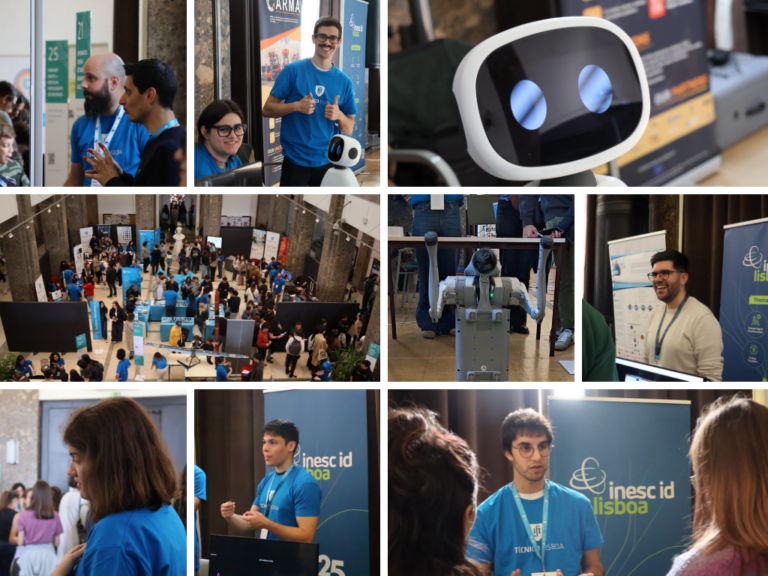
    An AI-powered robot dog, a European-made high-performance chip, a sustainability-focused game co-designed with People with Intellectual Disabilities (PID), a small AI robot that helps identify dangerous mushrooms, and even a tool that video-tracks camouflaged sea creatures — these are the projects INESC-ID presented at this year’s Técnico Open Day, held on April 5, drawing in curious minds of all ages.

    Just past 9 a.m, the nervous buzz among the team of INESC-ID researchers and volunteer students was palpable. With support from the Communication and Outreach Office, connections were tested, key topics mentally rehearsed and final touches applied at what was INESC-ID’s largest-ever presence at a science fair, featuring three booths and a demonstration arena. Everything was ready to welcome the record-breaking 2700 attendees entering Instituto Superior Técnico’s central pavilion, from aspiring engineers to knowledge-seeking families and science fans of all ages.

    Robots and games that teach and inspire

    At the first booth, Inês Lobo, a PhD student from the AIPS scientific area (at GAIPS group), introduced visitors to Todos Sustentáveis (All Sustainable), a co-designed game that empowers People with Intellectual Disabilities (PID) to be sustainable citizens. Originally created for this community, the game is now also being adopted in schools – and judging by the line of children waiting their turn, it will be a big hit.

    “A father even thanked me for being able to rest for half an hour while his son played the game”, shared an amused Inês.

    Next to her, fellow PhD student Sandra Andrade, demonstrated the adorable AI robot ELMO and the Mushroom Game – an engaging way to explore how trust influences AI assisted decision-making – perfect for sparking discussions about AI and even teaching a little mycology along the way.  “I was surprised by the age range of the participants, from babies to grandparents, all very interested in artificial intelligence and robots”, Sandra noted.

    Meanwhile, in the adjacent demonstration arena, Miguel Belbute, also from GAIPS, and the GO2 Robot Dog from the CARMA project delighted crowds. Designed to support emergency responders in disaster zones, the athletic robot impressed visitors with its agility,  so much so that it had to pause several times to recharge.

    “When the children gathered around me and the robot, asking endless questions after the last demo”, Miguel recalled, “I felt like we were looking at the next generation of engineers!”

    European Innovation in Chips and Computing

    At the next booth, INESC-ID researchers Pedro Tomás, Tiago Rocha and Nuno Neves, from HPCAS, showcased a major achievement: a high-performance, energy-efficient chip developed under the European Processor Initiative (EPI). This powerful computer chip is helping Europe stay competitive and ahead in high-tech fields like artificial intelligence and scientific simulations. 

    Using a real-time remote connection to the Barcelona Supercomputing Center, the researchers demonstrated the chip’s capabilities, while answering questions from young students fascinated by the technology, as well as from visitors interested in the impact of these efforts on Europe’s future. “It surprised me both the number and diversity of people who stopped by,” noted Pedro Tomás, taking part in the event for the first time.

    AI Meets Marine Biology

    Finally, at our maritime-themed booth, IDSS researcher Sofia Pinto’s Master’s students Tomás Gomes and Guilherme Gonçalves  (also first timers in outreach events) showcased their thesis research using AI-assisted video tracking to help biologists at the Lisbon Oceanarium. Their systems can detect camouflaged or hidden animals in aquarium video feeds, helping marine scientists better understand behaviour, stress and health of aquatic life in captivity.

    “It was a great feeling to be able to go out into the field and apply computer science to help animal welfare” said Tomás, who took valuable time away from thesis writing to volunteer. “This is definitely something I want to do again.” 

    A full day of demos. Dozens of questions. Hundreds of sparked minds. A smiling (if tired) INESC-ID team packed up, already looking forward to the next one.

    Featured Projects by INESC-ID:

    • A chip that puts Europe ahead in computing  (Pedro Tomás, Nuno Neves, Tiago Rocha – HPCAS)
    • Autonomous robots for emergency assistance  (Miguel Belbute – AIPS)
    • Mushroom Game: AI for decision assistance (Sandra Andrade – AIPS)
    • “Todos Sustentáveis” (All Sustainable): a game for sustainable citizens (Inês Lobo – AIPS)
    • Can computer science help study Oceanarium animals? (Sofia Pinto, Tomás Gomes, Guilherme Gonçalves – IDSS)

    About Técnico Open Day

    Técnico Open Day is an annual event, organised by Instituto Superior Técnico, that brings together students, professors, researchers, staff, student groups, departments, and associated institutes for a day of over a hundred activities for all ages. With free admission, it includes a science fair with associated research centres and institutes, student groups, laboratory visits, conversations with scientists, course presentations, experimental games, lectures, and much more.

    Text by Rodrigo Abril de Abreu, Head of Communications and Outreach Office, INESC-ID | © 2025 INESC-ID

    Images | © 2025 INESC-ID