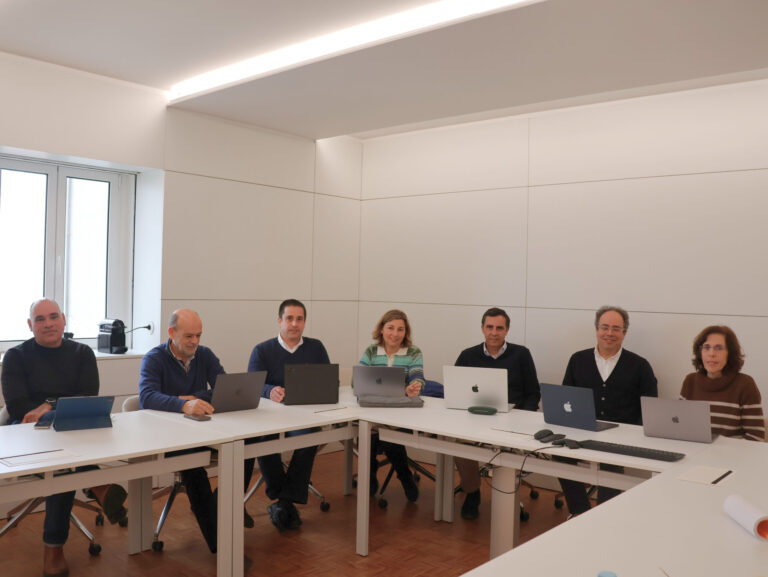
With the inaugural meeting of the newly elected Board of Directors of INESC-ID starts a new chapter in the institute’s history. This meeting, held January 20, set the stage for the vision and strategic goals that will guide INESC-ID’s path in the coming years.
Inês Lynce, President of the Board of Directors, highlighted the mission of the new leadership team. “The mission of the Board of Directors of INESC-ID is to reinforce its strategic role as a leader in cutting-edge research that drives innovation and addresses global challenges. Central to this vision is the recognition of our researchers and collaborators as the institute’s greatest asset,” she stated. The board aims to prioritize excellence in scientific research, foster interdisciplinary collaboration, and establish strong partnerships with industry and academia, both on a national and international scale.
Miguel Pupo Correia, President of the Executive Committee, emphasized the significance of this leadership transition. “This is the first board elected under the new statutes of INESC-ID, and one of its primary objectives is to implement the newly established management structure, which includes an executive committee and non-executive directors. This structure will facilitate strategic reflection on INESC-ID’s goals, particularly as the institution celebrates its 25th anniversary and reaches a stage of maturity,” Miguel notes. The board remains steadfast in its commitment to scientific excellence, internationalization, and societal impact, with a strong focus on the professional growth and development of its researchers and collaborators.
The meeting was also an opportunity for the Board to address key issues slated for 2025. Among these were the evaluation of INESC-ID’s status as an associated laboratory, the development of the strategic plan for 2026-2030, and the implementation of enhanced budget control mechanisms.
The remaining members of the Board of Directors are Luís Oliveira e Silva, Fernando Moreira, Helena Galhardas, Nuno Roma and João Paulo Carvalho.
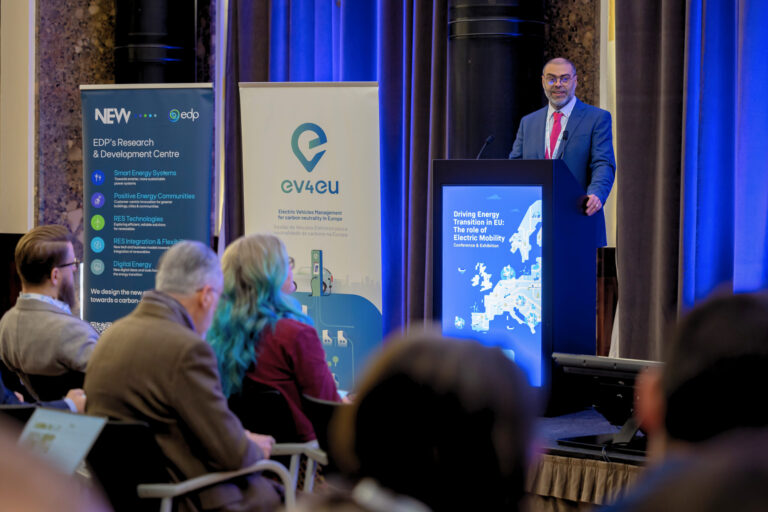
It was a cold winter morning, blessed with sunshine that lured people to the main entrance of Instituto Superior Técnico, in Lisbon, enjoying the warm rays while chatting about … energy. Their badges revealed a shared purpose, the conference Driving Energy Transition in EU: The Role of Electric Mobility, promoted by the INESC-ID project EV4EU.
The event gathered on January 15 specialists from around the world, coming both from research institutes and companies, to discuss electric mobility and the energy transition in Europe. An issue that INESC-ID project coordinator and Conference Chair, Hugo Morais, described as the “chicken-and-egg” dilemma of EV adoption: “no cars without infrastructure, and no infrastructure without cars.”
Some of the projects in focus are intended to solve the riddle, such as the Scale Project – a user-centric approach, involving seven countries, to address the complexities of scaling EV infrastructure; DRIVE2X, with demos in Maia, Portugal, and Amsterdam, the Netherlands, highlighting real-world applications of EV technology, the project aims to accelerate the uptake of vehicle electrification through new bi-directional smart charging technologies; FLOW Project, that tackles the increase in energy efficiency through energy exchange with buildings, vehicles and the grid and XL-Connect, in which the main goal is to optimize the entire charging process, from the energy generation until the end user, by developing a digital twin of the entire system and developing optimal smart charging technologies.
At the opening session, Inês Lynce, President of the Board of Directors, aptly remarked that we are living in the best time in history to discuss such a relevant topic. “We are in the right place, at the right time,” she said, emphasizing the importance of attracting young people to contribute to this transformative journey. Rogério Colaço, President of Instituto Superior Técnico, added that the shift to electric vehicles (EVs) represents “one of the greatest challenges of our time”, but one that is critical. He noted that EVs are inherently “more efficient than internal combustion engine vehicles”, a fact that underpins their central role in the energy transition.
Voices from Portugal and Beyond
Admitting the problem is more than ten years old, Jorge Martins from REN, presented the new Fast charging using transmission network Speed-E, with the belief that “this time, the market will take off”. “Electric trucks, though fewer in number, hold immense relevance due to the extensive kilometres they cover.
“The issue is not energy availability but power capacity, especially during peak demand”, stressed Hugo Morais, while Rui Gonçalves, from E-Redes, emphasized the need for significant grid upgrades, with planned investments increasing by 50% between 2026 and 2030. “Flexibility”, he argued, is key to address the challenges of energy transition for grids.
Portugal was celebrated as a case study in electric mobility. Débora Melo Fernandes, lawyer and Partner at Pérez-Llorca, specialized in energy, highlighted the country’s pioneering 2010 regulatory framework, which fostered a user-centric and competitive ecosystem. Débora outlined challenges such as fragmented regulations and lengthy permitting processes but emphasized the opportunities offered by aggregators and mechanisms like E-credits mandated by the latest Renewable Energy Directive, RED III, set for implementation by 2025.
Bruno Vieira, from EDA, brought the unique challenges of the Azores into focus. With nine islands and no capacity to export energy, the region faces distinct hurdles in adopting EVs and enhancing infrastructure. Meanwhile, Luís Prazeres, from Brisa, underscored the importance of education and training to boost performance and efficiency in the mobility sector.
Key Takeaways
With a large experience in the energy sector, the independent consultant António Vidigal sustained that electric vehicles have a significant role to play in the electrical systems of the future. And regulation can help. “Portugal is already recognized as a leading example in the adoption of renewable energy. It should also be a model for regulation that supports the energy transition”, he defended. The concept of “vehicles as batteries on wheels” offers immense potential for grid support, but current legislation limits V2G (vehicle-to-grid) applications, the specialist noted.
As Gonçalo Castelo Branco, from EDP Comercial, aptly put it, “whatever there is to come, we are still at the very beginning of what is going to be.” And as highlighted by INESC-ID’s President, Miguel Pupo Correia, the institute’s thematic lines and scientific areas underscore the societal importance of these efforts. Miguel noted that on a context of war, like the war in Ukraine, the energy systems are a target, including for cyberattacks.
And for great endeavours, collaboration is always the key, underlined Hugo Morais. “The future of electric mobility depends on interdisciplinary collaboration—regulators, consumers, and developers working hand in hand.”
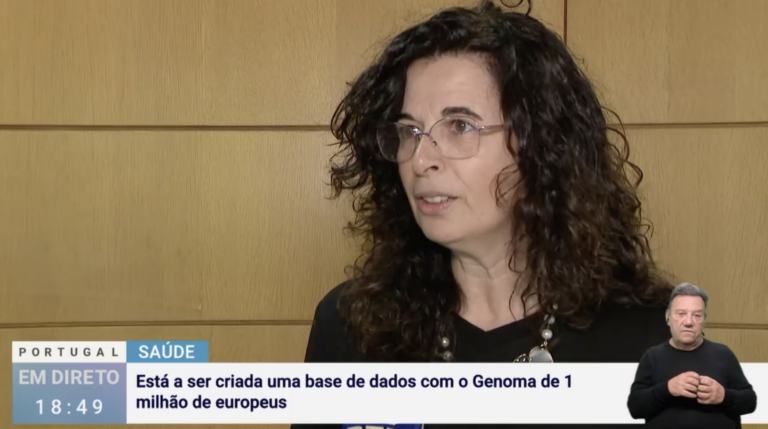
INESC-ID researcher and coordinator of INESC-ID’s Life and Health Technology Thematic Line, Ana Teresa Freitas, recently talked on RTP’s TV programme “Portugal em Direto”, about the creation of a new database with the genome of 1 million Europeans.
The goal is to gather individual genetic and health data to build risk models that will ease the development of more effective and personalised medicines, and allow more robust responses to future pandemics by understanding health risk factors within different populations. For example, a study back in 2021 determined that the Portuguese population is more vulnerable to a lack of vitamin D.
The project will end in 2026, and it will be one of the largest databases of the European population, with Portugal contributing with the data of 16000 people. The data acquired will not leave its respective countries, respecting security and privacy laws.
Watch the interview (in Portuguese here (11:22 – 14:14)
INESC-ID recently had two exploratory research projects (ERPs) approved in the Call for Exploratory Projects in All Scientific Domains 2023 by Fundação para a Ciência e a Tecnologia (FCT).
In the field of “Computer and Information Sciences and Informatics”, the selected project was FLORA, coordinated by Vasco Manquinho. The project will develop new techniques, focused on Answer Set Programming (ASP), to debug logic programs, which is usually a challenging process since the programmer does not control the flow of execution nor is able to check the intermediate state of the program or localise a fault. FLORA will not only provide new techniques to mitigate these challenges, but also new annotated datasets of ASP programs and new tools to support the generation of new ones. All these will be available in a GitLab-based open-source framework in order to provide personalised feedback to novice ASP programmers.
In the area of “Electrical and Electronic Engineering”, project OSiRIS coordinated by Rui Duarte, was the winning candidate. OSiRIS aims to explore AI algorithms to improve the generation of images by Synthetic Aperture Radar (SAR), while also replacing current computational units with smaller and faster ones. This will provide a new generation of on-board SAR processors to be further developed and industrialised, enhancing monitoring systems, on aircrafts and spacecrafts, and contributing to more accurate information on pollution, harvesting of natural resources and reaction to natural catastrophes.
The projects will each receive around 50K € of funding.
The goal of this call is to support exploratory research projects in all scientific domains, by promoting and strengthening the skills of scientific and technological institutions through the participation of their teams in projects of particular relevance. Proposals must be for individual projects, submitted by a single beneficiary, with a maximum duration of 18 months. Each project has a maximum funding of 50K, through the FCT budget.
The 2024 call opened on December 19, and will close on February 25, 2025.
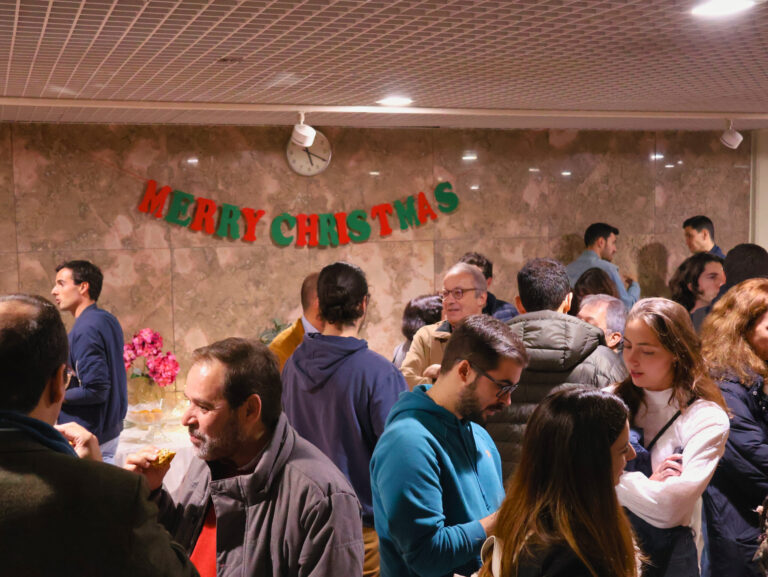
INESC-ID, INOV and INESC-MN came together on December 11 for a festive gathering complemented by Christmas traditional snacks and jolly tunes!
Following its 2nd annual meeting, back in October, the INESC Lisboa’s institutes gathered once more to celebrate Christmas and meet one last time before the end of the year. As INESC Lisbon president, Leonel Sousa, stated in a short but meaningful speech, these kinds of occasions allow participants to meet and socialise, improving relations between the different institutes and helping to build a stronger community.
Though there was no Christmas tree to gather around, there were gifts for those who wanted to take a memento home, made at CERCICA, a cooperative for education, rehabilitation and training of disabled citizens, based in Cascais.
We wish everyone a Merry Christmas and Happy Holiday season!
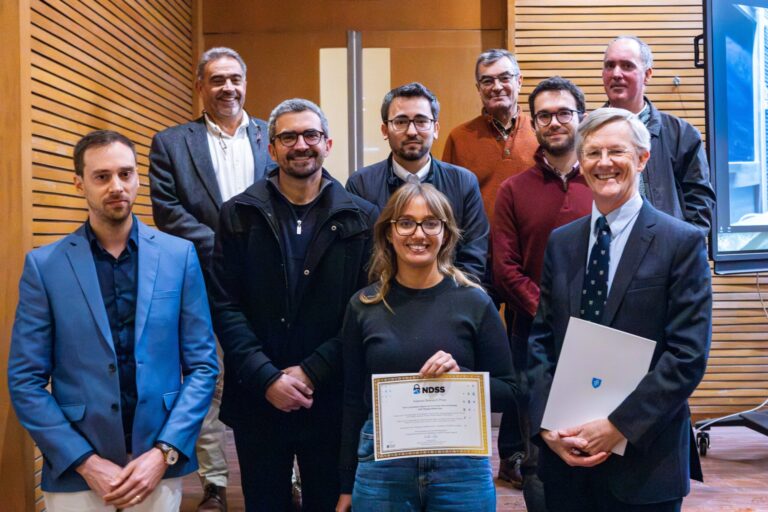
A research paper titled “Flow Correlation Attacks on Tor Onion Service Sessions with Sliding Subset Sum”, authored by INESC-ID, CMU Portugal and Instituto Superior Técnico PhD student, Daniela Lopes, won the 2024 “Best Portuguese Internet Research” by the Portuguese Chapter of the Internet Society (ISOC). The work was co-authored by her advisors, INESC-ID researcher Nuno Santos’ and Nicolas Cristin from Carnegie Mellon University.
The paper was published in the proceedings of the 2024 edition of the “Network and Distributed System Security (NDSS) Symposium” and resulted from the CMU Portugal Exploratory Research Project “DAnon – Supervised Deanonymization of Dark Web Traffic for Cybercrime Investigation,”. It announces a vulnerability in the Tor network, which is intended to provide users with private and anonymous Internet access, eliminating any possibility of tracing the origin of traffic. Malicious users can, however, take advantage of this and get around the surveillance imposed in some countries by censorship agencies or authorities, undermining the network’s purpose.
The identification of this issue was disclosed to the Tor network development team, contributing to increase its robustness. The jury highlighted the contribution of this paper to the protection of citizens’ rights online and against abusive surveillance and censorship on political or racial grounds, both goals of the Internet Society.
The award ceremony took place yesterday, December 11, at Instituto Superior Técnico, following a panel discussion on “Cryptography: the need and the dilemma”, featuring Miguel Pupo Correia, INESC-ID board member and researcher, Maria Manuel Leitão Marques, European Parliament Member and former Minister for the Presidency, and Robin Wilton, director of the “Internet Trust – Internet Society”.
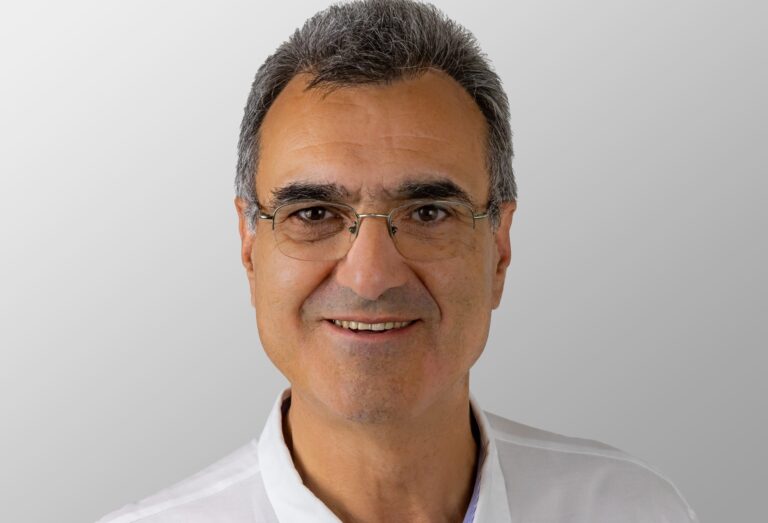
Joaquim Jorge, INESC-ID researcher in the area of Graphics and Interaction and professor at Instituto Superior Técnico, has been distinguished as an IEEE (Institute of Electrical and Electronics Engineers) Fellow 2025.
The IEEE Fellow is one of the highest distinctions given by IEEE, and it is attributed annually, to a small number of members, to honour the impact of their contributions to the areas of engineering, science and technology, bringing the realisation of significant value to society at large. Professor Joaquim Jorge’s work on sketch-based interfaces, modelling and virtual reality earned him this distinction, making him the only Portuguese researcher to become a Fellow this year.
The IEEE is the world’s largest technical professional organization dedicated to advancing technology for the benefit of humanity. Its members work in various fields of engineering, computing, and technology,
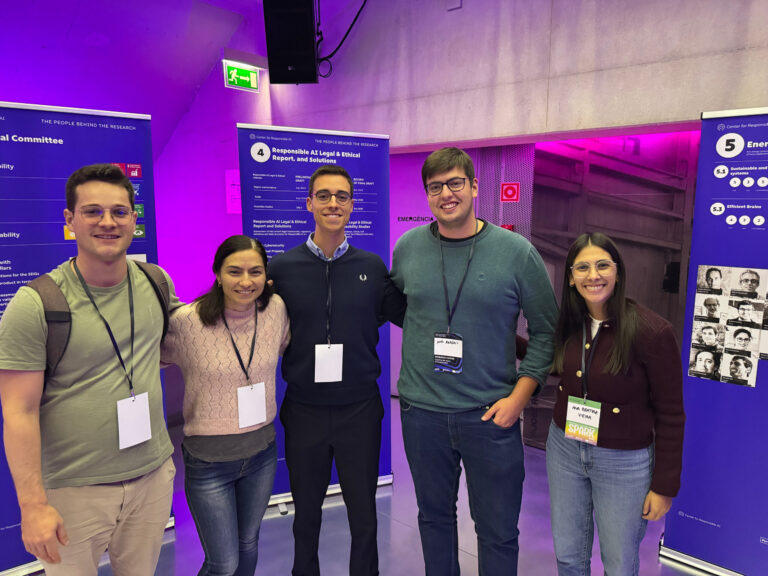
On November 19, INESC-ID PhD student André Duarte was honoured with the SPARK Award for the best PhD student project, during the Center for Responsible AI Forum 2024 (CRAI 2024), in Porto.
André’s work focuses on the detection of copyrighted content during the training process of a language model and was one of the 44 academic projects to be submitted. The SPARK Awards, hosted by CRAI, were the first Responsible AI Student Awards and recognised projects on topics ranging from machine learning to computer vision.
On Wednesday, November 13, INESC-ID’s support staff gathered around roasted sweet-potatoes, snacks and the traditional jeropiga for an internal social gathering!
The occasion not only marked the celebration of the Iberian tradition, Magusto, but was also dedicated to the support offices, which are a key part of the INESC-ID foundation. Accompanied by catchy music, the teams chatted away during the afternoon and seized the chance to sing happy birthday to one of our staff members.
At the end, each participant was gifted one of the brand new INESC-ID merch kits, as a token of appreciation for their daily efforts. We believe these special occasions will foster new connections and strengthen collaborations behind the scenes at INESC-ID.
Yeasts may seem just tiny, unimportant fungi, but their importance is far greater than their microscopic dimensions. They are vital in both the bioeconomy and health research, from baking bread to developing life-saving medications, participating in the production of food, energy and commodities, while also serving as pathogens and model organisms for studying genetics and diseases.
To support research on yeast gene activity, an open access platform, YEASTRACT+, has previously been developed by the European life sciences infrastructure ELIXIR. This platform serves as a widely used FAIRsharing Knowledge-base and repository. However, despite being a leading source of information, it currently lacks quantitative gene expression data and has limited characterisation of many yeast species.
The FAIRY project, coordinated by INESC-ID and funded by OSCARS, a new Horizon Europe Grant, aims to tackle these challenges and enhance this platform. The project will investigate how transcription factors (proteins that regulate the transcription of genes) influence yeast’s gene activity and the resulting traits in various yeast species. This knowledge will help predict how these regulations impact the yeast metabolism, which will allow improving yeast-based production methods towards a circular bioeconomy.
Additionally, the project will identify and store in a central database which genes are vital for the survival of various yeast species. This will improve the tools available for finding potential drug targets and make it easier for scientists to reuse the data, speeding up research in designing better yeast strains for industry and finding new antifungal drug treatments.
The FAIRY project is funded by the first edition of the OSCARS, an Horizon Europe Grant (GA number 101129751) led by the five Science Clusters: ENVRI (Environmental Science), ESCAPE (Astronomy and Particle Physics), LS RI (Life Sciences), PaNOSC (Neutron and Light Source Science), SSHOC (Social Sciences and Humanities).