Category: Partnerships

  • Stepping up for Europe: INESC-ID at Encontro Ciência 2025
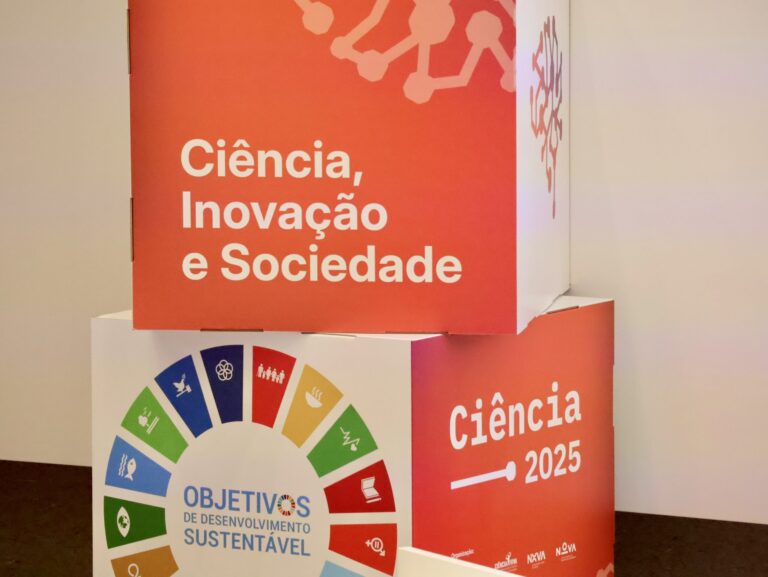
    Stepping up for Europe: INESC-ID at Encontro Ciência 2025

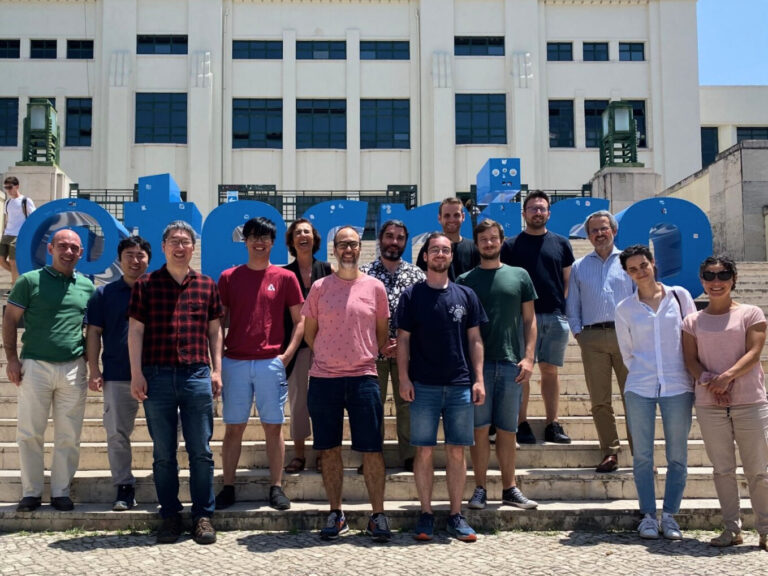
    In a fractured, fast-changing world, Europe is facing urgent questions about security, sustainability and technological sovereignty. At Encontro Ciência 2025,  Portugal’s largest annual science and technology gathering, we brought those questions into the room.

    Held from July 9 to 11 at NOVA SBE in Carcavelos, this year’s edition explored the theme “Ciência, Inovação e Sociedade”, bringing together researchers, policymakers, and institutions to discuss the future of science in society. The European Commission was the official guest of honour, represented by high-level officials in the fields of science and innovation.

    INESC-ID contributed with a flagship panel, joining voices from across the INESC network to ask a vital question: what role should research play in Europe’s resilience, autonomy, and defence?

    Strategic Autonomy and Defence

    At the heart of INESC-ID’s participation was the panel “The Role of Research in Resilience, Strategic Autonomy and Defence in the EU”, organised and moderated by Silvia Castro, Head of the Innovation Management Office. The session focused on Europe’s current challenges, highlighting how the INESC institutes are stepping up in response to shifting priorities, emerging risks, and a growing role for public research.

    Defence was an unavoidable theme (a clear sign of the times) and many research areas were framed through that lens. But the conversation didn’t shy away from the deeper challenge: how can research serve both security and society without losing its compass? This focus was illustrated by presentations on dual-use technologies spanning cybersecurity, nanoelectronics, energy, health, and photonics.

    The session featured contributions from Nuno Santos (INESC-ID), Nuno Cruz (INESC TEC), Carlos Henggeler Antunes (INESC Coimbra), Nazua Costa (INOV-INESC), and Susana Cardoso de Freitas (INESC MN), each presenting concrete examples of research underway and aligned with EU and national priorities.

    It also drew on several insights, presented by João Claro (INESC TEC), from the recent INESC Brussels HUB Summer Meeting 2025, which gathered researchers, EU policymakers, and industry leaders to discuss strategic autonomy and the role of dual-use research in Europe’s future.

    “The INESC Brussels HUB Summer Meeting showed how essential it is to have spaces for critical reflection, especially as we face growing geopolitical complexity and a rapidly changing research and innovation ecosystem,” remarked Silvia.

    AI, Policy, and Education

    Beyond the resilience agenda, INESC-ID contributed to a range of other  thematic sessions: Rui Henriques joined a discussion on how artificial intelligence is reshaping the agri-food sector, boosting efficiency, sustainability, and competitiveness from farming to food distribution.

    Helena Moniz participated in a panel on science-informed policymaking, where the Science4Policy initiative organised by PLANAPP was presented. The session highlighted how Portugal is positioning itself at the forefront of connecting research and public policy, with Helena noting that “initiatives like FCT’s Science4Policy calls are globally innovative” and that “we often fail to see what we’re good at in Portugal.”

    Finally, the “Engenharia para Todos” (Engineering for All) initiative  – a partnership between INESC-ID, Instituto Superior Técnico and Câmara Municipal de Oeiras – helped connect science with wider audiences. Science Manager Maria João Verdasca presented an e-poster on the programme’s outreach model, while students from the C4 Science Club of Carnaxide showcased their Smart City project: a tangible example of how engineering education and hands-on science can promote civic engagement, creativity, and early contact with advanced technologies.

    From strategic autonomy to smart cities, INESC-ID’s participation at Encontro Ciência 2025 showed how our work is addressing pressing societal needs by connecting research across fields and institutions.

    “Just like last year’s session, which brought together diverse perspectives from across the INESC institutes on a common theme”, added Silvia, “this initiative was also an excellent opportunity for networking and strengthening inter-institutional ties” – a reminder that in complex times, collaboration is as vital as innovation.

    Images | © 2025 INESC-ID

  • INESC-ID and CMU team up to advance Conversational AI

    INESC-ID and CMU team up to advance Conversational AI

    With the goal of launching a new research collaboration, for the development of Adaptive Conversational Engines, a research team led by Shinji Watanabe, Associate Professor at the Language Technologies Institute (CMU) traveled to Lisbon from June 15 to 18. This falls under the scope of the CMU Portugal supported project, “ACE-FM: Adaptive Conversational Engine powered by Foundation Models”, “which aims to enhance the capability of speech foundation models to understand long-form, multi-party conversations toward conversational AI. Besides, it supports the collaboration between CMU and PRR Mobilizing Agenda Accelerat.AI, led at INESC-ID by Human Language Technologies researcher Alberto Abad, Associate Professor at Instituto Superior Técnico (Técnico).”

    As part of the visit, INESC-ID hosted an intensive two-day workshop, kicking off the collaboration while exchanging knowledge between teams. The workshop featured presentations from both teams and a keynote by Shinji Watanabe, titled “Open Whisper-Style Speech Models: Transparency, Scalability, and Advancing Explainability”. The  first day provided an overview of the models developed at CMU, whilehands-on tutorials by CMU students Masao Someki, MLT student, and William Chen, PhD student, empowered researchers based in Portugal to apply them effectively. The second day focused on practical sessions in model fine-tuning with custom data and introduction to ESPnet3, CMU’s next-generation speech modeling platform. of what was a very productive workshop.

    Along with fellow INESC-ID Human Language Technologies researcher, Isabel Trancoso, Alberto Abad shared insights into their team structure and highlighted successful past collaborations within the CMU Portugal program. According to project leads Aberto Abad and Shinji Watanabe, the visit helped both teams to gain a deeper understanding of each other’s expertise, research styles and focus areas, and also strengthen connections with fellow language technologies’ researchers.

    Both teams expect that this collaboration will lay the foundation for future projects and long-term academic exchanges.  “The outcomes of this collaboration will benefit not only the Accelerat.ai project, but also other PRR-supported initiatives, including the development of a national Portuguese large language model”, shared Alberto Abad.

    The 2024 CMU Portugal PRR Call for Collaborative Research Grants aims to strengthen collaboration between CMU and Portuguese research institutions aligned with the Portuguese Recovery and Resilience Plan (PRR) Mobilizing Agendas. The call funded 12 projects, representing a significant step in fostering impactful research between Portugal and CMU.

    Read the full original article here

  • INESC-ID Hosts Collaborative Meeting on Innovation & Sustainability in Energy Transitition

    INESC-ID Hosts Collaborative Meeting on Innovation & Sustainability in Energy Transitition

    A collaborative meeting, hosted by INESC-ID’s Sustainable Power Systems (SPS) Group, recently took place at Instituto Superior Técnico (IST). The event gathered several companies from the Petrotec and Barraqueiro Groups, along with researchers from INESC-ID and Técnico, to discuss emerging trends and strengthen partnerships. 

    SPS senior researcher, Hugo Morais, provided an overview of three Horizon Europe projects – EV4EU, Shift2DC, and U2Demo – which he is currently leading at INESC ID, and also introduced the Energy Dream Lab, a new Lab under development at INESC ID’s facilities on Técnico’s Alameda campus.  We were also represented by Sónia Pinto, senior researcher and scientific coordinator of the Green Energy and Smart Converters (GESC) group, who shared the group’s advances in storage and converter energy systems.

    Focused on the meetings main themes, sustainability, energy transition and innovative transportation solutions, Petrotec shared a presentation on “Energy solutions for transformative industries”, and Barraqueiro focused on “Advancing sustainable transportation solutions”. The round of presentations also counted with other companies present such as Hellonext, Boost Logistics, Spinach Tours, Boost Portugal, and academics from IDMEC, IN+ and ITI.

    According to Hugo Morais, “the event was very interesting for understanding the current needs of the industry, which in many cases are driven by market and user demands” and allowed the “identification of collaboration opportunities in both national and international projects.”

    Following the meeting, participants visited Hellonext’s R&D center in Seixal, where they had the opportunity to see in firsthand the development of IT solutions for Renewable Energy Systems, Grid and EV Charging Infrastructure, and Hydrogen Refueling Solutions of Petrotec, at the company’s newest facilities.

    Gallery | INESC-ID

  • INESC-ID strengthens international AI collaboration with the China-Portugal Joint Laboratory on AI and Public Health Technologies

    INESC-ID strengthens international AI collaboration with the China-Portugal Joint Laboratory on AI and Public Health Technologies

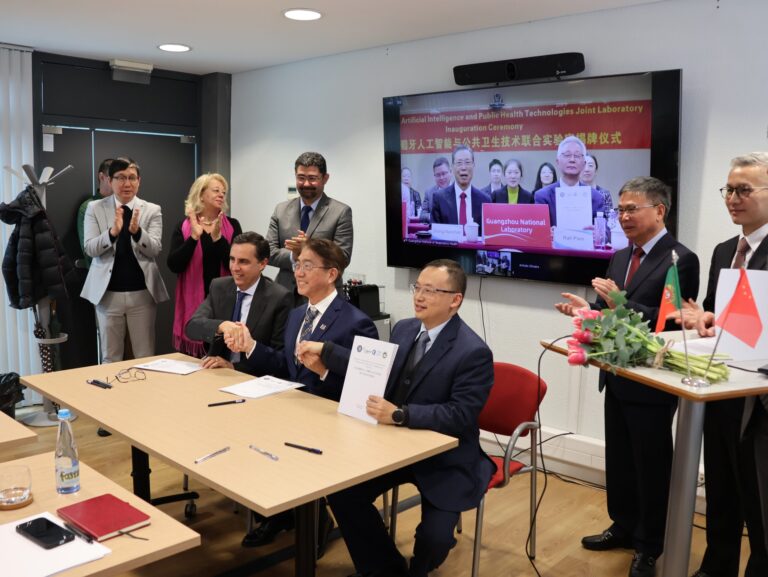
    It was 10:10 AM in Lisbon and 18:10 in Guangzhou, of March 5, when the official ceremony for the establishment of the China-Portugal Joint Laboratory on AI and Public Health Technologies started. Held at the Department of Computer Science and Engineering (DEI) of Instituto Superior Técnico, the event gathered Portuguese and Chinese representatives who celebrated the signing of the memorandum of understanding over a traditional cup of tea and a handshake.

    The China-Portugal Joint Laboratory on AI and Public Health Technologies is a collaborative effort between INESC-ID, Guangzhou Laboratory (GL), Guangzhou Medical University (GMU), and Macau University of Science and Technology (MUST) (China). The Joint Laboratory aims to consolidate and leverage artificial intelligence technologies to improve public health management at a global scale. This includes capabilities for analysing, modelling, and responding to emerging public health events.

    Arlindo Oliveira, INESC-ID researcher, Professor at Técnico and coordinator of the partnership, acknowledges both the challenges and the strengths of this collaboration: “Although this collaboration presents challenges related to language barriers and differing cultural and political perspectives, we have managed to establish a fruitful and mutually trusting relationship. This has already led to significant funding for research and development, with further projects expected to be approved in the near future.”

    Trust and Cooperation

    Through international cooperation and information sharing, the lab will collect, organize, and disseminate data and experiences crucial for the prevention and response to major pandemics. Additionally, it will drive research into infection prevention and control measures, as well as AI-powered diagnostic technologies to address both infectious and non-infectious diseases.

    During the ceremony, Zhao Bentang, Ambassador of the People’s Republic of China in Portugal, highlighted the significance of the Joint Laboratory. “The foundation of this laboratory reflects our firm belief that China and Portugal must work together to tackle global challenges. These challenges can only be effectively addressed through international cooperation. The creation of this laboratory is a concrete manifestation of both countries’ commitment to collaborating on these global issues, ensuring mutual benefits.”

    Following the formal proceedings, and at the request of the academic Chinese partners, part of the group took the lift to the seventh floor of the North Tower at the Alameda Campus to visit the Institute for Systems and Robotics, where they were introduced to some of the advanced robotic technologies developed at the lab. These included iCub, one of the most complex humanoid robots in the world, designed to study human behaviour, and Vizzy, an interactive robot created to assist the elderly and hospitalized patients.

    The works concluded with a visit to the Joint Laboratory at INESC-ID, that is meant to work under the five pillars Ana Teresa Freitas, President of DEI and the Strategic Coordinator of the INESC-ID thematic line Life and Health Technology, detailed at the ceremony: “Safe people, safe projects, safe data, safe algorithms, safe outputs”.

    AI to solve global challenges

    This new partnership is a step forward in facing global public health challenges through cutting-edge artificial intelligence technologies. As noted by Rogério Colaço, President of Instituto Superior Técnico, that welcomed the event, “the establishment of this Joint Laboratory represents a significant step forward in addressing global public health challenges. By leveraging cutting-edge artificial intelligence technologies, we aim to enhance public health management and improve our collective capacity to respond to emerging public health events on an international scale. This agreement not only fosters academic research but also promotes scholar exchanges that will enrich our understanding and capabilities.” An opinion shared by Miguel Pupo Correia, President of the Executive Committee of INESC-ID: “AI is one of the high-impact areas of our research, and this collaboration will enhance the creation of value for people and society.”

    The memorandum of understanding was formally signed by representatives from all four institutions. Also present were Tai Kin Ip, Secretary for Finance of the Macau Government, Che Weng Keong, President of the Macau Science and Technology Development Fund (FDCT), Madalena Alves, President of the Portuguese Foundation for Science and Technology (FCT), and Rogério Colaço, President of Instituto Superior Técnico.

    This initiative reinforces the growing importance of AI in public health and sets the foundation for a strong and lasting collaboration between Portugal and China in facing some of the most urgent and relevant global health challenges.

    Text by Sara Sá, Science Writer | Communications and Outreach Office, INESC-ID / © 2025 INESC-ID

    Images | © 2025 INESC-ID

  • Faster, Higher, Stronger: INESC-ID Joins Project ACHILLES to Redefine AI

    Faster, Higher, Stronger: INESC-ID Joins Project ACHILLES to Redefine AI

    In Greek legend, Achilles was a hero with a single vulnerability—his heel. Similarly, the “Achilles’ heels” of modern AI systems are trust and efficiency. The recently launched ACHILLES Horizon Europe Project (“Human-Centred Machine Learning: Lighter, Clearer, Safer”) aims to address these critical weaknesses.

    Bringing together 16 organizations from 10 countries, ACHILLES has significant Portuguese involvement. Led by Fraunhofer Portugal Research (FhAICOS) as the coordinating partner, INESC-ID plays a key role with six researchers leading the Work Package (WP) on AI sustainability and contributing to the WP on Privacy-Preserving Machine Learning and Model Monitoring. Paolo Romano, from Distributed Parallel and Secure Systems, coordinates INESC-ID’s participation, which has a budget of nearly one million euros.

    The ACHILLES team seeks to drive responsible AI innovation in line with European values and regulations. Moving away from the traditional “Faster, Higher, Stronger” approach—borrowed from the Olympics, another iconic Greek reference—ACHILLES champions a new framework: “Lighter, Clearer, Safer,” reflecting the evolving demands of modern AI.

    “At the heart of ACHILLES is an iterative development cycle inspired by clinical trials,” explained André Carreiro, Senior Scientist and ACHILLES Project Coordinator.

    A standout innovation within the project is the ACHILLES Integrated Development Environment (IDE), a machine-learning-driven platform empowering developers to build AI solutions that are not only more effective and efficient but also responsible and ethically compliant. The project will validate its approaches through real-world applications in healthcare, identity verification, content creation, and pharmaceuticals, demonstrating its transformative potential across diverse sectors.

    Funded with over €8 million under the Horizon Europe Framework Program, on the cluster of digital, industry and space, ACHILLES is set to redefine the way we approach AI, ensuring it aligns with the values and expectations of modern society.

  • INESC-ID joins prestigious Marie Curie Doctoral Training Network to enhance Privacy in Smart Speech Technology

    INESC-ID joins prestigious Marie Curie Doctoral Training Network to enhance Privacy in Smart Speech Technology

    How much private information can a single spoken word inadvertently reveal?

    The rapid growth of smart speech technology is transforming how people access information and applications through the human voice. However, these advancements come with privacy risks. Smart devices like speakers and smartwatches can expose users to the exploitation of sensitive information within speech signals, such as one’s health status, without their knowledge or consent.

    Can innovative privacy-preserving smart speech technologies reduce these risks? Aligned with this mission and its ongoing commitment to strengthen the internationalisation of its advanced training, INESC-ID has recently joined the Marie Curie doctoral training network “Privacy for Smart Speech Technology” (PSST). The PSST consortium includes world-leading research labs in speech processing, privacy, and usability, along with numerous innovative industrial partners across Europe.

    The network will train a new group of researchers to develop these urgently-needed technologies using cutting-edge deep learning methods. This double-degree, high-impact training program partners with Aalto University (Finland, Coordinator), INESC-ID (Portugal), EURECOM GIE (France), INRIA (France), Ruhr-Universität Bochum (Germany), Radboud University Nijmegen (the Netherlands), and the Technical University of Berlin (Germany), among other partners. It will provide doctoral researchers with expertise in speech processing, machine learning, and comprehensive knowledge of privacy threats and privacy-enhancing technologies.

    Funded with a total of €4M by the Marie Skłodowska-Curie Actions (MSCA) Doctoral Networks (DN) program, the program will run for 60 months, starting January 25, 2025. INESC-ID’s participation will be led by Isabel Trancoso, an INESC-ID researcher in the area of Human Language Technologies and full professor at Instituto Superior Técnico, with funding of €487K.

    PSST partners and researchers will jointly create a unique, user-centred view of smart speech technologies, reducing threats like exploitation of sensitive information via speech. They will also promote innovative business models for responsible and sustainable privacy-aware technologies in the EU.

    The call for open positions begins in Fall 2024.

    Click here for more detailed information and full list of partners.

  • INESC-ID joins Current/OS Foundation

    INESC-ID joins Current/OS Foundation

    INESC-ID has signed an agreement to join as Affiliate partner of the Current/OS Foundation, a non-profit, independent and open EU foundation for the promotion and adoption of active Direct Current (DC) solutions.

    Established in 2021 in the Netherlands and managed by ABB, Eaton, Schneider Electric, Tridonic and UL Solutions, the Current/OS Foundation is leading research and innovation to shape a direct current (DC) standard, that enables partners to develop DC-certified products or services for the construction of DC buildings, including DC microgrids. These localised energy systems can operate independently or in conjunction with the main power grid. This emerging technology seeks to establish innovative DC solutions over traditional Alternating Current (AC) systems, modernising energy installations for a more sustainable future.

    Current OS is already a member of Shift2DC consortium, a Horizon Europe funded project lead by INESC-ID. Shift2DC intends to offer a new approach on the way direct current (DC) solutions are used in power systems by creating smarter, more efficient, and eco-friendly energy systems. Focusing on the integration of DC solutions in four main infrastructures – Datacenters, Ports, Buildings, and Industry – Shift2DC expects to reshape the use of electricity.

    As a Research and Development Institute with a research area specialised in “Energy Transition”, INESC-ID has now joined the list of Current/OS Foundation members. This collaboration will enable INESC-ID to actively contribute to the advancement of EU unified standards for the full adoption of DC systems, aiming to establish Current/OS as a worldwide standard for electrical distribution.

    Hugo Morais, INESC-ID senior researcher and Shift2DC project coordinator: “Integration of INESC-ID in Current/OS will bring us the opportunity to work closely with lead stakeholders in the development of DC solutions. Our main aim is to contribute with our knowledge and expertise in the planning and operation of distribution systems as well as in the developing and testing innovative power electronic interfaces. Finally, participation in Current/OS will also improve the collaboration in the development of pilots and experiments as the one that are being implemented in Shift2DC project related DC Ports.”

    Yannick Neyret, President, Current/OS Foundation, added: “We are extremely pleased to be strengthening our collaboration with the INESC-ID. Academics will play a key role in our community to ensure education of students to the direct current electrical distribution and to lead research to complete our knowledge of DC.”

    More about the Current OS Foundation here.