Category: Research Highlights

  • Restoring Voices: Transformative ALS communication technology developed under CRAI wins innovation award
    Restoring Voices: Transformative ALS communication technology developed under CRAI wins innovation award

    Most of us are familiar with the synthetic voice that the famous physicist Stephen Hawking used to communicate. Suffering for many decades from the debilitating disease amyotrophic lateral sclerosis (ALS), Hawking continued working, unravelling the mysteries of black holes and sharing his insights in books and public appearances. Despite the misfortune of living with such a severe condition, he had access to cutting-edge technology that allowed him to remain professionally and socially active. Unfortunately, not all patients share this opportunity.

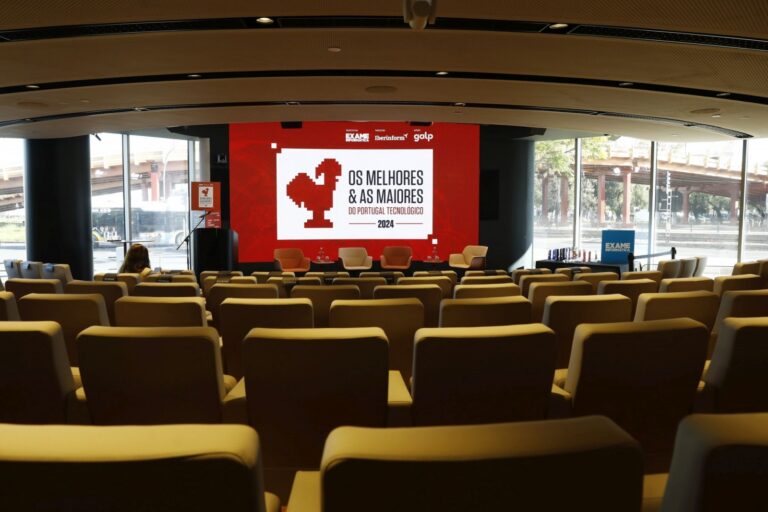
    Under the PRR-funded project Center for Responsible AI, in which INESC-ID is a key participant, Unbabel has developed Halo—a ground-breaking technology designed to restore the ability to communicate for patients living with ALS and similar conditions. This innovative device won the Prémio Inovação – Pedro Oliveira, awarded by Exame Informática during the “Os Melhores & As Maiores do Portugal Tecnológico 2024” ceremony.

    As described, “the solution consists of a muscle signal reader—essentially a band that can be worn on the head, which uses electromyography to detect fine muscle contractions—and Artificial Intelligence software that incorporates information about the user, such as personality, preferences, or their surrounding environment. Based on this system, which is continuously ‘fed’ with data from both the user and those around them, a persona is created. This persona generates response suggestions to questions posed to the user, which are then presented in audio form. The user selects the most appropriate response by moving their forehead muscles. Since the system converts text to speech for a more natural interaction, it is possible to use the patient’s own voice—either pre-recorded before the progression of the disease or retrieved from older audio recordings.” So that more patients may continue to have a voice.

    Every year, Exame Informática honors the best advancements in Portugal’s scientific and technological fields. As senior AI researcher at Unbabel Labs Catarina Farinha remarked, “with more recognition comes more responsibility to keep pushing and doing better.”

  • INESC-ID coordinates FAIRY Project to Support Yeast-based Bioeconomy and Health

    INESC-ID coordinates FAIRY Project to Support Yeast-based Bioeconomy and Health

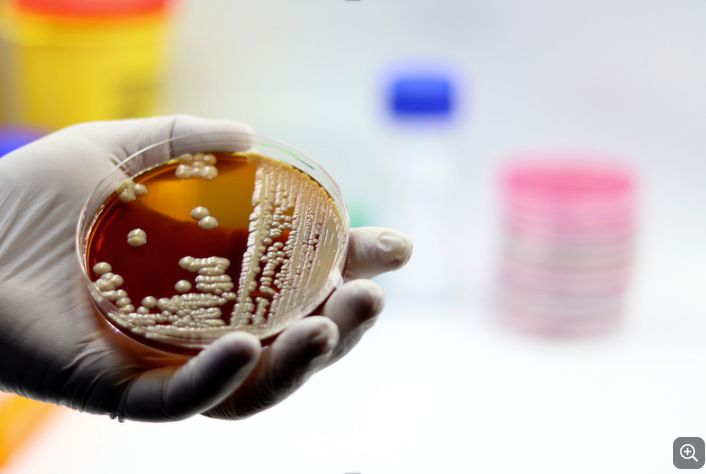
    Yeasts may seem just tiny, unimportant fungi, but their importance is far greater than their microscopic dimensions. They are vital in both the bioeconomy and health research, from baking bread to developing life-saving medications, participating in the production of food, energy and commodities, while also serving as pathogens and model organisms for studying genetics and diseases. 

    To support research on yeast gene activity, an open access platform, YEASTRACT+, has previously been developed by the European life sciences infrastructure ELIXIR. This platform serves as a widely used FAIRsharing Knowledge-base and repository. However, despite being a leading source of information, it currently lacks quantitative gene expression data and has limited characterisation of many yeast species.

    The FAIRY project, coordinated by INESC-ID and funded by OSCARS, a new Horizon Europe Grant, aims to tackle these challenges and enhance this platform. The project will investigate how transcription factors (proteins that regulate the transcription of genes) influence yeast’s gene activity and the resulting traits in various yeast species. This knowledge will help predict how these regulations impact the yeast metabolism, which will allow improving yeast-based production methods towards a circular bioeconomy.

    Additionally, the project will identify and store in a central database which genes are vital for the survival of various yeast species. This will improve the tools available for finding potential drug targets and make it easier for scientists to reuse the data, speeding up research in designing better yeast strains for industry and finding new antifungal drug treatments.

    Led by Pedro Monteiro, researcher in the area of Automated Reasoning and Software Reliability (ARSR), the project started on November 1st,  has a funding of €115K, and will last 12 months in partnership with Instituto Superior Técnico.

    Learn more about the project here.

    The FAIRY project is funded by the first edition of the OSCARS, an Horizon Europe Grant (GA number 101129751) led by the five Science Clusters: ENVRI (Environmental Science), ESCAPE (Astronomy and Particle Physics), LS RI (Life Sciences), PaNOSC (Neutron and Light Source Science), SSHOC (Social Sciences and Humanities).

  • INESC-ID powers up Enlit Europe with three innovative Horizon Europe projects in energy and mobility

    INESC-ID powers up Enlit Europe with three innovative Horizon Europe projects in energy and mobility

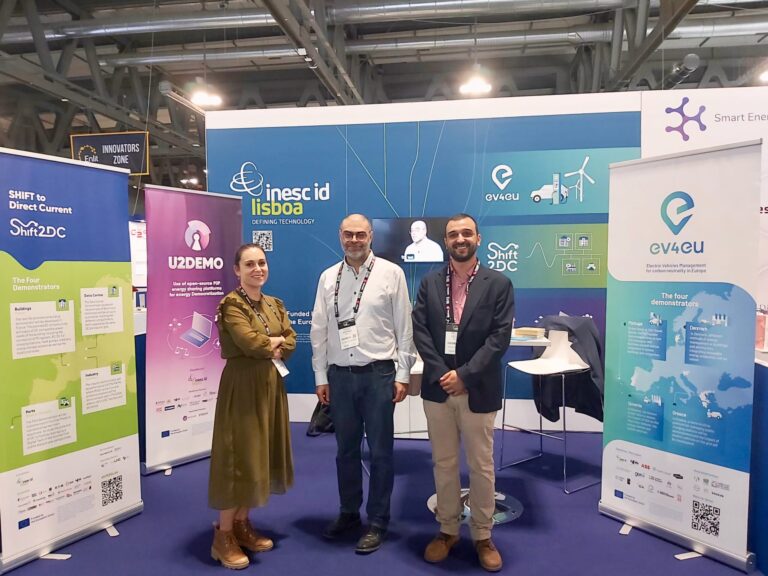
    INESC-ID made a strong impact at the 2024 edition of Enlit Europe, one of the leading energy conferences and exhibitions in Europe, proudly showcasing the Horizon Europe projects EV4EU, Shift2DC, and U2Demo.

    This year’s event, held from October 22 to 24 in Milan, set a new record by bringing together 15,000 energy experts from across the sector, and more than 200 sessions and 500 speakers over three days. Visitors had the opportunity to connect with the projects’ coordination team at the INESC-ID exhibition stand in the EU Projects Zone and during various sessions featuring the projects’ researchers.

    Ana Rita Nunes, project manager at INESC-ID, Pedro Costa, project researcher, and Hugo Morais, senior researcher from Sustainable Power Systems and project coordinator at INESC-ID, along with colleagues from different partner institutions, shared insights and the milestones already achieved by the three ongoing projects:

    • EV4EU – development of user-centric V2X management strategies for houses, buildings, parking lots, and EV fleets, that will allow the massive growth of electric vehicles.
    • Shift2DC – a new approach on the way direct current (DC) solutions are used in power systems by creating smarter, more efficient, and eco-friendly energy systems, including ongoing research on Madeira Island and the creation of a DC Digital Port on the island.
    • U2Demo – development of innovative energy management strategies and technological solutions to promote equitable and democratic access to sustainable energy resources, empowering consumers to manage their energy use more effectively, save money, and take control of their energy data.

    Learn more about the projects here:
    EV4EU
    Shift2DC
    U2Demo

    Images | © 2024 INESC-ID

  • INESC-ID Researchers among Stanford Elsevier’s World’s Top 2% Most Influential Scientists 2023

    INESC-ID Researchers among Stanford Elsevier’s World’s Top 2% Most Influential Scientists 2023

    Stanford has released the World’s Top 2% Most Influential Scientists lists, which feature 18 INESC-ID researchers, among the 200 thousand most cited scientists in the world.

    The recognition consists of two lists naming top scientists, doctors, engineers, and mathematicians. One list refers to the 2023 most influential scientists, while the other focuses on career-long impact. The lists are compiled by Stanford University (USA) and published by Elsevier. Eligible individuals are classified in 22 scientific fields and 174 subfields, based on data from Scopus.

    INESC ID’s most influential scientists in 2023 (11):

    INESC ID scientists included in the career-long database (16):

    More about last year INESC ID awardees list.

  • Yes, ISTSat-1 solar panels are charging in space

    Yes, ISTSat-1 solar panels are charging in space

    It is confirmed! The ISTSat-1 solar panels are working properly and charging the batteries. “It made my day,” says João Paulo Monteiro, a researcher at IST Nanosat Lab, minutes after the team received another piece of data from the first university CubeSat entirely developed and built in Portugal, launched on July 9.

    Since the CubeSat departed from French Guiana aboard the Ariane 6’s maiden flight, the project team has been working day and night, looking after ISTSat-1. “It’s almost like taking care of a newborn,” admits João Paulo, as the satellite may ‘cry’ at one in the morning, at noon, or at seven PM.

    Every 90 minutes, the satellite passes over the antennas placed at Técnico Oeiras, each time at a different angle. And amidst the noise captured by the equipment, the researchers are able to extract determinant information about the satellite. Only when the inclination of the satellite’s orbit is around 60 degrees is it a good chance to gather data. Usually, there are four good chances per 24 hours, and the amount of good news has been increasing, signal after signal, like baby steps.

    So far, the team knows it is cold out there – at 580 km from Earth – around 6 °C, as expected. The system is performing the predicted reboots, and the small cube is rotating at the desired speed. And fresh out of the bottle, we now know the energy system is fully operational. “It was a critical aspect,” admits João Paulo.

    Developed at Técnico, under the coordination of Rui Rocha, professor at IST and researcher at Instituto de Telecomunicações (IT), the ISTSat-1 project involved a team of around 50 people since its inception.

    As the pieces were being put together, a consortium was created to maximize the benefits of this pioneering event and others to come, and thus the NanosatLab consortium came to light, gathering IST, IT, INOV, INESC-MN, IDMEC, IST-ID/ISR-Lisboa, with INESC-ID as the leader.

    This week, the NanosatLab consortium had its first meeting, with the participation of Fernando Mira da Silva (IST), Carlos António Cardoso Fernandes (IT), António Gomes Leal (INOV), Susana Cardoso de Freitas (INESC-MN), Afzal Suleman (IDMEC), Rodrigo Ventura (IST-ID/ISR), Inês Lynce (INESC-ID) and the consortium directors Rui Rocha and Gonçalo Tavares.

    Regarding ISTSat-1, it is expected that during its five-year mission lifespan, the nanosatellite will capture and transmit messages from an air traffic monitoring system called ADS-B. This system involves aircraft broadcasting their positions, enabling other aircraft and ground terminals to receive this information.

    Text by Sara Sá, Science Writer | Communications and Outreach Office, INESC-ID / © 2024 INESC-ID

    Images | © 2024 INESC-ID

  • Electric Vehicles vs. Climate Change: INESC-ID at Técnico Open Day 2024 with EV4EU Project

    Electric Vehicles vs. Climate Change: INESC-ID at Técnico Open Day 2024 with EV4EU Project

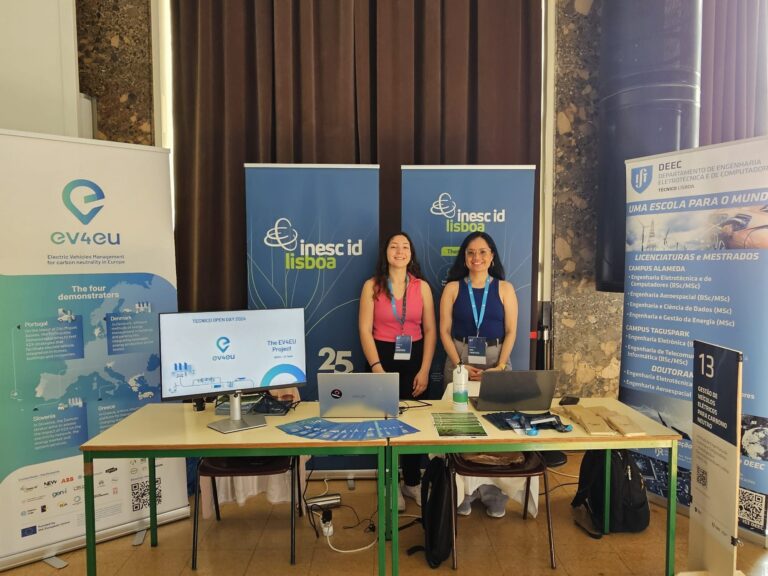
    INESC-ID marked its presence at the Técnico Open Day 2024, held on April 20 at Instituto Superior Técnico, in Lisbon, showcasing the Horizon Europe project EV4EU. The day was filled with lectures, interactive experiences, guided tours, and a science fair with 40 research projects on display, offering visitors a unique opportunity to discover the school and its initiatives.

    At the event’s Science Fair, EV4EU took center stage at the INESC-ID stand, where researchers Cindy P. Guzman and Larissa Montefusco, engaged with many curious visitors who stopped by to chat. Under the title “Electric Vehicles Management for Carbon Neutrality: Discover how electrical vehicles can contribute to the fight against climate change”, they shared the project’s latest developments and discussed how its planned solutions can support the massification of electric vehicles while contributing to the decrease of carbon emissions and global warming.

    Técnico Open Day 2024 was a major success, with over 2000 visitors throughout the day. With contributions from Departments, Students Associations, associated Research Units and Institutes, this was a day dedicated to celebrating diversity in the fields of engineering, science, technology and architecture, engaging the community with the best of what our science has to offer.

    Know more about the project here.

  • ISTSat-1: Portugal’s First University CubeSat Satellite Ready for Summer Space Launch

    ISTSat-1: Portugal’s First University CubeSat Satellite Ready for Summer Space Launch

    The first University CubeSat satellite, entirely conceived and developed in Portugal, is set to launch this summer. The ISTSat-1 project was developed by a collaborative team coordinated by Rui Rocha, which includes INESC-ID researchers Gonçalo Tavares and Moisés Piedade, along with students from Instituto Superior Técnico, marking a significant achievement for Portugal’s technological presence in the international space sector. 

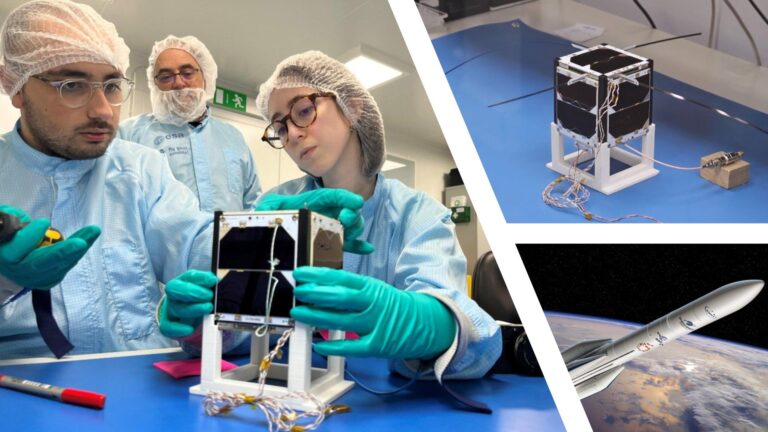
    This state-of-the-art nanosatellite, so named for its size and weight, demonstrates the remarkable feat of integrating all fundamental systems of a satellite into a small cube measuring just 10 cm on each side. It is scheduled to hitch a ride to space aboard the inaugural flight of the Ariane 6 rocket, launching from French Guiana in June or July this year. Once in orbit, the ISTSat-1’s mission will be to demonstrate that small CubeSats can effectively detect aircraft ADS-B signals from space in areas where ground systems cannot reach, such as oceans or very remote regions. 

    As the summer launch approaches, the ISTSat-1 team has already completed its final preparations. Recently, students from NanosatLab traveled to Exolaunch’s Berlin headquarters in Germany to integrate ISTSat-1 with the CubeSat deployer in preparation for the launch, and ensuring that the satellite is ready for the rigors of space. It will soon be shipped to Arianespace facilities in Évry, France, and subsequently to the Guiana Space Centre.

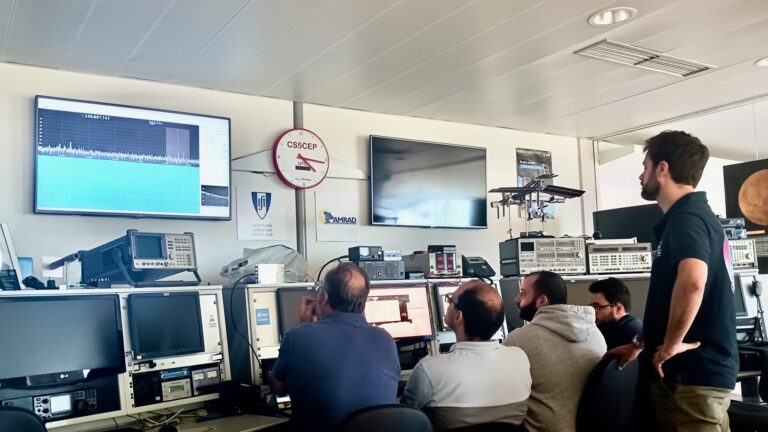
    Mission control for ISTSat-1 will be established at Técnico’s campus in Taguspark, Oeiras, and the satellite will be controlled via the CS5CEP station, licensed to AMRAD, ensuring that oversight and operation are conducted entirely from Portugal. 

    The launch and deployment of ISTSat-1 will be the culmination of an effort that began as early as 2010, when the feasibility of a CubeSat mission was assessed. In 2017, the project was selected by the European Space Agency’s (ESA) Fly Your Satellite! programme, which encourages university teams to develop their own satellites and exposes team members, particularly students, to the entire project lifecycle of a space mission. 

    In 2022, researchers involved in the ISTSat-1 project headed the creation of the Técnico NanosatLab in Taguspark. This consortium led by INESC-ID and including IT, IDMEC, ISR, INESC-MN, INOV, and Instituto Superior Técnico, was the site for the final integration of the ISTSat-1, paving the way for future satellite technology development projects.

    Know more about ISTSat-1: here

    (Image sources: ISTSat-1 website, INESC-ID, ESA)

  • INESC ID Interview with Aleksandar Ilic and Ricardo Nobre from the HPCAS Research Group

    INESC ID Interview with Aleksandar Ilic and Ricardo Nobre from the HPCAS Research Group

    The High-Performance Computing Architectures and Systems (HPCAS) Research Group at INESC-ID, works on state-of-the-art topics in High-Performance Computing (HPC), performance modeling, and bioinformatics. This includes epistasis detection which involves identifying combinations of specific gene mutations that may increase the likelihood of expressing a disease and have adverse effects on health (e.g. Alzheimer’s disease, breast cancer, and others). Epistasis analysis in disease research is proving crucial for a better understanding of complex illnesses.

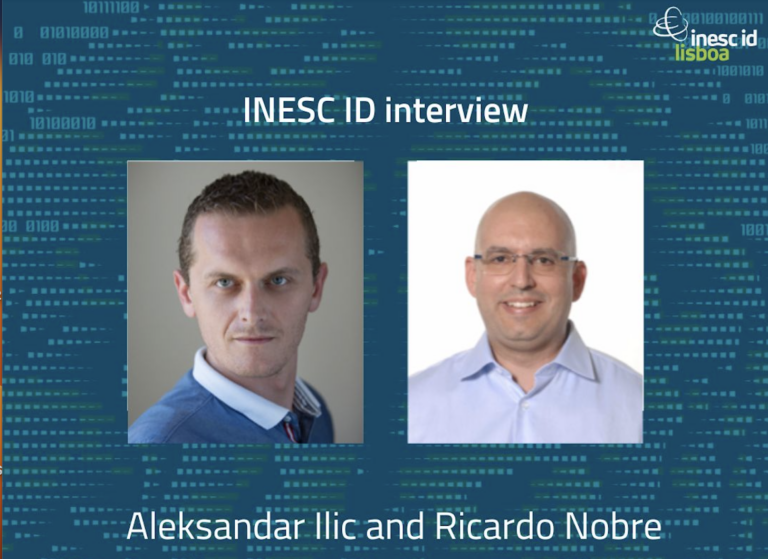
    In this INESC ID interview, HPCAS researchers Aleksandar Ilic and Ricardo Nobre explain the core of their research work and the progress made in Epistasis detection using Intel Software. The achievements of this research counted on the support of numerous researchers and students from INESC-ID and Técnico, including Leonel Sousa, Frederico Pratas, Diogo Marques, Rafael Campos, Sergio Jimenez-Santander, Miguel Graça, among others.

    Briefly, what is the core of the INESC ID High-Performance Computing Architectures and Systems (HPCAS) research work?

    Although tackling many different aspects of high-performance computing, the core HPCAS research work addresses the performance and efficiency of computational systems and applications both at the software and hardware level. At the software level, some of the key aspects that we focus on include parallel algorithms, scheduling, and load-balancing methods targeting systems with state-of-the-art devices, such as multi-core CPUs, GPUs, Deep-Learning Accelerators, FPGAs, etc. At the hardware level, the focus is often on the design of accelerators and application-specific processors and systems.

    Epistasis detection has been at the center of your recent research. Can you briefly explain what epistasis is and the main goals/achievements of your research in this field?”

    Epistasis detection is a bioinformatics application that is concerned with the identification of which combinations of single nucleotide polymorphisms (SNPs) are most correlated with a given condition. SNPs represent a variation of a single nucleotide at a given position in DNA. Several associations between combinations of SNPs and complex human diseases (e.g. Alzheimer’s, Breast Cancer) have been found, but many more are likely to be uncovered.

    “The main goals/achievements of our research in this field have been to develop fast and efficient methods to perform epistasis detection searches. “

    You proposed “using heterogeneous computer architectures composed of multicore CPUs and GPUs to achieve performant and energy-efficient epistasis analysis.” Briefly, what did you suggest?

    Heterogeneous computer architectures are at the core of many of today’s computing systems, from embedded devices to supercomputers. Our work involves developing efficient parallel algorithms and identifying which hardware is the most suitable to perform the different blocks of epistasis computations, as well as orchestrating them for efficient execution. Our main contribution in this research field represents one of the first studies to propose methods to efficiently exploit unconventional hardware to achieve high-performance epistasis detection, e.g., by using the NVIDIA Tensor Cores and AVX-512 POPCNT in Intel CPUs. These works currently represent the fastest approaches to epistasis detection in the literature.

    What are the main challenges that the team had to face?

    The use of hardware with novel instructions (e.g. vectorized POPCNT) and programming models/tools (e.g. Data Parallel C++ / SYCL) requires us to be at the forefront of technology in what concerns both the hardware and software methodologies. This requires investing a significant portion of the time in research, especially in cases where the hardware/software has not been previously explored, even for applications from other domains. Exploiting novel hardware/software/tools was often not straightforward and required redesigning the epistasis detection problem in ways that core operations are mapped to efficiently implemented instructions and programming primitives.

    What are the potential implications and usefulness of these results?

    Faster epistasis detection searches mean that a larger portion of today’s case-control datasets can be processed considering high-order SNP interactions. As a result, this might enable uncovering previously unknown relations between SNPs and complex conditions or diseases, which can help in better understanding causation mechanisms and have an impact on their treatment.

    You have been working within several national and international EU research projects. Can you let us know more about the international projects you are involved in? What is their common thread/theme related to optimizing this type of bioinformatics applications?

    Our explorations on epistasis detection started as part of the national FCT-funded HiPerBio project and continued in the context of other EU-funded research projects, such as SPARCITY, SYCLOPS, and multiple advanced computing projects. The common thread related to optimizing this type of bioinformatics application has been the efficient evaluation of the huge combination space. This computationally intensive task relates to many projects running at the HPCAS group, which are focused on fully exploiting the capabilities of state-of-the-art hardware.

    How does Intel come in and why? Main advantages of this collaboration?

    Intel is one of the key players and our long-term partner in what concerns our developments using both Intel hardware and software. Our recent studies show that some of the novel features introduced in recent Intel architectures are very useful for the acceleration of epistasis detection studies, e.g., AVX-512 POPCOUNT in Intel CPUs (Saphire Rapids) and data-parallel engines in Intel Datacenter Max Series GPUs (PVC).

    Furthermore, our research contribution (Cache-aware Roofline Model, CARM) has been integrated as a fully supported feature in the Intel Advisor tool, since 2017. The CARM allows for efficient characterization of performance upper bounds of different Intel CPU and GPU devices, while also providing intuitive guidance for application optimization. We relied also on this feature when optimizing epistasis detection codes, which provided speedups of up to 9x when compared to a baseline implementation.

    Ideally, where do you imagine your research going in the future?

    As for now, we have mostly focused on CPUs and GPUs, and FPGAs to some extent. However, we envision our research to extend to systems with even higher heterogeneity, including novel domain-specific accelerators, such as Tensor and Intelligence Processing Units (TPUs/IPUs). We also explore portable cross-device software solutions, based on open-standard programming languages such as DPC++ / SYCL, as well as the use of machine learning frameworks to achieve high performance and portability.

    Bios

    Aleksandar Ilic (PhD’14) is an Associate Professor at the Department of Electrical and Computer Engineering (DEEC), Instituto Superior Técnico (Técnico), Universidade de Lisboa, and a Researcher of INESC-ID, Lisbon, Portugal. He has contributed to more than 60 international journal and conference publications and has participated in many tutorials at different international venues. The integration of his scientific contribution (Cache-aware Roofline Model) in Intel Advisor received the HiPEAC Tech Transfer award. His research interests include high-performance and energy-efficient computing and modeling of parallel heterogeneous systems.

    Ricardo Nobre is a researcher at INESC ID and part of the High-Performance Computing Architectures and Systems (HPCAS) research area. His interests include high-performance computing, parallel programming, compilers and machine learning. He has contributed close to 30 papers in international journals and conferences. Ricardo Nobre received a PhD in Informatics Engineering from Faculty of Engineering of the University of Porto (FEUP).

    More Info:

    – INESC-ID Achieves 9x Acceleration for Epistasis Disease Detection using oneAPI Tools and Intel Hardware (Aleksandar Ilic and Ricardo Nobre)
    Improving the Efficacy of Patient-Centered Drug Development (Aleksandar Ilic)
    – Podcast: Accelerating Epistasis Detection – How oneAPI Supports Genetics Researchers (Aleksandar Ilic and Ricardo Nobre)

  • The expression of hate speech against Afro-descendant, Roma, and LGBTQ+ communities in YouTube comments

    The expression of hate speech against Afro-descendant, Roma, and LGBTQ+ communities in YouTube comments

    What’s in a word, and especially one mobilized for online hate speech (OHS)? A team of INESC-ID researchers has asked exactly that.

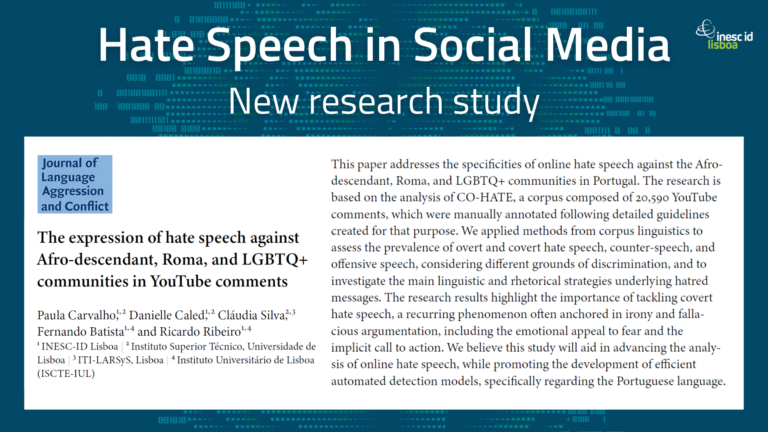
    Authored by INESC-ID Information and Decision Support Systems (IDSS) researchers Paula Carvalho and Danielle Caled, and Human Language Technologies (HLT) researchers Fernando Batista and Ricardo Ribeiro (together with Cláudia Silva from ITI-LARSyS)*, The expression of hate speech against Afro-descendant, Roma, and LGBTQ+ communities in YouTube comments — published this month in the Journal of Language Aggression and Conflict — explores the prevalence of overt and covert hate speech, counter-speech and offensive speech in CO-HATE (Counter, Offensive and Hate speech), a corpus of Portuguese 20,590 YouTube comments posted by more than 8,000 different online users.

    By asking two simple yet challenging questions — 1) how does OHS against the Afro-descendant, Roma, and LGBTQ+ communities materialize in the Portuguese social context? and 2) which are the main linguistic and rhetorical features underlying the expression of covert hate speech? — and creating a detailed database of written Portuguese (essential in studying and identifying online hate speech targeting Afro-descendant, Roma, and LGBTQ+ communities on social media), the team analyzed the specific characteristics of hateful comments towards these groups by combining quantitative and qualitative research methods based on corpus linguistics (which analyze large collections of texts to understand how language is used, uncovering patterns and relationships between words and structures, thus providing data-driven insights into the myriad ways language is used). They then measured agreement among annotators when identifying OHS and related topics.

    By studying how people express hatred in their comments, the team found that comment writers often use specific language and persuasive techniques. They also discovered that hate speech is often hidden behind irony and misleading arguments, a kind of speech that tries to make people afraid and encourages them to take action.

    This study offers valuable insights that can help detect online hate speech more effectively. It also deepens our understanding of how hate speech works online in Portugal, especially towards marginalized groups. Furthermore, the corpus created by Paula Carvalho et al. will be a valuable resource for those interested in developing methods to detect both obvious and hidden hate speech, as well as other related behaviors like counter-speech and offensive language, in Portuguese.

    Future research venues might involve expanding this study to other social media platforms like Twitter and include more communities such as migrants and refugees. The team is also planning on involving more annotators, considering their social backgrounds, to better assess agreement between different communities.

    This project follows a very successful research line at INESC-ID. Last year we had reported on the FCT-funded HATE COVID-19.PT project, coordinated by Paula Carvalho, and under which methods for semi-automatically putting together a large-scale Portuguese annotated corpus covering online hate speech were created.

    *Paula Carvalho, Danielle Caled and Cláudia Silva are also affiliated with Instituto Superior Técnico, and Ricardo Ribeiro with Instituto Universitário de Lisboa (ISCTE-IUL).

  • INESC-ID researchers receive António Brandão Vasconcelos Award

    INESC-ID researchers receive António Brandão Vasconcelos Award

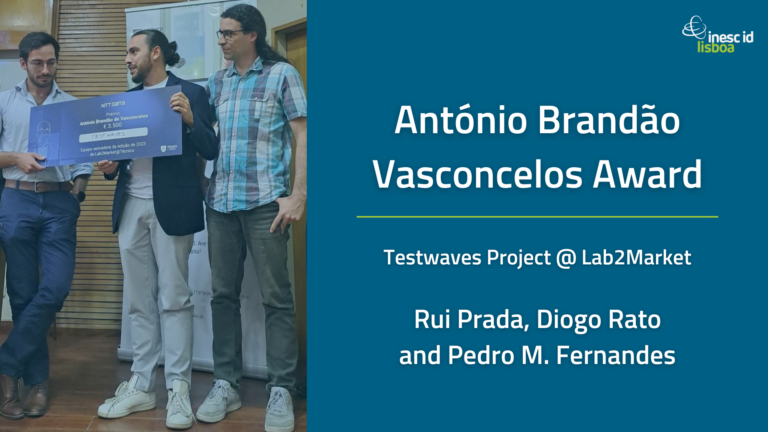
    INESC-ID researchers Rui Prada, Diogo Rato and Pedro M. Fernandes have received the first ever António Brandão Vasconcelos Award.

    Set up in honour of the founder of the iLLP@Técnico – Innovation Lean LaunchPad, the acceleration programme that became Lab2Market@Tecnico, the António Brandão Vasconcelos Award recognises “the most outstanding team within the Lab2Market@Técnico program, which, with the support of NTT Data Portugal and i-Deals, aims to identify and support the path to market of projects and technologies developed by researchers, teachers, and students of Instituto Superior Técnico.”

    And the most outstanding team within the Lab2Market@Técnico program is exactly what the three Artificial Intelligence for People and Society (AIPS) researchers were. Sharing, with three additional teams, three months-worth of training on how to turn their unique ideas into a viable business, Professor Prada, Diogo and Pedro — both PhD students at AIPS — were recognized for their project Testwaves, through which they intend to explore AI-based solutions for automated play-testing. The budding company has exciting plans for the near future, so definitely stay tuned.

    The Testwaves team received the António Brandão Vasconcelos Award, worth a cash prize of €3,500, on 31 May at Instituto Superior Técnico.

    Photo credit: Departamento de Engenharia Informática (DEI), Instituto Superior Técnico.