Category: Science Education

  • From theory to practice, the experience of the first Lisbon Blockchain Winter School
    From theory to practice, the experience of the first Lisbon Blockchain Winter School

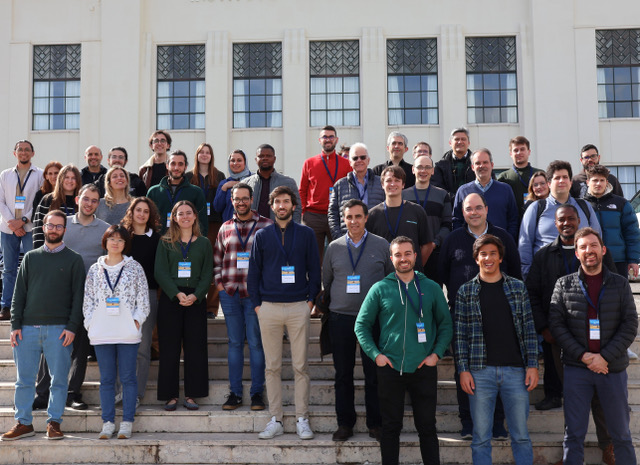
    Experts, professors, and students—some just beginning their journey into blockchain—came together in an environment where distinctions quickly blurred. The first edition of the Lisbon Blockchain Winter School (LxBWS), organized by the BIG ERA Chair project, provided a comprehensive training experience on blockchain technology through lectures, hands-on workshops, and keynotes by leading experts. The event also promoted networking, encouraging collaboration across different levels of expertise.

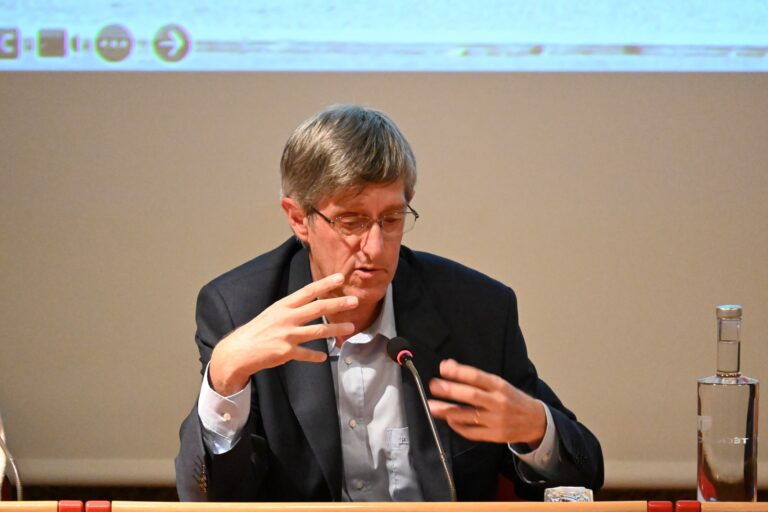
    “Since the sessions were designed to accommodate varying levels of knowledge—with introductory lectures alongside cutting-edge keynotes—participation was high across the board,” noted David R. Matos, an INESC-ID researcher and coordinator of the event’s organizing team. “For instance, even university professors actively engaged in the blockchain labs, despite their introductory nature”, says David, who is part of the BIG ERA Chair team, which is dedicated to unlocking the full potential of interdisciplinary blockchain research.

    One of the most engaging lab exercises involved creating a cryptocurrency from scratch. The session proved so captivating that even Seth Goldstein, a Carnegie Mellon University professor and renowned expert, enthusiastically took part—despite also delivering a surprising keynote on the future of money.

    “The first Lisbon Blockchain Winter School stands out among the many initiatives of the BIG ERA Chair Laboratory on Blockchain Innovation for Social Good. This lab fosters cutting-edge research, advanced education, and collaborative innovation within an international academic and industrial network,” emphasized INESC-ID researcher, Luís Caires, BIG ERA Chair coordinator and professor at Instituto Superior Técnico, which hosted the event from February 10 to 14.

    Blockchain, well beyond DeFi

    On the industry panel, participants had the opportunity to hear from entrepreneurs representing four exciting tech companies—Unlockit, Anchorage, SenseFinity, and Void—who shared insights into the triumphs and challenges of launching a company in today’s rapidly evolving technological landscape.

    INESC-ID researchers also played a key role in the event, that gathered 50 participants. Miguel Correia, President of INESC-ID’s Executive Committee, delivered a talk on Blockchain Applications and Digital Identity, while Miguel Pardal, coordinator of the Blockchain PRR-funded project, presented a lecture on Food Traceability with Blockchain.

    “While blockchain is often narrowly associated with decentralized finance (DeFi), its potential as a trustworthy, transparent, and consensus-based technology extends far beyond that. Sectors such as healthcare, public governance, and business are beginning to see its transformative impact,” noted Luís Caires.

    Participants’ feedback was very positive, with many describing the experience as “extremely enriching.” They praised the quality of speakers and presentations, the variety of sessions (which included both advanced and introductory content), and the event’s overall organization. Many even suggested that the initiative should be repeated next year. And while it wasn’t explicitly mentioned, it’s fair to assume that Lisbon’s winter sunshine may have also played a role in the event’s success.

    Images | © 2025 INESC-ID

  • Teaching science by the sea: Municipality of Oeiras and “Engenharia para Todos” empower teachers and students of Príncipe Island

    Teaching science by the sea: Municipality of Oeiras and “Engenharia para Todos” empower teachers and students of Príncipe Island

    It was still early morning when a group of dedicated educators and excited students gathered on the small piscatorial sandy beach in front of Abade Elementary School. Surrounded by the lush northeastern forests of Príncipe Island, each student’s eyes sparkled as they opened a big ocean-blue box filled with a treasure trove of fun scientific experiments. They were there for the “Engenharia para Todos” (“Engineering for All”) training sessions, a project aimed at transforming education through hands-on science.

    At the end of January, a delegation from the Department of Education of the Municipality of Oeiras (Município de Oeiras), organised an educational mission to the equatorial São Tomé e Príncipe archipelago to provide in-person training to 40 local teachers. The delegation included the Education Councilor of the Municipality of Oeiras, Pedro Patacho, and five trainers in the areas of Portuguese, Mathematics, Sciences, Arts, and Project Work, who promoted innovative methodologies to improve the quality of education in the region.

    In the field of Sciences, the mission was headed by INESC-ID’s Maria João Verdasca, manager of “Engenharia para Todos” – a project by Instituto Superior Técnico and INESC-ID, in partnership with the Municipality of Oeiras – who introduced the former Instituto Gulbenkian de Ciência’s Lab in a Box kit, now relaunched and driven by the project.

    “The transformative power of education was evident in every child’s smile and in the teachers’ dedication to embracing new ways of teaching,” proudly comments Maria João Verdasca.

    During two intense weeks, each of the five trainers worked daily with two classes in the morning, covering a total of nearly 1500 children. In the afternoons, they held training sessions with the teachers, discussing new pedagogical strategies and sharing good educational practices.

    Beyond the classroom, the delegation led by Pedro Patacho was received by the President of the Regional Government of Príncipe, Filipe Nascimento, and met with the Regional Secretary of Education, Fátima Cassandra, to discuss the island’s educational needs and future collaborations. The vibrant local culture and the island’s natural beauty provided the perfect backdrop and inspiration for these important exchanges of ideas.

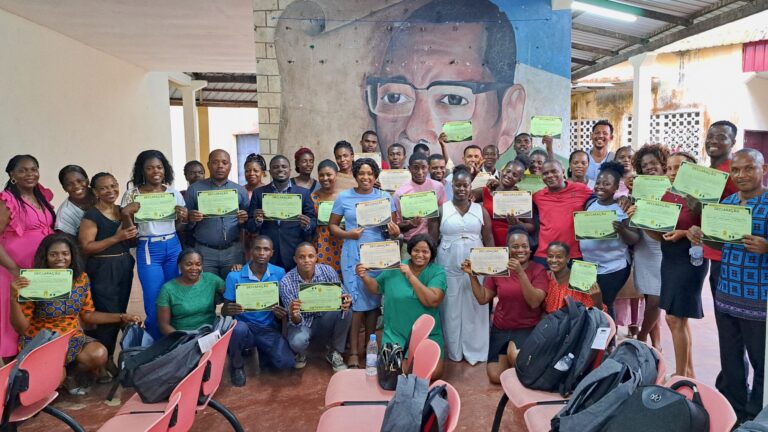
    At the end of the training, the teachers received their diplomas from the hands of the President of the Regional Government himself, in a joyful celebration that brought together teachers, trainers, and students, with the aroma of traditional snacks filling the air. 

    According to Maria João, “the impact of the training was noticeable in small but significant changes in pedagogical practices, such as better organisation of the school space and more dynamic and participatory classes”, and very soon, 10 out of the 40 trained teachers will come to Portugal to spend a week in Oeiras, observing the local teachers in their teaching dynamics.

    This initiative highlights our commitment to innovate in education, promote inclusion, and support sustainable development through knowledge.

    Text by Rodrigo Abril de Abreu, Head of Communications and Outreach Office, INESC-ID | © 2025 INESC-ID

    Images | © 2025 Engenharia para Todos 

  • Arlindo Oliveira and the Future of AI: From Generative Intelligence to National Strategy

    Arlindo Oliveira and the Future of AI: From Generative Intelligence to National Strategy

    It is definitely the topic of the moment and there is still a lot that can be said about it. After having previously authored an essay on the topic, between 2017 and 2018, and following an invitation from Fundação Francisco Manuel dos Santos, Arlindo Oliveira, INESC-ID researcher and Professor at the Department of Computer Science and Engineering (DEI), wrote the book Generative Artificial Intelligence (A Inteligência Artificial Generativa).

    “The goal was to present artificial intelligence in a way that is accessible to the general public. After writing that earlier essay, I realized that public perception of the subject had changed radically. Artificial intelligence, which was once a topic of interest confined to specialists, has become a common subject of discussion among the general public, especially after the emergence of technologies like ChatGPT,” Arlindo explains—or rather, the interactive chatbot of generative artificial intelligence created from the book’s content answers.

    “I believe it is important to contextualize artificial intelligence within the broader evolution of natural intelligence, which can be appealing from a scientific, philosophical, and humanistic perspective,” the bot continues, echoing Arlindo’s words as expressed in the newly released book.

    A debate about the book’s theme will take place on February, 12, at El Corte Inglés, Lisboa, with the presence of Ana Paiva, the Secretary of State of Science and INESC-ID researcher, and Paulo Dimas, from the company Unbabel. Generative Artificial Intelligence: Risks or benefits for the society of the future?

    Earlier this month, Arlindo was appointed to chair the Specialized Monitoring Committee for the National Artificial Intelligence Agenda. This committee will play a crucial role in shaping strategies for the development of a robust and innovative AI ecosystem in Portugal. The National Artificial Intelligence Agenda, part of the National Digital Strategy approved by the Government on December 12, 2024, will be presented at the end of the first quarter of 2025.

    Joining Arlindo Oliveira on the committee are Goreti Marreiros, President of the Portuguese Association for Artificial Intelligence (APPIA) and Principal Coordinator Professor at the Instituto Superior de Engenharia do Porto; Daniela Braga, representing the Accelerat.ai consortium, a key initiative under the Recovery and Resilience Plan (PRR); and Paulo Dimas, representing the Center for Responsible AI consortium, also part of the PRR – both of these projects, of which INESC-ID is a part.

  • How to achieve a Guinness World Record: the backstage of the largest programming lesson

    How to achieve a Guinness World Record: the backstage of the largest programming lesson

    A line spiralling around the building of the Técnico Innovation Center (TIC), at eight in the morning of an otherwise lazy Saturday, was a good hint that we were about to experience something we had never seen before. Something worthy of the Guinness World Records.

    The promise was to set the record for the largest computer programming lesson in a single venue. A goal Instituto Superior Técnico, together with Magma Studio, was determined to achieve.

    Being a PhD student in Computer Science it was definitely not the opportunity to learn about Phython that led Pedro Orvalho, 27, and his colleagues to get up earlier last October 13 and attend the meeting. “I was curious about how the class would be managed and, of course, also about the Guinness Record”, admits the researcher at INESC-ID, in Automated Reasoning and Software Reliability. When Pedro finally entered the venue, there were no more chairs nor gift bags. Certainly, the organizers didn’t expect more than the registered participants to show up. But they did!

    Three teachers were responsible for the 90-minute class: INESC-ID President, Inês Lynce, and INESC President, Arlindo Oliveira, both professors at Técnico, and Rodrigo Girão Serrão, a former student at IST.

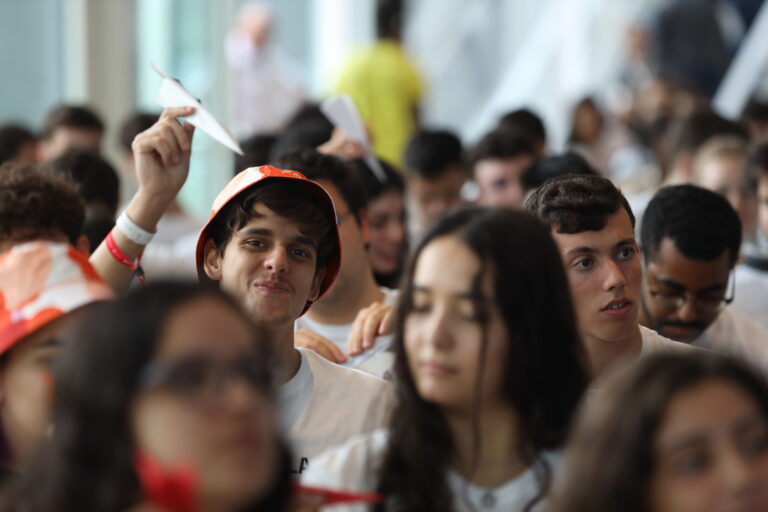
    For Inês, the challenge was to plan a lesson for such a large and diverse audience. “It couldn’t be a class like the ones I teach at Técnico”, she admits. So that is why she came up with the idea of explaining the notion of an algorithm using something we have all done at least once in our lives: making a paper plane. In the gift bags, the participants could find sheets of paper in different colours and by following the instructions provided by Inês the planes came out of their hands (but they were not allowed to test their aerodynamical properties!). Rodrigo used the example of the Sudoku game, to explain the notion of programming and Arlindo brought the Game of Life and the classical book Os Maias, by Eça de Queiroz, to demonstrate a language model previously trained on the masterpiece of Portuguese literature.

    The operations did not run smoothly all the time. “The access points were insufficient, and the mobile internet couldn’t handle it, resulting in a slow connection to OpenAI’s language model, which was used in the second example”, tells Arlindo Oliveira. A similar problem affected the remote control to operate the slides. “This caused the presentation to freeze more than once, putting me in a difficult position”, he regrets, admitting that “these two factors (and the sound delay in such a large room) were due to the scale of the event, and it was hard to anticipate, as classes are typically not held in such a large space.” After all, it was a first!

    Despite the setbacks, the event was a huge success. The Guinness World Record Adjudicator, Paulina Sapinska was checking during the lesson to ensure that all the attendees were following the class and not checking social networks, for example. After the count, the record was set: There were 1,668 participants at the TIC (the previous record had set 724 participants in Dallas, EUA, in 2016).

    Besides this, Inês Lynce highlights the festive atmosphere, the number of girls present and the general enthusiasm regarding programming. As stated by the President of Técnico, Rogério Colaço, a true “celebration of young talent.”

    Text by Sara Sá, Science Writer | Communications and Outreach Office, INESC-ID / © 2024 INESC-ID

    Images | © Instituto Superior Técnico and INESC-ID

  • Science, families and fun. European Researcher’s Night had it all!

    Science, families and fun. European Researcher’s Night had it all!

    To celebrate science across Europe is the goal of the European Commission’s initiative, European Researchers’ Night (NEI). And that’s exactly how it felt last Friday, the 27th, at Marina de Oeiras – a celebration!

    At 12 years old, Renata is very sure of what she wants to be when she grows up. The eighth-grader likes Biology the most and wants to be a scientist or an astronaut. Accustomed to attending science outreach events, Renata visited INESC-ID’s booth at NEI, where she tested the Alien Bar game  developed at Group of Artificial Intelligence for People and Society (GAIPS Lab), to explore cooperation between people. Throughout the afternoon, the researchers Samuel Gomes and Luís Costa, both regulars at such events, explained to visitors the concept behind these so-called serious games.

    Spread across three tables, INESC-ID’s participation at NEI, which has been celebrated throughout Europe since 2005, included a demonstration of platforms to study the psychology behind cooperation and teamwork, games to help cope with psoriatic arthritis and a demo of a social robot, interacting with the attendees. We also had the project Engenharia para Todos, aimed at promoting skills in the fields of Science and Technology.

    Although it was her first time participating in such events, PhD student and researcher Bárbara Ramalho from HUMAN Lab in Graphics and Interaction appeared completely at ease. Together with the master’s students Marta Vicente and Hugo Escobar, they showcased the game iPROLEPSIS, inviting volunteers to play while explaining how its tasks are designed to train wrist rotation or breathing—movements that are often affected in people with psoriatic arthritis.

    Also in the games section, we had Inês Lobo, from GAIPS, displaying the collaborative game Geometry Friends, highlighting a study that explores human interaction with agents, exhibiting different levels of initiative – leader, follower, shift initiative.

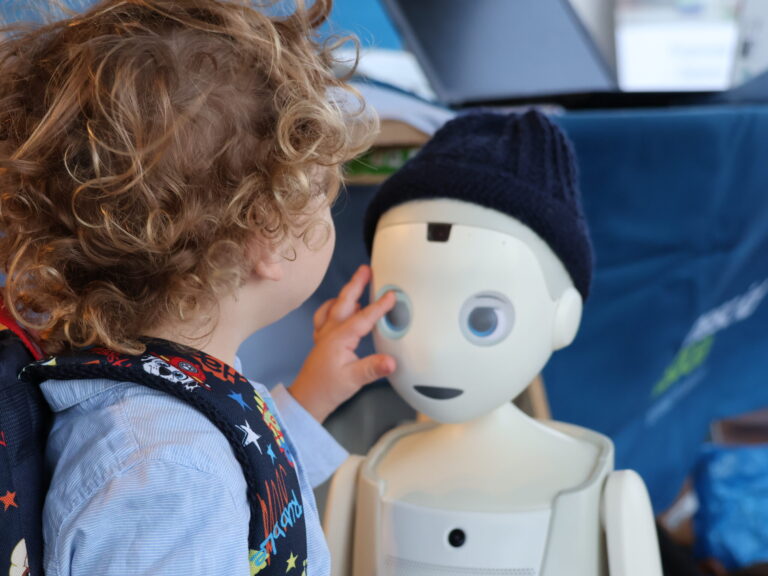
    Undoubtedly, the star of the show was Navel, our social robot, easily recognisable with its blue beanie and blinking eyes. Developed at GAIPS, Navel simulates a curious little boy and is designed to engage in social interactions in hospitals, elderly care institutions, or any setting where human contact is needed. Research assistant Haohua Dong proudly and enthusiastically took care of Navel throughout the event.

    INESC-ID’s participation in NEI Marina, an event promoted by António Xavier Institute of Chemical and Biological Technology of the NOVA University of Lisbon (ITQB NOVA), in partnership with the Município de Oeiras, offered a dynamic and interactive experience, showcasing the intersection of technology, human interaction, and social good. And was definitely a rewarding experience to all of the people involved.

    Text by Sara Sá, Science Writer | Communications and Outreach Office, INESC-ID / © 2024 INESC-ID

    Images | © 2024 INESC-ID

  • INESC-ID joins prestigious Marie Curie Doctoral Training Network to enhance Privacy in Smart Speech Technology

    INESC-ID joins prestigious Marie Curie Doctoral Training Network to enhance Privacy in Smart Speech Technology

    How much private information can a single spoken word inadvertently reveal?

    The rapid growth of smart speech technology is transforming how people access information and applications through the human voice. However, these advancements come with privacy risks. Smart devices like speakers and smartwatches can expose users to the exploitation of sensitive information within speech signals, such as one’s health status, without their knowledge or consent.

    Can innovative privacy-preserving smart speech technologies reduce these risks? Aligned with this mission and its ongoing commitment to strengthen the internationalisation of its advanced training, INESC-ID has recently joined the Marie Curie doctoral training network “Privacy for Smart Speech Technology” (PSST). The PSST consortium includes world-leading research labs in speech processing, privacy, and usability, along with numerous innovative industrial partners across Europe.

    The network will train a new group of researchers to develop these urgently-needed technologies using cutting-edge deep learning methods. This double-degree, high-impact training program partners with Aalto University (Finland, Coordinator), INESC-ID (Portugal), EURECOM GIE (France), INRIA (France), Ruhr-Universität Bochum (Germany), Radboud University Nijmegen (the Netherlands), and the Technical University of Berlin (Germany), among other partners. It will provide doctoral researchers with expertise in speech processing, machine learning, and comprehensive knowledge of privacy threats and privacy-enhancing technologies.

    Funded with a total of €4M by the Marie Skłodowska-Curie Actions (MSCA) Doctoral Networks (DN) program, the program will run for 60 months, starting January 25, 2025. INESC-ID’s participation will be led by Isabel Trancoso, an INESC-ID researcher in the area of Human Language Technologies and full professor at Instituto Superior Técnico, with funding of €487K.

    PSST partners and researchers will jointly create a unique, user-centred view of smart speech technologies, reducing threats like exploitation of sensitive information via speech. They will also promote innovative business models for responsible and sustainable privacy-aware technologies in the EU.

    The call for open positions begins in Fall 2024.

    Click here for more detailed information and full list of partners.