TecSummit, a unique event focused on entrepreneurship and technology, took place on March 28, at the Técnico Innovation Center (TIC), preceding the weekend-long TecStorm’25, the largest national university-level technology competition, organised by JUNITEC. The afternoon started with a roundtable on AI Frontiers, setting the scene for the following panels, which counted with our President of the Board, Inês Lynce as a speaker, alongside Paulo Dimas (CRAI) and moderated by João Martins (NOESIS).
Among the various activities offered during the evening, the main attraction was the Product Showcase, where various companies and startups like Noxus.AI, CRIAM, Windcredible and others, gave a sneak peek of their products and activities. INESC-ID was the only research institute represented, displaying an eye-catching stand with several state-of-the art project demonstrations. Visitors and participants had the chance to talk to our researchers at our eye-catching stand enjoying a moment of calm and insightful discussions before the excitement and intensity of TecStorm25.
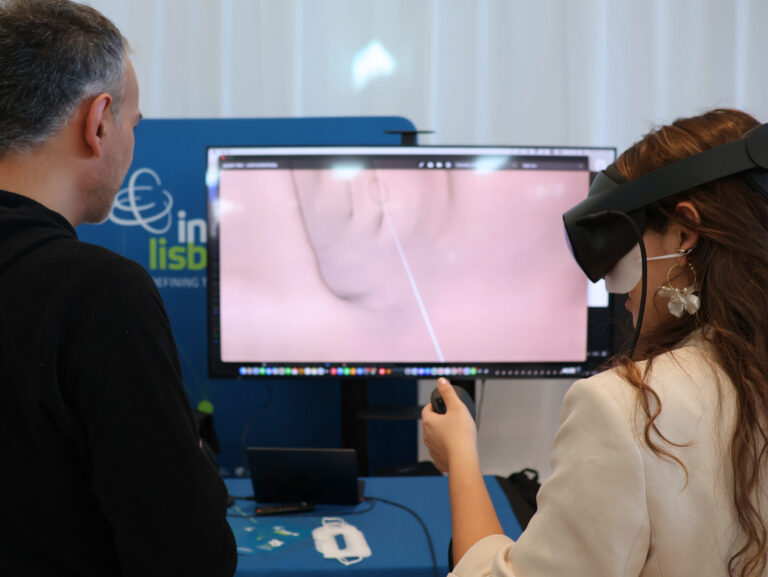
Ricardo Chaves, Joana Afonso and Pedro Martins showcased project DISCRETION, which intends to improve the security of military networks against emerging threats, while Larissa Montefusco provided passersby with an overview of EV4EU, a project, coordinated by Hugo Morais, with the ultimate goal of creating the conditions for electric mass deployment. Right next to EV4EU, Duarte Boto presented “REST: Interactive visualization tool for epidemic modelling”, which provides new insight in understanding the COVID-19 pandemic and for tracking future ones. Last but definitely not least, Anderson Maciel took over the big screen and, equipped with VR goggles, guided us through a 3D scheme of a colon, a new diagnosis VR tool that can prove itself as a new step for non-invasive diagnosis of health issues in the area.
On the first day of the SINFO32, which took place from February 17 to 21, INESC-ID marked its presence during the panel “Técnico’s Computer Engineering at the Forefront of Artificial Intelligence, a collaboration with the Department of Computer Science and Engineering (DEI). INESC-ID researchers Arlindo Oliveira, Ana Teresa Freitas and Inês Lynce, under the moderation of INESC-ID’s Science Writer, Sara Sá, highlighted the department’s contributions in various fields, which prompted many enthusiastic questions from the audience, particularly regarding entrepreneurship.
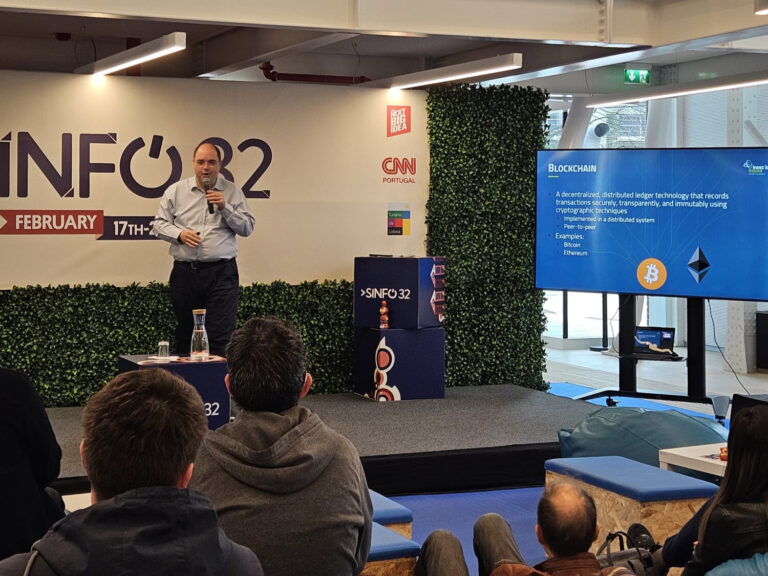
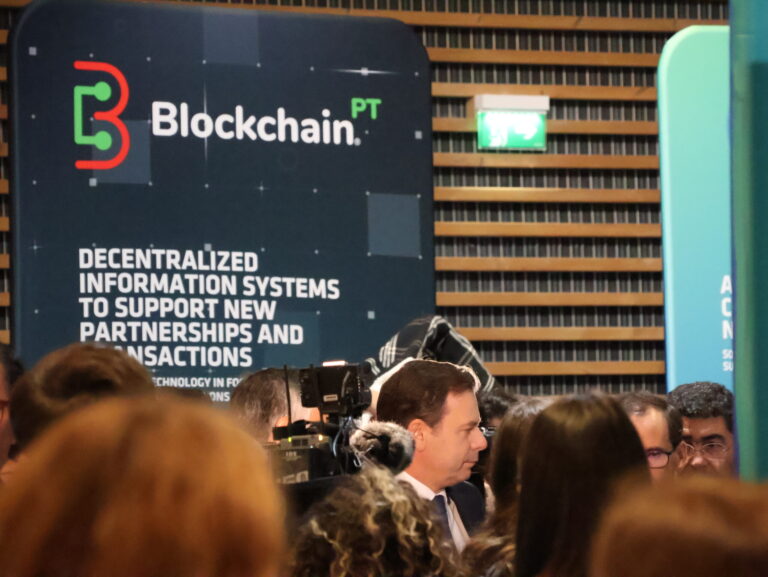
On the following day, our very own session, “FoodSteps: From Crypto-Currencies to Cherry-Tracking”, a presentation by INESC-ID researcher, Miguel Pardal. In a packed second stage, and following a short introduction about INESC-ID, the talk delved into the specifics of “blockchain”, and how it can be applied to the agriculture sector by keeping track of produce origins and monitoring its conditions during transport. A practical example of this food traceability is the project Blockchain.PT, which has been using blockchain technology to track the well known “cereja do Fundão” (read more about this innovative project here).
SINFO is a free tech conference, created by students from Instituto Superior Técnico, that hosts an annual week-long event in Lisbon, where participants (students, professionals or industry leaders) can connect with each other and share their knowledge in computer science and technology. Over the five days attendees were able to attend lectures, workshops and panels in a wide range of topics, from Multimedia to AI, as well as get in touch with companies displayed around the job fair.
Experts, professors, and students—some just beginning their journey into blockchain—came together in an environment where distinctions quickly blurred. The first edition of the Lisbon Blockchain Winter School (LxBWS), organized by the BIG ERA Chair project, provided a comprehensive training experience on blockchain technology through lectures, hands-on workshops, and keynotes by leading experts. The event also promoted networking, encouraging collaboration across different levels of expertise.
“Since the sessions were designed to accommodate varying levels of knowledge—with introductory lectures alongside cutting-edge keynotes—participation was high across the board,” noted David R. Matos, an INESC-ID researcher and coordinator of the event’s organizing team. “For instance, even university professors actively engaged in the blockchain labs, despite their introductory nature”, says David, who is part of the BIG ERA Chair team, which is dedicated to unlocking the full potential of interdisciplinary blockchain research.
One of the most engaging lab exercises involved creating a cryptocurrency from scratch. The session proved so captivating that even Seth Goldstein, a Carnegie Mellon University professor and renowned expert, enthusiastically took part—despite also delivering a surprising keynote on the future of money.
“The first Lisbon Blockchain Winter School stands out among the many initiatives of the BIG ERA Chair Laboratory on Blockchain Innovation for Social Good. This lab fosters cutting-edge research, advanced education, and collaborative innovation within an international academic and industrial network,” emphasized INESC-ID researcher, Luís Caires, BIG ERA Chair coordinator and professor at Instituto Superior Técnico, which hosted the event from February 10 to 14.
Blockchain, well beyond DeFi
On the industry panel, participants had the opportunity to hear from entrepreneurs representing four exciting tech companies—Unlockit, Anchorage, SenseFinity, and Void—who shared insights into the triumphs and challenges of launching a company in today’s rapidly evolving technological landscape.
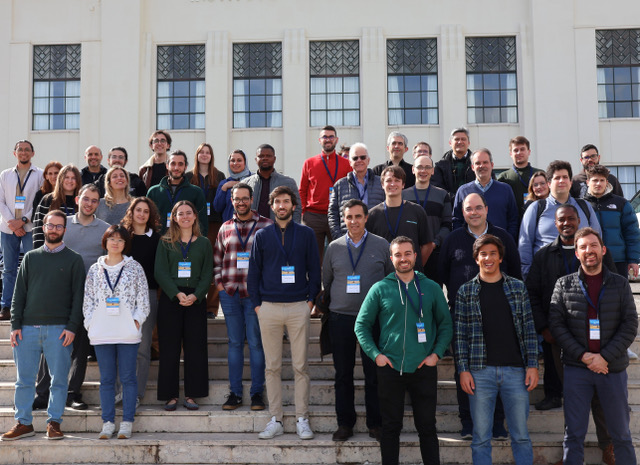
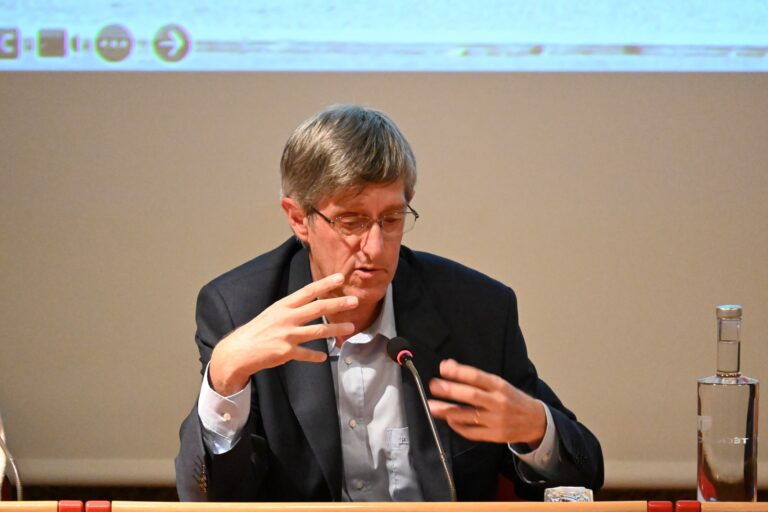
INESC-ID researchers also played a key role in the event, that gathered 50 participants. Miguel Correia, President of INESC-ID’s Executive Committee, delivered a talk on Blockchain Applications and Digital Identity, while Miguel Pardal, coordinator of the Blockchain PRR-funded project, presented a lecture on Food Traceability with Blockchain.
“While blockchain is often narrowly associated with decentralized finance (DeFi), its potential as a trustworthy, transparent, and consensus-based technology extends far beyond that. Sectors such as healthcare, public governance, and business are beginning to see its transformative impact,” noted Luís Caires.
Participants’ feedback was very positive, with many describing the experience as “extremely enriching.” They praised the quality of speakers and presentations, the variety of sessions (which included both advanced and introductory content), and the event’s overall organization. Many even suggested that the initiative should be repeated next year. And while it wasn’t explicitly mentioned, it’s fair to assume that Lisbon’s winter sunshine may have also played a role in the event’s success.
It was still early morning when a group of dedicated educators and excited students gathered on the small piscatorial sandy beach in front of Abade Elementary School. Surrounded by the lush northeastern forests of Príncipe Island, each student’s eyes sparkled as they opened a big ocean-blue box filled with a treasure trove of fun scientific experiments. They were there for the “Engenharia para Todos” (“Engineering for All”) training sessions, a project aimed at transforming education through hands-on science.
At the end of January, a delegation from the Department of Education of the Municipality of Oeiras (Município de Oeiras), organised an educational mission to the equatorial São Tomé e Príncipe archipelago to provide in-person training to 40 local teachers. The delegation included the Education Councilor of the Municipality of Oeiras, Pedro Patacho, and five trainers in the areas of Portuguese, Mathematics, Sciences, Arts, and Project Work, who promoted innovative methodologies to improve the quality of education in the region.
In the field of Sciences, the mission was headed by INESC-ID’s Maria João Verdasca, manager of “Engenharia para Todos” – a project by Instituto Superior Técnico and INESC-ID, in partnership with the Municipality of Oeiras – who introduced the former Instituto Gulbenkian de Ciência’s Lab in a Box kit, now relaunched and driven by the project.
“The transformative power of education was evident in every child’s smile and in the teachers’ dedication to embracing new ways of teaching,” proudly comments Maria João Verdasca.
During two intense weeks, each of the five trainers worked daily with two classes in the morning, covering a total of nearly 1500 children. In the afternoons, they held training sessions with the teachers, discussing new pedagogical strategies and sharing good educational practices.
Beyond the classroom, the delegation led by Pedro Patacho was received by the President of the Regional Government of Príncipe, Filipe Nascimento, and met with the Regional Secretary of Education, Fátima Cassandra, to discuss the island’s educational needs and future collaborations. The vibrant local culture and the island’s natural beauty provided the perfect backdrop and inspiration for these important exchanges of ideas.
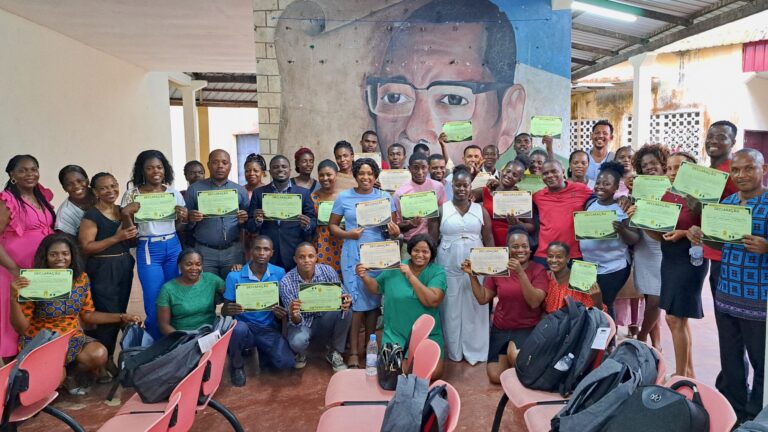
At the end of the training, the teachers received their diplomas from the hands of the President of the Regional Government himself, in a joyful celebration that brought together teachers, trainers, and students, with the aroma of traditional snacks filling the air.
According to Maria João, “the impact of the training was noticeable in small but significant changes in pedagogical practices, such as better organisation of the school space and more dynamic and participatory classes”, and very soon, 10 out of the 40 trained teachers will come to Portugal to spend a week in Oeiras, observing the local teachers in their teaching dynamics.
This initiative highlights our commitment to innovate in education, promote inclusion, and support sustainable development through knowledge.
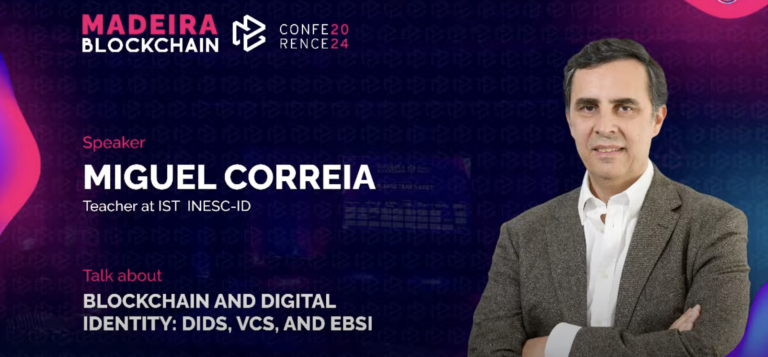
“If you pick a grain of sand, what is the probability that two of us pick the same one?” With this example, Miguel Pupo Correia, President of the INESC-ID Executive Committee, illustrates the probabilistic uniqueness of DIDs (Decentralised Identifiers), during his keynote “Blockchain and Digital Identity: DIDs, VCs, and EBSI”. This intervention took place during the Madeira Blockchain Conference 2024, which happened in Funchal at the end of the last year.
When asked about his participation, Miguel Pupo Correia adds: “This yearly conference brings together experts from all Web 3 areas — startup founders, academics, legal experts, etc. — both national and international, showcasing the state of the ecosystem and bringing inspiration for people interested in the topic.”
The video is now available on the conference’s Youtube Channel. If you are curious to know more about blockchain, digital identity and related use cases, we encourage you to follow the link and watch the full presentation.
It is definitely the topic of the moment and there is still a lot that can be said about it. After having previously authored an essay on the topic, between 2017 and 2018, and following an invitation from Fundação Francisco Manuel dos Santos, Arlindo Oliveira, INESC-ID researcher and Professor at the Department of Computer Science and Engineering (DEI), wrote the book Generative Artificial Intelligence (A Inteligência Artificial Generativa).
“The goal was to present artificial intelligence in a way that is accessible to the general public. After writing that earlier essay, I realized that public perception of the subject had changed radically. Artificial intelligence, which was once a topic of interest confined to specialists, has become a common subject of discussion among the general public, especially after the emergence of technologies like ChatGPT,” Arlindo explains—or rather, the interactive chatbot of generative artificial intelligence created from the book’s content answers.
“I believe it is important to contextualize artificial intelligence within the broader evolution of natural intelligence, which can be appealing from a scientific, philosophical, and humanistic perspective,” the bot continues, echoing Arlindo’s words as expressed in the newly released book.
A debate about the book’s theme will take place on February, 12, at El Corte Inglés, Lisboa, with the presence of Ana Paiva, the Secretary of State of Science and INESC-ID researcher, and Paulo Dimas, from the company Unbabel. Generative Artificial Intelligence: Risks or benefits for the society of the future?
Earlier this month, Arlindo was appointed to chair the Specialized Monitoring Committee for the National Artificial Intelligence Agenda. This committee will play a crucial role in shaping strategies for the development of a robust and innovative AI ecosystem in Portugal. The National Artificial Intelligence Agenda, part of the National Digital Strategy approved by the Government on December 12, 2024, will be presented at the end of the first quarter of 2025.
Joining Arlindo Oliveira on the committee are Goreti Marreiros, President of the Portuguese Association for Artificial Intelligence (APPIA) and Principal Coordinator Professor at the Instituto Superior de Engenharia do Porto; Daniela Braga, representing the Accelerat.ai consortium, a key initiative under the Recovery and Resilience Plan (PRR); and Paulo Dimas, representing the Center for Responsible AI consortium, also part of the PRR – both of these projects, of which INESC-ID is a part.
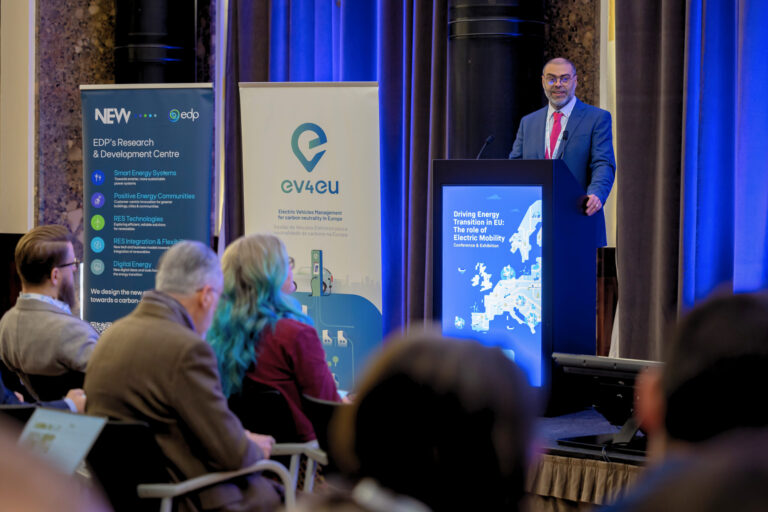
It was a cold winter morning, blessed with sunshine that lured people to the main entrance of Instituto Superior Técnico, in Lisbon, enjoying the warm rays while chatting about … energy. Their badges revealed a shared purpose, the conference Driving Energy Transition in EU: The Role of Electric Mobility, promoted by the INESC-ID project EV4EU.
The event gathered on January 15 specialists from around the world, coming both from research institutes and companies, to discuss electric mobility and the energy transition in Europe. An issue that INESC-ID project coordinator and Conference Chair, Hugo Morais, described as the “chicken-and-egg” dilemma of EV adoption: “no cars without infrastructure, and no infrastructure without cars.”
Some of the projects in focus are intended to solve the riddle, such as the Scale Project – a user-centric approach, involving seven countries, to address the complexities of scaling EV infrastructure; DRIVE2X, with demos in Maia, Portugal, and Amsterdam, the Netherlands, highlighting real-world applications of EV technology, the project aims to accelerate the uptake of vehicle electrification through new bi-directional smart charging technologies; FLOW Project, that tackles the increase in energy efficiency through energy exchange with buildings, vehicles and the grid and XL-Connect, in which the main goal is to optimize the entire charging process, from the energy generation until the end user, by developing a digital twin of the entire system and developing optimal smart charging technologies.
At the opening session, Inês Lynce, President of the Board of Directors, aptly remarked that we are living in the best time in history to discuss such a relevant topic. “We are in the right place, at the right time,” she said, emphasizing the importance of attracting young people to contribute to this transformative journey. Rogério Colaço, President of Instituto Superior Técnico, added that the shift to electric vehicles (EVs) represents “one of the greatest challenges of our time”, but one that is critical. He noted that EVs are inherently “more efficient than internal combustion engine vehicles”, a fact that underpins their central role in the energy transition.
Voices from Portugal and Beyond
Admitting the problem is more than ten years old, Jorge Martins from REN, presented the new Fast charging using transmission network Speed-E, with the belief that “this time, the market will take off”. “Electric trucks, though fewer in number, hold immense relevance due to the extensive kilometres they cover.
“The issue is not energy availability but power capacity, especially during peak demand”, stressed Hugo Morais, while Rui Gonçalves, from E-Redes, emphasized the need for significant grid upgrades, with planned investments increasing by 50% between 2026 and 2030. “Flexibility”, he argued, is key to address the challenges of energy transition for grids.
Portugal was celebrated as a case study in electric mobility. Débora Melo Fernandes, lawyer and Partner at Pérez-Llorca, specialized in energy, highlighted the country’s pioneering 2010 regulatory framework, which fostered a user-centric and competitive ecosystem. Débora outlined challenges such as fragmented regulations and lengthy permitting processes but emphasized the opportunities offered by aggregators and mechanisms like E-credits mandated by the latest Renewable Energy Directive, RED III, set for implementation by 2025.
Bruno Vieira, from EDA, brought the unique challenges of the Azores into focus. With nine islands and no capacity to export energy, the region faces distinct hurdles in adopting EVs and enhancing infrastructure. Meanwhile, Luís Prazeres, from Brisa, underscored the importance of education and training to boost performance and efficiency in the mobility sector.
Key Takeaways
With a large experience in the energy sector, the independent consultant António Vidigal sustained that electric vehicles have a significant role to play in the electrical systems of the future. And regulation can help. “Portugal is already recognized as a leading example in the adoption of renewable energy. It should also be a model for regulation that supports the energy transition”, he defended. The concept of “vehicles as batteries on wheels” offers immense potential for grid support, but current legislation limits V2G (vehicle-to-grid) applications, the specialist noted.
As Gonçalo Castelo Branco, from EDP Comercial, aptly put it, “whatever there is to come, we are still at the very beginning of what is going to be.” And as highlighted by INESC-ID’s President, Miguel Pupo Correia, the institute’s thematic lines and scientific areas underscore the societal importance of these efforts. Miguel noted that on a context of war, like the war in Ukraine, the energy systems are a target, including for cyberattacks.
And for great endeavours, collaboration is always the key, underlined Hugo Morais. “The future of electric mobility depends on interdisciplinary collaboration—regulators, consumers, and developers working hand in hand.”
A robot dog greeted visitors at the Técnico Innovation Summit, drawing a heart in the air with its front paws. It charmed everyone, and the research team behind the Sustainable Stoneby Portugal project looked on proudly at their “pet.”
The first edition of the Técnico Innovation Summit, held on November 4 and 5 at the Técnico Innovation Center during the PhD Open Days, showcased projects with significant economic impact, particularly those funded through Portugal’s Recovery and Resilience Plan (PRR).
INESC-ID was well-represented with four of its five projects:
Accelerat.ai: driving digital transformation in Portugal’s public and private sectors through technologies like conversational systems for the national health helpline SNS24;
Over the two-day event, numerous visitors passed through the venue, including students, entrepreneurs, researchers, and government representatives who also attended the nomination ceremony for the 21 new members of the National Council for Science, Technology, and Innovation (CNCTI).
“We were visited by Pedro Dominguinhos, President of the National Monitoring Committee for PRR, and Carla Branco Santos from the Executive Committee of IAPMEI,” shared Rubén Solera-Ureña, a researcher in Human Language Technologies involved in the Accelerat.ai project.
During their visit to the expo site, Prime Minister Luís Montenegro and his team visited various booths, including that of CRAI. Here, researchers demonstrated AI products developed under the project, such as a home physical therapy platform, a communication solution for ALS patients, and a platform to help hospital doctors automate administrative tasks.
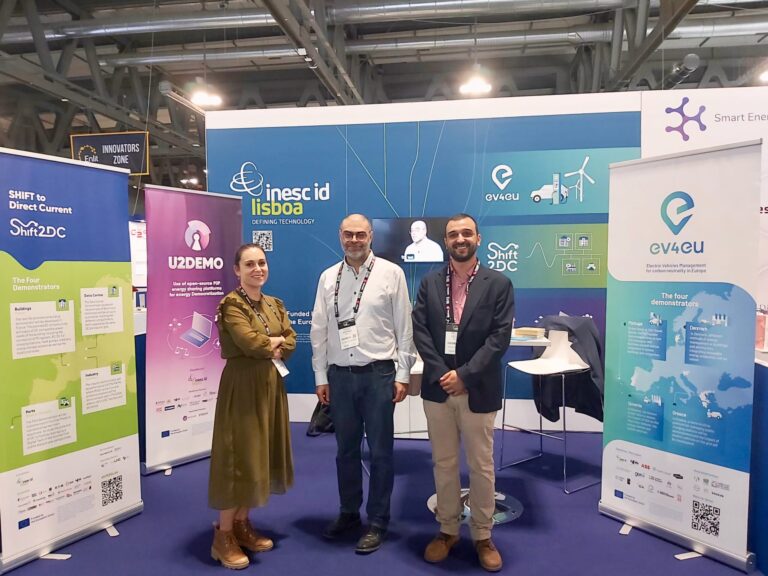
INESC-ID made a strong impact at the 2024 edition of Enlit Europe, one of the leading energy conferences and exhibitions in Europe, proudly showcasing the Horizon Europe projects EV4EU, Shift2DC, and U2Demo.
This year’s event, held from October 22 to 24 in Milan, set a new record by bringing together 15,000 energy experts from across the sector, and more than 200 sessions and 500 speakers over three days. Visitors had the opportunity to connect with the projects’ coordination team at the INESC-ID exhibition stand in the EU Projects Zone and during various sessions featuring the projects’ researchers.
Ana Rita Nunes, project manager at INESC-ID, Pedro Costa, project researcher, and Hugo Morais, senior researcher from Sustainable Power Systems and project coordinator at INESC-ID, along with colleagues from different partner institutions, shared insights and the milestones already achieved by the three ongoing projects:
EV4EU – development of user-centric V2X management strategies for houses, buildings, parking lots, and EV fleets, that will allow the massive growth of electric vehicles.
Shift2DC – a new approach on the way direct current (DC) solutions are used in power systems by creating smarter, more efficient, and eco-friendly energy systems, including ongoing research on Madeira Island and the creation of a DC Digital Port on the island.
U2Demo – development of innovative energy management strategies and technological solutions to promote equitable and democratic access to sustainable energy resources, empowering consumers to manage their energy use more effectively, save money, and take control of their energy data.
A line spiralling around the building of the Técnico Innovation Center (TIC), at eight in the morning of an otherwise lazy Saturday, was a good hint that we were about to experience something we had never seen before. Something worthy of the Guinness World Records.
Being a PhD student in Computer Science it was definitely not the opportunity to learn about Phython that led Pedro Orvalho, 27, and his colleagues to get up earlier last October 13 and attend the meeting. “I was curious about how the class would be managed and, of course, also about the Guinness Record”, admits the researcher at INESC-ID, in Automated Reasoning and Software Reliability. When Pedro finally entered the venue, there were no more chairs nor gift bags. Certainly, the organizers didn’t expect more than the registered participants to show up. But they did!
Three teachers were responsible for the 90-minute class: INESC-ID President, Inês Lynce, and INESC President, Arlindo Oliveira, both professors at Técnico, and Rodrigo Girão Serrão, a former student at IST.
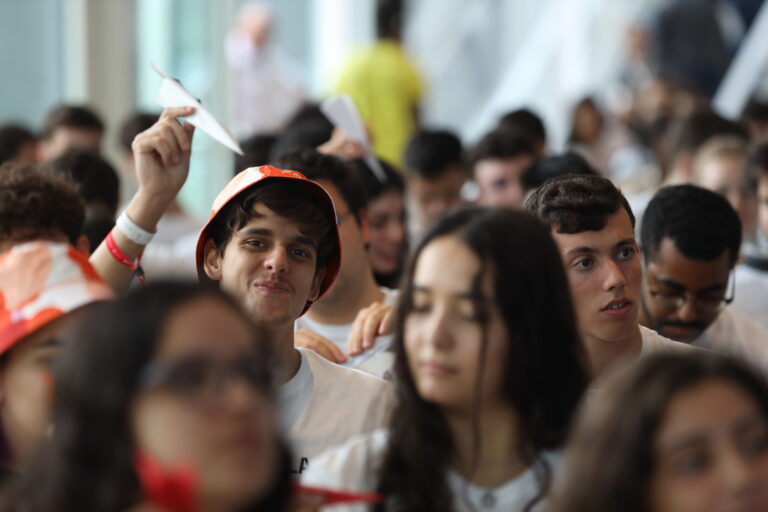
For Inês, the challenge was to plan a lesson for such a large and diverse audience. “It couldn’t be a class like the ones I teach at Técnico”, she admits. So that is why she came up with the idea of explaining the notion of an algorithm using something we have all done at least once in our lives: making a paper plane. In the gift bags, the participants could find sheets of paper in different colours and by following the instructions provided by Inês the planes came out of their hands (but they were not allowed to test their aerodynamical properties!). Rodrigo used the example of the Sudoku game, to explain the notion of programming and Arlindo brought the Game of Life and the classical book Os Maias, by Eça de Queiroz, to demonstrate a language model previously trained on the masterpiece of Portuguese literature.
The operations did not run smoothly all the time. “The access points were insufficient, and the mobile internet couldn’t handle it, resulting in a slow connection to OpenAI’s language model, which was used in the second example”, tells Arlindo Oliveira. A similar problem affected the remote control to operate the slides. “This caused the presentation to freeze more than once, putting me in a difficult position”, he regrets, admitting that “these two factors (and the sound delay in such a large room) were due to the scale of the event, and it was hard to anticipate, as classes are typically not held in such a large space.” After all, it was a first!
Despite the setbacks, the event was a huge success. The Guinness World Record Adjudicator, Paulina Sapinska was checking during the lesson to ensure that all the attendees were following the class and not checking social networks, for example. After the count, the record was set: There were 1,668 participants at the TIC (the previous record had set 724 participants in Dallas, EUA, in 2016).
Besides this, Inês Lynce highlights the festive atmosphere, the number of girls present and the general enthusiasm regarding programming. As stated by the President of Técnico, Rogério Colaço, a true “celebration of young talent.”