-
Spin-offs: HeartGenetics — from code to genes
When HeartGenetics was created, most people didn’t know they needed genetic screening in order to manage their health in a personal way. “We had a product that was good for people, even if they didn’t know it yet. It’s what Apple did — we didn’t know we needed an iPhone until we had one”, compares Ana Teresa Freitas, INESC-ID researcher and the co-founder of the spin-off from INESC-ID. We were a “technology push” company, she details (as opposed to a market pull company). It was 2013 when the initiative at the intersection of digital and biotechnology was stepping showed up to harness the power of genetics not to diagnose disease after it strikes, but to predict, prevent, and personalize health interventions, long before symptoms appear. At the heart of the company lies a powerful idea: that we can use genetic information, processed through polygenic risk models and sophisticated computational biology algorithms, to tell people not what they’re suffering from, but what they are at risk of and what they can do about it. “The idea was to bring genetics closer to people, especially in a preventive context,” Ana Teresa explains. “We weren’t trying to diagnose, we were trying to give people knowledge so that they can act earlier.” This novel approach meant HeartGenetics had to create a space in a healthcare market that wasn’t exactly waiting with open arms. Especially in Europe, health-related innovation often runs into a tangle of regulatory fragmentation, reimbursement policies, and institutional inertia. For a company founded in Portugal, this added extra layers of troubles. “Consumers — we humans as consumers — are very difficult,” she says. “And then, companies that are born in very small geographies like Portugal face another huge barrier from the start: the market itself. That’s very limiting. And in healthcare, it’s terrible! Every new country is a new regulatory wall, a new barrier to entry, a new barrier of trust.” And to exemplify this, Ana Teresa recalls a meeting with representatives from the United Arab Emirates: “They told us: ‘We love your product. We want it. Do you know why we’re even in this meeting? Because you were introduced by a Dutch company.’ That’s how difficult it is to be born in the South.” Good science, good user experience At its core, HeartGenetics combines genetics, machine learning, and clinical research. Their polygenic risk models — built from genome-wide association studies (GWAS) — aggregate multiple genetic variants into a single score, estimating an individual’s predisposition to complex diseases like cardiovascular conditions (the start of it), diabetes, or even how they might metabolise certain nutrients or respond to exercise. Ana Teresa and her team spent years refining these models. But innovation wasn’t just about the science, it was also about user experience. The company developed digital health reports that are not only clinically accurate, but also human-readable, tailored for individuals and healthcare professionals alike. HeartGenetics created an expert system with more than 10,000 coded rules, combining genetic data (as polygenic risk models) with wellness and lifestyle information to deliver personalised recommendations. “We didn’t want to give people a DNA report full of acronyms and technical jargon. We wanted to give them a clear picture of their health risks and how to act on them — something you could take to your doctor or your nutritionist and actually do something with.” Despite the scientific robustness, scaling the company meant navigating the slow and complex maze of health regulations. In Europe, each country interprets medical device (the category in which genetic screening is included) directives differently, leading to hurdles that are especially hard to clear for small and medium-sized enterprises (SMEs). “Portugal has very few companies in biotech or medtech because the regulations are not designed to support them,” she says. “In many cases, you can’t even get a tax incentive unless you’re a large multinational. That’s completely the opposite of how innovation ecosystems should work.” To grow, HeartGenetics had to look beyond its home country. “You need to think globally from the start. Portugal is too small. And yet, we had to go through all the same regulatory steps as a company from France or Germany, often with fewer resources.” When asked what she would tell aspiring entrepreneurs in tech or biotech, Freitas is clear-eyed: “You can’t do this kind of company straight out of school. You need experience — scientific, technical, and business. You need to understand what a clinical trial is. You need to know what it means to validate a medical algorithm at the European level. This is not an app you can pivot in a weekend.” She also warns against romanticising entrepreneurship. For her, starting a company wasn’t a lifelong dream — it was an opportunity that made sense given her research, her team, and her vision for a better way to deliver healthcare. Sold at the early days of the pandemics, HeartGenetics continued to evolve until 2022 when Freitas left the company, exploring deeper integrations with digital health platforms and longitudinal health monitoring. After all, how can we manage our health properly without understanding our genes? The hardest of being an entrepreneur: The greatest challenge of entrepreneurship was overcoming structural barriers in the healthtech sector. Consumers are naturally cautious, and trust is hard to earn — especially in healthcare. Coming from a small country like Portugal added further obstacles: a limited local market, fragmented regulations across Europe, and few incentives for small digital health and biotech companies. HeartGenetics had to think globally from day one, yet still faced the same complex approval processes as larger competitors, with far fewer resources. Building credibility often required external validation, particularly from companies based in more established markets. The main lesson: If you want to become an entrepreneur start by immersing yourself in the ecosystem — joining accelerators, speaking with investors, and testing ideas early. A diverse and experienced core team is essential from the outset. It's important to abandon unviable ideas quickly and to be prepared for setbacks. Facing rejection from the market and investors is frustrating but necessary; it helps refine the business and align it with real-world demand. Early-stage feedback, even when harsh, is a critical part of building a viable company. — Text by Sara Sá © 2025 INESC-ID. Credit INESC-ID and the author, with a link to the original source, when sharing or adapting this article.
read more › -
Spin-offs: SiliconGate, the company that emerged from a sabbatical
Marcelino Santos proudly opens a box of earbuds from a major global brand. Inside these sleek devices is a tiny circuit designed by SiliconGate — the INESC-ID spin-off specialising in analog and mixed-signal chip design.”These earbuds were a worldwide success”, says the co-founder of the company.
read more › -
After the lights went out: MIT and INESC-ID researchers team up to prevent the next blackout
Long queues outside corner shops and bakeries. Supermarkets closed. Anxious people carrying gas cylinders, bags of charcoal, batteries, and candles. In an instant, and for several hours, the fast, digital rhythm of 21st-century life was unplugged.
read more › -
“Healthy Mind, PhD in Progress”: Supporting PhD Student Wellbeing at INESC-ID
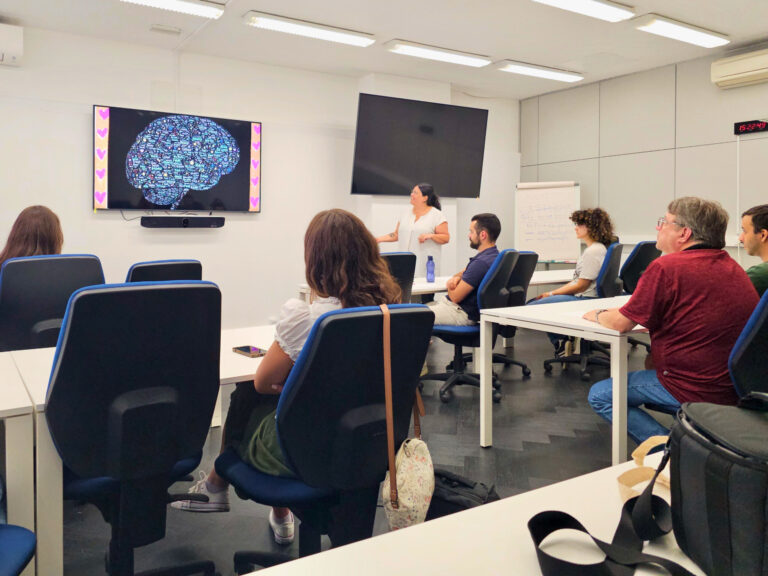
Can research institutes excel without caring for the wellbeing of their people?
read more › -
Spin-offs: From research to market, the technology transfer reality at INESC-ID
In the fields of science and innovation, the bridge between academic research and real-world impact is no longer an option, it's a must. At INESC-ID, this bridge is being reinforced through a dedicated commitment to technology transfer, a process that transforms research outputs into products and services, for the benefit of society.
read more › -
PRR Projects: From shopping to smartness. Project PT Smart Retail redesigned the future of retail
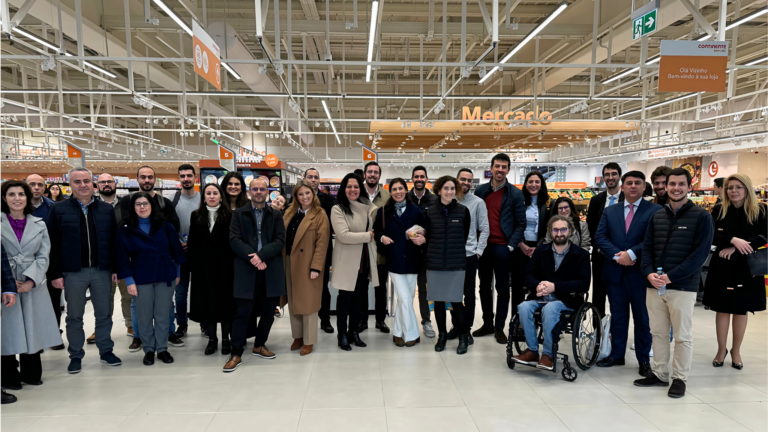
What if buying a snack, grabbing lunch, or doing the weekly groceries didn’t require queues, cashiers, or even a checkout line?
read more › -
“What is missing in Web3 is trust.” CMU Professor, Seth Goldstein, reflects on Blockchain and the future of work
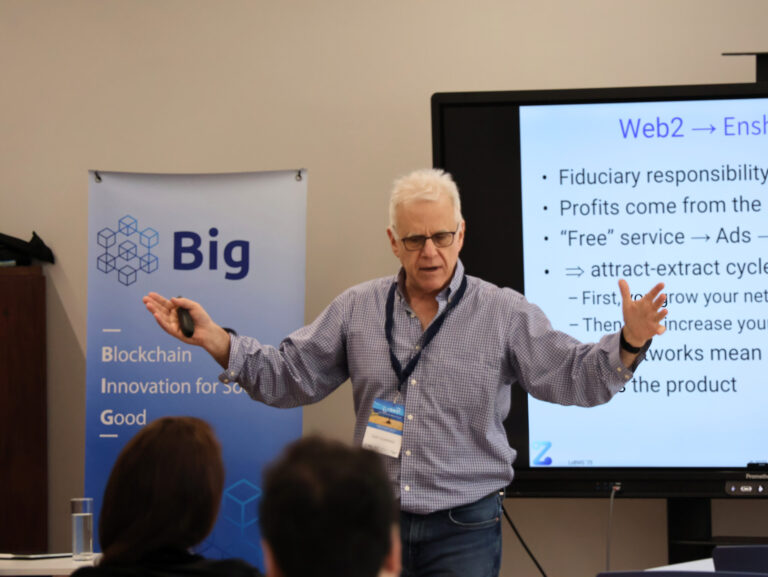
With its decentralized systems and the potential to reshape how we interact with the internet and conduct business, web3 sounds almost like an El Dorado. At the centre of it lies the technology that powers blockchain. Seth Goldstein, Professor at CMU School of Computer Science, is a committed thinker about the topic. During the Lisbon Blockchain Winter School 25, organized by the BIG Era Chair Project, he shared his mind-opening insights with the attendees, on a keynote under the title Web 3: trust, reputation and the future of money.
read more › -
PRR Projects: Fair, Explainable, and Sustainable. INESC-ID is leading Responsible AI with the CRAI Project
Luís Oliveira lost his ability to speak due to Amyotrophic Lateral Sclerosis (ALS) in early 2023. However, in May 2024, he made his voice heard around the world. Luís, who sadly passed away in the meantime, made an historic appearance at the United Nations summit AI for Good, becoming the first ALS patient to demonstrate the use of Halo. This groundbreaking technology, developed under the PRR-funded Centre for Responsible AI (CRAI) project, enables communication without speech or typing, by combining Generative AI with a non-invasive neural interface that translates bioelectrical signal patterns into language.
read more › -
Organ-on-a chip? Yes, it is possible. And INESC-ID will give a hand to it
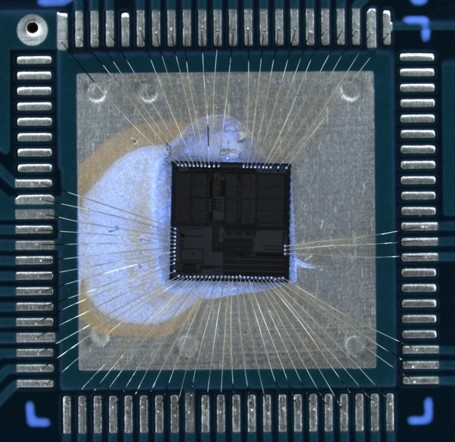
Tiago Moita walks across the wooden floor in what appear to be ordinary rubber-soled shoes. However, there's a twist: a low electrical resistance shoe sole prevents static electricity from damaging the microchips developed and tested at the Silicongate workbench. This company, incubated and partly owned by INESC-ID, designs and tests circuits for power management systems, such as those used in mobile phones. Strongly committed to research and innovation, Silicongate also participates in research projects like the EU-funded UNLOOC initiative, aimed at transforming the drug development process by reducing reliance on animal testing.
read more ›