-
In the Media: Inês Lynce reflects on education in the age of AI on the “AI Talks, Humans Answer” podcast
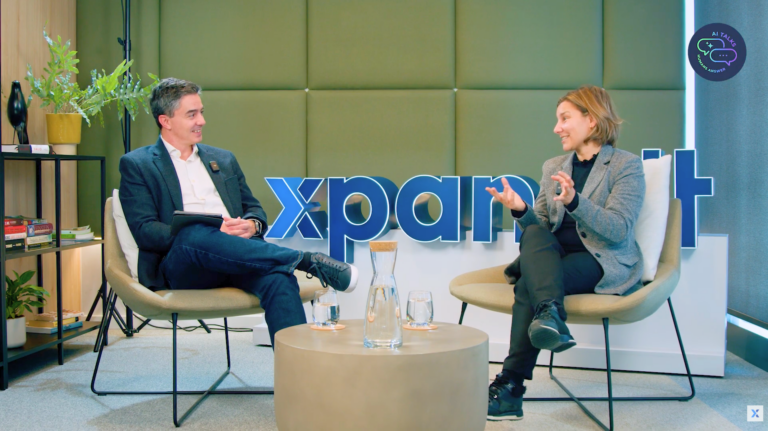
Not prohibiting students matters — banning adults rarely works. That was one of the key ideas shared by Inês Lynce on the use of artificial intelligence and large language models in higher education, in the latest episode of Xpandit’s AI Talks, Humans Answer. At a time when universities are debating regulations and even prohibitions on the use of AI, Inês Lynce, INESC-ID researcher in artificial intelligence, President of the Board of Directors, and Professor at Instituto Superior Técnico, joins host Sérgio Viana (Xpandit) to reflect on how learning and teaching are changing in a world of increasingly ubiquitous AI models. The researcher reflects on how students can use these tools critically, and the evolving roles of teachers, curricula and student assessment. She also raises broader concerns about the social impact of AI, stressing the importance of human mentorship, curiosity and critical questioning as foundations of education, regardless of technology. Watch the full episode: here
read more › -
In the Media: André Duarte’s research revealing AI-memorised copyrighted content featured in The Register
The source of Large Language Models’ (LLM) knowledge is often unclear. Besides the fact that most commercial AI vendors do not disclose their full training datasets, current AI models are usually reluctant to reveal memorised content. Research by INESC-ID and Carnegie Mellon University (CMU) Portugal PhD student André Duarte's has recently been featured in an article in The Register, discussing this issue. The focus is a paper co-authored by André, “RECAP: Reproducing Copyrighted Data from LLMs Training with an Agentic Pipeline”, which describes a software agent, RECAP, that is more effective in coaxing memorised content from LLMs, helping to determine what texts were used to train them and if they are copyrighted. Throughout the article, André explains what makes RECAP different from other software with the same purpose, and states that although one focus of this research concerns copyrighted content, the broader goal is to understand how memorisation happens in LLMs. This development has the potential to address regulatory concerns and help clarify copyright infringement claims from AI model training. The authors of the paper, which also include INESC-ID researcher, Arlindo Oliveira, argue that concerns regarding whether AI is being trained on proprietary data highlight the need for tools that can find what AI models have memorised. Read the full article here.
read more › -
In the Media: INESC-ID featured in RTP1’s Inteligência Portuguesa
In an increasingly digital world, changes and shifts are to be expected in the functioning of our society. With this transition in mind, Portuguese television channel, RTP1, has developed 5 episodes that guide viewers through the national technological ecosystem. From healthcare to outer space, the mini-series showcases examples of enterprises in different fields and the opinion of various experts. Among those experts, and with appearances across more than one episode, are INESC-ID researcher and President of the Board of Directors, Inês Lynce and INESC-ID researcher and INESC President, Arlindo Oliveira.
read more › -
In the Media: Joana Campos and Helena Moniz discuss critical thinking in the age of AI on RTP’s Sociedade Civil
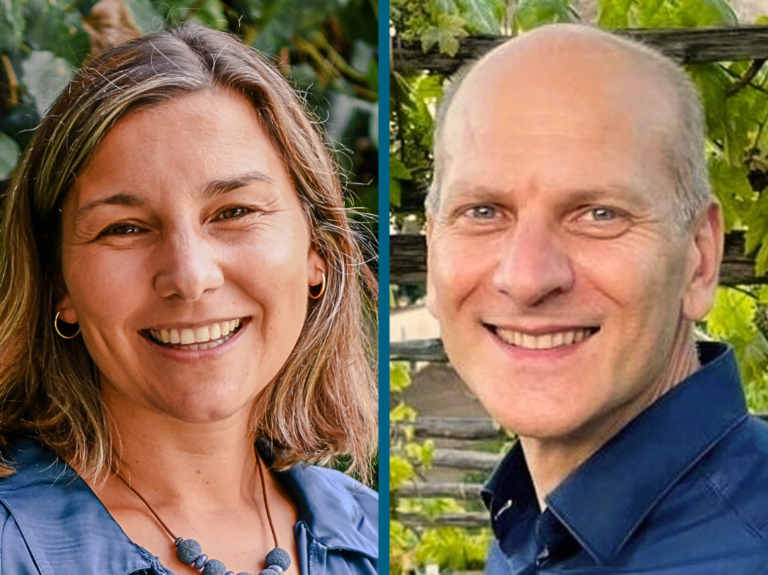
“Do you ever question Waze when driving?” asked the host of RTP’s Sociedade Civil. AI is changing our lives: the way we think, our ethics, and our culture. To help reflect and shed light on these pressing issues, INESC-ID researchers Joana Campos* and Helena Moniz**, alongside Luís Moniz Pereira from Nova University, were invited to the recently aired episode on Critical Thinking in the Age of AI.
read more › -
In the Media: Innovation from Research to Application, Miguel Pupo Correia’s interview for APDC
In an article published in the APDC magazine "Comunicações", Miguel Pupo Correia, researcher and President of the Executive Committee of INESC-ID, presents the institute, its history, and what it means to conduct research in one of the most relevant entities in the national scientific ecosystem. The piece was produced as part of a dual interview with António Leal, director of INOV, and follows an interview with INESC-TEC, in the previous issue.
read more › -
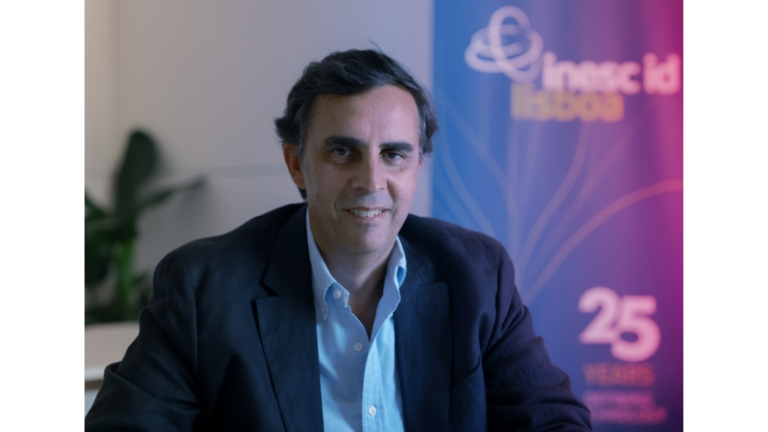
In the Media: Inês Lynce’s role at record-breaking ECAI 2025 featured in Il Mattino
According to Il Mattino, one of the main Italian newspapers, this year’s European Conference on Artificial Intelligence (ECAI 2025), one of the most prestigious international AI conferences, being held in Bologna from October 25 to 30, has set attendance and submission records.
read more › -
In the Media: “The Scientists of the future?” Arlindo Oliveira reflects on AI systems and their role in science
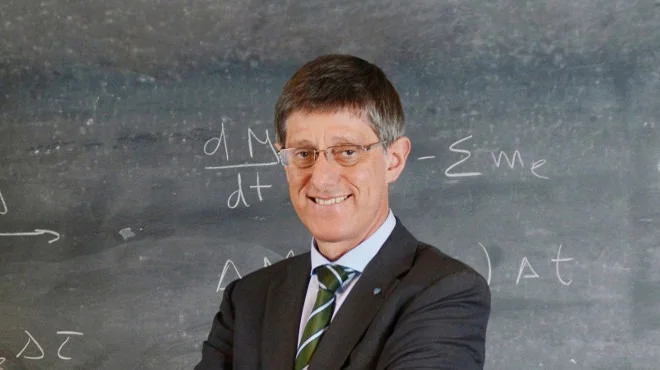
“Will artificial intelligence systems of the (near or far) future be capable of creating new knowledge?” is the central question in the most recent opinion article by Arlindo Oliveira*, INESC-ID researcher and professor at Instituto Superior Técnico, published in Público, one of the main national newspapers.
read more › -
In the Media: Luís Caires questions the future of Portugal’s science policy in Público
“Is this the end of the science that we need?” That’s the question Luís Caires*, INESC-ID researcher and professor at Instituto Superior Técnico, raises in a recent opinion piece for Público, one of Portugal’s main national newspapers. The article addresses the Portuguese government’s announcement to dissolve the Fundação para a Ciência e a Tecnologia (FCT) and the Agência Nacional de Inovação (ANI), replacing them with a new agency.
read more › -
In the Media: Helping journalists verify facts faster with trustworthy AI
INESC-ID PhD student Filipe Altoe, MSc student Sérgio Pinto, and researcher Sofia Pinto, also a Professor at Instituto Superior Técnico, are behind a new fact-checking AI model that was recently featured in national media, including Expresso, Observador, and SIC Notícias.
read more ›