Tag: AI

  • AMALIA, giving voice to Portuguese identity through Artificial Intelligence

    AMALIA, giving voice to Portuguese identity through Artificial Intelligence

    Few expressed pain and longing with the intensity of Amália Rodrigues, the iconic fado singer who became a symbol of Portuguese cultural identity. Her voice, her language, and her emotion are all part of a legacy that continues to shape Portugal’s artistic and emotional landscape. Drawing inspiration from that deep cultural well, AMALIA (Automatic Multimodal Language Assistant with Artificial Intelligence) is the name chosen for the first Portuguese Large Language Model (LLM) designed from scratch to reflect and preserve the richness of the Portuguese language and identity – with INESC-ID playing a crucial role, particularly in the area of speech processing.

    Derived from the Latin word for “fate,” fado conveys a broad spectrum of emotions, from heartbreak and nostalgia to joy and resilience. Similarly, AMALIA is being designed to understand, process, and generate content in European Portuguese, capturing nuances in both language and culture. “This tool will serve a wide range of applications across essential sectors such as education, media, science, cultural heritage, and public administration”, anticipates INESC-ID researcher and Professor at Técnico, Alberto Abad, from Human Language Technologies.

    A strategic national investment

    Supported under Portugal’s Recovery and Resilience Plan (PRR) and coordinated by the Foundation for Science and Technology (FCT), AMALIA is being developed by a national consortium of top academic and research institutions. This includes Universidade de Lisboa, via Instituto Superior Técnico, Universidade NOVA, the Universidade do Porto, Universidade de Coimbra, Universidade do Minho, and the national laboratories NOVA LINCS, IT, INESC TEC, CISUC/LASI, and ALGORITMI/LASI. Experts from the University of Beira Interior and the University of Évora are also contributing.

    Under the coordination of Alberto Abad, INESC-ID’s contribution focuses on multimodal language processing, particularly the integration of spoken language. This means AMALIA will not only be able to interpret text but also receive and process speech and images – giving it “ears” and “eyes,” with the “brain” generating accurate and contextually aware text responses.

    Unlike commercial AI models primarily optimized for global markets, AMALIA is trained from the scratch using resources such as Arquivo.pt and is specifically tailored for European Portuguese. It will be open source and designed to operate in closed and secure environments, ensuring data protection and reinforcing national technological sovereignty.

    AMALIA will serve as a strategic asset for Portugal – not just as a language model, but as a digital guardian of linguistic and cultural heritage. In an age when companies tend to prioritize broader language variants like Brazilian Portuguese, AMALIA’s focus on the European variant is both a cultural imperative and a technical challenge.

    Filling a niche

    By September 2025, the consortium aims to release a public version of the model. A first internal version was successfully launched on March 31, 2025, already capable of engaging in contextual conversations and demonstrating knowledge of Portuguese culture and language.

    “AMALIA will not replace general-purpose models like ChatGPT”, Alberto Abad underlines. “Instead, it fills a vital niche: delivering specialized, context-sensitive responses in domains where language, culture, and data privacy matter.” Its potential spans education, public service, cultural preservation, and more.

    As Fernando Pessoa once said, “My homeland is the Portuguese language (A minha pátria é a língua portuguesa).” With AMALIA, that homeland now has a voice in the digital future. One that speaks, understands, and respects its unique identity.


  • INESC-ID contributes to Europe’s digital autonomy in High-Performance Computing and AI through the DARE Project

    INESC-ID contributes to Europe’s digital autonomy in High-Performance Computing and AI through the DARE Project

    INESC-ID is one of 38 partners involved in a major European effort to build a sovereign computing infrastructure through the new project DARE SGA1 – Digital Autonomy with RISC-V in Europe.

    Our contribution will be on the project’s software ecosystem, in collaboration with INESC TEC, with a focus on optimizing performance for RISC-V architectures – an open-source, modular instruction set architecture that enables anyone to design custom processors without licensing fees, promoting technological independence and innovation. And also integrating HPC and AI applications, and enabling co-design approaches between hardware and software teams.

    Backed by €240 million in funding from the EuroHPC Joint Undertaking, the project marks a strategic step toward reducing Europe’s dependence on non-EU hardware and software in the fields of High-performance Computing (HPC) and Artificial Intelligence (AI).

    Coordinated by the Barcelona Supercomputing Center (BSC-CNS), DARE SGA1 will design and develop next-generation processors and a full software ecosystem based on RISC-V, an open standard instruction set architecture. The initiative’s goal is to create a fully European HPC technology stack to support scientific research, industrial innovation, and public-sector digital infrastructure.

    “INESC-ID’s long-standing expertise in computer architecture and HPC positions us well to support this ambitious European initiative,” said Leonel Sousa, INESC-ID researcher, responsible for the Portuguese participation in Dare, and professor at Instituto Superior Técnico.

    The first three years of DARE SGA1 will focus on building three RISC-V-based chiplets: a general-purpose processor (led by Codasip), a high-precision vector accelerator (led by Openchip), and an AI inference engine (led by Axelera AI). These components will form the backbone of Europe’s future supercomputing systems, offering greater energy efficiency and scalability than traditional monolithic chips.

    “There’s no AI without HPC”, notes Leonel Sousa. “At the core of the project lies Europe’s ambition to become self-reliant in semiconductor and chip design. It’s crucial to reduce our dependency on foreign chip supply”, underlines the researcher.

    DARE SGA1 is the first phase of a six-year roadmap to secure Europe’s digital autonomy in HPC and AI infrastructure. The project is expected to lay the groundwork for the EU’s first fully sovereign supercomputing system by the end of its initial phase.

  • Isabel Trancoso joins international panel on Technology and Regulation at Católica event

    Isabel Trancoso joins international panel on Technology and Regulation at Católica event

    Isabel Trancoso, senior researcher at INESC-ID, from Human Language Technologies scientific area, and a leading expert in speech technologies, participated in the Atlantic Dialogues on Technology and Regulation, held on April 3–4 at Universidade Católica Portuguesa in Lisbon.

    Organized by the Católica Research Centre for the Future of Law, in collaboration with FGV Direito Rio (Brazil), the event brought together national and international experts to discuss pressing challenges in digital regulation. Topics ranged from emerging technologies to the legal and ethical frameworks shaping our digital future.

    Ahead of a panel discussion on the topic, Isabel Trancoso and also Mário Figueiredo, professor at Instituto Superior Técnico, delivered keynote talks on Artificial Intelligence and the societal challenges it presents

    Participation in this high-level forum underscores INESC-ID’s active role in shaping public dialogue around the intersection of technology, ethics, and policy. Entry to the event was free, subject to prior registration.

  • INESC-ID strengthens international AI collaboration with the China-Portugal Joint Laboratory on AI and Public Health Technologies

    INESC-ID strengthens international AI collaboration with the China-Portugal Joint Laboratory on AI and Public Health Technologies

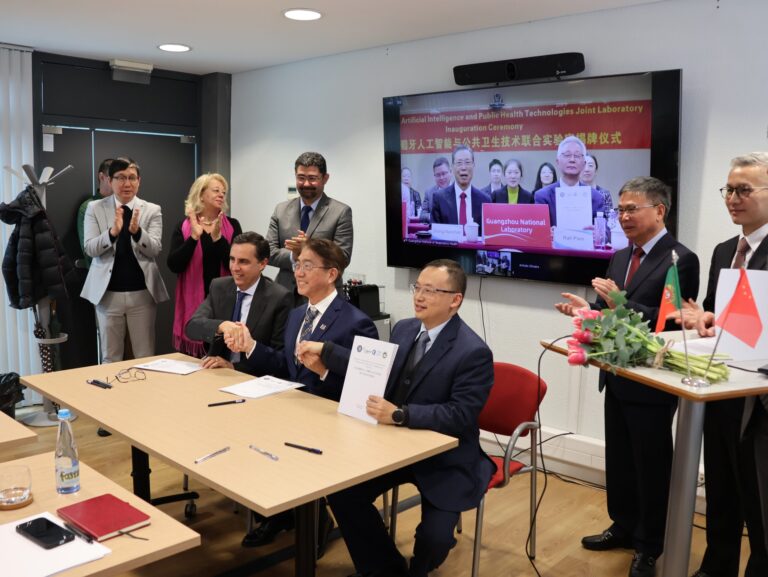
    It was 10:10 AM in Lisbon and 18:10 in Guangzhou, of March 5, when the official ceremony for the establishment of the China-Portugal Joint Laboratory on AI and Public Health Technologies started. Held at the Department of Computer Science and Engineering (DEI) of Instituto Superior Técnico, the event gathered Portuguese and Chinese representatives who celebrated the signing of the memorandum of understanding over a traditional cup of tea and a handshake.

    The China-Portugal Joint Laboratory on AI and Public Health Technologies is a collaborative effort between INESC-ID, Guangzhou Laboratory (GL), Guangzhou Medical University (GMU), and Macau University of Science and Technology (MUST) (China). The Joint Laboratory aims to consolidate and leverage artificial intelligence technologies to improve public health management at a global scale. This includes capabilities for analysing, modelling, and responding to emerging public health events.

    Arlindo Oliveira, INESC-ID researcher, Professor at Técnico and coordinator of the partnership, acknowledges both the challenges and the strengths of this collaboration: “Although this collaboration presents challenges related to language barriers and differing cultural and political perspectives, we have managed to establish a fruitful and mutually trusting relationship. This has already led to significant funding for research and development, with further projects expected to be approved in the near future.”

    Trust and Cooperation

    Through international cooperation and information sharing, the lab will collect, organize, and disseminate data and experiences crucial for the prevention and response to major pandemics. Additionally, it will drive research into infection prevention and control measures, as well as AI-powered diagnostic technologies to address both infectious and non-infectious diseases.

    During the ceremony, Zhao Bentang, Ambassador of the People’s Republic of China in Portugal, highlighted the significance of the Joint Laboratory. “The foundation of this laboratory reflects our firm belief that China and Portugal must work together to tackle global challenges. These challenges can only be effectively addressed through international cooperation. The creation of this laboratory is a concrete manifestation of both countries’ commitment to collaborating on these global issues, ensuring mutual benefits.”

    Following the formal proceedings, and at the request of the academic Chinese partners, part of the group took the lift to the seventh floor of the North Tower at the Alameda Campus to visit the Institute for Systems and Robotics, where they were introduced to some of the advanced robotic technologies developed at the lab. These included iCub, one of the most complex humanoid robots in the world, designed to study human behaviour, and Vizzy, an interactive robot created to assist the elderly and hospitalized patients.

    The works concluded with a visit to the Joint Laboratory at INESC-ID, that is meant to work under the five pillars Ana Teresa Freitas, President of DEI and the Strategic Coordinator of the INESC-ID thematic line Life and Health Technology, detailed at the ceremony: “Safe people, safe projects, safe data, safe algorithms, safe outputs”.

    AI to solve global challenges

    This new partnership is a step forward in facing global public health challenges through cutting-edge artificial intelligence technologies. As noted by Rogério Colaço, President of Instituto Superior Técnico, that welcomed the event, “the establishment of this Joint Laboratory represents a significant step forward in addressing global public health challenges. By leveraging cutting-edge artificial intelligence technologies, we aim to enhance public health management and improve our collective capacity to respond to emerging public health events on an international scale. This agreement not only fosters academic research but also promotes scholar exchanges that will enrich our understanding and capabilities.” An opinion shared by Miguel Pupo Correia, President of the Executive Committee of INESC-ID: “AI is one of the high-impact areas of our research, and this collaboration will enhance the creation of value for people and society.”

    The memorandum of understanding was formally signed by representatives from all four institutions. Also present were Tai Kin Ip, Secretary for Finance of the Macau Government, Che Weng Keong, President of the Macau Science and Technology Development Fund (FDCT), Madalena Alves, President of the Portuguese Foundation for Science and Technology (FCT), and Rogério Colaço, President of Instituto Superior Técnico.

    This initiative reinforces the growing importance of AI in public health and sets the foundation for a strong and lasting collaboration between Portugal and China in facing some of the most urgent and relevant global health challenges.

    Text by Sara Sá, Science Writer | Communications and Outreach Office, INESC-ID / © 2025 INESC-ID

    Images | © 2025 INESC-ID

  • PRR Projects: Fair, Explainable, and Sustainable. INESC-ID is leading Responsible AI with the CRAI Project

    PRR Projects: Fair, Explainable, and Sustainable. INESC-ID is leading Responsible AI with the CRAI Project

    Luís Oliveira lost his ability to speak due to Amyotrophic Lateral Sclerosis (ALS) in early 2023. However, in May 2024, he made his voice heard around the world. Luís, who sadly passed away in the meantime, made an historic appearance at the United Nations summit AI for Good, becoming the first ALS patient to demonstrate the use of Halo. This groundbreaking technology, developed under the PRR-funded Centre for Responsible AI (CRAI) project, enables communication without speech or typing, by combining Generative AI with a non-invasive neural interface that translates bioelectrical signal patterns into language.

    Halo, developed by Unbabel—the leading partner in this large-scale initiative—is perhaps the most visible innovation to emerge from the CRAI consortium. With €51 million in funding, CRAI aims to promote fair, transparent, eco-friendly, and trustworthy Artificial Intelligence. The initiative is structured around three key areas. Technology developers, including startups and companies focused on product development, ensure AI research directly supports real-world applications, such as Unbabel’s Halo. Fundamental research, led by top institutions like INESC-ID, Instituto de Telecomunicações, and the Champalimaud Foundation, drives cutting-edge AI advancements. Industry and healthcare adopters, such as Hospital de São João, Bial, and Luz Saúde, integrate AI solutions into their operations, ensuring broad societal impact. In total, CRAI brings together 10 startups, two unicorns, a law firm, five industry leaders, and eight research centers.

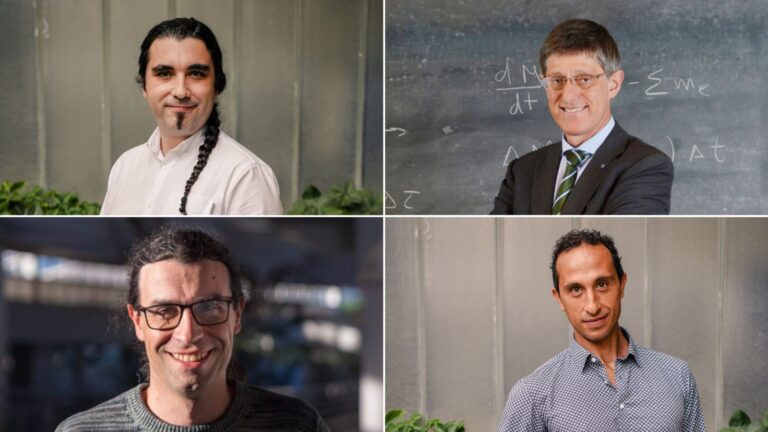
    At INESC-ID, four different research teams—led by Bruno Martins, Arlindo Oliveira, Rui Prada, and Paolo Romano—collaborate on various aspects of the project, with Responsible AI as a core pillar. Alongside this vision of connecting with companies, the teams are developing highly applied solutions.

    “CRAI is built on three fundamental principles: fairness, ensuring no discrimination towards groups of people; understandability and explainability, making AI systems interpretable and their decision-making processes transparent; and sustainability, ensuring computational feasibility and reducing energy consumption without compromising performance.”  — Bruno Martins

    INESC-ID’s expertise in Natural Language Processing (NLP) and dialogue systems has for instance been instrumental in supporting projects like Unbabel Halo. Other key initiatives focus on legal or clinical NLP, which are critical components of the Affine product being developed by NeuralShift, with its focus on streamlining legal workflows, or the automated medical record systems developed in collaboration with Priberam’s PCARE initiative.

    Bruno Martins, from Human Language Technologies research area and the coordinator of INESC-ID participation at the project, explains that CRAI is built on three fundamental principles: “fairness, ensuring no discrimination towards groups of people; understandability and explainability, making AI systems interpretable and their decision-making processes transparent; and sustainability, ensuring computational feasibility and reducing energy consumption without compromising performance.”

    The team led by Paolo Romano adopts a three-pronged approach to enhance AI efficiency and scalability, focusing on system-level optimization, cloud-level optimization, and self-adaptation. Meanwhile, research by the team coordinated by Rui Prada, on Social Artificial Intelligence and Social Robotics, aims to develop AI that interacts naturally and responsibly with humans, fostering a symbiotic relationship between people and technology. And Arlindo Oliveira’s team aims to strike a balance between safeguarding data privacy and security while leveraging customer insights in a competitive landscape.

    CRAI’s main objectives include advancing fundamental research in Responsible AI, developing products and services that apply Responsible AI principles to generate economic impact, attracting, training, and retaining world-class talent, and promoting education and awareness through initiatives such as the Responsible AI Forum. These efforts are already translating into real-world solutions, enhancing accessibility, improving healthcare processes, and fostering ethical AI adoption across industries.


    Text by Sara Sá, Science Writer | Communications and Outreach Office, INESC-ID
    © 2025 INESC-ID. Credit INESC-ID and the author, with a link to the original source, when sharing or adapting this article.

    Images | © 2025 INESC-ID, Técnico, Unbabel

  • Arlindo Oliveira and the Future of AI: From Generative Intelligence to National Strategy

    Arlindo Oliveira and the Future of AI: From Generative Intelligence to National Strategy

    It is definitely the topic of the moment and there is still a lot that can be said about it. After having previously authored an essay on the topic, between 2017 and 2018, and following an invitation from Fundação Francisco Manuel dos Santos, Arlindo Oliveira, INESC-ID researcher and Professor at the Department of Computer Science and Engineering (DEI), wrote the book Generative Artificial Intelligence (A Inteligência Artificial Generativa).

    “The goal was to present artificial intelligence in a way that is accessible to the general public. After writing that earlier essay, I realized that public perception of the subject had changed radically. Artificial intelligence, which was once a topic of interest confined to specialists, has become a common subject of discussion among the general public, especially after the emergence of technologies like ChatGPT,” Arlindo explains—or rather, the interactive chatbot of generative artificial intelligence created from the book’s content answers.

    “I believe it is important to contextualize artificial intelligence within the broader evolution of natural intelligence, which can be appealing from a scientific, philosophical, and humanistic perspective,” the bot continues, echoing Arlindo’s words as expressed in the newly released book.

    A debate about the book’s theme will take place on February, 12, at El Corte Inglés, Lisboa, with the presence of Ana Paiva, the Secretary of State of Science and INESC-ID researcher, and Paulo Dimas, from the company Unbabel. Generative Artificial Intelligence: Risks or benefits for the society of the future?

    Earlier this month, Arlindo was appointed to chair the Specialized Monitoring Committee for the National Artificial Intelligence Agenda. This committee will play a crucial role in shaping strategies for the development of a robust and innovative AI ecosystem in Portugal. The National Artificial Intelligence Agenda, part of the National Digital Strategy approved by the Government on December 12, 2024, will be presented at the end of the first quarter of 2025.

    Joining Arlindo Oliveira on the committee are Goreti Marreiros, President of the Portuguese Association for Artificial Intelligence (APPIA) and Principal Coordinator Professor at the Instituto Superior de Engenharia do Porto; Daniela Braga, representing the Accelerat.ai consortium, a key initiative under the Recovery and Resilience Plan (PRR); and Paulo Dimas, representing the Center for Responsible AI consortium, also part of the PRR – both of these projects, of which INESC-ID is a part.

  • Faster, Higher, Stronger: INESC-ID Joins Project ACHILLES to Redefine AI

    Faster, Higher, Stronger: INESC-ID Joins Project ACHILLES to Redefine AI

    In Greek legend, Achilles was a hero with a single vulnerability—his heel. Similarly, the “Achilles’ heels” of modern AI systems are trust and efficiency. The recently launched ACHILLES Horizon Europe Project (“Human-Centred Machine Learning: Lighter, Clearer, Safer”) aims to address these critical weaknesses.

    Bringing together 16 organizations from 10 countries, ACHILLES has significant Portuguese involvement. Led by Fraunhofer Portugal Research (FhAICOS) as the coordinating partner, INESC-ID plays a key role with six researchers leading the Work Package (WP) on AI sustainability and contributing to the WP on Privacy-Preserving Machine Learning and Model Monitoring. Paolo Romano, from Distributed Parallel and Secure Systems, coordinates INESC-ID’s participation, which has a budget of nearly one million euros.

    The ACHILLES team seeks to drive responsible AI innovation in line with European values and regulations. Moving away from the traditional “Faster, Higher, Stronger” approach—borrowed from the Olympics, another iconic Greek reference—ACHILLES champions a new framework: “Lighter, Clearer, Safer,” reflecting the evolving demands of modern AI.

    “At the heart of ACHILLES is an iterative development cycle inspired by clinical trials,” explained André Carreiro, Senior Scientist and ACHILLES Project Coordinator.

    A standout innovation within the project is the ACHILLES Integrated Development Environment (IDE), a machine-learning-driven platform empowering developers to build AI solutions that are not only more effective and efficient but also responsible and ethically compliant. The project will validate its approaches through real-world applications in healthcare, identity verification, content creation, and pharmaceuticals, demonstrating its transformative potential across diverse sectors.

    Funded with over €8 million under the Horizon Europe Framework Program, on the cluster of digital, industry and space, ACHILLES is set to redefine the way we approach AI, ensuring it aligns with the values and expectations of modern society.

  • Inês Lynce reflects about the importance of a comprehensive education the Impact of research and the future of AI

    Inês Lynce reflects about the importance of a comprehensive education the Impact of research and the future of AI

    In a recent interview for the supplement Dinheiro Vivo (part of Diário de Notícias), INESC-ID President, Inês Lynce, highlighted crucial topics regarding student education and the societal impact of scientific research. One of the key points discussed was the importance of a well-rounded education that goes beyond academic grades. According to the President, university admission is currently based on grades, but this doesn’t always predict future success. “There are many students who aren’t necessarily the ones with the highest grades, but they end up being much more successful,” she noted.

    The secret to this success, she explained, lies in a comprehensive education. The President emphasized that students’ resumes should not be limited to academic degrees but should include practical and extracurricular experiences. “I always recommend to students: the CV is not just about the academic title, but also the professional experience. Hands-on projects, like building satellites or the Formula Student, a racing car, are valuable examples of how important this practical experience is,” she added. She also emphasized the importance of extracurricular activities, such as competitive sports, highlighting the need to balance these with academic work: “A healthy body, a healthy mind, that’s the message.”

    Another central theme of the interview was the role of Artificial Intelligence (AI). The President compared AI to mathematics, seeing it as an indispensable foundation, not only for engineering but also for various fields of knowledge. “AI will become a fundamental base for everything, just as mathematics is for engineering,” she observed. This vision reinforces the idea that the future of science and innovation will be deeply tied to the development of AI technologies.

    The President also underscored the social responsibility that comes with conducting research, especially in high-impact areas like AI. “Doing excellent research means not only creating scientific impact but also societal impact,” she stated. She pointed out that communicating the work done by researchers is becoming increasingly important, noting that many professionals in the field weren’t trained for this task: “Researchers, by nature, weren’t shaped for this. And it’s an effort.”

    On the first episode of the podcast No limite da Inteligência Artificial, by the journalist Bruno Contreiras Mateus, Inês discusses with Paulo Dimas, from Unbabel, the present and the future of AI, the threats, the benefits and the way to deal with this technology in a fruitful and responsible manner.


  • INESC-ID joins the CARMA project (Collaborative Autonomous Robots for eMergency Assistance)

    INESC-ID joins the CARMA project (Collaborative Autonomous Robots for eMergency Assistance)

    During natural or manmade disasters, a quick and effective response is mandatory to minimise damage and ensure the population’s safety. Whether it’s a medical team employed to assist citizens during an earthquake, or police officers called to a bomb threat, first responders are sent directly to the site of a wide range of disaster situations. 

    What if, instead of sending traditional rescue teams, we could send unmanned vehicles working in symbiosis with humans to collect information, support first responders and assist citizens, thereby increasing security and rescue efforts, even in low visibility?

    To tackle this challenge, INESC-ID has recently joined Horizon Europe project Collaborative Autonomous Robots for eMergency Assistance (CARMA), led by a large European industrial leader (CS Group -France) in the crisis management market, and with partners across Europe, from Portugal to Greece.

    The goal of CARMA is simple: to co-create a groundbreaking and intuitive platform offering a complementary set of semi-autonomous and autonomous Unmanned Ground Vehicles (UGVs) capable of cooperating with humans during emergencies. By combining the experience of rescue teams with these vehicles, a faster and reliable analysis of the situation could be obtained, contributing to a more effective rescue plan. 

    At INESC-ID, the 36-month project is coordinated by Rui Prada, researcher in the area of Artificial Intelligence for People and Society, and funded with 334K€ out of a total 4M€ funding. The participation will consist of co-designing sessions with end-users, citizen representatives, and developers, to conduct the creation and definition of situations for the use of robots in civil protection scenarios, such as in the case of response to natural disasters. A model will be developed for the social behaviour of robots, that will collaborate with humans (first responders and citizens), in problem solving and setting guidelines for the relevant societal and ethical issues.

    The project will build on previously acquired research results, in the field of disaster robotics, and combine 3D radar-based environment mapping and analysis, with Artificial Intelligence (AI), Symbiotic operations and natural robot/human interaction. This will contribute to an improved planning of paths and missions as well as detection of victims and threats. 

    The process will involve end-users and experts who will assess and evaluate the results, provide insights, and identify typical and representative use cases and disaster scenarios. To aid in the implementation process, the project will carry out an ambitious communication and dissemination plan, training curriculum and produce a white book with recommendations for doctrine changes and best practices for the use of smart UGVs in disaster response.

    Click here for more detailed information and full list of partners.

  • In the Media: Inês Lynce discusses Educational and Societal challenges in Computer Science at Visão newsmagazine

    In the Media: Inês Lynce discusses Educational and Societal challenges in Computer Science at Visão newsmagazine

    In a profound interview at Visão newsmagazine, INESC-ID President, Inês Lynce, discusses the evolution of computational sciences, particularly in relation to Artificial Intelligence (AI), and why the perception of radical change might not be entirely accurate, despite visible advancements. Inês details that while the foundations of AI and machine learning have been around since 1956, the real game-changer has been the increase in computational power and the vast amounts of data now available, making these technologies much more effective.

    The conversation also touches on the importance of demystifying AI and the need to explain how algorithms reach their conclusions, due to their inherent opacity. The concept of “Reinforcement Learning” is mentioned, likening it to Pavlov’s experiments, where rewards are used to train algorithms. The interview further explores the contrast between apocalyptic and awe-struck views of AI, emphasizing the significance of scientific communication for the general public.

    On a topic that is particularly important to her, Inês expresses concern about increasing female representation, breaking the stereotype that certain fields are predominantly male, and highlighting the positive impact of having women in leadership roles.

    Confessing her enthusiasm for the interaction with students, the professor at Técnico also reflects on the role of persistence and passion in scientific research and teaching. While research is portrayed as a solitary endeavour that heavily depends on peer acceptance, teaching is seen as offering immediate rewards. The ongoing shift in the education system, with a greater focus on autonomous learning by students, is a topic that is also of great relevance to Inês and that has been expressed clearly.

    The interview is on the printed edition of Visão newsmagazine, August 15, and is also available here.