Tag: health

  • INESC-ID strengthens international AI collaboration with the China-Portugal Joint Laboratory on AI and Public Health Technologies

    INESC-ID strengthens international AI collaboration with the China-Portugal Joint Laboratory on AI and Public Health Technologies

    It was 10:10 AM in Lisbon and 18:10 in Guangzhou, of March 5, when the official ceremony for the establishment of the China-Portugal Joint Laboratory on AI and Public Health Technologies started. Held at the Department of Computer Science and Engineering (DEI) of Instituto Superior Técnico, the event gathered Portuguese and Chinese representatives who celebrated the signing of the memorandum of understanding over a traditional cup of tea and a handshake.

    The China-Portugal Joint Laboratory on AI and Public Health Technologies is a collaborative effort between INESC-ID, Guangzhou Laboratory (GL), Guangzhou Medical University (GMU), and Macau University of Science and Technology (MUST) (China). The Joint Laboratory aims to consolidate and leverage artificial intelligence technologies to improve public health management at a global scale. This includes capabilities for analysing, modelling, and responding to emerging public health events.

    Arlindo Oliveira, INESC-ID researcher, Professor at Técnico and coordinator of the partnership, acknowledges both the challenges and the strengths of this collaboration: “Although this collaboration presents challenges related to language barriers and differing cultural and political perspectives, we have managed to establish a fruitful and mutually trusting relationship. This has already led to significant funding for research and development, with further projects expected to be approved in the near future.”

    Trust and Cooperation

    Through international cooperation and information sharing, the lab will collect, organize, and disseminate data and experiences crucial for the prevention and response to major pandemics. Additionally, it will drive research into infection prevention and control measures, as well as AI-powered diagnostic technologies to address both infectious and non-infectious diseases.

    During the ceremony, Zhao Bentang, Ambassador of the People’s Republic of China in Portugal, highlighted the significance of the Joint Laboratory. “The foundation of this laboratory reflects our firm belief that China and Portugal must work together to tackle global challenges. These challenges can only be effectively addressed through international cooperation. The creation of this laboratory is a concrete manifestation of both countries’ commitment to collaborating on these global issues, ensuring mutual benefits.”

    Following the formal proceedings, and at the request of the academic Chinese partners, part of the group took the lift to the seventh floor of the North Tower at the Alameda Campus to visit the Institute for Systems and Robotics, where they were introduced to some of the advanced robotic technologies developed at the lab. These included iCub, one of the most complex humanoid robots in the world, designed to study human behaviour, and Vizzy, an interactive robot created to assist the elderly and hospitalized patients.

    The works concluded with a visit to the Joint Laboratory at INESC-ID, that is meant to work under the five pillars Ana Teresa Freitas, President of DEI and the Strategic Coordinator of the INESC-ID thematic line Life and Health Technology, detailed at the ceremony: “Safe people, safe projects, safe data, safe algorithms, safe outputs”.

    AI to solve global challenges

    This new partnership is a step forward in facing global public health challenges through cutting-edge artificial intelligence technologies. As noted by Rogério Colaço, President of Instituto Superior Técnico, that welcomed the event, “the establishment of this Joint Laboratory represents a significant step forward in addressing global public health challenges. By leveraging cutting-edge artificial intelligence technologies, we aim to enhance public health management and improve our collective capacity to respond to emerging public health events on an international scale. This agreement not only fosters academic research but also promotes scholar exchanges that will enrich our understanding and capabilities.” An opinion shared by Miguel Pupo Correia, President of the Executive Committee of INESC-ID: “AI is one of the high-impact areas of our research, and this collaboration will enhance the creation of value for people and society.”

    The memorandum of understanding was formally signed by representatives from all four institutions. Also present were Tai Kin Ip, Secretary for Finance of the Macau Government, Che Weng Keong, President of the Macau Science and Technology Development Fund (FDCT), Madalena Alves, President of the Portuguese Foundation for Science and Technology (FCT), and Rogério Colaço, President of Instituto Superior Técnico.

    This initiative reinforces the growing importance of AI in public health and sets the foundation for a strong and lasting collaboration between Portugal and China in facing some of the most urgent and relevant global health challenges.

    Text by Sara Sá, Science Writer | Communications and Outreach Office, INESC-ID / © 2025 INESC-ID

    Images | © 2025 INESC-ID

  • In the Media: Fábio Passos writes on Jornal i about organ-on-chip technology that could revolutionise modern medicine

    In the Media: Fábio Passos writes on Jornal i about organ-on-chip technology that could revolutionise modern medicine

    Can technology replace animal testing in drug development?

    A new article, entitled “Integrated circuits that emulate human organs: Organs-on-chip” (“Circuitos integrados que simulam órgãos humanos: Órgãos-em-chip”) was recently published by INESC-ID researcher, in the area of Nano-Electronic Circuits and Systems, Fábio Passos, on Portuguese newspaper, “Jornal i”.

    Traditionally, ensuring a drug’s safety for human consumption, requires extensive animal testing. This is not only a slow and costly process that sometimes causes animal suffering, but also often offers unreliable results for humans, resulting in undesirable side effects and failed tests. 

    According to Fábio Passos, the Organ-on-chip (OOC) technology – a groundbreaking innovation that uses integrated circuits to mimic a human organ in a controlled microenvironment – could be the solution for this problem, and “the application of this technology promises to revolutionise drug development, disease research and personalised medicine, while reducing dependence on animal testing”.

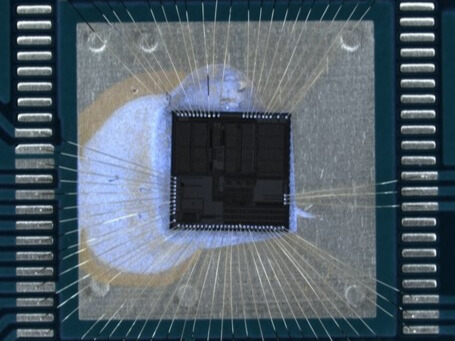
    The creation of OOC systems is, however, no small feat. Their composition is made of channels lined with living cells that mimic the structures and functions of specific organs, requiring the integration of multiple complex miniaturised components. The UNLOOC research project , which includes 51 organisations from 10 European countries, intends to tackle these technical challenges. In Portugal, partners like INESC-ID, INESC-MN, Instituto Superior Técnico, and Silicon Gate are developing analog integrated circuits for precise control and real-time monitoring of these systems.

    Read the full article here (in Portuguese).