Tag: INESC ID

  • Addressing Gender Imbalance in Academia: Insights from CMU’s Jeria Quesenberry
    Addressing Gender Imbalance in Academia: Insights from CMU’s Jeria Quesenberry

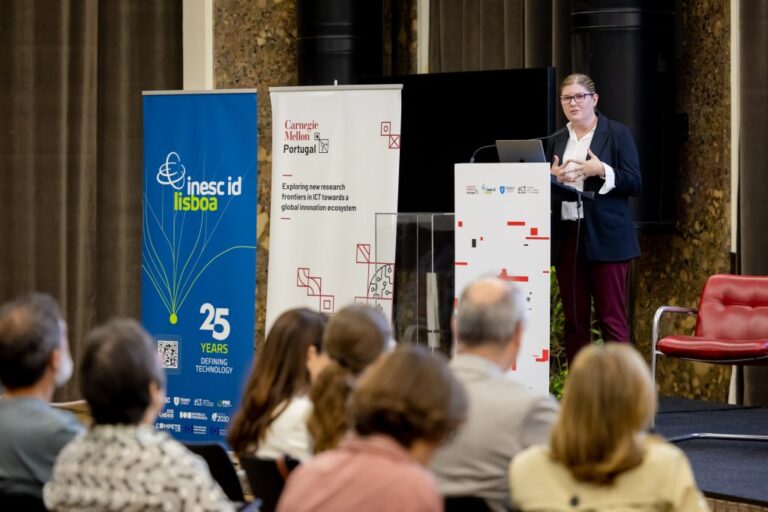
    “Fighting gender imbalance is not hard. In fact, it is much easier than nuclear physics or Artificial Intelligence,” states Jeria Quesenberry, professor of Information Systems at Carnegie Mellon University (CMU) and author of the book “Kicking Butt in Computer Science: Women in Computing at Carnegie Mellon University”. Jeria was speaking during the roundtable that followed the talk “Breaking Barriers in Technology: Women in Computing at Carnegie Mellon and Global Perspectives,” held on June 26 at Instituto Superior Técnico in Lisbon, an event co-organized by INESC- ID and the Técnico Gender Balance Group.

    Jeria shared the outcomes of her research on women in computing, highlighting best practices and challenges from her experience at CMU and showcasing examples from the Computer Science undergraduate program at CMU over the years. According to the researcher, “Gender imbalance is a topic that requires work. It is a multifaceted problem that demands a multi-layered approach.” She added: “When I started my research 25 years ago, this was a new topic. Now there is a broader recognition of the problem; speaking about gender balance is no longer a question.”

    As of 2019, in the US, women represent just over half of the professional workforce but only 27% of computing jobs, and African American and Latinx women hold less than 10% of computing occupations. The highest representation of women in ICT work can be found in the Asia-Pacific region (30.4% women) and Africa (31.3% women).

    Regarding Carnegie Mellon University’s reality, CMU SCS undergrad gender diversity has been higher than national averages for 15+ years. In 2019, 49% of new CS students were women. Since 2022, that percentage has been divided between women and nonbinary; in 2023, it was registered at 46% and 3%, respectively. Regarding major graduates, females and males are at about the same rate – women are 93%, and men are 92%. In the mid to late 90s, female students only represented 5-12% of the students in the field.

    The roundtable themed “Gender Imbalance in STEM: The Portuguese Academic Experience” gathered Ana Paiva, Portuguese Secretary of State for Science; Anália Cardoso Torres, Professor at Instituto Superior de Ciências Sociais e Políticas, Universidade de Lisboa; Inês Lynce, National co-Director of the CMU Portugal Program and President of INESC-ID; Jeria Quesenberry; João Peixoto, Vice-Rector of Universidade de Lisboa; Leonor Barreiros, a master student at Instituto Superior Técnico; and Luís Lemos Alves, Professor at Instituto Superior Técnico. Sara Sá, science writer at INESC-ID, moderated the discussion.

    Fresh out of the oven, Anália Cardoso Torres presented findings from the study “Gender Equality in Higher Education Institutions,” which analyzed gender equality policies in Portuguese higher education. The study revealed that despite late efforts, Portugal is making strides in addressing gender inequalities in academia. Inês Lynce shared her personal experience and discussed the underrepresentation of women in academic leadership and the importance of fostering self-confidence in young girls from an early age. Ana Paiva highlighted the need to guarantee gender balance in the law, but supporting education, awareness, and cultural activities can have a big impact. The Secretary of State mentioned some activities that have been developed, such as the RESTART Program.

    Jeria’s trip to Portugal included a visit to INESC TEC in Porto and is part of the tradition of bringing Carnegie Mellon University speakers to Portugal to share best practices and experiences on the topic of gender balance in academia. A subject that (unfortunately) still needs to be discussed.

    Text adapted from

    Images | © CMU Portugal

  • INESC-ID Sparks Innovation at ElectroDay 2024

    INESC-ID Sparks Innovation at ElectroDay 2024

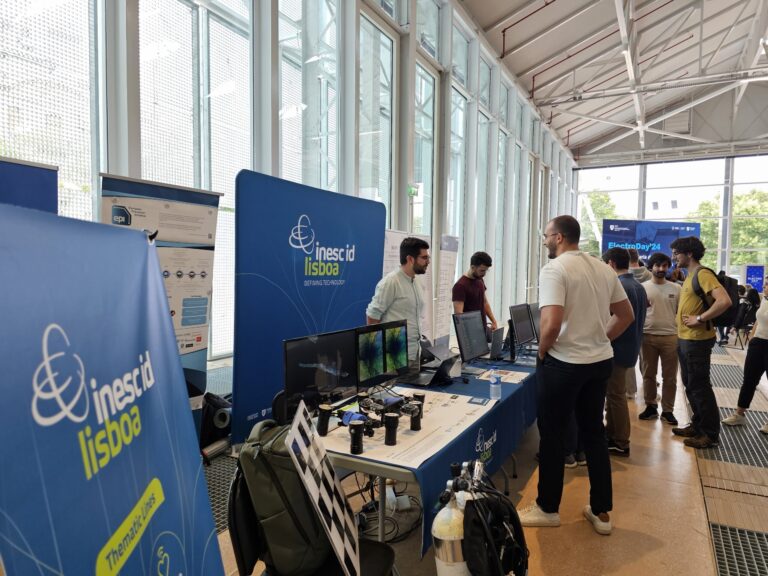
    Last Saturday, INESC-ID marked its presence at ElectroDay 2024, held at the Técnico Innovation Center (TIC), with its researchers  enthusiastically presenting several projects in the field of Electrical and Computer Engineering.

    In a venue completely packed with engineering enthusiasts, students, families and friends, the INESC-ID stand showcased projects at different stages of development, such as the “3D-CAVE Project”, presented by Nuno Neves, André Costa, Nuno Roma and Pedro Tomás (HPCAS); “European Processor Initiative (EPI)”, presented by Pedro Tomás, Nuno Neves and Tiago Rocha (HPCAS); “Cache-aware Roofline Model: HPC impact in EU projects”, presented by Aleksandar Ilic, José Morgado and Alexandre Rodrigues (HPCAS); “Embedded systems projects at INESC-ID”, presented by Gonçalo Tavares, Ruben Afonso and Fabian Näf (NCES); and “Shift2DC – Revolutionizing the way we use Electricity”, presented by Hugo Morais (SPS) and Guilherme Paraíso (GESC).

    The event provided a unique opportunity to highlight our researchers’ work and share their enthusiasm with both experts and curious attendees. Many visitors stopped by our stand to ask questions, listen to our researchers, and watch their demonstrations, supporting INESC-ID’s mission of expanding its science communication initiatives.

    ElectroDay is an initiative of Técnico’s Department of Electrical and Computer Engineering (DEEC). The 2024 edition featured a diverse program with participation from various institutes, research centers, and student groups, showcasing their work and projects in fields such as electronics, computer science, IT, telecoms, and aerospace. Additionally, it included the ‘ElectroCap Demo Day,’ the final public presentation and prize awarding of the ElectroCap program, where 32 student teams organized to solve real engineering problems, aiming to integrate as many concepts learned during the first cycle as possible.

    Learn more about ElectroDay here.

    Images | © 2024 INESC-ID

  • INESC ID researchers among the World’s Top 2% Most Influential Scientists

    INESC ID researchers among the World’s Top 2% Most Influential Scientists

    Stanford has released the World’s Top 2% Most Influential Scientists lists, featuring fourteen INESC ID researchers among the 200 thousand World’s most cited scientists.

    This annual recognition comprises two lists naming top scientists, doctors, engineers, and mathematicians, one referring to 2022 most influential scientists and the other focusing on a career-long impact.

    Compiled by Stanford University (USA) and published by Elsevier, scientists are classified in 22 scientific fields and 174 subfields. The lists are based on data from Scopus – the reference database of article abstracts and citations for journals and other academic publications – which covers nearly 36 377 titles (22,794 active titles and 13,583 inactive titles) from approximately 11,678 publishers.

    This year, a total of fourteen INESC-ID researchers have been appointed, some of them featuring in both categories:

    INESC ID’s most influential scientists in 2022 (7):

    INESC ID scientists included in the career-long database (14:

    More about last year INESC ID awardees list.

    Most influential 2022 scientists (full lists)

  • INESC ID researchers contributed to the development of an intelligent device for the detection of multi-resistant bacteria

    INESC ID researchers contributed to the development of an intelligent device for the detection of multi-resistant bacteria

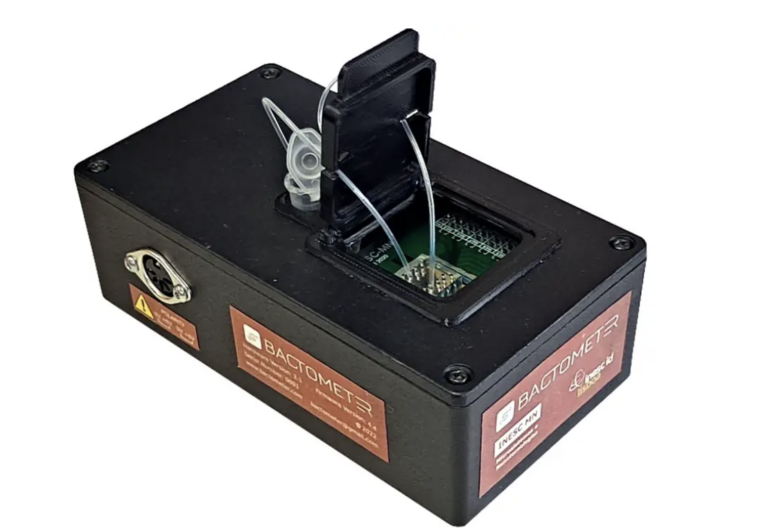
    A group of Portuguese researchers from INESC-ID and INESC MN have contributed to the development of Bactometer, a biological detector that can be used as screening system to detect multi-resistant bacteria in less than an hour.

    Multidrug-resistant bacteria are estimated to cause about 4.5 million hospital infections every year in Europe. Every day, patients colonized with multidrug-resistant bacteria are seen in Intensive Care Units, introducing these microorganisms into the hospital environment. These microorganisms develop more resistance and infect 1/5 of hospitalized patients.

    Bactometer will allow rapid and efficient identification of the strain of bacteria and its resistance mechanisms, reducing the current waiting time of 48-72h (with the laboratory culture method) to less than 1h. This new device will serve as a valuable support in the battle against antimicrobial resistance in Hospital environments.

    Additionally, the device is easily operated with no need for previous experience (similar to a COVID test) and the cost is similar to lab cultures (a classic but less precise method). This alternative is highly accurate on par with other expensive and sophisticated methods, such as PCR.

    Bactometer was created thanks to the research that has been developed at INESC for the last 15 years (INESC MN and INESC ID), as the device integrates technologies resulting from this long research work.

    The project was launched and monitored by Técnico professors: Paulo Freitas and Susana Cardoso from INESC MN and Moisés Piedade, Jorge Fernandes and Gonçalo Tavares from INESC-ID.

    The current project team is composed by 4 elements from Instituto Superior Técnico: Diogo Caetano (Electrical and Computer Engineering Ph.D.), Ruben Afonso (Electrical and Computer Engineering Ph.D. candidate), Débora Albuquerque (Biomedical Engineering Ph.D. candidate) and Ana Rita Soares (Technological Physics Ph.D.).

    The device development also counted with the support of the Portuguese start-up Magnomics. Founded in 2013, the company is focused on delivering the next generation of fully portable in-vitro molecular diagnostic devices. The basis of its novel and proven technology was transferred from INESC-ID and INESC MN and is based on an on-chip DNA extraction, amplification, and magnetic detection.

    Bactometer device schematic. Credit: INESC Brussels Hub

    More about the Bactometer on the official website.
    Official Press Release (INESC Brussels)