Tag: INESC MN

  • INESC Lisboa Annual Meeting: A Day of Reflection, Recognition, and Future Directions in Research
    INESC Lisboa Annual Meeting: A Day of Reflection, Recognition, and Future Directions in Research

    “It is an important event for the entire community, especially for young researchers. An opportunity to think about things we don’t usually consider,” said Arlindo Oliveira, INESC-ID researcher and President of INESC, at the closing session of the INESC Lisboa meeting, held on Friday, October 25. His words encapsulate the spirit of this gathering, now in its second edition, bringing together researchers from the three Lisbon-based INESC institutions—INESC-ID, INOV, and INESC MN.

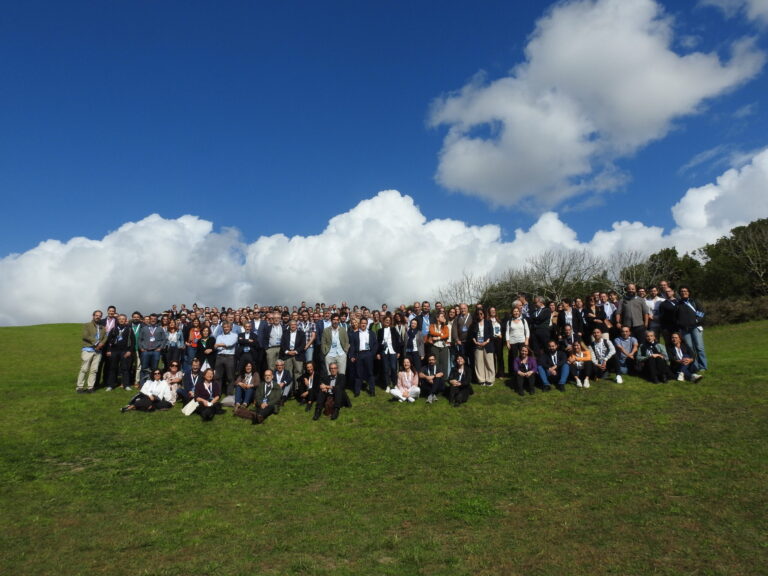
    Under a bright autumn sun, around 300 people spent the day at the Crowne Plaza Hotel in Costa da Caparica, just across the Tagus River, engaging in discussions on career paths, institutional futures, and today’s scientific challenges. The day began with a warm welcome from INESC Lisboa President, Leonel Sousa, who expressed satisfaction with the success of this second edition and the impressive turnout.

    INESC-ID President, Inês Lynce, followed by presenting key statistics for INESC-ID: 102 integrated researchers, 64 collaborators, and 140 PhD students. She also introduced planned improvements for the institute’s management system, proudly noting that INESC-ID was the largest institute to achieve a maximum rating in the latest Fundação para a Ciência e Tecnologia evaluation. “The strength of INESC-ID lies in its foundations; our greatest asset is the initiative of our researchers. It’s up to the management to motivate people,” Inês concluded.

    INOV President Fernando Moreira shared insights into the institute’s history, tracing its origins back to 1980 and the centres for technology transfer. After these institutional updates, the audience turned to a talk from Dejan Milojicic, Senior Research Manager in the Strategy and Innovation Office at HP and former President of the IEEE Computer Society. Dejan, who has contributed to the annual Megatrends report for 15 years alongside 49 other distinguished experts, discussed the report’s role in guiding governments, research institutions, and industry. He noted, however, that unpredictable factors like war or COVID-19 can disrupt even the best projections. “Even so, we shouldn’t let that deter us from making predictions,” he asserted.

    Drawing on trends from the 2024 Megatrends document, participants then broke into parallel sessions to explore three major areas of evolving technology: Sustainability, Artificial General Intelligence, and Digital Transformation. Attendees were randomly assigned to groups to dive into these topics further.

    The afternoon included sessions organized by each institution. For INESC-ID, João Paulo Carvalho, Board Member responsible for Human Resources, provided an in-depth profile of INESC-ID members, including an exciting preview of the new building planned for the institute. Nuno Roma, also a Board Member, presented the most relevant numbers of the financial situation of our Institute.

    Brief presentations from Sílvia Castro, Head of the Innovation and Management Office, Sandra Aresta, from Knowledge and Technology Transfer, Rodrigo Abreu, Communications and Outreach Office, and Vanda Fidalgo, Human Resources Manager, further enriched the day’s discussions. In a parallel session, and with notorious satisfaction from the participants, occurred the first meeting of the INESC-ID PhD. students.

    The eagerly awaited announcement of awards was led by the researcher Rui Prada, from the AI for People and Society, who presented the winners of the Young Researcher category, Alessandro Gianola, of the PhD Student, Rafael Belchior, and the Researcher category, Hugo Morais.

    The day concluded with a talk by Maria Mota, President and CEO of the newly formed GIMM—a research institute created from the merger of the renowned IGC and IMM institutes. Maria, a scientist with over two decades of experience in malaria research, shared the story of GIMM’s foundation, mission, operational approach, and future directions for research in biology and medical care. Arlindo Oliveira then closed the event, expressing his appreciation for this initiative.

    Text by Sara Sá, Science Writer | Communications and Outreach Office, INESC-ID / © 2024 INESC-ID

    Images | © 2024 INESC-ID and INOV

  • INESC ID researchers contributed to the development of an intelligent device for the detection of multi-resistant bacteria

    INESC ID researchers contributed to the development of an intelligent device for the detection of multi-resistant bacteria

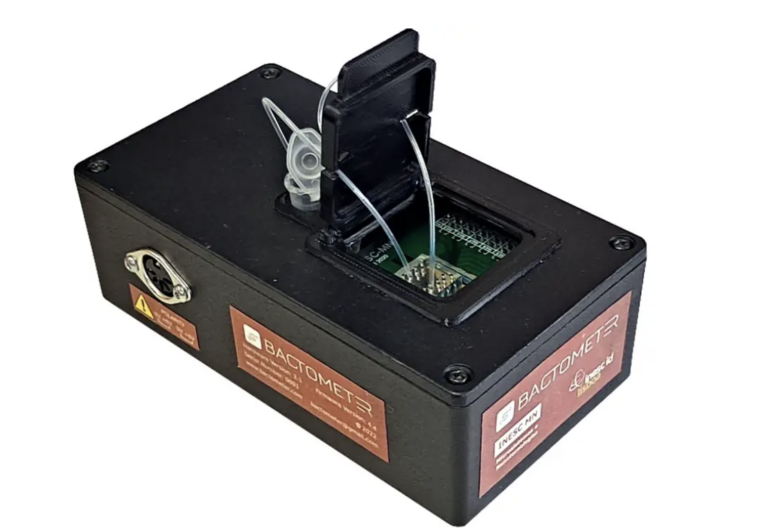
    A group of Portuguese researchers from INESC-ID and INESC MN have contributed to the development of Bactometer, a biological detector that can be used as screening system to detect multi-resistant bacteria in less than an hour.

    Multidrug-resistant bacteria are estimated to cause about 4.5 million hospital infections every year in Europe. Every day, patients colonized with multidrug-resistant bacteria are seen in Intensive Care Units, introducing these microorganisms into the hospital environment. These microorganisms develop more resistance and infect 1/5 of hospitalized patients.

    Bactometer will allow rapid and efficient identification of the strain of bacteria and its resistance mechanisms, reducing the current waiting time of 48-72h (with the laboratory culture method) to less than 1h. This new device will serve as a valuable support in the battle against antimicrobial resistance in Hospital environments.

    Additionally, the device is easily operated with no need for previous experience (similar to a COVID test) and the cost is similar to lab cultures (a classic but less precise method). This alternative is highly accurate on par with other expensive and sophisticated methods, such as PCR.

    Bactometer was created thanks to the research that has been developed at INESC for the last 15 years (INESC MN and INESC ID), as the device integrates technologies resulting from this long research work.

    The project was launched and monitored by Técnico professors: Paulo Freitas and Susana Cardoso from INESC MN and Moisés Piedade, Jorge Fernandes and Gonçalo Tavares from INESC-ID.

    The current project team is composed by 4 elements from Instituto Superior Técnico: Diogo Caetano (Electrical and Computer Engineering Ph.D.), Ruben Afonso (Electrical and Computer Engineering Ph.D. candidate), Débora Albuquerque (Biomedical Engineering Ph.D. candidate) and Ana Rita Soares (Technological Physics Ph.D.).

    The device development also counted with the support of the Portuguese start-up Magnomics. Founded in 2013, the company is focused on delivering the next generation of fully portable in-vitro molecular diagnostic devices. The basis of its novel and proven technology was transferred from INESC-ID and INESC MN and is based on an on-chip DNA extraction, amplification, and magnetic detection.

    Bactometer device schematic. Credit: INESC Brussels Hub

    More about the Bactometer on the official website.
    Official Press Release (INESC Brussels)