Tag: PRR

  • PRR Projects: From shopping to smartness. Project PT Smart Retail redesigned the future of retail
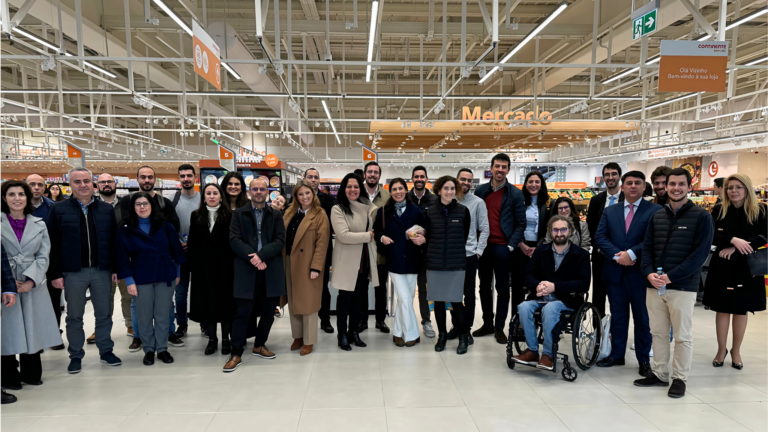
    PRR Projects: From shopping to smartness. Project PT Smart Retail redesigned the future of retail

    What if buying a snack, grabbing lunch, or doing the weekly groceries didn’t require queues, cashiers, or even a checkout line?

    This is not a scene from a sci-fi movie. It is already happening, in Portugal! The world’s largest intelligent retail store— a 1,200 square meter space operated by Continente—opened earlier this year in Leiria, showcasing the very technologies being developed through PT Smart Retail. This PRR-funded mobilizing project will transform the way we shop, consume, and interact with physical retail spaces.

    On this project, INESC-ID has a key role in dealing with the privacy and security of this future. Under the internal coordination of researcher Nuno Santos, from Distributed, Parallel and Secure Systems, the initiative brings together 19 partners, from startups to tech providers, universities, and major retailers like Continente and Galp.

    At the helm of the consortium is Sensei, a Portuguese tech company already pioneering autonomous retail experiences. But the goal of PT Smart Retail goes far beyond existing proof-of-concept stores. With an investment of over €31 million, the project aspires to deliver a new generation of intelligent, autonomous, and sustainable retail—from futuristic vending machines to fully operational cashierless stores, all powered by national technology.

    Launched in 2022 and running through the end of 2024, PT Smart Retail is part of Portugal’s broader Recovery and Resilience Plan (PRR), aiming to build national capacity in high-tech, high-impact sectors. In the retail domain, that means: Designing autonomous and hybrid store formats, developing “pods” that can be deployed in remote or high-traffic areas, introducing Zero Waste Cabinets that reinvent the vending machine experience and creating peripheral technologies to enhance user interaction and sustainability.

    Each innovation is based in seamless, contactless, and user-centric shopping experiences—think of walking into a shop, picking up your items, and walking out without scanning a single barcode. The rest is up to the system.

    “Our role in the project is very focused. We’re working on the privacy and security side—anticipating problems that might not be critical for the pilot store today but will be essential if this technology is to scale nationally or internationally.” – Nuno Santos

    But as this vision moves closer to reality, critical questions arise: How do we ensure customer privacy? Who has access to video data? How secure is the underlying AI? That’s where INESC-ID comes in.

    “Our role in the project is very focused,” explains Nuno Santos, Principal Investigator at INESC-ID and Professor at Técnico. “We’re working on the privacy and security side—anticipating problems that might not be critical for the pilot store today but will be essential if this technology is to scale nationally or internationally.”

    Indeed, the transition to intelligent retail systems introduces layers of complexity—technically, ethically, and legally. Every sensor, every camera, and every line of code collecting customer behavior must comply with GDPR, safeguard identity, and protect sensitive data from leaks or misuse.

    To solve these challenges, the INESC-ID team is developing solutions across five research vectors:

    1. Privacy-preserving Video Processing

    In smart stores, camera footage is essential for tracking customer movement and product selection. But how can we do this without violating privacy?

    INESC-ID’s answer is to transform video feeds into anonymized skeletal models, abstracting individuals into motion paths instead of identities. In some cases, the team goes further—applying visual obfuscation techniques that reduce people to blurred silhouettes, while still enabling operators to debug the system when needed.

    2. Trusted Video Stream Processing

    The software that powers smart retail—including the AI models for object recognition and movement tracking—runs on edge servers located inside stores. These are valuable intellectual property assets for companies like Sensei. But how can they ensure this code isn’t reverse-engineered or tampered with, especially in international deployments?

    INESC-ID is exploring hardware-based secure enclaves that encrypt and shield algorithms from unauthorized access, even when deployed in less trusted environments.

    3. Data Provenance and Auditability

    With thousands of data points flowing through these systems daily, it’s essential to prove that the algorithms act fairly and legally. INESC-ID is working on cryptographic methods to ensure traceability—demonstrating that a particular transaction was computed using valid data, from legitimate sensors, using trusted code.

    This will be crucial for compliance auditing, especially in the context of the AI Act in Europe.

    4. Network and Communication Security

    A smart retail system involves dozens of sensors communicating in real-time with local servers and cloud backends. This creates vulnerabilities: from spoofing attacks that fake product scans to malicious devices planted in stores.

    To address this, INESC-ID is developing secure communication protocols and monitoring tools that can detect anomalies in sensor behavior and network traffic.

    5. Web Application Security

    The final layer of the stack includes web-based dashboards, APIs, and customer-facing apps. These are often the most visible points of contact—and the most vulnerable to attacks.

    INESC-ID’s researchers are conducting code audits and developing automated tools to detect and patch vulnerabilities in retail web applications before they can be exploited.

    “The problems we’re solving in PT Smart Retail are not just relevant to retail,” says Nuno Santos. “They apply to surveillance in public spaces, stadiums, smart cities. The anonymization and secure processing of visual data is a broader societal challenge.”

    Ultimately, PT Smart Retail is not just about automating shopping. It’s about building trust in an era where technology is everywhere and often invisible. “When we used to shop at a neighborhood store, trust was physical, the shopkeeper knew us. Today, that trust has to be engineered into the system”, Nuno Santos notes.

    By combining cutting-edge AI with responsible data practices, PT Smart Retail aims to become a global reference for intelligent, privacy-first retail. And INESC-ID’s work is central to making that happen.


    Text by Sara Sá, Science Writer | Communications and Outreach Office, INESC-ID
    © 2025 INESC-ID. Credit INESC-ID and the author, with a link to the original source, when sharing or adapting this article.

    Images | © 2025 PT Smart Retail

  • AMALIA, giving voice to Portuguese identity through Artificial Intelligence

    AMALIA, giving voice to Portuguese identity through Artificial Intelligence

    Few expressed pain and longing with the intensity of Amália Rodrigues, the iconic fado singer who became a symbol of Portuguese cultural identity. Her voice, her language, and her emotion are all part of a legacy that continues to shape Portugal’s artistic and emotional landscape. Drawing inspiration from that deep cultural well, AMALIA (Automatic Multimodal Language Assistant with Artificial Intelligence) is the name chosen for the first Portuguese Large Language Model (LLM) designed from scratch to reflect and preserve the richness of the Portuguese language and identity – with INESC-ID playing a crucial role, particularly in the area of speech processing.

    Derived from the Latin word for “fate,” fado conveys a broad spectrum of emotions, from heartbreak and nostalgia to joy and resilience. Similarly, AMALIA is being designed to understand, process, and generate content in European Portuguese, capturing nuances in both language and culture. “This tool will serve a wide range of applications across essential sectors such as education, media, science, cultural heritage, and public administration”, anticipates INESC-ID researcher and Professor at Técnico, Alberto Abad, from Human Language Technologies.

    A strategic national investment

    Supported under Portugal’s Recovery and Resilience Plan (PRR) and coordinated by the Foundation for Science and Technology (FCT), AMALIA is being developed by a national consortium of top academic and research institutions. This includes Universidade de Lisboa, via Instituto Superior Técnico, Universidade NOVA, the Universidade do Porto, Universidade de Coimbra, Universidade do Minho, and the national laboratories NOVA LINCS, IT, INESC TEC, CISUC/LASI, and ALGORITMI/LASI. Experts from the University of Beira Interior and the University of Évora are also contributing.

    Under the coordination of Alberto Abad, INESC-ID’s contribution focuses on multimodal language processing, particularly the integration of spoken language. This means AMALIA will not only be able to interpret text but also receive and process speech and images – giving it “ears” and “eyes,” with the “brain” generating accurate and contextually aware text responses.

    Unlike commercial AI models primarily optimized for global markets, AMALIA is trained from the scratch using resources such as Arquivo.pt and is specifically tailored for European Portuguese. It will be open source and designed to operate in closed and secure environments, ensuring data protection and reinforcing national technological sovereignty.

    AMALIA will serve as a strategic asset for Portugal – not just as a language model, but as a digital guardian of linguistic and cultural heritage. In an age when companies tend to prioritize broader language variants like Brazilian Portuguese, AMALIA’s focus on the European variant is both a cultural imperative and a technical challenge.

    Filling a niche

    By September 2025, the consortium aims to release a public version of the model. A first internal version was successfully launched on March 31, 2025, already capable of engaging in contextual conversations and demonstrating knowledge of Portuguese culture and language.

    “AMALIA will not replace general-purpose models like ChatGPT”, Alberto Abad underlines. “Instead, it fills a vital niche: delivering specialized, context-sensitive responses in domains where language, culture, and data privacy matter.” Its potential spans education, public service, cultural preservation, and more.

    As Fernando Pessoa once said, “My homeland is the Portuguese language (A minha pátria é a língua portuguesa).” With AMALIA, that homeland now has a voice in the digital future. One that speaks, understands, and respects its unique identity.


  • PRR Projects: Fair, Explainable, and Sustainable. INESC-ID is leading Responsible AI with the CRAI Project

    PRR Projects: Fair, Explainable, and Sustainable. INESC-ID is leading Responsible AI with the CRAI Project

    Luís Oliveira lost his ability to speak due to Amyotrophic Lateral Sclerosis (ALS) in early 2023. However, in May 2024, he made his voice heard around the world. Luís, who sadly passed away in the meantime, made an historic appearance at the United Nations summit AI for Good, becoming the first ALS patient to demonstrate the use of Halo. This groundbreaking technology, developed under the PRR-funded Centre for Responsible AI (CRAI) project, enables communication without speech or typing, by combining Generative AI with a non-invasive neural interface that translates bioelectrical signal patterns into language.

    Halo, developed by Unbabel—the leading partner in this large-scale initiative—is perhaps the most visible innovation to emerge from the CRAI consortium. With €51 million in funding, CRAI aims to promote fair, transparent, eco-friendly, and trustworthy Artificial Intelligence. The initiative is structured around three key areas. Technology developers, including startups and companies focused on product development, ensure AI research directly supports real-world applications, such as Unbabel’s Halo. Fundamental research, led by top institutions like INESC-ID, Instituto de Telecomunicações, and the Champalimaud Foundation, drives cutting-edge AI advancements. Industry and healthcare adopters, such as Hospital de São João, Bial, and Luz Saúde, integrate AI solutions into their operations, ensuring broad societal impact. In total, CRAI brings together 10 startups, two unicorns, a law firm, five industry leaders, and eight research centers.

    At INESC-ID, four different research teams—led by Bruno Martins, Arlindo Oliveira, Rui Prada, and Paolo Romano—collaborate on various aspects of the project, with Responsible AI as a core pillar. Alongside this vision of connecting with companies, the teams are developing highly applied solutions.

    “CRAI is built on three fundamental principles: fairness, ensuring no discrimination towards groups of people; understandability and explainability, making AI systems interpretable and their decision-making processes transparent; and sustainability, ensuring computational feasibility and reducing energy consumption without compromising performance.”  — Bruno Martins

    INESC-ID’s expertise in Natural Language Processing (NLP) and dialogue systems has for instance been instrumental in supporting projects like Unbabel Halo. Other key initiatives focus on legal or clinical NLP, which are critical components of the Affine product being developed by NeuralShift, with its focus on streamlining legal workflows, or the automated medical record systems developed in collaboration with Priberam’s PCARE initiative.

    Bruno Martins, from Human Language Technologies research area and the coordinator of INESC-ID participation at the project, explains that CRAI is built on three fundamental principles: “fairness, ensuring no discrimination towards groups of people; understandability and explainability, making AI systems interpretable and their decision-making processes transparent; and sustainability, ensuring computational feasibility and reducing energy consumption without compromising performance.”

    The team led by Paolo Romano adopts a three-pronged approach to enhance AI efficiency and scalability, focusing on system-level optimization, cloud-level optimization, and self-adaptation. Meanwhile, research by the team coordinated by Rui Prada, on Social Artificial Intelligence and Social Robotics, aims to develop AI that interacts naturally and responsibly with humans, fostering a symbiotic relationship between people and technology. And Arlindo Oliveira’s team aims to strike a balance between safeguarding data privacy and security while leveraging customer insights in a competitive landscape.

    CRAI’s main objectives include advancing fundamental research in Responsible AI, developing products and services that apply Responsible AI principles to generate economic impact, attracting, training, and retaining world-class talent, and promoting education and awareness through initiatives such as the Responsible AI Forum. These efforts are already translating into real-world solutions, enhancing accessibility, improving healthcare processes, and fostering ethical AI adoption across industries.


    Text by Sara Sá, Science Writer | Communications and Outreach Office, INESC-ID
    © 2025 INESC-ID. Credit INESC-ID and the author, with a link to the original source, when sharing or adapting this article.

    Images | © 2025 INESC-ID, Técnico, Unbabel

  • INESC-ID’s PRR projects on display at Técnico Innovation Summit

    INESC-ID’s PRR projects on display at Técnico Innovation Summit

    A robot dog greeted visitors at the Técnico Innovation Summit, drawing a heart in the air with its front paws. It charmed everyone, and the research team behind the Sustainable Stoneby Portugal project looked on proudly at their “pet.”

    The first edition of the Técnico Innovation Summit, held on November 4 and 5 at the Técnico Innovation Center during the PhD Open Days, showcased projects with significant economic impact, particularly those funded through Portugal’s Recovery and Resilience Plan (PRR).

    INESC-ID was well-represented with four of its five projects:

    • Accelerat.ai: driving digital transformation in Portugal’s public and private sectors through technologies like conversational systems for the national health helpline SNS24;
    • Centre for Responsible AI (CRAI): developing fair, explainable, and sustainable AI solutions;
    • Blockchain.pt: establishing a national blockchain network to position Portugal as a global leader in blockchain innovation;
    • Alliance for Energy Transition (ATE): fostering an ecosystem for energy transition and decarbonization.

    Over the two-day event, numerous visitors passed through the venue, including students, entrepreneurs, researchers, and government representatives who also attended the nomination ceremony for the 21 new members of the National Council for Science, Technology, and Innovation (CNCTI).

    “We were visited by Pedro Dominguinhos, President of the National Monitoring Committee for PRR, and Carla Branco Santos from the Executive Committee of IAPMEI,” shared Rubén Solera-Ureña, a researcher in Human Language Technologies involved in the Accelerat.ai project.

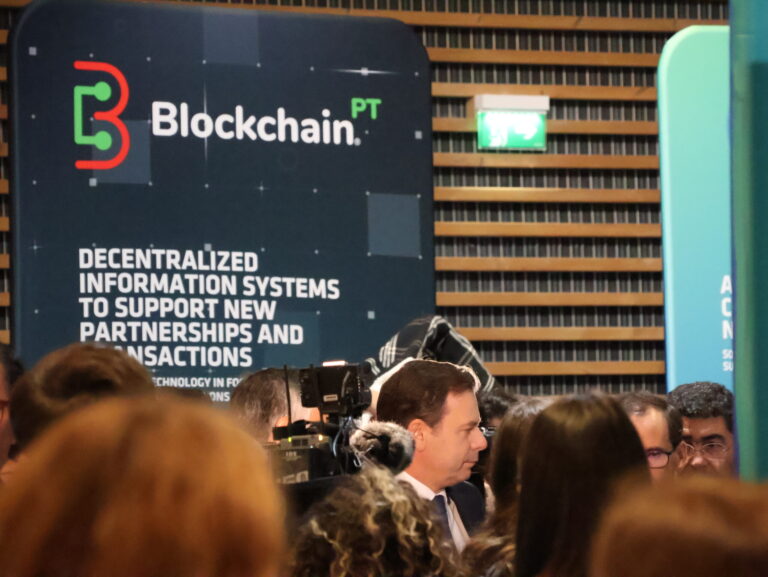
    During their visit to the expo site, Prime Minister Luís Montenegro and his team visited various booths, including that of CRAI. Here, researchers demonstrated AI products developed under the project, such as a home physical therapy platform, a communication solution for ALS patients, and a platform to help hospital doctors automate administrative tasks.

    Images | © 2024 INESC-ID

  • PRR Projects:                                                        How can I help you, como posso ajudar, koma podi ajudá?

    PRR Projects: How can I help you, como posso ajudar, koma podi ajudá?

    Who hasn’t had a frustrating experience with a chatbot? If you haven’t, either you’ve never used one, or you’ve interacted in American English or any other of the preferred languages of the big tech companies.

    It may not be obvious, but developing a conversational agent could be a powerful way to promote inclusion. This is precisely one of the goals of the consortium Accelerat.ai, created to advance the digital transformation of the public and private sectors in Portugal, with active participation from INESC-ID. “We intend to develop technology in Portugal to support sectors that are particularly important, such as a conversational system for SNS24 (Portuguese National Health Service’s helpline) and customer support solutions for businesses”, describes Alberto Abad from Scientific Area Human Language Technologies and the leader of INESC-ID’s participation in the consortium, which is supported under the Recovery and Resilience Plan (RRP).

    As seen in other areas of technology, the need to improve the quality and reliability of conversational agents was stressed during the Covid-19 pandemic, due to the transformation of services that previously provided in-person assistance and had to close. Consequently, there was a shortage of personnel to handle requests coming through contact centres, which were often not designed for that purpose. “Such circumstances created a need for, whenever possible, automated assistance,” notes Abad, a professor at Técnico, which is also a member of the consortium.

    In this world of ours, there are about 7 000 spoken languages. According to Defined.ai, an AI marketplace for tools, data and models, and the leader of Accelerat.ai consortium, “29% of business has lost clients due to a lack of multilingual support and 70% of end-users express greater loyalty to companies offering support in their native language.” And so, the mission of this ambitious project, with a budget of 35 million euros, 2.18 million of which is allocated to INESC-ID, is to develop a conversational assistant for languages outside the top 15 language roadmaps of the big 5 tech companies, starting with European Portuguese.

    The solutions in development are based on Conversational Artificial Intelligence Agents and CCaaS (Contact Centre as a Service). At INESC-ID, we will investigate and explore the capacity to mutually convert from speech to text and text to speech – an area known as Automatic Speech Recognition and Speech Synthesis. “It is a technology that has existed for many years, with several components – speech-to-text, and the reverse, text-to-speech”, Abad notes. “Additionally, there is the ‘brain’ of the system, which involves dialogue management and task handling, and this has evolved significantly in recent times with the advent of large language models (LLMs) that have transformed the landscape.” 

    To public and private organizations

    Some of this technology is already on the market, typically dominated by major tech companies such as Microsoft, Google, and Apple. These corporations have a business vision and often overlook niche languages, such as European Portuguese, spoken by ten million people. Consequently, the level of maturity and the amount of data available to develop these systems for minority languages is lower. “Therefore, the goal of the project is to provide Portuguese companies with technology specifically tailored to the Portuguese context, including its variants”, like dialects or regional forms of the language.

    Together on this mission, Defined.ai states that the project represents a strategic effort to cater the needs of the public and private sectors in Portugal and related markets, enhancing communication and accessibility in digital platforms. “If a developer intends to use voice systems in the Portuguese market, they must rely on generic models with a considerable margin of error, or in English and Brazilian Portuguese, languages that are not the preferred options for Portuguese speakers”, defended Daniela Braga, from Defined.ai, in a press release.

    Over the past ten years, errors on this kind of systems have been drastically reduced. “The systems are improving so much that we may be approaching a situation where, in certain tasks, it will be difficult to distinguish a human from a machine. The components are the same, but they work much better”, explains Alberto Abad. And so synthetic speech may end up being indistinguishable from recordings in terms of naturalness and fluidity. “Today, it is possible to have dialogue systems that solve many problems”, he adds. But still there is margin for improvement, by pushing the boundaries of the state of the art.

    Picking up on emotional cues

    One of the research goals is to extract emotional cues from speech to create more empathetic, human-like responses, moving further away from a robotic response. Another purpose is to improve speech recognition in non-ideal conditions, such as low-resource languages (with relatively less data available for training), or atypical speech. “Systems are tested for normative speech – such as children, where the lexicon is different, pitch is different and there are more fluctuations”, says the researcher. Elderly and people with any type of disability that affects speech are also in the scope of Accelerat.ai. The system may be trained to speak slower when interacting with elderly, use youthful speech with youngsters or adapting the accent, to create more closeness to the user.

    “Speech can be considered private information. If used maliciously, it is easy to create synthesis systems with our voice”, he alerts. “There can be a set of automatically extracted information that we might want to protect” – Alberto Abad.

    It is becoming increasingly evident that voice data can contain valuable information that may be used to detect health conditions, such as Parkinson’s disease. “Depending on the type of client and the circumstances, this information can be useful for characterizing the patient, as in a hospital setting”, exemplifies Abad.

    However, the more valuable the data, the greater the concern about privacy. “Speech can be considered private information. If used maliciously, it is easy to create synthesis systems with our voice”, he alerts. “There can be a set of automatically extracted information that we might want to protect.” To guarantee this, INESC-ID’s team is also working in ways to extract information while ensuring user privacy. And for this there are several approaches. “One idea is to use encryption. Another is to allow users to control which information they want to be leaked—such as being okay with their gender being known but not wanting anything else to be disclosed, or only allowing their speech to be used to understand what they are saying.”

    Presence at Interspeech

    Privacy is also a significant part of the project, with PhD students working in this area. “Currently, when we use such a system, the speech is stored, and we don’t know what might be done with it. We are working on improving speech recognition, on extracting features and health biomarkers, and in the future, on making interactions more private, addressing security and ethical concerns.”

    Six senior researchers, five post-doc, three PhD students, a master student are part of the project, a team that had a notable presence in the last Interspeech conference (the largest one on speech and language technologies in the world), with the participation of several members, the presentation of three scientific works related to the improvement of automatic speech recognition in low-resource settings and the use of LLMs as speech annotators to characterize speakers, the participation of a junior PhD as an expert pannellist in the special session “Connecting Speech-science and Speech-technology for Children’s Speech”. and above all, with the recognition of Professor Isabel Trancoso who received the ISCA Medal for Scientific Achievement, an annual distinction that honors each year an individual who has made extraordinary contributions to the field of speech communication science and technology.

    Projects like Accelerat.ai bring progress to conversational AI, prioritizing inclusiveness and accessibility. With applications ranging from healthcare to customer support, innovations in speech recognition and synthesis will increasingly become part of our everyday lives, bringing human-centered solutions at the base of AI development in Portugal and beyond.


    Text by Sara Sá, Science Writer | Communications and Outreach Office, INESC-ID
    © 2025 INESC-ID. Credit INESC-ID and the author, and link to the original source when sharing or adapting this article.

    Images | © 2024 INESC-ID, Accelerat.ai

  • PRR Projects:                                                    Mirror, mirror on the wall, am I real or am I fake?

    PRR Projects: Mirror, mirror on the wall, am I real or am I fake?

    Working in agriculture is exhausting, unpredictable, and sometimes not financially rewarding. Miguel Batista is a son, grandson and a great-grandson of cherry producers and he surely knows what he is talking about when mentioning the hardships, and also the joy, of living off farming. “I am afraid my son will not be a cherry producer”, he admits while talking at a debate taking place at Festa da Cereja, in Alcongosta, Fundão. Under the name “Cherry 4.0 – on the road to modernization”, organized by the Ciência Viva Agency and the Fundão Municipality, the gathering joined cherry producers, scientists and technology people. Batista, from the company Sota e Lino, provided the motto for the discussion. “When I started 30 years ago, no one checked the labels. Nowadays, everybody does.”

    And there is a lot of information that can be added to a label, like the origin, carbon footprint, fertilizers used during cultivation, all of this weighs increasingly more when the consumer decides. The Agenda “Decentralize Portugal with Blockchain”, funded under the PRR (Programa de Recuperação e Resiliência), in which INESC-ID is one of the promoters, aims to create a national blockchain network, preparing the country to be a world leader in the technology. It was also showcased during the debate.

    Coordinated by VOID Software and comprising 56 entities, including companies, research institutions, associations, and public bodies, “Decentralize Portugal with Blockchain” is organized into ten work packages addressing sectors like agriculture, digital asset management, and interoperability. With an investment exceeding 72 million euros, the agenda aims to launch 26 scalable products with significant export potential. Key focuses include “farm-to-fork” traceability integrating IoT with blockchains, managing digital assets in real estate and beyond, and interoperability solutions for data exchange between diverse blockchain systems and technologies across sectors. The end goal, as described on the project’s website, is “to propel Portugal to the forefront of blockchain technology in Europe and advance the country’s digital transformation.”

    Tracing the origins of Cereja do Fundão

    One of the proposed applications – Work Package 1 – is concerning the traceability of Cereja do Fundão. Fundão Cherries, cultivated in the Cova da Beira region of Portugal, stand out for their superior quality and unique characteristics that make them valuable in the market. However, it is important that they are authentic and monitored from origin to consumer. So, the goal of this demonstrator is to develop a first version of an innovative information system to ensure the traceability of Fundão cherries from harvest to consumer, with the vision of the “importance of technology as a driver of innovation and taking advantage of global business opportunities made possible by this technology”, notes the coordinator of the project, Miguel Pardal, an INESC-ID researcher, from Distributed Parallel and Secure Systems, and a professor at Técnico. “The use of Blockchain aims to ensure the integrity of the collected data, providing a reliable source of information about the origin and quality of cherries”, Pardal explains. “Unlike traditional databases, it is not under the control of a single entity but rather involves a network of partners, including producers, distributors, retailers, and technology providers.”

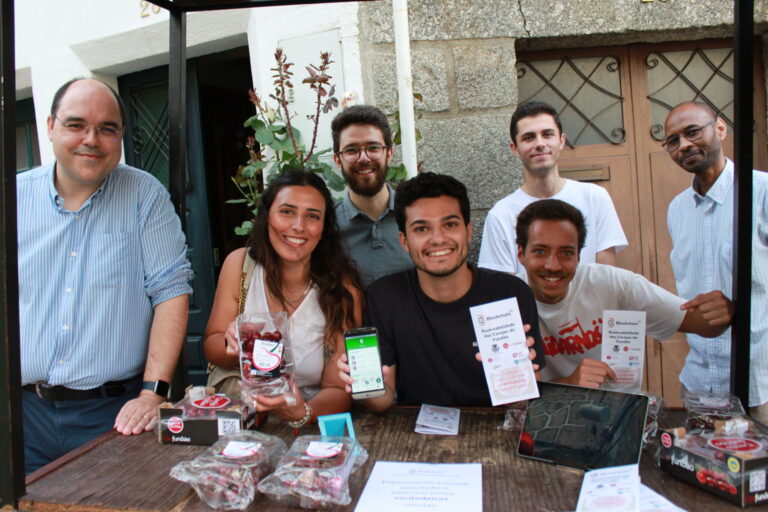
    Festa da Cereja, in Alcongosta, was the perfect opportunity to demonstrate it to the population and test its impact. The demonstrator, developed in collaboration with the organization of cherry producers Cerfundão, the retailer Sonae MC and the technology company Sensefinity, included an app through which consumers can have access to the information.

    Visitors passing through the main street of the mountain village during Festa da Cereja were looking for the traditional cherry products, like pies and liquors. But they also found technology. For two days, on the stand of Blockchain.pt people could test the system and become familiar with the main aspects of the project. By reading the QR code on the box, the app would show the community area (freguesia) in which it was produced and all the steps the fruits have gone through to reach the customer. “The focus of this initial demonstrator is the assurance of origin and, therefore, the locations involved in the supply chain. In the future, the system will include integrated sensors for temperature, humidity, light, and vibration, for example, in field boxes and packaging labels, to enable better monitoring of transportation and storage conditions”, Miguel Pardal explains.

    Where technology meets tradition

    The project involves a group of master students, working on the app in order for it to be appealing to end users, with a gamification component. All the server programming is also with INESC-ID. The smart label is being developed by Sensefinity with the data sent through LoRa net. The position, detected by GPS, is communicated every five minutes, from the fields to Cerfundão, and then on every thirty minutes. The labels are attached to the boxes and pallets and the sensor also registers temperatures and humidity. “These data can be relevant in case there is some sort of sanitary problem”, underlines the CEO of Sensefinity, Orlando Remédios.

    The system will be integrated with the enterprise information systems of the partners involved in the supply chain. The use of Blockchain aims to ensure the integrity of the collected data, providing a reliable source of information about the origin and quality of the cherries. “Unlike traditional databases, this information is not controlled by a single entity, but by the group of partners involved in the system, including producers, distributors, and retailers, as well as the technology providers involved”, Miguel Pardal explains.

    “This approach enables the construction of shared systems even in environments where there is only partial trust between partners, which often hindered the adoption of new technologies. By using blockchain, we can ensure that data and code are managed securely and transparently, eliminating single points of failure and preventing fraud. This model can be applied to various sectors and help boost the economy.” Miguel Pardal

    Cherries were only a start. Other food products might follow, like almonds and meat. “This project is building a food traceability system that provides guarantees about the origin of products”, Miguel Pardal summarizes. “It can also monitor their storage and transport conditions to protect quality and freshness.”

    According to Miguel Pardal, this project can have a significant impact on the agriculture sector, protecting and adding value to Portuguese products. “From a research perspective, it allows for experimenting with new business integration architectures by implementing a logically centralized system—simpler, with which all participants communicate and with common data schemes—but with technological guarantees that data storage and code execution are performed in a decentralized and consensual manner among all business partners. This approach enables the construction of shared systems even in environments where there is only partial trust between partners, which often hindered the adoption of new technologies. By using blockchain, we can ensure that data and code are managed securely and transparently, eliminating single points of failure and preventing fraud. This model can be applied to various sectors and help boost the economy.” A new dawn is rising.

    Text by Sara Sá, Science Writer | Communications and Outreach Office, INESC-ID / © 2024 INESC-ID

    Images | © 2024 INESC-ID

    A team of INESC-ID was at Festa da Cereja, Alcongosta, with a demo of the Blockchain.Pt project