Tag: Técnico

  • Bridging Knowledge and Innovation: Inês Lynce joins the National Council for Science, Technology, and Innovation
    Bridging Knowledge and Innovation: Inês Lynce joins the National Council for Science, Technology, and Innovation

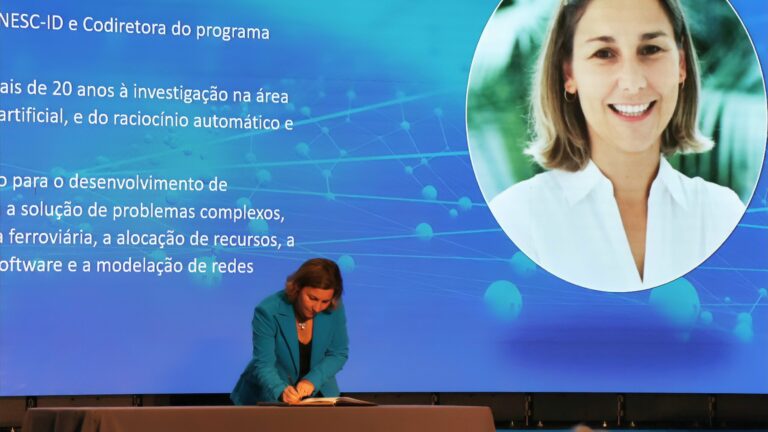
    Carlos Oliveira, Adélio Mendes, Amélia Santos… Inês Lynce. INESC-ID’s President became the ninth figure in science, technology, and innovation to be called to the stage at the Técnico Innovation Centre on the afternoon of November 5. In a ceremony attended by the Prime Minister of Portugal, Luís Montenegro; the Minister of Economy, Pedro Reis; the Minister of Education, Science, and Innovation, Fernando Alexandre; and the Secretary of State for Science, Ana Paiva, an INESC-ID researcher, the 21 new members of the National Council for Science, Technology, and Innovation (CNCTI) were formally appointed.

    This advisory body is tasked with supporting the development and sustainability of the national scientific and technological system, fostering the internationalization of Portuguese science, and promoting Portuguese as a working language in scientific fields, as outlined in the Diário da República. It is also responsible for providing scientific advice and enhancing cross-sectoral and inter-ministerial coordination in science and technology policies. Additionally, the CNCTI is expected to collaborate in parliamentary debates on science, technology, and innovation whenever requested by the Assembly of the Republic.

    During her mandate, Inês Lynce, a Professor at Instituto Superior Técnico specializing in Artificial Intelligence, and National Director of the Carnegie Mellon Portugal Program, aims to promote “scientific excellence and talent attraction and retention.”

    “It is crucial to have a council that can serve the Government and the country, so that what is created in universities can be translated into value,” emphasized the rector of Universidade de Lisboa, Luís Ferreira. “It often happens that those making decisions are not aware of what is being produced. We need a bridge between the foundations, where knowledge is created, and those who can leverage it to create value.” Entrepreneur and council president Carlos Oliveira highlighted the goal of making Portugal a country where science, technology, and innovation form the basis for growth by fostering dialogue between research centres, innovation hubs, and companies. As noted by Prime Minister Luís Montenegro, the world’s largest and most complex challenges, such as climate change, can only be tackled with the help of science.

    Text by Sara Sá, Science Writer | Communications and Outreach Office, INESC-ID / © 2024 INESC-ID

    Images | © 2024 INESC-ID


  • INESC ID researchers contributed to the development of an intelligent device for the detection of multi-resistant bacteria

    INESC ID researchers contributed to the development of an intelligent device for the detection of multi-resistant bacteria

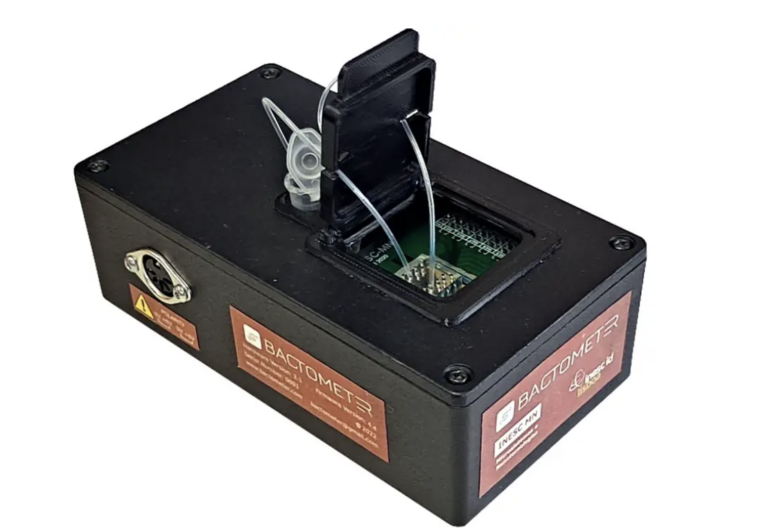
    A group of Portuguese researchers from INESC-ID and INESC MN have contributed to the development of Bactometer, a biological detector that can be used as screening system to detect multi-resistant bacteria in less than an hour.

    Multidrug-resistant bacteria are estimated to cause about 4.5 million hospital infections every year in Europe. Every day, patients colonized with multidrug-resistant bacteria are seen in Intensive Care Units, introducing these microorganisms into the hospital environment. These microorganisms develop more resistance and infect 1/5 of hospitalized patients.

    Bactometer will allow rapid and efficient identification of the strain of bacteria and its resistance mechanisms, reducing the current waiting time of 48-72h (with the laboratory culture method) to less than 1h. This new device will serve as a valuable support in the battle against antimicrobial resistance in Hospital environments.

    Additionally, the device is easily operated with no need for previous experience (similar to a COVID test) and the cost is similar to lab cultures (a classic but less precise method). This alternative is highly accurate on par with other expensive and sophisticated methods, such as PCR.

    Bactometer was created thanks to the research that has been developed at INESC for the last 15 years (INESC MN and INESC ID), as the device integrates technologies resulting from this long research work.

    The project was launched and monitored by Técnico professors: Paulo Freitas and Susana Cardoso from INESC MN and Moisés Piedade, Jorge Fernandes and Gonçalo Tavares from INESC-ID.

    The current project team is composed by 4 elements from Instituto Superior Técnico: Diogo Caetano (Electrical and Computer Engineering Ph.D.), Ruben Afonso (Electrical and Computer Engineering Ph.D. candidate), Débora Albuquerque (Biomedical Engineering Ph.D. candidate) and Ana Rita Soares (Technological Physics Ph.D.).

    The device development also counted with the support of the Portuguese start-up Magnomics. Founded in 2013, the company is focused on delivering the next generation of fully portable in-vitro molecular diagnostic devices. The basis of its novel and proven technology was transferred from INESC-ID and INESC MN and is based on an on-chip DNA extraction, amplification, and magnetic detection.

    Bactometer device schematic. Credit: INESC Brussels Hub

    More about the Bactometer on the official website.
    Official Press Release (INESC Brussels)