Author: admin

  • ISTSat-1: Portugal’s First University CubeSat Satellite Ready for Summer Space Launch

    ISTSat-1: Portugal’s First University CubeSat Satellite Ready for Summer Space Launch

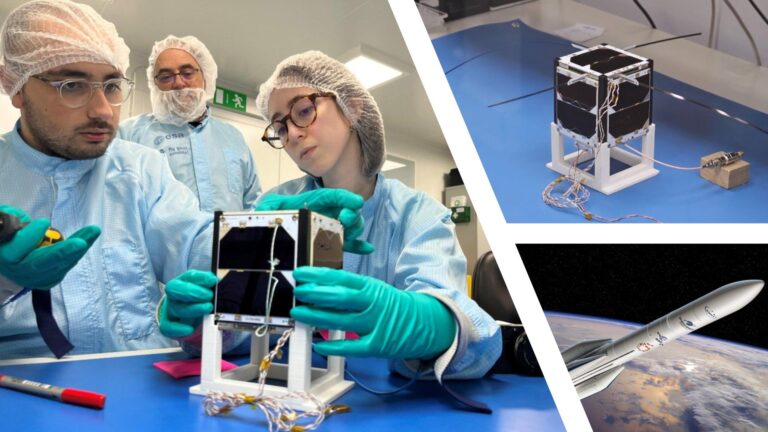
    The first University CubeSat satellite, entirely conceived and developed in Portugal, is set to launch this summer. The ISTSat-1 project was developed by a collaborative team coordinated by Rui Rocha, which includes INESC-ID researchers Gonçalo Tavares and Moisés Piedade, along with students from Instituto Superior Técnico, marking a significant achievement for Portugal’s technological presence in the international space sector. 

    This state-of-the-art nanosatellite, so named for its size and weight, demonstrates the remarkable feat of integrating all fundamental systems of a satellite into a small cube measuring just 10 cm on each side. It is scheduled to hitch a ride to space aboard the inaugural flight of the Ariane 6 rocket, launching from French Guiana in June or July this year. Once in orbit, the ISTSat-1’s mission will be to demonstrate that small CubeSats can effectively detect aircraft ADS-B signals from space in areas where ground systems cannot reach, such as oceans or very remote regions. 

    As the summer launch approaches, the ISTSat-1 team has already completed its final preparations. Recently, students from NanosatLab traveled to Exolaunch’s Berlin headquarters in Germany to integrate ISTSat-1 with the CubeSat deployer in preparation for the launch, and ensuring that the satellite is ready for the rigors of space. It will soon be shipped to Arianespace facilities in Évry, France, and subsequently to the Guiana Space Centre.

    Mission control for ISTSat-1 will be established at Técnico’s campus in Taguspark, Oeiras, and the satellite will be controlled via the CS5CEP station, licensed to AMRAD, ensuring that oversight and operation are conducted entirely from Portugal. 

    The launch and deployment of ISTSat-1 will be the culmination of an effort that began as early as 2010, when the feasibility of a CubeSat mission was assessed. In 2017, the project was selected by the European Space Agency’s (ESA) Fly Your Satellite! programme, which encourages university teams to develop their own satellites and exposes team members, particularly students, to the entire project lifecycle of a space mission. 

    In 2022, researchers involved in the ISTSat-1 project headed the creation of the Técnico NanosatLab in Taguspark. This consortium led by INESC-ID and including IT, IDMEC, ISR, INESC-MN, INOV, and Instituto Superior Técnico, was the site for the final integration of the ISTSat-1, paving the way for future satellite technology development projects.

    Know more about ISTSat-1: here

    (Image sources: ISTSat-1 website, INESC-ID, ESA)

  • In the Media: Ana Paiva and Alberto Rodrigues da Silva nominated for the XXIV Government of Portugal

    In the Media: Ana Paiva and Alberto Rodrigues da Silva nominated for the XXIV Government of Portugal

    Last Friday, April 5th, distinguished INESC-ID researchers Ana Paiva and Alberto Rodrigues da Silva were officially appointed as Secretaries of State in a ceremony at Ajuda Palace in Lisbon, presided over by the President of the Portuguese Republic, Marcelo Rebelo de Sousa.

    Ana Paiva* is the new Secretary of State for Science, serving under the Ministry of Education, Science and Innovation, while Alberto Rodrigues da Silva** has taken the role of Secretary of State for Modernisation and Digitalisation, under the Ministry of Youth and Modernisation. They were inaugurated alongside 41 colleagues appointed across 17 different ministries.

    *Ana Paiva is a researcher at INESC-ID within the Artificial Intelligence for People and Society research area and a Full Professor of Artificial Intelligence at Técnico, University of Lisbon. Her recent research focuses on engineering agents and robots capable of collaborating with humans in groups, fostering transparent, prosocial, and altruistic societies. She has served on the Global Agenda Council in Artificial Intelligence and Robotics of the World Economic Forum and as a member of the Scientific Advisory Board of Science Europe. She is a fellow of the AAAI, EurAI, and ELLIS.

    **Alberto Silva is a researcher at INESC-ID within the Information Systems research area and a Full Professor in the Department of Computer Engineering at Técnico, University of Lisbon. He is a member of the Project Management Institute (PMI), a senior member of the Association for Computing Machinery (ACM), part of the QUATIC Series Scientific Steering Committee, and a member of GPSI/APSI, the Working Group for Information Systems Project Management of the Portuguese Association for Information Systems.

    (photo: andresmh / Flickr)

  • In the Media: Paula Carvalho discusses the spread of online hate speech with Público newspaper

    In the Media: Paula Carvalho discusses the spread of online hate speech with Público newspaper

    In an article in Público titled “Liberdade para odiar. Onde começa o discurso de ódio?(“Freedom to hate. Where does hate speech begin?”), INESC-ID researcher Paula Carvalho shared insights about the complex and pervasive phenomenon of direct and indirect online hate speech.

    Within the context of the EU-funded project Knowing Online Hate Speech (kNOwHATE), which includes Paula Carvalho and researchers from Iscte and IST-ID, the team has analysed the content, subtleties and propagation of thousands of messages directed against immigrants, racial/ethnic groups, and LGBTIQ communities.

    With the rise of social media platforms and the rapid dissemination of information, understanding and addressing this phenomenon has become crucial for identifying, monitoring, and preventing online hate speech against these communities.

    Read the full article (in PT) here.

    *Paula Carvalho is a researcher at INESC-ID within the Information Systems Engineering research area, and an Invited Assistant Professor at Técnico, University of Lisbon. Her research interests lie in the broad areas of Natural Language Processing, Corpus Linguistics, and Computational Social Sciences. Currently, her research is particularly focused on the analysis and detection of information disorder on social media, including hate speech and conspiracy theories.

  • Isabel Trancoso honored with ISCA Medal for Scientific Achievement

    Isabel Trancoso honored with ISCA Medal for Scientific Achievement

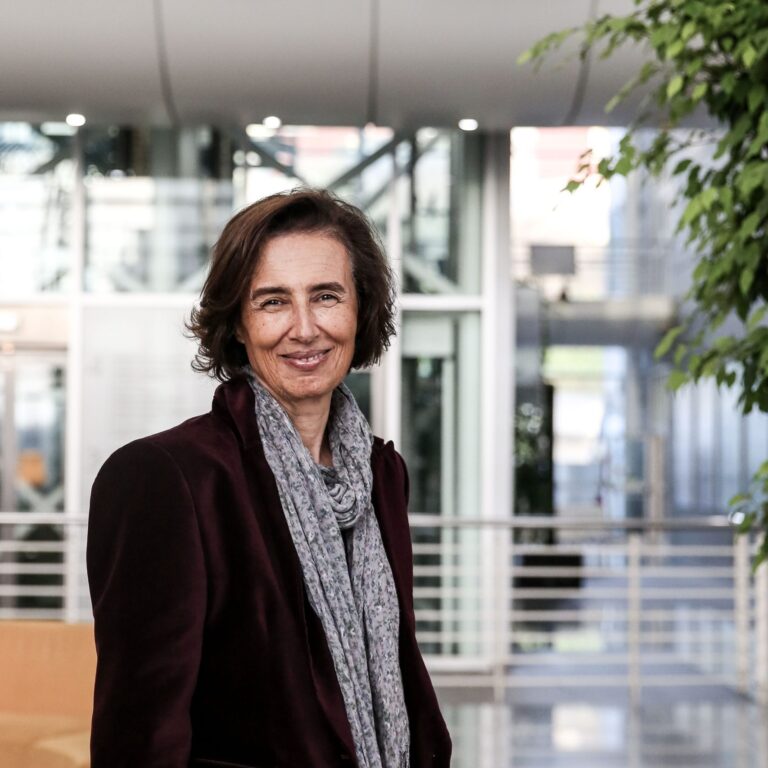
    INESC-ID researcher Isabel Trancoso has been chosen as the recipient of the 2024 International Speech Communication Association (ISCA) Medal for Scientific Achievement. This prestigious award recognizes her “pioneering contributions to speech coding and resources for the Portuguese language, and sustained service to the speech community.”

    The ISCA Medal, established in 1989, represents ISCA’s highest achievement and acknowledges outstanding contributions to speech communication. Isabel Trancoso will be presented with the medal at the opening ceremony of Interspeech 2024 in Kos, Greece. In addition to this honor, she will deliver a keynote speech, about her work in the field and perspectives on past, present, and future of speech communication.

    Isabel Trancoso is a full professor at Instituto Superior Técnico, the former President of the Scientific Council of INESC ID, and also the founder of INESC-ID’s Speech Processing Group, now HLT (Human Language Technologies). She was president of ISCA from 2007 to 2011, and became a Fellow of ISCA in 2014.

    Recently, she has also received the honor of being appointed IEEE Fellow Committee Chair 2024 (learn more here).

    (Photo credits: Expresso Podcast “A Próxima Vaga” © Nuno Fox)

  • Leonel Sousa represents INESC-ID at 2nd European Memory Systems Forum

    Leonel Sousa represents INESC-ID at 2nd European Memory Systems Forum

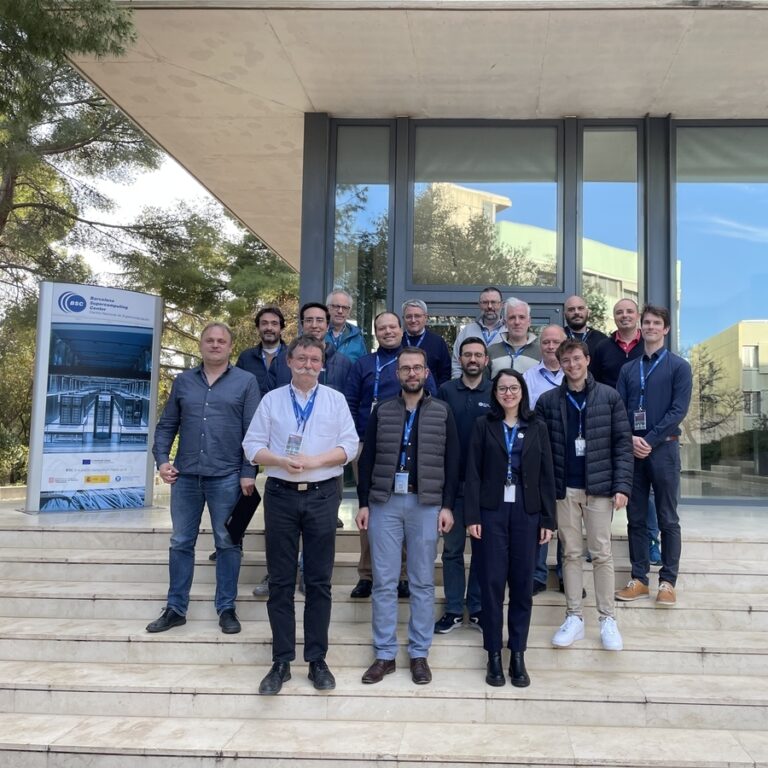
    Leonel Sousa, INESC-ID researcher in the field of High-Performance Computing Architectures and Systems and a full professor at Técnico, represented INESC-ID at the second European Memory Systems Forum, held from February 29 to March 1, 2024.

    The event, hosted at The Barcelona Supercomputing Center (BSC-CNS) and co-sponsored by Micron, brought together industry leaders and research institutes to address challenges in high-performance memory systems, vital for the advancement and scalability of high-performance computing systems, and play a pivotal role in the future of EU research and industry.

    Participating organizations included INESC-ID, BSC-CNS, Micron, ZeroPoint, the French Alternative Energies and Atomic Energy Commission (CEA), the Foundation for Research and Technology – Hellas (FORTH), Instituto Superior Técnico (IST), and the Technical University of Munich (TUM).

    The forum was part of the DEEP-SEA project, a European-funded initiative with a €15 million budget, launched in April 2021.

    Know more here.

    (Photo: https://www.bsc.es/)

  • Inês Lynce featured guest alumna at Técnico “Alumni Talks – Women Edition 2024”

    Inês Lynce featured guest alumna at Técnico “Alumni Talks – Women Edition 2024”

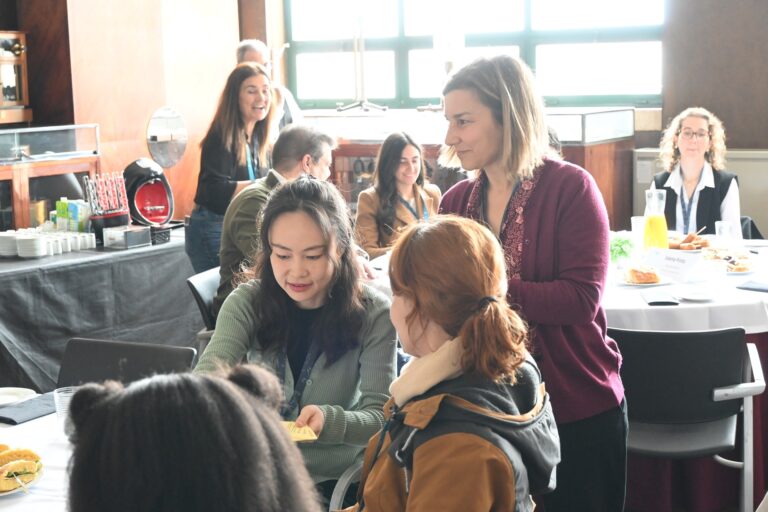
    On International Women’s Day, Inês Lynce, President and researcher of INESC-ID, who also serves as a representative of the Gender Balance@Técnico group, participated in the “Alumni Talks – Women Edition 2024” at Instituto Superior Técnico. Joining her were five other outstanding women researchers, engineers, and entrepreneurs.

    This special edition aimed to highlight the inspiring and successful journeys of six alumnae from Técnico. During this informal event, held over brunch, former and current students shared their experiences, career paths, and insights on their professional backgrounds.

    The distinguished guests, including Inês Lynce, were Sara Guerreiro de Sousa (Unbabel Labs & Center for Responsible AI), Mariana Marques (CAMO Engineer), Joana Pinto (Co-founder and CEO @ Clynx Health), Lara Próspero (Global Director – L&D Delivery Excellence at Microsoft), and Marta Sousa e Silva (Project Manager at Xylem, Inc.).

    The Técnico’s “Alumni Talks – Women Edition” serves as a platform to foster mentorship, networking, and empowerment among women in technology and engineering.

    (Photo credit: Communications Office DEI, Técnico)

  • In the Media: Ana Paiva featured in Expresso Newspaper’s Podcast “A Próxima Vaga”

    Ana Paiva, INESC-ID researcher in the field Artificial Intelligence for People and Society and full professor at Técnico, was the featured guest in the episode of Expresso Newspaper’s Podcast “A Próxima Vaga”. The episode titled: “Ensino e Inteligência Artificial: Os chatbots vão tornar os alunos mais preguiçosos e com menos pensamento crítico?” (in PT only) also featured Goreti Marreiros (APPIA President) and was moderated by Francisco Pinto Balsemão.

    The discussion explored the impact of Artificial Intelligence (AI) in the future of teaching, addressing challenges and risks, including equitable access to education and human interaction as essential aspects for learning.

    Listen to this episode here.

  • In the Media: INESC-ID researchers Luisa Coheur and Helena Moniz discuss AI biases and stereotypes in Público newspaper

    In the Media: INESC-ID researchers Luisa Coheur and Helena Moniz discuss AI biases and stereotypes in Público newspaper

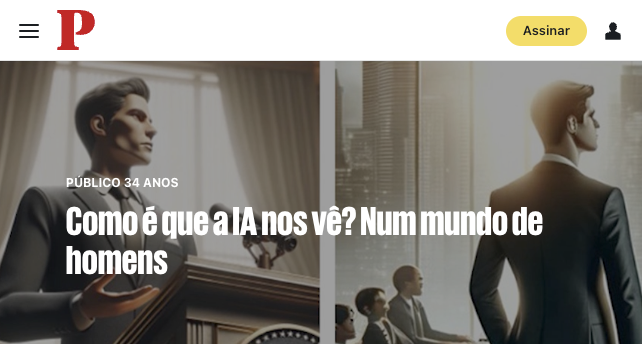
    In an article titled Como é que a IA nos vê? Num mundo de homens (How does AI see us? In a world of men) Luísa Coheur and Helena Moniz, INESC-ID researchers within the Human Language Technologies (HLT) research area, joined a conversation with Público Newspaper about the biases deeply embedded within machine learning algorithms. The researchers help shed light on how artificial intelligence models often reflect existing stereotypes but also perpetuate and amplify them.

    Read the full article (in PT) here.

    *Luisa Coheur is an INESC-ID researcher, and Associate Professor in the Department of Computer Science and Engineering, Técnico, UL, where she works on Natural Language Processing, specializing in Dialogue Systems, Question/Answering and Machine Translation.

    *Helena Moniz is an INESC-ID researcher, and Assistant Professor at the School of Arts and Humanities at the University of Lisbon. She teaches Computational Linguistics, Computer Assisted Translation, and Machine Translation Systems and Post-editing.

  • In the Media: Isabel Trancoso featured in Expresso Newspaper’s Podcast “A Próxima Vaga”

    Isabel Trancoso, INESC-ID researcher in the field of Human Languages Technology (HLT) and full professor at Técnico, was the featured guest in the episode of Expresso Newspaper’s Podcast “A Próxima Vaga” titled: “Media e Inteligência Artificial: como é que o jornalismo sobrevive na era dos ‘deepfakes’ e da fragmentação do consumo digital?” (in PT only)

    In this episode, alongside Ricardo Costa (Expresso’s Director of Information) and moderated by Francisco Pinto Balsemão, Isabel Trancoso discussed media, artificial intelligence, and journalism survival in the age of ‘deepfakes’ and digital consumption fragmentation.

    Listen to the episode here.

  • Strengthening European Project Management Expertise: INESC-ID’s OLISSIPO Training Initiatives

    Strengthening European Project Management Expertise: INESC-ID’s OLISSIPO Training Initiatives

    From February 14 to 16, INESC-ID hosted a series of three impactful training initiatives on research management of European Projects, as part of the OLISSIPO project framework, a Twinning initiative involving collaboration between INESC-ID, Inria, ETH, and EMBL. These initiatives, building on the success of previous editions held in Lisbon in 2022 and 2023, were designed to enhance research management and administration skills at the hosting institution.

    Horizon Europe Workshop: Navigating the Pre-Award Phase

    The first day featured the workshop “Horizon Europe for ICT: an Overview,” providing practical insights and equipping researchers and staff for the pre-award phase of Horizon Europe Proposals. Facilitated by Matthieu Py, the European Strategy Officer at Inria (France), the workshop covered essential topics, including Gender & Diversity, Ethics & Data, and Responsible Research and Innovation & Open Science.

    Research and Administration Management (RMA) Seminar

    Dedicated to deepening knowledge in various methodologies, the second day hosted a seminar on Research and Administration Management (RMA). The session covered pre-award (ideation and open calls) and post-award (Project valorization and management) aspects. Alongside Matthieu Py, the seminar featured presentations presentations and guided discussions by Ana Espada (CQE, IST-ID), Mariana Santa-Marta (CERENA/CEGIST, IST-ID), and Carla Patrocínio and Patrícia Lima (Tecnico’s Technology Transfer Office), providing valuable insights into daily RMA activities.

    Bilateral Meetings and Future Collaborations

    The final day was dedicated to bilateral meetings between INESC-ID’s thematic lines representatives and Inria, aiming to present research topics and identify common areas for future collaboration. Participants included Susana Vinga, Marie-France Sagot, Ana Teresa Freitas (Life and Health Technology), Hugo Morais (Energy Transition), José Borbinha (Societal Digital Transformation), Miguel Correia (Security & Privacy), and two members of the OLISSIPO Scientific Advisory Board (SAB) Jonas S. Almeida and Dan Gusfield.

    The event saw active participation from representatives of INESC-ID, INESC-MN, INOV INESC, Técnico, IST-ID, IT, IDMEC, and LIP, with diverse expertise in science management, project management, and technology transfer. The interest and involvement of representatives from different INESC research centers and institutes, facilitated the sharing of best practices and the development of common processes to streamline research proposal preparation.

    These training initiatives were organized collaboratively with the OLISSIPO PROJECT Team, including Susana Vinga (INESC-ID), Niko Beerenwinkel (ETH Zürich), Marie-France Sagot (Inria), Wolfgang Huber (EMBL), Matthieu Py (European Strategy Officer at Inria) and Sílvia Castro (Head of Innovation Management Office at INESC-ID). Additional collaboration for the RMA seminar was provided by Marta Candeias (Head of Research & Innovation Grants Support Unit at IST-ID).

    OLISSIPO Project Page