Author: admin

  • World Password Day: see how you can improve yours

    World Password Day: see how you can improve yours

    Today, 05 May, we celebrate World Password Day. As Security and Privacy is one of the main research foci at INESC-ID, and one of the institute’s major Thematic Lines, we wanted to give our contribution to improving the strength and performance of everyone’s passwords.

    Miguel Correia — researcher within the Distributed, Parallel and Secure Systems (DPSS) INESC-ID Research Area and Strategic Coordinator of the Security and Privacy Thematic Line — suggests using “strings of at least 10 characters that do not appear in a dictionary as passwords, mixing letters, digits and signs”.

    “The two main problems with textual passwords are [that] most people choose predictable passwords (even the ones they think they don’t) and [that] most people reuse passwords between different services” commented João Ferreira, INESC-ID researcher within the Automated Reasoning and Software Reliability (ARSR) Research Area. João Ferreira is also one of the Principal Investigators of the PassCert Project (which aims to “build an open-source, proof-of-concept [password manager] that through the use of formal verification, is guaranteed to satisfy properties on data storage and password generation”), a CMU Portugal Exploratory Research Project.

    From the perspective of a user creating an efficient password, João Ferreira has a few suggestions:

    • Use at least 12 characters, using at least two or three different classes (between lowercase, uppercase, digits and symbols);
    • Characters must appear in unpredictable positions — i.e., avoid putting capital letters at the beginning of the password and numbers/digits at the end of the password;
    • Avoid using dictionary words or familiar expressions (e.g. sayings, parts of song lyrics, etc.);
    • Do not use patterns like “1234” or “abcd” or keyboard patterns like “qwerty” or “cvbnm” or acronyms like “SCP”, “SLB” or “FCP”;
    • Ensure the chosen password does not appear in any known “data breaches” (e.g., use something like Pwned Passwords).

    Happy World Password Day!

  • The 12th Lisbon Machine Learning School – LxMLS 2022

    The 12th Lisbon Machine Learning School – LxMLS 2022

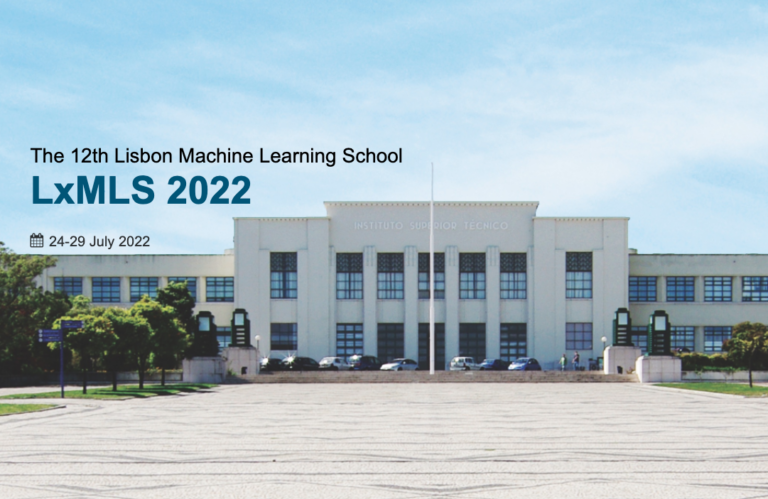
    All those interested in Machine Learning and Natural Language Processing are invited to attend the 12th Lisbon Machine Learning School – LxMLS 2022, 24-29 July 2022, in-person at Instituto Superior Técnico.

    LxMLS 2022 will cover a range of machine learning topics important in solving natural language processing problems and is organized by INESC-ID, Instituto Superior Técnico, Instituto de Telecomunicações, the Lisbon ELLIS Unit for Learning and Intelligent Systems (LUMLIS), Unbabel, and Zendesk. Two of LxMLS’ organizers are INESC-ID affiliated researchers: Fernando Batista and Bruno Martins.

    The application deadline in on 15 May 2022. Further details are available here.

  • INESC-ID welcomes ETH Zürich Olissipo researchers

    INESC-ID welcomes ETH Zürich Olissipo researchers

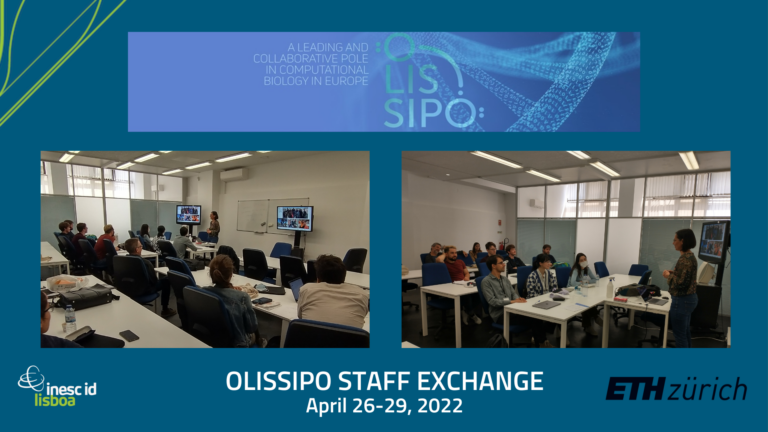
    This past week, April 26-29, the INESC-ID Olissipo team received some of the members of the ETH Zürich team, including Professor Niko Beerenwinkel (in addition to members from the Inria team Professors Marie-France Sagot and Ariel Silber). This Staff Exchange included scientific presentations by both teams – covering computational biology topics from cancer and evolutionary genomics to machine learning and transcriptomics– as well as teamwork sessions and space to reflect on the future directions of this project.

    Coordinated by Susana Vinga – INESC-ID researcher and member of its Board of Directors, as well as Associate Professor at Instituto Superior Técnico – OLISSIPO is a Twinning project, funded by the European Commission within Horizon 2020, that aims to enhance the competences in Computational Biology at INESC-ID and to create an international pole of excellence in multi-disciplinary science in Portugal.

    The Olissipo consortium is composed of four research institutions: INESC-ID, ETH Zurich, EMBL and Inria.

  • INESC-ID celebrates the International Girls in ICT Day 2022 with hundreds of students

    INESC-ID celebrates the International Girls in ICT Day 2022 with hundreds of students

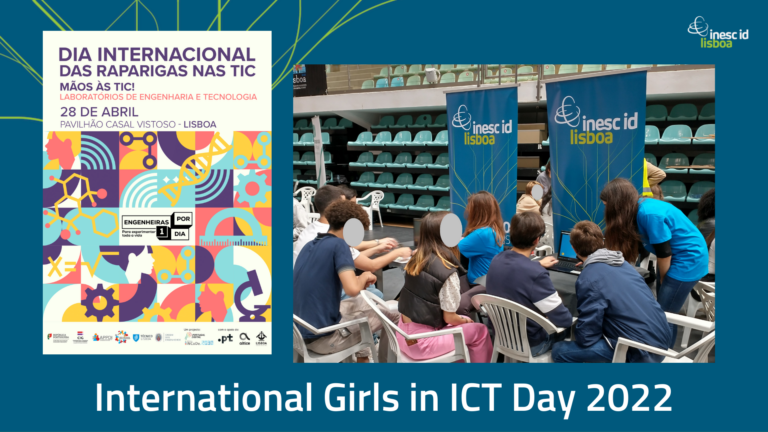
    Today, 28 April 2022, INESC-ID is celebrating the International Girls in ICT Day 2022 by engaging hundreds of students with fun activities on Artificial Intelligence.

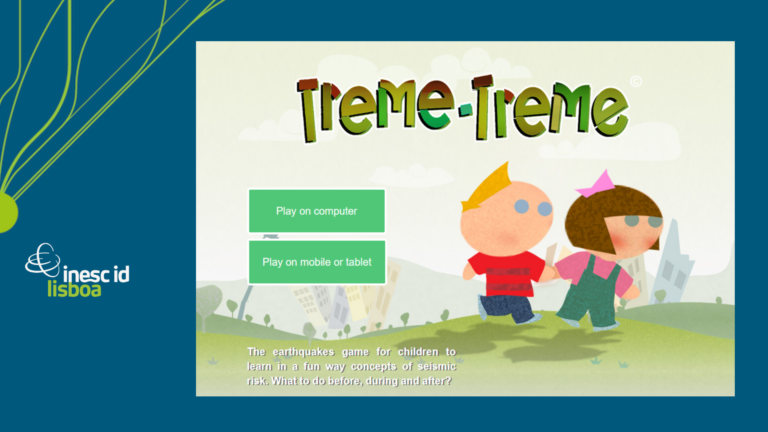
    Set at Pavilhão Casal Vistoso in Areeiro, Lisbon, 9th to 12h grade students from across the country were mobilized in engineering and technology lab sessions from numerous companies, as well as research institutes affiliated with Instituto Superior Técnico, amongst them INESC-ID. At the INESC-ID space, students were invited to play with Geometry Friends (a two player cooperative puzzle platformer computer game) and Treme-treme (a didactic videogame on seismic risk), activities that were facilitated by Inês Lobo and Inês Batina, students from the Artificial Intelligence for People and Society Research Area at INESC-ID.

    The yearly International Girls in ICT Day draws attention to the critical need for more girls and women in Information and Communication Technologies, with initiatives bringing students and professionals together around the world.

  • INESC Lisboa — Identifying synergies

    INESC Lisboa — Identifying synergies

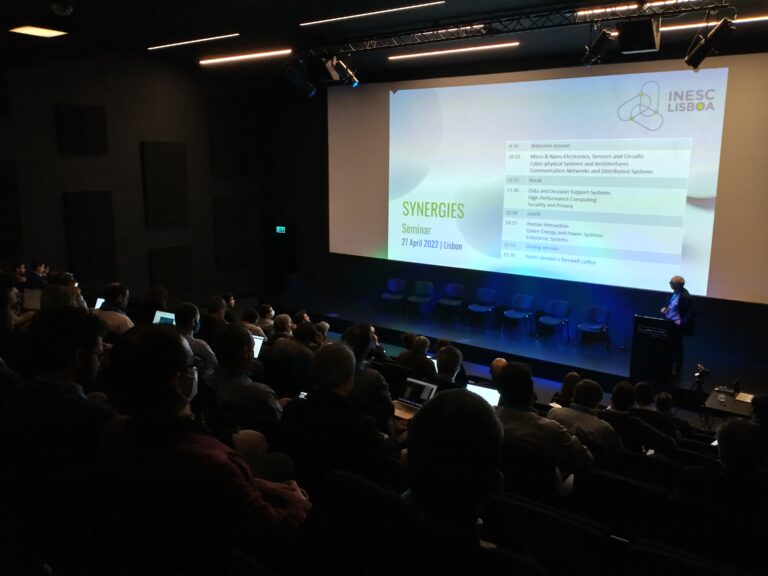
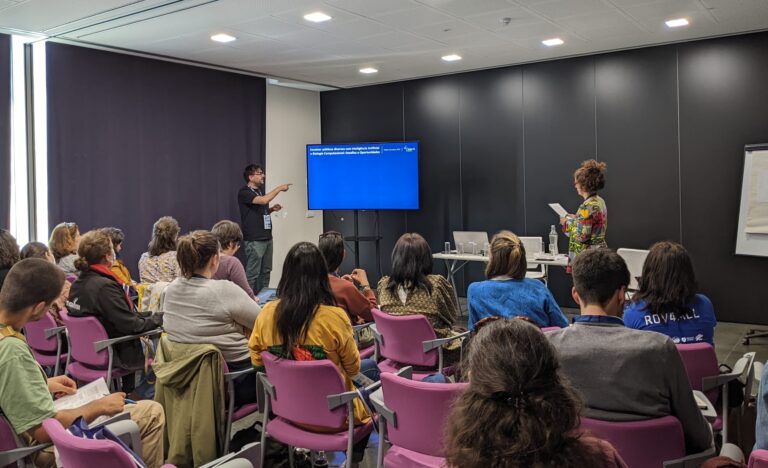
    INESC Lisboa — Synergies, a seminar several months in the making, took place in Lisbon today.

    In a day packed full of cross-disciplinary talks and poster sessions on Computer Science and Electrical and Computer Engineering, Microsystems and Nanotechnology and Innovation in Information and Communication Technologies, INESC Lisboa — Synergies brought together one-hundred researchers from INESC Lisboa and its three Lisbon-based INESC institutions: INESC-ID, INESC MN and INOV.

    INESC Lisboa — Synergies aimed to explore internal synergies and explore R&D and innovation impact, strengthening the external visibility of all three technology powerhouses based on their many common strengths.

  • Manuel Lopes completes his “Agregação” in Computer Science and Engineering at Instituto Superior Técnico

    Manuel Lopes completes his “Agregação” in Computer Science and Engineering at Instituto Superior Técnico

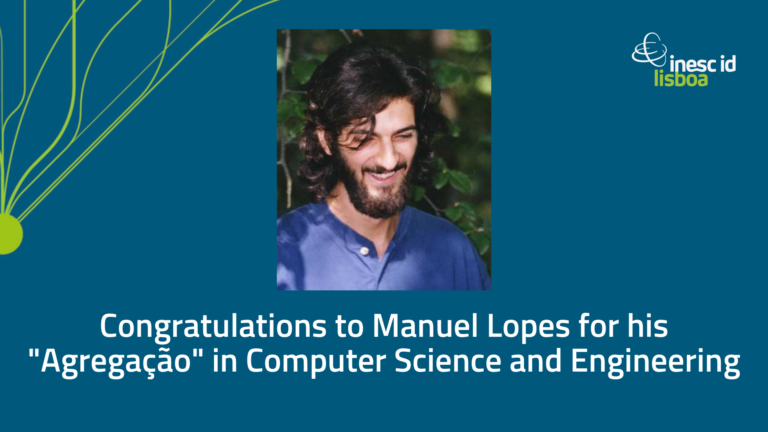
    Manuel Lopes INESC-ID researcher within the Artificial Intelligence for People and Society Research Area and Associate Professor at the Department for Computer Science and Engineering of Instituto Superior Técnico has today successfully completed his Agregação in Computer Science and Engineering.

    Across two sessions, on 26 and 27 April 2022, Lopes presented the course unit report Artificial Intelligence Education in B.Sc in Computer Science and Engineering” and the seminar “Autonomous Learning in Intelligent Machines”.

    Our warmest congratulations to Manuel!

    (Photo credit: web.tecnico.ulisboa.pt)

  • “Artes e Tecnologia” — Andreas Wichert’s new Art&Technology exhibition at IST

    “Artes e Tecnologia” — Andreas Wichert’s new Art&Technology exhibition at IST

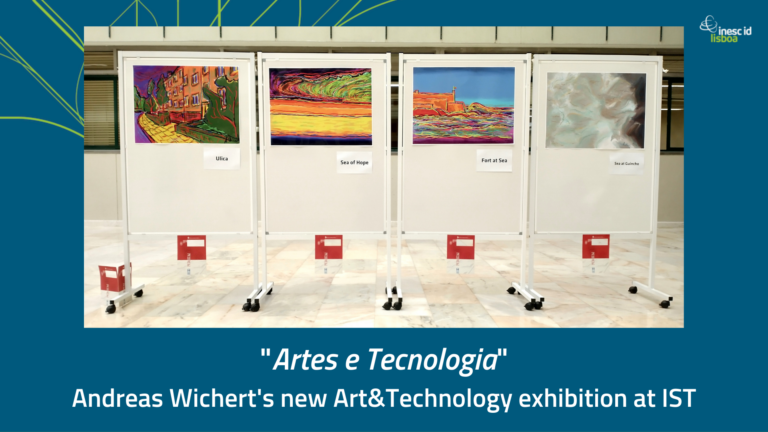
    Today, 26 April 2022, a new Art&Technology exhibition is inaugurated. Consisting in a collection of digital paintings authored by Andreas Wichert, INESC-ID researcher within the Artificial Intelligence for People and Society Research Area and Professor Auxiliar at Instituto Superior Técnico, “Artes e Tecnologia” (“Arts and Technology”) is open at IST’s Civil Engineering building, in the Alameda campus, until 06 May 2022.

    We asked Andreas what had motivated him to create this collection of digital paintings. “Before moving to Portugal I painted in oil, however due to restrictions I could not continue to do it,” Andreas commented. “With the arrival of iPad and Apple Pencil and the corresponding software Procreate I could continue to paint,” adding that “Technology allows you to create art that without it it was not possible.” More of Andreas’ artwork can be viewed online and found on Instagram @andrzejwichert.

    This exhibition will also stage a dynamic experiment in which visitors will have the chance to interact with Vizzy, a social robot, so as to improve Vizzy’s skills (work carried out by João Avelino, researcher at the Institute for Systems and Robotics, ISR).

    Andreas Wichert is also the author of three books on machine learning and artificial intelligence: Machine Learning — A Journey to Deep Learning (2021), Principles of Quantum Artificial Intelligence (2020) and Intelligent Big Multimedia Databases (2015).

  • “Treme-treme” now live at the new earthquake-themed experience “Quake”

    “Treme-treme” now live at the new earthquake-themed experience “Quake”

    Treme-treme an educational game that engages children aged 7 to 9 years-old with seismic risk — is now live at Quake, the newly inaugurated Lisbon-based experience on the 1755 great Lisbon earthquake. An immersive mix of technology and art, Quake was brought together, amongst others, by seismologists, historians and theater specialists.

    Developed by the Department of Civil Engineering and the Department of Computer Science and Engineering of Instituto Superior Técnico (including by INESC-ID researchers Rui Prada and Pedro Santos), Dreamstudios and Flaidisaine© (under the European project UPStrat-MAFA – “Urban disaster Prevention Strategies using MAcroseismic Fields and FAult Sources), Treme-treme teaches children how to behave during an earthquake, including building an emergency kit and learning to recognize the spots at home, school and work that are particularly dangerous during such an event.

    Quake and Treme-treme also have been featured in Time Out. As the magazine invites, “Imagine yourself sitting on a pew in a city church, on November 1, 1755, All Saints’ Day, minutes before the earth began to shake. Suddenly, everything collapses, the flames flare up,” adding that “In fact, you can stop imagining.” Now you can experience the event and tragedy that remade Lisbon and inspired poets of the sublime such as Voltaire. And Treme-treme is an integral part of that.

  • Looking at life in context: computational biology and artificial intelligence break new ground

    Looking at life in context: computational biology and artificial intelligence break new ground

    Earlier this year, EMBL – the European Molecular Biology Laboratory, a collaborator in some of INESC-ID’s research programs, including OLISSIPO – launched its new strategic programme for 2022-2026, Molecules to Ecosystems, calling it “a new era for European molecular biology”, under which EMBL proposes to expand its scope by “looking at life in context”. (The announcement of the new strategic programme was coupled with a new year piece by Edith Heard, the director-general of EMBL, published in Nature, suggesting a more integrative approach to the study of life)

    Many of these future and innovative “ways of seeing” are only available via – and due to – computational biology and artificial intelligence, areas in which INESC-ID has active research programmes and expertise. As EMBL elaborates, “Advances in computational power and artificial intelligence […] enable rigorous analysis and creative integration of these [i.e., biological] data. This tremendous technological progress in life sciences can now be coupled with the capacity to gather and analyse data of greater scope, resolution, and quality than ever before.”

    A recent paper authored by several OLISSIPO members mirrors EMBL’s strategy of dynamically “looking at life in context”. Totoro: Identifying Active Reactions During the Transient State for Metabolic Perturbations, published in Frontiers in Genetics, offers a novel, open source method to analyse metabolomic data, successfully predicting the dynamics of known active metabolic pathways. The authors reaffirm the need for a wide and integrative view of big biological data: “With the current technologies, it gets more common to have different kinds of data available which creates a need for methods that combine, for instance, metabolomic, transcriptomic and proteomic data.” Research as that developed by OLISSIPO researchers brings us closer to that reality.

    Coordinated by Susana Vinga – INESC-ID researcher and member of its Board of Directors, as well as Associate Professor at Instituto Superior Técnico – OLISSIPO is a Twinning project, funded by the European Commission within Horizon 2020, that aims to enhance the competences in Computational Biology at INESC-ID and to create an international pole of excellence in multi-disciplinary science in Portugal. The Olissipo consortium is composed of four research institutions: INESC-ID, EMBL, ETH Zurich and Inria.

  • The fifth issue of Faraday News is out

    The fifth issue of Faraday News is out

    The fifth issue of Faraday News — a publication of Instituto Superior Técnico’s Faraday Museum is out.

    Co-edited and co-coordinated by Moisés Piedade (INESC-ID Emeritus Researcher and retired IST Full Professor Moisés Piedade), Faraday News is packed full of content on electrical engineering and is published once a year under the aegis of Faraday Museum, a collection of six-hundred scientific instruments and historical pieces of equipment from the 19th and 20th centuries.

    One of the pieces showcased at the Faraday Museum a monumental slide rule has also recently been showcased in Técnico’s 110 Histórias, 110 Objetos podcast, for which Piedade was also interviewed.