
Author: admin

  • iv4XR: Artificial Intelligence to test Extended Reality

    iv4XR: Artificial Intelligence to test Extended Reality

    The European project iv4XR brings together experts from 8 different countries, to research and develop novel ways to test Extended Reality (XR) systems using Artificial Intelligence (AI). XR systems are interactive systems such as Virtual Reality (VR) and Augmented Reality (AR), which combines real and virtual environments. These systems can be powerful tools for areas such as medicine (e.g. 3D imaging), entertainment (e.g. video games) and military (e.g. combat training).


    The goal is to improve the testing of these systems in terms of functionality and user experience. The project is deploying tools that automate some testing procedures, reducing the current burden of user testing in the XR development process, which still largely requires human testers. It removes barriers from the state of the art processes and empower the development of novel XR systems.

    Extended Reality (XR) has limitless possibilities to change both the digital and the real world. However, the development of XR systems is currently a big challenge, as is their verification and validation, which are key steps of the highly iterative development process.
    The European joint effort aims to provide XR developers with intelligent test agents that will automatically explore and test their systems, searching for unexpected behaviors, usability concerns and helping refine configurations. Since user experience is an essential part of XR systems, this project also aims to develop socio-emotional AI in test agents to automatically assess the quality of the user experience.

    This project is led by an INESC-ID team, coordinated by Rui Prada.

    Other members consist of companies representing the XR industry: Gameware Europe Limited (United Kingdom), GoodAI Research SRO (Czech Republic), Thales SIX GTS and Thales AVS (France); universities: Universiteit Utrecht (Netherlands) Universitat Politècnica de València (Spain) and Umeå Universitet (Sweden); and the research institute Fondazione Bruno Kessler (Italy). The team combines decades of expertise in advanced interactive systems, AI, and software engineering and testing, and XR development.


    For more information: iv4xr-project.eu | Twitter: @iv4xr

  • MOOD – Dealing With Emerging Diseases: Rethinking How We Monitor Global Health

    MOOD – Dealing With Emerging Diseases: Rethinking How We Monitor Global Health

    The MOOD Project started in January 2020 and intends to improve epidemic intelligence tools and services. It is is part of the European programme H2020, and has a budget of 14 million euros.

    At the moment, the project is very focused on COVID-19.

    In the next 4 years, 25 different research institutions, foundations, and government public health and veterinary organizations will work together in the development of new monitoring tools, as a complementary addition to those already in existence.

    This project will act in four stages: 

    1. Development of five case studies on epidemic intelligence systems in European countries with different geography, climate, socio-economic statuses and methods of monitoring. These case studies have already begun and are focused on Italy, Finland, France, Serbia, and Spain.
    2. Characterization of the systems existing of the aforementioned countries, evaluating  the needs in terms of epidemic intelligence tools and services.
    3. Development of tools and services that will be available to the European Centre for Disease Control (ECDC) and to the public health agencies involved in the project. These will also be disseminated in Europe and beyond, particularly in the Global South;
    4. Sharing of the new co-constructed tools and services at a reasonable cost and, if possible, as open source.


    Epidemic intelligence systems or how to assess the risk of emerging pathogens 

    Climate change, animal and human mobility, growing populations and urbanization bring an increased risk for the emergence and global and accelerated spread of new pathogens. It is crucial that the emergence of a pathogen can be rapidly detected and assessed for the risk it poses to public health.

    In response to this, public health agencies are developing epidemic intelligence systems that rely on two types of information: “official” sources reported by public health services as well as so-called “unofficial” sources, which relay information found in the media, scientific articles or laboratory data.  

    The MOOD project will contribute to these efforts, providing existing monitoring platforms with methodological and practical support in response to their needs. Beyond health data, other types of data will also be incorporated to better assess the risk of a pathogen spreading.

    INESC-ID researchers involved are Bruno Martins and Mário Silva, which are also professors at Instituto Superior Técnico.


    Partners involved:

    France: Anses, Cirad, INRAE, Inserm, Université de Montpellier-LIRMM, GERDAL
    Germany : Mundialis GmbH & Co KG
    Belgium: Institute of Tropical Medicine, Université Libre de Bruxelles, Katolich University of Leuven, Avia-GIS
    Spain: Instituto de Salud Carlos III
    Italy: Fondazione Edmund Mach/Fondazione Bruno Kessler, Istituto Superiore di Sanità
    Finland: Finnish Institute for Health and Welfare Netherlands: Stichting OpenGeoHub
    Portugal: Instituto de Engenharia de Sistemas e Computadores, Investigação e Desenvolvimento em Lisboa
    United Kingdom: University of Oxford, Environmental Research Group Oxford Limited, University of Southampton
    Serbia: Institute of Public Health of Serbia
    Switzerland: ETH Zürich, SIB Institut Suisse de Bioinformatique
    United States of America: International Society for Infectious Diseases

  • OLISSIPO: Strengthening Computational Biology

    Olissipo “Fostering Computational Biology Research and Innovation in Lisbon” is a twinning action, meaning that stands for institutional networking to strengthen a specific field of research. The OLISSIPO project aims to bring these disciplines together with biological and biomedical research and strengthen INESC-ID’s research profile in computational biology.

    Susana Vinga is the principal researcher involved in this special widening action.

    OLISSIPO is a joint effort by INESC-ID, EMBL’s Huber group , the French National Institute for Research in Digital Science and Technology (INRIA) in Lyon, and the Swiss Federal Institute of Technology in Zurich (ETH Zurich).

    The project will focus on key applications of statistics in molecular biology research, for example in single cell analyses and simulations, and the mathematical modelling of cell–cell interactions.

    Group leader Wolfgang Huber and his team will contribute their expertise in developing statistical methods and computational tools, and will prepare tutorials, training courses, and outreach activities, and welcome scientists from INESC-ID to EMBL Heidelberg. The ultimate goal of OLISSIPO is to establish a leading European cluster of excellence in computational biology in Lisbon.

  • INESC-ID Recent Achievements in H2020

    INESC-ID Recent Achievements in H2020

    Researchers from INESC-ID have recently been successful through the participation in four European competitive projects: Olissipo leaded by Susana Vinga, BIG co-leaded by Rodrigo Rodrigues, TAILOR and HumainE-AI-Net with the participation of Ana Paiva.

    Olissipo is a twinning action, meaning that stands for institutional networking to strengthen a specific field of research. In Olissipo “Fostering Computational Biology Research and Innovation in Lisbon” the goal is to enhance the INESC-ID competences in the field of Computational Biology and developing it into an international pole of excellence. Susana Vinga is the principal researcher involved in this special widening action.

    BIG is an ERA Chair “Blockchain technologies and design Innovation for social Good” that aims the full potential of interdisciplinary research of Instituto Superior Técnico, while strengthening innovation and knowledge transfer activities with local and global industrial partners, contributing to the smart specialization strategy of the Lisbon region in stimulating the upcoming ecosystem of digital startups and their economic impact. Rodrigo Rodrigues and Nuno Nunes are the leading researchers of BIG. This project is a collaboration with the Interactive Technologies Institute ( ITI/ LARSyS).

    TAILOR “Network of research centres for foundations of trustworthy AI” will create a network of research excellence centres on the foundations of trustworthy AI to meet the grand challenges in health, mobility and resource management. And finally, HumanE-AI-Net “Research on AI system that enhance human intelligence” aims to develop the scientific foundations and technological breakthroughs needed to build Artificial Intelligence systems that enhance human intelligence rather that replacing it. Ana Paiva participates in both TAILOR and HumanE-AI-Net.

    These new projects will enhance contributions to both the scientific community through OLISSIPO and BIG, but also the social concerns around Artificial Intelligence, which is the focus of both research projects TAILOR and HumanE-AI-Net, through the participation of its researchers.

  • INESC Brussels HUB

    INESC Brussels HUB

    Based in Brussels, INESC Brussels HUB was created, recently, to increase the success of the five institutes from INESC Group: INESC Coimbra, INESC ID, INESC MN, INESC TEC, and INESC Inovação.
    INESC Brussels HUB is an important step to raise INESC institutes to an international level.

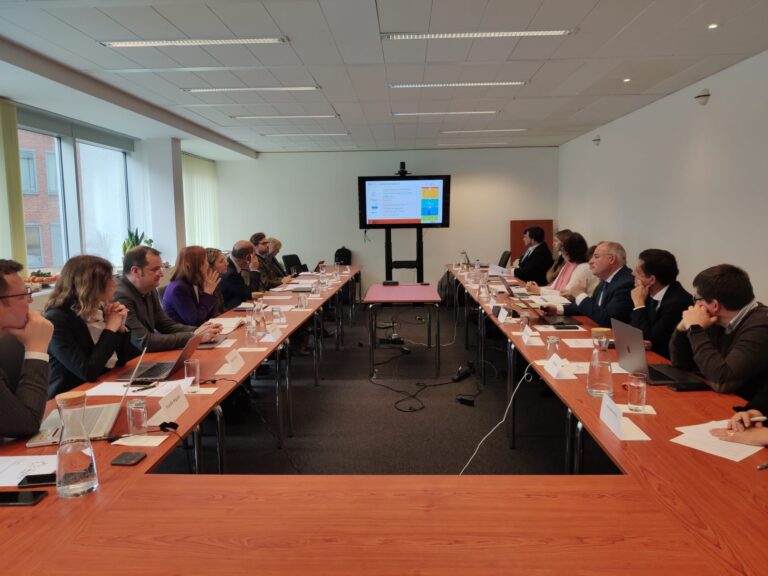
    At the beginning of March, representatives from the five institutions gathered together with Portuguese Members of the European Parliament Committee on Industry, Research and Energy (ITRE) to present INESC to all the institutions, and also, present histories of successful research and innovation with economic and social impact, with the resource to European funds.
    Also, this meeting was important to discuss the contribution of INESC in different pieces of legislation and the internationalization of the INESC group.

    Recently INESC Brussels Hub has launched a monthly newsletter that can be read here: Edition 1 | Edition 2.

  • Catarina Belém Received Maria de Lourdes Pintasilgo Award 2019

    Catarina Belém Received Maria de Lourdes Pintasilgo Award 2019

    In March this year, Instituto Superior Técnico (IST) attributed the Maria de Lourdes Pintasilgo Award to our former fellow Catarina Belém, in the category Young Alumni

    This prize rewards, annually, since 2016, two women graduated at Instituto Superior Técnico.


    Congratulations Catarina Belém!

  • Afonso Botelho Wins Professor Luís Vidigal Award

    Afonso Botelho Wins Professor Luís Vidigal Award

    Afonso Botelho, a student from Instituto Superior Ténico (IST), who did his thesis in collaboration within INESC-ID and DEIMOS Engenharia, is one of the winning authors from the 2019 edition of Professor Luís Vidigal Award

    Titled “Design and Application of Thrust Manoeuvres in a Constrained Spacecraft Rendezvous Context Using Optimal Control Techniques”, this thesis was guided by Prof. João Miranda Lemos, from INESC-ID and IST and Engr. Baltazar Parreira, from Deimos Engenharia. 

    The Professor Luís Vidigal Award is an annual prize that distinguishes the author of one Master’s Dissertations that bring together the best scientific characteristics, of innovative and quality, with themes within the scientific areas of Electrical Engineering, Informatics and Computers. 


    Congratulations to Afonso Botelho for this distinction, to all the nominees and also Simão Nava de Moraes Sarmento, from IST, who also won this award. 

  • Covid-19 Information

    Covid-19 Information

    In view of the current situation of COVID-19, INESC-ID took preventive measures, which include the cancellation of all missions and the teleworking regime by default.

    We appreciate everyone’s understanding and will be updating this information.

  • 3 Years Since Faraday Museum Opening

    3 Years Since Faraday Museum Opening

    This month completes 3 years since the Faraday Museum opening, on February 6, 2017.

    The museum was created by Professor Moisés Piedade, INESC-ID researcher, and professor from the Department of Electrical and Computer Engineering (DEEC) of Instituto Superior Técnico (IST).

    The museum, located at Instituto Superior Técnico, is divided into three main areas: Instrumentation and Writing; Audio, Radio and TV, and Communication. 

    Faraday Museum presents furniture and equipment of historic character, with more than 800 pieces from the 19th to 21st century, in the scientific areas of Electronics, Energy, and Computers. 


    With the three years since opening, it was launched a bi-monthly newspaper, Faraday News, that could be read here

    Currently, at Faraday, and until February 28th, it is possible to see the “Walkmanlândia”, a temporary exhibition dedicated to Walkman, which counts with a collection from Professor and Museum Director, Moisés Piedade, in along with Faraday voluntaries.

  • Welcome to INESC-ID Team!

    Welcome to INESC-ID Team!

    INESC-ID is delighted to welcome his 20 newest researchers, with fellowships from Portuguese National Funding Agency for Science (FCT) and recent research projects hiring.

    We are glad to welcome these young and dynamic researchers in the INESC-ID team!

    Meet some of our newest researchers.