INESC-ID 20 Years Booklet
We are pleased to share with you the INESC-ID 20 Years Booklet that we have been preparing. We invite you to make a brief journey of the last twenty years of INESC-ID through the pages of this booklet. We hope…
We are pleased to share with you the INESC-ID 20 Years Booklet that we have been preparing. We invite you to make a brief journey of the last twenty years of INESC-ID through the pages of this booklet. We hope…
Tomorrow we celebrate the 20 years of INESC-ID with a special wide public event at Museu do Oriente. Please join us on this special occasion to share and celebrate the future to come. The entrance is free.
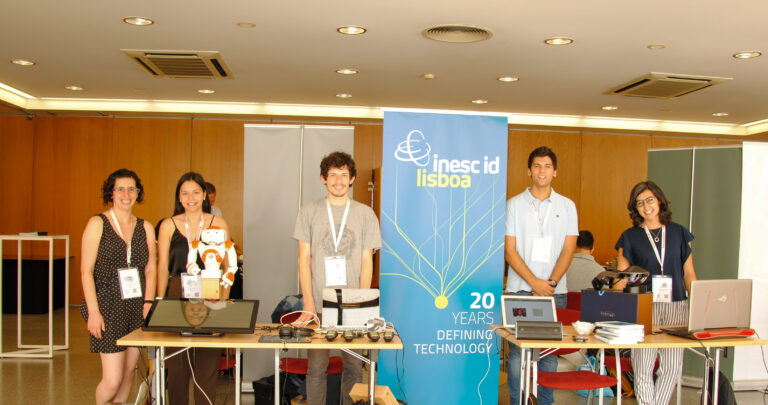
It has ended yesterday another edition of Science and Technology Summit, an event that promotes debates in the most varied areas of science, and also, allows an interaction between researchers, companies and the visiting public. We were present in another edition with the exhibition of demos from several INESC-ID research groups: GAIPS, L2F, and VIMMI.
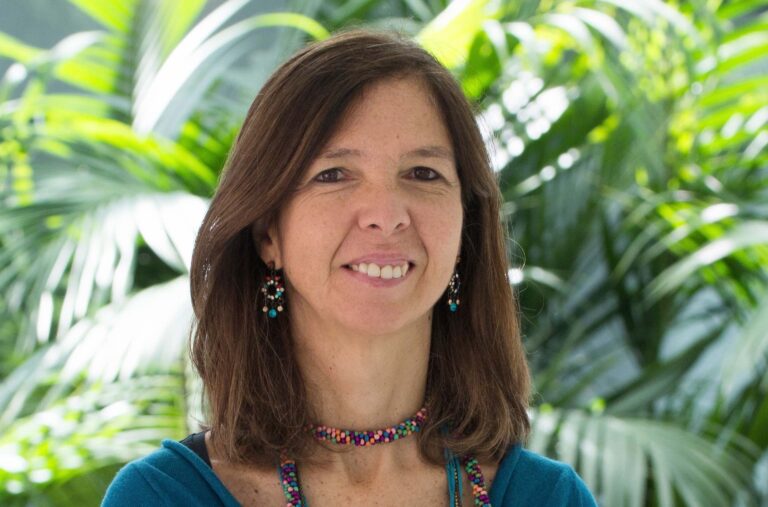
We are proud to announce that our researcher Ana Paiva, from the research group Intelligent Agents and Synthetic Characters (GAIPS), was elected EurAI Fellow by the EurAI Fellows committee 2019. The EurAi Fellows program was created by the European Association for Artificial Intelligence in 1999, “to recognize individuals who have made significant, sustained contributions to the field of artificial intelligence (AI) in Europe.”
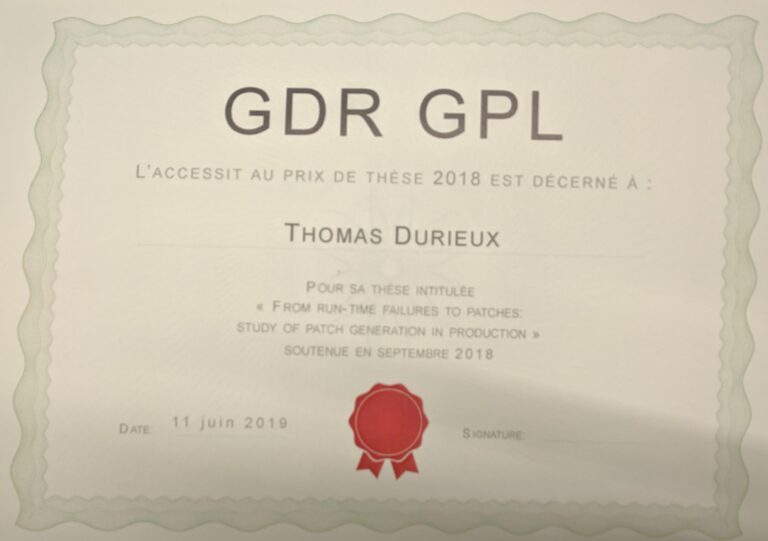
The doctoral thesis «From Runtime Failures to Patches: Study of Patch Generation in Production» of our researcher Thomas Durieux was distinguished with the 2nd place of best thesis in France last week. The researcher Thomas is supervised by the Rui Maranhão, from the research group Information and Decision Support Systems (IDSS).
The INESC-ID researcher Rui Prada is one of the members of the Socio-Cognitive Systems Journal board editorial. This new journal will be officially launched early in 2020 but they are already accepting submissions in their website. Also, an editorial talking about the topic will be released in Online First very soon.
INESC-ID has been present in Keep in Touch 2019 with the ‘IoT Board for Agriculture Applications’ demo, presented by the researcher João Tagaio. The Internet of Things (IoT) allows the connection of different devices to the internet. Therefore, is possible to obtain a series of data and from them, extract useful information to the final user. However, some challenges emerge in the communication area, in terms of protocols used and in the electronics area, where is necessary to develop chips that present a very low current consumption. In this presentation, it was presented a Real Time Clock (RTC), developed by SiliconGate startup, with consumption in the order of nano ampere. Because of this, the chip is ideal for IoT systems where is necessary to wake up the microcontroller from a sleep state. The Clock when generating an alarm wakes up the microcontroller which in turn reads the sensors data and communicate them through the radio frequency module. The thesis presented also consists of the development of an IoT system to precision agriculture where an RTC is used to wake up the system. The intention is to achieve very low current consumption levels in a way that the system could work with just one battery charge for years.
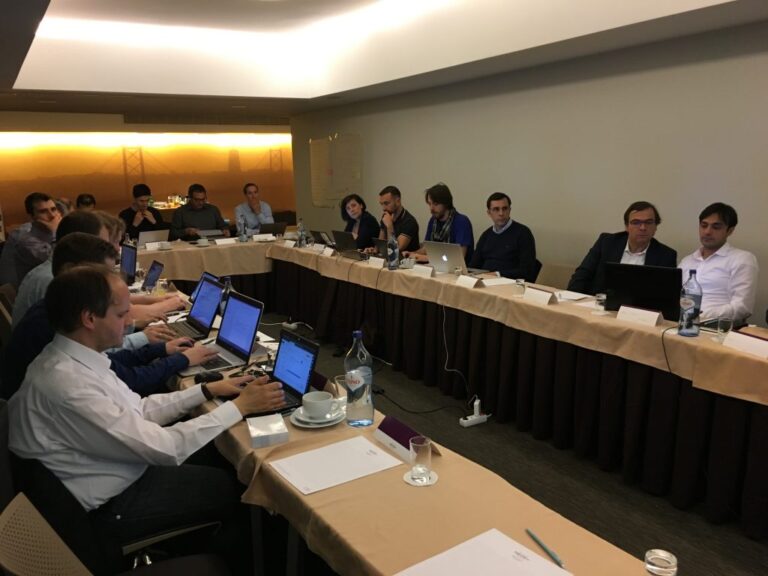
INESC-ID is one of the ten partners of Qualichain, a European project focused on the assessment of the implications at technical, political, socio-economic, legal and cultural levels of Blockchain technology for verifying education and employment qualifications. Also, QualiChain specifies in the “impact – in terms of benefits and risks – of the prescribed solution’s utilization”. QualiChain targets the creation, piloting and evaluation of a decentralised platform for storing, sharing and verifying education and employment qualifications and focuses on the assessment of the potential of blockchain technology, algorithmic techniques and computational intelligence for disrupting the domain of public education, as well as its interfaces with private education, the labour market, public sector administrative procedures and the wider socio-economic developments. INESC-ID is in charge of designing some of the components of the platform and participates in one of the pilots. This research project is coordinated at INESC-ID by Miguel Pupo Correia. For more information: https://qualichain-project.eu
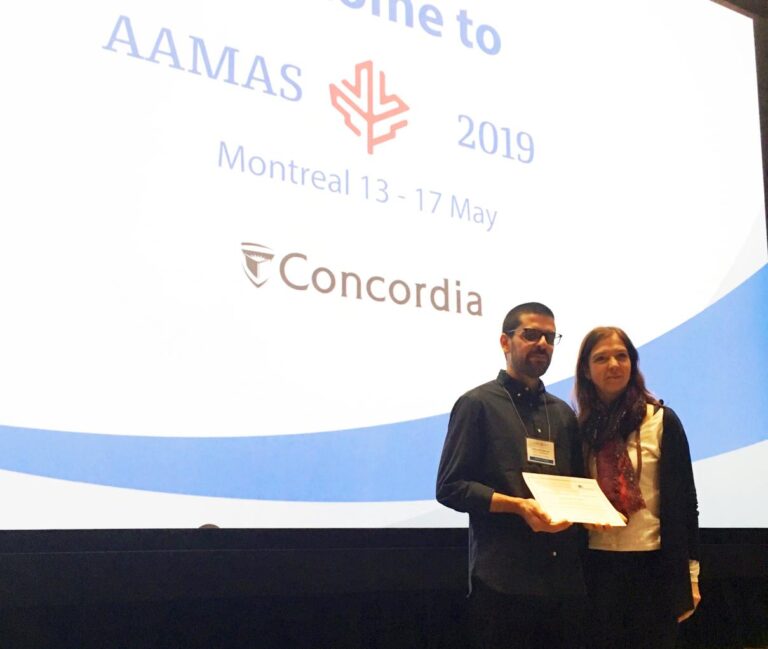
Fernando Pedro, a former student from GAIPS won the Victor Lesser distinguished dissertation award with the these ‘Reputation Dynamics and the Self-organization of Cooperation’, at AAMAS 2019. Moreover, six members of GAIPS Team, led by the researcher Ana Paiva, presented their work at the international conference, in Montreal, Canada and one of them got nominated for the best paper award.

INESC-ID is one of the ten partners of Qualichain, a European project focused on the assessment of the implications at technical, political, socio-economic, legal and cultural levels of Blockchain technology for verifying education and employment qualifications. Also, QualiChain specifies in…