
Author: admin

  • Armilar and the Tech-Transfer Fund: investing in high-growth tech-based startups

    Armilar and the Tech-Transfer Fund: investing in high-growth tech-based startups

    On January 31st  at 2.30pm at INESC-ID Alameda (room 336), took place a 30 minutes presentation (plus Q&A) by Armilar Venture Partners.

    Armilar Venture Partners (formerly known as Espírito Santo Ventures), is an independent VC fund manager of more than 200 million euros of assets, represented by worldwide companies with innovative products and services.

    Armilar is now looking for business projects based on technology to invest with its 60M tech-transfer fund.

    In addition to presenting the company, José Guerreiro de Sousa also explained  the business projects the fund is looking for, as a starting point for further interactions.

  • Best Paper Award at ICGI 2018

    Best Paper Award at ICGI 2018

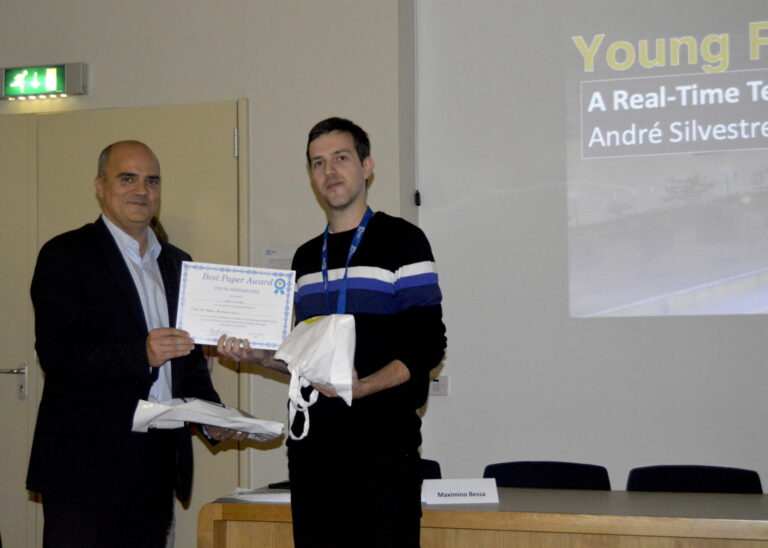
    André Silvestre won the Best Paper Award for a Young Researcher at the ICGI 2018 conference, with the paper “A Real-Time Terrain Ray-Tracing Engine”, with co-authors João Pereira and Vasco Costa.

  • “Managing long-term digital information” in Expresso newspaper

    “Managing long-term digital information” in Expresso newspaper

    INESC-ID Reseacher José Borbinha was interviewed for an article about managing digital information in the long term.

    This contribution comes in line with his coordination responsibilities  in the construction of the European eArchiving Building Block, in the scope of the CEF Programme:

    https://ec.europa.eu/cefdigital/wiki/display/CEFDIGITAL/eArchiving

    https://ec.europa.eu/cefdigital/wiki/display/CEFDIGITAL/CEF+Digital+Home

  • Article about managing long-term digital information in Expresso newspaper

    Article about managing long-term digital information in Expresso newspaper

    INESC-ID Reseacher José Borbinha was interviewed for an article about managing digital information in the long term.

    This contribution comes in line with his coordination responsibilities  in the construction of the European eArchiving Building Block, in the scope of the CEF Programme:

    https://ec.europa.eu/cefdigital/wiki/display/CEFDIGITAL/eArchiving

    https://ec.europa.eu/cefdigital/wiki/display/CEFDIGITAL/CEF+Digital+Home

  • Projects “iLU” and “Data2Help” in the press

    Projects “iLU” and “Data2Help” in the press

    INESC-ID Researchers apply artificial intelligence to medical emergencies and mobility.

    Source:

    SAPO 24, January 4th, 2019

    DN, January 4th, 2019


  • New Essay on Artificial Intelligence

    New Essay on Artificial Intelligence

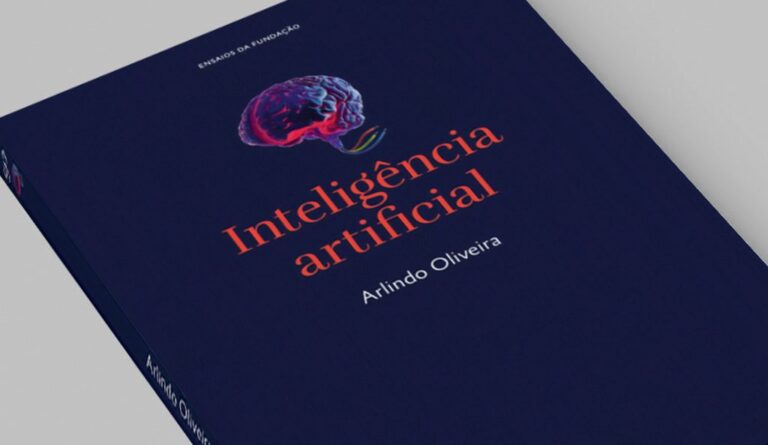
    This new essay by Arlindo Oliveira describes, in an approachable way, what artificial intelligence is and how it relates to human intelligence, as well as possible societal and economic applications and implications.

    It includes a historical perspective and an analysis of the current state of technology and also reflects on the possible consequences of the development of artificial intelligence and invites us to project our intelligence into the future.

    The book is available here and will be officially presented on January 30th at 6PM at IST Lisbon,


  • Talks on Model Driven Engineering & Artificial Intelligence Approaches

    Talks on Model Driven Engineering & Artificial Intelligence Approaches

    We want to invite students, teachers, researchers and professionals in the fields of engineering and management to participate in this event that will take place January 18th, between 1PM and 2PM at Pavilhão de Informática II, Sala 0.17, IST Alameda.

    This series of conversations will start with  Model-based technologies (MDE) and artificial intelligence techniques (AI),  the basis of most systems that will support the activities and businesses of the future.

    Although various areas of computer engineering have been developing rapidly, there are still few companies and universities that have extensively explored techniques involving modeling and rigorous specification of systems, transformation between models, or automatic generation. These techniques are applied at different levels of abstraction and in different application domains such as software engineering, civil, mechanical, but also in health, education, fintech or legaltech. These approaches will allow organizations to raise to a historical level of efficiency, productivity and intelligence.

    Speakers:  Alberto Silva (IST) and João Paulo Carvalho (Quidgest).

    How to participate:

    The registration is free but due to the limited capacity of the auditorium (50 max), the registration is mandatory. Please use this link to do so.

    Also, a light lunch will be offered to the participants at around 12H30PM.

    More information: https://www.quidgest.pt/mdeai/


  • Evaluation INESC-ID

    Evaluation INESC-ID

    As Associate Laboratory since 2004,  INESC-ID is periodically evaluated by the Foundation for Science and Technology (FCT).

    This status is reserved for research institutions of great merit that have been recognized in external assessments as having the “capacity to cooperate in a stable, competent and efficient way in the pursuit of specific political, scientific and national technological objectives”.

    The review is made by an international panel of experts, based on the R&D institutions’ activity reports and proposed strategic plans as well as on direct contacts with researchers and institutions, through site visits and/or interviews by the reviewers.

    All R&D institutions are awarded a qualitative grade, which determines the level of funding to be awarded, until the next review takes place, or until a mid-term assessment is made.

    INESC-ID  most recent evaluation took place December 3rd, and with great effort of all INESC-ID members, we believe we were able to transmit all our passion and commitment.


  • New H2020 project

    New H2020 project

    Algos and SD research groups will partner with Barcelona Supercomputing Center and several other institutions in this new European project, with 3.9 M funding, to develop and deploy a production-ready parallel programming environment. This will turn future exascale supercomputers, which will be overwhelmingly heterogeneous, into manageable platforms for application developers in different domains.

    The consortium of the EPEEC project (European joint Effort toward a Highly Productive Programming Environment for Heterogeneous Exascale Computing) that started on 1 October 2018,  will significantly advance and integrate existing state-of-the-art components based on European technology (programming models, runtime systems, and tools) with key features enabling 3 overarching objectives: high coding productivity, high performance, and energy awareness.

    Five applications representing different scientific domains will be used as part of a strong interdisciplinary co-design approach and as technology demonstrators: AVBP (fluid dynamics and combustion), DIOGENeS (nanophotonics / nanoplasmonics), OSIRIS (plasma physics), Quantum ESPRESSO (materials sciences) and SMURFF (life sciences). EPEEC will exploit results from past Future and Emerging Technologies (FET) projects that have led to the cutting-edge software components it builds upon, and aims to influence the most important parallel programming standardisation bodies.

    The project will ensure the composability and interoperability of its programming models and runtimes, which will incorporate specific features to handle data-intensive and extreme-data applications. Enhanced leading-edge performance tools will offer integral profiling, performance prediction, and visualisation of traces.

    An automatic generator of compiler directives will provide outstanding coding productivity from the very beginning of the application developing/porting process. Developers will be able to leverage either shared memory or distributed-shared memory programming flavours, and code in their preferred language (C, Fortran, or C++) and accelerator programming model (OpenMP, OpenACC, CUDA, or OpenCL).

  • First VMCAI Winter School – CALL FOR PARTICIPATION

    First VMCAI Winter School – CALL FOR PARTICIPATION

    VMCAI Winter School is a winter school on formal methods associated with VMCAI 2019 (VMCAI 2019 – 20th International Conference on Verification, Model Checking, and Abstract Interpretation) that took place in Lisbon, Portugal on January 9-12, 2019. In the vein of VMCAI, the school is meant to facilitate interaction, cross-fertilization, and advancement of hybrid methods that combine Verification, Model Checking, Abstract Interpretation, etc.

    The VMCAI Winter School program featured two tutorial lectures per day, presented by distinguished speakers and experts in these fields.

    List of tutorial lectures:

    * An Introduction to Learning from Programs, by Marc Brockschmidt (Microsoft Research, Cambridge, UK)

    * Models and Techniques for Analyzing Security Protocols, by Veronique Cortier (Loria, Nancy, France)

    * Neural Network Verification, by M. Pawan Kumar (University of Oxford, UK)

    * Computing with SAT Oracles: From CDCL SAT Solving to Ubiquitous Industry Adoption, by João Marques-Silva (University of Lisbon, Portugal)

    * Abstract Interpretation, by Patrick Cousot  (New York University, USA). This tutorial will be complemented by an invited talk by Sylvie Putot (Ecole Polytechnique, France) on “Zonotopic abstract domains for numerical program analysis”.

    * Developing distributed protocols formally with Ivy, by Ken McMillan (Microsoft Research, Redmond, USA)

    A more detailed program is available at the school website http://vmcaischool19.tecnico.ulisboa.pt/

    Organizers: Constantin Enea (IRIF, University Paris Diderot); Vasco Manquinho (INESC-ID, IST – Universidade de Lisboa); Ruzica Piskac   (Yale University)