Category: Awards and Recognitions

  • INESC-ID Awards 2025: celebrating research excellence and the people who make it
    INESC-ID Awards 2025: celebrating research excellence and the people who make it

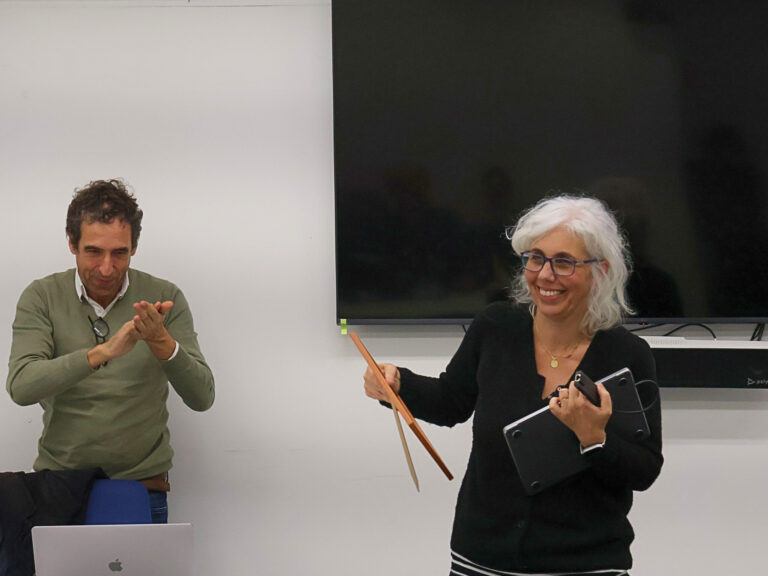
    Closing the year, the INESC-ID Awards 2025 brought together researchers, students and staff to recognise three outstanding contributions to the institute’s scientific life and impact.

    Hosted by the President of the Scientific Council, Rodrigo Rodrigues, the packed hybrid ceremony awarded Best INESC-ID Researcher to Luísa Coheur, Best Young Researcher to  Christof Torres and Best PhD Student to Pedro Orvalho.

    The recipients gave short presentations of their work. Luísa gave an overview of research on transparent and inclusive machine translation evaluation, including efforts to adapt this work to translation niches such as sign language; Christof, speaking live from Berlin, discussed his ongoing research on fortifying decentralised financial systems, wallet privacy and cross-chain sandwiching; and Pedro, now a postdoctoral researcher at the Barcelona AI Research Institute, presented MENTOR, a semantic automated program repair framework for programming exercises designed for use in educational environments.

    About the INESC-ID Awards:

    Since 2009, the INESC-ID Awards are presented annually to honour researchers whose work has made a significant contribution to the scientific life and impact of the institute, helping nurture a culture of excellence and commitment within INESC-ID’s scientific community.

    Winners are selected by an independent jury composed of world-renowned experts from the INESC-ID Advisory Board, ensuring a rigorous and external evaluation of the research conducted at the institute.

    © 2025 INESC-ID

    Images | © 2025 INESC-ID


  • 1st place in ULisboa redeSAÚDE Award goes to Catarina Botelho

    1st place in ULisboa redeSAÚDE Award goes to Catarina Botelho

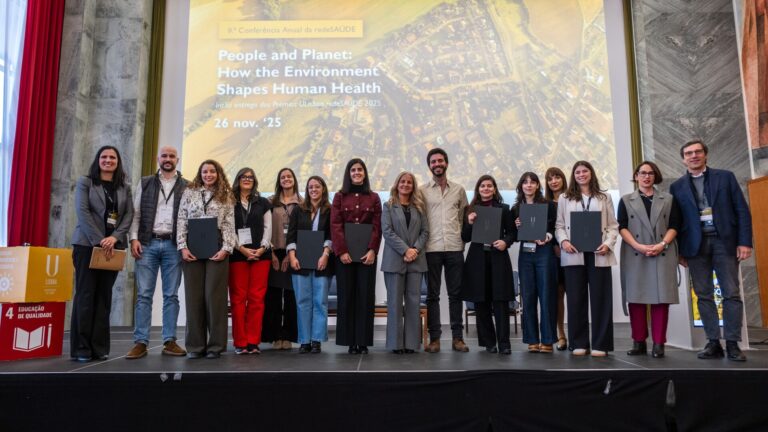
    Former INESC-ID PhD student and researcher in Human Language Technologies (HLT), Catarina Botelho, was awarded first place in the category “Health Systems / Entrepreneurship / Digital Transition” of the ULisboa RedeSAÚDE awards 2025.

    The goal of the Awards is to motivate the interest of PhD and master’s students, from the University of Lisbon, in the health sector. Additionally it seeks to promote innovative research, best practices and knowledge sharing that could contribute to the development of the area. The ceremony took place on November 26 during the 9th Annual Conference of redeSAÚDE, under the theme “People and Planet: How the Environment Shapes Human Health”. 

    The work which earned Catarina this prize was developed while conducting her PhD, “Leveraging Large Language Models to Support Alzheimer’s Disease Detection”. It was advised by INESC-ID HLT researchers Isabel Trancoso and Alberto Abad, and Tanja Schultz from Bremen  University, and it explored the potential of Large Language Models (LLMs) in analysing speech transcriptions and recognise certain features (e.g. text coherence and lexical diversity) that could indicate a possibility of Alzheimer’s Disease in a patient.

    © 2025 INESC-ID

  • Maria Ponte distinguished with Honorable Mention at the CRAI Forum 2025

    Maria Ponte distinguished with Honorable Mention at the CRAI Forum 2025

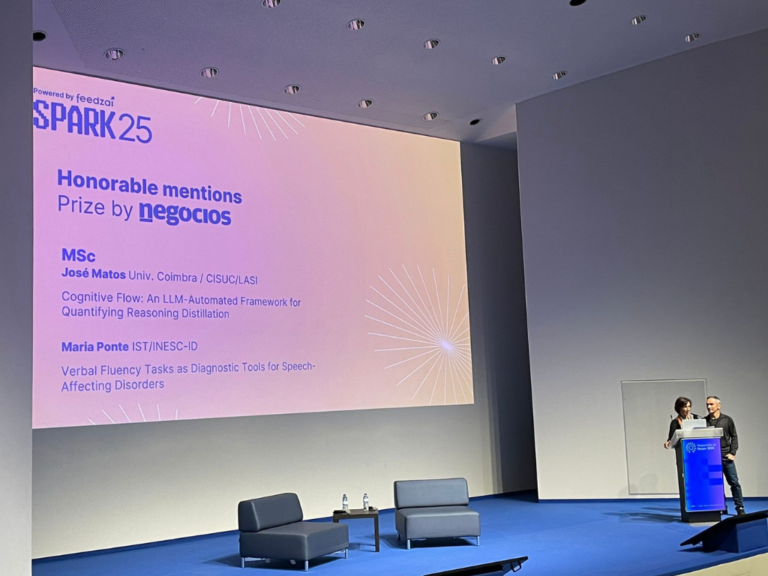
    Maria Ponte, INESC-ID master’s student was distinguished with an Honorable Mention of the SPARK Award on November 25, during the 2025 edition of the Center for Responsible AI Forum 2025 (CRAI 2025), in Lisbon.

    The awards were supported by Feedzai and aimed to recognise impactful and innovative work, by master’s and PhD students, aligned with responsible AI principles. Maria is advised by Human Language Technologies researcher, Isabel Trancoso, who hosted the ceremony, and her work is focused on “Verbal Fluency Tasks as Diagnostic tools for Speech-Affecting Disorders”. 

    Know more about CRAI here.

    © 2025 INESC-ID

  • INESC-ID student Lucian Popescu received “La Caixa” Foundation Doctoral INPhINIT fellowship

    INESC-ID student Lucian Popescu received “La Caixa” Foundation Doctoral INPhINIT fellowship

    Lucian Popescu, PhD student in High-Performance Computing Architectures and Systems (HPCAS), and advised by Nuno Lopes, researcher in the same area, received the “La Caixa” Foundation Doctoral INPhINIT fellowship.

    The exclusive fellowship is attributed to international students who wish to pursue doctoral studies in Portugal or Spain and is the first “La Caixa” fellowship to be secured by an INESC-ID student. “Typically only one or two of these fellowships are awarded per year to computer science (30 in total), which shows the degree of competitiveness.” highlights Nuno Lopes. “We were very surprised and happy with this Christmas gift! Thank you to La Caixa for funding national research.”

    Lucian concluded his bachelor’s and master’s degrees in the University POLITEHNICA of Bucharest, in Romania, and is now starting his PhD in IST/INESC-ID. During his master’s he published an article “Exploiting Undefined Behavior in C/C++ Programs for Optimization: A Study on the Performance Impact” in the Programming Language Design and Implementation (PLDI) 2025, the most relevant annual conference in the sector.

  • Rubén Solera-Ureña recognised as Outstanding PC Member for ECAI 2025

    Rubén Solera-Ureña recognised as Outstanding PC Member for ECAI 2025

    INESC-ID researcher, Rubén Solera-Ureña, from the Human Language Technologies scientific area, has recently been elected Outstanding Program Committee (PC) Member for the European Conference on Artificial Intelligence (ECAI) 2025.

    This election recognises his vital contributions to the reviewing process, contributing to the research community and ensuring the quality and integrity of the conference program.

    ECAI is a leading conference in the field of Artificial Intelligence in Europe, and this year took place in Bologna from October 25 to 30.

    More about ECAI 2025 here

  • Paula Carvalho, Danielle Caled and Mário Silva win “Best Portuguese Internet Research” Award 2025 by the Internet Society

    Paula Carvalho, Danielle Caled and Mário Silva win “Best Portuguese Internet Research” Award 2025 by the Internet Society

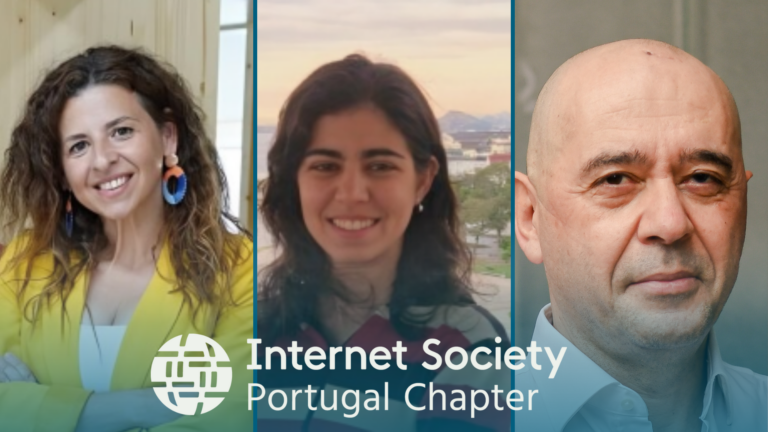
    The paper “The Thin Line Between Conspiracy Theories and Opinion: Why Humans and AI Struggle to Differentiate Them”, developed by INESC-ID, has recently won the “Best Portuguese Internet Research” Award of the Internet Society. The paper is authored by Paula Carvalho, now at Universidade de Aveiro, Danielle Caled, who completed her PhD at INESC-ID, and Mário Silva, researcher in INESC-ID’s Information and Decision Support Systems scientific area.

    The study gathered articles from the Portuguese blogosphere and analysed them by both humans and automated systems. It aimed to highlight the difficulty of telling conspiracy from opinion pieces and to deepen the understanding of credibility perception. Furthermore, it provides valuable insights for developing tools to distinguish the two categories and critically assess conspiracy theories.

    The “Best Portuguese Internet Research” of the Internet Society 2025 Award is an initiative of the Portugal Chapter of the Internet Society (isoc.pt). It aims to promote and reward the best results of research, carried out in Portugal, with relevance and potential future impact on the evolution of the Internet, in line with the goals of the Internet Society.

  • INESC-ID Researchers among Stanford Elsevier’s World’s Top 2% Most Influential Scientists in 2024

    INESC-ID Researchers among Stanford Elsevier’s World’s Top 2% Most Influential Scientists in 2024

    Stanford has released the Stanford/Elsevier Top 2% Scientists List 2025, which feature 20 INESC-ID researchers, among the most cited scientists in the world.

    This annual recognition comprises two lists naming top scientists, doctors, engineers, and mathematicians, among 200 thousand people, one referring to the 2024 most influential scientists and the other focusing on a career-long impact. The lists are compiled by Stanford University (USA) and published by Elsevier. Eligible individuals are classified in 22 scientific fields and 174 subfields, based on data from Scopus.

    INESC-ID’s most influential scientists in 2024 (12):

    INESC-ID scientists included in the career-long database (16):

    More about last year INESC ID awardees list.

  • Joaquim Jorge Elected 2027 IEEE Computer Society President

    Joaquim Jorge Elected 2027 IEEE Computer Society President

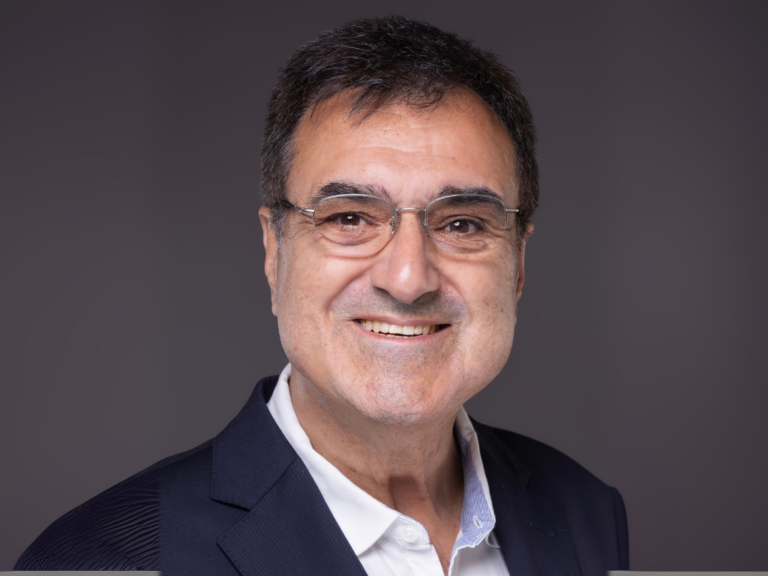
    INESC-ID researcher Joaquim Jorge, from the Graphics and Interaction scientific area, has been elected President of the IEEE Computer Society for 2027, after serving on the Society’s Board of Governors and leading multiple initiatives in the field of computing.

    A long-time contributor to the IEEE community, he was previously named an IEEE Distinguished Visitor, received the Golden Core Recognition in 2024, and was inducted into the IEEE VR Academy. He currently serves on the Society’s Publications Board.

    The IEEE Computer Society is the world’s largest organisation of computing professionals, supporting over 375,000 members worldwide.

  • INESC-ID PhD Student Awarded Best Student Paper Award at ISVLSI 2025

    INESC-ID PhD Student Awarded Best Student Paper Award at ISVLSI 2025

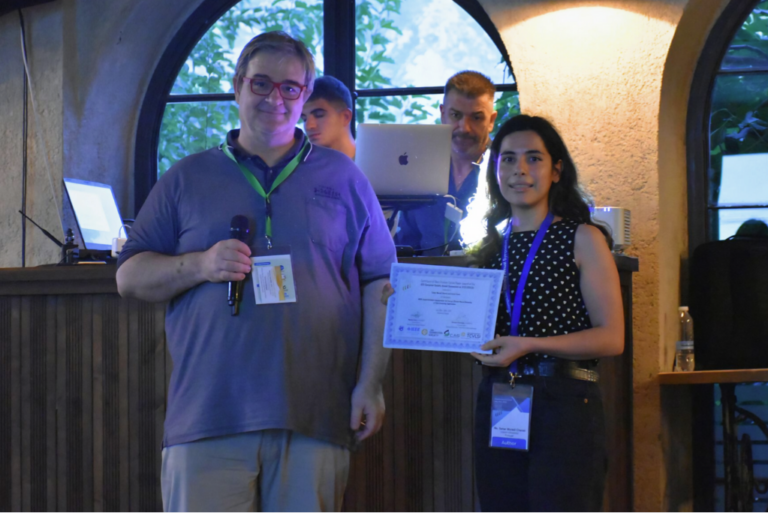
    Sahar Moradi Cherati, one of our PhD Students in High-Performance Computing Architectures and Systems (HPCAS) was awarded the “Best Student Paper Award” during the IEEE Computer Society Annual Symposium on VLSI (Very-large-scale integration).

    Sahar’s work “MSDF-Based Hardware Accelerators for Energy-Efficient Neural Networks in Edge Computing Applications”, is co-authored by her supervisor HPCAS researcher Leonel Sousa. It explores a new approach to designing Multiply-Accumulate (MAC) units using Most Significant Digit First (MSDF) arithmetic. The goal is to enhance neural network performance on edge devices by minimising latency and effectively managing energy and area constraints.

    It’s encouraging to see this work recognised, and I’m grateful for the support and guidance I’ve received throughout this work.” adds Sahar.

    For over three decades the Symposium has been a unique forum promoting multidisciplinary research and new visionary approaches in the area of VLSI. The 2025 Symposium explores emerging trends and novel ideas and concepts covering a broad range of topics, from VLSI circuits, systems and design methods, to bringing VLSI design to new areas and technologies. This year it was co-located with the event “Empowering Women in Hardware & Chip Design: Challenges & Success Stories” organised by #SMART4Women.

  • Isabel Trancoso elected to Lisbon Academy of Sciences

    Isabel Trancoso elected to Lisbon Academy of Sciences

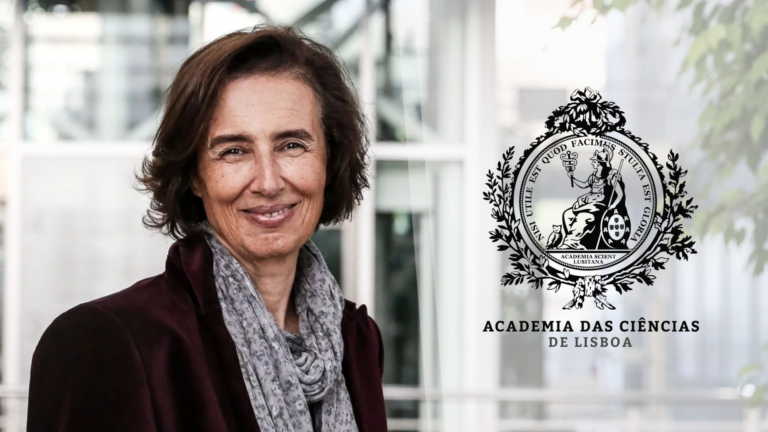
    Isabel Trancoso, senior researcher at INESC-ID, founder of the Human Language Technologies area, and full professor at Instituto Superior Técnico, has been elected a corresponding member of the Lisbon Academy of Sciences. She will join the Science Class, 8th Section – Information Sciences and Technologies. The official swearing-in ceremony will take place on July 3, ahead of the Academy’s annual celebrations on July 4.

    Founded in 1779, the Lisbon Academy of Sciences is one of Portugal’s oldest scientific institutions. It promotes interdisciplinary research, cultural heritage, public education, and civic discourse, and serves as an official advisory body to the Portuguese state in matters of language and scientific policy. Members are elected from among Portuguese citizens with a significant body of scientific or literary work, and are expected to contribute to the Academy’s intellectual and institutional activities, including plenary sessions and the work of their respective sections.

    Her election follows recent appointments of other INESC-ID researchers, including Arlindo Oliveira (2024) and José Borbinha (2023), highlighting the institute’s continued presence and influence within national science policy and academic leadership.