Category: Awards and Recognitions

  • Arlindo Oliveira receives the Galp and Academy of Engineering Career Award
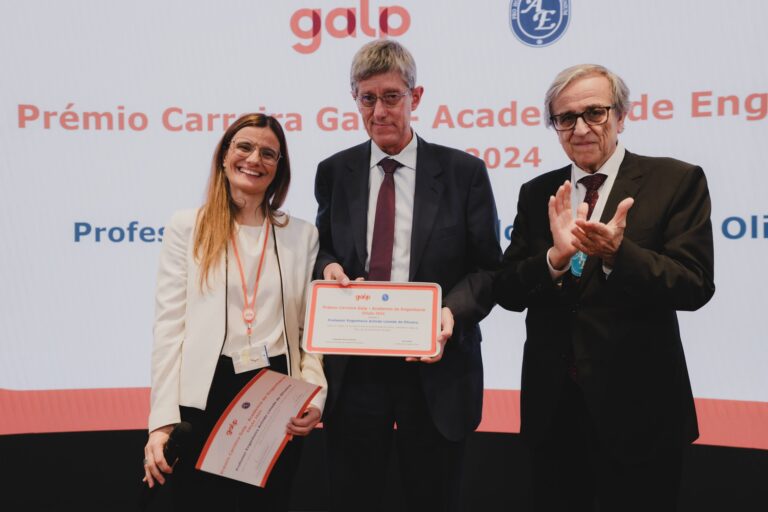
    Arlindo Oliveira receives the Galp and Academy of Engineering Career Award

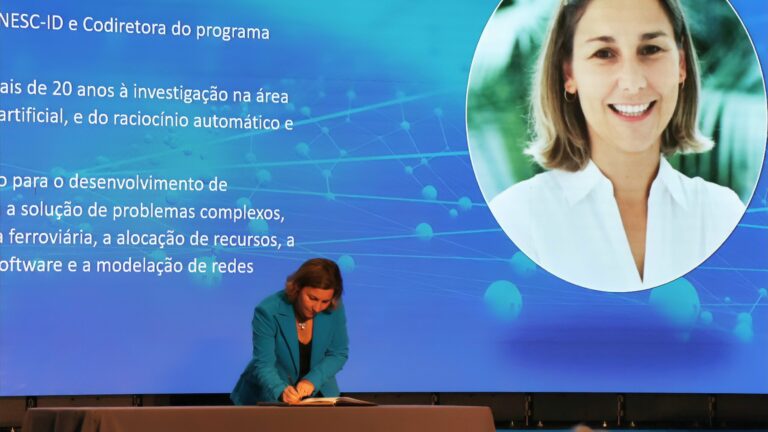
    More than just “personal recognition,” the Career Award from Galp and the Academy of Engineering, presented to Arlindo Oliveira, is a “tribute” to the institutions where he has worked, said the INESC-ID researcher.

    The President of INESC and Professor at Instituto Superior Técnico spoke at the award ceremony, which took place on February 25 at Galp’s headquarters in Lisbon. The selection of Arlindo Oliveira as the award recipient was based on the “social and economic relevance of his career” as well as the “excellence of his contributions to engineering.”

    During the ceremony, the researcher from the Information and Decision Support Systems scientific area took the opportunity to share insights on ongoing discussions in AI, emphasizing that “the idea of mechanizing reasoning is not new.” He highlighted that “Alan Turing had already answered everything in 1950—he just didn’t have a computer.” He also reinforced the idea that “there is nothing in intelligence that is not computable.”

    In a recorded message, Marcelo Rebelo de Sousa, President of Portugal, praised the awardee’s “outstanding scientific career at both national and international levels” and recognized him as “a pioneer in the field of AI in our country.”

    The jury for the Career Award included Eduardo Marçal Grilo, João Paulo Oliveira, and Maria da Graça Carvalho, representing the Academy of Engineering, as well as Georgios Papadimitriou, Ana Casaca, and Manuel Andrade from Galp. The jury was chaired by Sebastião Feyo de Azevedo, President of the Academy of Engineering.

    Images | © 2025 Galp

    *Adapted from the original published by Instituto Superior Técnico 

  • INESC-ID Projects Approved in ERPs FCT Call

    INESC-ID Projects Approved in ERPs FCT Call

    INESC-ID recently had two exploratory research projects (ERPs) approved in the Call for Exploratory Projects in All Scientific Domains 2023 by Fundação para a Ciência e a Tecnologia (FCT).

    In the field of “Computer and Information Sciences and Informatics”, the selected project was FLORA, coordinated by Vasco Manquinho. The project will develop new techniques, focused on Answer Set Programming (ASP), to debug logic programs, which is usually a challenging process since the programmer does not control the flow of execution nor is able to check the intermediate state of the program or localise a fault. FLORA will not only provide new techniques to mitigate these challenges, but also new annotated datasets of ASP programs and new tools to support the generation of new ones. All these will be available in a GitLab-based open-source framework in order to provide personalised feedback to novice ASP programmers.

    In the area of “Electrical and Electronic Engineering”, project OSiRIS coordinated by Rui Duarte, was the winning candidate. OSiRIS aims to explore AI algorithms to improve the generation of images by Synthetic Aperture Radar (SAR), while also replacing current computational units with smaller and faster ones. This will provide a new generation of on-board SAR processors to be further developed and industrialised, enhancing monitoring systems, on aircrafts and spacecrafts, and contributing to more accurate information on pollution, harvesting of natural resources and reaction to natural catastrophes.
    The projects will each receive around 50K € of funding.

    The goal of this call is to support exploratory research projects in all scientific domains, by promoting and strengthening the skills of scientific and technological institutions through the participation of their teams in projects of particular relevance. Proposals must be for individual projects, submitted by a single beneficiary, with a maximum duration of 18 months. Each project has a maximum funding of 50K, through the FCT budget.

    The 2024 call opened on December 19, and will close on February 25, 2025.

    More information here

  • Daniela Lopes wins “Best Portuguese Internet Research” Award 2024 by the Internet Society

    Daniela Lopes wins “Best Portuguese Internet Research” Award 2024 by the Internet Society

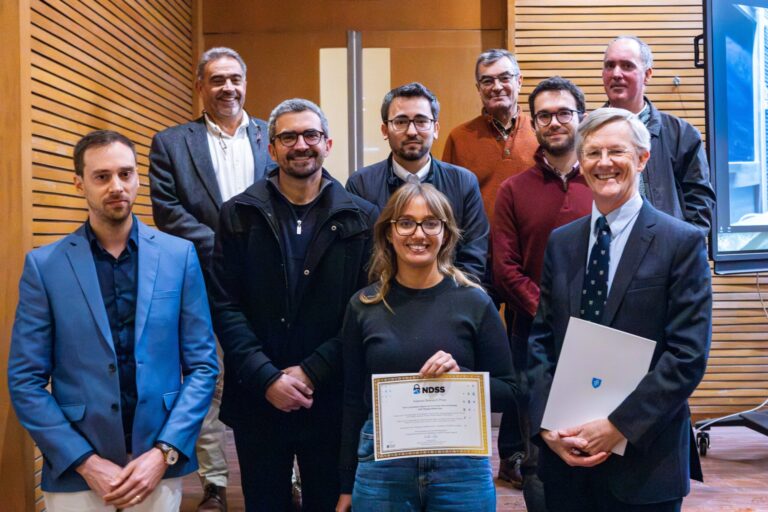
    A research paper titled “Flow Correlation Attacks on Tor Onion Service Sessions with Sliding Subset Sum”, authored by INESC-ID, CMU Portugal and Instituto Superior Técnico PhD student, Daniela Lopes, won the 2024 “Best Portuguese Internet Research” by the Portuguese Chapter of the Internet Society (ISOC). The work was co-authored by her advisors, INESC-ID researcher Nuno Santos’ and Nicolas Cristin from Carnegie Mellon University.

    The paper was published in the proceedings of the 2024 edition of the “Network and Distributed System Security (NDSS) Symposium” and resulted from the CMU Portugal Exploratory Research Project “DAnon – Supervised Deanonymization of Dark Web Traffic for Cybercrime Investigation,”. It announces a vulnerability in the Tor network, which is intended to provide users with private and anonymous Internet access, eliminating any possibility of tracing the origin of traffic. Malicious users can, however, take advantage of this and get around the surveillance imposed in some countries by censorship agencies or authorities, undermining the network’s purpose. 

    The identification of this issue was disclosed to the Tor network development team, contributing to increase its robustness. The jury highlighted the contribution of this paper to the protection of citizens’ rights online and against abusive surveillance and censorship on political or racial grounds, both goals of the Internet Society.

    The award ceremony took place yesterday, December 11, at Instituto Superior Técnico, following a panel discussion on “Cryptography: the need and the dilemma”, featuring Miguel Pupo Correia, INESC-ID board member and researcher, Maria Manuel Leitão Marques, European Parliament Member and former Minister for the Presidency, and Robin Wilton, director of the “Internet Trust – Internet Society”. 

    The paper is accessible here.

  • Joaquim Jorge Appointed IEEE Fellow 2025

    Joaquim Jorge Appointed IEEE Fellow 2025

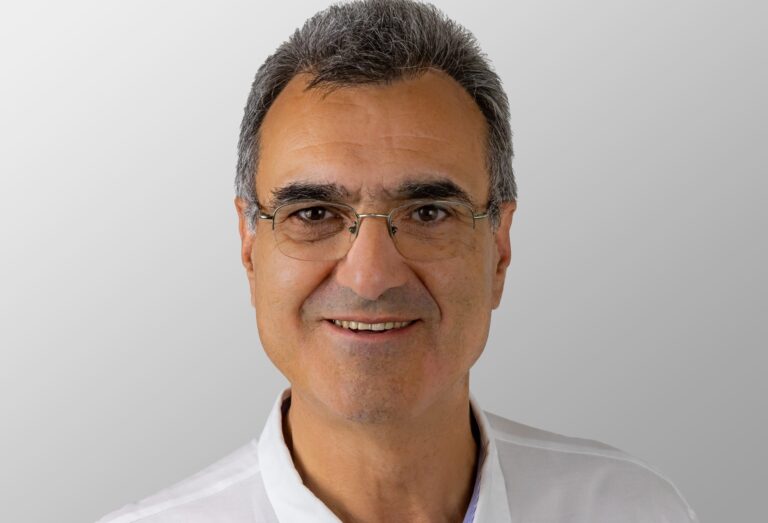
    Joaquim Jorge, INESC-ID researcher in the area of Graphics and Interaction and professor at Instituto Superior Técnico, has been distinguished as an IEEE (Institute of Electrical and Electronics Engineers) Fellow 2025.

    The IEEE Fellow is one of the highest distinctions given by IEEE, and it is attributed annually, to a small number of members, to honour the impact of their contributions to the areas of engineering, science and technology, bringing the realisation of significant value to society at large. Professor Joaquim Jorge’s work on sketch-based interfaces, modelling and virtual reality earned him this distinction, making him the only Portuguese researcher to become a Fellow this year.

    The IEEE is the world’s largest technical professional organization dedicated to advancing technology for the benefit of humanity. Its members work in various fields of engineering, computing, and technology, 

    Learn more about the IEEE Fellow Program here.

  • Restoring Voices: Transformative ALS communication technology developed under CRAI wins innovation award

    Restoring Voices: Transformative ALS communication technology developed under CRAI wins innovation award

    Most of us are familiar with the synthetic voice that the famous physicist Stephen Hawking used to communicate. Suffering for many decades from the debilitating disease amyotrophic lateral sclerosis (ALS), Hawking continued working, unravelling the mysteries of black holes and sharing his insights in books and public appearances. Despite the misfortune of living with such a severe condition, he had access to cutting-edge technology that allowed him to remain professionally and socially active. Unfortunately, not all patients share this opportunity.

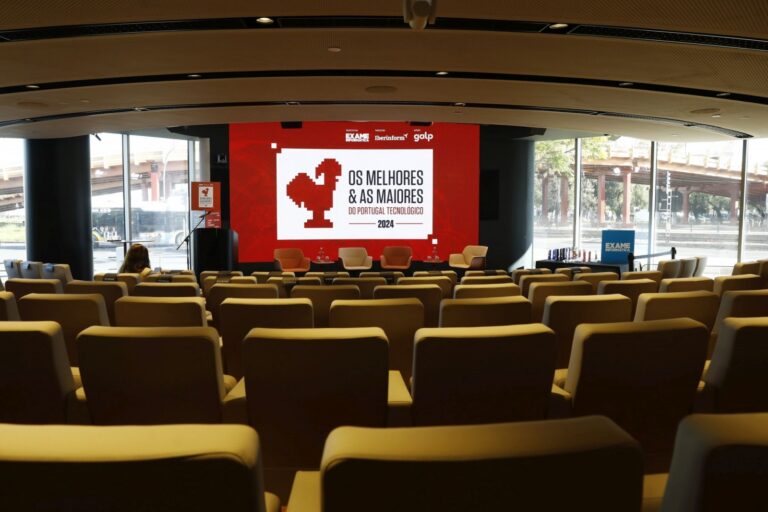
    Under the PRR-funded project Center for Responsible AI, in which INESC-ID is a key participant, Unbabel has developed Halo—a ground-breaking technology designed to restore the ability to communicate for patients living with ALS and similar conditions. This innovative device won the Prémio Inovação – Pedro Oliveira, awarded by Exame Informática during the “Os Melhores & As Maiores do Portugal Tecnológico 2024” ceremony.

    As described, “the solution consists of a muscle signal reader—essentially a band that can be worn on the head, which uses electromyography to detect fine muscle contractions—and Artificial Intelligence software that incorporates information about the user, such as personality, preferences, or their surrounding environment. Based on this system, which is continuously ‘fed’ with data from both the user and those around them, a persona is created. This persona generates response suggestions to questions posed to the user, which are then presented in audio form. The user selects the most appropriate response by moving their forehead muscles. Since the system converts text to speech for a more natural interaction, it is possible to use the patient’s own voice—either pre-recorded before the progression of the disease or retrieved from older audio recordings.” So that more patients may continue to have a voice.

    Every year, Exame Informática honors the best advancements in Portugal’s scientific and technological fields. As senior AI researcher at Unbabel Labs Catarina Farinha remarked, “with more recognition comes more responsibility to keep pushing and doing better.”

  • André Duarte wins SPARK award at the CRAI Forum 2024

    André Duarte wins SPARK award at the CRAI Forum 2024

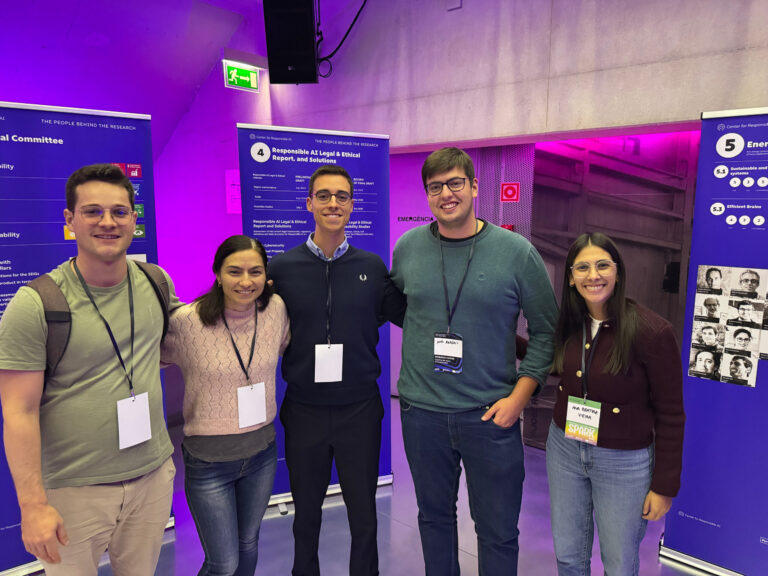
    On November 19, INESC-ID PhD student André Duarte was honoured with the SPARK Award for the best PhD student project, during the Center for Responsible AI Forum 2024 (CRAI 2024), in Porto.

    André’s work focuses on the detection of copyrighted content during the training process of a language model and was one of the 44 academic projects to be submitted. The SPARK Awards, hosted by CRAI, were the first Responsible AI Student Awards and recognised projects on topics ranging from machine learning to computer vision.

    Learn more about CRAI here.

  • Ruxandra Barbulescu and Alessandro Gianola recognized with the Outstanding PC Member Award at ECAI 2024

    Ruxandra Barbulescu and Alessandro Gianola recognized with the Outstanding PC Member Award at ECAI 2024

    On October 24, INESC-ID researchers Ruxandra Barbulescu and Alessandro Gianola were hounored with the Outstanding PC Member Award at the 27th European Conference on Artificial Intelligence (ECAI 2024).

    ECAI is the premier conference in the field of Artificial Intelligence in Europe, and the Outstanding PC Member Award aims to highlight the vital contributions of committee members of this research community. The recipients of the ECAI-2024 Outstanding PC Member Award represent only 2-3% of all regular PC members supporting the conference.

    Learn more about ECAI 2024 here.

  • Bridging Knowledge and Innovation: Inês Lynce joins the National Council for Science, Technology, and Innovation

    Bridging Knowledge and Innovation: Inês Lynce joins the National Council for Science, Technology, and Innovation

    Carlos Oliveira, Adélio Mendes, Amélia Santos… Inês Lynce. INESC-ID’s President became the ninth figure in science, technology, and innovation to be called to the stage at the Técnico Innovation Centre on the afternoon of November 5. In a ceremony attended by the Prime Minister of Portugal, Luís Montenegro; the Minister of Economy, Pedro Reis; the Minister of Education, Science, and Innovation, Fernando Alexandre; and the Secretary of State for Science, Ana Paiva, an INESC-ID researcher, the 21 new members of the National Council for Science, Technology, and Innovation (CNCTI) were formally appointed.

    This advisory body is tasked with supporting the development and sustainability of the national scientific and technological system, fostering the internationalization of Portuguese science, and promoting Portuguese as a working language in scientific fields, as outlined in the Diário da República. It is also responsible for providing scientific advice and enhancing cross-sectoral and inter-ministerial coordination in science and technology policies. Additionally, the CNCTI is expected to collaborate in parliamentary debates on science, technology, and innovation whenever requested by the Assembly of the Republic.

    During her mandate, Inês Lynce, a Professor at Instituto Superior Técnico specializing in Artificial Intelligence, and National Director of the Carnegie Mellon Portugal Program, aims to promote “scientific excellence and talent attraction and retention.”

    “It is crucial to have a council that can serve the Government and the country, so that what is created in universities can be translated into value,” emphasized the rector of Universidade de Lisboa, Luís Ferreira. “It often happens that those making decisions are not aware of what is being produced. We need a bridge between the foundations, where knowledge is created, and those who can leverage it to create value.” Entrepreneur and council president Carlos Oliveira highlighted the goal of making Portugal a country where science, technology, and innovation form the basis for growth by fostering dialogue between research centres, innovation hubs, and companies. As noted by Prime Minister Luís Montenegro, the world’s largest and most complex challenges, such as climate change, can only be tackled with the help of science.

    Text by Sara Sá, Science Writer | Communications and Outreach Office, INESC-ID / © 2024 INESC-ID

    Images | © 2024 INESC-ID


  • Nuno Santos honoured with Universidade de Lisboa / Caixa Geral de Depósitos Scientific Award

    Nuno Santos honoured with Universidade de Lisboa / Caixa Geral de Depósitos Scientific Award

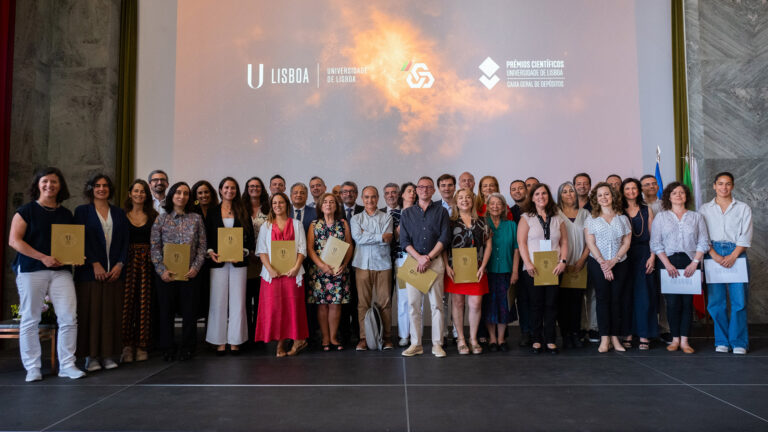
    INESC-ID researcher, Nuno Santos, has been recognised with an award in the 2024 edition of the Universidade de Lisboa / Caixa Geral de Depósitos Scientific Awards (Prémios Científicos Universidade de Lisboa / Caixa Geral de Depósitos).

    Nuno Santos, researcher at INESC-ID in the Scientific Area of Distributed, Parallel and Secure Systems, and professor at Instituto Superior Técnico, received the award for his contributions in the field of Computer Science and Engineering, among 44 fellow nominees. The award ceremony took place in the evening of June 25, at the Salão Nobre da Reitoria in Universidade de Lisboa.

    The UL/CGD Scientific Awards and Honourable Mentions recognises researchers, across 26 scientific areas, celebrating their contributions and encouraging publications in renowned international journals.

  • Arlindo Oliveira elected member of the Academy of Sciences of Lisbon

    Arlindo Oliveira elected member of the Academy of Sciences of Lisbon

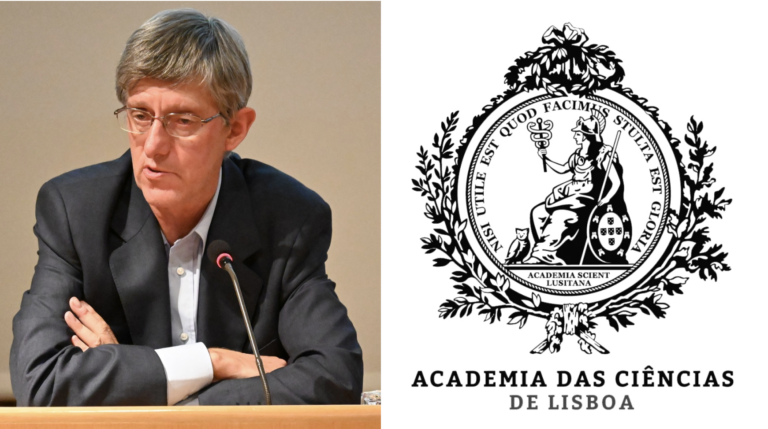
    Arlindo Oliveira, INESC-ID researcher in the area of Information and Decision Support Systems, was elected a member of the Lisbon Academy of Sciences, receiving the status of corresponding member of the science class, 8th section – Information Sciences and Technologies. The official diploma award ceremony will take place on July 4th, day of the Academy of Sciences, at its Salão Nobre.

    Aiming to foster scientific research, education and knowledge transfer, and other forms of national culture, the Academy of Sciences consists of two classes, Sciences and Letters, each divided into nine sections. The members can be any Portuguese citizen with scientific or literary work produced, and corresponding members are expected to attend plenary sessions, contribute to the academy’s work and increase the activities of their respective sections. Effective members, moreover, tackle activities of higher prestige, such as management of activities, presentation of their own reports, proposals, etc, and electing and being elected to academic positions.

    On 2023, INESC-ID researcher in the same scientific area, José Borbinha, was appointed corresponding member.