Category: In-Depth

  • Spin-offs: HeartGenetics — from code to genes

    Spin-offs: HeartGenetics — from code to genes

    When HeartGenetics was created, most people didn’t know they needed genetic screening in order to manage their health in a personal way.  

    “We had a product that was good for people, even if they didn’t know it yet. It’s what Apple did — we didn’t know we needed an iPhone until we had one”, compares Ana Teresa Freitas, INESC-ID researcher and the co-founder of the spin-off from INESC-ID. We were a “technology push” company, she details (as opposed to a market pull company).  

    It was 2013 when the initiative at the intersection of digital and biotechnology was stepping showed up to harness the power of genetics not to diagnose disease after it strikes, but to predict, prevent, and personalize health interventions, long before symptoms appear. 

    At the heart of the company lies a powerful idea: that we can use genetic information, processed through polygenic risk models and sophisticated computational biology algorithms, to tell people not what they’re suffering from, but what they are at risk of and what they can do about it. 

    “The idea was to bring genetics closer to people, especially in a preventive context,” Ana Teresa explains. “We weren’t trying to diagnose, we were trying to give people knowledge so that they can act earlier.” 

    This novel approach meant HeartGenetics had to create a space in a healthcare market that wasn’t exactly waiting with open arms. Especially in Europe, health-related innovation often runs into a tangle of regulatory fragmentation, reimbursement policies, and institutional inertia. For a company founded in Portugal, this added extra layers of troubles. 

    “Consumers — we humans as consumers — are very difficult,” she says. “And then, companies that are born in very small geographies like Portugal face another huge barrier from the start: the market itself. That’s very limiting. And in healthcare, it’s terrible! Every new country is a new regulatory wall, a new barrier to entry, a new barrier of trust.” 

    And to exemplify this, Ana Teresa recalls a meeting with representatives from the United Arab Emirates: 

    “They told us: ‘We love your product. We want it. Do you know why we’re even in this meeting? Because you were introduced by a Dutch company.’ That’s how difficult it is to be born in the South.” 

    Good science, good user experience 

    At its core, HeartGenetics combines genetics, machine learning, and clinical research. Their polygenic risk models — built from genome-wide association studies (GWAS) — aggregate multiple genetic variants into a single score, estimating an individual’s predisposition to complex diseases like cardiovascular conditions (the start of it), diabetes, or even how they might metabolise certain nutrients or respond to exercise. 

    Ana Teresa and her team spent years refining these models. But innovation wasn’t just about the science, it was also about user experience. The company developed digital health reports that are not only clinically accurate, but also human-readable, tailored for individuals and healthcare professionals alike. HeartGenetics created an expert system with more than 10,000 coded rules, combining genetic data (as polygenic risk models) with wellness and lifestyle information to deliver personalised recommendations. 

    “We didn’t want to give people a DNA report full of acronyms and technical jargon. We wanted to give them a clear picture of their health risks and how to act on them — something you could take to your doctor or your nutritionist and actually do something with.” 

    Despite the scientific robustness, scaling the company meant navigating the slow and complex maze of health regulations. In Europe, each country interprets medical device (the category in which genetic screening is included) directives differently, leading to hurdles that are especially hard to clear for small and medium-sized enterprises (SMEs). 

    “Portugal has very few companies in biotech or medtech because the regulations are not designed to support them,” she says. “In many cases, you can’t even get a tax incentive unless you’re a large multinational. That’s completely the opposite of how innovation ecosystems should work.” 

    To grow, HeartGenetics had to look beyond its home country. “You need to think globally from the start. Portugal is too small. And yet, we had to go through all the same regulatory steps as a company from France or Germany, often with fewer resources.” 

    When asked what she would tell aspiring entrepreneurs in tech or biotech, Freitas is clear-eyed: 

    “You can’t do this kind of company straight out of school. You need experience — scientific, technical, and business. You need to understand what a clinical trial is. You need to know what it means to validate a medical algorithm at the European level. This is not an app you can pivot in a weekend.” 

    She also warns against romanticising entrepreneurship. For her, starting a company wasn’t a lifelong dream — it was an opportunity that made sense given her research, her team, and her vision for a better way to deliver healthcare. 

    Sold at the early days of the pandemics, HeartGenetics continued to evolve until 2022 when Freitas left the company, exploring deeper integrations with digital health platforms and longitudinal health monitoring. After all, how can we manage our health properly without understanding our genes? 

    The hardest of being an entrepreneur: 

    The greatest challenge of entrepreneurship was overcoming structural barriers in the healthtech sector. Consumers are naturally cautious, and trust is hard to earn — especially in healthcare. Coming from a small country like Portugal added further obstacles: a limited local market, fragmented regulations across Europe, and few incentives for small digital health and biotech companies. HeartGenetics had to think globally from day one, yet still faced the same complex approval processes as larger competitors, with far fewer resources. Building credibility often required external validation, particularly from companies based in more established markets. 

    The main lesson:  

    If you want to become an entrepreneur start by immersing yourself in the ecosystem — joining accelerators, speaking with investors, and testing ideas early. A diverse and experienced core team is essential from the outset. It’s important to abandon unviable ideas quickly and to be prepared for setbacks. Facing rejection from the market and investors is frustrating but necessary; it helps refine the business and align it with real-world demand. Early-stage feedback, even when harsh, is a critical part of building a viable company.


    Text by Sara Sá
    © 2025 INESC-ID. Credit INESC-ID and the author, with a link to the original source, when sharing or adapting this article.

  • Spin-offs: SiliconGate, the company that emerged from a sabbatical

    Spin-offs: SiliconGate, the company that emerged from a sabbatical

    Marcelino Santos proudly opens a box of earbuds from a major global brand. Inside these sleek devices is a tiny circuit designed by SiliconGate — the INESC-ID spin-off specialising in analog and mixed-signal chip design.”These earbuds were a worldwide success”, says the co-founder of the company.  

    The story of SiliconGate began more than 15 years ago with a sabbatical leave. In 2006, Marcelino Santos, an INESC-ID researcher and Professor at Instituto Superior Técnico, decided to take a sabbatical. “I was curious,” he recalls. “After years in academia, I wanted real industry experience before continuing to teach.” His search led him to Chipidea, an interesting Portuguese company specialising in analog and mixed-signal integrated circuits. 

    Marcelino recounts how welcoming Chipidea was. “When I proposed my sabbatical plan, they gathered all their group leaders and let me choose where to focus. That openness was remarkable.” 

    His background was primarily in digital integrated circuit testing, with a focus on defect analysis. But power management circuits intrigued him. “Power management involves large devices and deep knowledge of physical structures, which connects well with what I’d been doing.” 

    Entrusted with leading a project despite his newcomer status, Marcelino quickly found himself at the heart of fast-paced, real-world chip development. But in 2007, Chipidea was sold, and what initially seemed like a setback turned into a catalyst for something new. 

    Faced with the uncertainty of the sale, Marcelino noticed a pool of talented engineers suddenly at risk of losing their positions. “Portugal didn’t have any other company focused on power management design at the time. Letting this expertise slip away would have been a loss for the industry and for the country.” 

    Together with four engineers, Marcelino decided to act. In December 2008, SiliconGate was born — a spin-off rooted in INESC-ID’s lab but with commercial ambitions. “We started in the third-floor lab at INESC-ID, mixing student talent with experienced engineers.” 

    This hybrid academic-industrial model enabled them to build prototypes, prepare demonstrations, and gradually establish credibility. SiliconGate’s first products would soon enter the global market. 

    SiliconGate’s evolution was shaped by client demands — often from highly specialised sectors. Marcelino highlights one pivotal partnership with an Israeli client in the banking card industry. “Israeli companies lead in data encryption and secure chip technology used worldwide. They asked us to develop the power management circuit for smart credit cards.” 

    This project required rigorous testing and characterisation to meet strict quality and robustness standards. “It pushed us to elevate our lab capabilities significantly. The intensive measurement work shaped the way we operate today.” 

    The lab’s transformation is also a personal story. “Tiago Moita, my former PhD student and now lab leader, developed automation techniques essential for our testing. But without high standards set by our clients, our progress would have been limited.” 

    Standing ovation 

    SiliconGate’s lab is a key differentiator. The company designs circuits, which clients then integrate and fabricate — often through foundries in Taiwan. Then the fabricated chips return to SiliconGate’s lab for performance validation. 

    “This feedback loop is crucial,” Marcelino explains. “It’s not a simple hand-off. We verify that the chip performs as promised in real conditions. If not, we refine our design. It’s a negative feedback loop — in terms of engineering – which allows us to improve continuously.” 

    This rigorous approach has allowed SiliconGate to tackle projects beyond power management, including circuits for CERN to withstand particle radiation, automotive-grade components, and consumer electronics. 

    But certainly the product that makes Marcelino and his team prouder is the power management IC (responsible for battery charging and management) inside the commercial Bluetooth headphones he has in his office, ready to unbox and show off. “When we visited the company in Japan, after the launch of the phones, we were received with a standing ovation, that is how happy they were with it!” 

    From a small startup, SiliconGate grew to a team of about 30 engineers split between Lisbon and Porto, adapting to remote work trends accelerated by the COVID-19 pandemic. “Initially, I was skeptical about remote work. But the team proved their commitment and productivity.” 

    However, the semiconductor crisis of 2021 posed a severe challenge. “We went a whole year without closing deals because fabrication plants were full. We paid salaries from reserves, facing the brink of collapse. It was a critical moment”, Marcelino admits.  

    The company survived by maintaining discipline, flexibility, and trust in its people. “The crisis taught us resilience and validated our remote work capabilities.” 

    Despite its commercial success, SiliconGate remains deeply connected to academia and research. It participates in European projects like PAVIS (enhancing MRI imaging), UNLOCK (power management for ultrasound implants), and GreenCHIPS (energy-efficient circuits). 

    “These projects provide stability when commercial work slows and let us push technological frontiers,” Marcelino notes. 

    On a note for entrepreneurs, Marcelino says: “There’s no substitute for experience. Entrepreneurship shouldn’t start with a business plan but by working in the field — learning products, customers, and pain points.” And shares a simple analogy: “A repairman in my hometown of Beja wanted his own shop. He worked first in another shop to learn the trade. That’s the path.” 

    Patience and adaptability have been key, especially dealing with workload fluctuations common in hardware startups. European projects help smooth the cycles, but the road remains demanding. 

    SiliconGate is now recognised internationally, part of the TSMC ecosystem as a certified IP provider, and visible on industry platforms like Design & Reuse and ChipEstimate. The company’s reputation is built on quality, trust, and the ability to meet stringent client demands. 

    Marcelino smiles when asked about his entrepreneurial journey: “It wasn’t planned. It was a series of fortunate accidents. The important part is recognising opportunity when it knocks and embracing it.” 

    The hardest of being an entrepreneur: 

    “Dealing with workload fluctuations. That is, there are times when we would need twice as many engineers. And there are times when it would be good to pay only half the salaries, because there just isn’t enough work to justify having so many people.” 

    The main lesson:
    “The biggest lesson I take away is the need to go out there — to immerse yourself in the field, in the market. That is, anyone who wants to be an entrepreneur in a given area should first start working in that area to understand it: to learn about the products — what they really are, the technical details — and to get to know the players: who is selling, who the clients are, and how the business process works. After that, then yes, one can begin to see clearly.” 


    Text by Sara Sá
    © 2025 INESC-ID. Credit INESC-ID and the author, with a link to the original source, when sharing or adapting this article.

  • After the lights went out: MIT and INESC-ID researchers team up to prevent the next blackout

    After the lights went out: MIT and INESC-ID researchers team up to prevent the next blackout

    Long queues outside corner shops and bakeries. Supermarkets closed. Anxious people carrying gas cylinders, bags of charcoal, batteries, and candles. In an instant, and for several hours, the fast, digital rhythm of 21st-century life was unplugged. 

    The unprecedented Iberian blackout that left Portugal and Spain “in the dark” on the morning of April 28 exposed just how reliant modern society is on the seamless functioning of our electrical grids. 

    In the weeks that followed, the event triggered international media attention, quickly becoming politicized and a lightning rod in the renewable energy debate, as the Iberian Peninsula is one of the world’s regions with the highest levels of renewable energy production.

    Experts across the sector, including INESC-ID researchers and Instituto Superior Técnico professors Pedro Carvalho and Rui Castro, helped clarify the technical complexity of the event and the deeper challenges it revealed for Europe’s ongoing energy transition. (Read our earlier article here.) 

    “It immediately caught the world’s attention. Because we have one of the highest shares of renewables, what happened here became a weapon in the political debate.” –  Pedro Carvalho 

    But now, the key question is: how do we prevent this from happening again? 

    Events like these are often compared to forest fires – all too familiar in Portugal. Once they begin, they are incredibly hard to stop. Which is why building resilience and improving control in such a tightly interconnected system is essential. 

    That’s precisely the focus of a new project titled “Assessing and Mitigating Blackouts: The Case of Iberian 2025 Blackout”, recently awarded a US$200K seed grant by the MIT Portugal Program. The MIT Portugal Seed Fund is awarded exclusively to MIT Principal Investigators, with proposals that include collaboration with Portuguese faculty, students, industry, or other institutions in Portugal. 

    The project is co-led by Marija Ilic, professor and researcher at MIT and Pedro Carvalho—long-time collaborators with nearly two decades of joint work on modelling power systems and grids. Their research will explore two innovations designed to prevent future large-scale blackouts while allowing the continued integration of high levels of renewable energy sources. 

    The first involves simulating the electric power grid interconnecting France, Spain, Portugal, and the underwater connection to Africa—all affected during the April 28 event. The team will reconstruct the chain of events, assess vulnerabilities, and explore how cross-border exchanges, particularly between France and Spain, can be better coordinated to prevent voltage collapse. 

    The second innovation focuses on developing an adaptive power electronics control system capable of stabilising voltage and frequency during extreme grid disturbances. This mechanism is intended to avoid the premature activation of protection protocols that can inadvertently shut down the entire system. 

    Together, these innovations could help prevent widespread blackouts, while supporting the transition to cleaner, decentralised energy. To achieve this, the two co-investigators are rethinking today’s operating and planning practices, and aim to deliver recommendations for policymakers.  

    For Portugal, that work now includes INESC-ID, through Pedro Carvalho. As a member of the newly formed Technical Advisory Group for Strengthening the Security and Flexibility of the National Electricity System – set up by Portugal’s Minister for Environment and Energy and expected to soon deliver a public report – he is uniquely positioned to help turn research into action. 

    The group’s goal is to reinforce the grid’s resilience against future blackouts. For INESC-ID, this participation also reflects recognition of its expertise in energy systems, increasingly called upon in both research and policy contexts. 

    The project won’t just be academic. Using MIT’s Power Digital Twin to simulate real-world situations—recently deployed in Puerto Rico to prepare its power grid for hurricanes—the team will better understand the vulnerabilities of the Iberian grid and identify improvements, all while maintaining high use of renewables. 

    What adds further urgency and relevance to this research is the current political context. Although the blackout has disappeared from media headlines, “behind the scenes, utilities, especially in Spain, are still under tremendous pressure. Many companies are demanding millions in compensation,” Carvalho explains. 

    But practical changes are already underway. In the future, insights from this project could be applied to other regions with high renewable penetration, such as Texas, California, and Northern Europe, and provide recommendations to help industry and governments design better mitigation strategies. 

    In the immediate aftermath of the event, uncertainty and lack of information sparked speculation ranging from technical failure to fears of a Europe-wide cyberattack. We were bluntly reminded that our increasingly decentralised and interconnected critical infrastructures are not just technical, they are a societal nervous system.


    Text by Rodrigo Abril de Abreu | Head of Communications and Outreach Office, INESC-ID
    © 2025 INESC-ID. Credit INESC-ID and the author, with a link to the original source, when sharing or adapting this article.

  • “Healthy Mind, PhD in Progress”: Supporting PhD Student Wellbeing at INESC-ID

    “Healthy Mind, PhD in Progress”: Supporting PhD Student Wellbeing at INESC-ID

    Can research institutes excel without caring for the wellbeing of their people?

    It’s increasingly clear that real excellence in R&D+i is not just about brains or breakthroughs, it’s also about the social support systems behind them. With initiatives like the PhD Students Meetup on mental health and wellbeing last June, INESC-ID is taking part in this shift towards a new scientific culture.

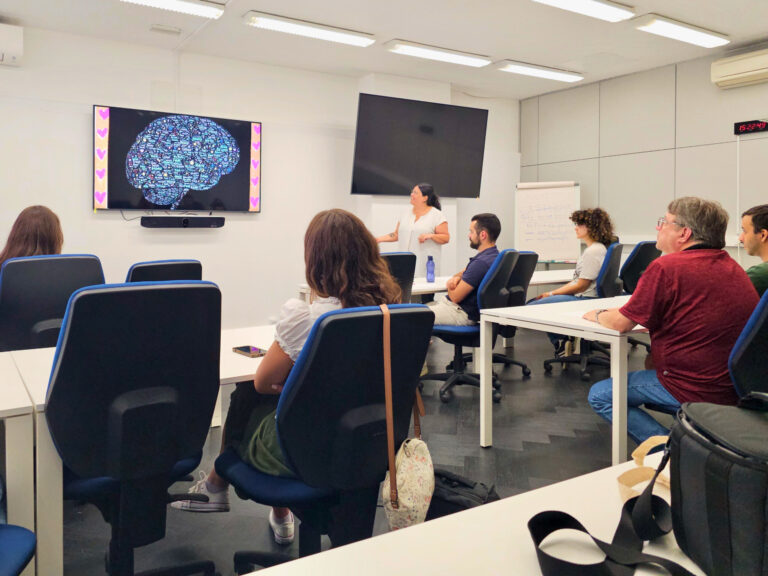
    For many PhD students, the path toward a scientific career can be isolating. That’s why moments like the INESC-ID PhD Students Meetups matter. Part of an ongoing series of community-building initiatives designed to connect and empower our students, June’s event brought together around 20 participants from different research areas and stages of their doctoral journey for a hands-on workshop titled “Mente Sã: PhD em Progresso” (Healthy Mind: PhD in Progress). The session was led by Carla Boura, Coordinator of the Mental Health and Wellbeing Program at the University of Lisbon, and former Head of Student Support at Técnico’s Oeiras campus, both key institutions in the INESC-ID ecosystem.

    Over the course of the half-day session, students paused, reflected, and explored tools to support their mental wellbeing – from recognising signs of psychological distress to practicing self-care and stress management strategies, including breathing and meditation exercises. The workshop also invited group discussions and joint reflection on common challenges, long-term wellbeing practices, and available resources.

    A structural problem: stress, isolation, and academic pressure

    The session began by framing the structural pressures faced by PhD students, including the solitary nature of certain research fields, a competitive culture, and the absence of a strong academic community.

    A global survey of over 6000 PhD students, reported in a 2019 Nature article by Chris Woolston, found that more than one-third sought help for anxiety or depression with many other reporting mental health struggles. The study also showed that students face multiple pressures. External factors include unstable funding, unclear career prospects, excessive workloads, or lack of institutional support. Internal challenges like imposter syndrome, anxiety or burnout, are also common. Nearly one in five students also reported experiencing bullying or harassment. For international students, visa issues and cultural adaptation can add another layer of stress and isolation.

    These stressors resonated with the students present, who shared their challenges in a rare moment of openness, made possible by the atmosphere of trust in the room. As Beatriz put it “What I liked the most was the caring environment, feeling like a safe space to share my experiences, and the practical tools and exercises to help with my emotions.” For Joana, “seeing that everyone has the same struggles during a PhD, and getting to know other INESC-ID students” was just as valuable.

    Carla, who launched Portugal’s first academic mentoring program at Instituto Superior Técnico in 1997, and actively participates in wellbeing and inclusion initiatives, isn’t surprised by this reaction:

    “There’s a misconception that PhD students, being older and having prior university experience, don’t need support. But everyone needs help at some point, regardless of age, and in a student community where more and more go directly from a Master’s to a PhD, that support becomes even more essential.”

    She adds there’s often a lack of literacy around the topic and “in the case of doctoral students, prevention can be essential for a healthy journey”. Her remarks echoed student feedback, with one suggesting the inclusion of this kind of session during the onboarding process, while others highlighted that connecting with peers was just as important as the content itself.

    Mental wellbeing as a foundation for excellence

    According to Carla, the University of Lisbon has taken an important step in building this culture “once and for all”,  aligning with the Nature article’s call for universities, supervisors, and funders to create healthier research environments and concrete support structures. Through its Mental Health and Wellbeing Program and Academic Success Project, the goal is to pave the way for psychologically safe environments that are “essential to developing creative, motivated, and dynamic students.”

    In a field defined by high intelectual demands, small gestures can make a big difference. As Carla Boura reflected, “Initiatives like this one – bringing the University of Lisbon’s Mental Health Program to your students – can truly have an impact.”

    At INESC-ID, home to nearly 200 PhD students, wellbeing and mental health are part of the conversation, not as a side note, but as a condition for excellence.

    More information about ULisboa’s Mental Health and Wellbeing Program (in Portuguese) here.

    Psychological First Aid Manual – University of Lisbon (PDF, in Portuguese) here.


    Text by Rodrigo Abril de Abreu | Head of Communications and Outreach Office, INESC-ID
    © 2025 INESC-ID. Credit INESC-ID and the author, with a link to the original source, when sharing this article.

    Images | © 2025 INESC-ID

  • Spin-offs: From research to market, the technology transfer reality at INESC-ID

    Spin-offs: From research to market, the technology transfer reality at INESC-ID

    In the fields of science and innovation, the bridge between academic research and real-world impact is no longer an option, it’s a must. At INESC-ID, this bridge is being reinforced through a dedicated commitment to technology transfer, a process that transforms research outputs into products and services, for the benefit of society.

    Sandra Aresta, INESC-ID’s Knowledge Transfer Manager, sees a clear trend: “Scientific institutions are increasingly aware of the importance of having a technology transfer office.” This growing awareness is not unique to INESC-ID. Across Portugal and Europe, institutions are working to strengthen their capacity to bring research into the market, following in the footsteps of more mature innovation ecosystems such as those in France, Germany, and the United States.

    Technology transfer is far from a new concept — in countries like the United States, the Bayh-Dole Act of 1980 was a turning point, allowing universities to retain intellectual property (IP) rights to federally funded research. This legislation helped create an ecosystem of university spin-offs and public-private partnerships. Today, the U.S. continues to lead in the number of spin-offs created per year, with institutions like MIT and Stanford at the top. 

    In Europe, the picture is more nuanced. While countries like France, the Netherlands, and Germany have strong technology transfer structures, others — especially those categorised as “widening countries” (a term used by the European Commission for member states with lower R&D performance) — are still catching up. In Portugal, ANI (Agência Nacional de Inovação) has played a key role in building capacity and promoting entrepreneurship within academic institutions.

    A growing culture of innovation at INESC-ID

    At INESC-ID, technology transfer has resulted in the creation of nine spin-offs, in different fields such as microelectronics (SiliconGate), speech recognitions (Voiceinteraction) or genetic testing (Heartgenetics), bringing research outcomes directly into the marketplace. These companies are not accidental by-products of research — they are deliberately created with the purpose of commercialising academic IP.

    “Potentially, everything can be transformed into a product or service,” Sandra explains. “And at INESC-ID, this is especially true — our research areas allow us to do so within a relatively short time frame and with modest funding.” Compared to fields like biomedical sciences, which require extensive clinical validation, complex regulation, and high capital investment, areas like computer science, robotics, and signal processing — all strengths of INESC-ID — offer a more agile path to market.

    Despite the growing momentum, several challenges remain. One of the key barriers, according to Sandra, is cultural: “The academic culture is naturally geared toward the development of knowledge, but less so toward entering the market.” Most PhD graduates still envision a future within academia, often unaware that entrepreneurship is a viable and valuable career path.

    Moreover, teaching responsibilities and academic workloads can be significant obstacles. Many university researchers simply lack the time and energy to engage in entrepreneurial ventures. Yet, as Sandra points out, technology transfer is increasingly being recognised as the “third mission” of universities.

    Another critical driver of spin-off creation is personal motivation. “There are usually three main reasons why researchers launch spin-offs: either they want a vehicle to bring their product or service to market, or they’re looking to create their own employment or the need for funding, wether public or private, for the more advanced stages of product development, which an academic institution can hardly obtain she explains. In either case, the result is the same: more innovation entering the real economy.

    A shift in institutional priorities

    The shift toward recognising the economic impact of academic research is now embedded in European science and innovation policy. The European Commission has repeatedly acknowledged the “innovation paradox” — the fact that Europe excels in scientific research but struggles to convert it into economic value. In response, the Commission is encouraging consortia that include industry partners, promoting entrepreneurial skills among researchers, and rewarding projects with measurable impact beyond publications and citations.

    This policy shift is resonating at institutional levels. As Sandra notes, “a few years ago, the only thing that mattered was scientific excellence. Now we also look at economic and societal impact.” 

    And so, the path forward looks optimistic. “When researchers try entrepreneurship, they usually enjoy it. They see it as an additional challenge — one that is intellectually stimulating and rewarding.”

    And another way to ‘define technology.’


    Text by Sara Sá, Science Writer | Communications and Outreach Office, INESC-ID
    © 2025 INESC-ID. Credit INESC-ID and the author, with a link to the original source, when sharing or adapting this article.

  • PRR Projects: From shopping to smartness. Project PT Smart Retail redesigned the future of retail

    PRR Projects: From shopping to smartness. Project PT Smart Retail redesigned the future of retail

    What if buying a snack, grabbing lunch, or doing the weekly groceries didn’t require queues, cashiers, or even a checkout line?

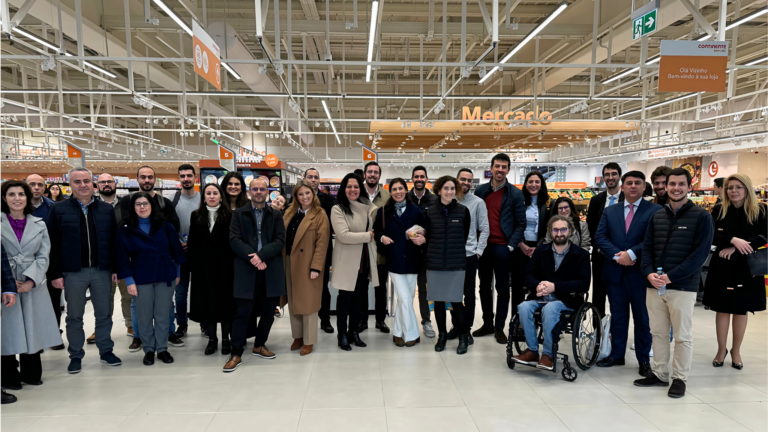
    This is not a scene from a sci-fi movie. It is already happening, in Portugal! The world’s largest intelligent retail store— a 1,200 square meter space operated by Continente—opened earlier this year in Leiria, showcasing the very technologies being developed through PT Smart Retail. This PRR-funded mobilizing project will transform the way we shop, consume, and interact with physical retail spaces.

    On this project, INESC-ID has a key role in dealing with the privacy and security of this future. Under the internal coordination of researcher Nuno Santos, from Distributed, Parallel and Secure Systems, the initiative brings together 19 partners, from startups to tech providers, universities, and major retailers like Continente and Galp.

    At the helm of the consortium is Sensei, a Portuguese tech company already pioneering autonomous retail experiences. But the goal of PT Smart Retail goes far beyond existing proof-of-concept stores. With an investment of over €31 million, the project aspires to deliver a new generation of intelligent, autonomous, and sustainable retail—from futuristic vending machines to fully operational cashierless stores, all powered by national technology.

    Launched in 2022 and running through the end of 2024, PT Smart Retail is part of Portugal’s broader Recovery and Resilience Plan (PRR), aiming to build national capacity in high-tech, high-impact sectors. In the retail domain, that means: Designing autonomous and hybrid store formats, developing “pods” that can be deployed in remote or high-traffic areas, introducing Zero Waste Cabinets that reinvent the vending machine experience and creating peripheral technologies to enhance user interaction and sustainability.

    Each innovation is based in seamless, contactless, and user-centric shopping experiences—think of walking into a shop, picking up your items, and walking out without scanning a single barcode. The rest is up to the system.

    “Our role in the project is very focused. We’re working on the privacy and security side—anticipating problems that might not be critical for the pilot store today but will be essential if this technology is to scale nationally or internationally.” – Nuno Santos

    But as this vision moves closer to reality, critical questions arise: How do we ensure customer privacy? Who has access to video data? How secure is the underlying AI? That’s where INESC-ID comes in.

    “Our role in the project is very focused,” explains Nuno Santos, Principal Investigator at INESC-ID and Professor at Técnico. “We’re working on the privacy and security side—anticipating problems that might not be critical for the pilot store today but will be essential if this technology is to scale nationally or internationally.”

    Indeed, the transition to intelligent retail systems introduces layers of complexity—technically, ethically, and legally. Every sensor, every camera, and every line of code collecting customer behavior must comply with GDPR, safeguard identity, and protect sensitive data from leaks or misuse.

    To solve these challenges, the INESC-ID team is developing solutions across five research vectors:

    1. Privacy-preserving Video Processing

    In smart stores, camera footage is essential for tracking customer movement and product selection. But how can we do this without violating privacy?

    INESC-ID’s answer is to transform video feeds into anonymized skeletal models, abstracting individuals into motion paths instead of identities. In some cases, the team goes further—applying visual obfuscation techniques that reduce people to blurred silhouettes, while still enabling operators to debug the system when needed.

    2. Trusted Video Stream Processing

    The software that powers smart retail—including the AI models for object recognition and movement tracking—runs on edge servers located inside stores. These are valuable intellectual property assets for companies like Sensei. But how can they ensure this code isn’t reverse-engineered or tampered with, especially in international deployments?

    INESC-ID is exploring hardware-based secure enclaves that encrypt and shield algorithms from unauthorized access, even when deployed in less trusted environments.

    3. Data Provenance and Auditability

    With thousands of data points flowing through these systems daily, it’s essential to prove that the algorithms act fairly and legally. INESC-ID is working on cryptographic methods to ensure traceability—demonstrating that a particular transaction was computed using valid data, from legitimate sensors, using trusted code.

    This will be crucial for compliance auditing, especially in the context of the AI Act in Europe.

    4. Network and Communication Security

    A smart retail system involves dozens of sensors communicating in real-time with local servers and cloud backends. This creates vulnerabilities: from spoofing attacks that fake product scans to malicious devices planted in stores.

    To address this, INESC-ID is developing secure communication protocols and monitoring tools that can detect anomalies in sensor behavior and network traffic.

    5. Web Application Security

    The final layer of the stack includes web-based dashboards, APIs, and customer-facing apps. These are often the most visible points of contact—and the most vulnerable to attacks.

    INESC-ID’s researchers are conducting code audits and developing automated tools to detect and patch vulnerabilities in retail web applications before they can be exploited.

    “The problems we’re solving in PT Smart Retail are not just relevant to retail,” says Nuno Santos. “They apply to surveillance in public spaces, stadiums, smart cities. The anonymization and secure processing of visual data is a broader societal challenge.”

    Ultimately, PT Smart Retail is not just about automating shopping. It’s about building trust in an era where technology is everywhere and often invisible. “When we used to shop at a neighborhood store, trust was physical, the shopkeeper knew us. Today, that trust has to be engineered into the system”, Nuno Santos notes.

    By combining cutting-edge AI with responsible data practices, PT Smart Retail aims to become a global reference for intelligent, privacy-first retail. And INESC-ID’s work is central to making that happen.


    Text by Sara Sá, Science Writer | Communications and Outreach Office, INESC-ID
    © 2025 INESC-ID. Credit INESC-ID and the author, with a link to the original source, when sharing or adapting this article.

    Images | © 2025 PT Smart Retail

  • “What is missing in Web3 is trust.” CMU Professor, Seth Goldstein, reflects on Blockchain and the future of work

    “What is missing in Web3 is trust.” CMU Professor, Seth Goldstein, reflects on Blockchain and the future of work

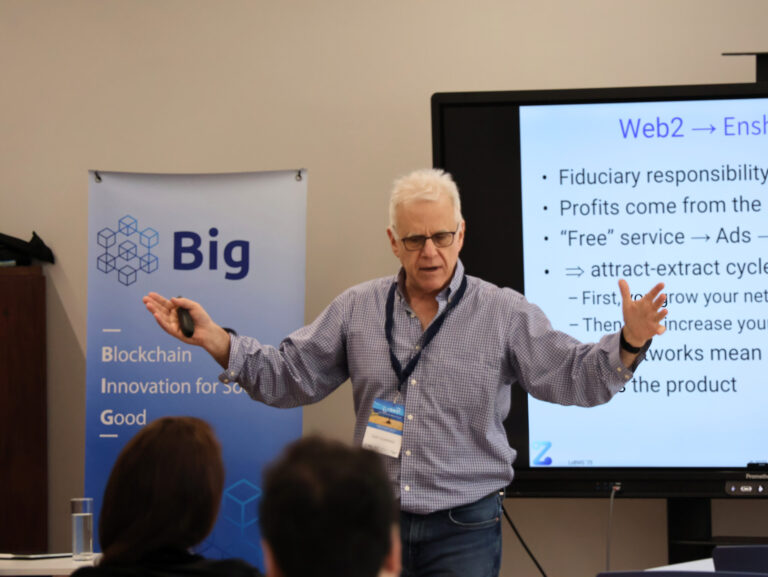
    With its decentralized systems and the potential to reshape how we interact with the internet and conduct business, web3 sounds almost like an El Dorado. At the centre of it lies the technology that powers blockchain. Seth Goldstein, Professor at CMU School of Computer Science, is a committed thinker about the topic. During the Lisbon Blockchain Winter School 25, organized by the BIG Era Chair Project, he shared his mind-opening insights with the attendees, on a keynote under the title Web 3: trust, reputation and the future of money.

    For the specialist, that shared the story of the three technological revolutions mankind has been through, what we are now living is unlike anything we have seen before and therefore a conversation about what is going on is crucial. “With the development of Web3, blockchain, and cryptocurrency, we are entering the third technological revolution (TR3) — one that will transform the labour market, redefine productivity, and fundamentally alter how we work.”

    Web3: The technology of trust

    Web3 is more than just a technological shift; it’s a new social technology that addresses trust in digital interactions. For Goldstein, the heart of blockchain’s innovation lies in the idea that, with it, you don’t have to trust the individual actors involved, but you can trust the results they produce.

    In the past, trust has been central to transactions. From banking to everyday exchanges, we rely on systems and intermediaries to validate and secure transactions. Goldstein compares this to a simple example of money transfer: Imagine a world where individuals didn’t rely on intermediaries like banks but instead could exchange money directly, knowing their transactions would be validated by others in the network, who are incentivized to do so honestly.

    This decentralized validation system is the backbone of blockchain. It operates without a central authority and ensures the authenticity of every transaction, allowing people to trust the results even if they don’t trust each other. As Goldstein puts it, blockchain is “a social technology” where individuals are incentivized to behave honestly, not because of goodwill, but because their economic interests are aligned with maintaining the system’s integrity.

    Is Blockchain for social good?

    One of the most common criticisms of blockchain and cryptocurrency is that they might be used for illicit purposes. Goldstein, however, counters that the transparency inherent in blockchain actually makes it difficult to misuse. Every Bitcoin transaction, for example, is recorded on the blockchain and publicly visible, making it clear who is transferring funds to whom. This transparency might be one of the technology’s most significant strengths in ensuring accountability and trust in the system.

    Goldstein also highlights the broader social impact of these technologies. Just as roads and public infrastructure provide societal benefits, blockchain, Web3, and cryptocurrency can be seen as a public good, accessible to everyone. They allow for decentralized governance and voting, enabling individuals to participate in decision-making processes without the need for centralized power structures.

    Technological revolutions and the future of work

    Goldstein draws parallels between Web3 and earlier technological revolutions. The First Industrial Revolution saw a massive increase in productivity and improvements in living standards. The Second Industrial Revolution, fueled by electricity, further transformed society. However, the third revolution, which is driven by technologies like Web3, artificial intelligence, and blockchain, presents a unique challenge: it will not only increase productivity but also lead to massive disruption in the labour market.

    With the rise of automation and AI, many traditional jobs are being replaced by machines. But there’s a twist: as productivity increases, labour costs are approaching zero. In Goldstein’s view, Web3 represents the solution to this problem by creating new forms of money and economic systems that don’t rely on the traditional methods of trust and control. As the cost of production continues to decrease, individuals may no longer need to depend on traditional jobs to sustain their livelihoods.

    Goldstein also provocatively suggests that the key skills for the future won’t be programming or technical expertise, but rather philosophy, time management, and human-centric skills like empathy, creativity, and social intelligence. As machines take over cognitive and physical tasks, humans will be needed more for their emotional and creative capabilities.

    As Web3 continues to evolve, there’s a need for regulation to ensure that it doesn’t devolve into a system ripe for exploitation. While Goldstein believes that governments shouldn’t be the ones to innovate, their role is critical in establishing boundaries and ensuring that individuals and institutions act within those boundaries. This is where the concept of Adam Smith’s “invisible hand” comes into play — government intervention should be designed to address externalities, like pollution, by setting appropriate costs and regulations.

    In the case of cryptocurrency and blockchain, governments should aim to create a framework where people can innovate but also be held accountable for their actions. With the right regulations, blockchain could remain a force for good — offering transparency and security while providing individuals with the freedom to innovate.

    Reputation-based currency

    Looking ahead, Goldstein envisions a future where reputation is more important than currency. In this new economic model, the currency will be based not on the trust in a central authority but on the trust that people place in each other’s reputations. People will “print” their own money, and the value of that money will be determined by their fiscal reputation — not the government or central bank.

    However, there are challenges ahead. As the labour market changes, Goldstein warns that the transition could be painful, with mass unemployment and social unrest as traditional jobs disappear. Yet, he remains optimistic. If we approach this revolution with the right mindset and adapt to these changes, the future could be bright — even if it requires us to rethink what work means and how we value human skills.

    Goldstein’s greatest fear, however, is the potential end of innovation. With the rise of automation and AI, fewer people may choose to invest the time and effort needed to become experts in their fields. If the pursuit of expertise becomes increasingly irrelevant, we might lose the very drive that has led to humanity’s greatest advancements. This presents a paradox — we’re entering an era of unprecedented technological progress, but we also risk undermining the very factors that drive that progress.

    In conclusion, the Web3 revolution is not just about blockchain or cryptocurrency — it’s about rethinking how we organize and value work, trust, and money in a world where traditional systems are no longer sufficient. While the future may be uncertain, one thing is clear: the changes happening now will define the future of work, society, and how we interact with the digital world. Whether it becomes a utopia or dystopia depends on how we navigate this new frontier.


    Text by Sara Sá, Science Writer | Communications and Outreach Office, INESC-ID
    © 2025 INESC-ID. Credit INESC-ID and the author, and link to the original source when sharing or adapting this article.

    Images | © 2025 INESC-ID

  • PRR Projects: Fair, Explainable, and Sustainable. INESC-ID is leading Responsible AI with the CRAI Project

    PRR Projects: Fair, Explainable, and Sustainable. INESC-ID is leading Responsible AI with the CRAI Project

    Luís Oliveira lost his ability to speak due to Amyotrophic Lateral Sclerosis (ALS) in early 2023. However, in May 2024, he made his voice heard around the world. Luís, who sadly passed away in the meantime, made an historic appearance at the United Nations summit AI for Good, becoming the first ALS patient to demonstrate the use of Halo. This groundbreaking technology, developed under the PRR-funded Centre for Responsible AI (CRAI) project, enables communication without speech or typing, by combining Generative AI with a non-invasive neural interface that translates bioelectrical signal patterns into language.

    Halo, developed by Unbabel—the leading partner in this large-scale initiative—is perhaps the most visible innovation to emerge from the CRAI consortium. With €51 million in funding, CRAI aims to promote fair, transparent, eco-friendly, and trustworthy Artificial Intelligence. The initiative is structured around three key areas. Technology developers, including startups and companies focused on product development, ensure AI research directly supports real-world applications, such as Unbabel’s Halo. Fundamental research, led by top institutions like INESC-ID, Instituto de Telecomunicações, and the Champalimaud Foundation, drives cutting-edge AI advancements. Industry and healthcare adopters, such as Hospital de São João, Bial, and Luz Saúde, integrate AI solutions into their operations, ensuring broad societal impact. In total, CRAI brings together 10 startups, two unicorns, a law firm, five industry leaders, and eight research centers.

    At INESC-ID, four different research teams—led by Bruno Martins, Arlindo Oliveira, Rui Prada, and Paolo Romano—collaborate on various aspects of the project, with Responsible AI as a core pillar. Alongside this vision of connecting with companies, the teams are developing highly applied solutions.

    “CRAI is built on three fundamental principles: fairness, ensuring no discrimination towards groups of people; understandability and explainability, making AI systems interpretable and their decision-making processes transparent; and sustainability, ensuring computational feasibility and reducing energy consumption without compromising performance.”  — Bruno Martins

    INESC-ID’s expertise in Natural Language Processing (NLP) and dialogue systems has for instance been instrumental in supporting projects like Unbabel Halo. Other key initiatives focus on legal or clinical NLP, which are critical components of the Affine product being developed by NeuralShift, with its focus on streamlining legal workflows, or the automated medical record systems developed in collaboration with Priberam’s PCARE initiative.

    Bruno Martins, from Human Language Technologies research area and the coordinator of INESC-ID participation at the project, explains that CRAI is built on three fundamental principles: “fairness, ensuring no discrimination towards groups of people; understandability and explainability, making AI systems interpretable and their decision-making processes transparent; and sustainability, ensuring computational feasibility and reducing energy consumption without compromising performance.”

    The team led by Paolo Romano adopts a three-pronged approach to enhance AI efficiency and scalability, focusing on system-level optimization, cloud-level optimization, and self-adaptation. Meanwhile, research by the team coordinated by Rui Prada, on Social Artificial Intelligence and Social Robotics, aims to develop AI that interacts naturally and responsibly with humans, fostering a symbiotic relationship between people and technology. And Arlindo Oliveira’s team aims to strike a balance between safeguarding data privacy and security while leveraging customer insights in a competitive landscape.

    CRAI’s main objectives include advancing fundamental research in Responsible AI, developing products and services that apply Responsible AI principles to generate economic impact, attracting, training, and retaining world-class talent, and promoting education and awareness through initiatives such as the Responsible AI Forum. These efforts are already translating into real-world solutions, enhancing accessibility, improving healthcare processes, and fostering ethical AI adoption across industries.


    Text by Sara Sá, Science Writer | Communications and Outreach Office, INESC-ID
    © 2025 INESC-ID. Credit INESC-ID and the author, with a link to the original source, when sharing or adapting this article.

    Images | © 2025 INESC-ID, Técnico, Unbabel

  • Organ-on-a chip? Yes, it is possible. And INESC-ID will give a hand to it

    Organ-on-a chip? Yes, it is possible. And INESC-ID will give a hand to it

    Tiago Moita walks across the wooden floor in what appear to be ordinary rubber-soled shoes. However, there’s a twist: a low electrical resistance shoe sole prevents static electricity from damaging the microchips developed and tested at the Silicongate workbench. This company, incubated and partly owned by INESC-ID, designs and tests circuits for power management systems, such as those used in mobile phones. Strongly committed to research and innovation, Silicongate also participates in research projects like the EU-funded UNLOOC initiative, aimed at transforming the drug development process by reducing reliance on animal testing.

    Traditional animal testing in drug development faces significant challenges due to methodological limitations and ethical concerns, often failing to predict human reactions to drugs. It is estimated that adverse drug reactions (ADRs) cause 197,000 deaths annually in the EU, with a societal cost of €79 billion. The EU-funded UNLOOC project—Unlocking Data Content of Organ-on-Chip—aims to address this by developing organ-on-chip systems. These innovative devices simulate human organ responses, offering safer and more reliable testing alternatives.

    “We are working in two areas: the replacement of animal testing and the development of personalized medicine,” says INESC-ID researcher Fábio Passos, who is actively involved in the project.

    By advancing tools based on engineered cell systems (ECS), artificial intelligence, and high-throughput testing, UNLOOC seeks to transform preclinical testing, reduce ADRs, and lower drug development costs by up to €700 million per new drug.

    The project integrates ECS-based hardware and software, enabling precise environmental control (e.g., temperature, pH, oxygen) and parallelized testing across multiple channels. Jorge Fernandes, INESC-ID project coordinator notes that “microelectronics is a key enabling technology for these systems, to process, simultaneously in a small footprint, signals from large sensor arrays.” One key innovation is an application-specific integrated circuit (ASIC) developed by Silicongate. This ASIC interfaces with sensors to measure environmental parameters across up to 1,024 channels in a single digital system.

    “To enable the development of cell structures similar to skin, liver, lungs, and other tissues, very specific conditions are required. These can only be achieved through the measurement and control of environmental variables like temperature, oxygen, pH, and conductivity,” explains Marcelino Santos, Silicongate co-founder and CTO.

    Personalized medicine and disease research

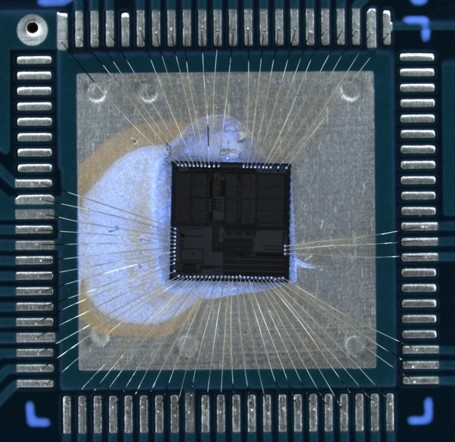
    INESC-ID is responsible for the sensor that monitors changes in the culture where lab-grown skin is placed. This skin, composed of chemicals and real cells, is immersed in a liquid containing electrical circuits. “The electronic component is what makes everything possible—without it, it would be impossible to monitor the activity of the artificial organ,” stresses Fábio Passos. The measurements are instantaneous, with the ability to perform thousands per millisecond. “One of its key advantages is its capacity for simultaneous readings, enabling hundreds of measurements at the same time,” Fábio adds. All this in a sensor that is a microchip measuring just 1mm x 1mm.

    INESC MN is also part of the project and according to Diogo Caetano, the project coordinator at the institution, “the unique synergy between nanoelectronics circuits and sensors within the three PT partners will allow us to achieve precise and continuous monitoring in OOC systems.”

    UNLOOC will validate its tools in five use cases across 10 European countries, benefiting academia, the pharmaceutical industry, and cosmetics production. The project aims to promote personalized medicine and advance disease research.

    All this technology is possible because the “artificial” organs generate a set of biomedical signals with given voltages and currents that can be interpreted by the electronic circuitry. However, several challenges must be overcomed in order to meet the necessary resolution to interpret such signals. “In our case”, Marcelino explains, ”the resolution required to read the sensors necessitated the development of a new analog-to-digital converter (ADC). Previously, our sigma-delta ADCs were primarily used for temperature measurements, where a 12-bit resolution was sufficient. For the UNLOOC project, we are developing a 14-bit sigma-delta ADC with significantly higher energy efficiency than previous designs.”

    The modular system, with a flexible number of analog channels monitored through a single serial digital interface (SPI), was specifically designed for this project. The SPI interface, typically used for reading and writing in a register bank, will use a prefix in the addresses to uniquely identify each ASIC. “There is great potential for healthcare applications, gaining traction with advancements in electronics,” notes Fábio Passos.

    The applications developed and validated by UNLOOC will drive drug development, enable cosmetics production without animal testing, foster personalized medicine, and provide new insights into disease. Given the growing organ-on-chip (OOC) market, these solutions have significant economic potential. On average, they could reduce the cost of bringing a new drug to market by €170 million to €700 million. This approach positions Europe at the forefront of this burgeoning field, contributing to ethical, economic, and technological advancements in healthcare and drug development.


    Text by Sara Sá, Science Writer | Communications and Outreach Office, INESC-ID
    © 2025 INESC-ID. Credit INESC-ID and the author, and link to the original source when sharing or adapting this article.

  • PRR Projects: Driving the Future of Energy – the Alliance that will change the landscape

    PRR Projects: Driving the Future of Energy – the Alliance that will change the landscape

    Undoubtedly, the biggest challenge facing humankind today is the energy transition. It is urgent that this ever-present topic moves from intentions to real action. This is precisely the aim of the PRR-funded project, Alliance for Energy Transition (ATE), with strong involvement from INESC-ID.

    This collaborative initiative was designed to enhance the competitiveness and resilience of Portugal’s energy sector, positioning the country as a leader in sustainable and digital energy solutions. “It emphasizes how prioritized this area is and the strategic positioning of the country, as it touches on many strategic areas both nationally and internationally—from mobility to consumer services, electrical grids, offshore energy, solar power, and hydrogen,” notes Hugo Morais, a researcher in Sustainable Power Systems and Professor at Técnico.

    Led by Efacec, with a consortium of 80 entities, 13 strategic partners, and a €274 million investment (€157M from PRR), ATE encompasses 16 work packages (WPs), each advancing key areas from smart grids to sustainable mobility and renewable energy integration. “It’s gigantic!” says Hugo.

    This project is so large in scale that a dedicated association was created—Associação Aliança para a Transição Energética—to manage its 60 companies, 14 R&D institutes, six universities, 11 associations, clusters, public entities, and two laboratories.
    “ATE arises from the need to strengthen the competitiveness and resilience of companies in Portugal’s energy sector, with the clear goal of leading decarbonization and driving an effective energy transition. Thus, it becomes essential to create innovative, sustainable products, processes, and services with export potential, covering the entire value chain,” summarizes Rui Lameiras, Head of Product Management at Efacec, in an interview with Jornal Sol.

    INESC-ID in four work packages

    There are six areas of intervention: decarbonization of the energy system, reindustrialization and circular resource use, digitalization of the energy sector, decentralization and democratization of energy, sustainable mobility and industry, and business acceleration in the new economy. INESC-ID plays an essential role in four of the WPs, contributing innovative solutions and technologies aimed at driving both the energy transition and digital transformation of the sector.

    “When we talk about the virtualization of functions, we’re referring to a completely new philosophy in substation development. A substation costs around ten million euros, and what we’re discussing is a complete shift in design philosophy—something that will have an impact five or ten years from now.” – Hugo Morais

    To improve protections within electric grids, INESC-ID is developing solutions for intermittent fault detection, renewable-based systems, and virtualized protection functions—a shift from traditional Intelligent Electronic Devices (IEDs) to virtualized systems that allow for centralized management and reduced installation costs. “When we talk about the virtualization of functions, we’re referring to a completely new philosophy in substation development. A substation costs around ten million euros, and what we’re discussing is a complete shift in design philosophy—something that will have an impact five or ten years from now,” explains Hugo Morais. “This is to show that we have tangible results ready for the near future—a new station, a new concept for mobility management. We’re already entering the commercialization phase of prototype one and two, with the goal of reaching the market within three years,” Hugo adds.

    The project is also working on a flexibility services considering different market architectures that hare available in different countries. Afterwards, new services are being designed and will be available in a near future. “Some things will be important now, while others will be relevant in five or ten years. Many outcomes will emerge from the project,” notes Hugo Morais.
    A significant part of this work results from the collaboration with the Smart Energy Lab. Here, INESC-ID is developing end-user solutions, including cost-effective strategies for electric mobility, battery control, and flexibility services that allow consumers to contribute to grid stability. One ongoing project is the Living Energy platform—a unique tool designed to engage both people and devices. With a user-friendly and visually appealing interface, Living Energy offers real-time data presentation, interactive capabilities, and options for gathering both quantitative and qualitative information.

    No crystal balls

    The platform can be easily adapted to specific needs, allowing for the collection, analysis, and reporting of key indicators, as well as stakeholder engagement through customization options. With more than 50 registered users across the country and a team of engineers and data scientists, it is possible to gather detailed information about new technologies before they are launched on the market—because, as we can read on the website, “we do not trust crystal balls.”

    INESC-ID is also managing the implementation of a platform for digitalizing the energy sector and a support laboratory, essential for accelerating product testing and validation to reach the necessary Technology Readiness Levels (TRL) for commercialization. “The goal is to create a network of laboratories from various entities with multiple capabilities, thus avoiding the need for companies to rely on international laboratories,” explains Rui Lameiras.
    In such a challenging and vast endeavour, continuous training is crucial. INESC-ID focuses on reskilling and upskilling consortium partners, aiming to bolster expertise and adaptability among the professionals involved in ATE projects.
    Other segments of the ATE include solutions for energy communities, with some focused on offshore wind, which is “quite active,” according to Hugo. Other areas include solar energy, the integration of photovoltaic systems in agriculture, and PV integration in ports to support maritime mobility. In total, there will be 45 new products—80% of these destined for the international market—a turnover estimated at €550 million, generating 700 new jobs and avoiding 3.4 million tons of CO₂ emissions.

    The goal is ambitious, as well as the challenge. The moment is now. As ATE continues to unfold, it will not only have a significant impact on Portugal’s energy landscape but also contribute to global efforts toward a more sustainable and interconnected world.


    Text by Sara Sá, Science Writer | Communications and Outreach Office, INESC-ID
    © 2025 INESC-ID. Credit INESC-ID and the author, and link to the original source when sharing or adapting this article.

    Images | © 2024 INESC-ID, ATE