Category: INESC-ID

  • Innovation, memories, and future challenges at INESC-ID’ 25th anniversary celebration
    Innovation, memories, and future challenges at INESC-ID’ 25th anniversary celebration

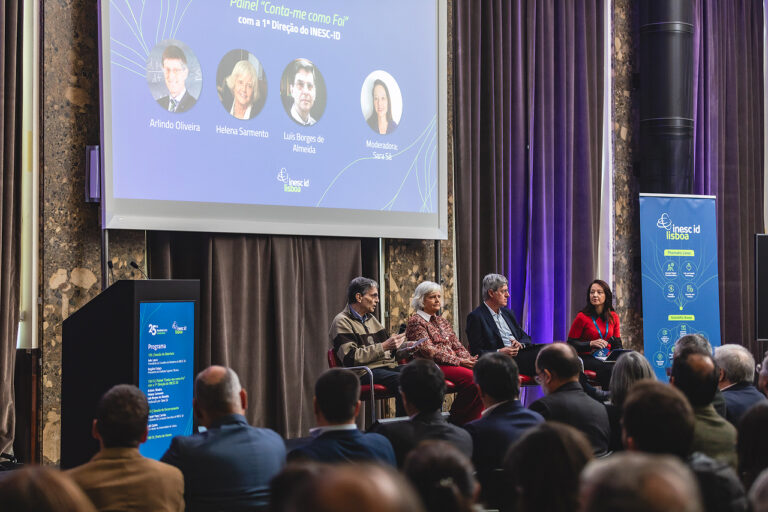
    There was chit-chat, an in-house photoshow, a trip down memory lane, and a big birthday cake. INESC-ID is officially a young adult, and January 28 was the day we chose to gather our community—past and present—along with friends from academia to celebrate 25 years of defining technology.
    At the Salão Nobre of Instituto Superior Técnico, we spent the afternoon reflecting on the work accomplished so far, as outlined by Inês Lynce, President of the Board of Directors, and looking ahead to the future, as addressed by Miguel Pupo Correia, President of the Executive Committee.
    In a conversation with INESC-ID’s first Directors back in the year 2000—Luís Borges de Almeida, Helena Sarmento, and Arlindo Oliveira—moderated by INESC-ID Science Writer Sara Sá, we heard about the main challenges of launching a research institute, the innovative management solutions implemented, and the memorable incidents that shaped this adventure.
    Rogério Colaço, President of Técnico, and Luís Castro, Vice-Rector of Universidade de Lisboa and a Professor at Técnico, honoured us with their presence on stage, sharing a few words in recognition of the research work conducted at INESC-ID.
    And, of course, no birthday celebration would be complete without cake and candles. The afternoon concluded with a chocolate cake decorated in INESC-ID colours and more than one hundred participants singing “Happy Birthday” to INESC-ID.

    Images | © 2025 INESC-ID

  • Focus on collaborators and scientific excellence will mark the mandate of the new Board of Directors

    Focus on collaborators and scientific excellence will mark the mandate of the new Board of Directors

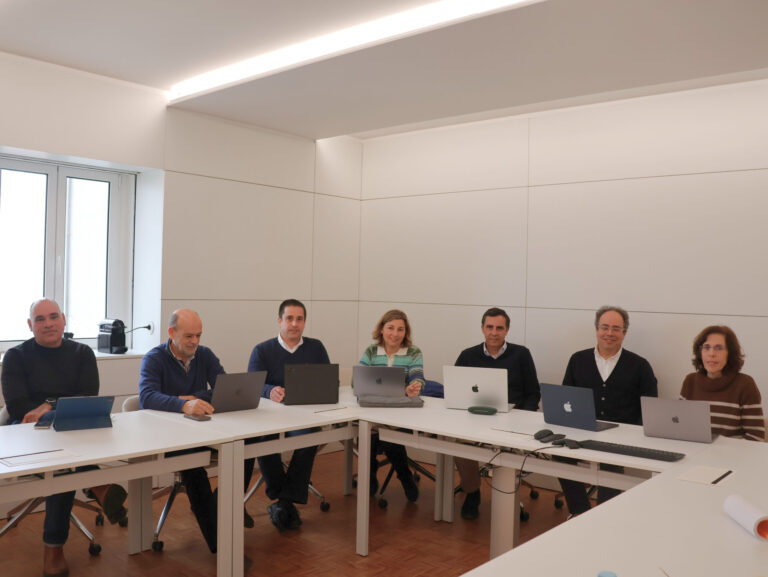
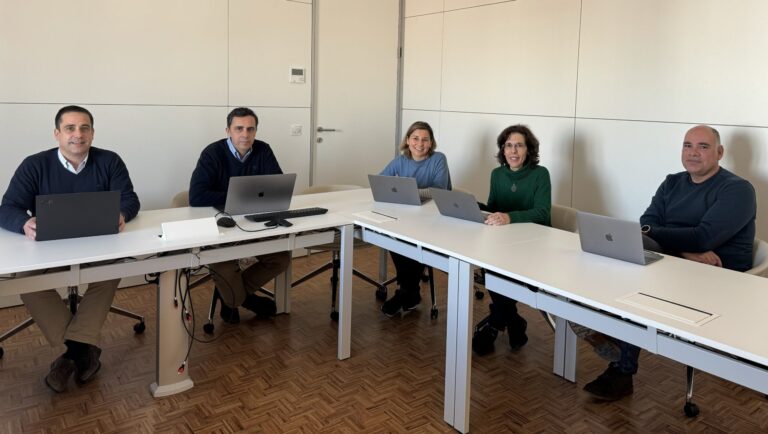
    With the inaugural meeting of the newly elected Board of Directors of INESC-ID starts a new chapter in the institute’s history. This meeting, held January 20, set the stage for the vision and strategic goals that will guide INESC-ID’s path in the coming years.

    Inês Lynce, President of the Board of Directors, highlighted the mission of the new leadership team. “The mission of the Board of Directors of INESC-ID is to reinforce its strategic role as a leader in cutting-edge research that drives innovation and addresses global challenges. Central to this vision is the recognition of our researchers and collaborators as the institute’s greatest asset,” she stated. The board aims to prioritize excellence in scientific research, foster interdisciplinary collaboration, and establish strong partnerships with industry and academia, both on a national and international scale.

    Miguel Pupo Correia, President of the Executive Committee, emphasized the significance of this leadership transition. “This is the first board elected under the new statutes of INESC-ID, and one of its primary objectives is to implement the newly established management structure, which includes an executive committee and non-executive directors. This structure will facilitate strategic reflection on INESC-ID’s goals, particularly as the institution celebrates its 25th anniversary and reaches a stage of maturity,” Miguel notes. The board remains steadfast in its commitment to scientific excellence, internationalization, and societal impact, with a strong focus on the professional growth and development of its researchers and collaborators.

    The meeting was also an opportunity for the Board to address key issues slated for 2025. Among these were the evaluation of INESC-ID’s status as an associated laboratory, the development of the strategic plan for 2026-2030, and the implementation of enhanced budget control mechanisms.

    The remaining members of the Board of Directors are Luís Oliveira e Silva, Fernando Moreira, Helena Galhardas, Nuno Roma and João Paulo Carvalho.


    Images | © 2025 INESC-ID


  • Advancing Compiler Technology: Nuno Lopes receives Google Research Scholar Award with Alive2 Project

    Advancing Compiler Technology: Nuno Lopes receives Google Research Scholar Award with Alive2 Project

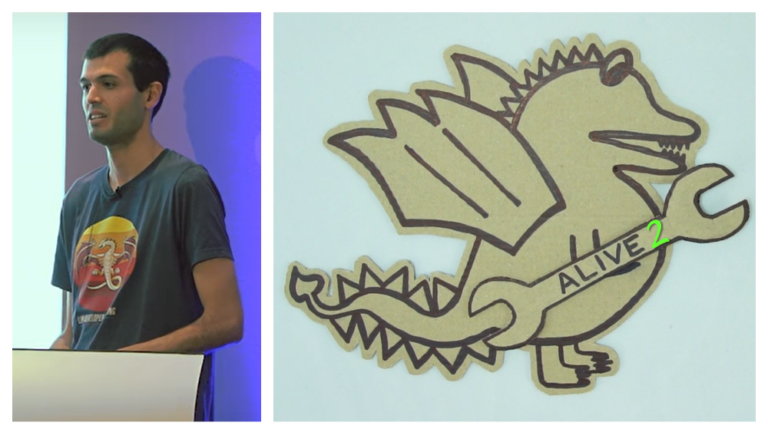
    Nuno Lopes*, researcher at INESC-ID and professor at the Department of Informatics at Técnico, received the prestigious and highly competitive Google Research Scholar Award, which includes a grant of $60,000.

    The award was given for his research in the area of automatic verification of compilers, which Nuno Lopes has developed in the last decade. In the past, this work had already been recognised with two distinctions for best papers at the Programming Language Design and Implementation conference (PLDI), and a technology transfer award. The prize money will be used to hire students to work on Alive2 for LLVM compiler verification, a tool developed by INESC-ID and used by several companies, including Google.

    The prize is awarded annually by Google and aims on funding world-class research conducted by early-career professors who are pursuing research in fields relevant to Google. This year, only two were granted in the area of Software Engineering and Programming Languages worldwide, with INESC-ID being one of the recipients.

    *Nuno Lopes is a researcher within the High Performance Computing Architectures and Systems Scientific Area at INESC-ID and Associate Professor at the Department of Computer Science and Engineering at Instituto Superior Técnico.

  • A year in review: 2023 INESC-ID Annual Report now available!

    A year in review: 2023 INESC-ID Annual Report now available!

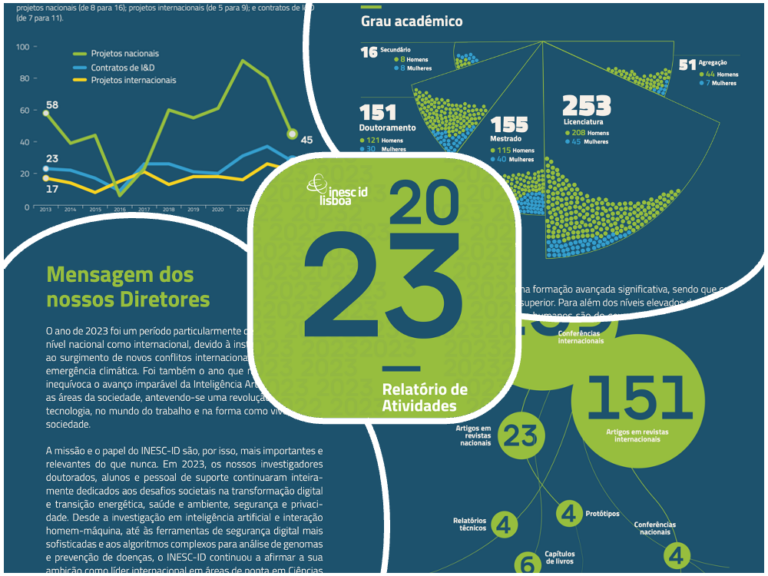
    The 2023 INESC-ID Annual Report has been released! The report, published in Portuguese, offers a comprehensive overview of the INESC-ID community, including the latest facts and figures, project updates, and achievements from the past year. It also presents highlights of our research, development, and innovation throughout 2023, alongside detailed information about our organisational structure, mission, and strategic objectives.

    Download the 2023 Annual Report here, and get to know our institute better with this retrospective.

  • OLISSIPO organises Workshop on How to Design a Graphical Abstract

    OLISSIPO organises Workshop on How to Design a Graphical Abstract

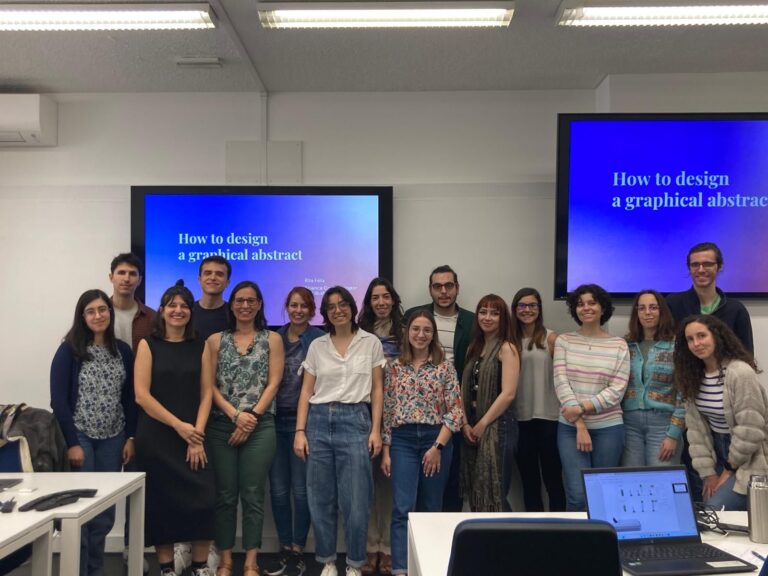
    Last Friday, we had the pleasure of hosting a workshop on “How to design a graphical abstract,” organised by OLISSIPO. The workshop was specifically tailored for Early-Stage Researchers and had Rita Félix, science communicator, illustrator, and designer from the CNC Center for Neuroscience and Cell Biology, as speaker and instructor.

    Throughout the day, participants delved into the specifics of graphical abstracts, gaining valuable insights into their structure and learning practical tips for enhancing clarity and appeal in their designs, without the need for software like Adobe Illustrator. They were encouraged to bring their graphical abstracts to the workshop, to share with the group, receive feedback, and collaborate on refining their designs. By the end of the day, each attendee left with an improved version of their graphical abstract, following several presentations and discussions.

    The aim was to equip participants with the necessary design tools and insights to create compelling and clear visual representations of their research, highlighting INESC-ID’s dedication to fostering a culture of effective science communication and equipping its researchers with the tools and knowledge necessary to share their work with broader audiences.

  • AI in Science: how can the European Commission promote a responsible uptake? Arlindo Oliveira participated as an expert in a report, via the Scientific Advice Mechanism

    AI in Science: how can the European Commission promote a responsible uptake? Arlindo Oliveira participated as an expert in a report, via the Scientific Advice Mechanism

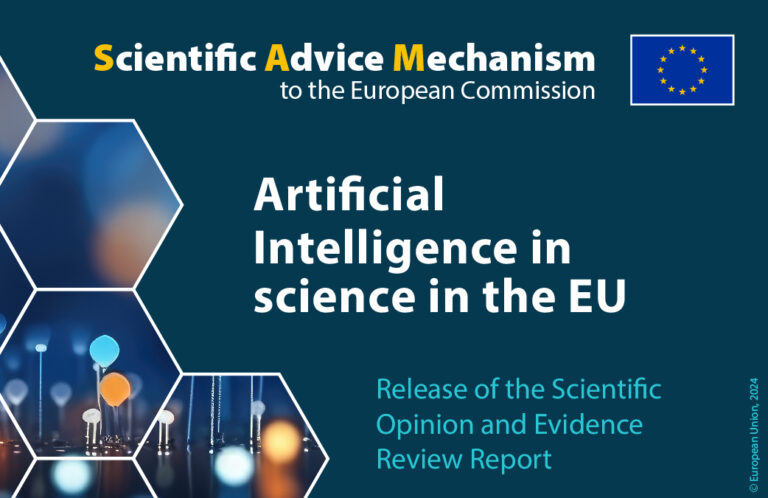
    Published on April 15, the report “Successful and timely uptake of artificial intelligence in science in the EU” was produced by a group of renowned scientists, including INESC-ID researcher Arlindo Oliveira, from the SA-IDSS research area. The experts have been asked to provide recommendations via the Scientific Advice Mechanism, concerning how the European Commission can accelerate a responsible uptake of AI in Science. Some take home messages are: The EU should prioritize AI-powered research, particularly in area where large amounts of data are available, but hard to interpret, such as personalized health, social cohesion, and the green and digital transitions; It is important to support new research into the greenest AI algorithms and infrastructure, to help manage the environmental impact of the technology; data should be high quality, responsibly collected and well curated, with fair access for European researchers and innovators.

    While science may serve as basis for developing AI-based applications, science is also to be considered as a specific field in which AI can be applied: some of the most complex scientific problems can be tackled with AI technologies (including, but not limited to, data-intensive problems).

    For a more detailed information in the scientific advice, you may check the complete report.

  • Leonel Sousa represents INESC-ID at 2nd European Memory Systems Forum

    Leonel Sousa represents INESC-ID at 2nd European Memory Systems Forum

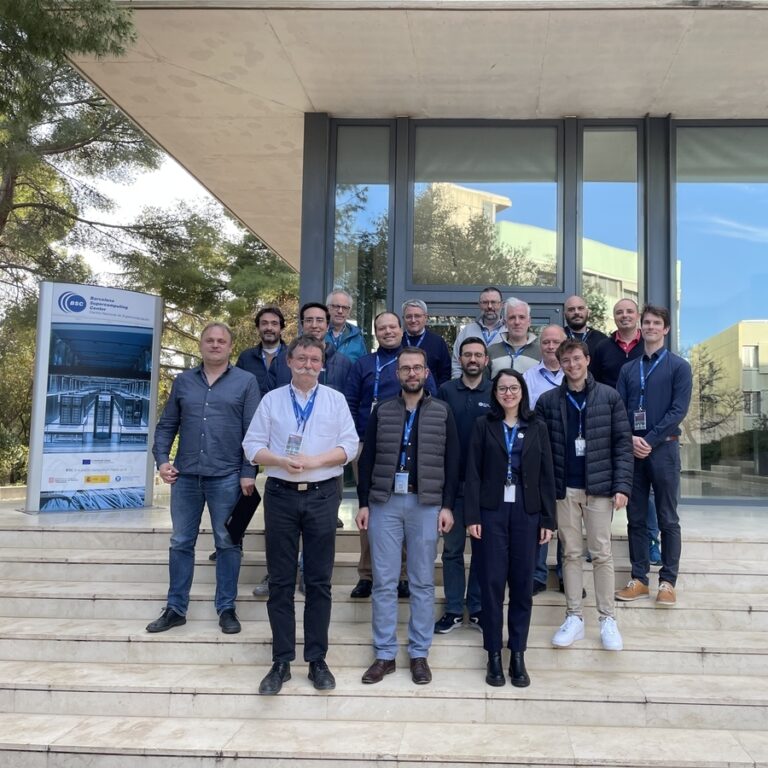
    Leonel Sousa, INESC-ID researcher in the field of High-Performance Computing Architectures and Systems and a full professor at Técnico, represented INESC-ID at the second European Memory Systems Forum, held from February 29 to March 1, 2024.

    The event, hosted at The Barcelona Supercomputing Center (BSC-CNS) and co-sponsored by Micron, brought together industry leaders and research institutes to address challenges in high-performance memory systems, vital for the advancement and scalability of high-performance computing systems, and play a pivotal role in the future of EU research and industry.

    Participating organizations included INESC-ID, BSC-CNS, Micron, ZeroPoint, the French Alternative Energies and Atomic Energy Commission (CEA), the Foundation for Research and Technology – Hellas (FORTH), Instituto Superior Técnico (IST), and the Technical University of Munich (TUM).

    The forum was part of the DEEP-SEA project, a European-funded initiative with a €15 million budget, launched in April 2021.

    Know more here.

    (Photo: https://www.bsc.es/)

  • In the Media: INESC-ID researchers Luisa Coheur and Helena Moniz discuss AI biases and stereotypes in Público newspaper

    In the Media: INESC-ID researchers Luisa Coheur and Helena Moniz discuss AI biases and stereotypes in Público newspaper

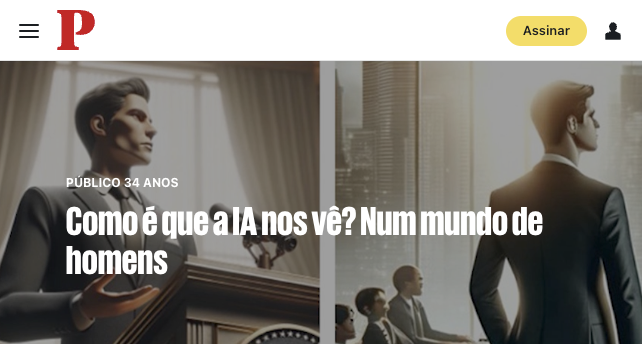
    In an article titled Como é que a IA nos vê? Num mundo de homens (How does AI see us? In a world of men) Luísa Coheur and Helena Moniz, INESC-ID researchers within the Human Language Technologies (HLT) research area, joined a conversation with Público Newspaper about the biases deeply embedded within machine learning algorithms. The researchers help shed light on how artificial intelligence models often reflect existing stereotypes but also perpetuate and amplify them.

    Read the full article (in PT) here.

    *Luisa Coheur is an INESC-ID researcher, and Associate Professor in the Department of Computer Science and Engineering, Técnico, UL, where she works on Natural Language Processing, specializing in Dialogue Systems, Question/Answering and Machine Translation.

    *Helena Moniz is an INESC-ID researcher, and Assistant Professor at the School of Arts and Humanities at the University of Lisbon. She teaches Computational Linguistics, Computer Assisted Translation, and Machine Translation Systems and Post-editing.

  • Strengthening European Project Management Expertise: INESC-ID’s OLISSIPO Training Initiatives

    Strengthening European Project Management Expertise: INESC-ID’s OLISSIPO Training Initiatives

    From February 14 to 16, INESC-ID hosted a series of three impactful training initiatives on research management of European Projects, as part of the OLISSIPO project framework, a Twinning initiative involving collaboration between INESC-ID, Inria, ETH, and EMBL. These initiatives, building on the success of previous editions held in Lisbon in 2022 and 2023, were designed to enhance research management and administration skills at the hosting institution.

    Horizon Europe Workshop: Navigating the Pre-Award Phase

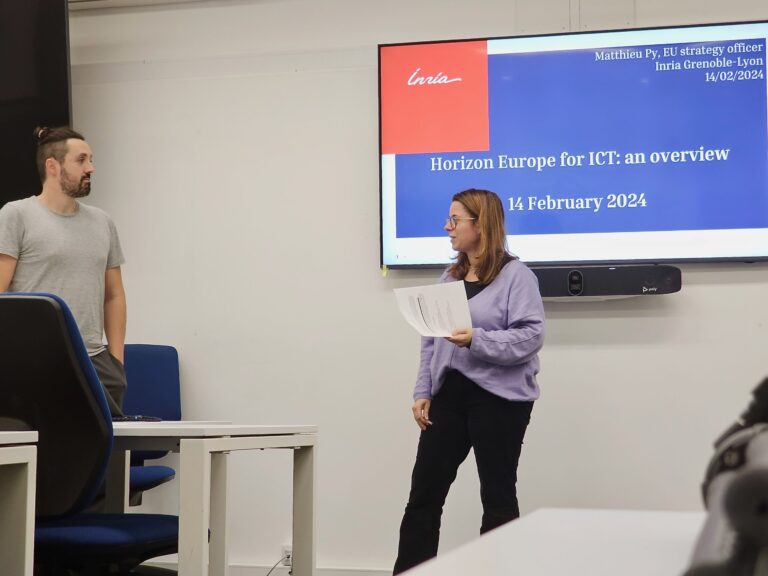
    The first day featured the workshop “Horizon Europe for ICT: an Overview,” providing practical insights and equipping researchers and staff for the pre-award phase of Horizon Europe Proposals. Facilitated by Matthieu Py, the European Strategy Officer at Inria (France), the workshop covered essential topics, including Gender & Diversity, Ethics & Data, and Responsible Research and Innovation & Open Science.

    Research and Administration Management (RMA) Seminar

    Dedicated to deepening knowledge in various methodologies, the second day hosted a seminar on Research and Administration Management (RMA). The session covered pre-award (ideation and open calls) and post-award (Project valorization and management) aspects. Alongside Matthieu Py, the seminar featured presentations presentations and guided discussions by Ana Espada (CQE, IST-ID), Mariana Santa-Marta (CERENA/CEGIST, IST-ID), and Carla Patrocínio and Patrícia Lima (Tecnico’s Technology Transfer Office), providing valuable insights into daily RMA activities.

    Bilateral Meetings and Future Collaborations

    The final day was dedicated to bilateral meetings between INESC-ID’s thematic lines representatives and Inria, aiming to present research topics and identify common areas for future collaboration. Participants included Susana Vinga, Marie-France Sagot, Ana Teresa Freitas (Life and Health Technology), Hugo Morais (Energy Transition), José Borbinha (Societal Digital Transformation), Miguel Correia (Security & Privacy), and two members of the OLISSIPO Scientific Advisory Board (SAB) Jonas S. Almeida and Dan Gusfield.

    The event saw active participation from representatives of INESC-ID, INESC-MN, INOV INESC, Técnico, IST-ID, IT, IDMEC, and LIP, with diverse expertise in science management, project management, and technology transfer. The interest and involvement of representatives from different INESC research centers and institutes, facilitated the sharing of best practices and the development of common processes to streamline research proposal preparation.

    These training initiatives were organized collaboratively with the OLISSIPO PROJECT Team, including Susana Vinga (INESC-ID), Niko Beerenwinkel (ETH Zürich), Marie-France Sagot (Inria), Wolfgang Huber (EMBL), Matthieu Py (European Strategy Officer at Inria) and Sílvia Castro (Head of Innovation Management Office at INESC-ID). Additional collaboration for the RMA seminar was provided by Marta Candeias (Head of Research & Innovation Grants Support Unit at IST-ID).

    OLISSIPO Project Page 

  • INESC-ID Board of Directors’ term renewed until 2025

    INESC-ID Board of Directors’ term renewed until 2025

    The INESC ID Board of Directors has renewed its current term, originally set for 2022-2023, until the end of 2024.

    The Board, led by Inês Lynce as President, alongside João Paulo Carvalho, Miguel Pupo Correia, Nuno Roma, and Helena Galhardas, who now assumes the role of Susana Vinga (2022-23), will continue serving in their respective positions until the end of 2024.

    The coordination of the Scientific Council will be maintained, with Luís Rodrigues continuing in his role, supported by Jorge Fernandes and Rui Prada. 

    The election for the Board of Directors for the subsequent biennium, 2025-2026, will take place in 2024.