Category: INESC-ID

  • INESC-ID awarded close to €1 million in FCT research funding

    INESC-ID awarded close to €1 million in FCT research funding

    INESC-ID has been awarded shy of one million euros in FCT funding from the latest call for research projects, in a spread of Research, Development and Innovation corresponding to over a quarter of the successfully-funded projects across its two relevant evaluation panels.

    On 27 July FCT released the results of the 2022 call for R&D projects across all scientific domains. Of the 630 projects selected to share a funding pot of 74,8 million euros, eight involve INESC-ID researchers, with: six projects coordinated by INESC-ID principal investigators, one project co-coordinated by an INESC-ID researcher and another in which INESC-ID researchers will collaborate.

    Of the 57 applications deemed eligible for evaluation across the two panels — “Computer and Information Sciences and Informatics” (CISI) and “Electrical and Electronic Engineering” (EEE) — covering the six funded projects coordinated by INESC-ID PIs, only 22 were successful. This means that INESC-ID alone swooped-up 27% of the total number of projects awarded funding across the CISI and EEE panels.

    Advancing the field of Information and Communication Technologies (ICT), these eight projects cover two FCT funding modalities (“Scientific research and technological development projects” and “Exploratory projects”), a wide range of topics and six of INESC-ID’s eleven research areas: Distributed, Parallel and Secure Systems (DPSS), Automated Reasoning and Software Reliability (ARSR), Artificial Intelligence for People and Society (AIPS), High Performance Computing Architectures and Systems (HPCAS), Graphics and Interaction (GI), Information and Decision Support Systems (IDSS).

  • Ana Sara Costa receives Doctoral Dissertation Award
    Ana Sara Costa receives Doctoral Dissertation Award

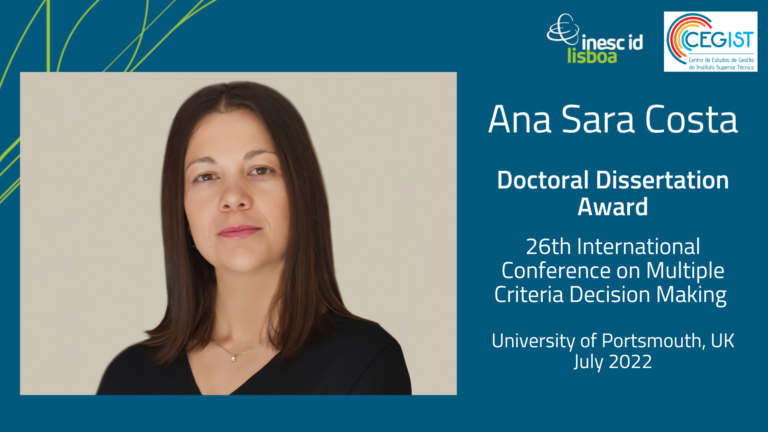
    Ana Sara Costa, an early career researcher who finished her PhD in Engineering and Management at Instituto Superior Técnico in 2020 (supervised by Professor José Figueira from CEG-IST and Professor José Borbinha from INESC-ID) has recently received the Doctoral Dissertation award at the 26th International Conference on Multiple Criteria Decision Making (University of Portsmouth, UK 26 June – 01 July 2022).

    Currently a researcher at CEG-IST and an Invited Assistant Professor at Instituto Superior Técnico, Costa wrote her thesis — A multiple criteria integrated approach for nominal classification problems: Methods and applications — with a very clear purpose: according to Costa, “to developed multicriteria decision support methods for classification problems with nominal categories [which can group objects/concepts together based on a given characteristic or property] without any order of preference between them.” These were implemented in DecSpace, an online platform where Costa provides several methods and demonstrated their applicability through three studies with different objectives and contexts: housing assignement for refugees (contributing to the definition of an urban strategy and the decision aiding process as it relates to the accommodation system) and the cultural adaptive reuse of abandoned buildings, both in the city of Turin, and a recruitment process in the Special Forces of the Portuguese Army.

    “The methods we developed make it possible to model the preferences and judgments of decision makers when comparing two decision objects in terms of similarity and dissimilarity,” Costa explains, “and it is possible to consider the effects of interaction between two criteria and the structuring of the criteria in a hierarchy. The methods have potential for application across several areas in decision-making situations that involve classification into nominal categories, considering different criteria, which can bring value to decisions in organizations.”

    What does this award mean for Ana Sara Costa? “[It] represents a recognition of the merit of my doctoral thesis, which I had the privilege of developing under the guidance of Professor José Rui Figueira and Professor José Borbinha, as well as the relevance of their contributions to the area of ​​MCDM [Multiple Criteria Decision Aiding].”

    And what about the future? “The plan is to continue performing research and teaching in this area,” Costa told us. As a true academic, she concluded “as I consider my contribution to the construction of students’ knowledge and their motivation for research to be very gratifying.”

  • Tell me what your proteome is and I’ll tell you what you are: the proteomic maps of 949 human cancer cell lines

    Tell me what your proteome is and I’ll tell you what you are: the proteomic maps of 949 human cancer cell lines

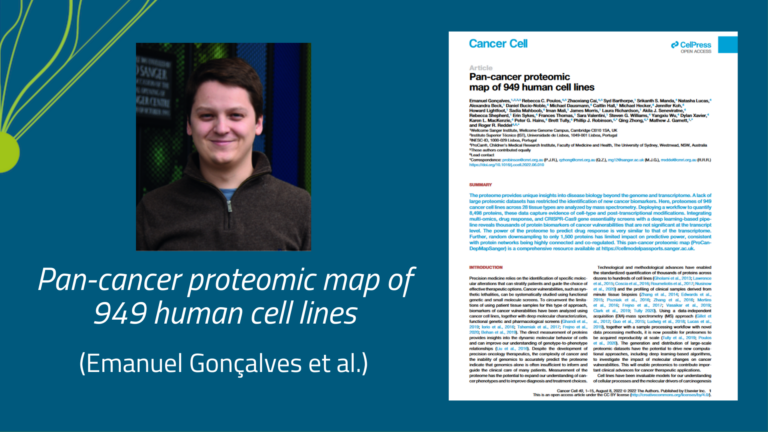
    Emanuel Gonçalves INESC-ID Automated Reasoning and Software Reliability (ARSR) computational biology researcher has published a groundbreaking study in the journal Cancer Cell (published online 14 July 2022).

    In the article Pan-cancer proteomic map of 949 human cell lines, the last study resulting from Gonçalves’ postdoctoral work at the Wellcome Sanger Institute, Gonçalves together with co-first authors Rebecca C. Poulos and Zhaoxiang Cai and an immense and interdisciplinary group of colleagues addressed one substantial gap in cancer research: until now a comprehensive characterization of the proteomes of cancer cells was lacking, an absence that substantially limited the identification of novel cancer biomarkers (the molecular signature that each tumour produces).

    To tackle this challenge, the team profiled the proteomes — the complete set of proteins expressed by a genome of 949 cancer cell lines from 28 different tissues using mass spectrometry (a technique used to identify individual molecules in a complex solution based on their unique mass-to-charge signature). Then, analysing some 8,498 proteins within an integrated strategy bringing together multi-omics with drug response and the CRISPR-Cas9 gene editing technology (to manipulate the expression of genes one by one and look at how essential each of the respectively expressed proteins was), Gonçalves and his colleagues revealed thousands of protein biomarkers of cancer vulnerabilities (those molecular changes that promote tumour development and progression, such as those in genes responsible for cell proliferation).

    “This study significantly expands our molecular knowledge of cancer cells — more than doubling the number of cancer cell lines with proteomes characterized so far — and of protein regulation in cancer,” Gonçalves shared with us. “Complementing genomics, this dataset provides unique information only captured at the protein level, which we would be missing otherwise, with several important applications, from more accurate therapeutic biomarkers to unique insights into protein associations.”

    A study of this dimension, technical complexity and impact inevitably results in game-changing and novel ways of looking at cancer diagnosis, study and potential treatments. As Gonçalves reminded us, “As part of the Cancer DepMap effort, this enables a proteomic lookup map to study cancer, from identifying potential therapeutic biomarkers to studying fundamental processes of protein regulation. This will hopefully become an important resource for the broad community.” Importantly, this pan-cancer proteomic map (ProCan-DepMapSanger), an invaluable resource, is already available online.

    And how is Gonçalves’ future research progressing from this major paper? “Looking forward, I’m interested in continuing the work of harnessing these large scale datasets and their integration. There are biological mechanisms that can only be studied and understood when taking a holistic approach integrating multiple molecular datasets, like the one we present here.”

    Interdisciplinarity is key in tackling the biggest challenges in contemporary biomedical science. The joining together of computational and molecular biology approaches represents one such unique hope that of fully tackling the emperor of all maladies.

  • INESC-ID researcher Francisco C. Santos elected vice-president of FCT

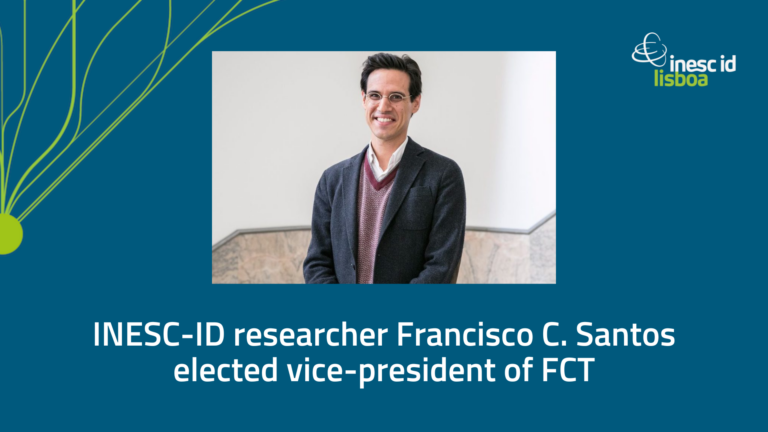
    INESC-ID researcher Francisco C. Santos elected vice-president of FCT

    Francisco C. Santos — INESC-ID Artificial Intelligence for People and Society (AIPS) researcher and Full Professor at the Department of Computer Science and Engineering of Instituto Superior Técnico — has been elected as the new vice-president of FCT, the Portuguese Foundation for Science and Technology (Fundação para a Ciência e Tecnologia). Santos joins Madalena Alves — FCT’s new president and Full Professor of Environmental Biotechnology and Bioengineering at Universidade do Minho — in the governing board of FCT.

    Before taking on the vice-presidency of FCT, Santos has led an accomplished teaching and research career focused on applying and developing computational tools to understand collective dynamics and decision-making in social and life sciences. Having received his PhD in Computer Science from the Université Libre de Bruxelles (ULB), Santos was a researcher at the Machine Learning Group of ULB and subsequently Investigador Auxiliar at the Centre for Artificial Intelligence of NOVA. In 2016 Santos was awarded the CGD / University of Lisbon prize in Computer Science and, the following year, the 2017 Young Scientist Award for Socio-Econophysics of the German Physical Society.

    Santos will be sworn in as vice-president of FCT in a ceremony attended by Elvira Fortunato, the Minister of Science, Technology and Higher Education, this afternoon.


    Photo credit: IST UL.

  • Rui Prada completes his Habilitation in Computer Science and Engineering at Instituto Superior Técnico

    Rui Prada completes his Habilitation in Computer Science and Engineering at Instituto Superior Técnico

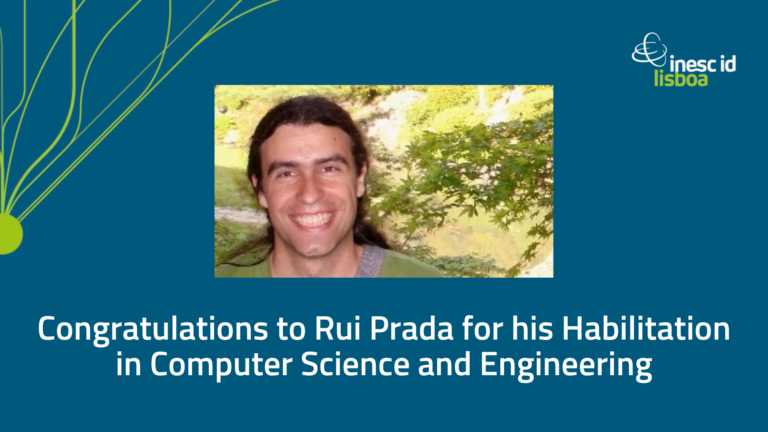
    Rui Filipe Fernandes Prada INESC-ID researcher within the Artificial Intelligence for People and Society Research Area and Associate Professor at the Department of Computer Science and Engineering of Instituto Superior Técnico has today successfully completed his Habilitation (Agregação) in Computer Science and Engineering.

    Across two sessions, on 28th and 29th June 2022, Prada presented the course unit report Specialisation in Games” and the seminar “Human–Agent Interaction – Building Socially Intelligent Agents in Games.

    Our warmest congratulations to Rui!

  • INESC-ID researchers honoured with Universidade de Lisboa / Caixa Geral de Depósitos Scientific Awards

    INESC-ID researchers honoured with Universidade de Lisboa / Caixa Geral de Depósitos Scientific Awards

    Three INESC-ID researchers have been honoured at this year’s Universidade de Lisboa / Caixa Geral de Depósitos Scientific Awards (Prémios Científicos Universidade de Lisboa / Caixa Geral de Depósitos).

    The awardees lists recognised Professor Leonel Augusto Pires Seabra de Sousa (Full Professor at the Department of Electrical and Computer Engineering at IST), who received this year’s award  in the Electrical Engineering and Aerospace Engineering (Avionics) category, Professor Rui Manuel Gameiro de Castro (Associate Professor at the Department of Electrical and Computer Engineering at IST), who received this year’s award in the Energy and Environmental Engineering category, as well as Professor Pedro Tiago Gonçalves Monteiro (Associate Professor at the Department of Computer Science and Engineering), who received an honourable mention in the Computer Science and Computer Engineering area.

    The UL/CGD Scientific Awards and Honourable Mentions are bestowed across twenty-six areas, recognising scientific research activity while encouraging the practice of publication in international journals of recognized quality.

    On having been recognised with the Electrical Engineering and Aerospace Engineering (Avionics) award, Professor Sousa accepted it as “a recognition of the quality of the research work carried out, which is always good. But, fundamentally, I hope that it will be an incentive for the Electrical and Computer Engineering researchers of the younger generations to do even better, namely those who are at INESC-ID.” Professor Castro added that “receiving this award [in Energy and Environmental Engineering] means recognition of the work of my research team in Renewable Energies and Energy Transition, always with the aim of promoting the name of INESC-ID within the international scientific community.”

    The award ceremony will take place on 28 June 2022, 6:30pm, at Salão Nobre of Reitoria da Universidade de Lisboa.

  • INESC Lisboa — Identifying synergies

    INESC Lisboa — Identifying synergies

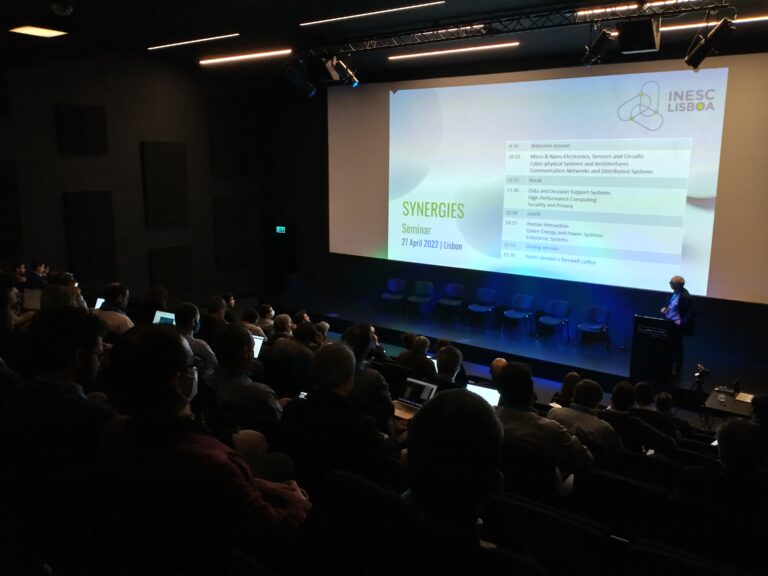
    INESC Lisboa — Synergies, a seminar several months in the making, took place in Lisbon today.

    In a day packed full of cross-disciplinary talks and poster sessions on Computer Science and Electrical and Computer Engineering, Microsystems and Nanotechnology and Innovation in Information and Communication Technologies, INESC Lisboa — Synergies brought together one-hundred researchers from INESC Lisboa and its three Lisbon-based INESC institutions: INESC-ID, INESC MN and INOV.

    INESC Lisboa — Synergies aimed to explore internal synergies and explore R&D and innovation impact, strengthening the external visibility of all three technology powerhouses based on their many common strengths.

  • Manuel Lopes completes his “Agregação” in Computer Science and Engineering at Instituto Superior Técnico

    Manuel Lopes completes his “Agregação” in Computer Science and Engineering at Instituto Superior Técnico

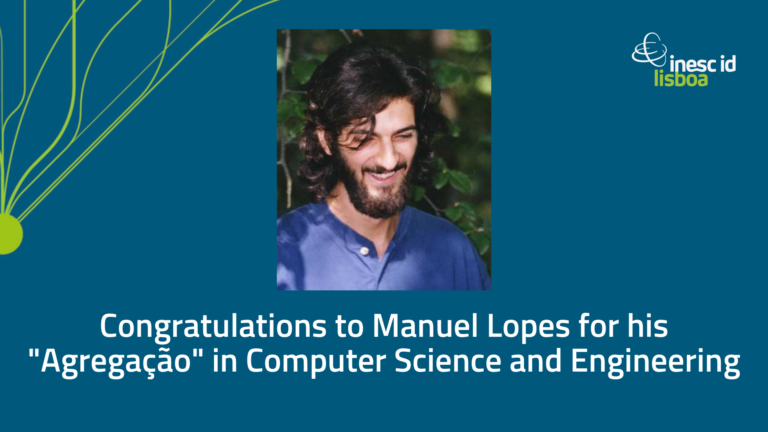
    Manuel Lopes INESC-ID researcher within the Artificial Intelligence for People and Society Research Area and Associate Professor at the Department for Computer Science and Engineering of Instituto Superior Técnico has today successfully completed his Agregação in Computer Science and Engineering.

    Across two sessions, on 26 and 27 April 2022, Lopes presented the course unit report Artificial Intelligence Education in B.Sc in Computer Science and Engineering” and the seminar “Autonomous Learning in Intelligent Machines”.

    Our warmest congratulations to Manuel!

    (Photo credit: web.tecnico.ulisboa.pt)

  • “Artes e Tecnologia” — Andreas Wichert’s new Art&Technology exhibition at IST

    “Artes e Tecnologia” — Andreas Wichert’s new Art&Technology exhibition at IST

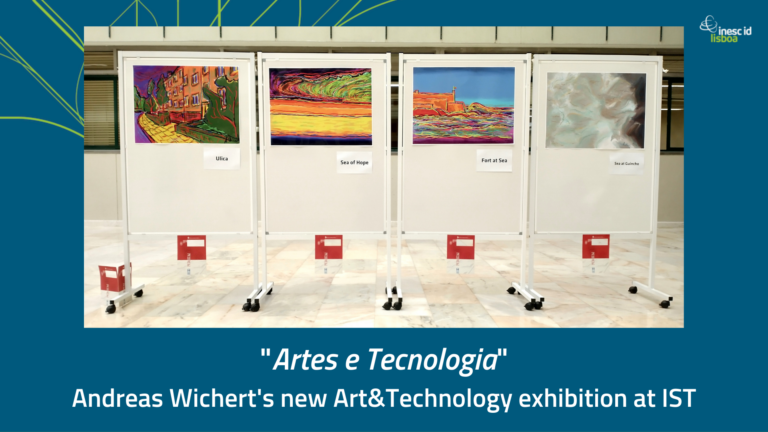
    Today, 26 April 2022, a new Art&Technology exhibition is inaugurated. Consisting in a collection of digital paintings authored by Andreas Wichert, INESC-ID researcher within the Artificial Intelligence for People and Society Research Area and Professor Auxiliar at Instituto Superior Técnico, “Artes e Tecnologia” (“Arts and Technology”) is open at IST’s Civil Engineering building, in the Alameda campus, until 06 May 2022.

    We asked Andreas what had motivated him to create this collection of digital paintings. “Before moving to Portugal I painted in oil, however due to restrictions I could not continue to do it,” Andreas commented. “With the arrival of iPad and Apple Pencil and the corresponding software Procreate I could continue to paint,” adding that “Technology allows you to create art that without it it was not possible.” More of Andreas’ artwork can be viewed online and found on Instagram @andrzejwichert.

    This exhibition will also stage a dynamic experiment in which visitors will have the chance to interact with Vizzy, a social robot, so as to improve Vizzy’s skills (work carried out by João Avelino, researcher at the Institute for Systems and Robotics, ISR).

    Andreas Wichert is also the author of three books on machine learning and artificial intelligence: Machine Learning — A Journey to Deep Learning (2021), Principles of Quantum Artificial Intelligence (2020) and Intelligent Big Multimedia Databases (2015).

  • INESC-ID researchers recognized in Research.com rankings

    INESC-ID researchers recognized in Research.com rankings

    Several INESC-ID researchers have recently been recognized across multiple thematic Research.Com rankings, both nationally and internationally.

    In the fields of Computer Science and Electrical and Computer Engineering we find a number of INESC-ID researchers: Ana Paiva, Joaquim Jorge, Miguel Pupo Correia, Luís Rodrigues, Rodrigo Rodrigues, Arlindo Oliveira, Isabel Trancoso, Hugo Morais, LuísFerreira and Leonel Sousa. Once again, INESC-ID researchers are credited as major figures in their respective scientific and technological fields.

    Research.com is a portal created by scientists for scientists to help researchers keep track of relevant conferences and research, as well as providing rankings of individuals and institutions worldwide.