Category: News

  • In the Media: Inês Lynce reflects on education in the age of AI on the “AI Talks, Humans Answer” podcast

    In the Media: Inês Lynce reflects on education in the age of AI on the “AI Talks, Humans Answer” podcast

    Not prohibiting students matters — banning adults rarely works. That was one of the key ideas shared by Inês Lynce on the use of artificial intelligence and large language models in higher education, in the latest episode of Xpandit’s AI Talks, Humans Answer.

    At a time when universities are debating regulations and even prohibitions on the use of AI, Inês Lynce, INESC-ID researcher in artificial intelligence, President of the Board of Directors, and Professor at Instituto Superior Técnico, joins host Sérgio Viana (Xpandit) to reflect on how learning and teaching are changing in a world of increasingly ubiquitous AI models.

    The researcher reflects on how students can use these tools critically, and the evolving roles of teachers, curricula and student assessment. She also raises broader concerns about the social impact of AI, stressing the importance of human mentorship, curiosity and critical questioning as foundations of education, regardless of technology.

    Watch the full episode: here

  • Big steps towards a smaller footprint: INESC-ID contributes to innovative carbon-management platform

    Big steps towards a smaller footprint: INESC-ID contributes to innovative carbon-management platform

    Environmental requirements and regulations have been increasing in an effort to address the climate crisis, one of society’s main concerns in recent years. These goals, however urgent, can be challenging to meet.

    In a partnership with INESC-ID, Nova SBE and the Municipality of Fundão, tech company Celfocus has launched a pilot project to support companies in improving their sustainability strategies. It consists of a single digital tool that enables companies to measure, reduce and compensate their carbon dioxide (CO2) emissions, with full security and transparency, thanks to the use of blockchain technology.

    In addition to measuring their carbon footprint, the platform allows companies to manage how it will be reduced, based on their own sustainability strategies, a process fully accessible within the platform. Sustainable project promoters can submit initiatives eligible for carbon credits, which in turn can be used in an integrated Marketplace to be sold, purchased or used to compensate emissions.

    Tests have been conducted in the municipality of Fundão, with local entities like Alambique Hotel Resort & Spa, the Agrupamento de Escolas do Fundão, the Santa Casa da Misericórdia and the Departamento de Inovação da Autarquia. With the pilot phase completed, and the captured interest of large international companies, Celfocus is now preparing for the commercial distribution of the platform.

    The initiative is part of the Blockchain.PT Mobilising Agenda, funded by Portugal’s Recovery and Resilience Plan (PRR) and integrated with international frameworks like the Climate Action Data Trust (CADT), ensuring alignment with the global standards of the climate report.

    © 2025 INESC-ID

    Image: Matthias Heyde | Unsplash

  • In the Media: André Duarte’s research revealing AI-memorised copyrighted content featured in The Register

    In the Media: André Duarte’s research revealing AI-memorised copyrighted content featured in The Register

    The source of Large Language Models’ (LLM) knowledge is often unclear. Besides the fact that most commercial AI vendors do not disclose their full training datasets, current AI models are usually reluctant to reveal memorised content. Research by INESC-ID and Carnegie Mellon University (CMU) Portugal PhD student André Duarte’s has recently been featured in an article in The Register, discussing this issue.

    The focus is a paper co-authored by André, “RECAP: Reproducing Copyrighted Data from LLMs Training with an Agentic Pipeline”, which describes a software agent, RECAP, that is more effective in coaxing memorised content from LLMs, helping to determine what texts were used to train them and if they are copyrighted.

    Throughout the article, André explains what makes RECAP different from other software with the same purpose, and states that although one focus of this research concerns copyrighted content, the broader goal is to understand how memorisation happens in LLMs.

    This development has the potential to address regulatory concerns and help clarify copyright infringement claims from AI model training. The authors of the paper, which also include INESC-ID researcher, Arlindo Oliveira, argue that concerns regarding whether AI is being trained on proprietary data highlight the need for tools that can find what AI models have memorised.

    Read the full article here.

  • INESC-ID Awards 2025: celebrating research excellence and the people who make it

    INESC-ID Awards 2025: celebrating research excellence and the people who make it

    Closing the year, the INESC-ID Awards 2025 brought together researchers, students and staff to recognise three outstanding contributions to the institute’s scientific life and impact.

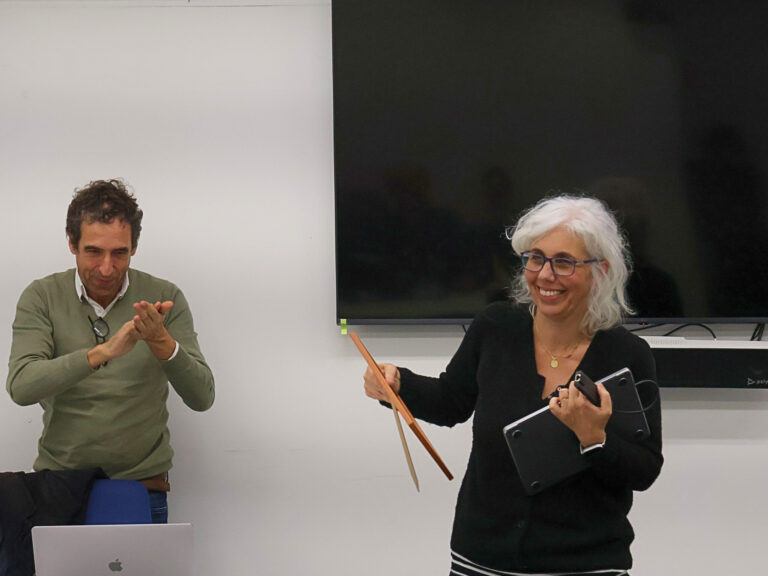
    Hosted by the President of the Scientific Council, Rodrigo Rodrigues, the packed hybrid ceremony awarded Best INESC-ID Researcher to Luísa Coheur, Best Young Researcher to  Christof Torres and Best PhD Student to Pedro Orvalho.

    The recipients gave short presentations of their work. Luísa gave an overview of research on transparent and inclusive machine translation evaluation, including efforts to adapt this work to translation niches such as sign language; Christof, speaking live from Berlin, discussed his ongoing research on fortifying decentralised financial systems, wallet privacy and cross-chain sandwiching; and Pedro, now a postdoctoral researcher at the Barcelona AI Research Institute, presented MENTOR, a semantic automated program repair framework for programming exercises designed for use in educational environments.

    About the INESC-ID Awards:

    Since 2009, the INESC-ID Awards are presented annually to honour researchers whose work has made a significant contribution to the scientific life and impact of the institute, helping nurture a culture of excellence and commitment within INESC-ID’s scientific community.

    Winners are selected by an independent jury composed of world-renowned experts from the INESC-ID Advisory Board, ensuring a rigorous and external evaluation of the research conducted at the institute.

    © 2025 INESC-ID

    Images | © 2025 INESC-ID


  • Know-it-all Quiz: a INESC-ID PhD Student Meetup to close 2025

    Know-it-all Quiz: a INESC-ID PhD Student Meetup to close 2025

    Earlier this month, our PhD students had their last meetup of 2025. After working hours, around twenty students gathered to room 9 of Alves Redol (INESC-ID headquarters), for a quiz game.

    Divided into four teams and fuelled by snacks, the participants soon defined strategies and carefully went through the instructions at the beginning of the Mentimeter presentation. The first round was an easy one, INESC-ID trivia combined with facts about Computer Science and Electrical and Computer Engineering, a breeze for everyone. Quirky beeps, nostalgic sounds, soundtracks and even domestic appliances filled the room as the next round came along. Riddles took a modern turn, as various combinations of emojis appeared on the screen for a more challenging game of guessing which movie or series was being represented. And for the final boss, isolated quotes appeared on the screen, prompting participants to gather all their pop culture knowledge to guess what piece of media had originated the sentence.

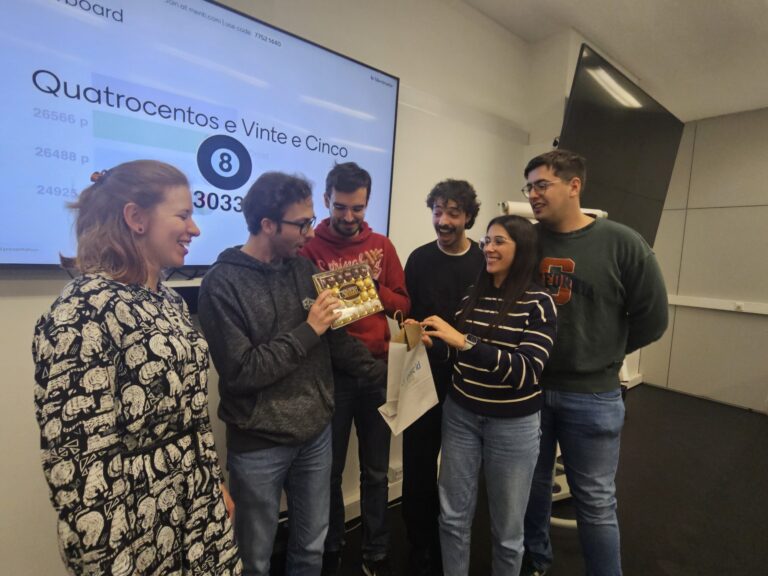
    The results were very close to a tie, but one team emerged victorious: “Quatrocentos e Vinte e Cinco”! The victory earned them a sweet prize which, in true community spirit, they made sure to share with their fellow colleagues.

    * The INESC-ID PhD Students Meetups are informal gatherings designed to support and connect our doctoral researchers. Created by the Communications and Outreach Office, the series offers space for community building, peer exchange, personal and professional growth, and insight into the wider opportunities of the PhD journey.

    © 2025 INESC-ID

    Images | © 2025 INESC-ID

  • What fun it is to laugh and chat at the INESC Lx Christmas party

    What fun it is to laugh and chat at the INESC Lx Christmas party

    As is tradition, the three INESC Lisbon institutes, INESC-ID, INESC-MN and INOV, had their Christmas gathering on December 17 to mark the jolliest time of the year.

    Under a smiley gingerbread cookie projected on the screen, the attendees gathered around the tables for a cozy evening snack and to engage in conversation, promoting connection between the three institutes. The chat was lively, the mood was merry, a perfect opportunity to wish each other happy holidays.

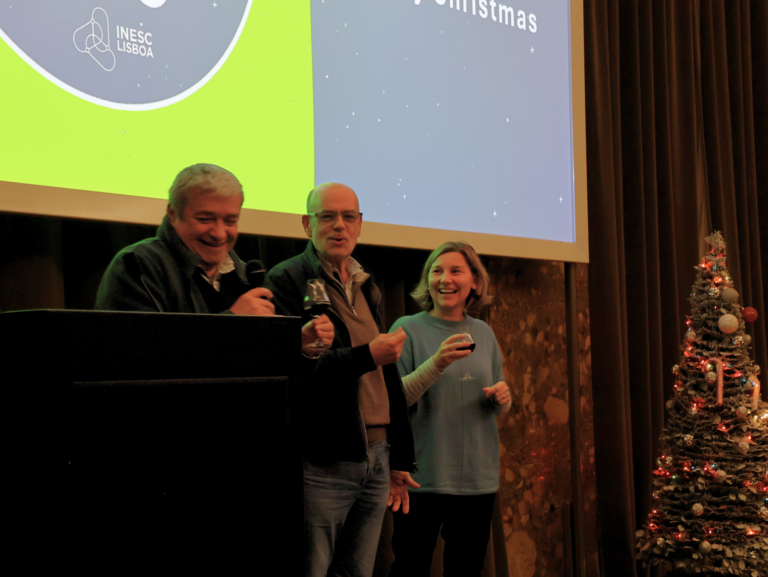
    Inês Lynce INESC-ID president of the Board of Directors, Fernando Moreira president of INOV and Paulo Freitas, director of INESC-MN, went briefly up to the stage to thank everyone for coming, rejoicing on a very successful 2025 and taking the chance to make a heartfelt toast with everyone present.

    We wish everyone a Merry Christmas and a Happy Holiday season!


    © 2025 INESC-ID

    Images | © 2025 INESC-ID

  • INESC-ID researchers develop AI model inspired by human vision

    INESC-ID researchers develop AI model inspired by human vision

    From unlocking our phones with facial recognition to self-driving cars, AI-based computer vision is increasingly part of the technologies we use. Yet there is still much to learn from how we see the world.

    To address this gap, researchers from INESC-ID, Instituto Superior Técnico (IST), and the Champalimaud Foundation (CF) have developed EVNets – Early Vision Networks, an AI model inspired by the primate visual system to improve robustness in image analysis.

    The research, developed by Lucas Piper and Arlindo Oliveira (INESC-ID and Instituto Superior Técnico), together with Tiago Marques (Champalimaud Foundation), was recently presented by Lucas at NeurIPS 2025 in San Diego, one of the most prestigious international conferences in Machine Learning and AI.

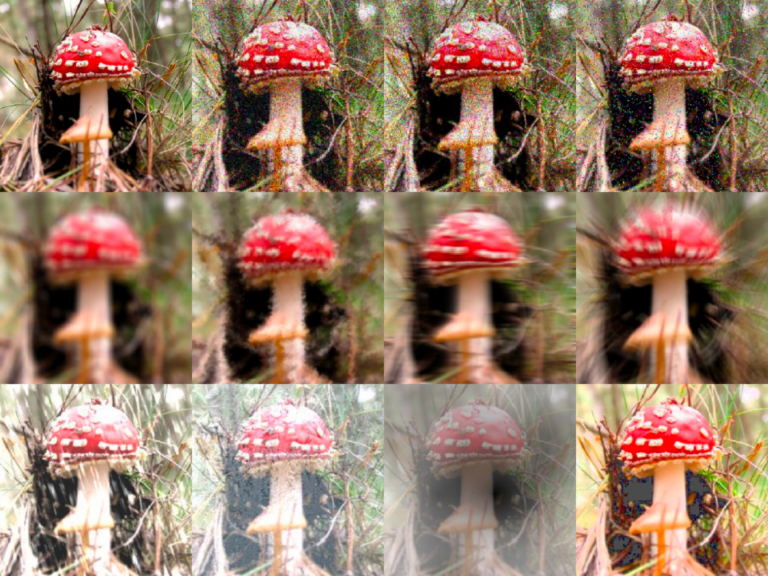
    EVNets build on earlier research into how primates process visual information, integrating biological principles to enhance performance in computer vision tasks. The model is particularly effective when dealing with distortions such as brightness or contrast variation, situations that human vision handles naturally but that remain challenging for many traditional AI systems.

    This biologically inspired approach also supports more interpretable and transparent algorithms. We want to develop models that we can comprehend and explain,” said Lucas. “If these algorithms are aligned with how the human brain works, they are already more inherently understandable.”

    At the Breast Cancer Research Program at the Champalimaud Foundation, EVNets are already being tested to determine whether the model can analyse medical imaging scans from different manufacturers more reliably than current AI methods. If the improvements in robustness translate to clinical data, EVNets could contribute to more consistent diagnostics and support patient care.

    © 2025 INESC-ID
    Image: Tiago Marques / Champalimaud Foundation

  • 1st place in ULisboa redeSAÚDE Award goes to Catarina Botelho

    1st place in ULisboa redeSAÚDE Award goes to Catarina Botelho

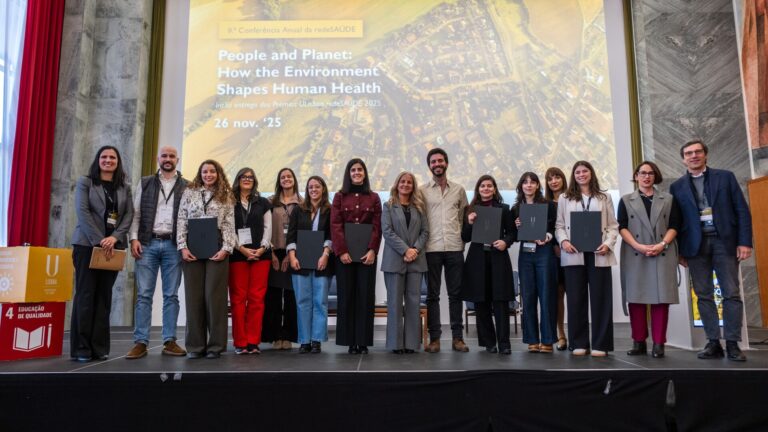
    Former INESC-ID PhD student and researcher in Human Language Technologies (HLT), Catarina Botelho, was awarded first place in the category “Health Systems / Entrepreneurship / Digital Transition” of the ULisboa RedeSAÚDE awards 2025.

    The goal of the Awards is to motivate the interest of PhD and master’s students, from the University of Lisbon, in the health sector. Additionally it seeks to promote innovative research, best practices and knowledge sharing that could contribute to the development of the area. The ceremony took place on November 26 during the 9th Annual Conference of redeSAÚDE, under the theme “People and Planet: How the Environment Shapes Human Health”. 

    The work which earned Catarina this prize was developed while conducting her PhD, “Leveraging Large Language Models to Support Alzheimer’s Disease Detection”. It was advised by INESC-ID HLT researchers Isabel Trancoso and Alberto Abad, and Tanja Schultz from Bremen  University, and it explored the potential of Large Language Models (LLMs) in analysing speech transcriptions and recognise certain features (e.g. text coherence and lexical diversity) that could indicate a possibility of Alzheimer’s Disease in a patient.

    © 2025 INESC-ID

  • Maria Ponte distinguished with Honorable Mention at the CRAI Forum 2025

    Maria Ponte distinguished with Honorable Mention at the CRAI Forum 2025

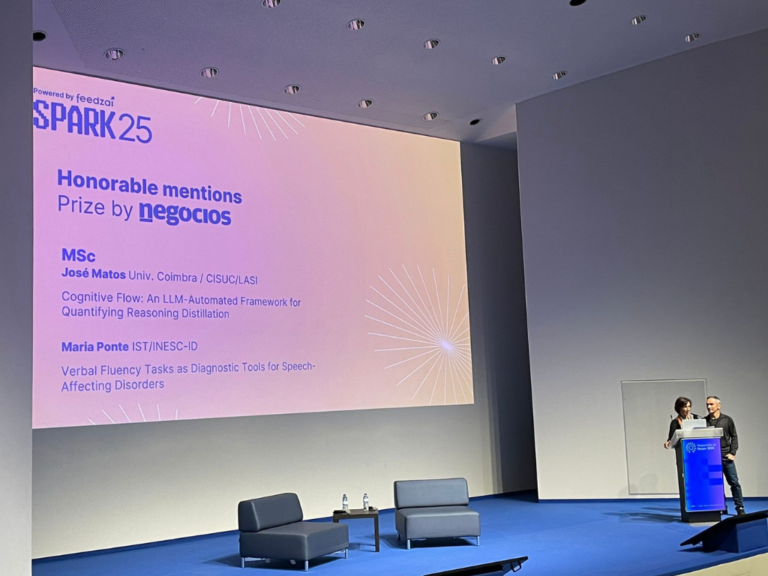
    Maria Ponte, INESC-ID master’s student was distinguished with an Honorable Mention of the SPARK Award on November 25, during the 2025 edition of the Center for Responsible AI Forum 2025 (CRAI 2025), in Lisbon.

    The awards were supported by Feedzai and aimed to recognise impactful and innovative work, by master’s and PhD students, aligned with responsible AI principles. Maria is advised by Human Language Technologies researcher, Isabel Trancoso, who hosted the ceremony, and her work is focused on “Verbal Fluency Tasks as Diagnostic tools for Speech-Affecting Disorders”. 

    Know more about CRAI here.

    © 2025 INESC-ID

  • INESC-ID student Lucian Popescu received “La Caixa” Foundation Doctoral INPhINIT fellowship

    INESC-ID student Lucian Popescu received “La Caixa” Foundation Doctoral INPhINIT fellowship

    Lucian Popescu, PhD student in High-Performance Computing Architectures and Systems (HPCAS), and advised by Nuno Lopes, researcher in the same area, received the “La Caixa” Foundation Doctoral INPhINIT fellowship.

    The exclusive fellowship is attributed to international students who wish to pursue doctoral studies in Portugal or Spain and is the first “La Caixa” fellowship to be secured by an INESC-ID student. “Typically only one or two of these fellowships are awarded per year to computer science (30 in total), which shows the degree of competitiveness.” highlights Nuno Lopes. “We were very surprised and happy with this Christmas gift! Thank you to La Caixa for funding national research.”

    Lucian concluded his bachelor’s and master’s degrees in the University POLITEHNICA of Bucharest, in Romania, and is now starting his PhD in IST/INESC-ID. During his master’s he published an article “Exploiting Undefined Behavior in C/C++ Programs for Optimization: A Study on the Performance Impact” in the Programming Language Design and Implementation (PLDI) 2025, the most relevant annual conference in the sector.